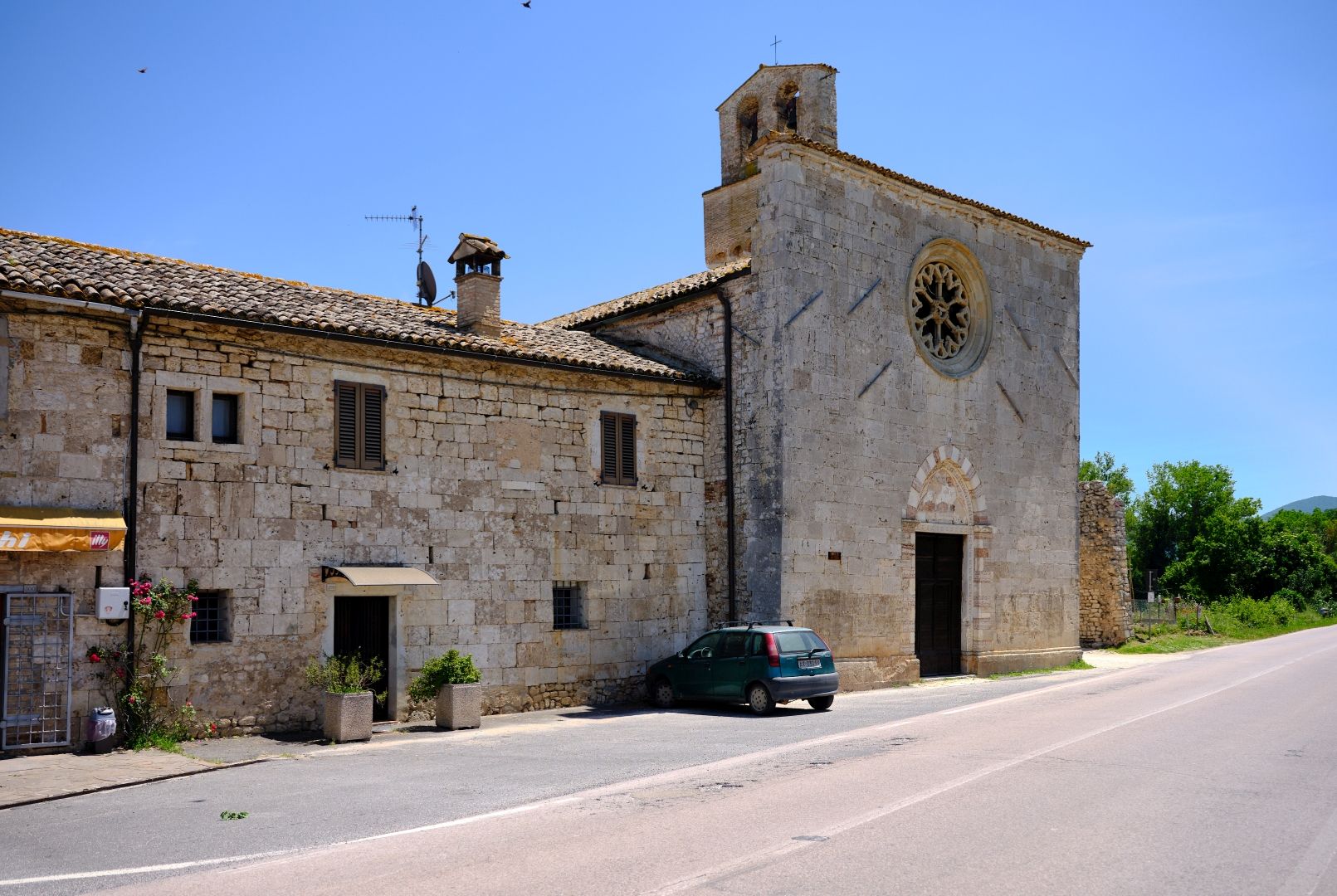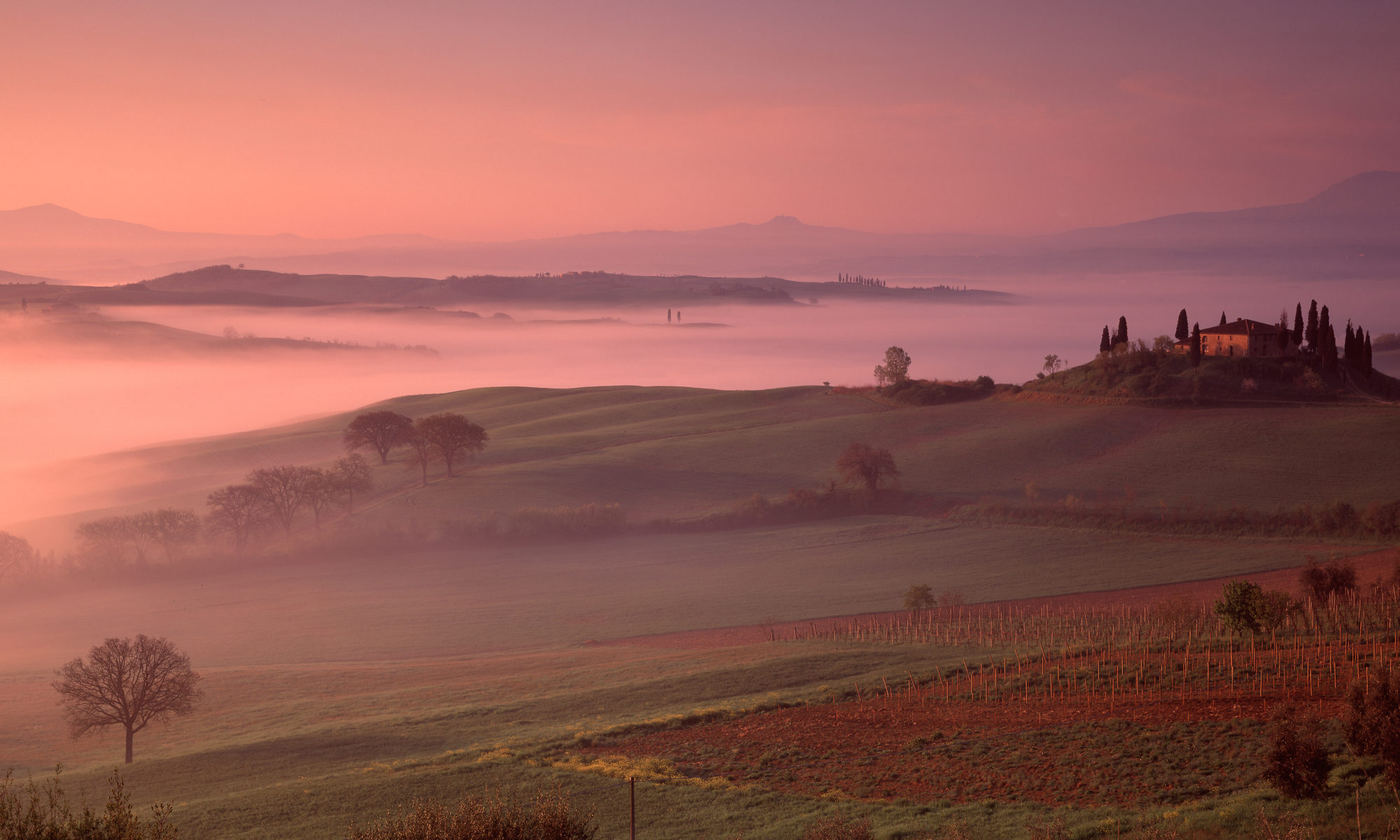
Welcome to the seventh article in this series about very old buildings. On your first sight of Santo Stefano it might not occur to you that it qualifies as “paleochristian” – it is in fact a complex of churches which date from various periods up to the 13th Century. But at its heart you can still see part of a pagan Roman temple, which is very cool.
The complex is known locally as the Sette Chiese (seven churches) but I can only count four proper churches and a little chapel.
We like Bologna and have been there a few times, either as a destination in its own right to visit with friends, or as a convenient stopping point on a journey to or from points further north. I’ve visited Santo Stefano three times – the first time was a long time ago with a film camera loaded with slow film unsuitable for interior shots. The second time, the church was closed and I could only take pictures from the outside.
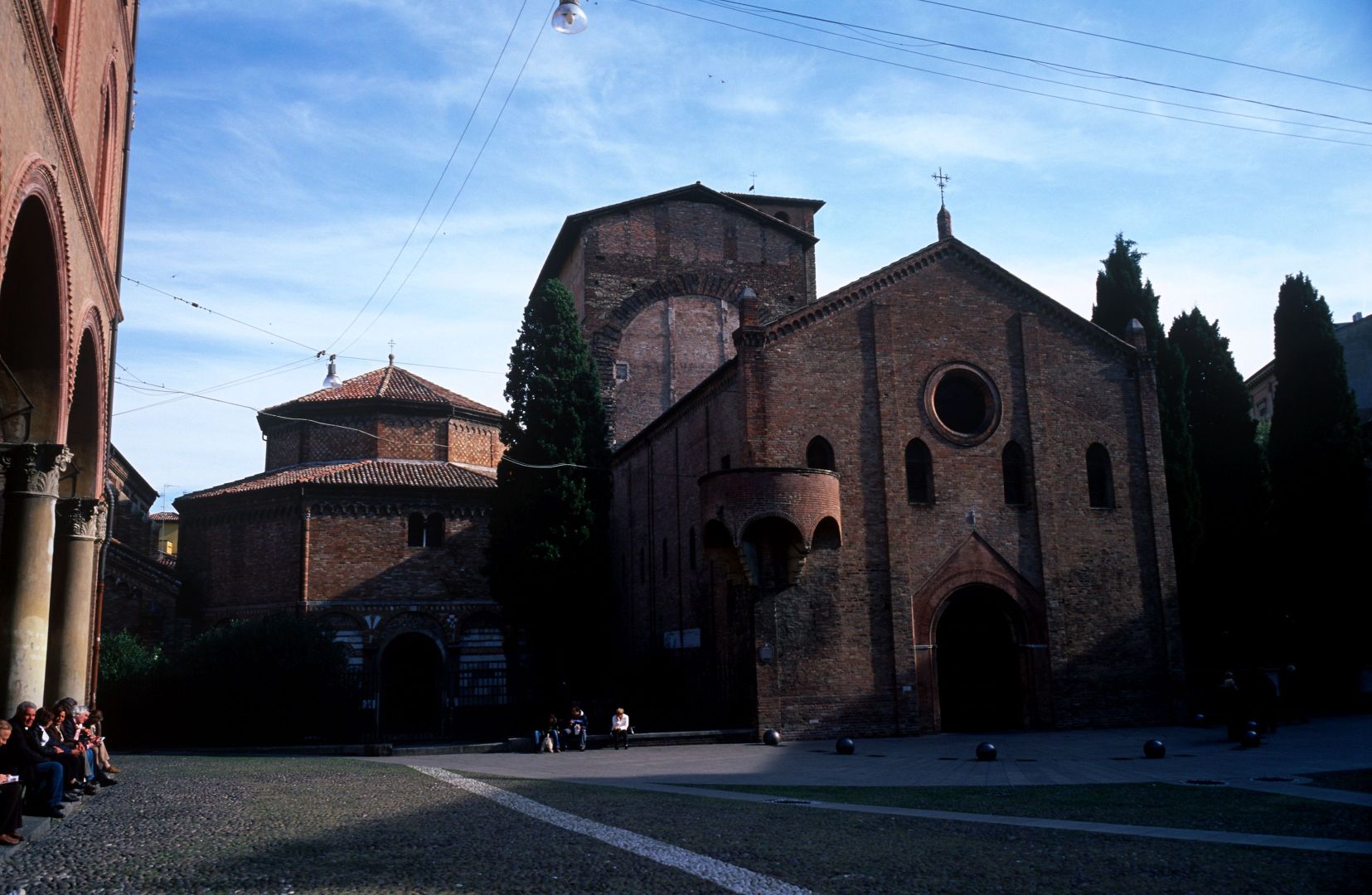
The third time, we could get in, but one of the main areas was undergoing a major restoration and was hidden by scaffolding. Being a history buff in Italy takes perseverance – I’ll try for a fourth visit at some stage.
Nonetheless I now have enough photographs, taken over about fifteen years, to illustrate an article, because it is quite a fascinating place. But telling a coherent story of all the churches over two millennia is a bit of a challenge – I’ll concentrate on the two oldest, and we’ll see how it goes.
Ancient Bologna
These buildings bear witness to a substantial part of Bologna’s history. To understand that, let’s have a bit of context.
Bologna sits where the northern side of the Apennines comes down to meet the valley of the Po. The fertile valley was a source of wealth, while the nearby hills would doubtless have been a refuge in time of war. That this was an obvious place for settlements is shown by the line of ancient cities that follow the edge of the mountains – Rimini, Forlì, Faenza, Imola, Bologna, Modena, Parma and Piacenza, among others. These towns also follow the line of the ancient Roman road called the Via Aemilia, but the mountains were there first.
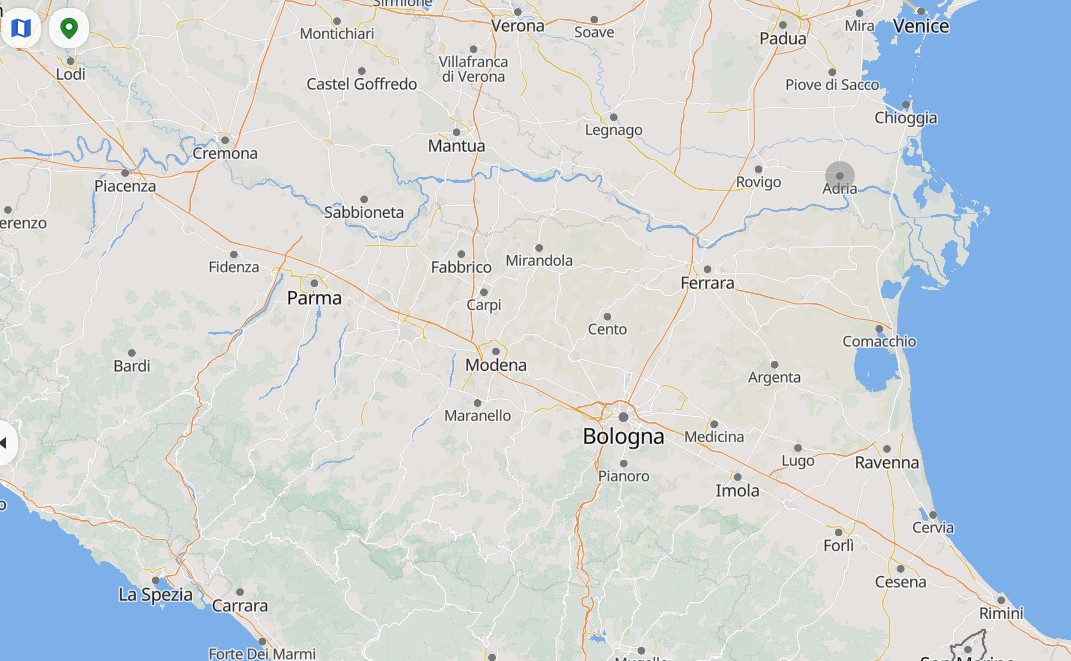
Bologna has a history that goes back to the prehistoric Villanovan culture, which was replaced by (or became) the Etruscans. Then came the Celts, from whose language the name of Bologna ultimately derives. When all that dust finally settled, we are left with the thriving city of Bononia, part of the Roman imperium from 196 BC.
The Temple of Isis
In previous articles we’ve seen how the Romans had a tendency to adopt exotic eastern cults and allow them to coexist with their own pantheon. This worked very well until another eastern cult (Christianity) arrived and started demanding exclusivity. Anyway, one of those earlier cults was the Egyptian cult of Isis. Isis was a goddess who personified the feminine divine power over the natural world – probably identified with other female goddesses in the Roman pantheon. Later perhaps Isis was absorbed into the cult of the Virgin Mary, although there does not seem to be any hard evidence for this so it remains a matter for judgement, and scholarly disagreement.
One thing that is known is that Temples dedicated to Isis were supposed to be built where there was a source of pure water for ritual purposes. Along the edge of the Apennines there must have been a few of these, and it was in such a place in Bononia, sometime in the first century AD, that the adherents of the cult of Isis built a temple over a sacred spring.
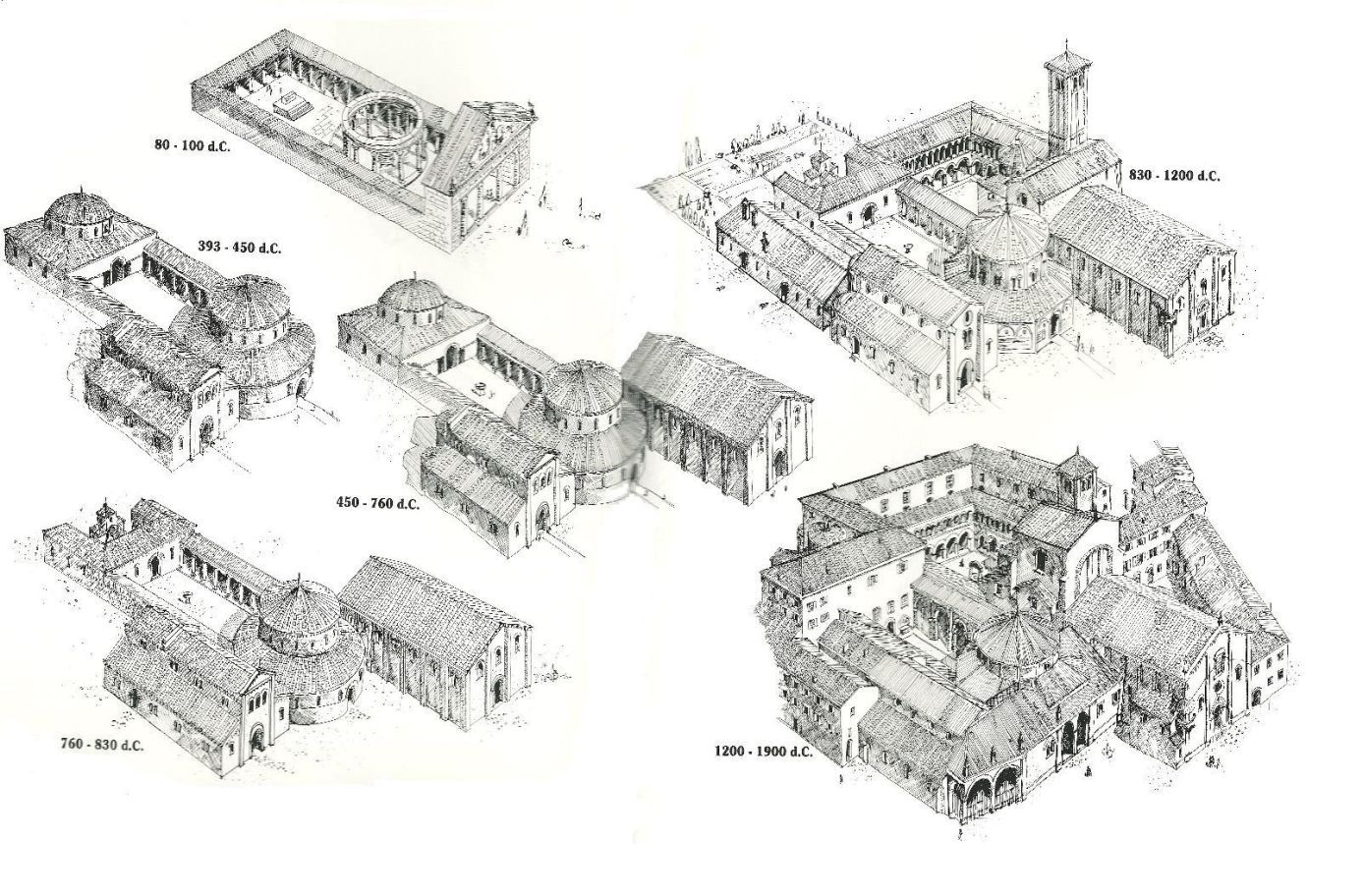
At this point I will include a really useful infographic that is on display in Santo Stefano, which shows the evolution of the church complex over the centuries. We will be referring back to it several times – because it is pretty difficult to keep track of everything that happened in the history of this complex, and looking at the jumble of buildings from the outside, it is hard to make sense of it all. If you are reading this on a desktop device I recommend opening the graphic in a separate tab so you can refer to it.
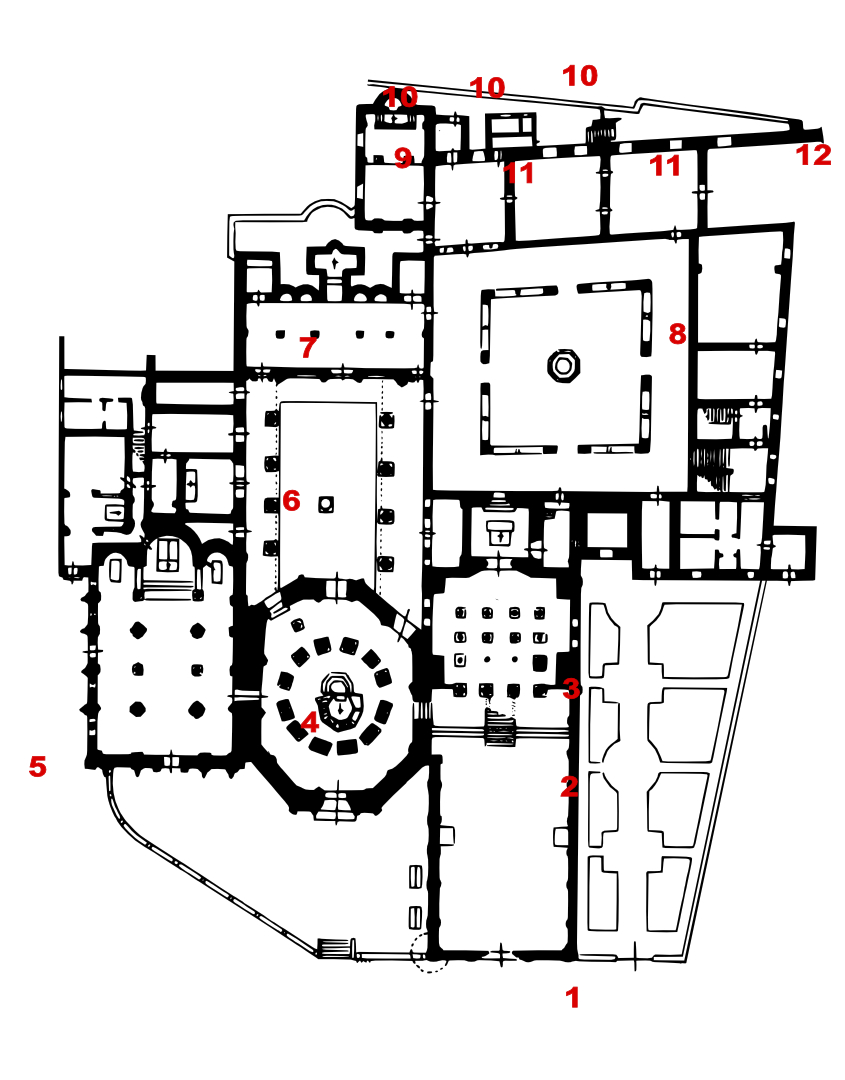
And here is another from the Santo Stefano Wikipedia page, showing the plan of the complex. It is by M. Violante and reproduced under the Creative Commons licence.
The temple of Isis is at the top left of the infographic above, and you can see that it consists of a circular sanctuary inside a rectangular structure with a conventional classical entrance (of course this is a hypothetical reconstruction, but it is also an informed one, so let’s go with it).
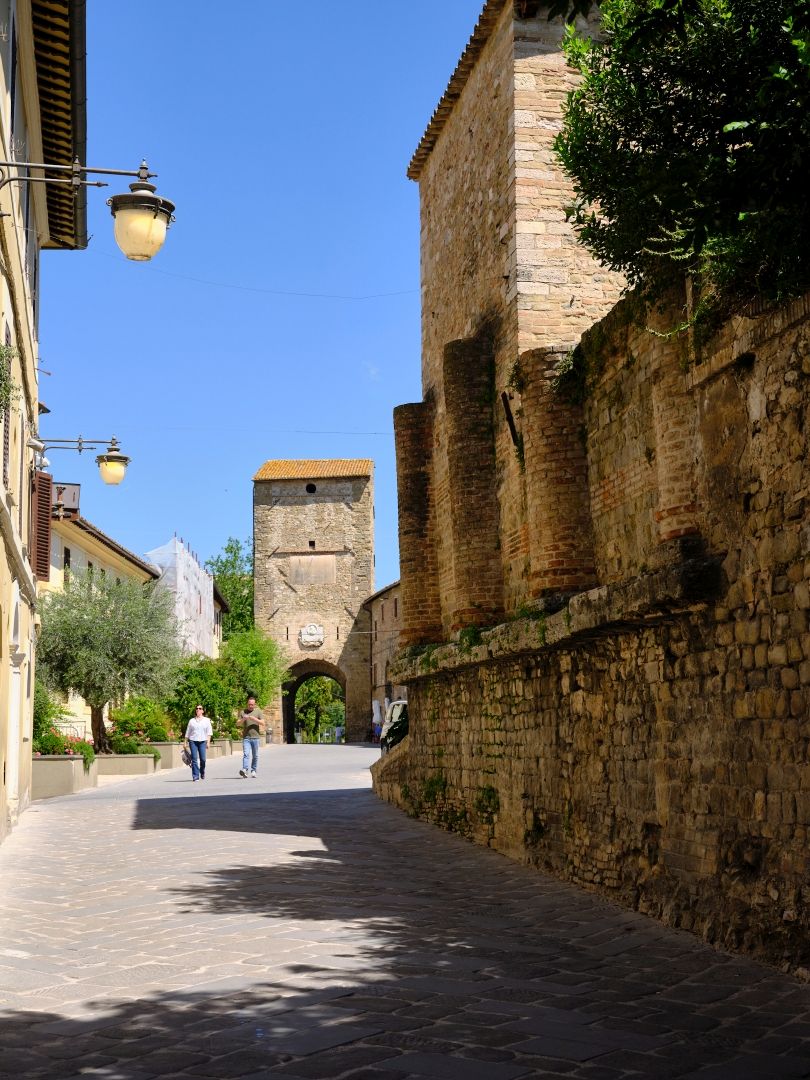
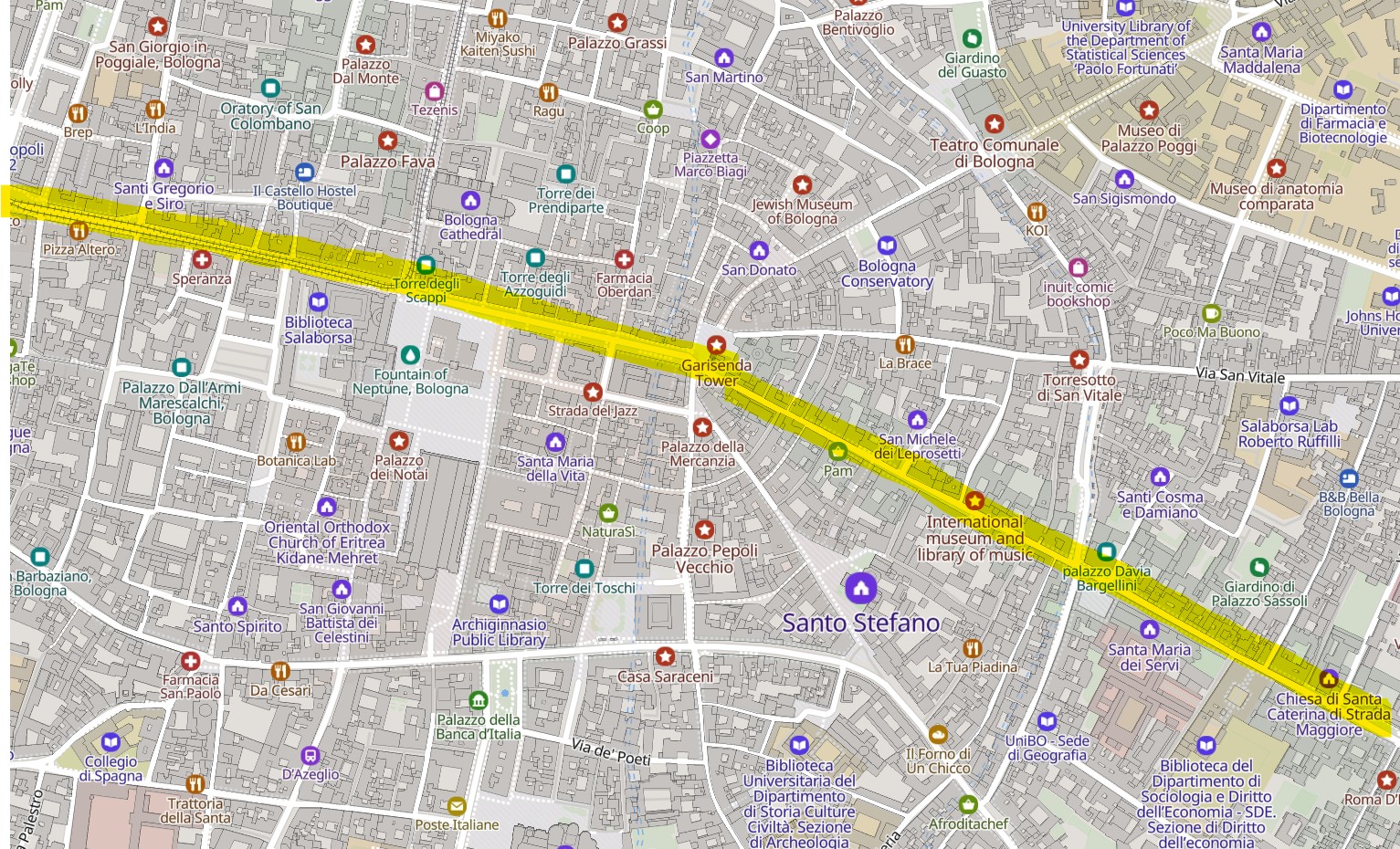
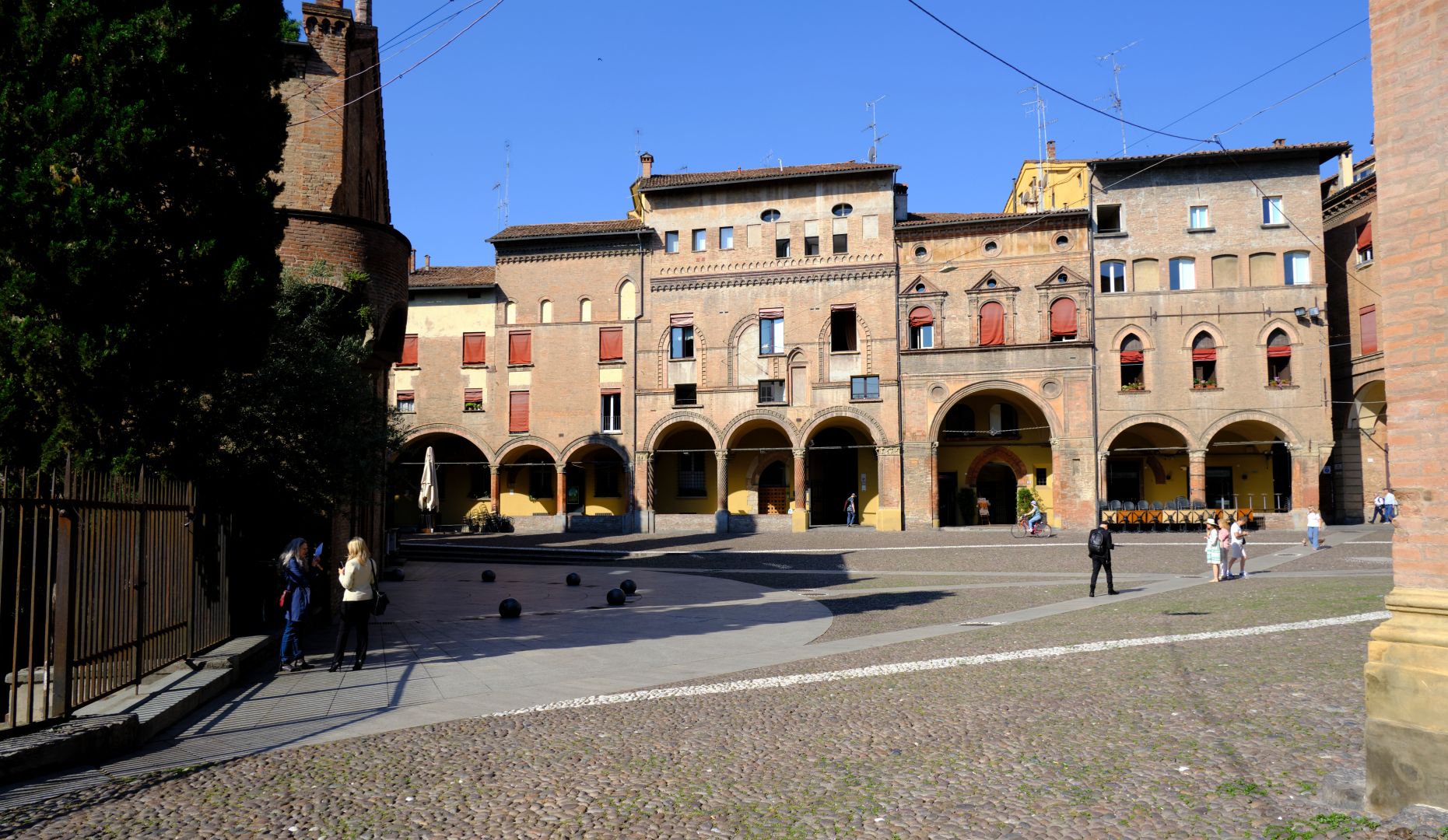
It’s a bit hard, standing in Piazza Santo Stefano among all the elegant colonnades of modern Bologna, to try and imagine the pagan temple here. Was it even in the town, or outside it? I haven’t been able to find a clear description of where the town boundaries of Roman Bononia were, other than that the town was a lot smaller than medieval Bologna, so the Temple of Isis could have been just outside the walls. It is about 50 metres away from the modern Strada Maggiore, which was then part of the Via Aemilia, so it was next to the main road out of town.
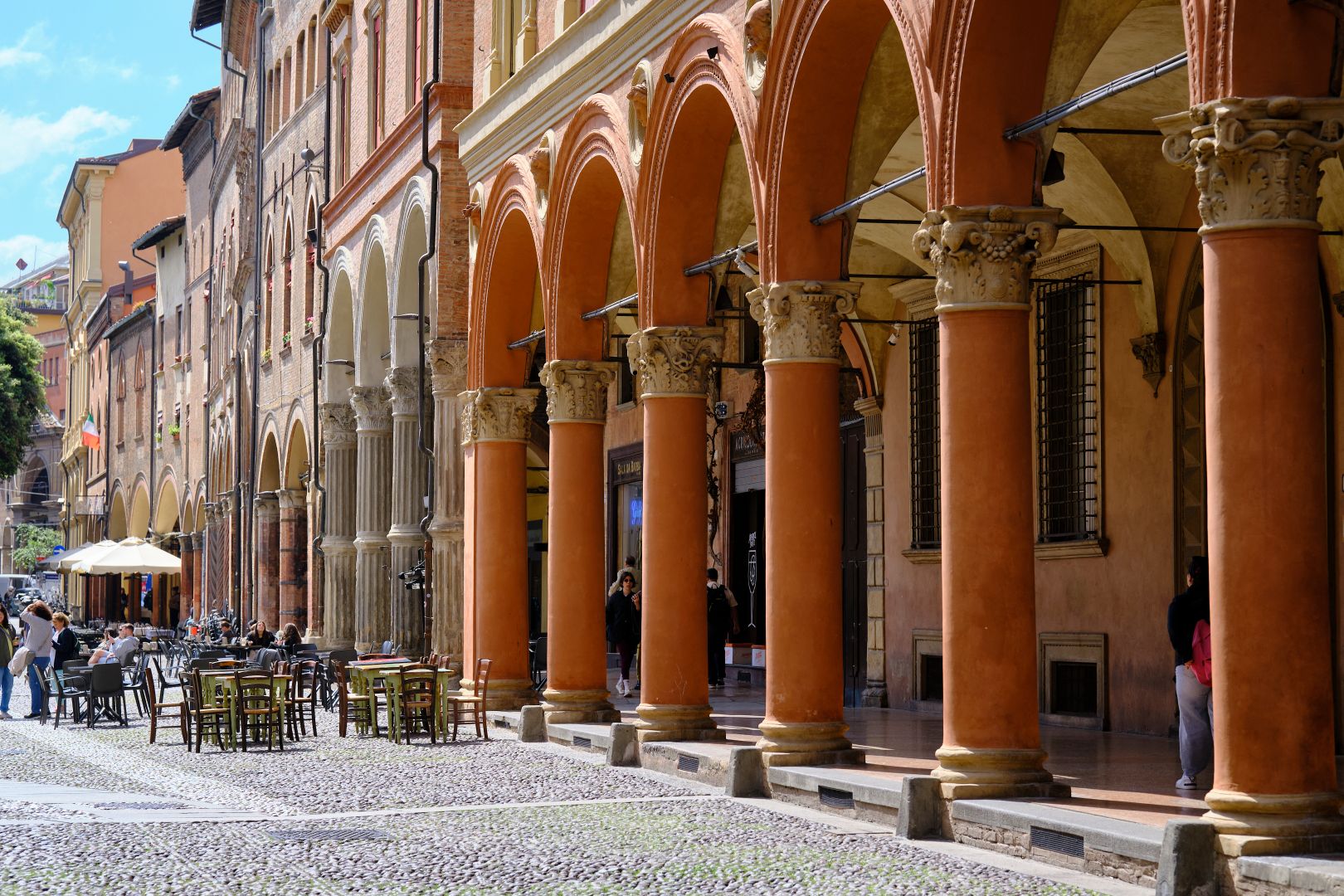
What would it have looked like here, when the temple was new – say in around 100 AD? Before Christianity, Roman law prohibited burials inside city boundaries, so as with other towns, the main road out of Bononia was probably lined with monumental tombs belonging to wealthy families, and a few temples, of which this was one. Traffic on the Via Aemilia – military, governmental and commercial – would have been substantial. Away to the south would be the line of Apennine foothills, and round about, you would see – what? Perhaps market gardens and orchards, such as you still see in the southern Po Valley, except not on today’s industrial scale. The proprietors of those productive estates would have built comfortable villas, and while the labour back then was human rather than mechanical, the Second-Century landowners probably liked statues in their gardens as much as Italians still do in the 21st.
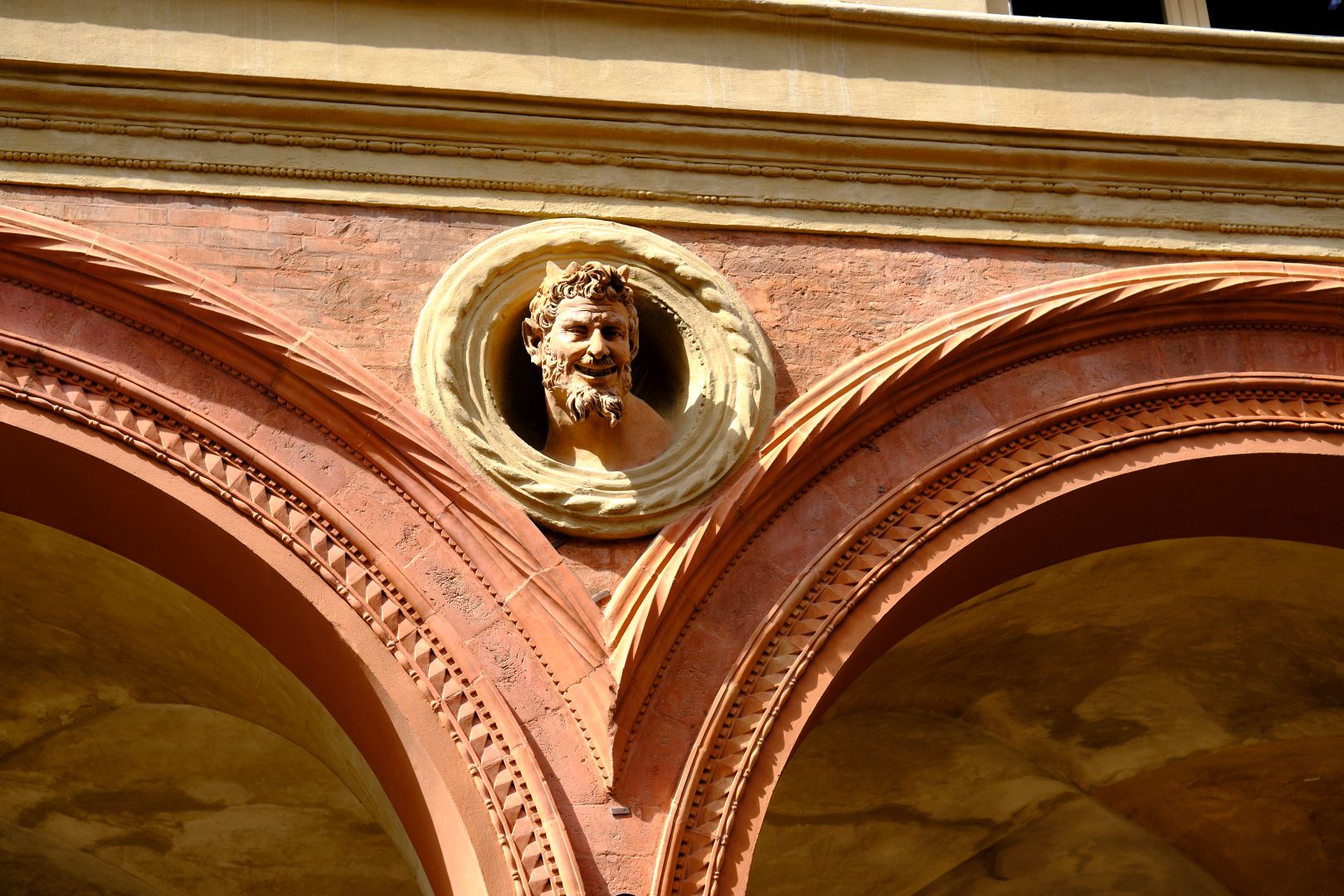
The Church of Saints Vitale and Agricola
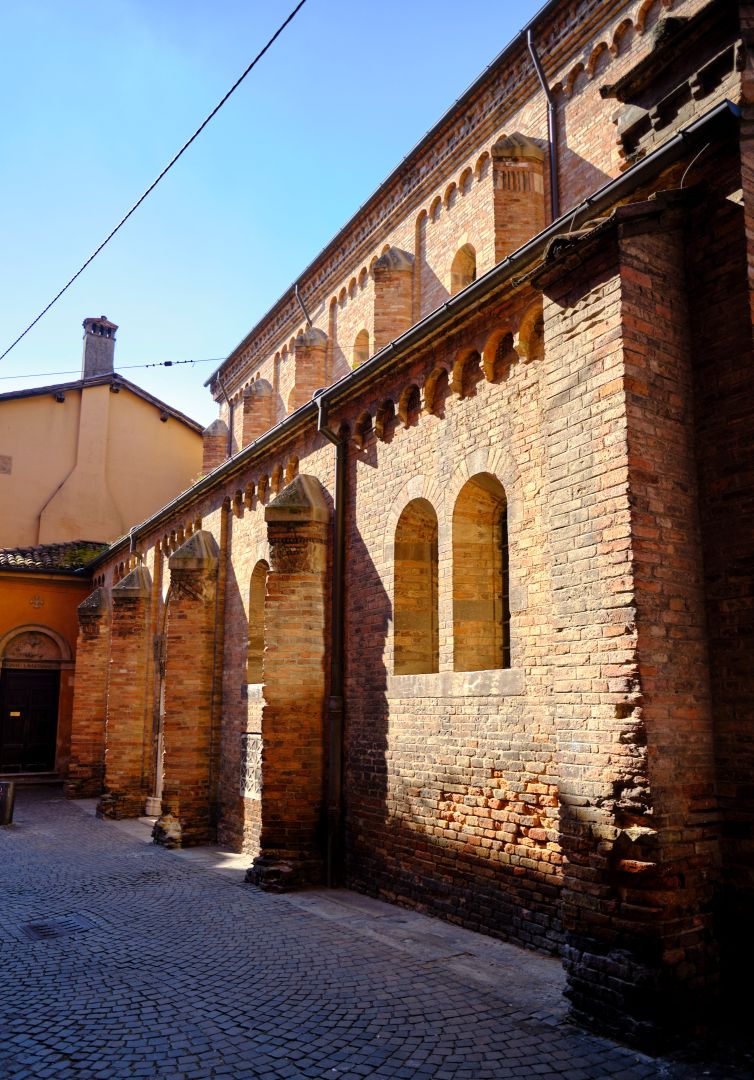
Let us now look at the first Christian church on the site, which was not built over the Temple of Isis, but next to it.
The first recorded Christian martyrs from Bologna, during the Diocletian persecution, were Saints Vitale and Agricola, slave and master respectively, who both converted to Christianity and were executed in the first decade of the 4th Century. At some point in the 300s, after Constantine’s edict of toleration towards Christianity, a church dedicated to them was built alongside the Temple of Isis. It is number 5 in the plan view above, and the rectangular building to the left of the temple in the graphic.
Not much is known about the saints – they are first mentioned by St Ambrose of Milan, writing in the 390s. Ambrose recounts how the discovery of their remains in a Jewish cemetery outside the town led to their being reburied here, in a church built for the purpose.
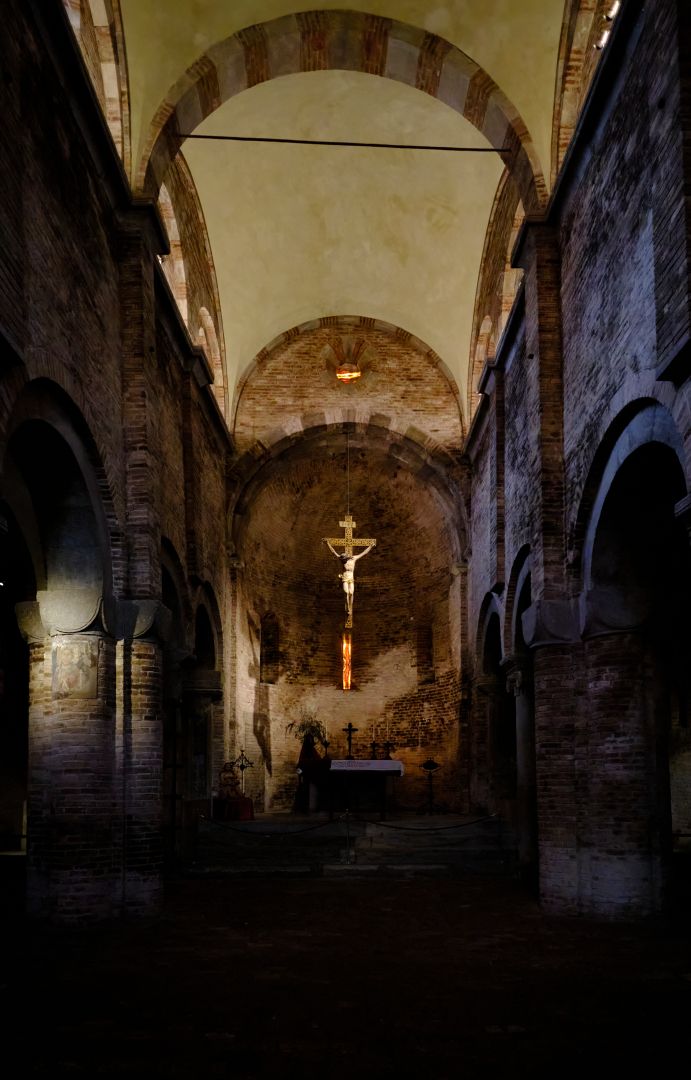
Inside, the first impression is of gloom – there is a little natural light high up, but lower down artificial light has been kept to a minimum.
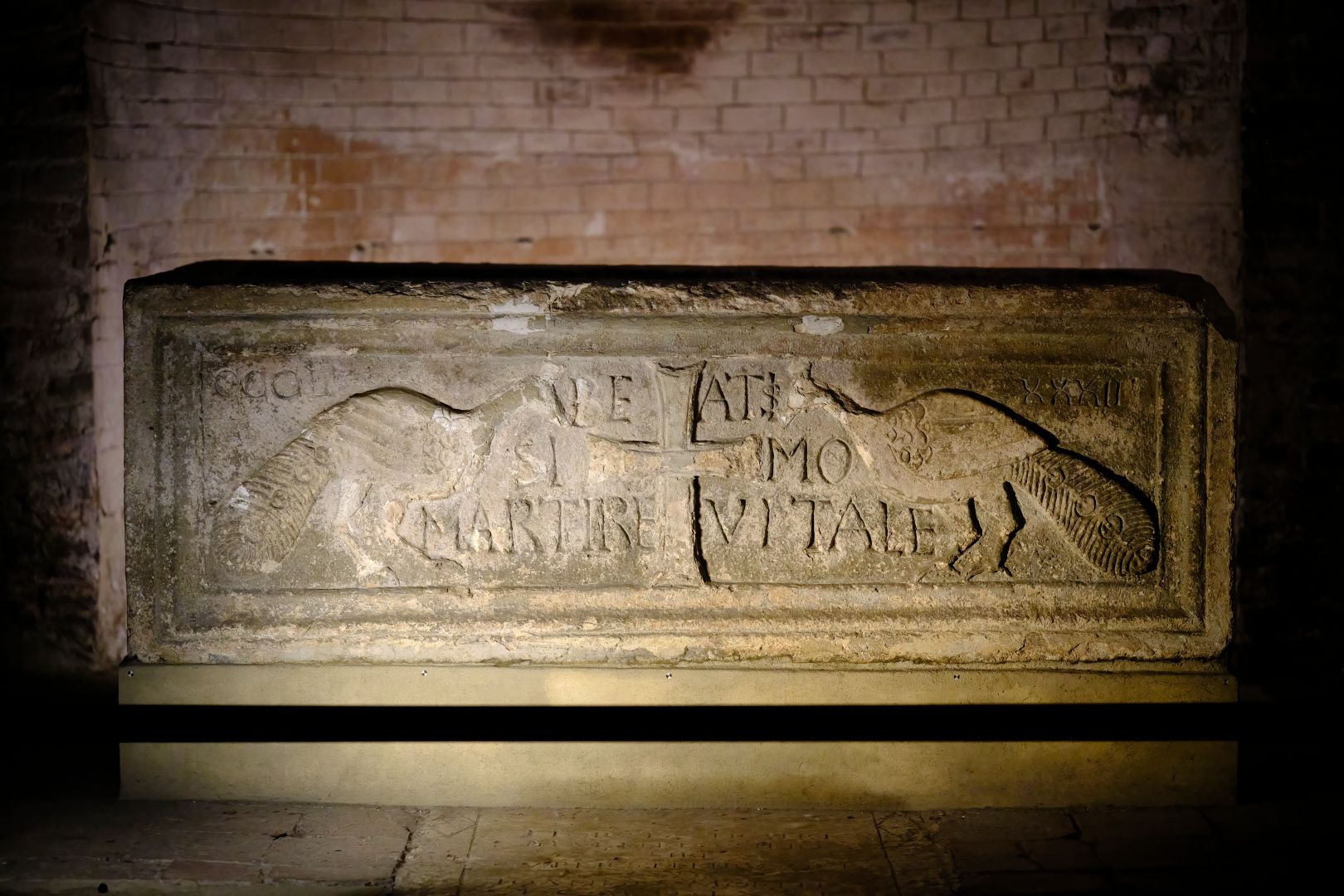
Two sarcophagi containing the supposed remains on the martyrs are in the side apses. The photograph below shows that of St Vitale. The peacocks are a very typical early Christian motif (there was an ancient belief that peacocks’ flesh did not decay after death, hence they became associated with resurrection). The inscription reads “Most Blessed Martyr Vitale” and the date in Roman numerals is CCCLXXXII – 382, or possibly 383 with the final numeral obscured. Either way, the date is wrong because we are told that the remains were reburied in the church in 393. And in any case I believe that numbering years from the birth of Christ did not start until the 6th Century. So the sarcophagus could be from the time of building the church, but if so the date must have been added in a later century.
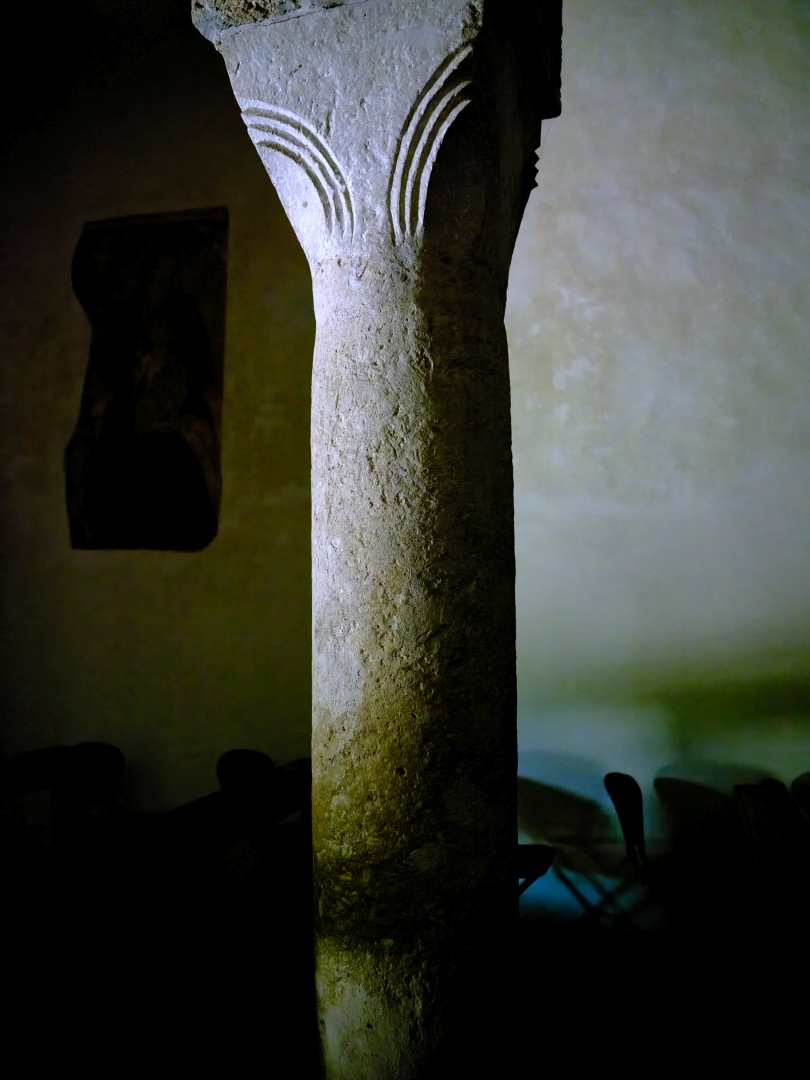
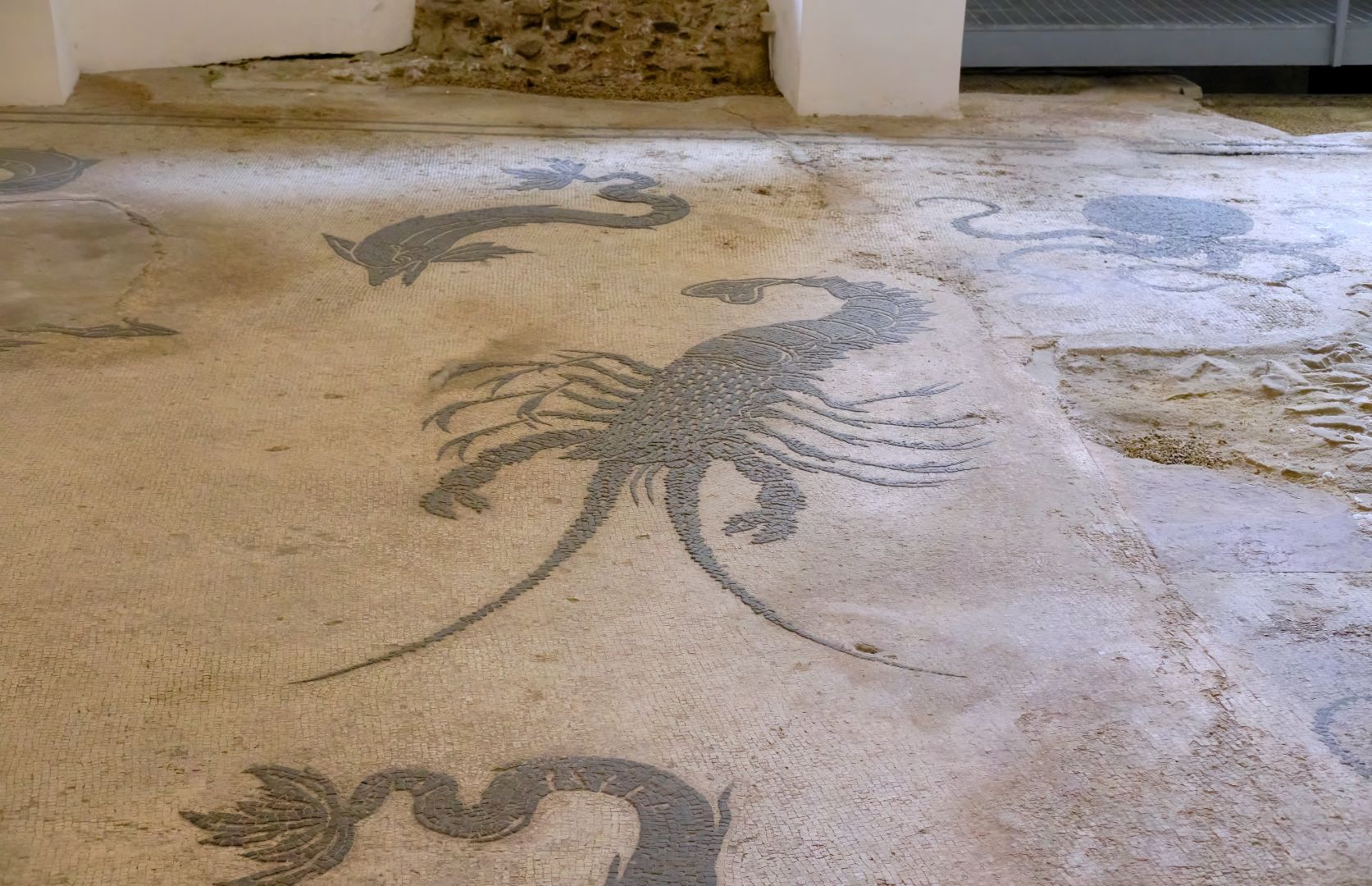
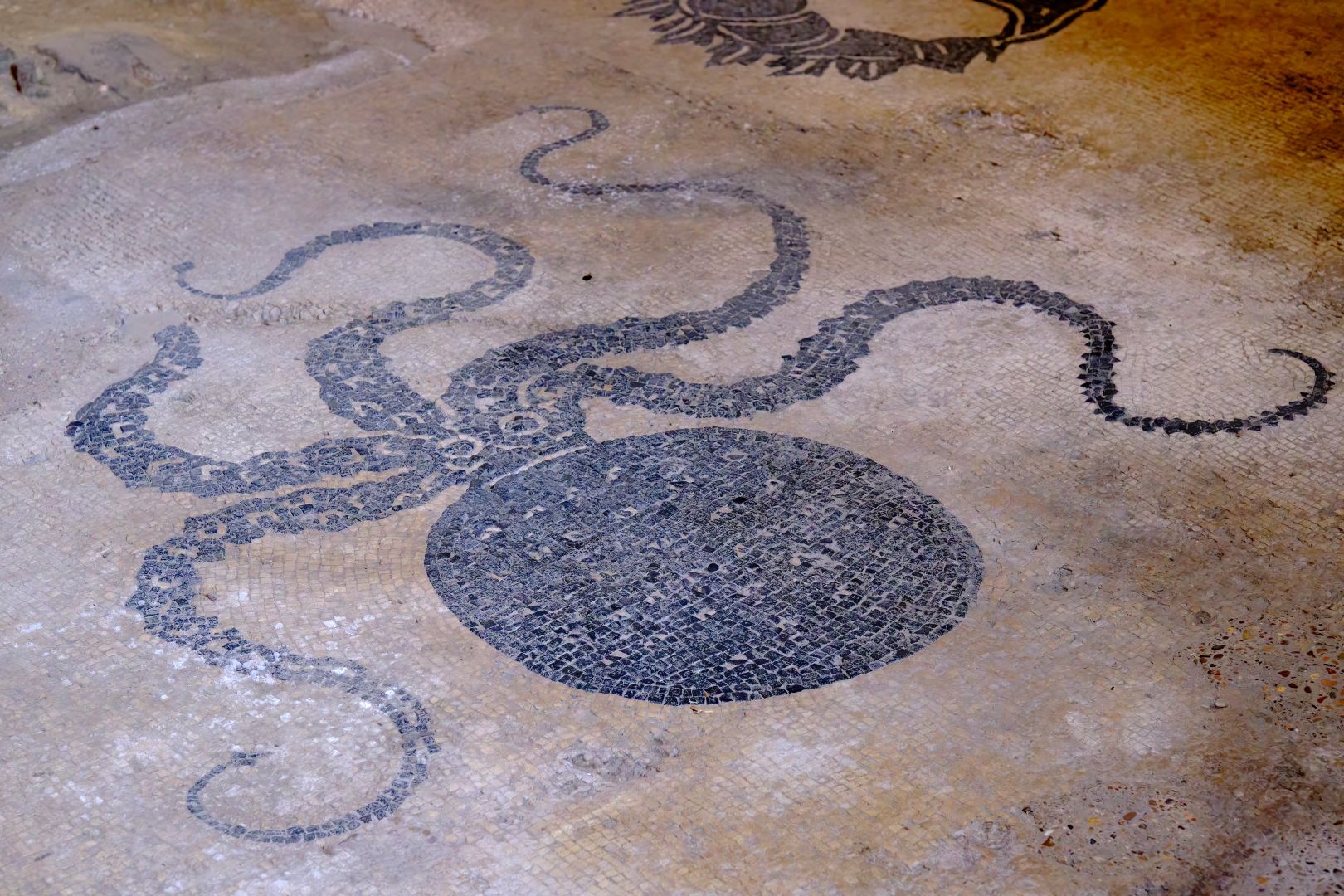
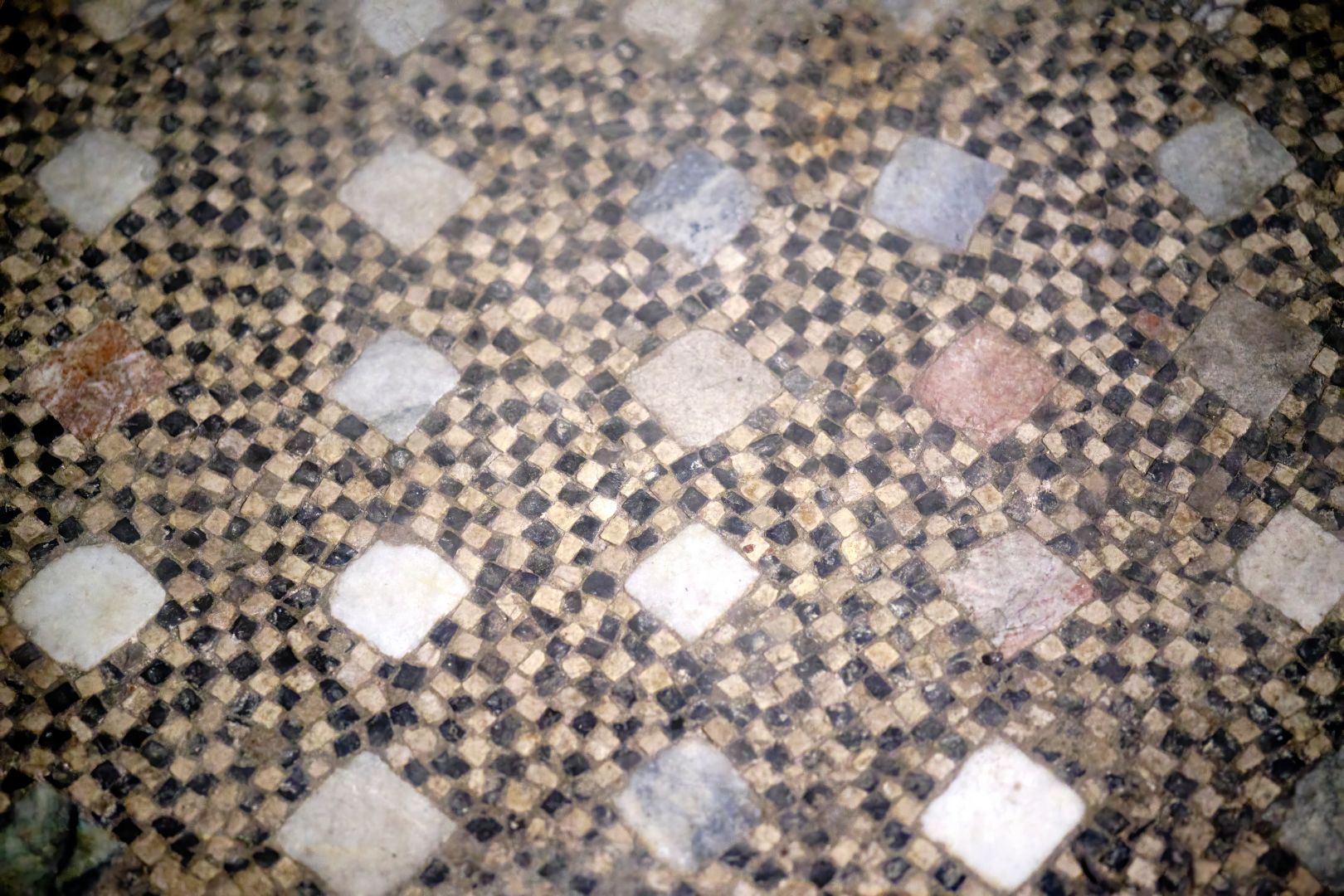
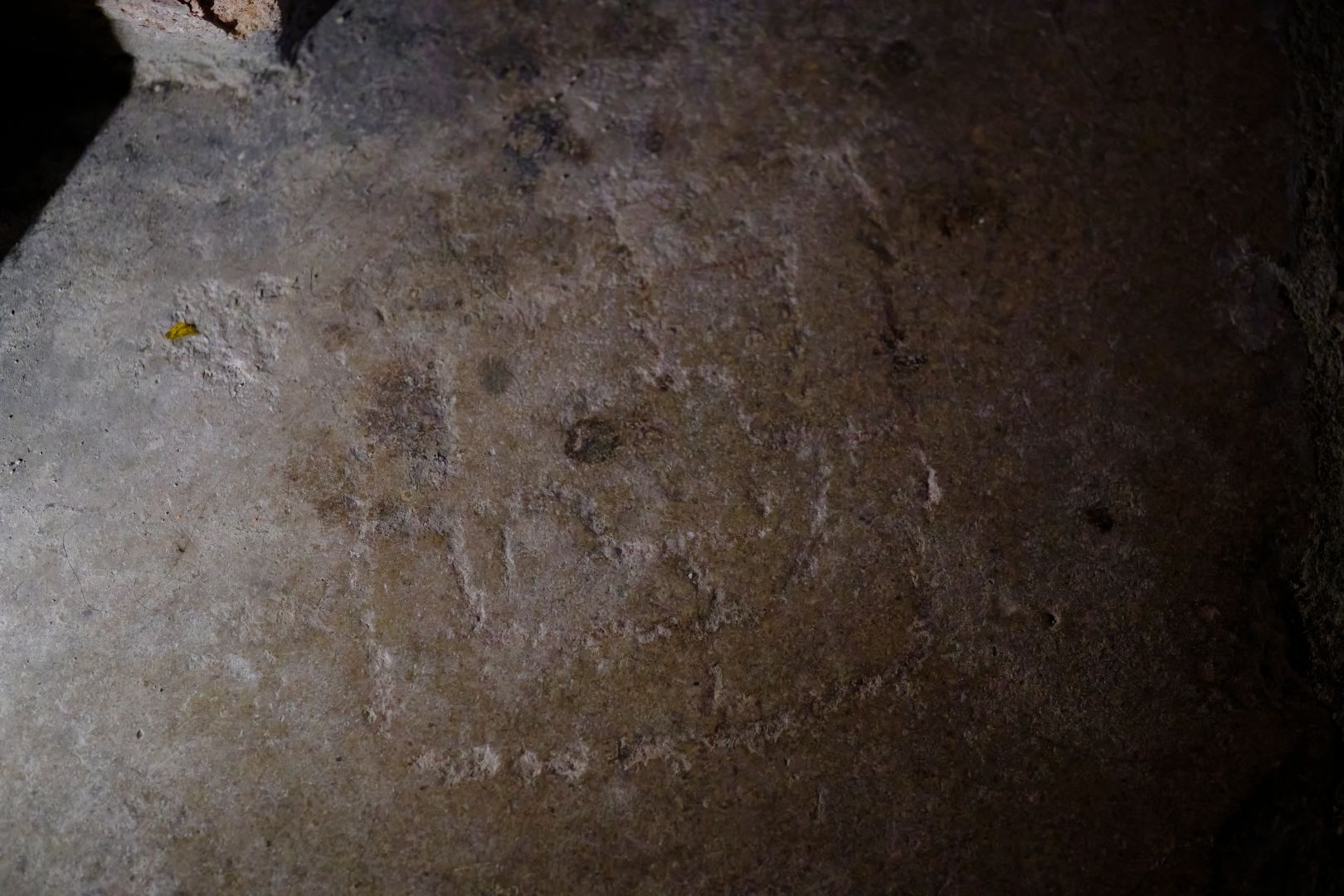
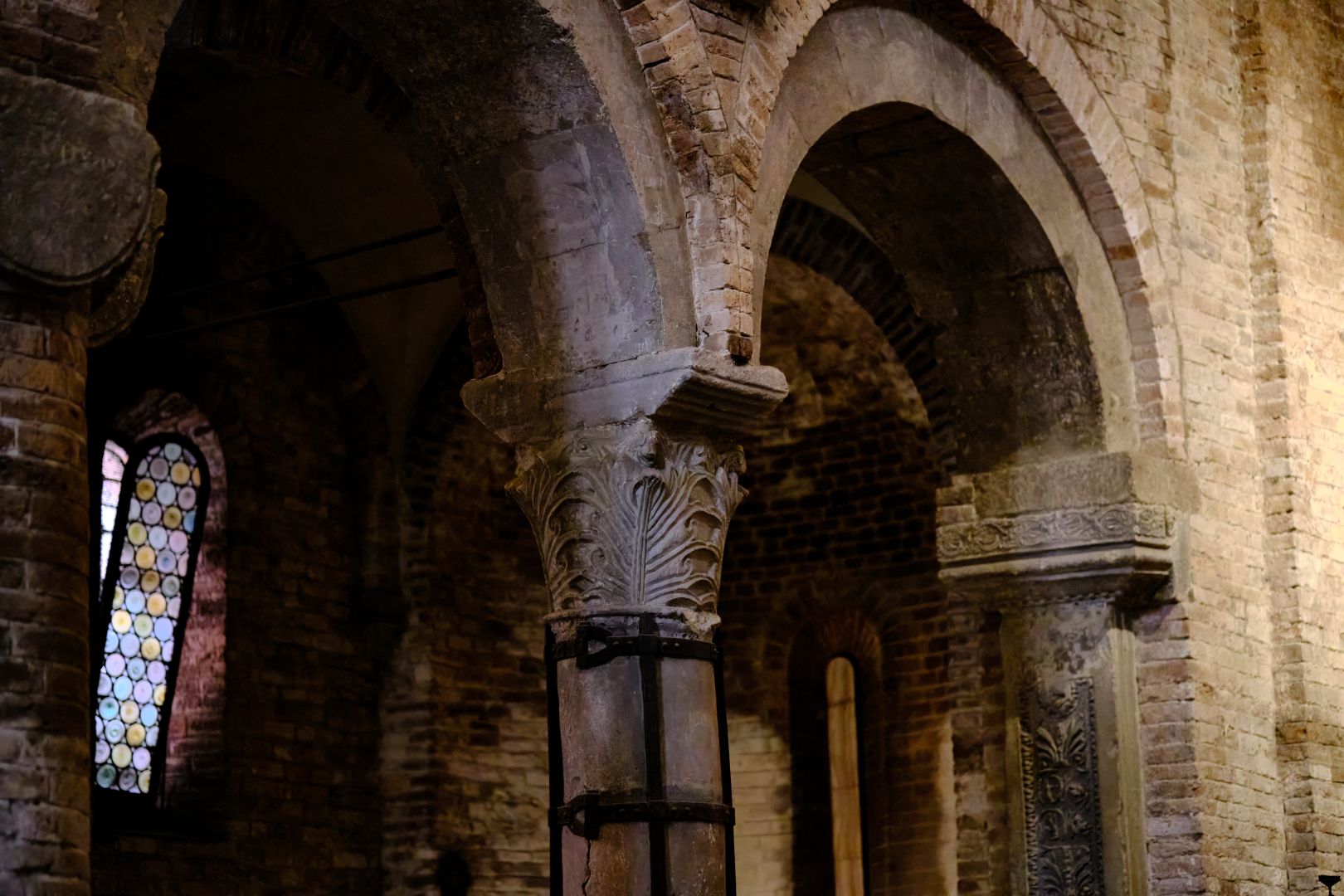
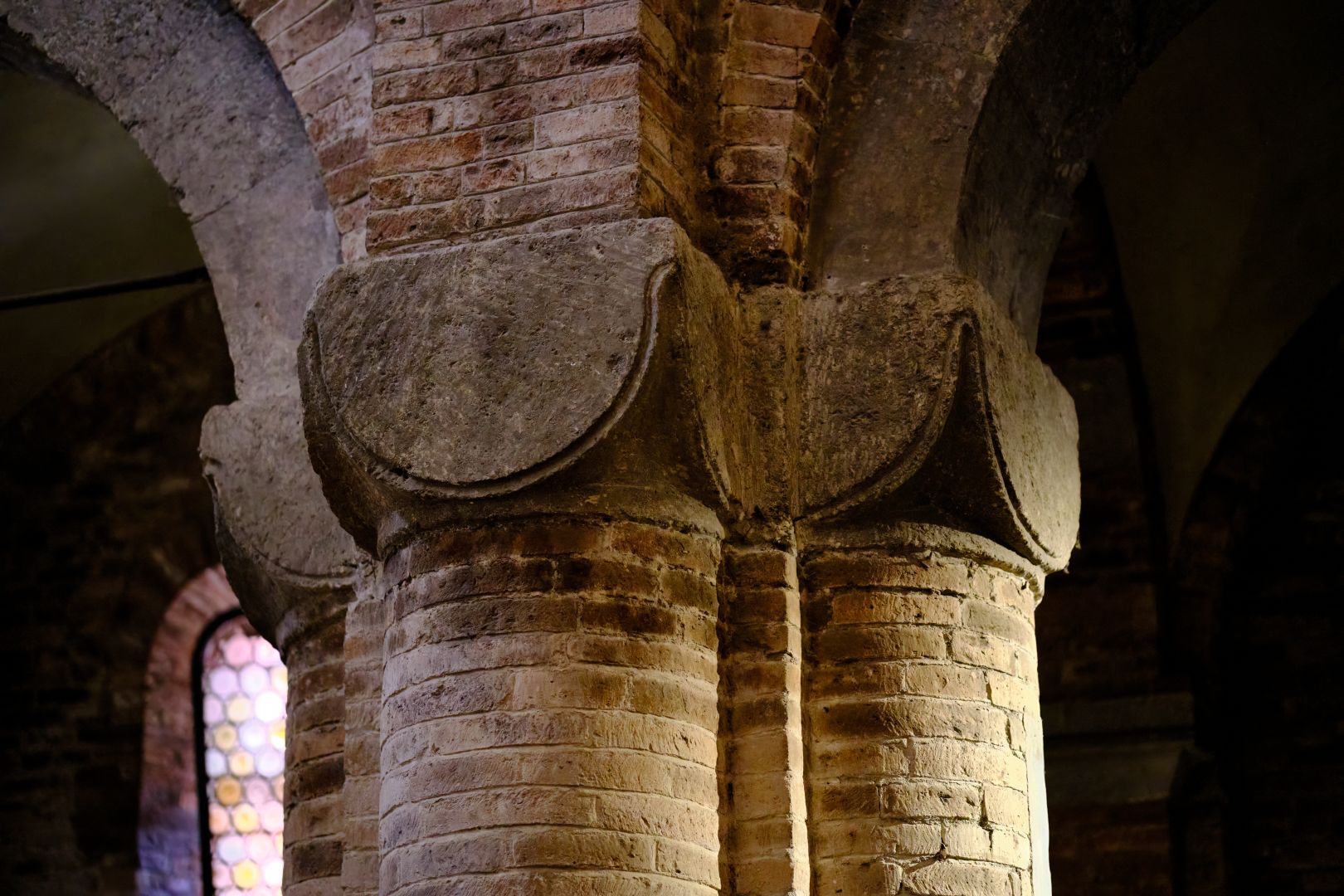
There are some other survivals from the building’s earliest period, including a small section of Roman mosaic floor, and some (to me) indecipherable graffiti of the same era. The architecture is a mix of styles – some column capitals clearly scavenged from older Roman structures, some from the late-Roman or Byzantine period, and some – almost 1930s-like in their brutal simplicity – are described in the information panel in the church as “Franco-Carolingian style”. If they do indeed date from the era of Charlemagne then there must have been a reconstruction of the church sometime after the displacement of Lombard rule by the Franks. That makes sense – Bologna was sacked and captured by the Lombards in 728, and recaptured by the Franks on behalf of the papacy in 774.
Having survived the end of the Western Empire, invasions and wars, this church faced its most implacable enemy in the 15th Century in the person of Pope Eugenius IV. The story is that at some point around the year 1400 an ancient tomb was discovered in the church, bearing the name SYMON. Rumours spread that this was the real tomb of Simon Peter, which is to say St Peter the apostle, who was supposed to have been buried in Rome. Eugenius was understandably unhappy about this, not least because some of the lucrative pilgrim trade was being diverted from Rome to Bologna, and he ordered that the church roof be removed and the building filled with earth. It remained in this state for about seventy years, before being restored by Cardinal Giuliano Della Rovere, the future Pope Julius II. I imagine that the Bolognese authorities were careful to maintain a discreet silence about the whole SYMON story after that.
The Church of the Holy Sepulchre (Santo Sepolcro)
So what happened to the Temple of Isis? Well, obviously, at some point it ceased to be a pagan temple. The conventional date for the suppression of paganism is 392 AD, when the Emperor Theodosius I made temple worship, among other things, illegal. This temple might have fallen out of use before that, but it cannot have been later.
Only a couple of decades after 392, at some point in the early 400s, Bishop Petronius had a church built on the site of the temple. (Petronius, a local aristocrat, was later canonised and as St Petronius, is the patron saint of Bologna. The large church next to Piazza Maggiore is dedicated to him.)
The story goes that Petronius wanted the church to be a copy of the Church of the Holy Sepulchre in Jerusalem, built not long before by Constantine. If you look at the infographic above, the illustration marked “393-450 d.C.” shows the new church – the two round buildings, next to SS Vitale and Agricola.
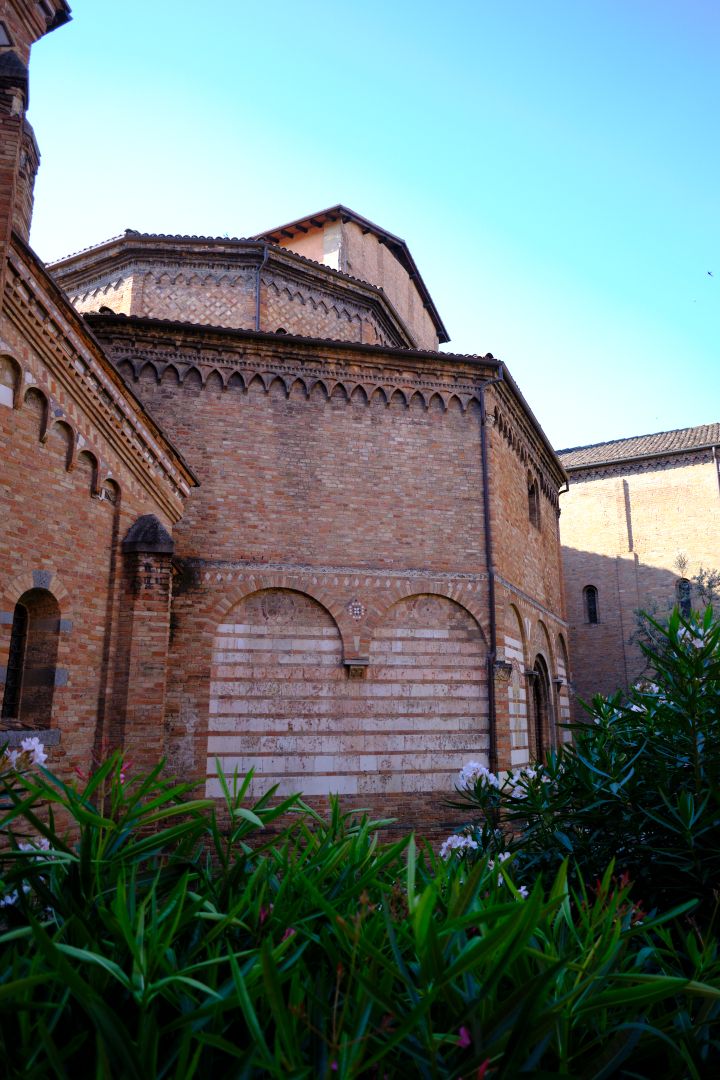
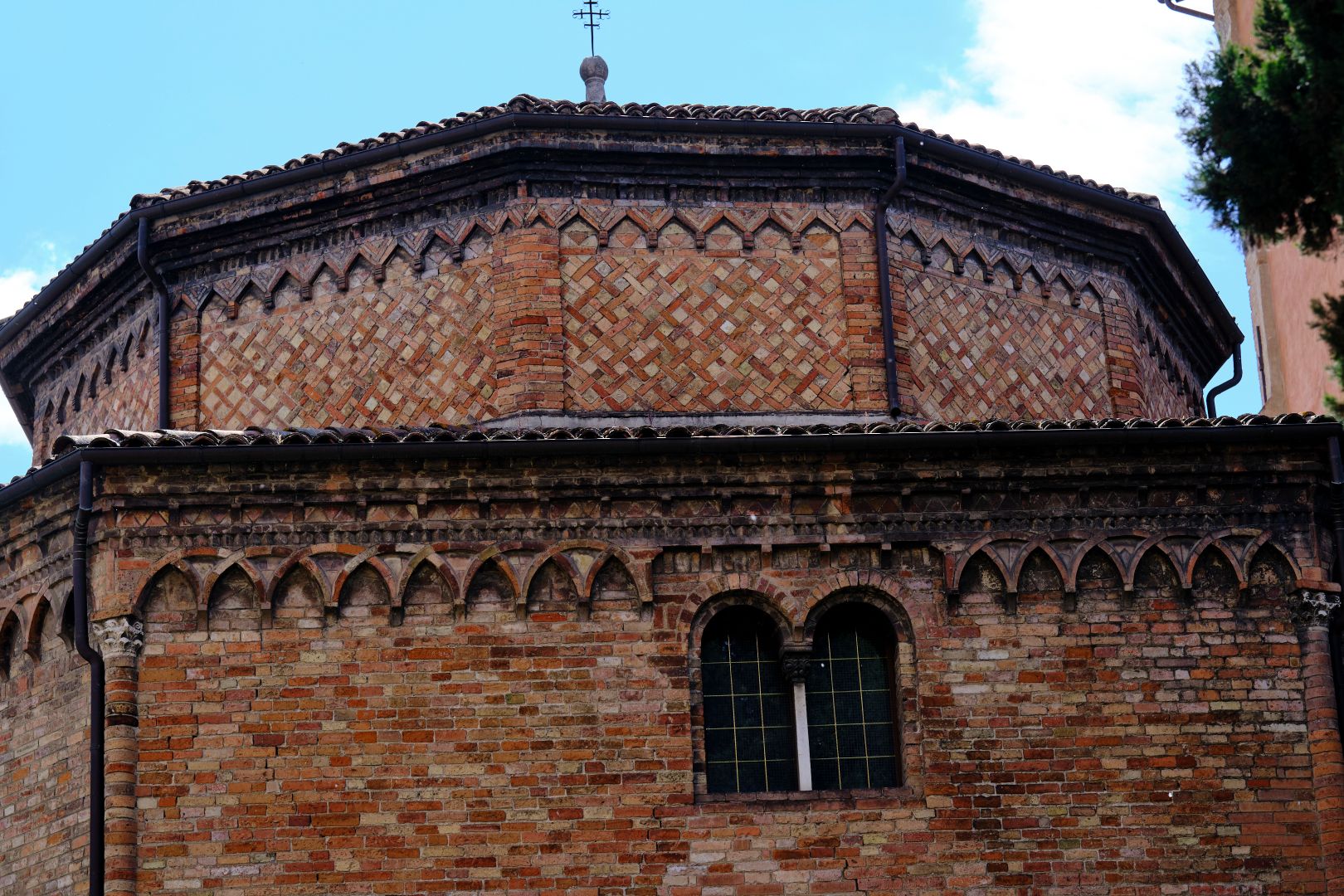
It seems clear that the church was built on the remains of the Temple of Isis, because the circular structure incorporates seven ancient columns imported from Greece, albeit paired with brick columns for greater strength.
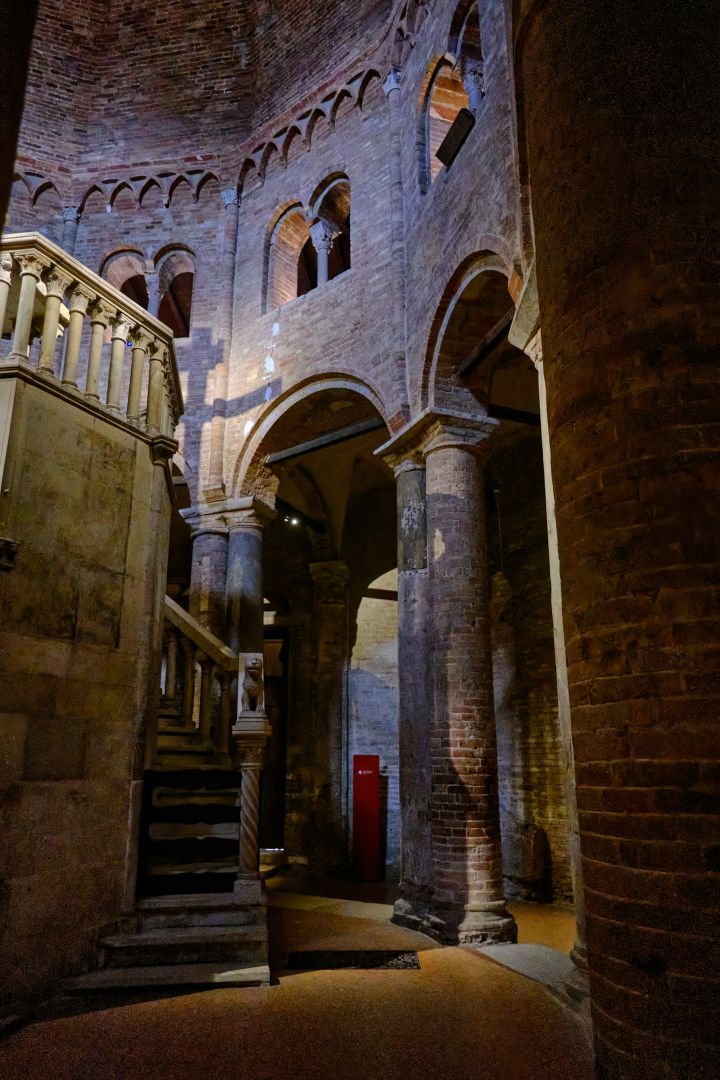
How much of the existing church survives from the 400s is not clear. Around the year 900 the Carolingian empire had splintered, and various Frankish strongmen claimed the throne of Italy. History recognises a chap called Berengar I as the king, but one of his rivals brought in an army of Magyar mercenaries from what is now Hungary, and the ensuing conflict did a lot of damage in the Po Valley, including to this church, requiring a rebuilding around the year 1000.
In the centre is a curious structure – the information panel in the church describes it as an “edicola” or shrine. It takes the form of a sepulchre, with a pulpit built on top of it. Until as recently as the year 2000, the sepulchre held the bones of Petronius, minus the head which was in his titular church in the centre of Bologna. It was possible to crawl inside to worship the relics, but in 2000 the parts of the body were reunited in the other larger church, so the tomb is now empty.
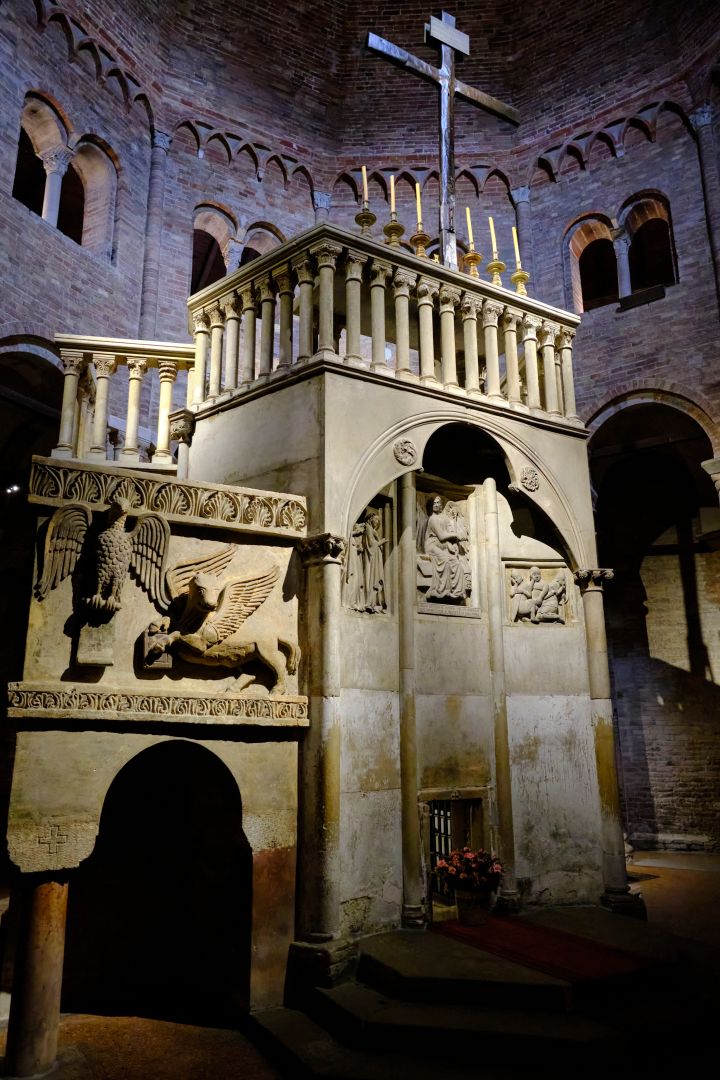
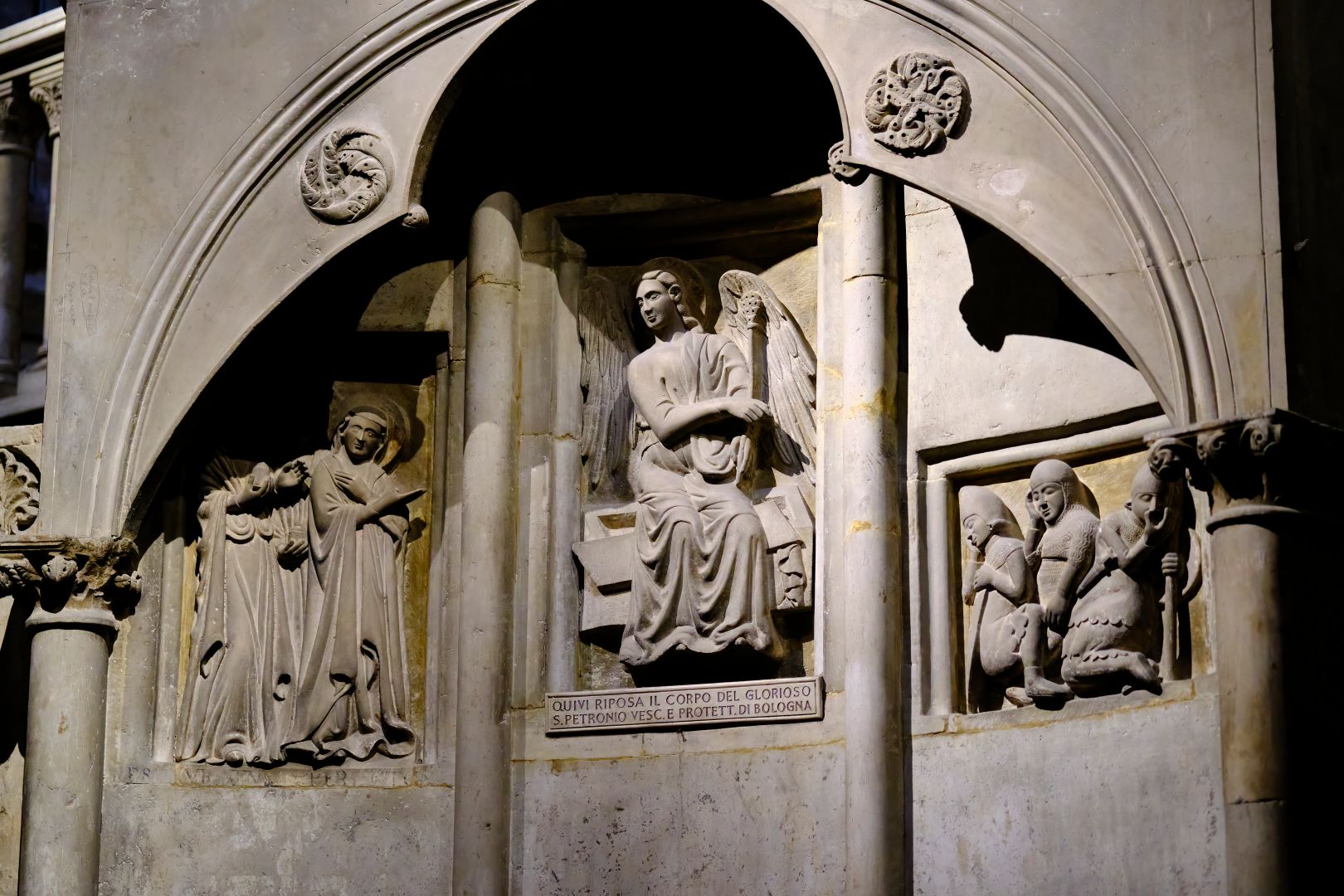
A church this old is going to have some traditions associated with it. One, according to the Wikipedia page (citation needed!) is that pregnant women would walk around the church thirty-three times, stopping on each circuit to enter the tomb and pray. Another is that the prostitutes of Bologna would gather at the church on Easter Sunday in honour of Mary Magdelene, and recite a prayer that was never revealed to outsiders.
It is tempting to ascribe these feminine rituals as in some way invoking the memory of the pagan goddess once worshipped on this very spot – but that is extraordinarily unlikely. However amateur history bloggers are surely allowed, at least, to indulge themselves by enjoying the historical resonances.
Another feature of the church is a black marble column called the “Colonna della Flagellazione” or the Column of the Scourging. The information panel at the site rather carefully describes it as “commemorating” the column at which Christ was whipped, rather than being the actual one. I would not be at all surprised though if in the Middle Ages it was venerated as the actual column. Ancient Roman columns were fairly easy to come by, and I am aware of several churches that claimed to possess the original item. There is a particularly fine one in the Church of Santa Prassede in Rome.
The Other Churches in the Complex
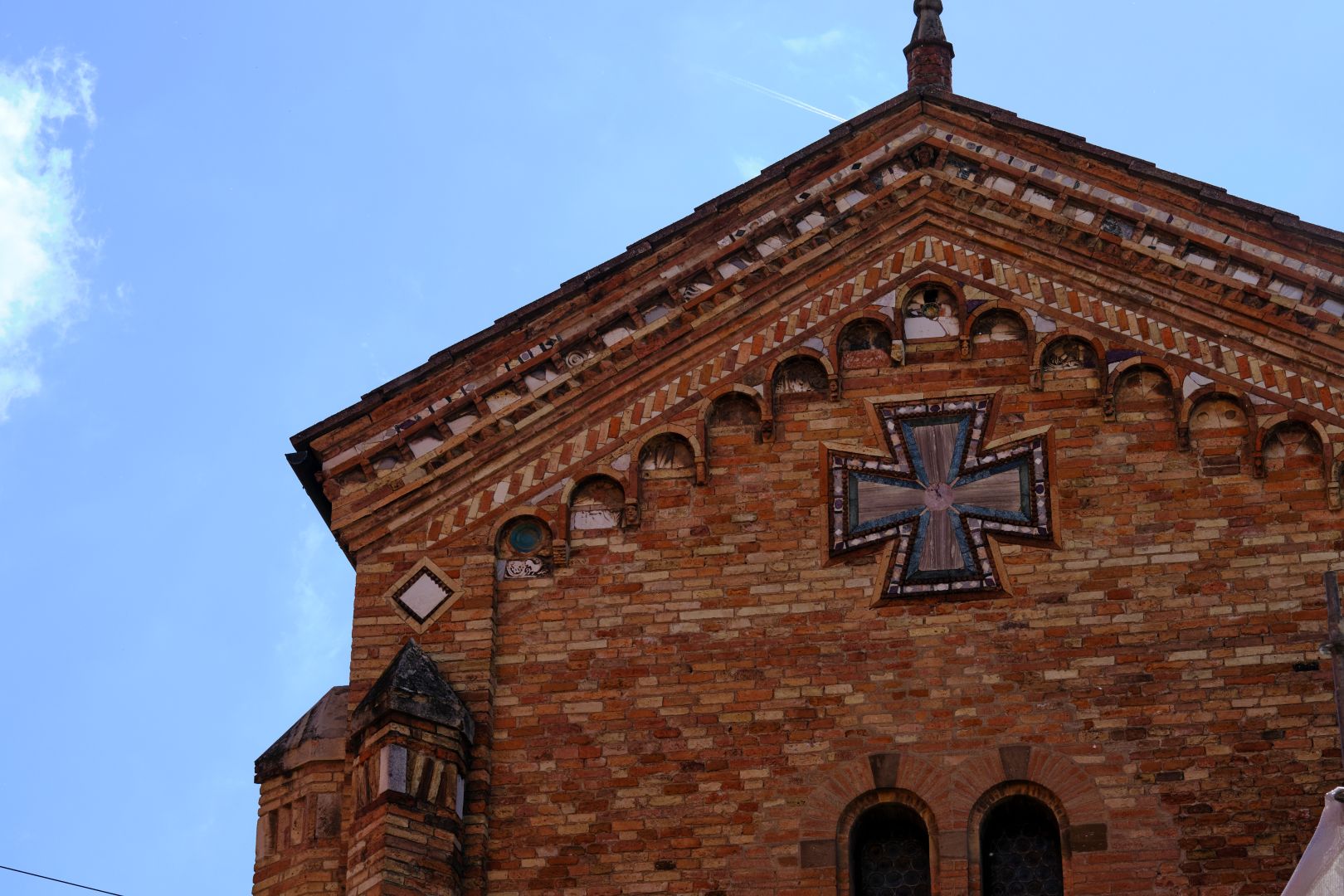
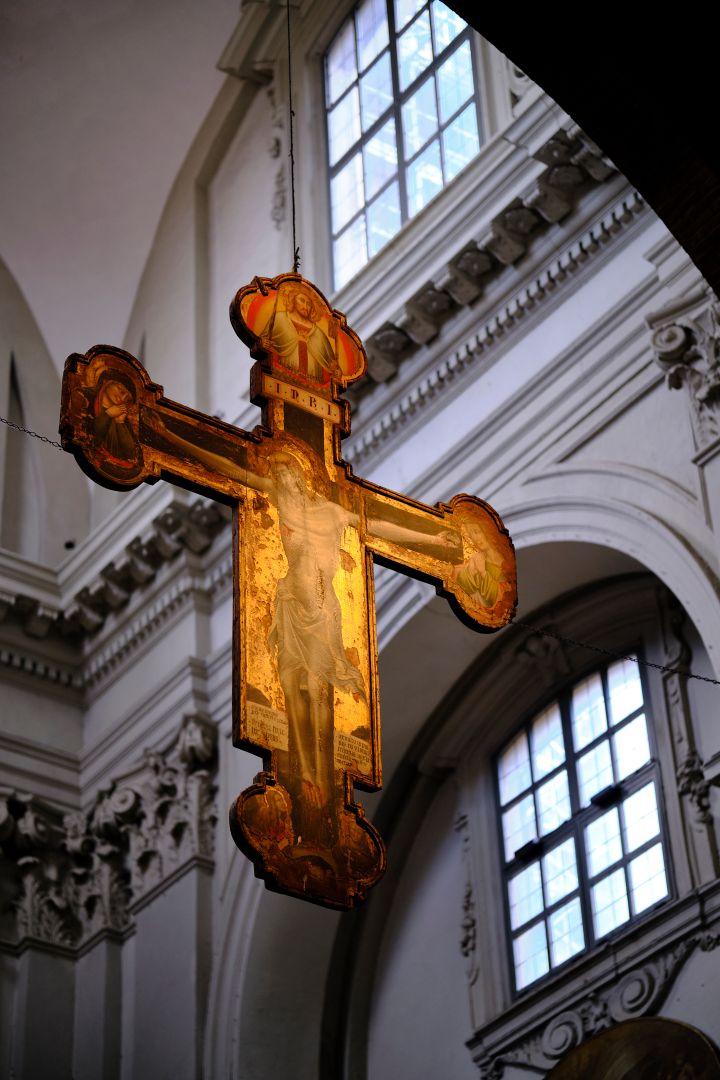
The first church that you enter from the street is the Church of the Crucifix, so-called because over the altar is a prized painted crucifix dating from 1380. In the infographic above it is the large square building that first appears in the illustration dated 460-760 AD. Although the church dates from the Lombard period, it was heavily restored in the 19th and 20th Centuries, so there is not a lot to excite the antiquarian.
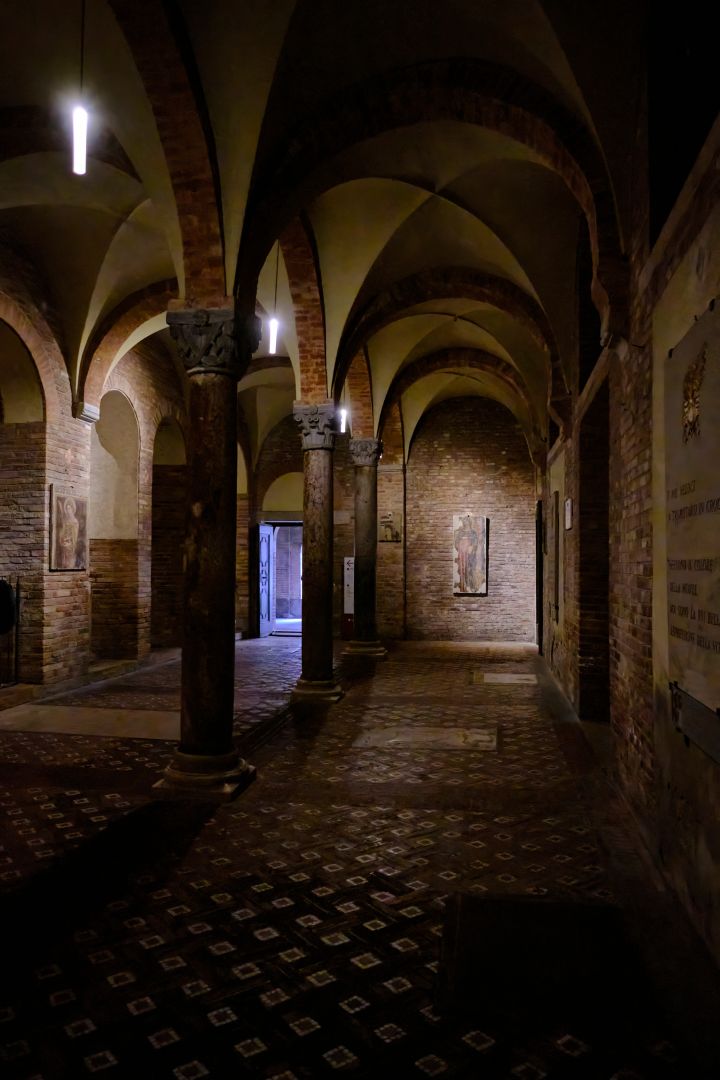
Returning to the infographic, if you compare the illustrations from 450-760 and 760-830, you can see that the domed building opposite the Church of the Holy Sepulchre (apparently a baptistery) is replaced by a rather irregular building with three sections surrounding a little chapel. This is the Church of the Trinity, which dates from the 10th Century, although it was rebuilt in the late 19th Century in a sort of neo-Romanesque style which does retain some of the nobility of the original.
I’d like to end this by returning to the Church of the Sepulchre that was built over the Temple of Isis. You will recall that such temples needed to be built over a sacred spring. Now have another look at the picture of the interior. Set into the floor, to the right of the “edicola”, is a metal grate. Beneath that, still there after all those centuries, is the original sacred spring of Isis!