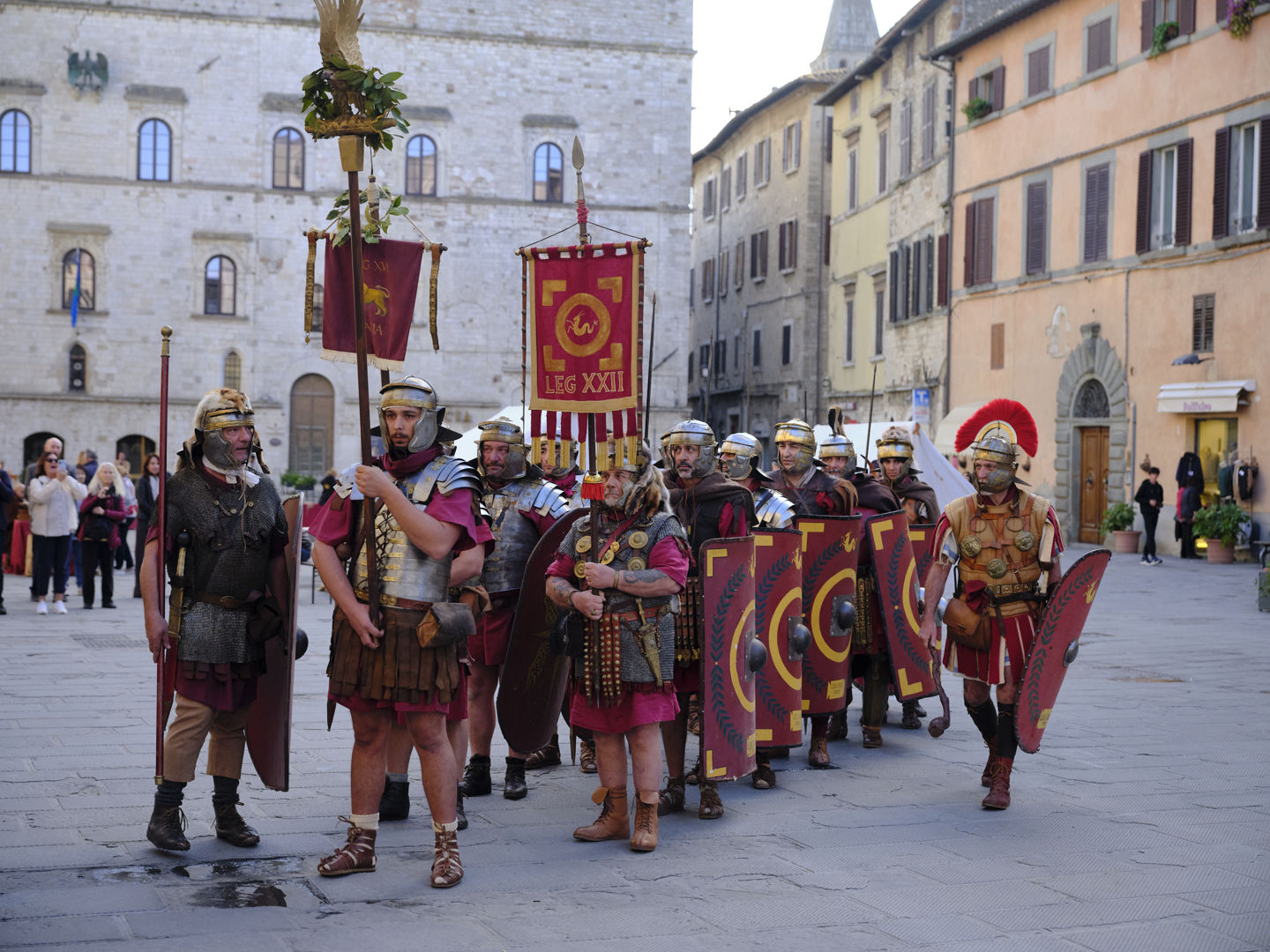
A post about commemorating the origins of the Emperor Trajan – origins which may or may not be historically accurate.
One of the things I admire about the Italian education system is the way that kids are taught about the traditions and history of their own town and region at school. It obviously adds considerably to the sense of community identity. And if you are an immigrant, you’ll learn it all too, and will share that local knowledge, and perhaps some sense of community, with those whose families have been there for centuries.
Worthy as this system is, it does have the disadvantage that children learn (and firmly believe as adults) some dubious local mythologies. Such as that Umbrians eat unsalted bread because they were protesting against a papal salt tax (except that they eat unsalted bread in neighbouring Tuscany too, where there was no such tax, and did so centuries before the tax was imposed).
Todi’s two most famous sons were the Emperor Trajan, who ruled from 98-117 AD, and the medieval poet Jacopone da Todi. So I am going to have to tread carefully here, because I don’t want to be run out of town, but it seems that the evidence for Trajan’s association with Todi is more tenuous than I first thought.
The authorised version is that the Emperor Trajan was born – in Spain – to parents from Todi families, and that, traditionally, he visited the town as emperor and bestowed honours on it. I will examine all that later, but first, a couple of weekends ago there was an event in Todi called Tuder – La Città di Traiano, evento di rievocazione storica, which is to say “Tuder (the Roman name for Todi) – the City of Trajan, historical re-enactment event”.
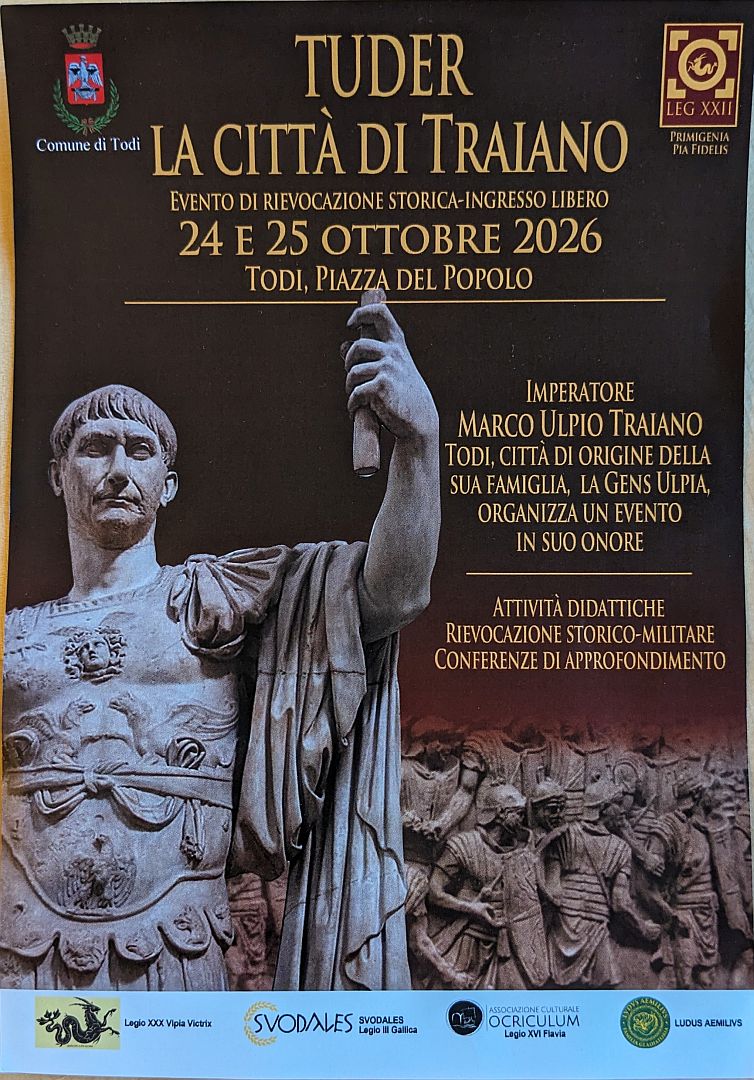
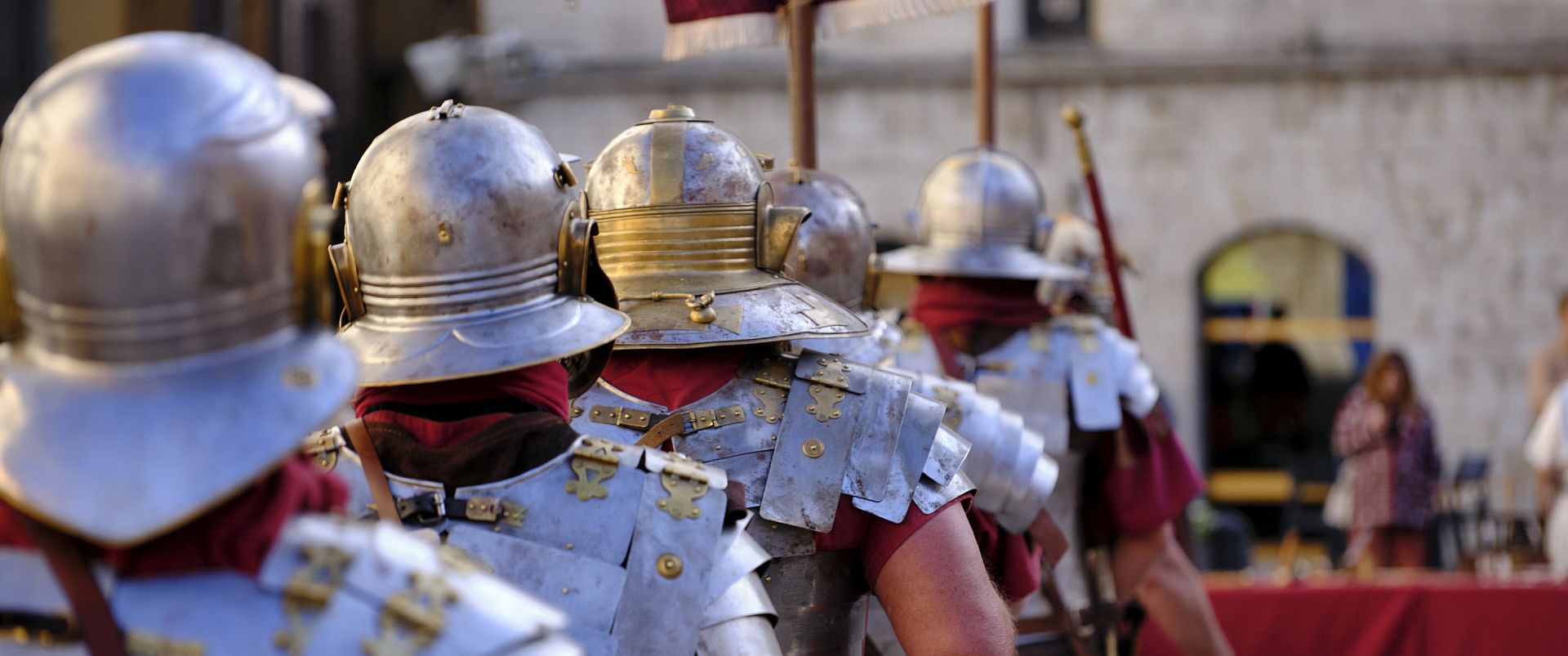
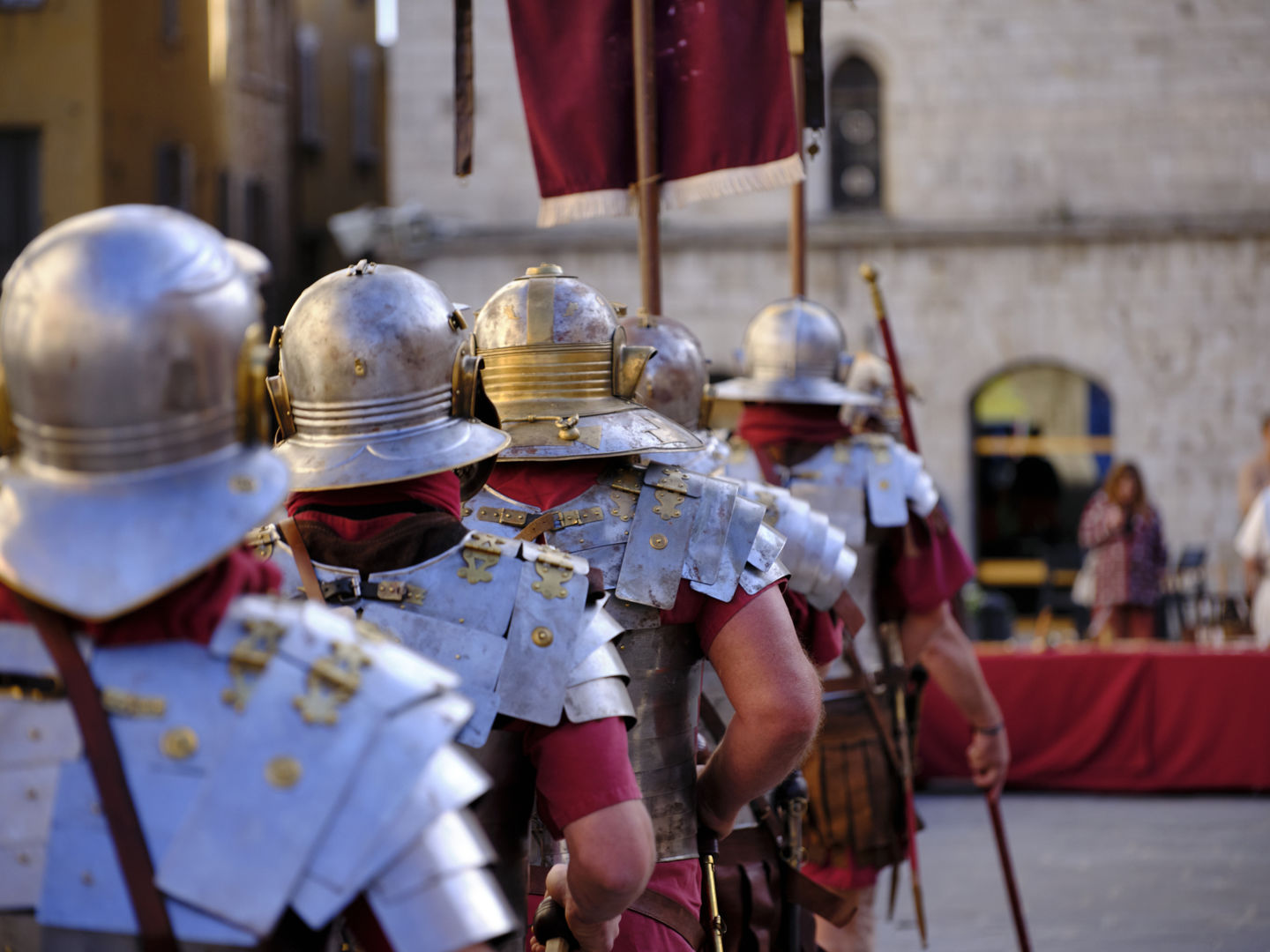
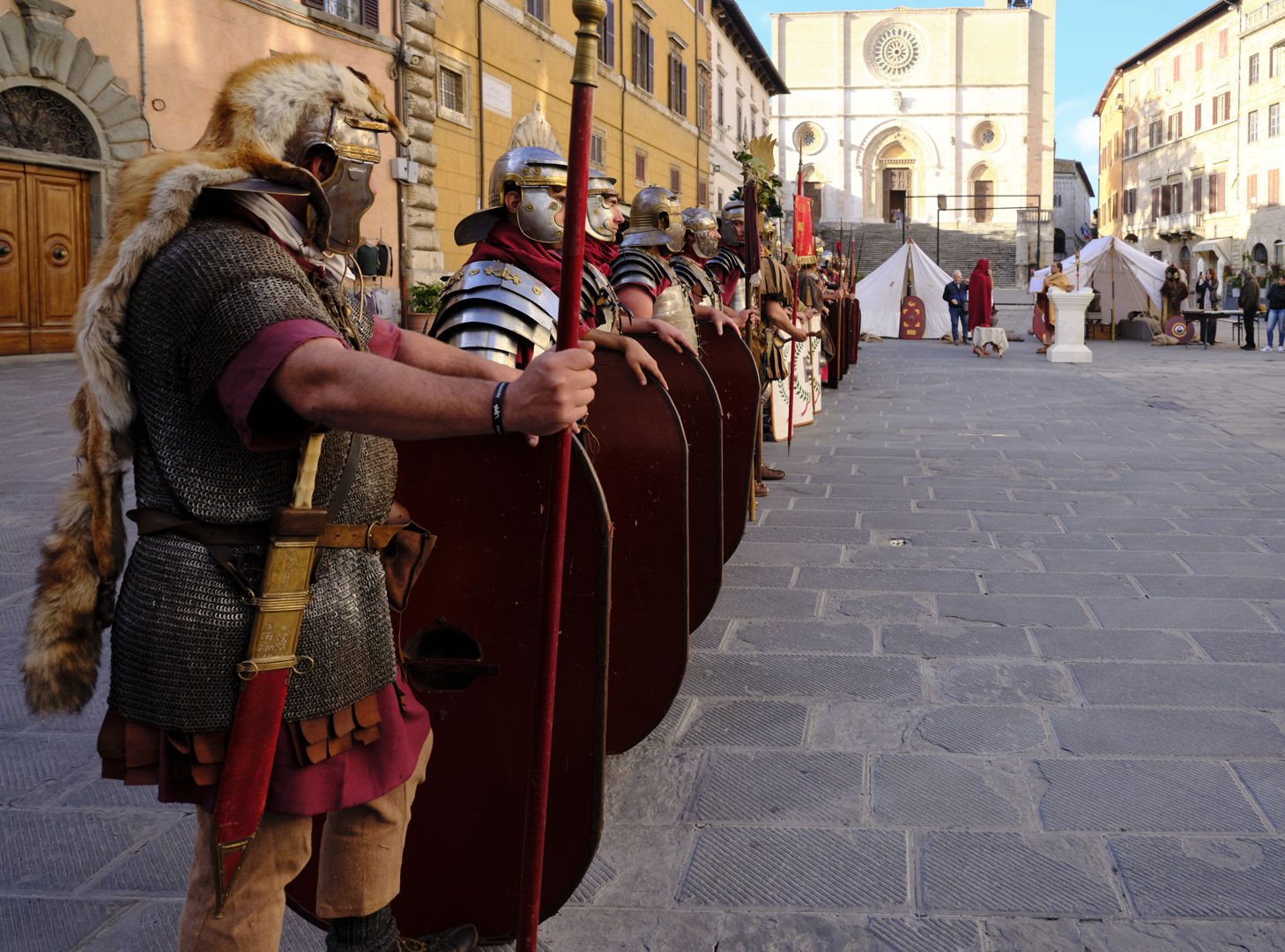
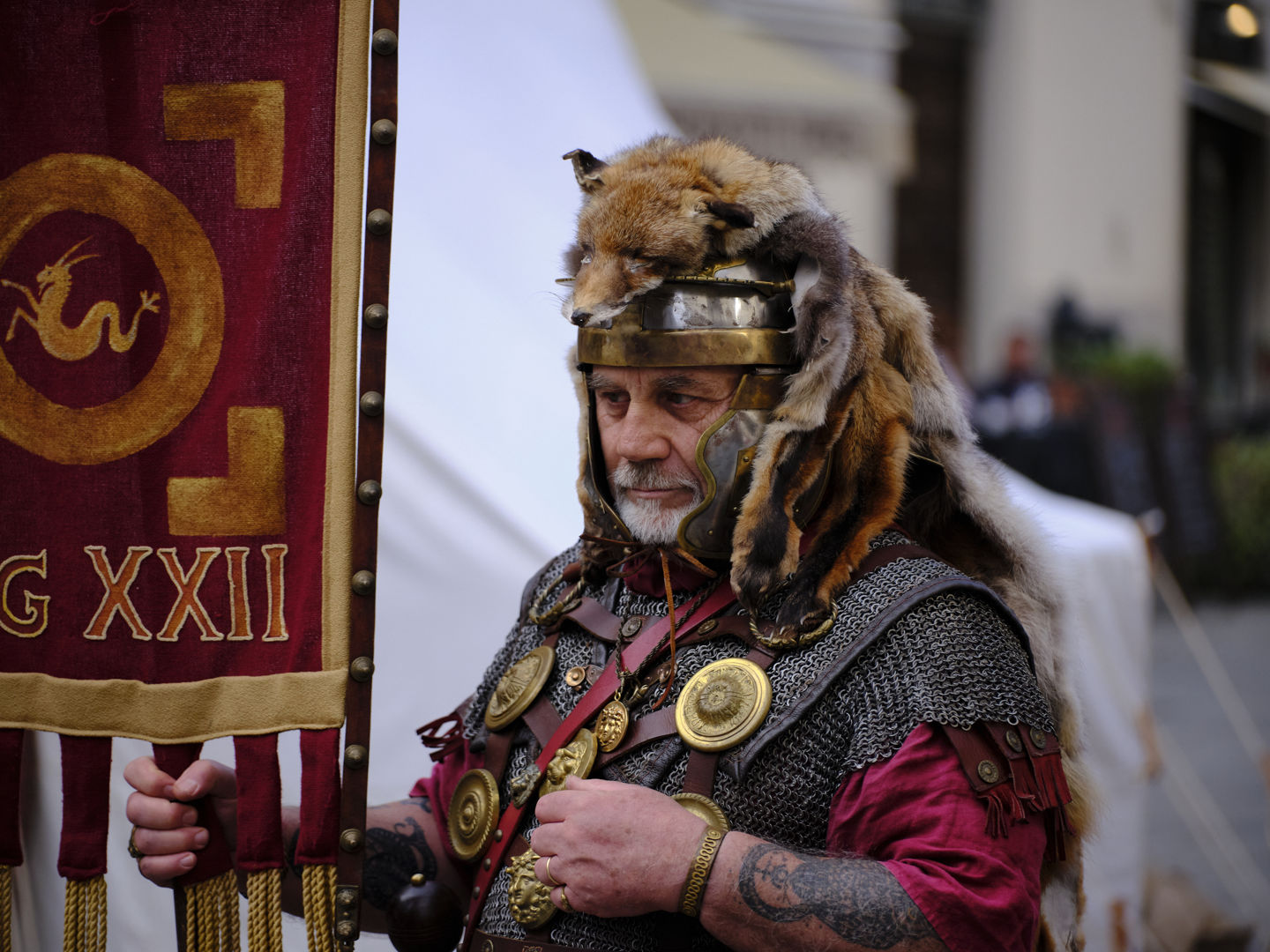
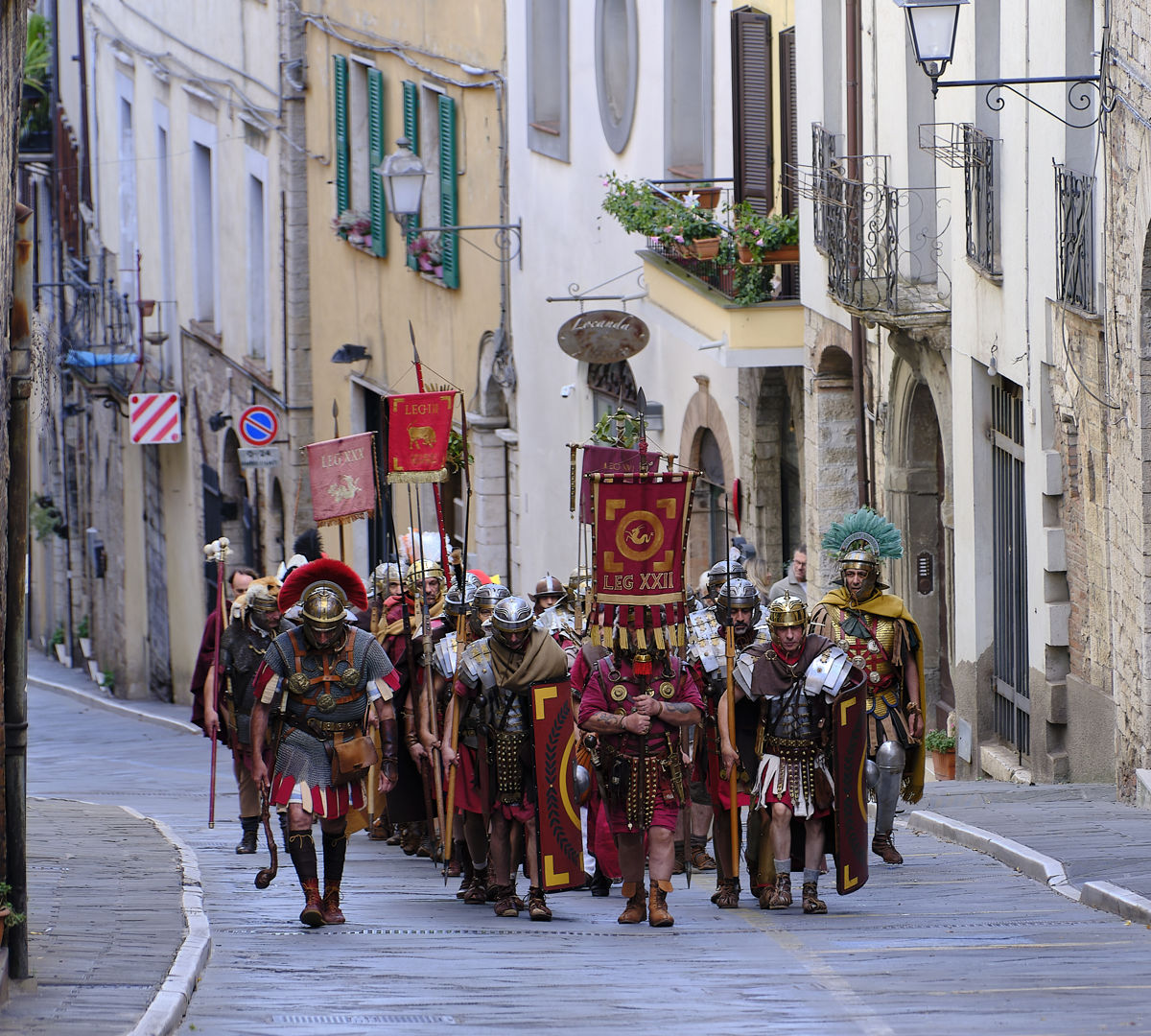
I’ve written before about such events in Italy – in The Serious Business of Dressing Up and The Serious Business of Dressing Up, Part II and I do enjoy them a lot. There is something special about watching people in medieval costume taking part in an archery competition where their ancestors in the town militia would have practised similar skills in the 12th Century. Or indeed people dressed as Roman legionaries marching up a street which was once an actual Roman road, and parading in a Piazza which was an actual forum.
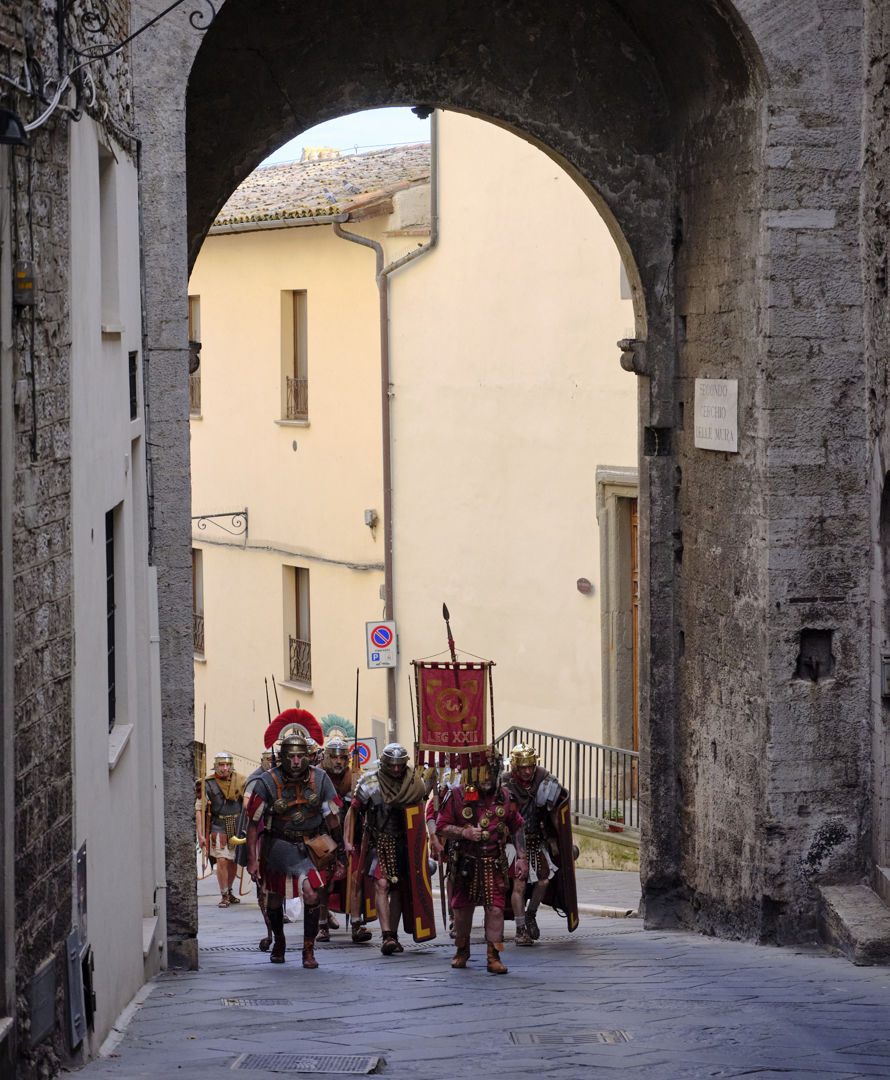
The amount of attention to detail that goes into some of these is remarkable. A few years ago I was particularly impressed by a group that had decided to specialise in armour and uniforms of the late imperial period. Most go for the more famous uniforms of the late republican and early imperial eras.
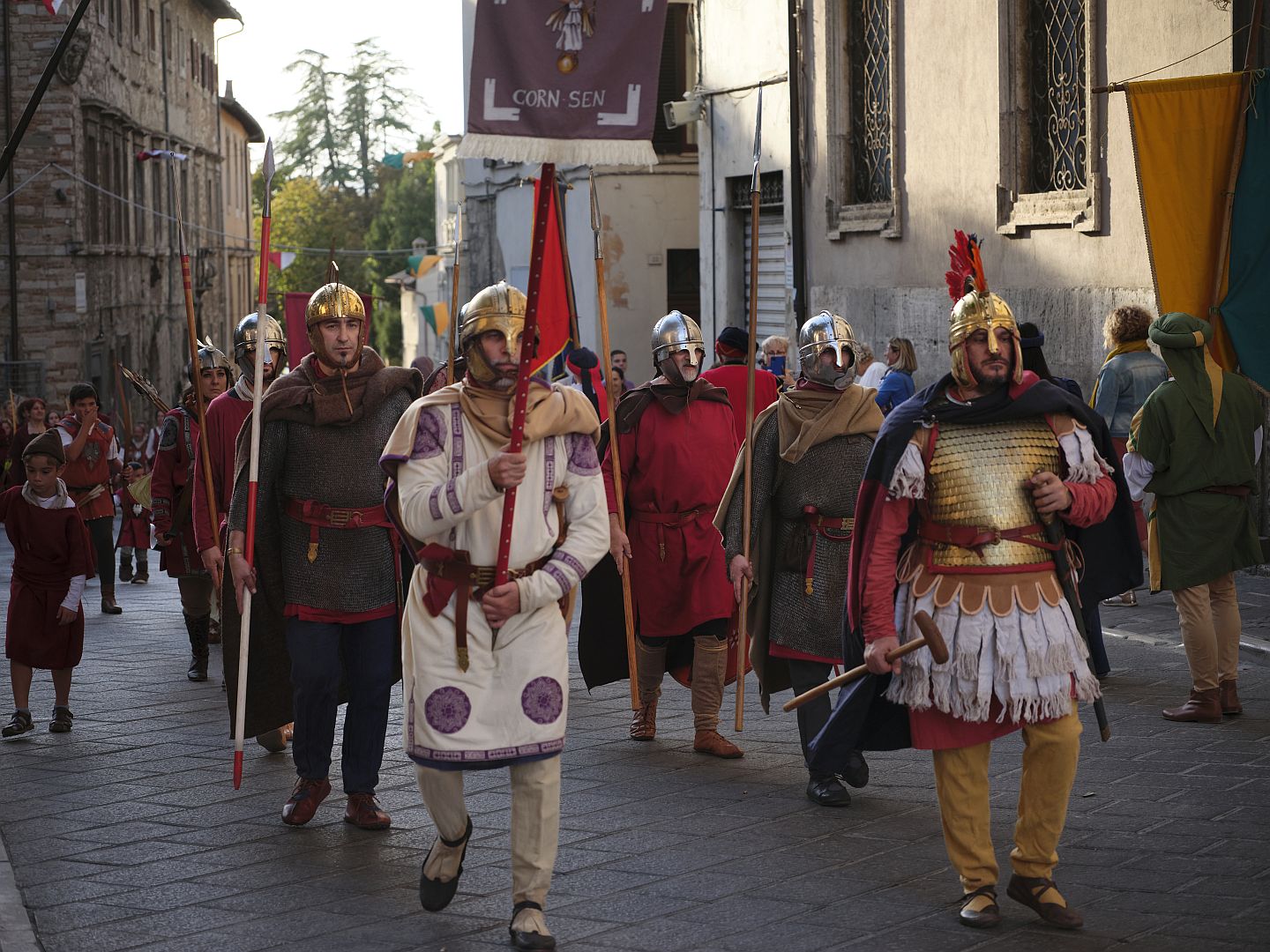
This was not going to be a problem for the Città di Traiano event, because Roman military uniforms in Trajan’s reign were those with which we are most familiar, whether from Life of Brian or Astérix. In fact, the detailed carvings on Trajan’s column in Rome may be the precise reason that when we think of Roman soldiers, they are wearing armour of Trajan’s day. I hadn’t thought of that before. By the way, there is an excellent website on Trajan’s column which contains many photographs of the carvings.
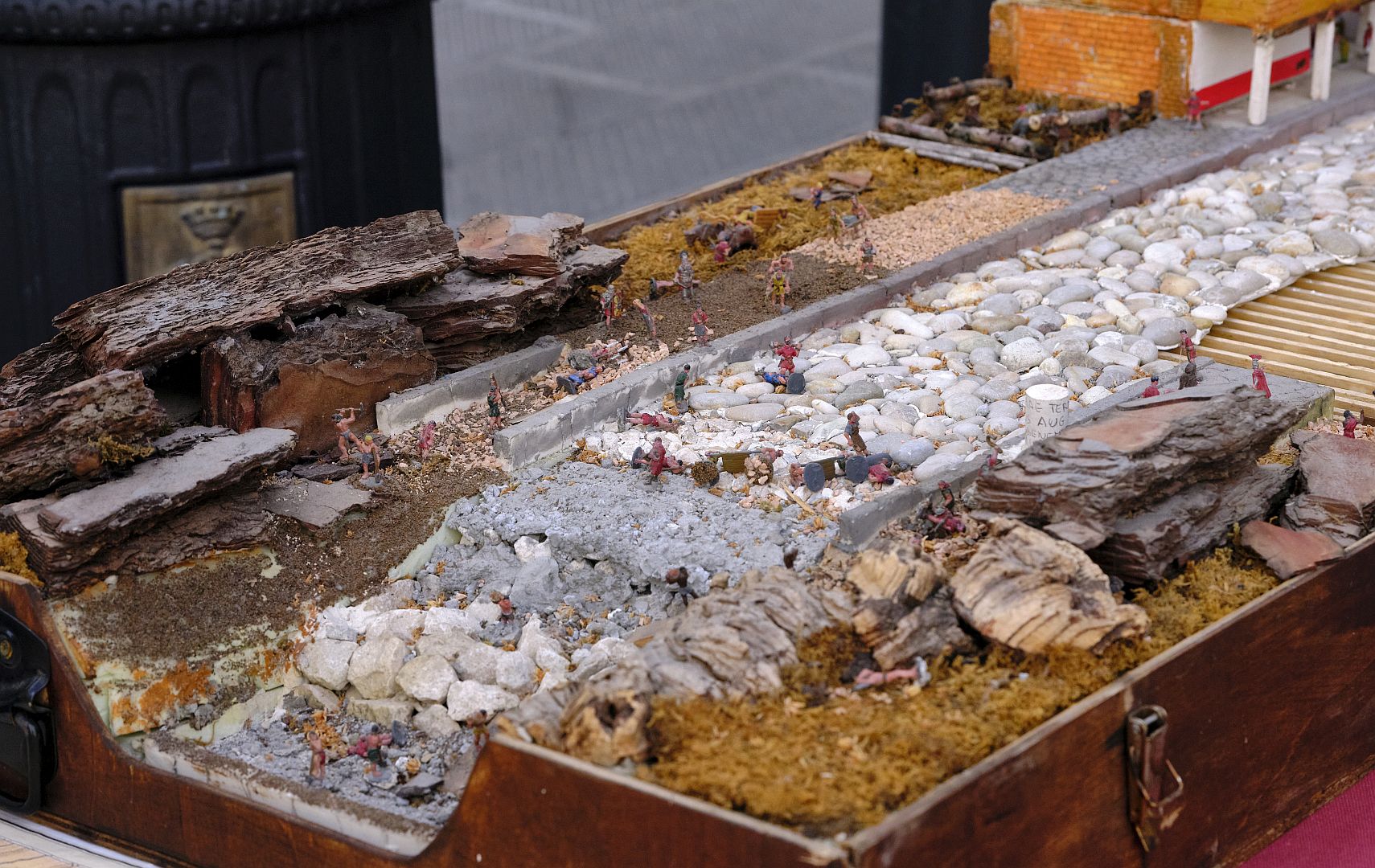
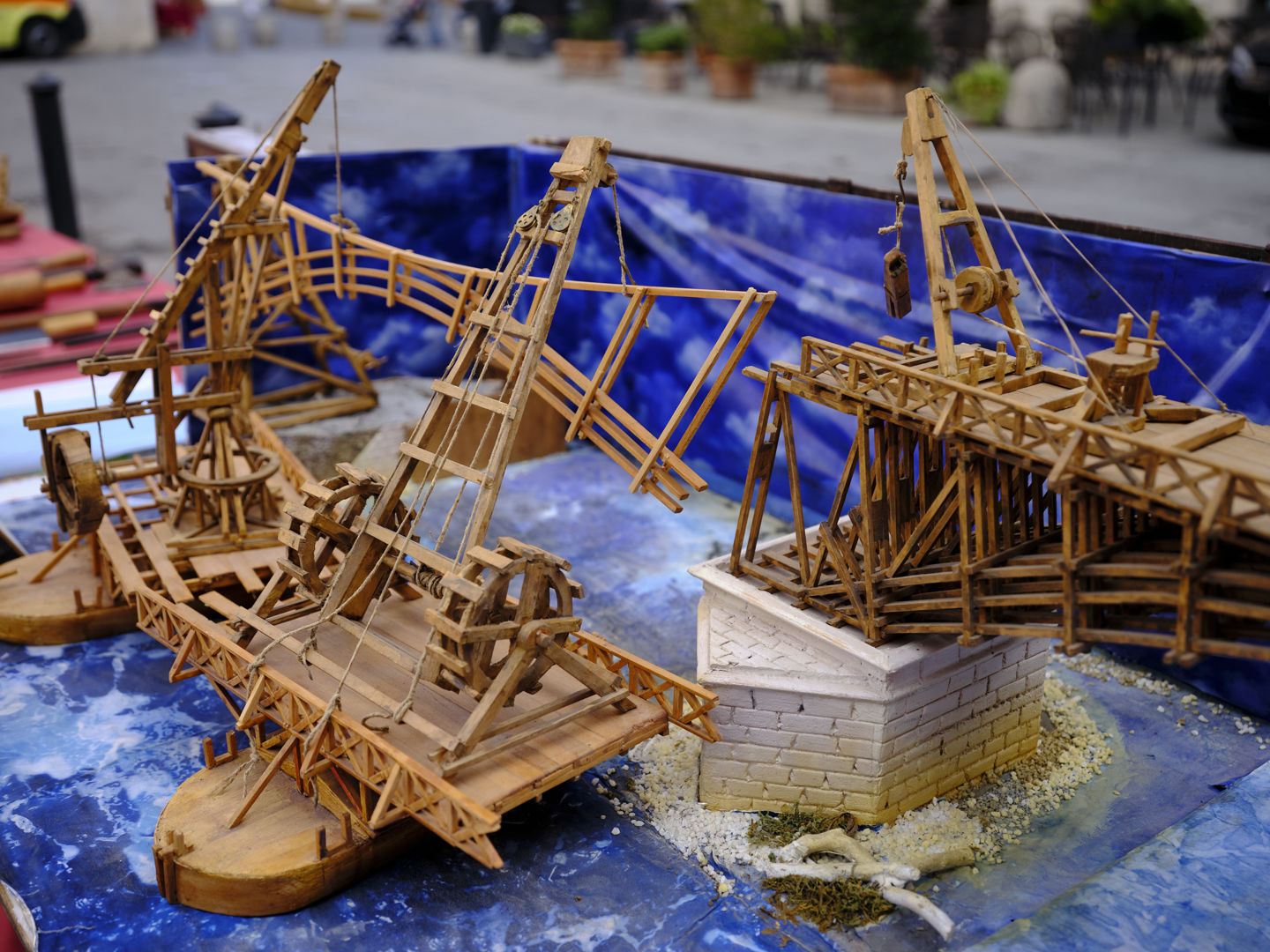
The event started with setting up displays – of armour, weapons, pottery, jewelry and the like. There were some detailed models of Roman engineering as well, such as road-building techniques.
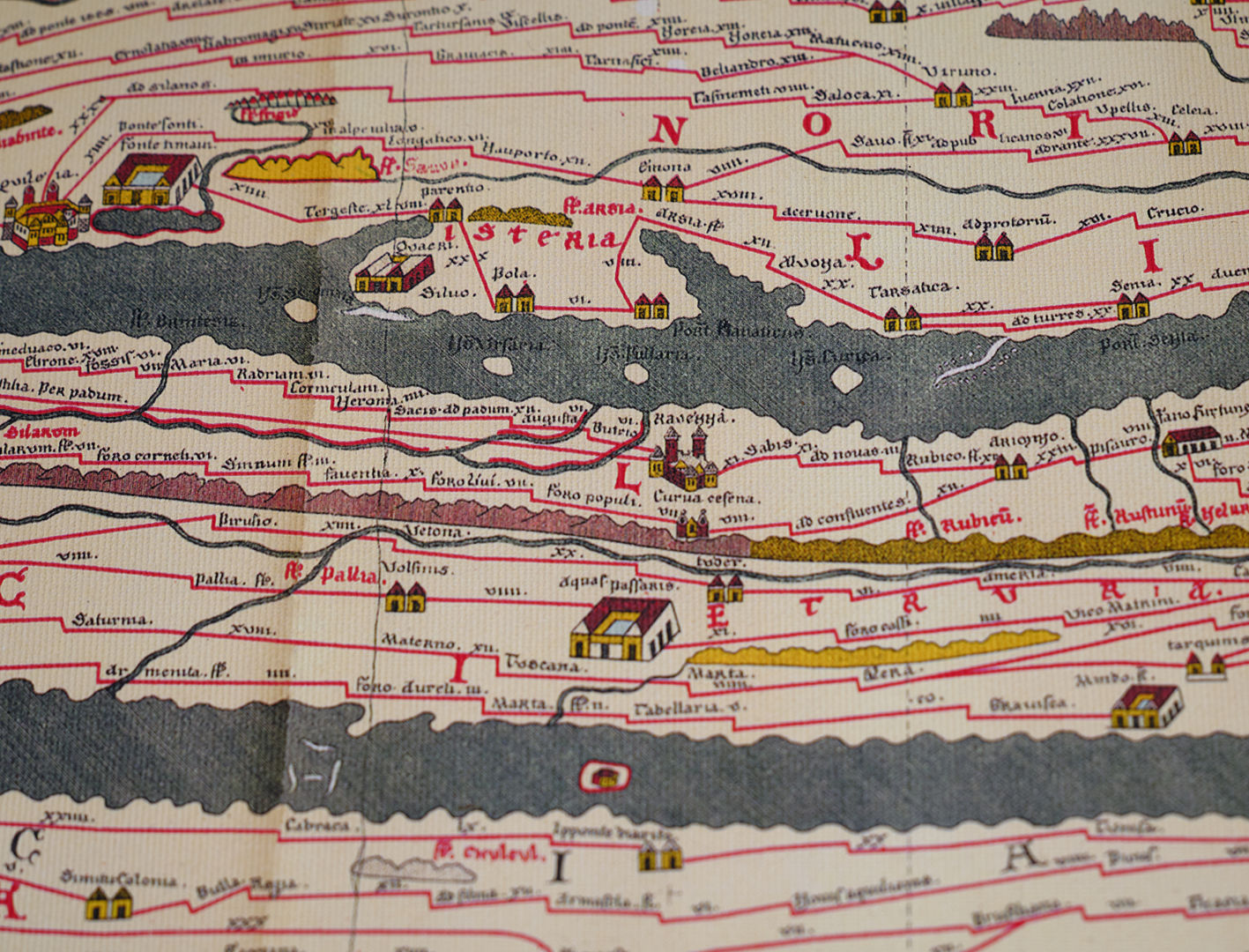
I was very impressed to see that they had a facsimile of the famous “Peutinger Map” of the Roman road network. This is a fascinating document – actually a strip of parchment about seven metres long, prepared in the 13th Century and based, it is thought, on originals from late antiquity, possibly earlier.
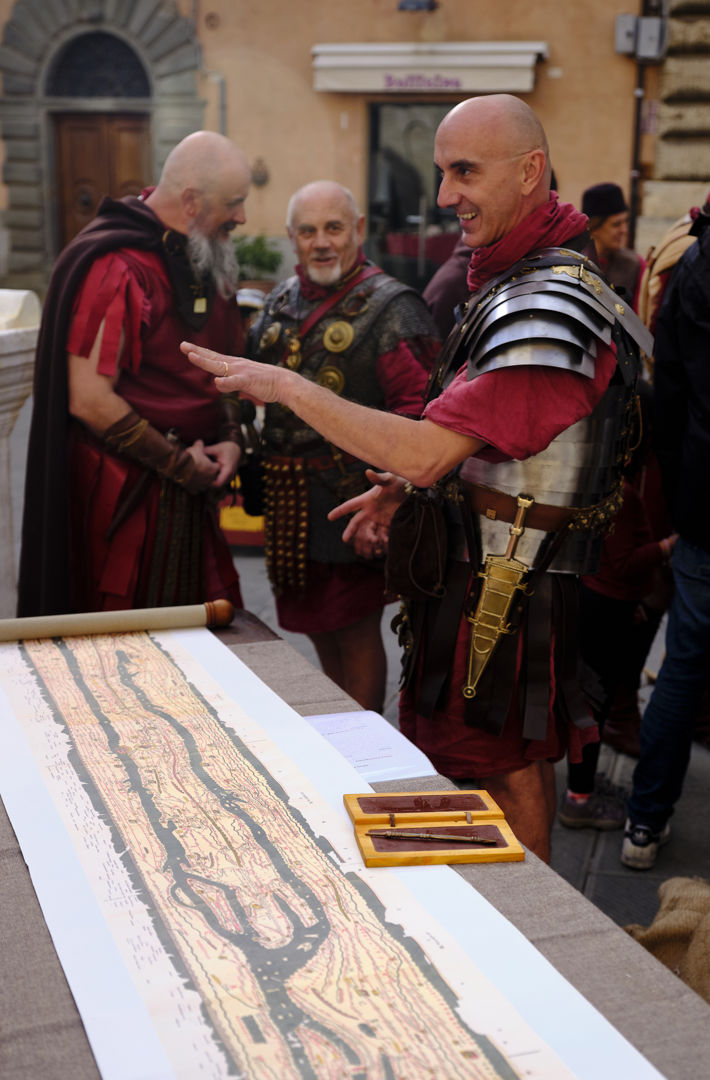
As a geographically accurate representation of the ancient world it is a bit of a failure. But as a way of planning an itinerary – like the London Underground Map – it would work very well. So if you wanted to get from Rome to Perugia, you would first take the road to Baccanae, then to Falerii, and so on, just as, if you were going from Earl’s Court to Oxford Circus, you would change at Notting Hill Gate.
After a while, an altar was erected, a metal brazier was placed on it, and something in the bowl was burned as an offering. From what I have read, these offerings might be incense, or something as simple as a bit of grain with salt in it.
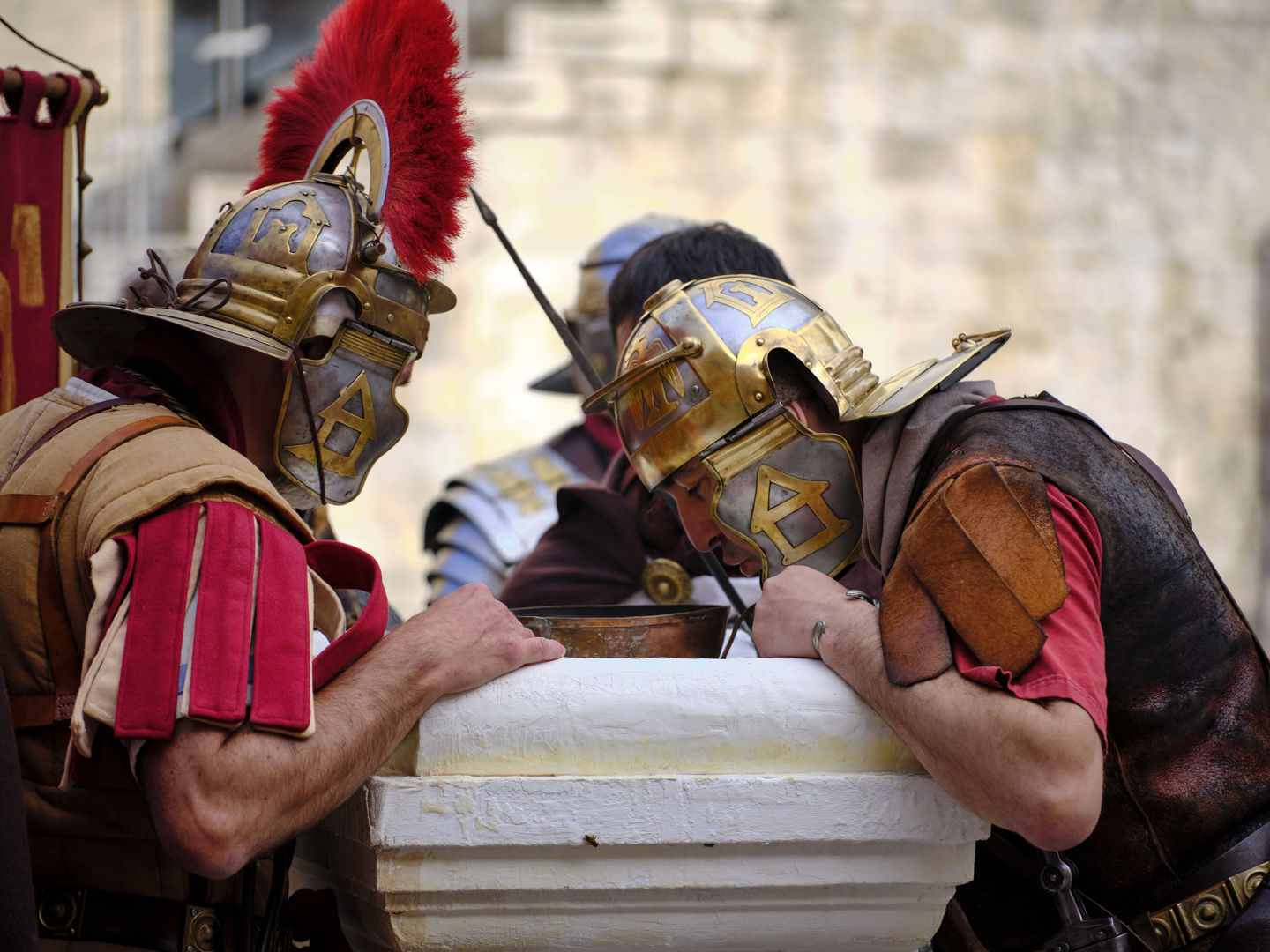
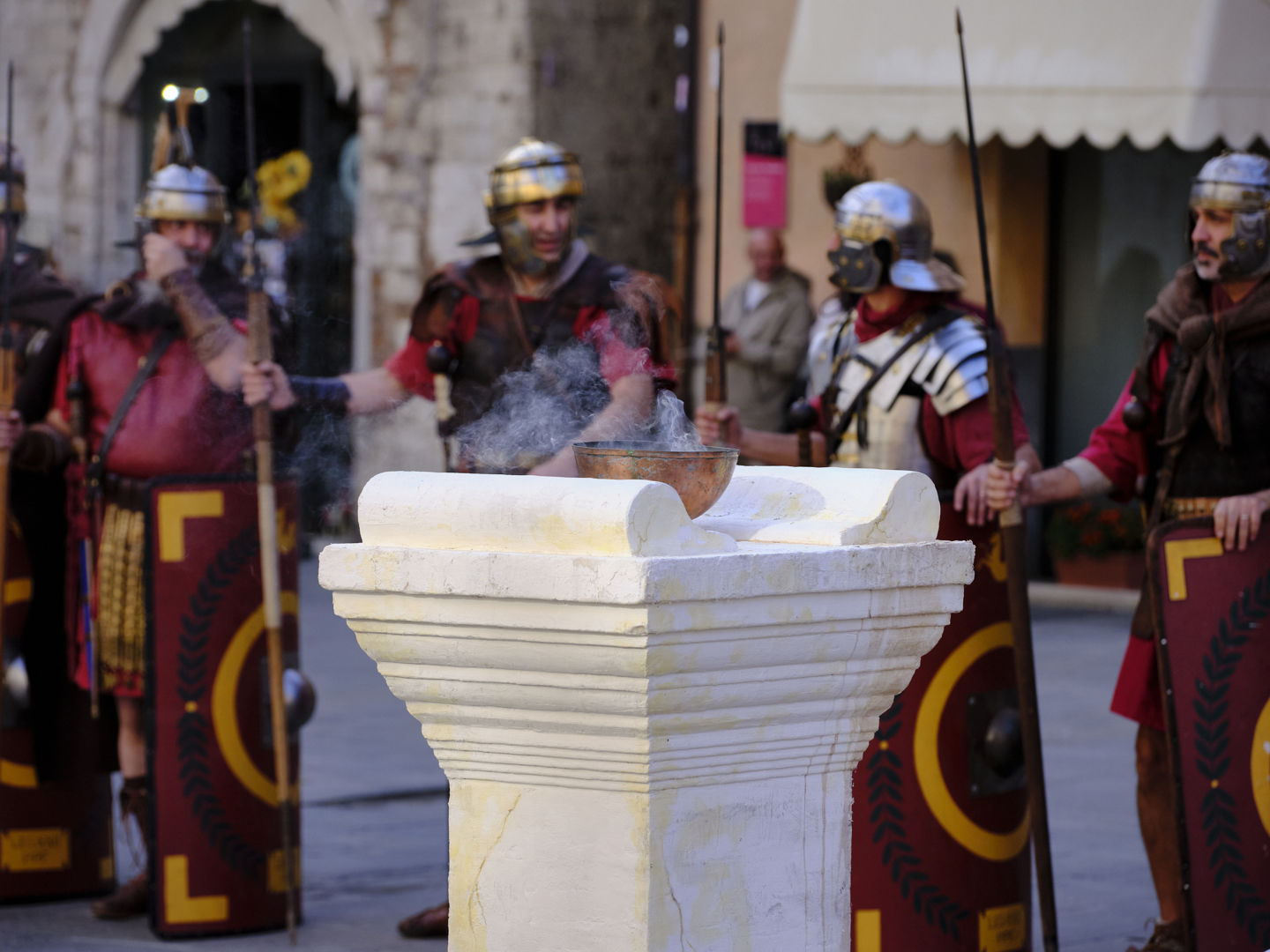
I have read that Roman armies carried portable altars with them on campaign, but I was under the impression that these were made of metal for ease of transport. The altar in the photographs above is clearly intended to be marble, which would have made it very heavy. Once the offering was well alight, the area in front of the altar then became a parade ground on which the legionaries formed up while someone dressed as a priest read a Latin speech of dedication to Jupiter.
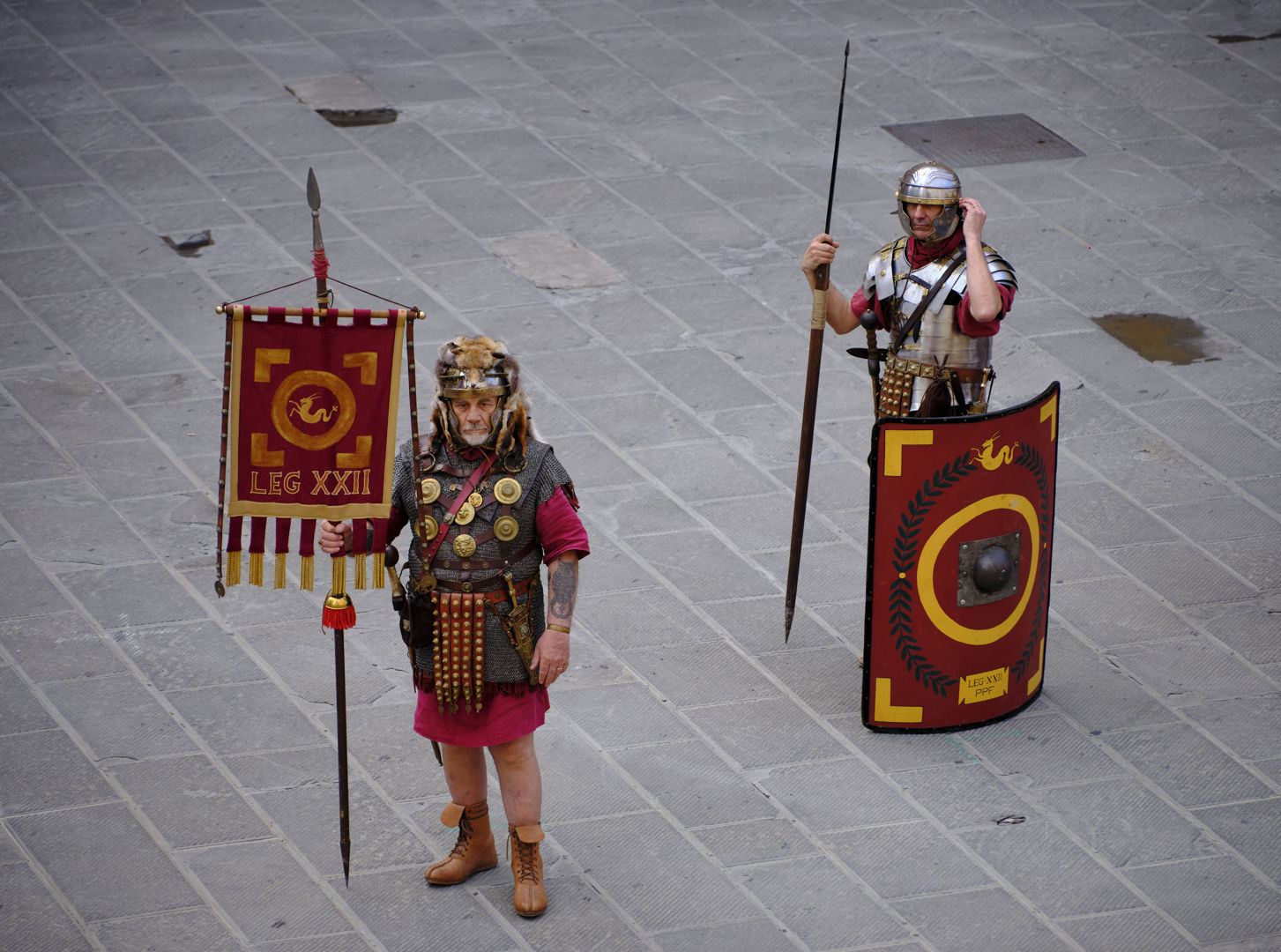
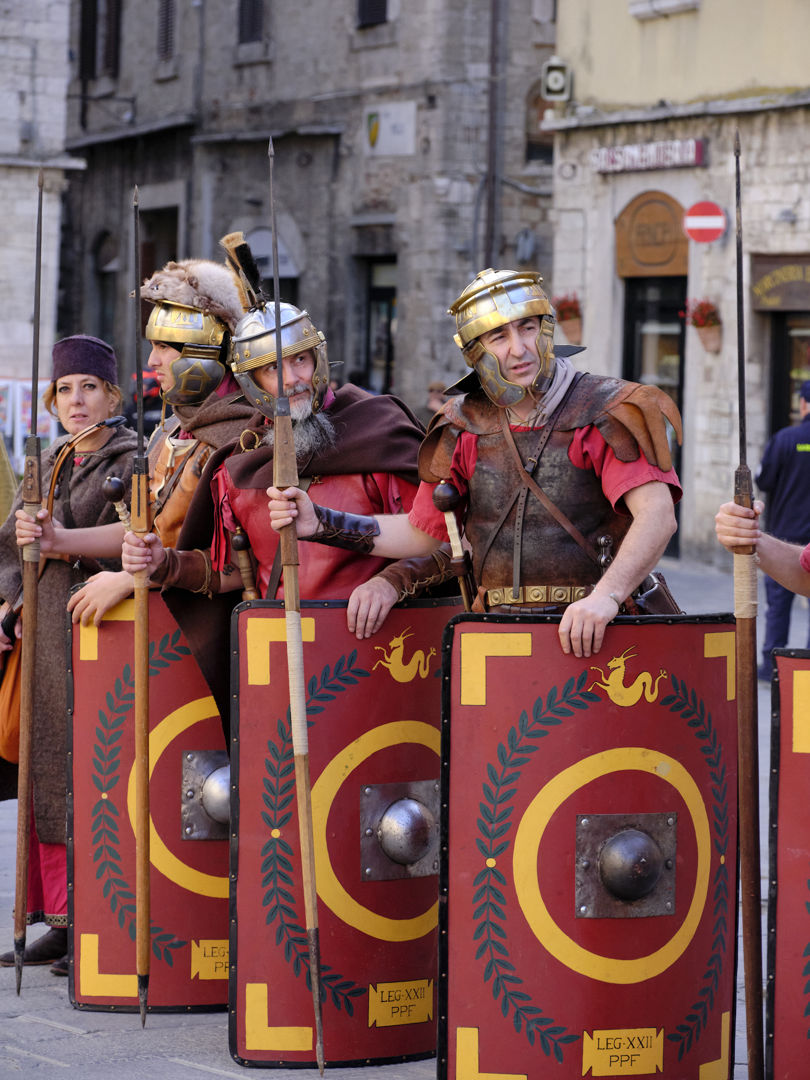
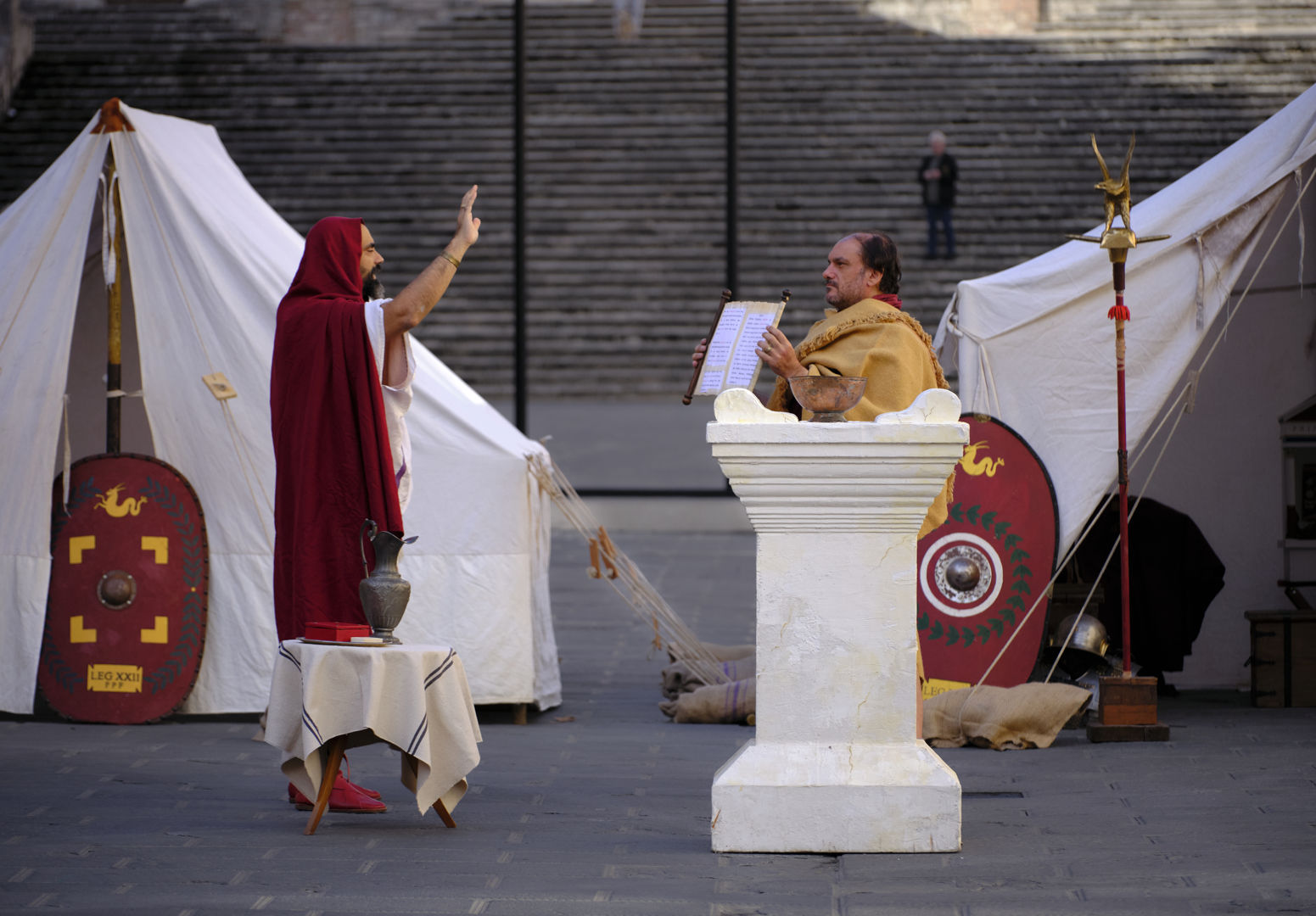
The soldiers then saluted the city (as represented by the deputy mayor).
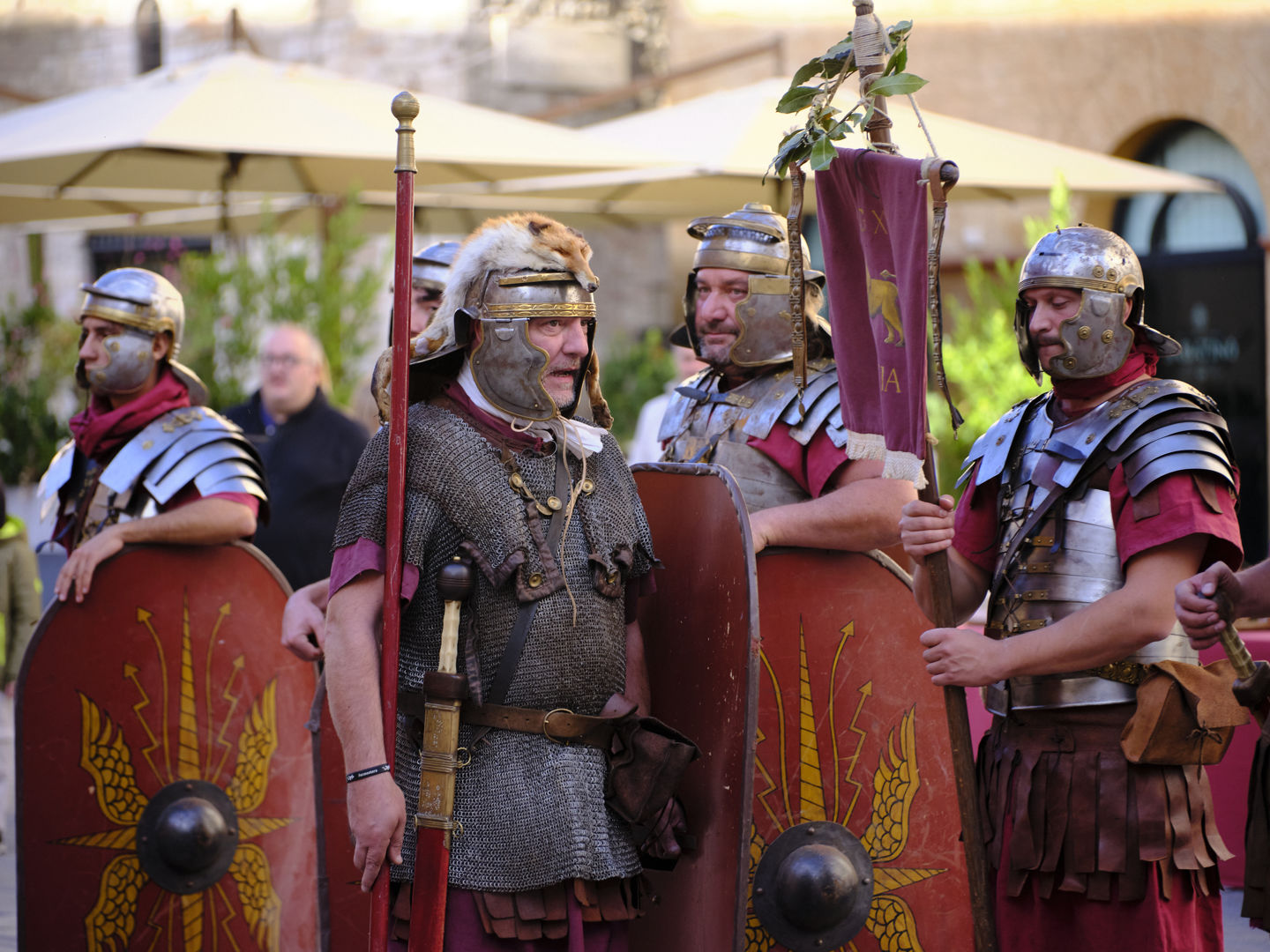
Let’s talk about Trajan
It is a bit unexpected, given that we are in what is considered the “Golden Age” of the Empire, that there are so few contemporary historical sources for the period. Suetonius’ De Vita Caesarum (Lives of the Caesars), most of which was written when he had access to the imperial archives, stops at Domitian, Trajan’s predecessor but one. What snippets we do have tend to be anecdotes intended to illustrate the characters of the emperors, rather than a record of their policies and politics. There is a contemporary source in the form of the letters of Pliny the Younger (as governor of Pontus in Asia Minor, Pliny actually corresponded with Trajan directly). But Pliny’s letters were reporting on the affairs of Pontus, and receiving directions from the emperor, rather than recording history.
Pliny did actually write a history covering the reign of Domitian, of Nerva and the early part of Trajan’s reign, but it has been lost. Wouldn’t it be wonderful if a new history were to be found hidden among the burnt scrolls of Herculaneum that are awaiting analysis?
Some things are known about Trajan from the writings of the Greek historian Cassius Dio. Unfortunately Dio was writing a century or so after Trajan, and his complete text has not survived. Instead we are reliant upon summaries (“epitomes”) made in the 7th Century.
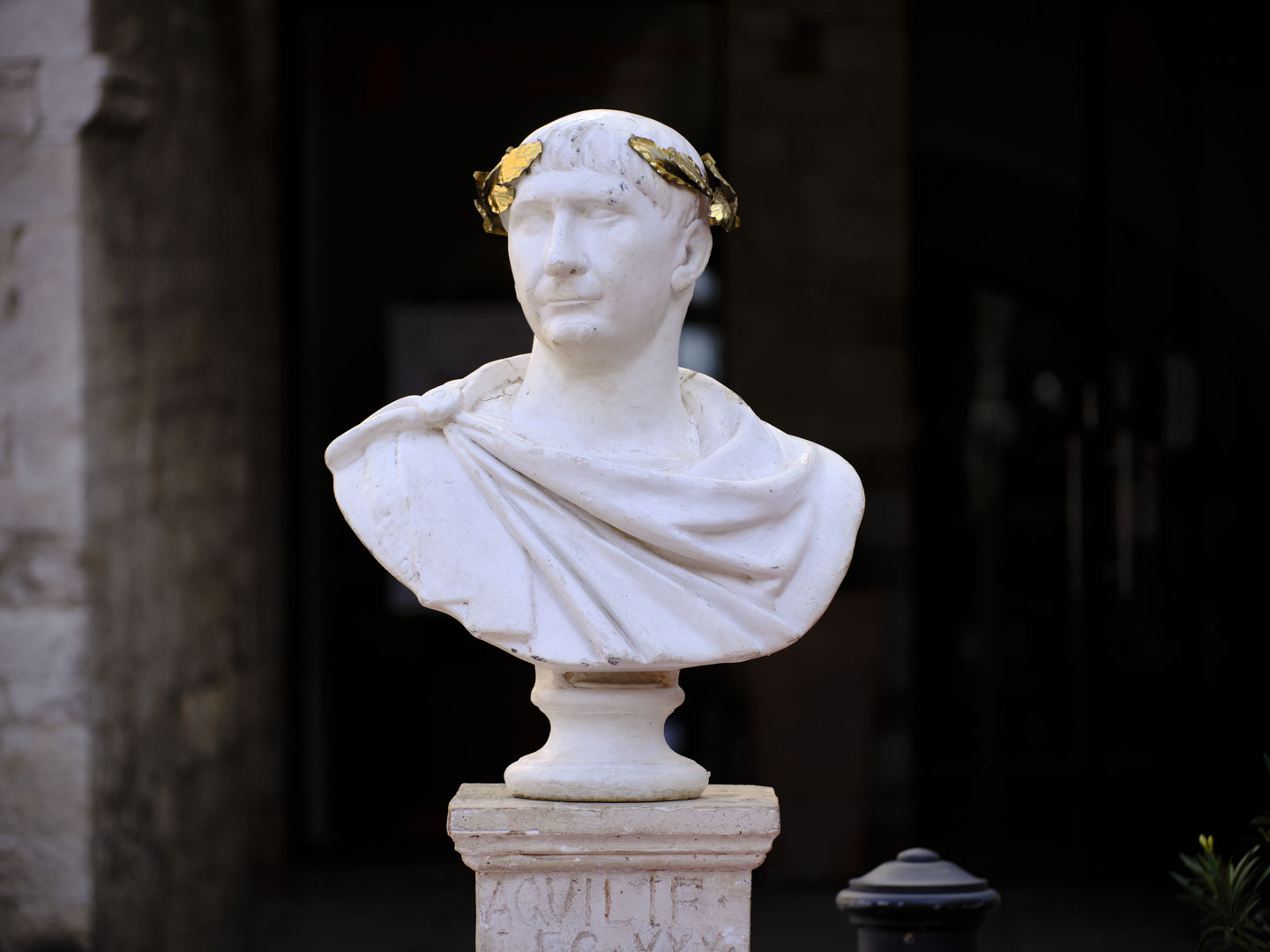
Marcus Ulpius Traianus is known in Italian as Traiano and his name is mispronounced even worse by anglophone historians as Trajan. He was a career soldier, whose family had at some point been raised to senatorial rank (this was quasi-hereditary; once one family member was thus ennobled, it was easier for their descendants). On the assassination of the Emperor Domitian in 96 AD, the Senate chose one of their number, the elderly Nerva , as emperor. Nerva adopted Trajan as his heir, and when Nerva died in due course, Trajan succeeded him without any kind of coup or bloodshed.
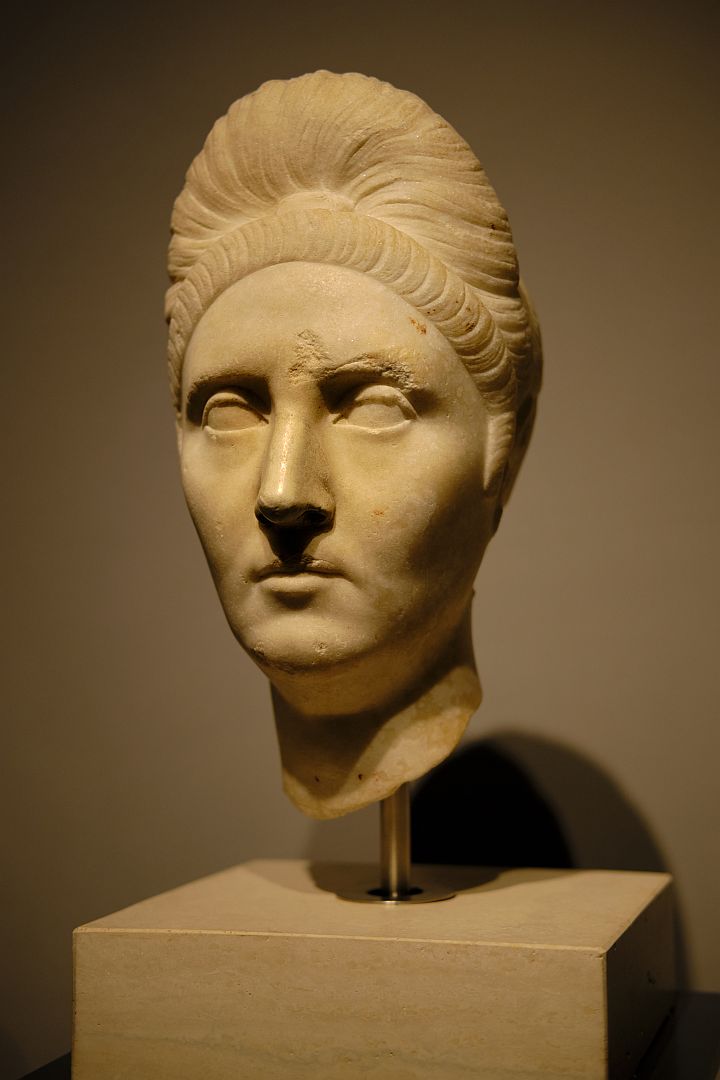
He is generally held up as an example of a “good emperor” – not licentious or cruel, a capable soldier and administrator, ruling not by fear but by setting a good example. His wife, Pompeia Plotina, was known for her interest in philosophy and the dignity and simplicity of her life. She undertook projects to assist the poor, and improve access to education. They had no children of their own, but their adopted son became the Emperor Hadrian.
It was under Trajan that the Roman Empire reached its widest ever extent. He was also known for his building works, including a major rebuilding project in central Rome. In what was doubtless a managed public image, he comes across as a bluff, honest soldier, respectful of the privileges of the Senate, and giving honour to philosophers, although he claims not to understand them much. In his portrait busts and the carvings on his column in Rome, that’s very much the impression one gets, with his pudding-basin haircut and frank gaze. Just the sort of fellow, then, that any city would be proud to claim as its own. Here’s where it gets a bit murky though.
Trajan was born in southern Spain, in a town called Italica near modern Seville, which had been founded around 250 years earlier at the end of the Punic Wars, as a colony for Roman army veterans. When exactly Trajan’s family settled there is I believe unknown, but certainly his father was born in Spain. Cassius Dio is quite explicit that Trajan was an Iberian, not a transplanted Italian, but then perhaps he was only saying that to make the point that Trajan was the first Emperor to have come from the provinces, and as we have seen he was writing a century later.
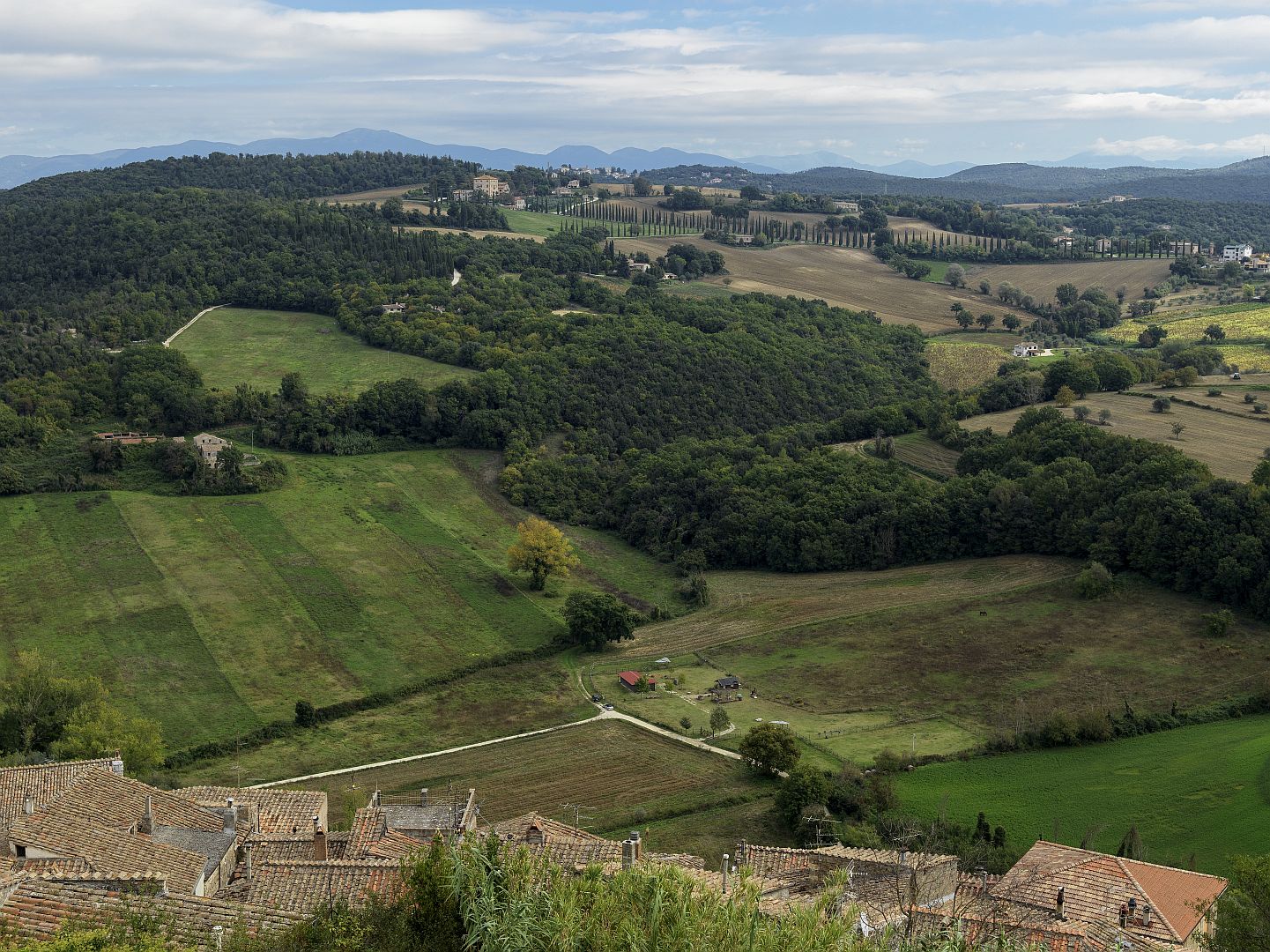
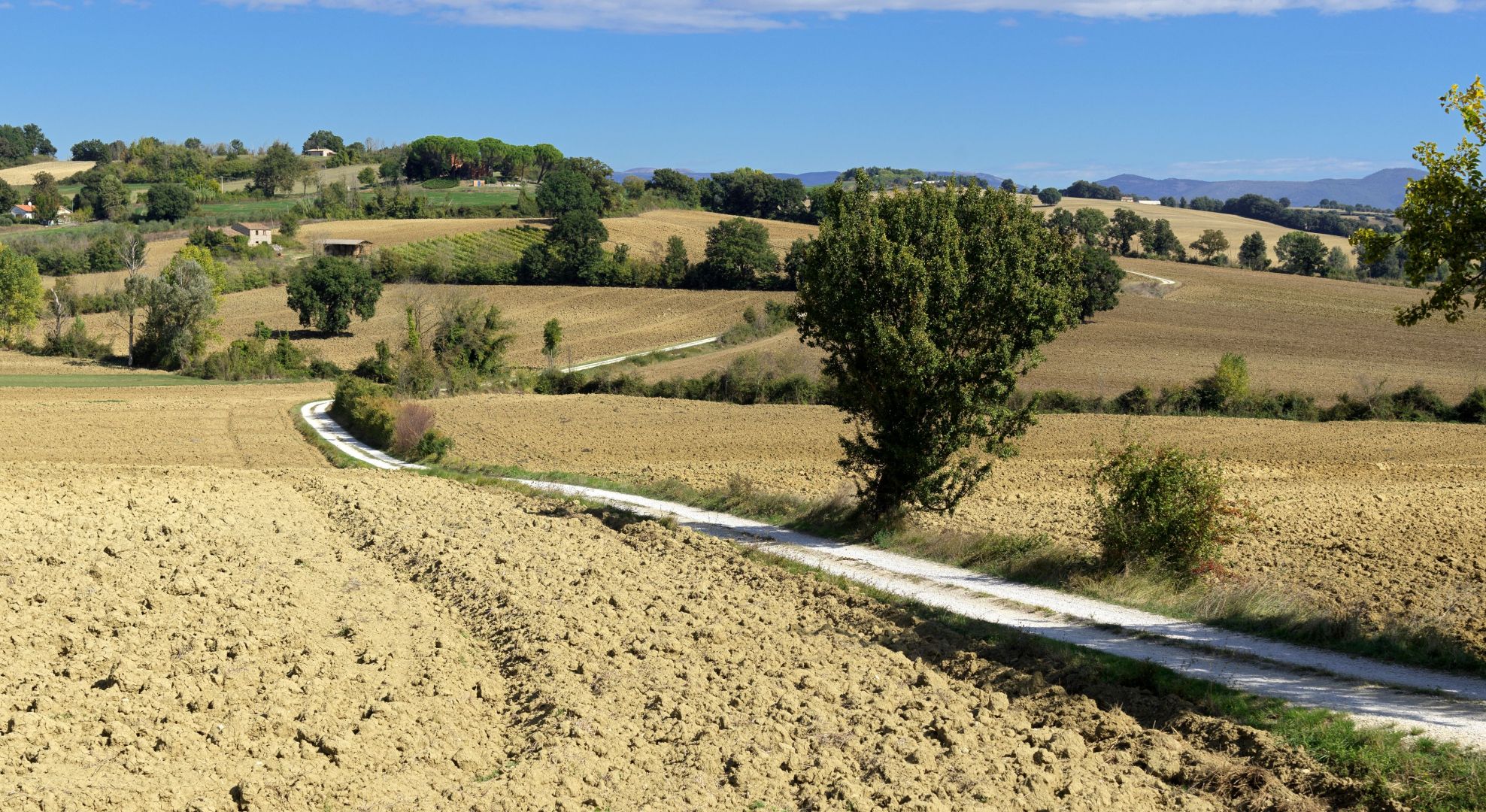
Todi tradition has it that two prominent local families, the Ulpii and the Traii, took service with Rome and rose to military and senatorial rank. Maybe they did – and emigrating to Spain to live in a colonia of military veterans is not inconsistent with that story. Moreover the existence of the Gens Ulpia and the Gens Traia in Umbria is not an inference – they are independently attested through funerary monuments as having lived in Tuder before Trajan’s time. An additional bit of evidence is that Trajan owned land in Umbria near the town of Ameria (modern Amelia), not far south of Todi, which he apparently inherited from his mother.
So far, so plausible. Is there any hard evidence? It seems that there is only one primary source from antiquity that explicitly links Trajan to Tuder. This is a work called Epitome di Caesaribus by an anonymous 5th-Century author – three hundred years after Trajan – with brief accounts of all the emperors from Augustus to Theodosius I. In it, the author describes Trajan as Ulpius Traianus, ex urbe Tudertina — “Ulpius Traianus, from the city of Tuder.”
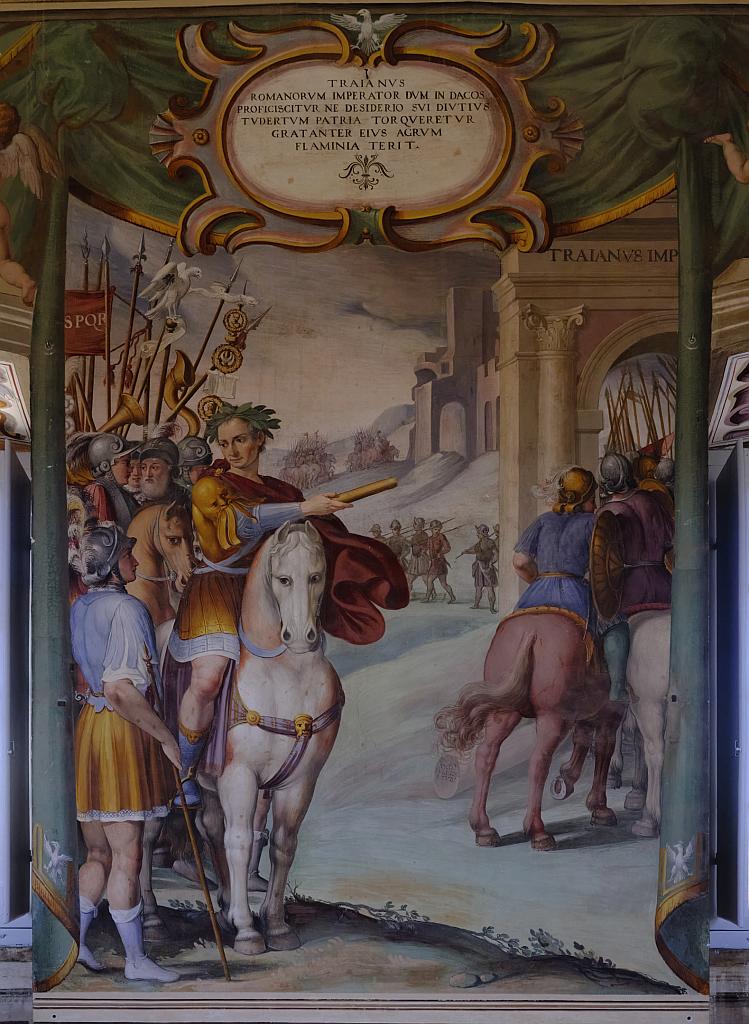
That seems fairly unequivocal, and Todi has taken that to be the gospel truth ever since. In both the Bishop’s Palace and the town hall you can see 17th-Century frescoes depicting Trajan visiting the town on his way to conquer the Dacians.
But, there remain a few problems. One is that Epitome di Caesaribus is a fairly sketchy account – written three hundred years after Trajan – that gets other things badly wrong. Another is that the more contemporary accounts we have are united in describing Trajan as Spanish, not Italian. Yet another is that there is apparently evidence for a native Iberian Trahii family in that part of Spain which, if Latinised, could turn into “Traianus”.
The final problem, advanced by some scholars, is that the region of Iberia around Italica was called “Turdetania”. Is it possible that “ex urbe Tudertina” is actually a misprint for “ex urbe Turdetana”? We’ll never know.
Personally, I don’t think that either the pro or the con arguments for an Umbrian origin for Trajan are proven beyond doubt (I hope my Todi friends will still talk to me after this). It’s possible that some more evidence may come to light, but at the moment I would say that the Umbrian claims are plausible, as are the Andalusian counter-claims. For now, both claim him as their own.
Meanwhile, Back at the Re-enactment
On the afternoon of the second day (Sunday) there was a march up to the Piazza del Popolo (the ancient forum) from a little piazza by the Porta Romana called the “Foro Ulpio Traiano” – and which local tradition associates with the Ulpii and the Traii.
Some of the re-enactors were on the wrong side of sixty, and it is a long slog up the hill from the Porta Romana, so the centurions in charge judiciously ordered a few tactical halts on the way.
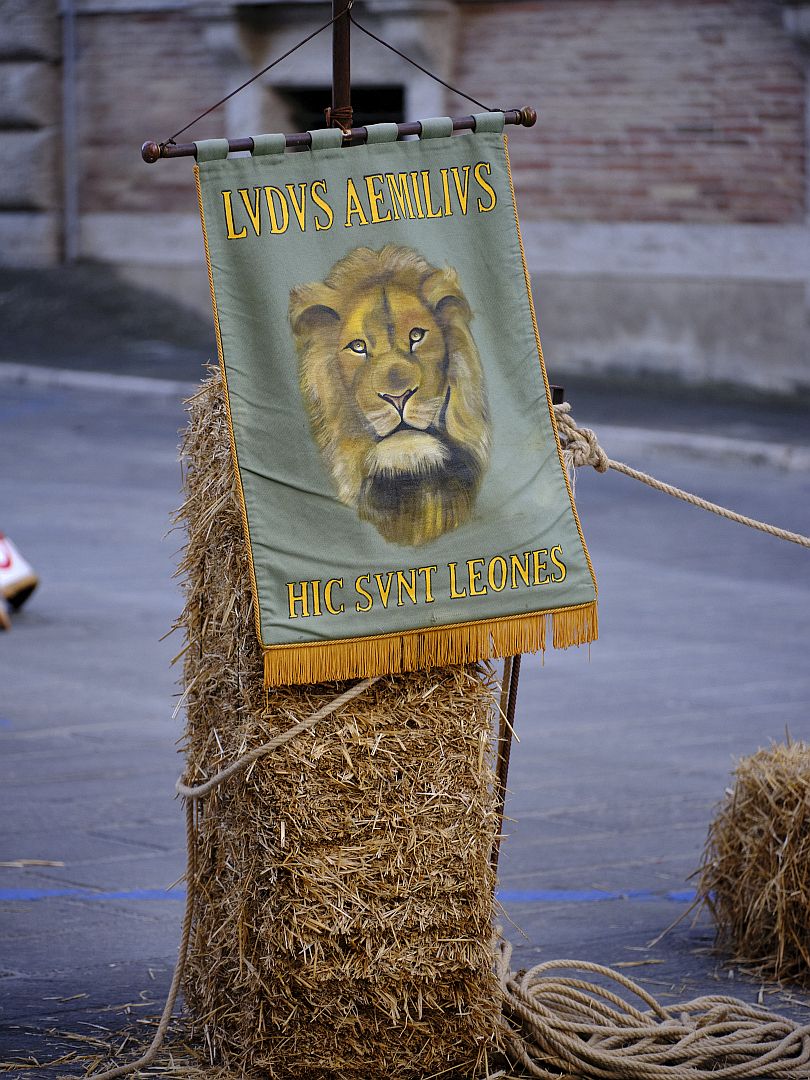
Once back at the top we were treated to a display of gladiatorial combat by a group of re-enactors called “Ludus Aemilius” from Cesena. Cesena is on the ancient Via Aemilia so it’s a good choice of name.
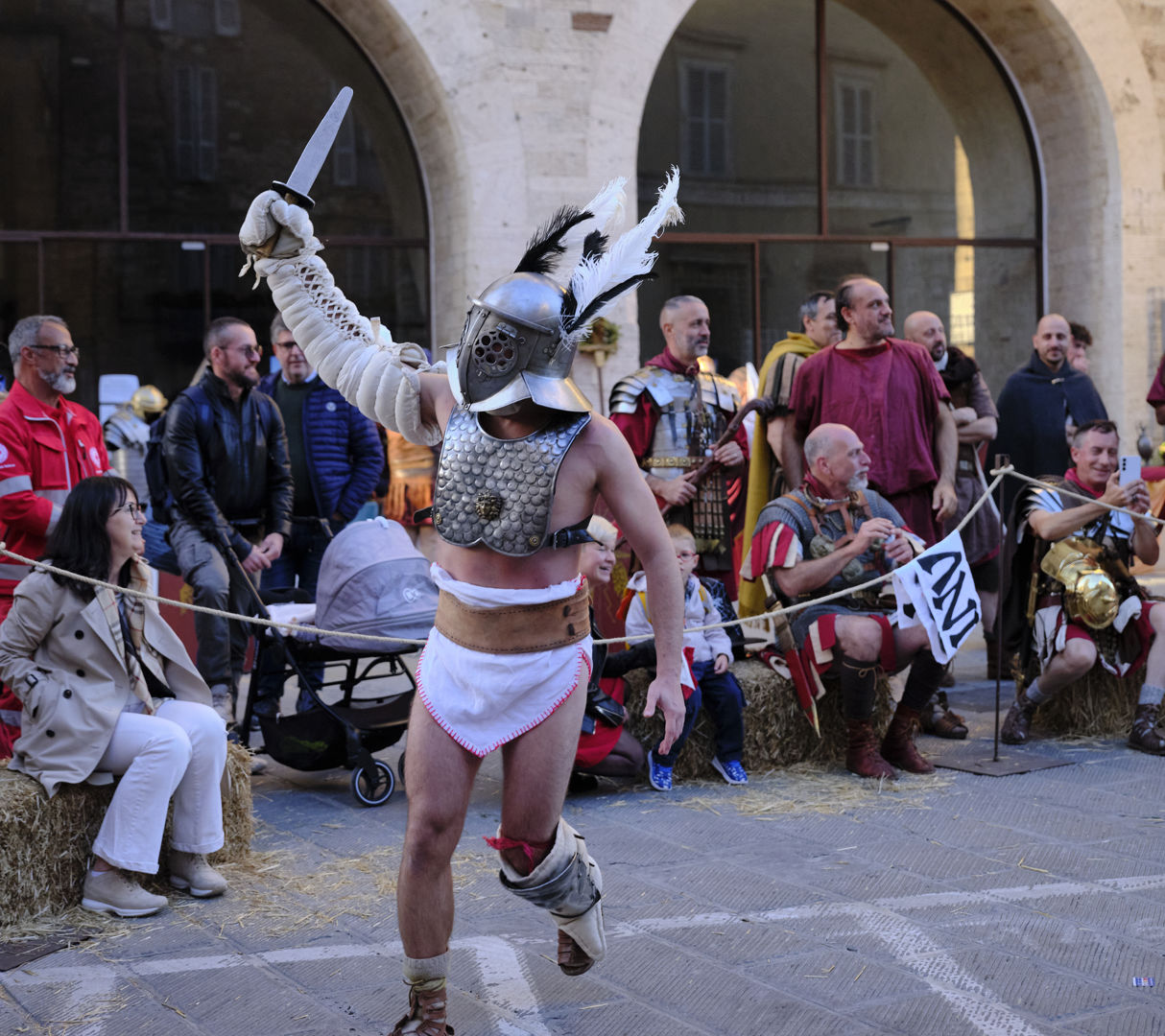
The gladiators were divided into two teams, red and white, and they distributed red and white ribbons to the audience so we could wave them in support of one side or the other. Each bout (with wooden swords, or in the case of the retarius, a trident with much padding on the tips) proceeded until one of the combatants was “hit” at which he fell to his knees and the victorious one stood over him while the crowd was encouraged to shout either mitte (spare him) or iugula (cut his throat). We were a soft-hearted crowd and always wanted to spare them, although the legionaries in the crowd generally stayed in character and roared for death.
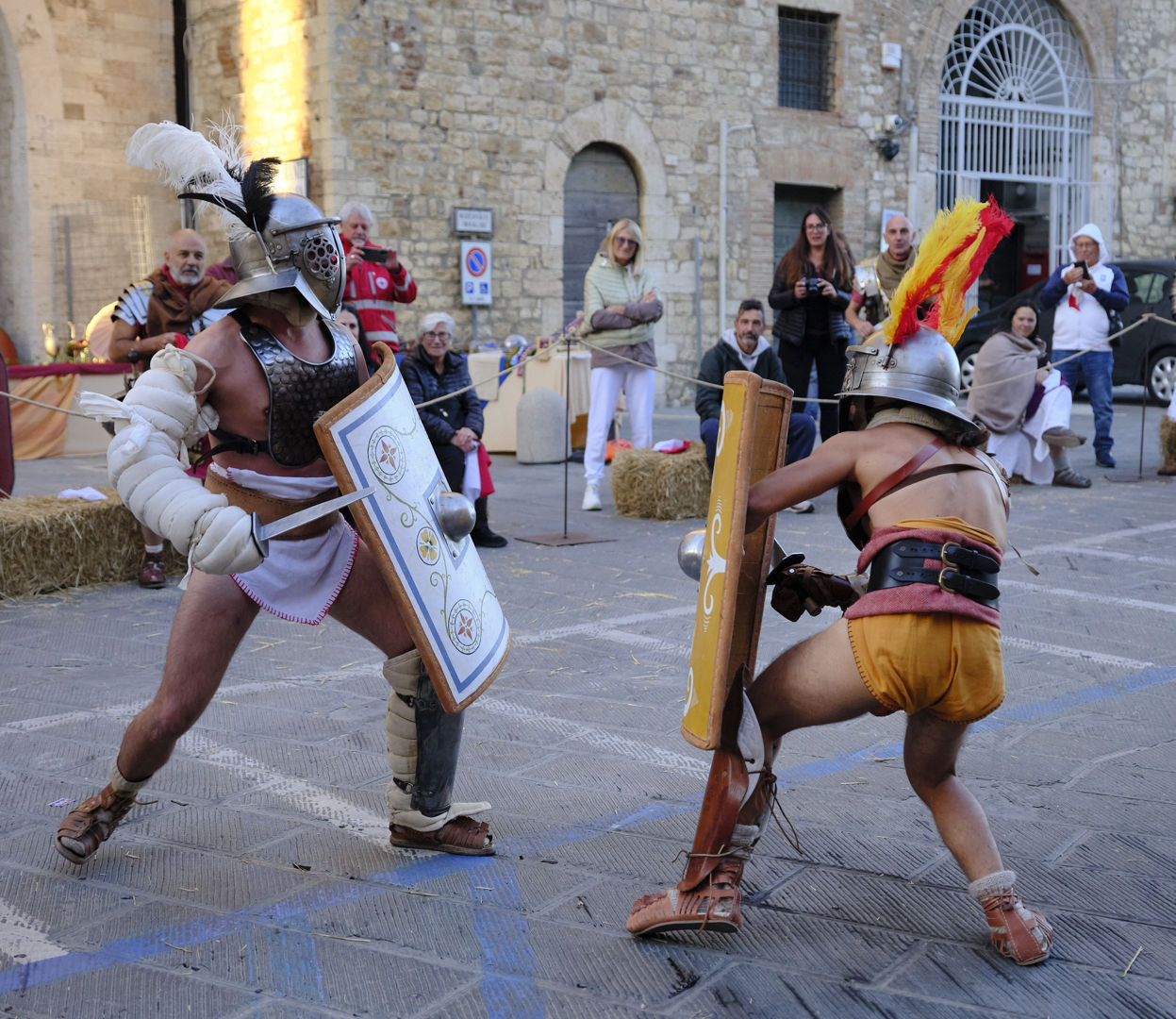
I say “he” but there were in fact a couple of female gladiators. These apparently existed, although they were regarded as a bit indecorous. If they hadn’t been a thing, the Emperor Septimius Severus would not have felt it necessary to ban them in 200 AD.
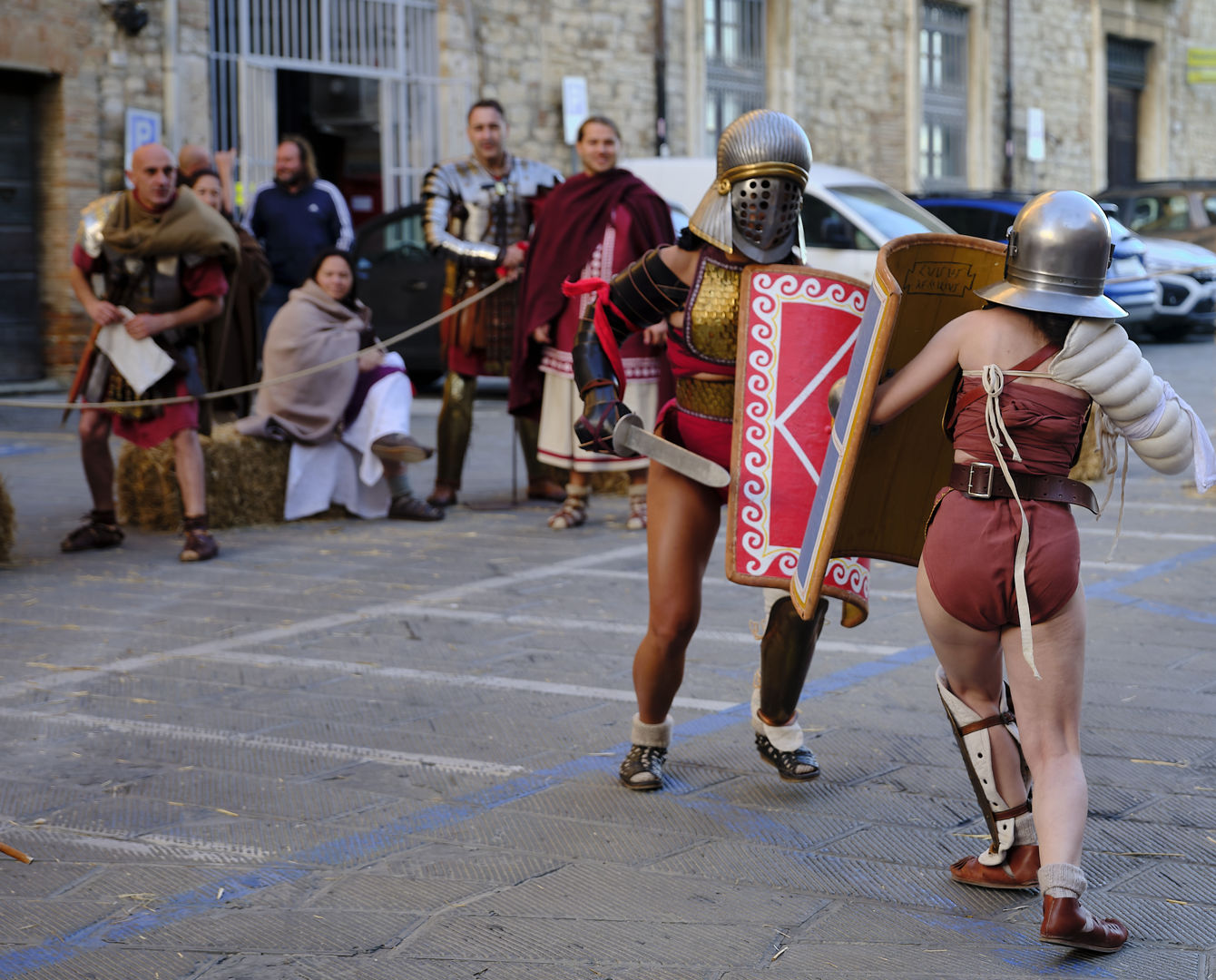
At the end of the final bout, the calls for mercy were just as loud, but this time the referee decided that iugula had won – and the defeated gladiator pretended to fall dead. Just as mothers were assuring their children that it was all make-believe, the dead man sprang back to life, leapt into the crowd and started chasing the legionary who had been calling the loudest for his death, to general amusement.