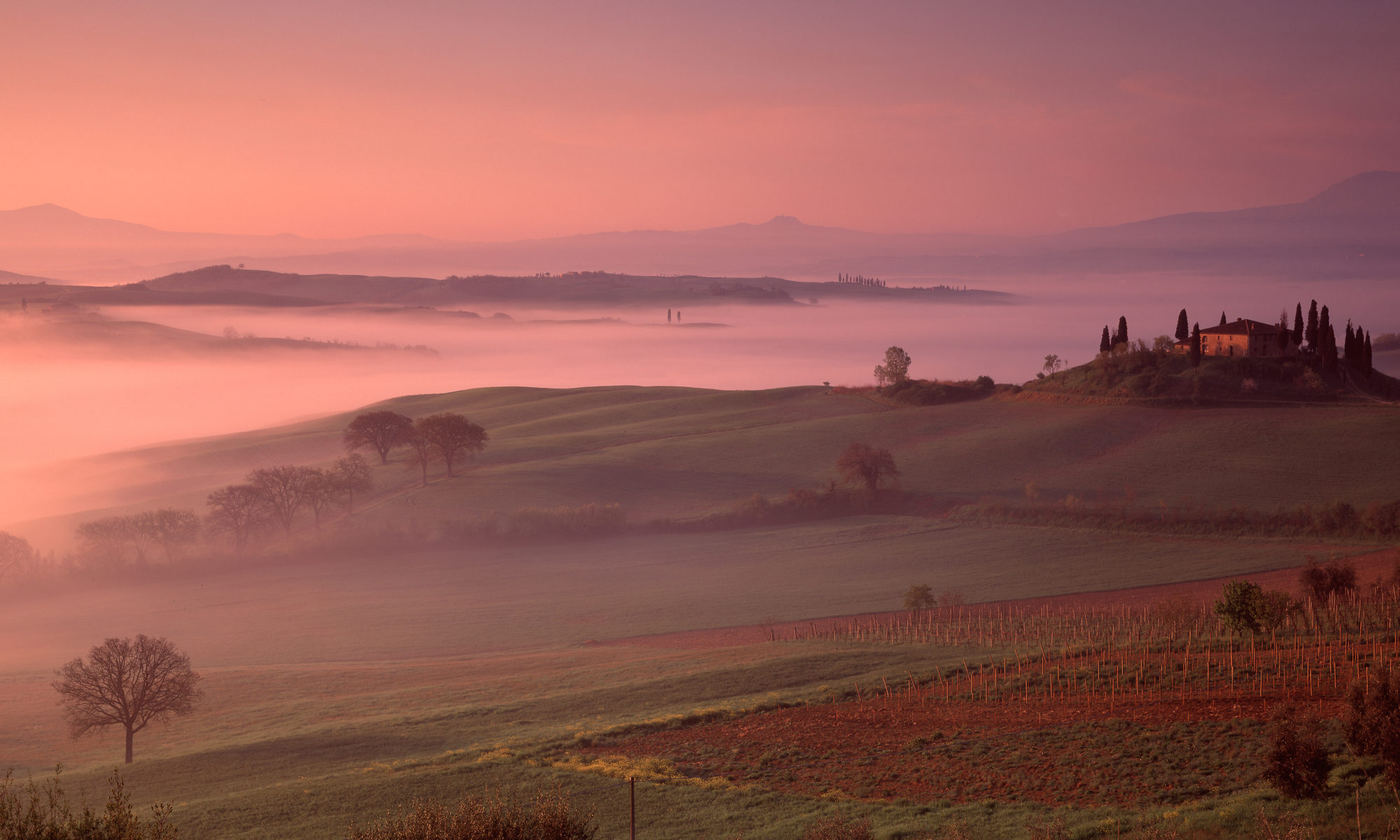
Here is a selection of photographs taken over several years on a Hasselblad camera in mountainous regions of Italy. After my last post on a complex of very ancient churches in Bologna I felt like getting out into the open air again.
Going Over to the Dark Slide
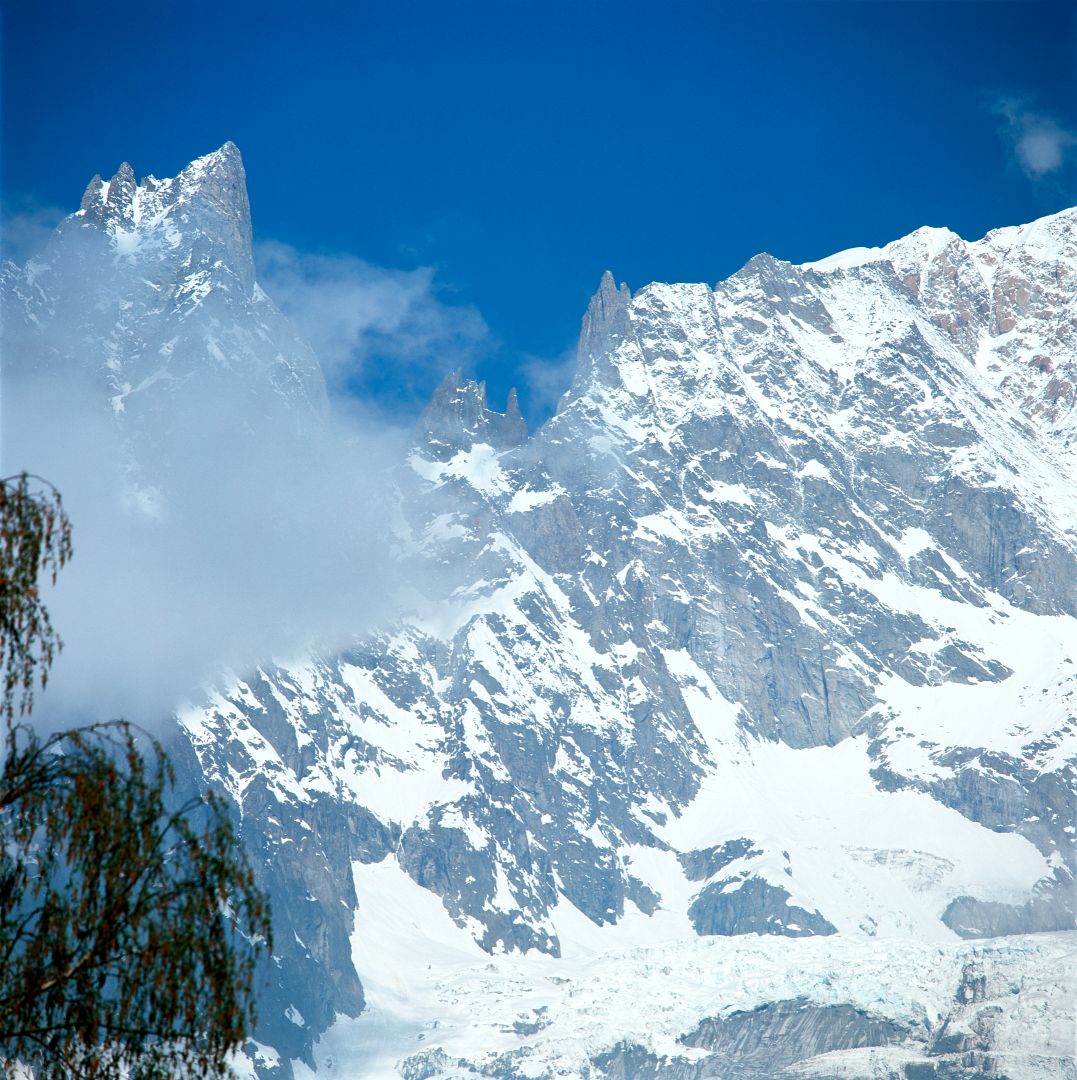
These pictures were taken on a Hasselblad 501C/M. It is a modular system – not only can various lenses be fitted to the body, but so can various backs, containing the film. The majority were taken with 6x6cm rollfilm backs and Fujichrome Velvia film, scanned on a Nikon 9000ED film scanner.
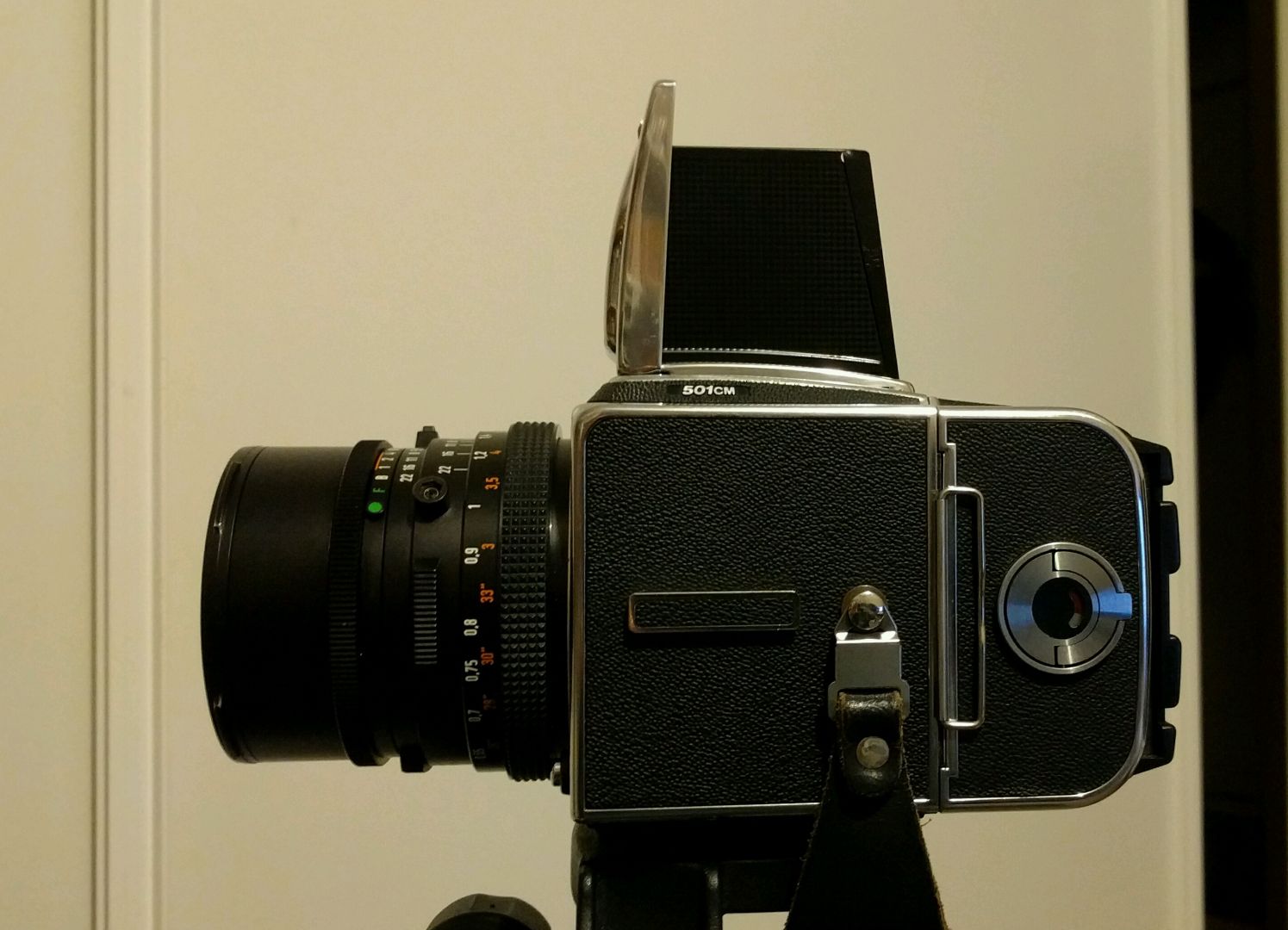
Hasselblads are iconic cameras, and something that I had always thought of as out of reach to amateurs like me. But in the early 2000s a lot of professional photographers moved into digital and sold their film gear, and the result was that it became possible to pick up used Hasselblads, and other medium-format cameras, comparatively cheaply. I bought mine in 2004, abandoning my (then) state-of-the-art Canon EOS 3 35mm SLR. Suddenly I was taking pictures on a camera which took no batteries, because there was nothing that needed them. Everything was manual.
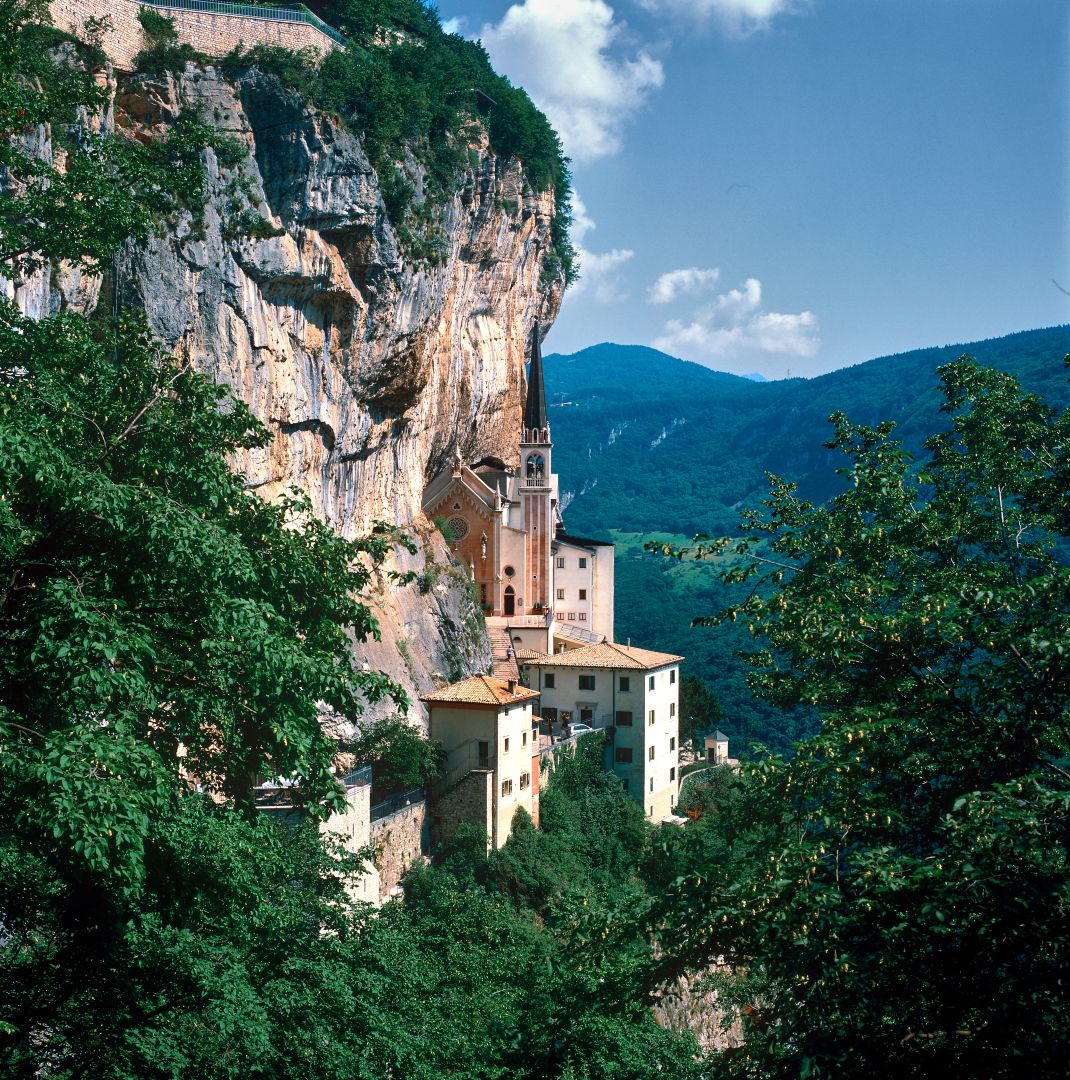
I have a very large number of photographs taken with Hasselblad over eighteen years or so. Here are some of them, selected on the basis that they were all taken in mountainous areas of Italy.
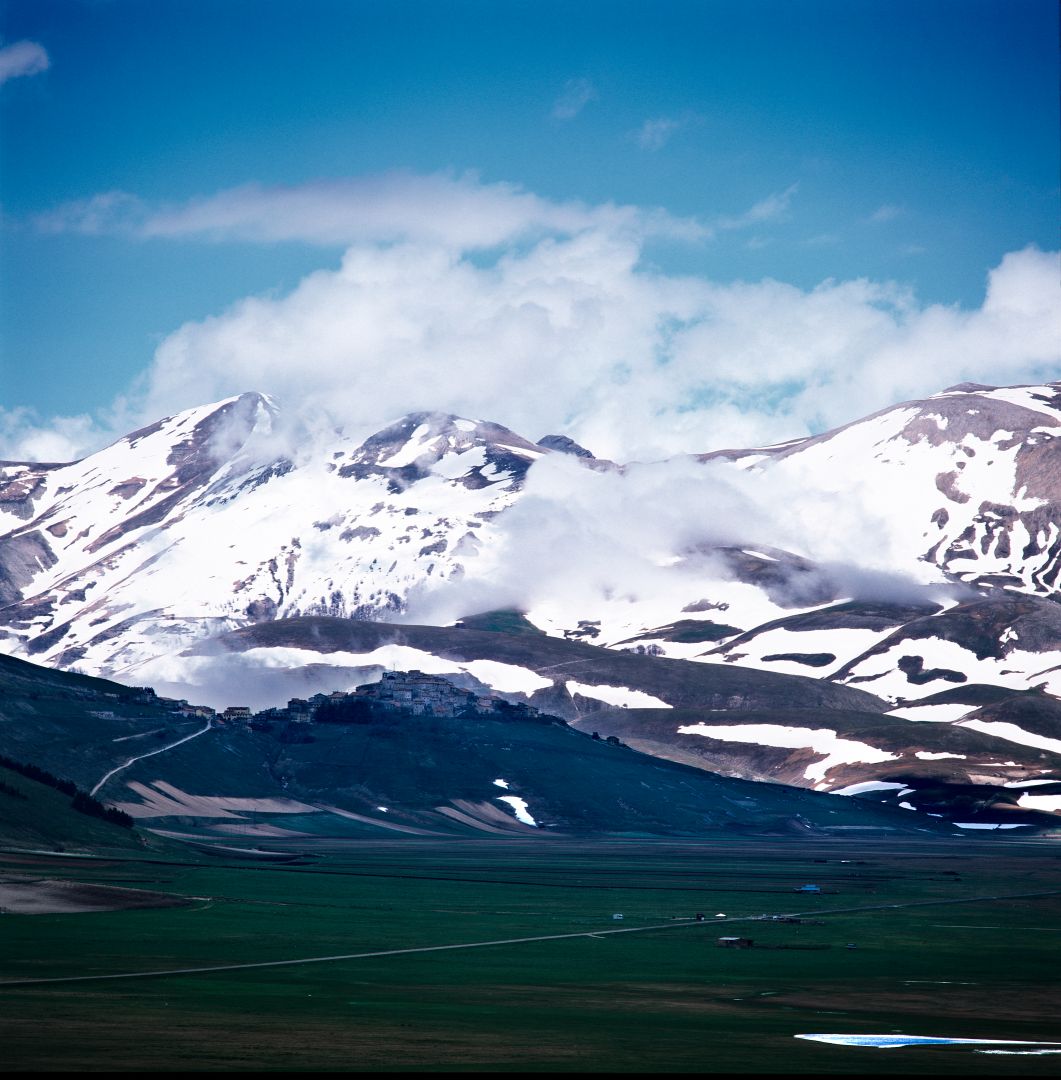
Abruzzo
I’ve grown quite fond of Abruzzo. It’s not too hard to get to from Umbria, and it has some very beautiful scenery. In summer it is a welcome escape from the heat of the lower altitudes, and in the cooler weather the snow-capped mountains are spectacular. I’ve already written about a visit there in my post on Abruzzo and the Reluctant Pope.
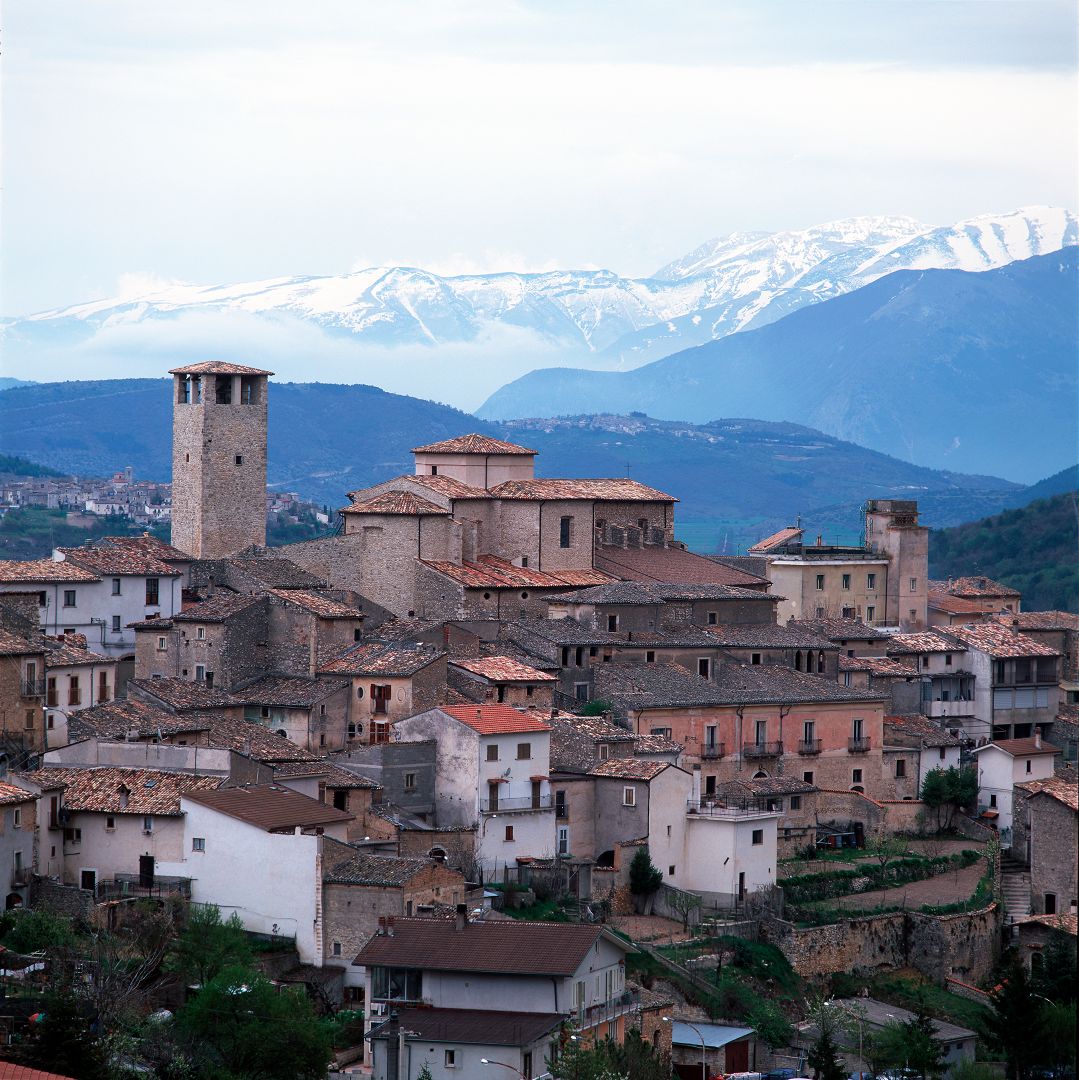
The photograph below, of the little town of Caporciano, was taken on our first ever visit to Abruzzo, in 2006. Apart from the spectacular setting – it is not far from l’Aquila – we remember it as being the first place where we were brave enough to have lunch in a little trattoria where we knew no-one would speak English. Our rudimentary Italian was adequate for the purpose, although that may have been the place where I unintentionally asked for four litres of the house red rather than a quarter-litre (quattro rather than quarto). The proprietor, fortunately, worked out what I probably wanted.
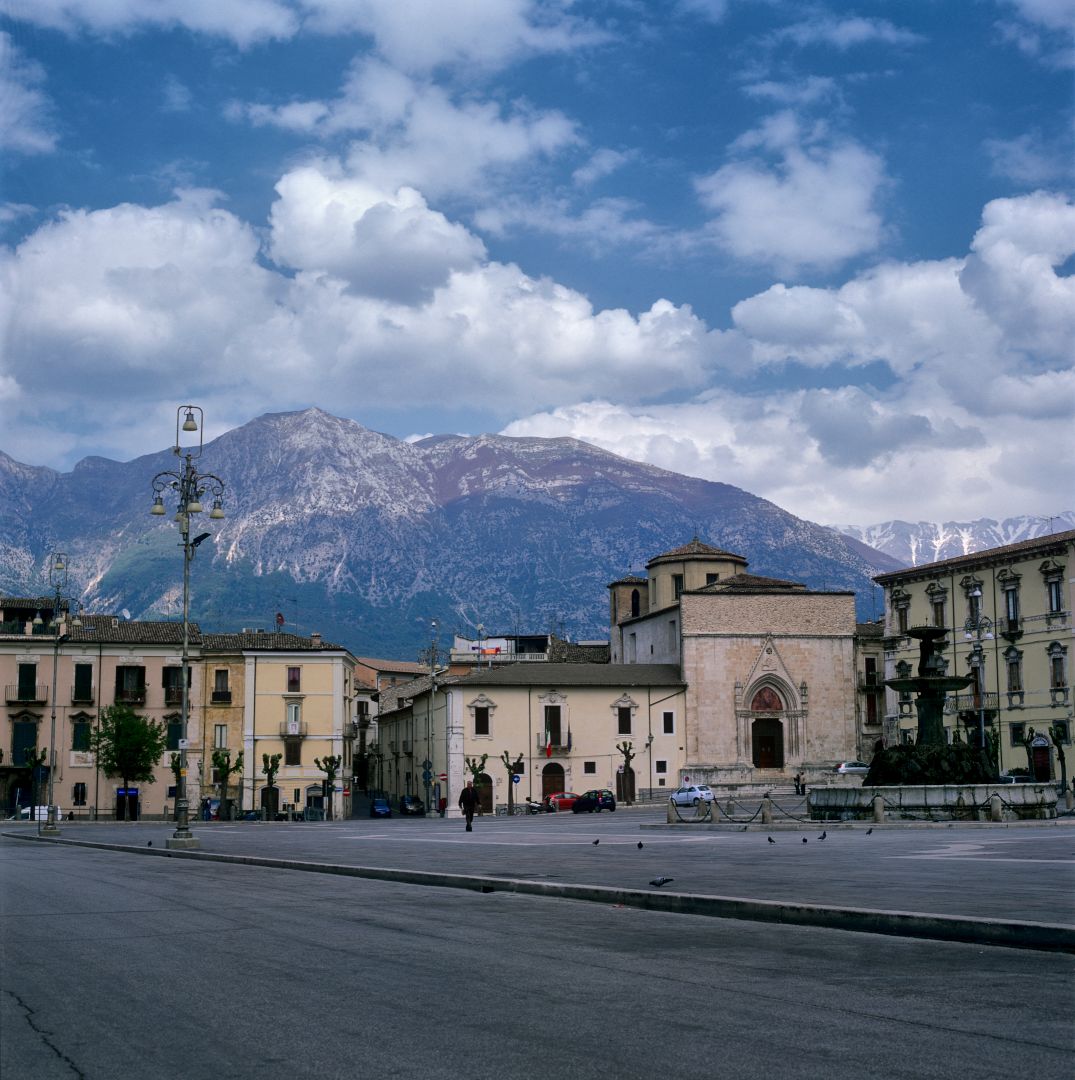
The largest cities in Abruzzo are down near the coast, but for me the quintessential Abruzzese town is Sulmona, which we first visited in 2011. It sits in a valley surrounded by very tall mountains, among which you may find a hermitage built by Celestine V, the “reluctant Pope”. The photograph below shows the central marketplace, which was the scene of a dreadful event in 1944 when two Canadian aircraft, sent to attack a German headquarters in a nearby piazza, mistakenly attacked the marketplace instead. 52 civilians were killed. The lamp post in the picture still shows scars from shrapnel.
From Sulmona you can take the motorway down towards the Adriatic coast, or head further up into the mountains. In the latter case, you will see some rugged terrain and towns which until recently were quite isolated and retained traditional customs and dress.
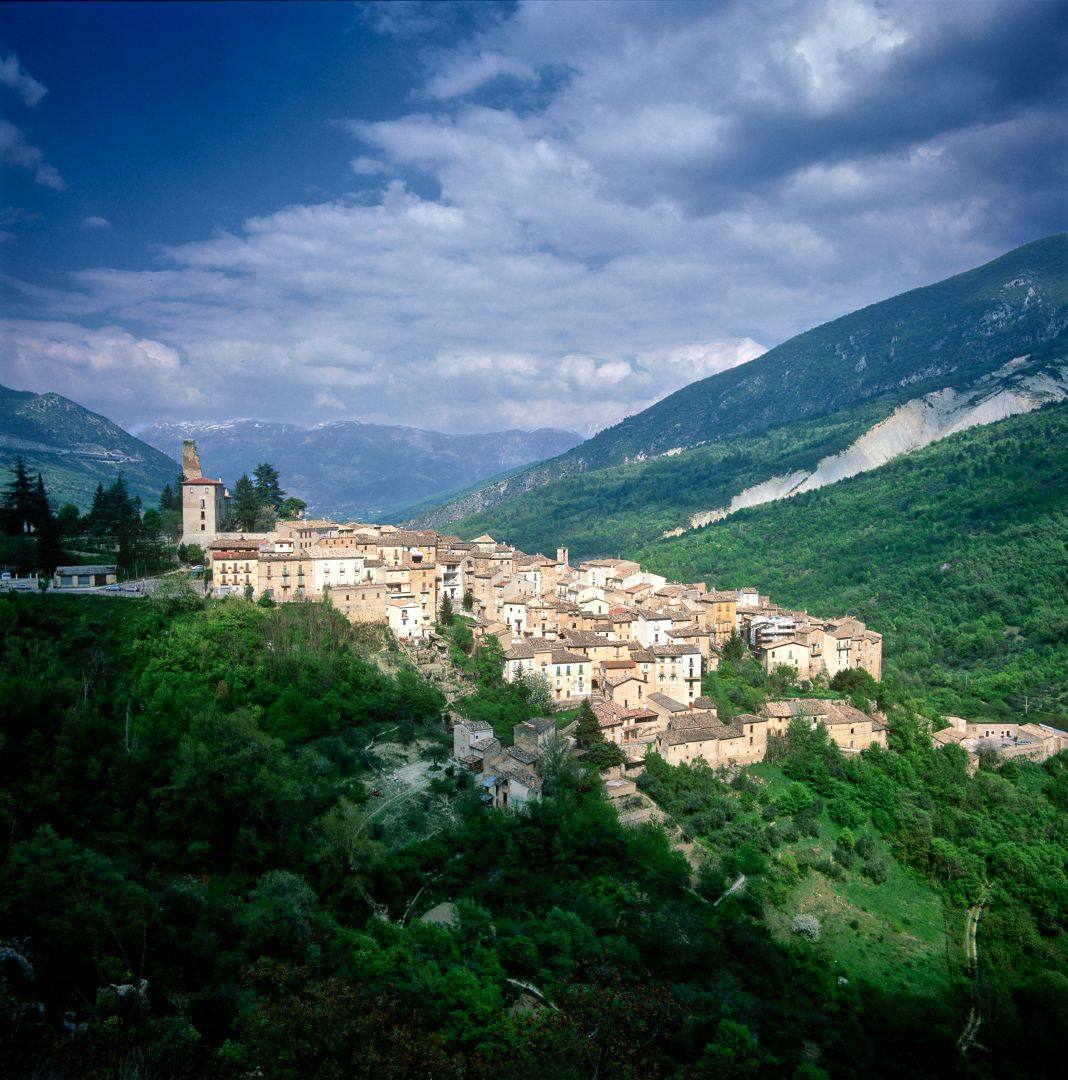
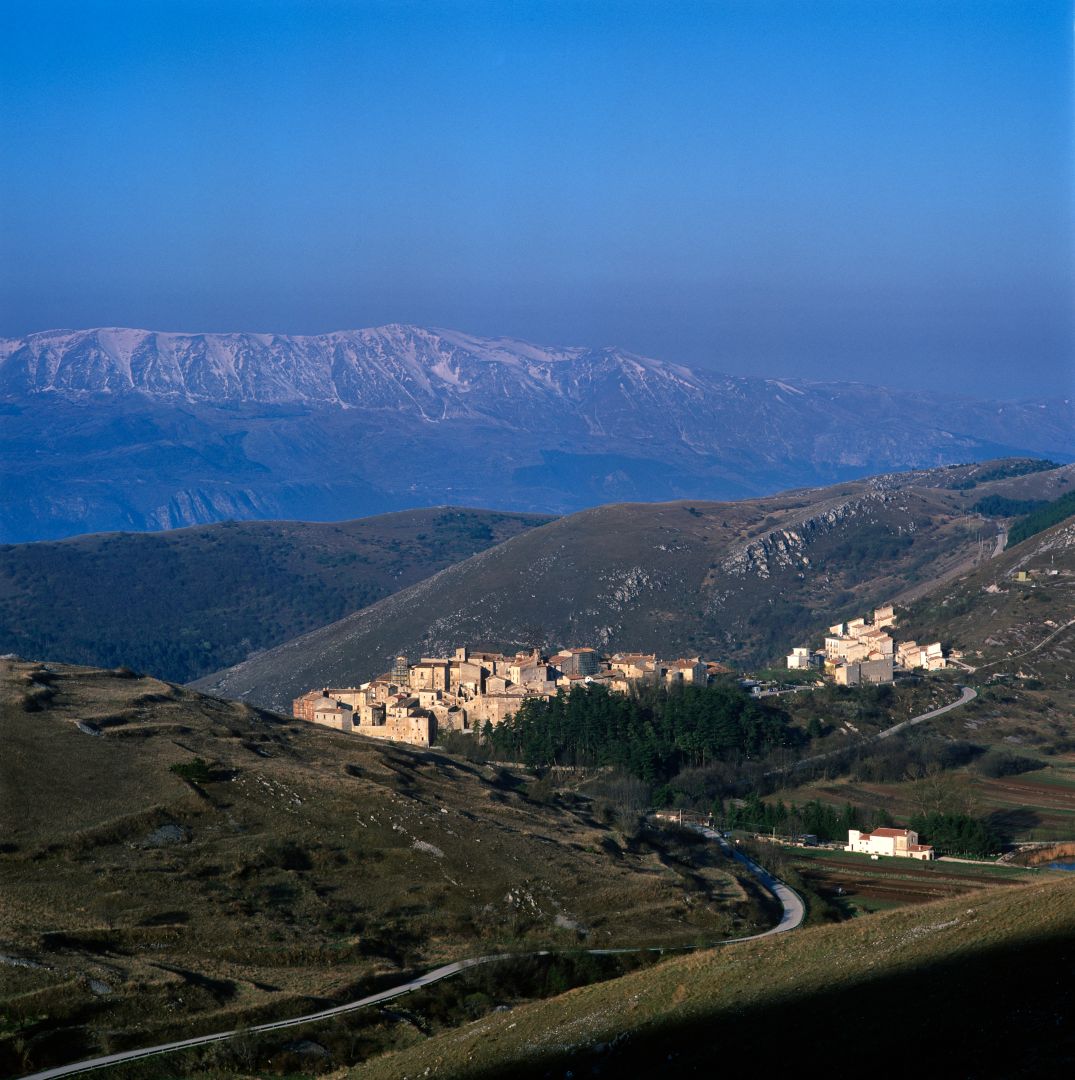
On another visit in 2011 we were staying in a little place called Santo Stefano di Sessanio, high up in the mountains above l’Aquila. It was still showing damage from the 2009 earthquake that caused so much destruction in l’Aquila itself.
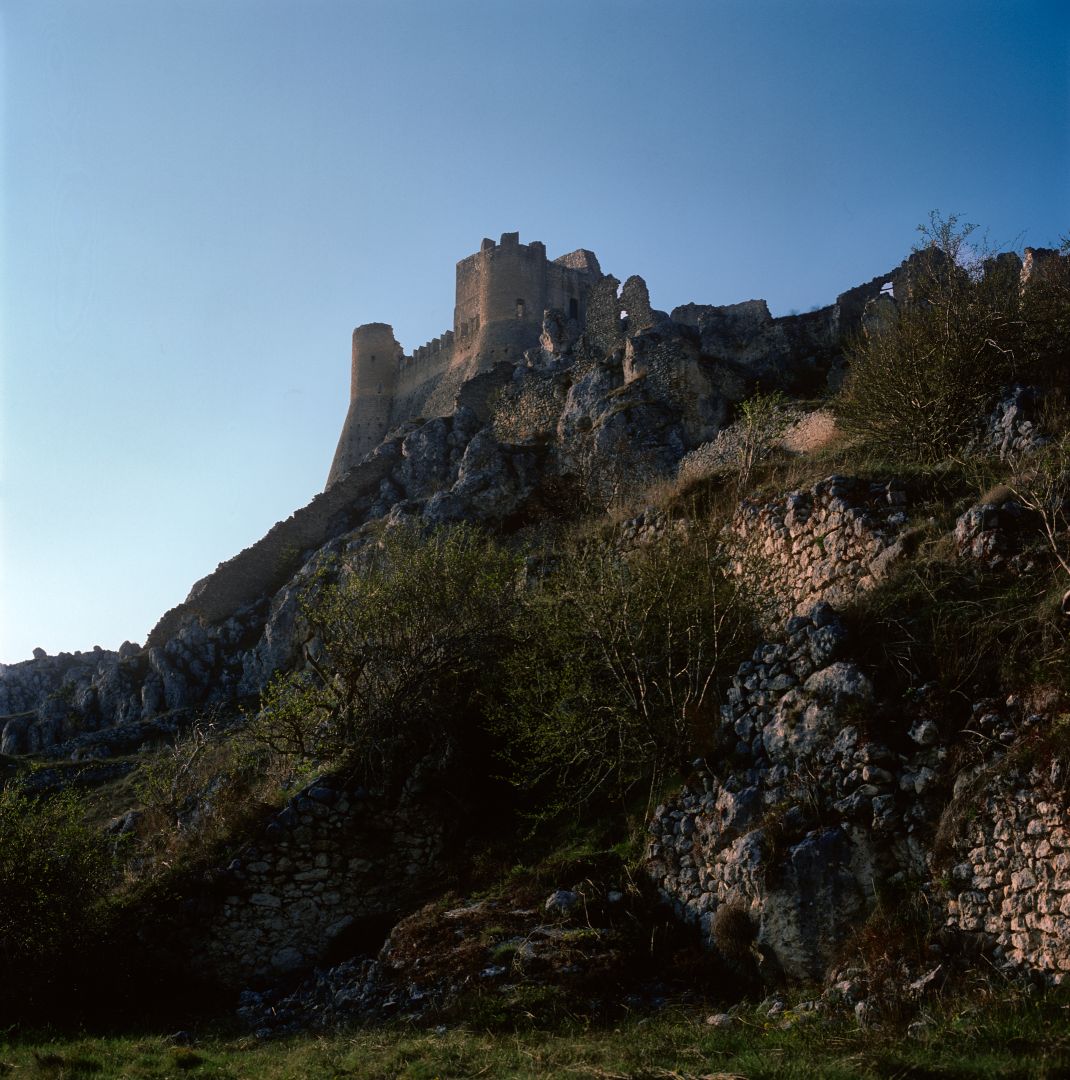
Not far from Santo Stefano is the town of Calascio. Above the town is the highest fortress in the Apennines, the iconic Rocca di Calascio, a popular hiking destination and an occasional film location.
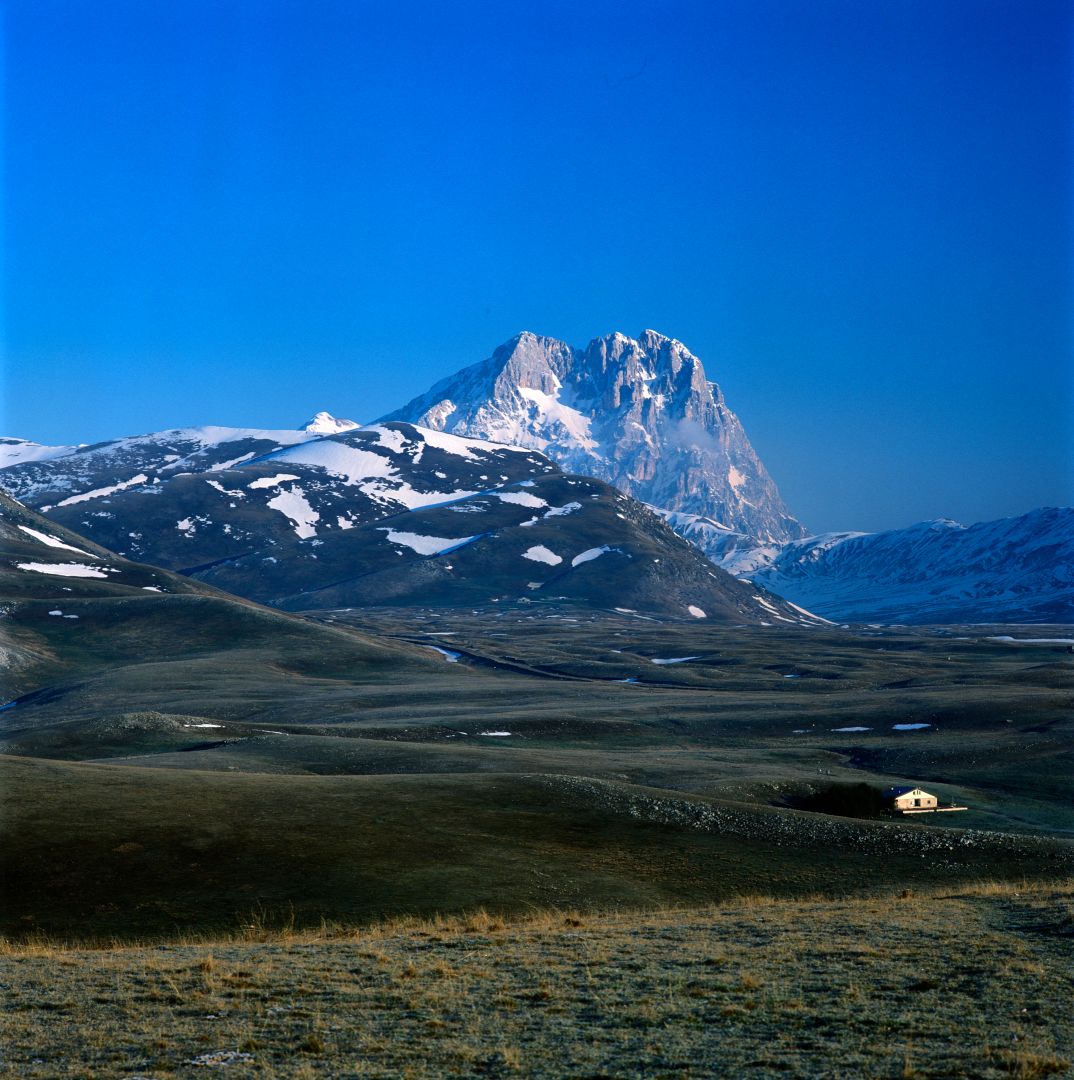
Santo Stefano is located within the Gran Sasso National Park, and it is a short drive up to the high plateau called Campo Imperatore from which you can see the peak called Gran Sasso d’Italia (the Big Rock of Italy).
In September 1943 Campo Imperatore was the scene of one of the most dramatic episodes in the Second World War. After Mussolini had been dismissed by King Victor Emmanuel III, he was arrested and eventually imprisoned in the Campo Imperatore Hotel, reachable only by cable car. Hitler ordered his rescue, and a force of German commandos landed in gliders, seizing the upper cable car station to prevent Italian reinforcements arriving. Mussolini and the leader of the German force then escaped in a badly overloaded military observation aircraft which only managed to become airborne by being piloted off the edge of a cliff.
Mussolini was then installed as head of the puppet regime based in the town of Salò on Lake Garda. In April 1945, while attempting to flee to Switzerland, he was captured near Lake Como by communist partisans and shot.
The Dolomites
I intend to write in greater detail about the South Tyrol and the Dolomites at some point – in fact we are planning to revisit the town of Bressanone (Brixen) this December to see its famous Christmas markets. But in a few visits over the years I have accumulated quite a few photographs, so here is a preview of that future article.
The German-speaking part of the Dolomites, leading up to the Brenner Pass, doesn’t feel very Italian, and that is because it was part of Austria until 1919. I wrote a bit about its history, from a linguistic point of view, in my post called A Brief Political History of the Italian Language. A major feature of this was how the Fascist government tried to impose Italian on the population, including inventing Italian names for places that had never had them. These names are still gazetted, albeit alongside the original German ones.
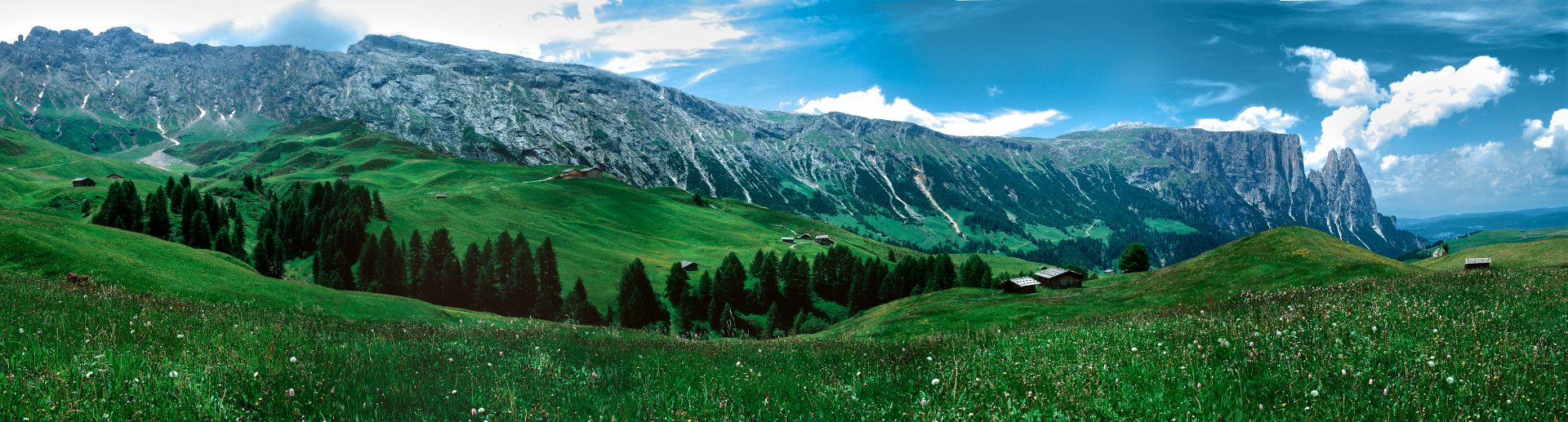
One of the most spectacular areas is around the town of Seis (Siusi in Italian) Above the town, a vast line of mountains ends in some pointy peaks, called the Schlern. From Seis you can take a chairlift up to the “Seiser Alm”: a cross-country skiiing area in winter. In summer it is an alpine meadow extravagantly covered in wildflowers.
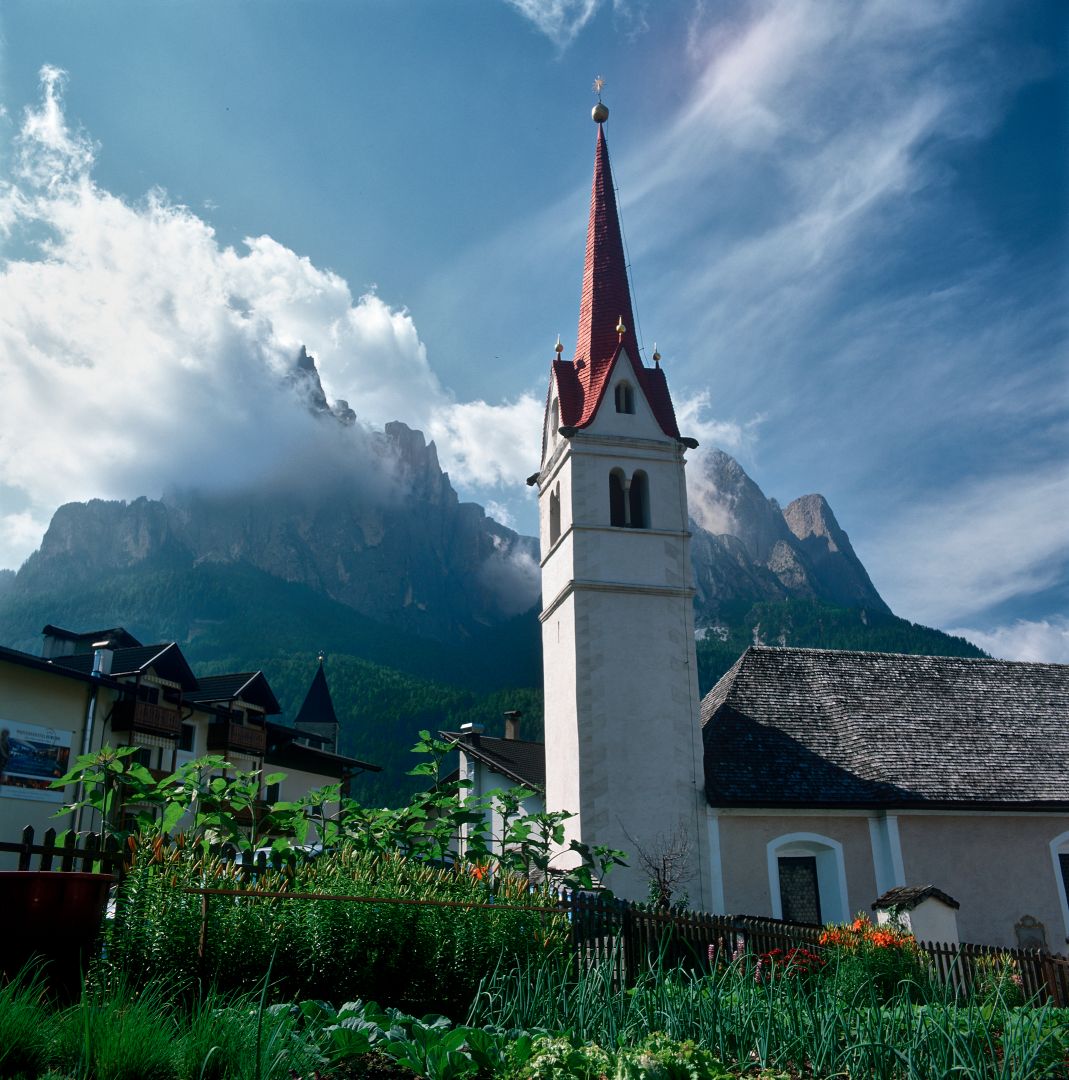
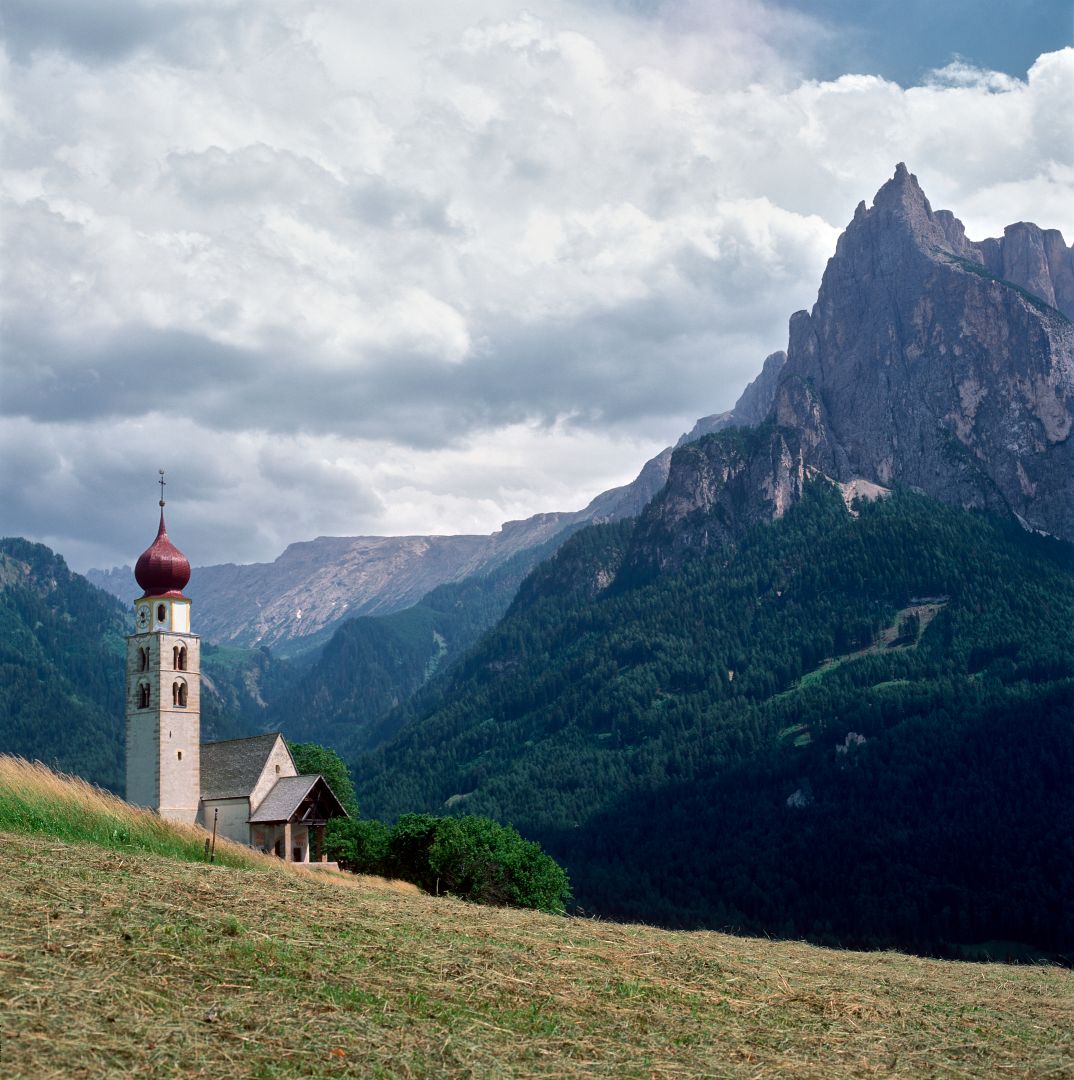
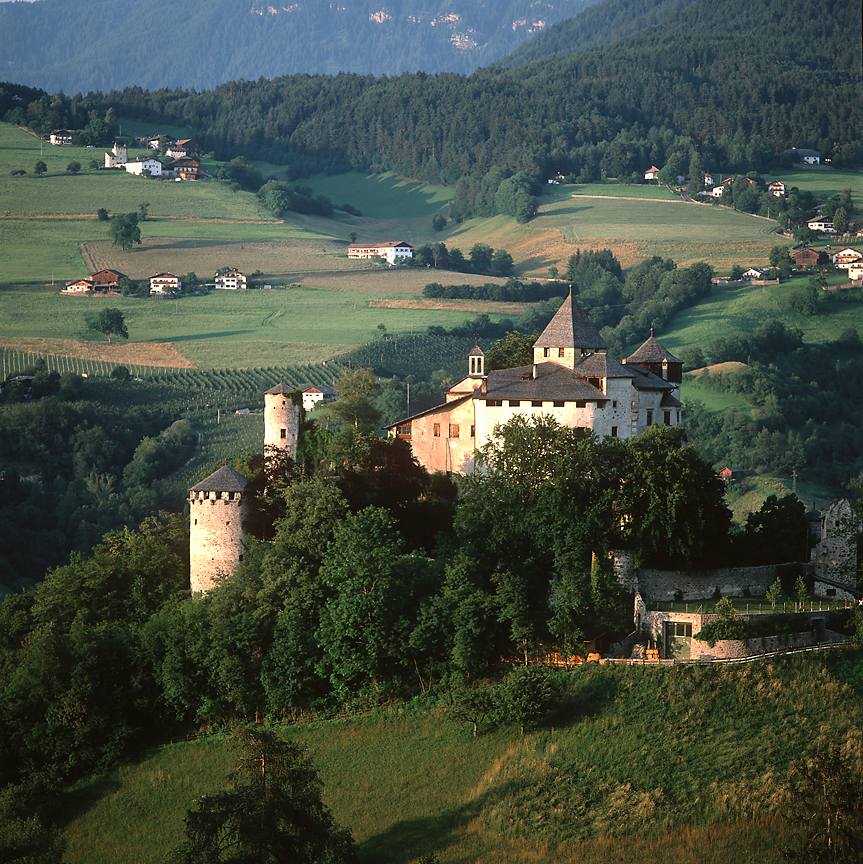
All through this area you will find charming little villages with their onion-domed steeples, or lakes of clear water, all with a backdrop of huge rugged mountains.
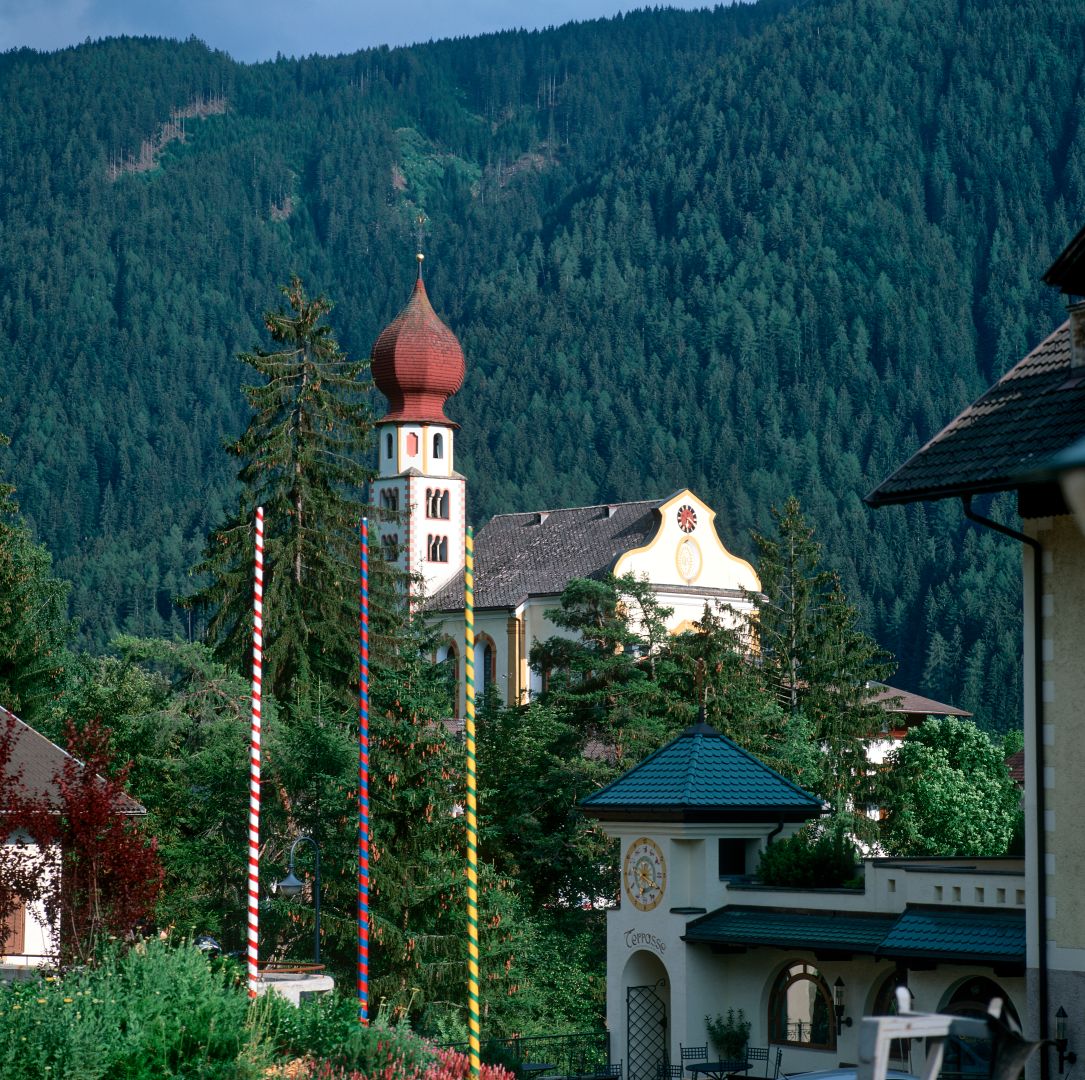
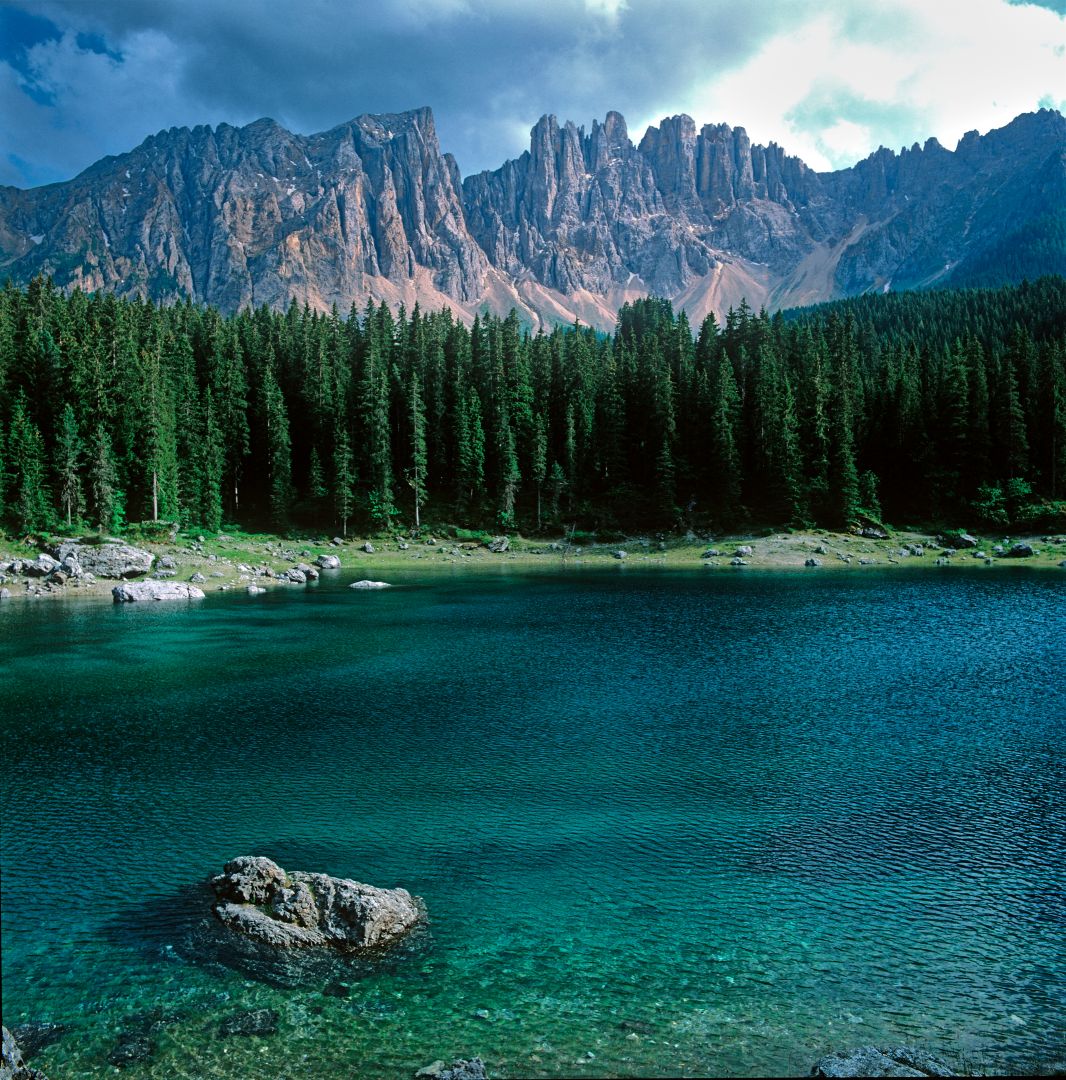
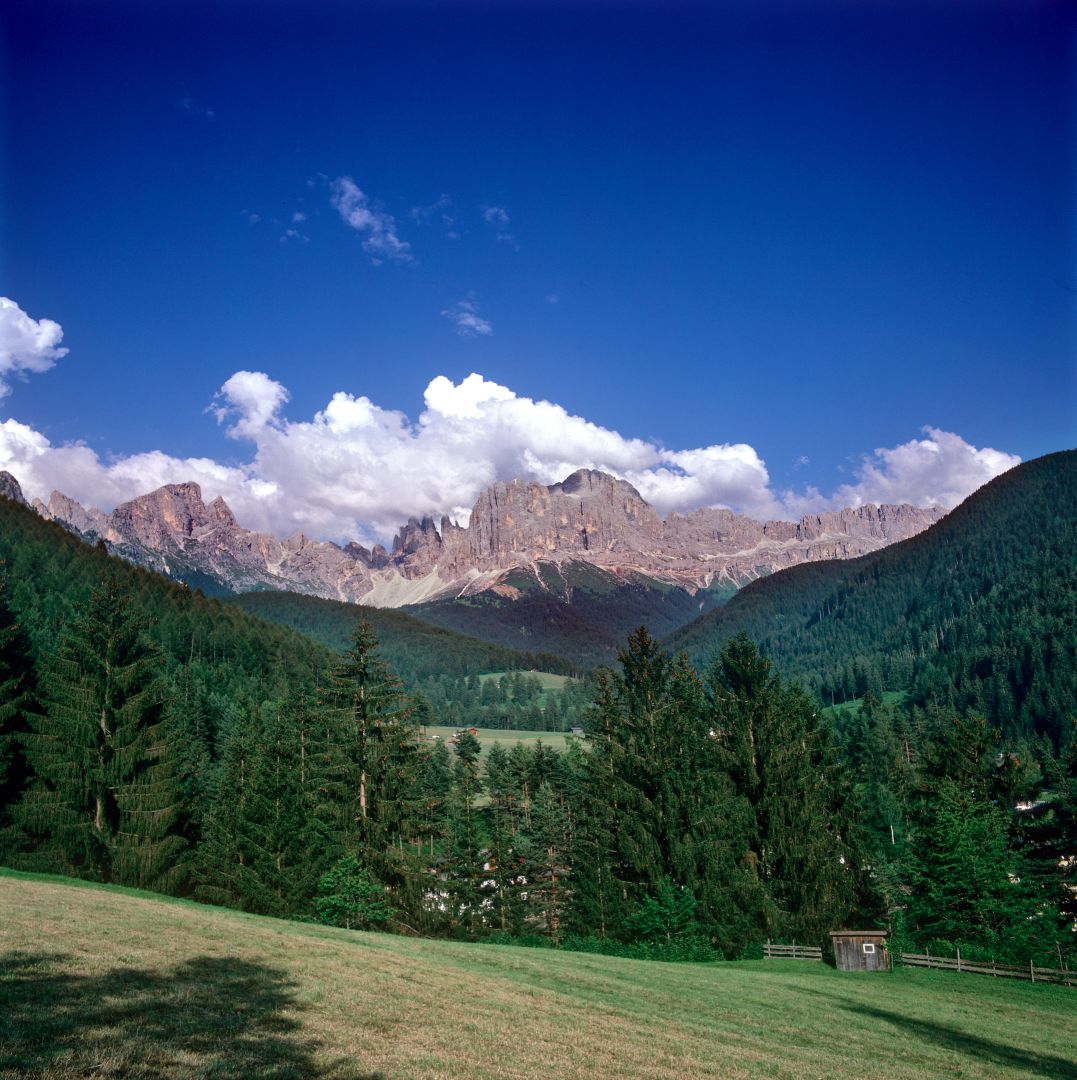
Another thing the area has in abundance is mountain passes, with roads that look as if they might have featured in The Italian Job, or an episode of Top Gear. Alas we were in a rented Fiat Panda, so unable to really do it justice.
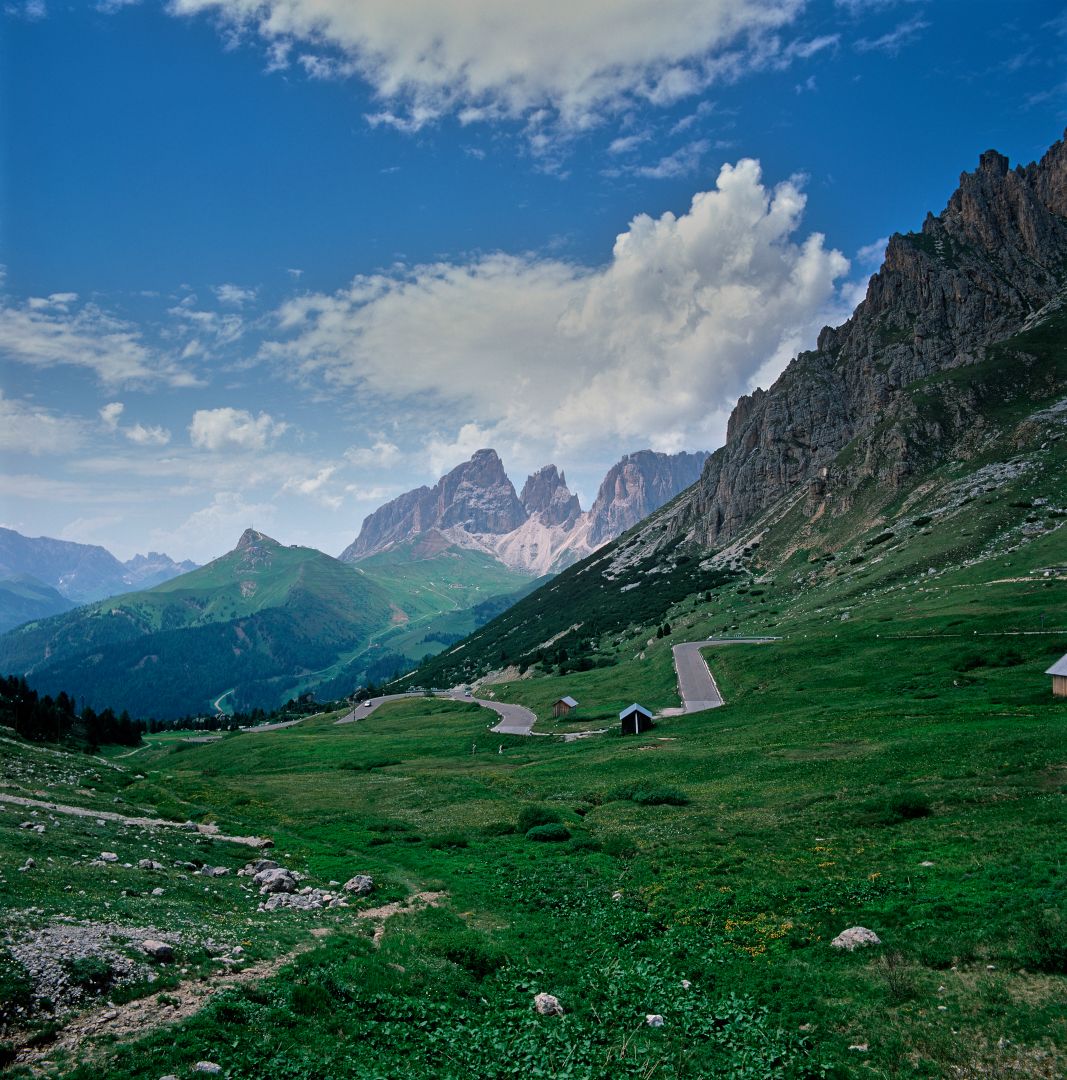
The photograph below is of the Würzjoch, or Passo delle Erbe in Italian. I was mildly perplexed as to why a German placename meaning “pass of the spices” might have an Italian equivalent which means “pass of the herbs”. Was it on some trading route? I asked ChatGPT which directed me to a scholarly article which as far as I can tell (it is in German) suggests that the würz in Würzjoch actually derives from a placename in Ladin (the third language in these parts), but that when the Fascists invented Italian names for places someone mistranslated it, hence “Pass of the Herbs”.
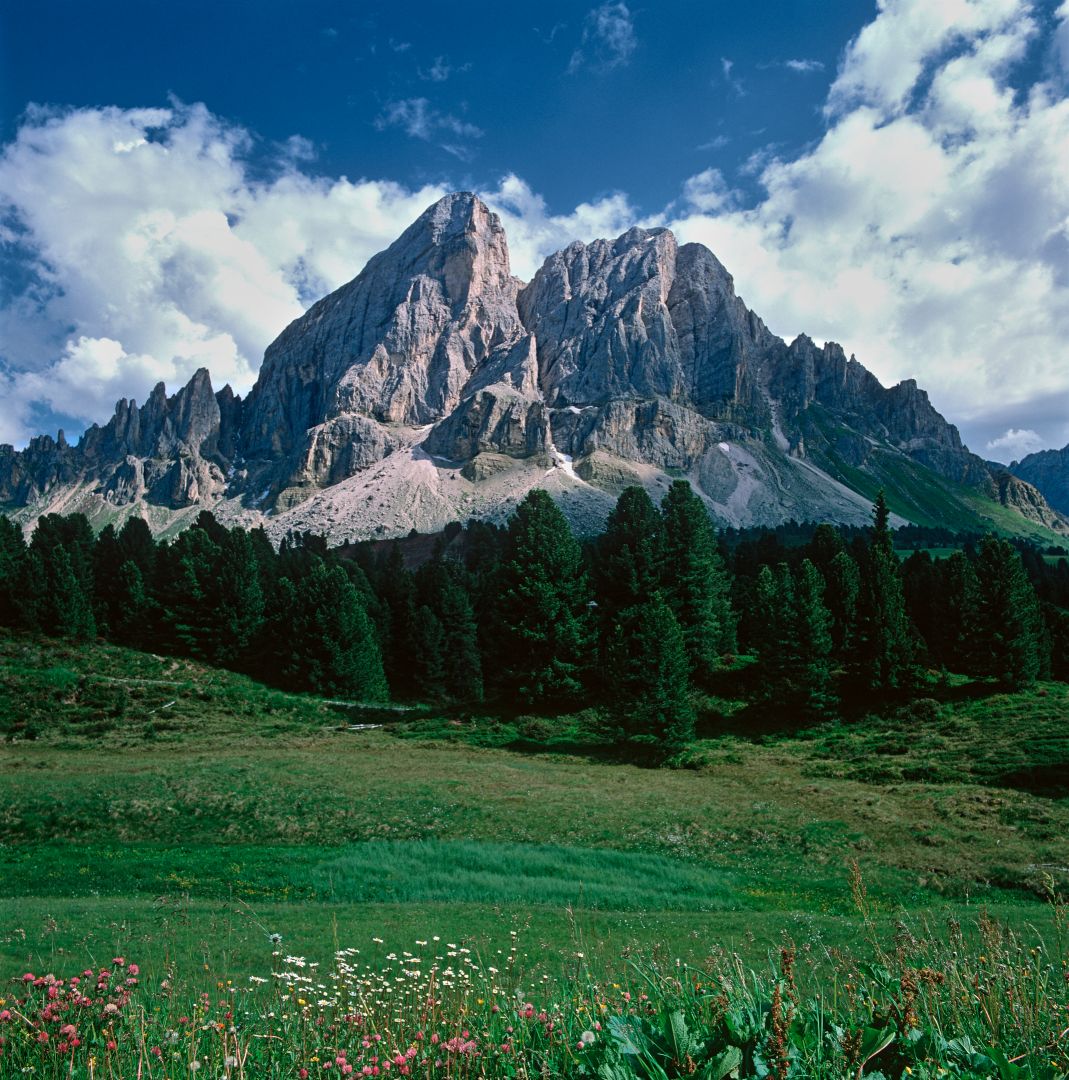
Whatever the derivation of the name it is a very beautiful place. When we were there a herd of cows was grazing on the slopes in the sunshine, to the tonk-tonk-tonk sound of the cowbells that some of them were wearing.
The Change to Digital
In 2016 I bought a 50 megapixel digital back for the Hasselblad. It is very creditable to Hasselblad that they made a digital back that would fit onto any of their cameras dating back to the 1950s. This was my first serious experience with digital photography and I must say that I treated it much like a film camera – setting the lowest possible ISO and doing everything manually. At first it did not even occur to me that I could use the histogram display on the LCD to check the exposure, and I continued estimating the exposure myself[i] or using a hand-held light meter.
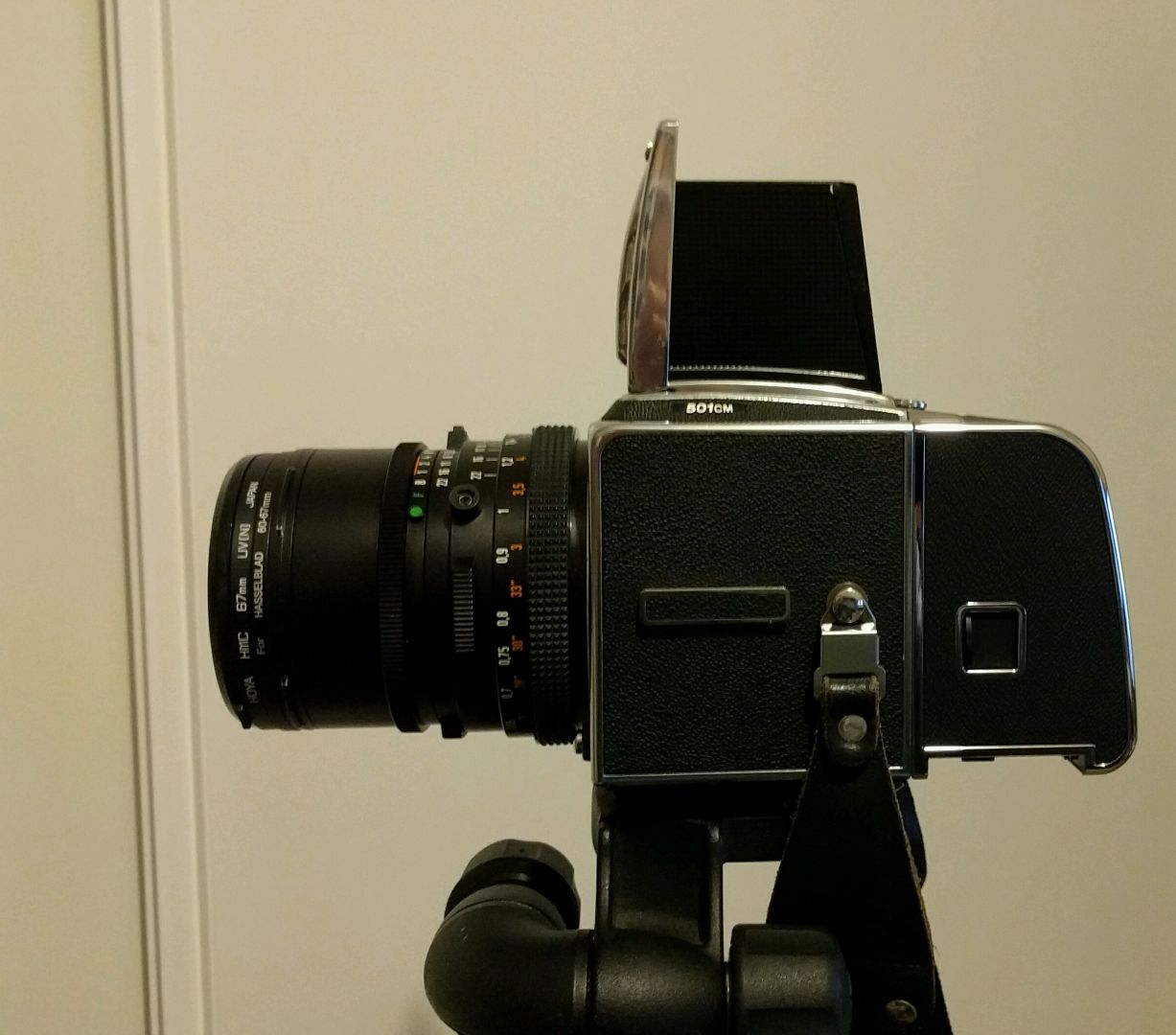
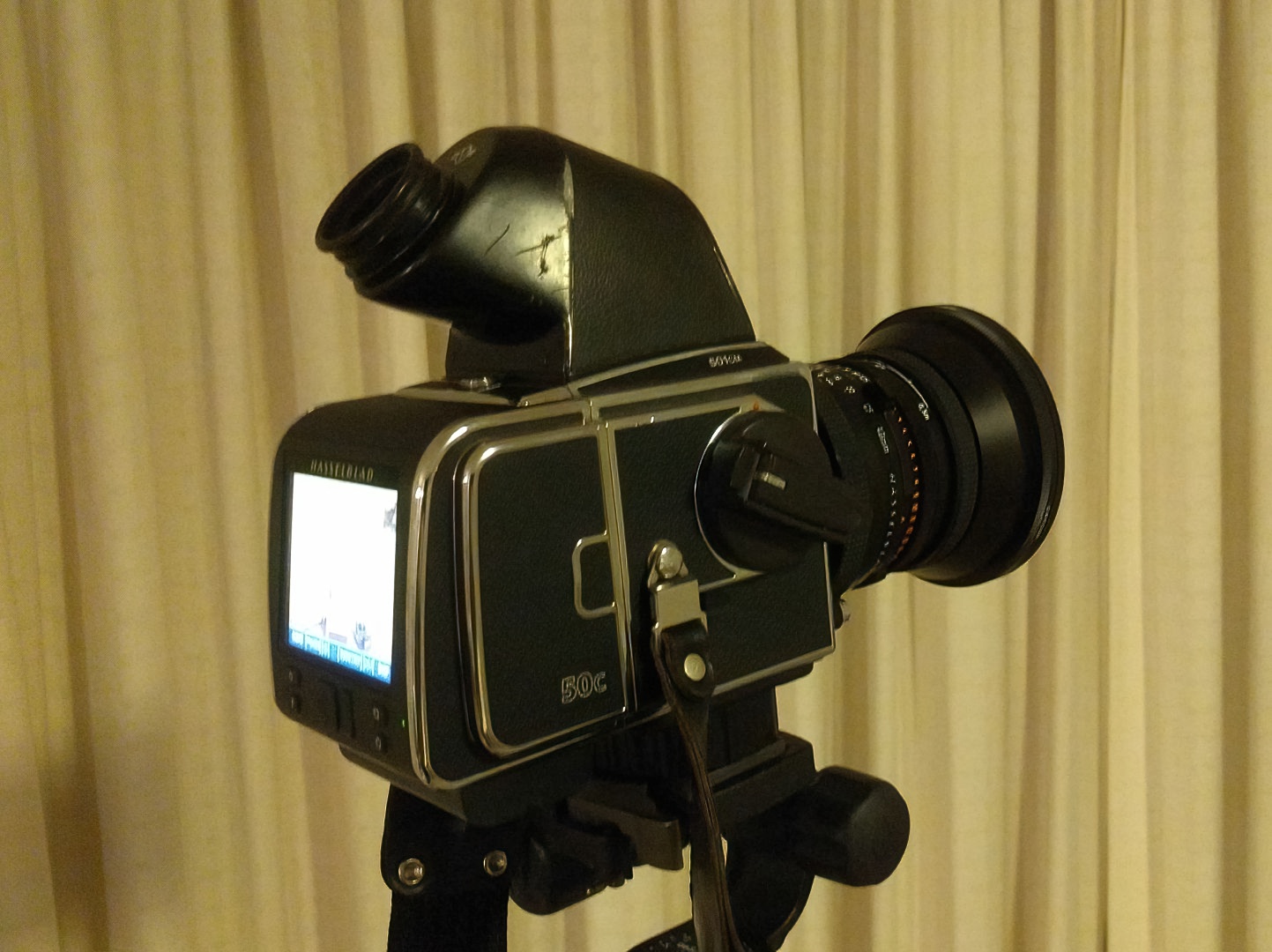
An extraordinary thing about Hasselblads is that the “V-Series” was in production from 1957 to 2013 (with the CFV digital backs, you could argue that they are still in production) and the lenses, bodies and backs are largely interchangeable. I thought it was pretty cool that I could have my oldest lens, made in the 1970s, attached to a body made in the 1980s, and a digital back made in the 2010s.
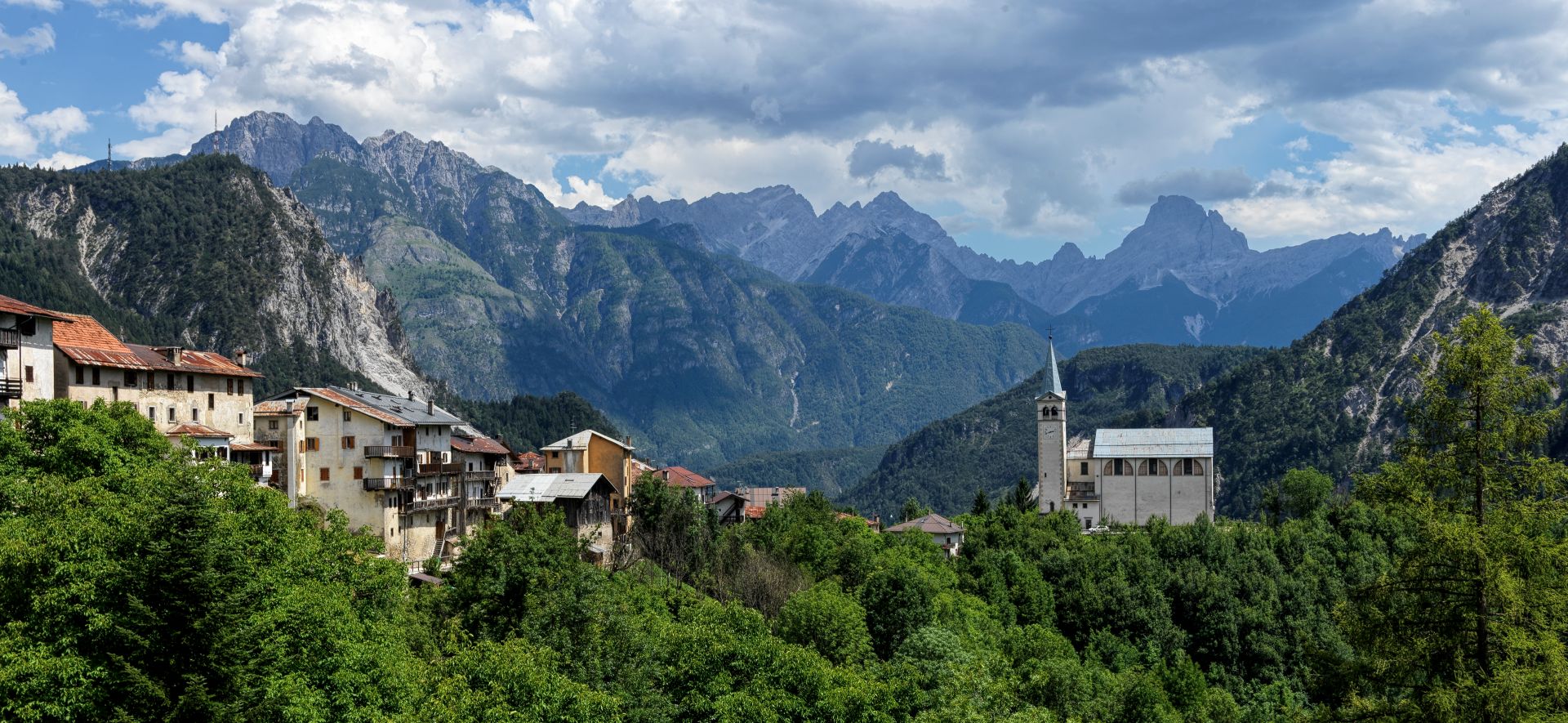
In 2017 we returned to the Dolomites – this time to the eastern part which is mostly Italian-speaking. We were staying near a town called Feltre, from which we could easily get to Belluno and thence northwards up to an area called the Val di Cadore.
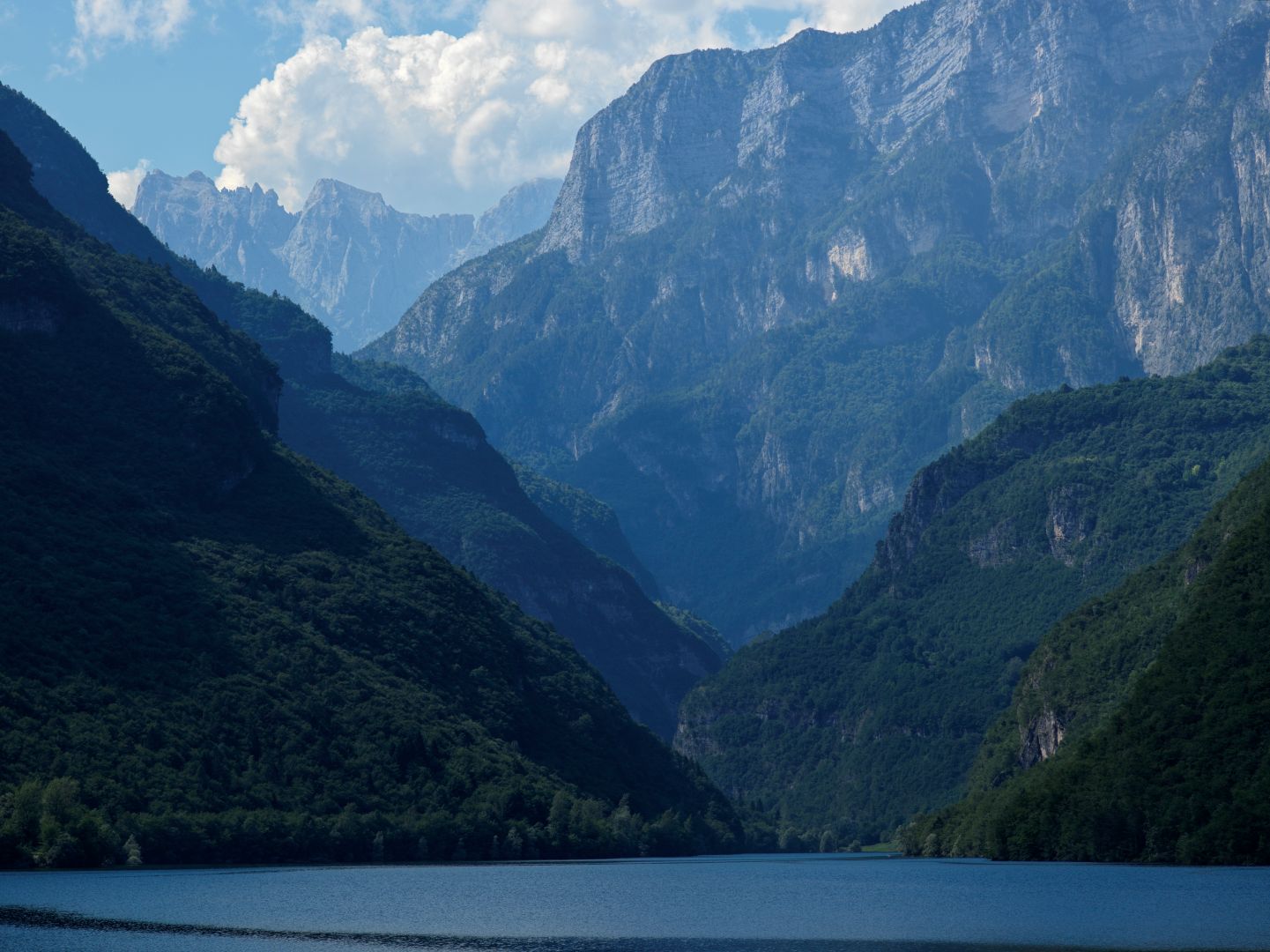
Cadore is a name known to all Italians – in the First World War this was the scene of some of the most difficult and dramatic fighting between the young unified Italy and the Austro-Hungarian Empire.
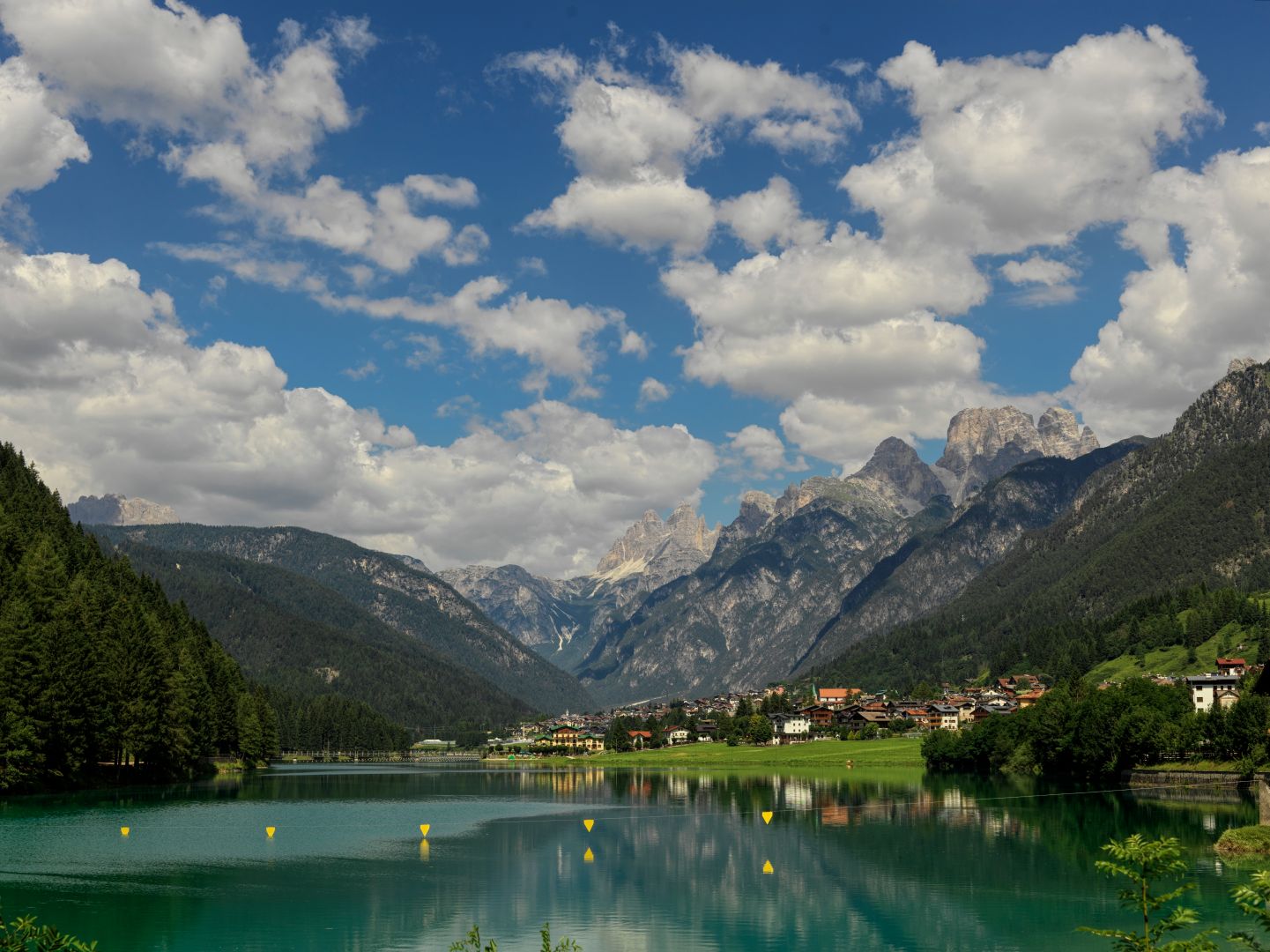
In the First World War Italy came in on the side of the Allies. But thus far the young Italian Army had only fought colonial wars against Libyans and Ethiopians, and not terribly successfully. Incredibly, Italian troops were sent into these icy mountains in light tropical kit, to face one of the most experienced militaries in the world. Where, by and large, they demonstrated heroism, resilience and tenacity.
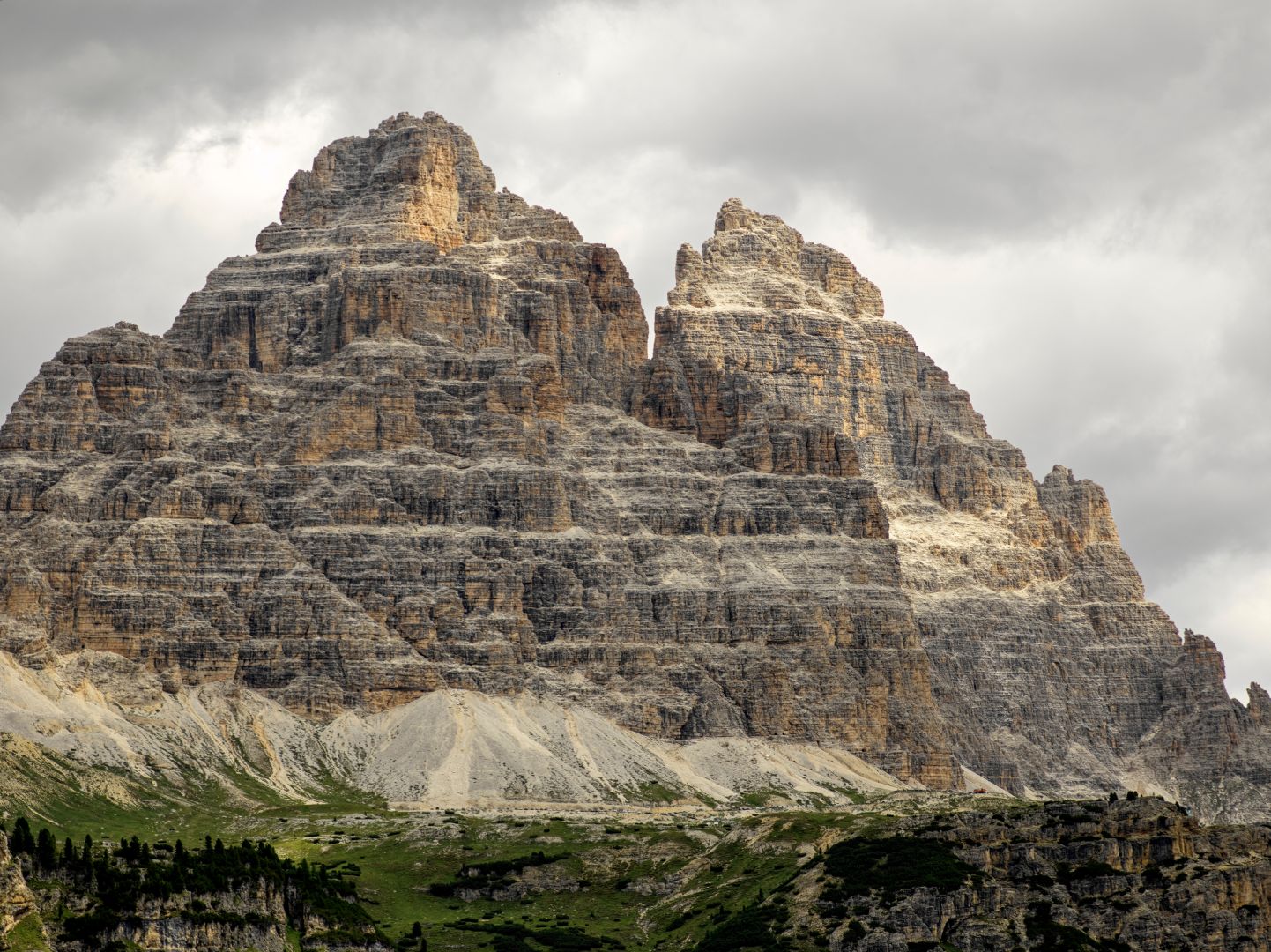
Dug into caves on these mountains, both sides hauled up light artillery pieces and with these popguns took shots at each other while sustaining many casualties – cold and avalanches were enemies as deadly as the Austrians.
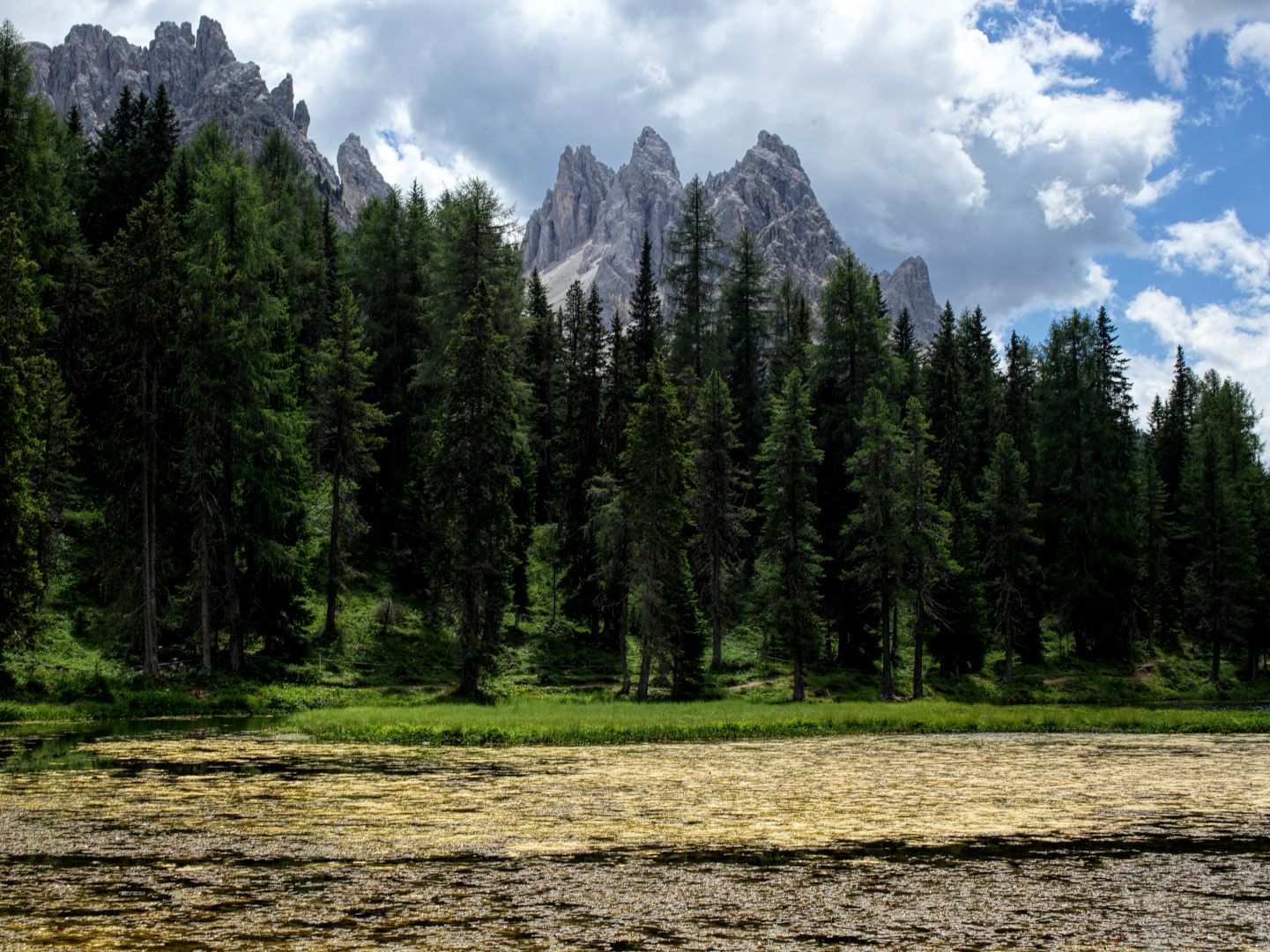
Then came the disaster at Caporetto – away to the east in the Julian Alps, in what is now part of Slovenia. I won’t go into the details here but Austrian and German troops broke the Italian line and forced the Italian Second Army into headlong retreat until they managed to regroup at the River Piave. Even today, if an Italian describes something as un vero Caporetto they are saying that it was an unmitigated disaster. The result was that the Italian forces in the Dolomites, who had fought so valiantly against great odds for so long, and held their line, were suddenly dangerously exposed and had to withdraw.
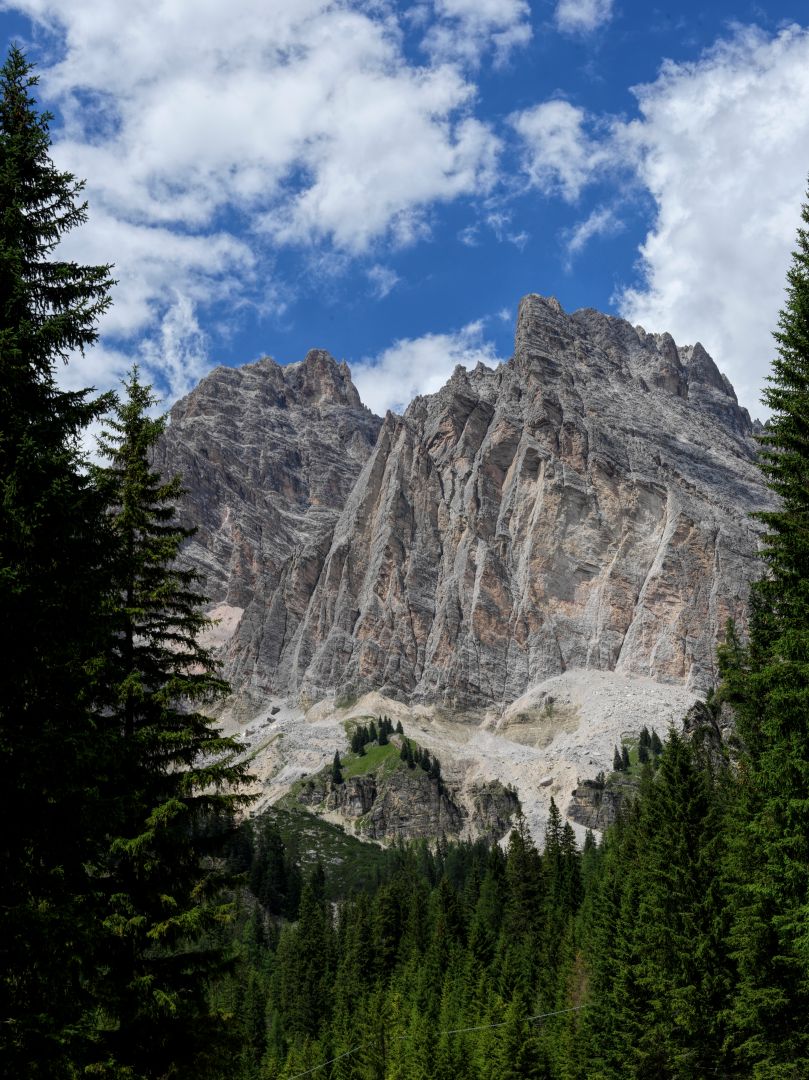
At the Treaty of Versailles, Italy’s allies, looking at its undoubted military failures, had a tendency to dismiss the Italian campaign as a comic-opera sideshow. This was deeply unfair. The demobilised Italian soldiers (Mussolini was one) felt that their suffering had been for nothing, and this resentment was to be a significant factor in the growth of Fascism.
The End of my Hasselblad Journey
I no longer have the Hasselblad gear – like my large format camera and lenses it had all become too heavy for me to carry about, so in 2022 I sold it all and invested in a used Fujifilm GFX 50R medium format digital camera, and later a new Fujifilm X-Pro 3 APS-C digital as well, both of which are a good deal more convenient. My education in digital photography, especially raw image processing in Capture One software, really started from there.
While I’m happy with the choice, I still look back fondly on those Hasselblad days. Using fully manual film cameras taught me a great deal about the craft of photography. And there’s something about using a Hasselblad – like driving an Alfa Romeo – that causes strangers to strike up conversations with you, like a Dutch guy we met at a cafe in Ferrara, or a German on a ferry on Lake Como.
I remember once passing a Japanese gentleman in the street in Melbourne, who saw my camera and exclaimed “Hasselblad!” (Although what he actually said was “Hah! Hasu Buradu!”).
[i] Estimating exposure without a light meter is not as hard as it sounds. The “sunny sixteen” rule says that on a sunny day, at an aperture of f/16, the exposure should be the reciprocal of the ISO, so 1/100 of a second if you are using an ISO 100 film. Open up by one stop for light overcast, another stop for heavy overcast, and so on. Before selenium light meters were invented in the 1930s, photographers had to do this all the time.