Every May in Bari there is a big party to celebrate a medieval grand theft. Unintentionally, we found ourselves part of it.
We have a talent for choosing awkward times to visit places. Once, after having booked flights to Italy via Singapore, we were wondering why it was so hard to find a hotel room in Singapore. Only after we arrived did we discover that the Formula One Grand Prix was on that weekend. Our onward flight was made less comfortable by the fact that all the aisle seats on the 747 had been booked by the F1 crew members.
This year I drove into Rome and wondered why some major roads were closed, only to realise that the Giro d’Italia cycling race was in town.
However sometimes the inconvenience of arriving at the wrong time is compensated for by the subsequent experience. This is often the case with turning up in a place on the feast day of the local saint. We’ve done this in Lucca and Chiusi, and although it might be hard to park, one can be amply rewarded by seeing a place celebrating something not for tourists, but for itself.
So, there we were, a couple of months ago, driving into Bari with two friends. We had planned the trip to Puglia (the “heel” of Italy) months earlier, and were expecting a relaxing couple of days exploring the Old Town of Bari before proceeding further south to Lecce. We had visited Puglia about fifteen years ago (see my post on Puglia and the Salentine) and were looking forward to seeing it again and showing our friends.
But something was wrong. You know those scenes from Westerns, when Clint Eastwood rides into town, accompanied by an ominous Ennio Morricone score: it is deserted, people hide behind barrels or scuttle away into side streets, all creating a sense of foreboding. Well, driving into Bari was nothing like that. Apart from the growing sense of foreboding, that is. The proprietor of our accommodation had provided us with detailed instructions on how to get there, while omitting to mention that on this weekend, road closures would make it impossible to follow those instructions.
And instead of people scuttling away, or hiding behind barrels, there were other signs which strike terror into the heart of anyone who knows Italy. Local police directing traffic! Traffic barriers and road closures! And worst of all – portable toilets! Something was definitely up.
We didn’t have an ominous Ennio Morricone score playing on the car stereo, but it was there in our heads. Also, it was raining, a lot.
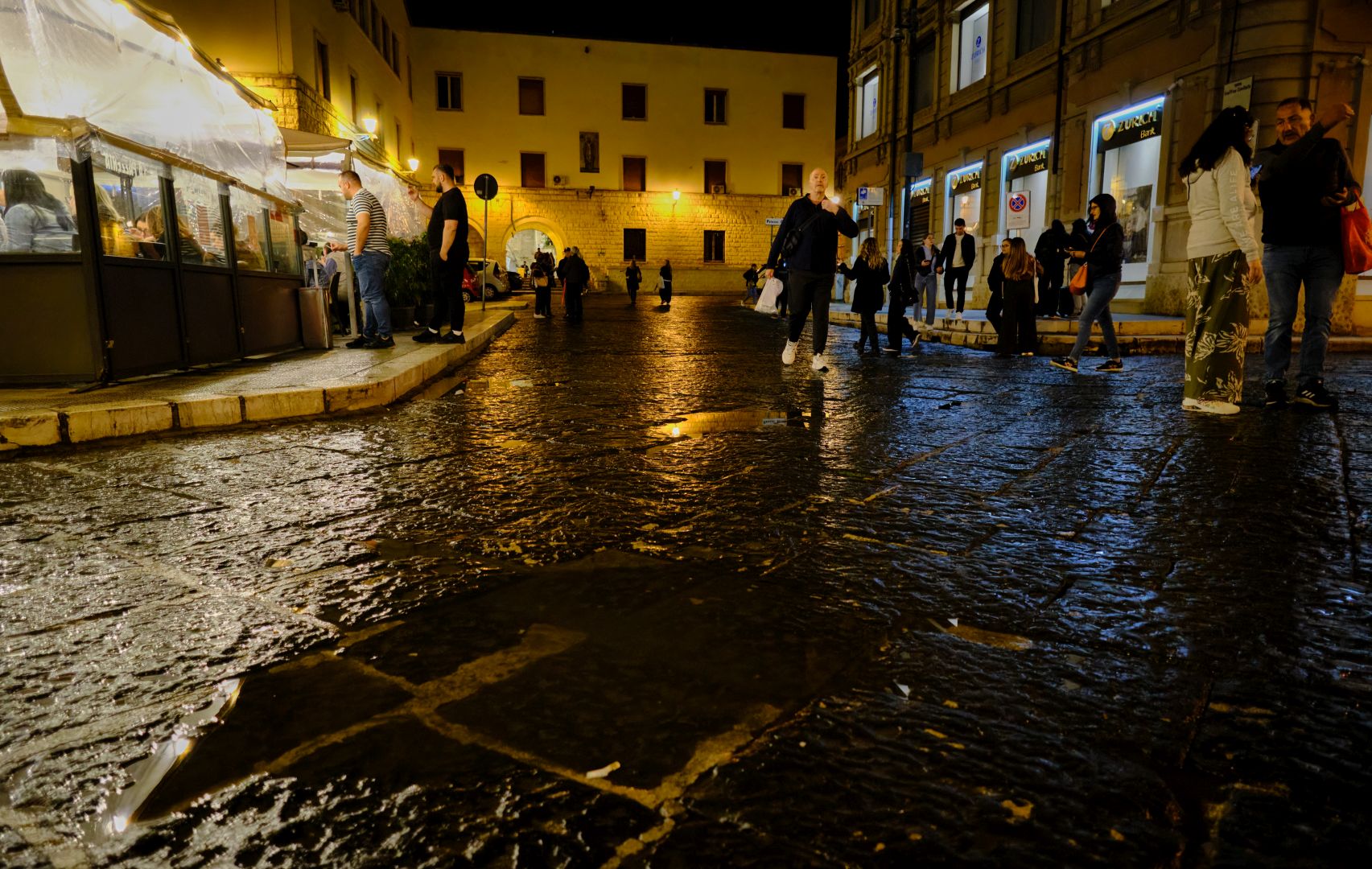
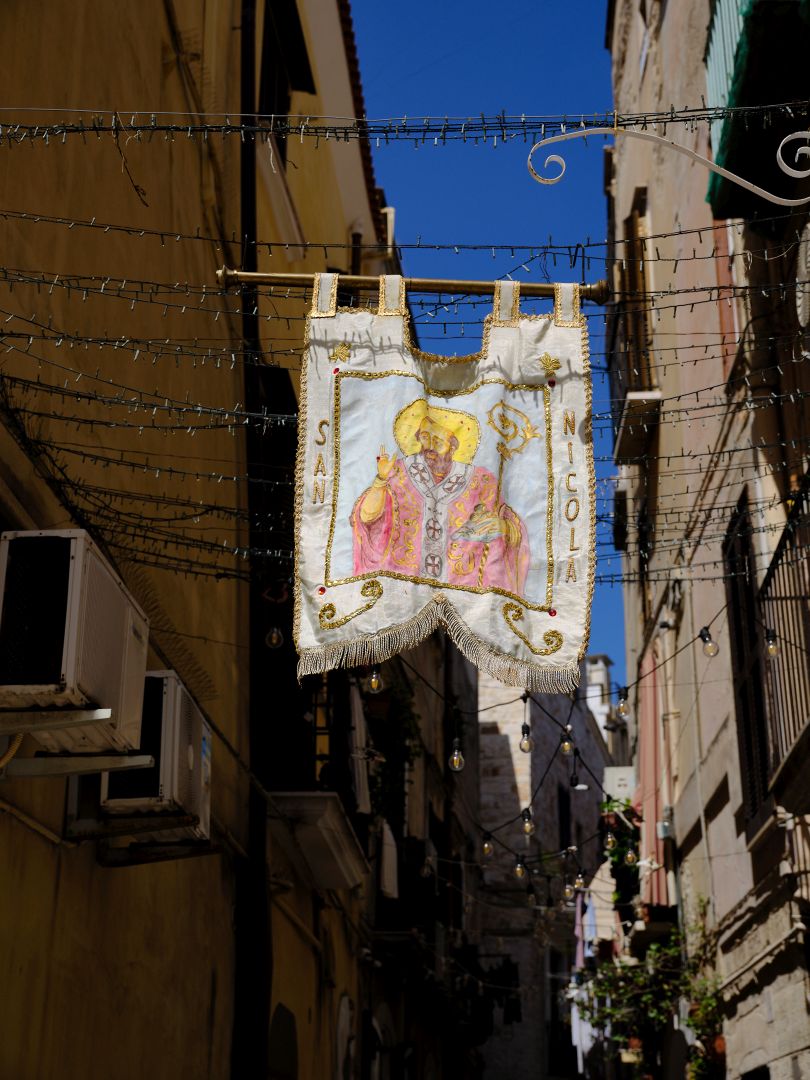
We had arrived, it transpired, during celebrations in honour of Bari’s patron saint – San Nicola, known in English as Saint Nicholas.
My heartrate is already rising writing about this, so it’s time to lower the tension with, naturally, a bit of history. Who was Saint Nicholas of Bari? I’m glad you asked.
The Real Saint Nicholas
He didn’t come from Bari, and probably never went there, at least not when he was alive. He was a Greek from Asia Minor – Anatolia in what is now southern Turkey. In fact he is properly known as St Nicholas of Myra, the town of which he was bishop.
He lived from 270-343 AD, or at least those are the traditional dates of his birth and death. So he lived during the Imperial period, specifically during the reigns of Diocletian, when Christians were persecuted, and Constantine, who recognised Christianity. There are suggestions that he attended the Council of Nicaea in 325, where the Nicene Creed of orthodox Christianity was adopted, but these suggestions are from later centuries and there are no contemporary records of him doing so.
And that is about as far as conventional history can take us, but when history fails, legend generously leaps in to fill the gaps with lots of imaginative detail. It seems he was a busy chap and is credited with a great many good deeds and miracles.
His most famous miracle is that of the “pickled boys”. During a famine, a butcher kidnapped and murdered three boys and pickled their bodies in brine, intending to pass them off as pork and sell them. St. Nicholas resurrected them, and is frequently pictured next to them.
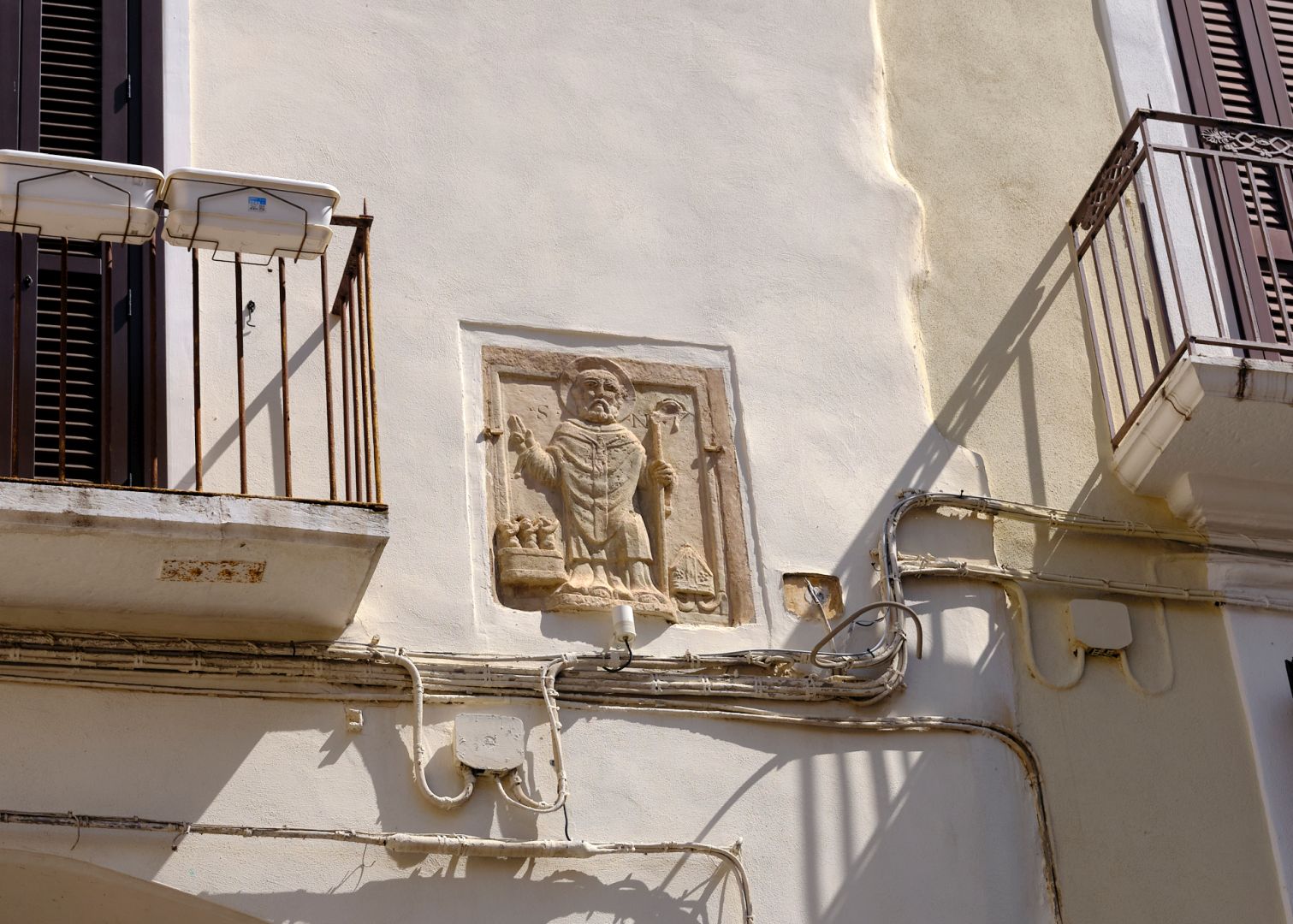
Apparently the story was so well-known that sometimes people didn’t bother including the boys in the pictures, and just showed him next to the barrel in which they had been pickled. But over time the story got confused and people started associating him with the barrel rather than its contents. Saint Nicholas might therefore have been surprised to find out that to his many other portfolios were added being the patron saint first of coopers, and then of brewers.
Among his good deeds, as opposed to miracles, the most famous is how three daughters of an impoverished father faced being forced into prostitution. Sneaking up to their window on three consecutive nights, Nicholas dropped bags of gold coins in, allowing the father to pay each girl’s dowry and save her honour.

Since Saint Nicholas’s feast day was in December, this act of charity started to be associated with Christmas gift-giving, in several countries. In The Netherlands, “Saint Nicholas” became Sinterklaas, and in that form he made his way to the Dutch settlements in North America, where in a complicated case of cultural fusion, he exchanged attributes with the traditional English Father Christmas, and they both became Santa Claus. With considerable assistance from a 1930s advertising campaign for Coca-Cola, the 4th-Century Bishop of Bari ended up in the 20th Century as a jolly old man wearing a red costume trimmed in white fur. If St Nicholas was watching from heaven, I hope he found it amusing.
Let’s get back to Myra. The emergence of these and many other legends makes it clear that Saint Nicholas was genuinely venerated, and famous beyond his homeland. It seems that Theodosius II and Justinian recognised this, as both later emperors founded or restored churches dedicated to him.
But in the 11th Century, Anatolia was overrun by the Seljuk Turks, and the Christian Greeks became a subject population. In 1087 a group of merchants from Bari saw an opportunity. Breaking into the sarcophagus in Saint Nicholas’s church in Myra, they removed most of the skeleton and took it back to Bari. Later, during the First Crusade, some Venetian sailors gathered up a few leftover bones and took them back to Venice.
Theft of the relics of a saint was a surprisingly common thing in the Middle Ages. Possession of such relics – however acquired – made your city a place of pilgrimage, and the pilgrim trade was lucrative. The theft of the body of Saint Mark from Alexandria and its removal to Venice is a famous example, but there were others. And while you might think that the saints themselves would look askance at such treatment of their earthly remains, there were always convenient miracles, or at least a dream or two, to demonstrate the saints’ post facto ratification of the act. Or someone might suddenly remember an old story that the saint in question had actually expressed a desire to be buried there all along.
So it is easy to be cynical, but to the medieval mind the possession of such relics brought spiritual as well as material benefits. Patron saints could be expected to intercede on your behalf to invoke divine aid in times of plague, famine and war.
To be in possession of such relics brought a responsibility to protect them against similar larceny. Famously, the tomb of Saint Francis of Assisi remained hidden in the foundations of his basilica for almost six hundred years until the danger was past.
Enter the Normans
What sort of place was the Bari to which the relics of Saint Nicholas were taken? If you know much about the 11th and 12th Centuries in Southern Italy (or are a keen reader of this blog) it will not surprise you to know that it was under Norman rule at the time. In fact, the whole Norman adventure in Italy might be said to have started here.
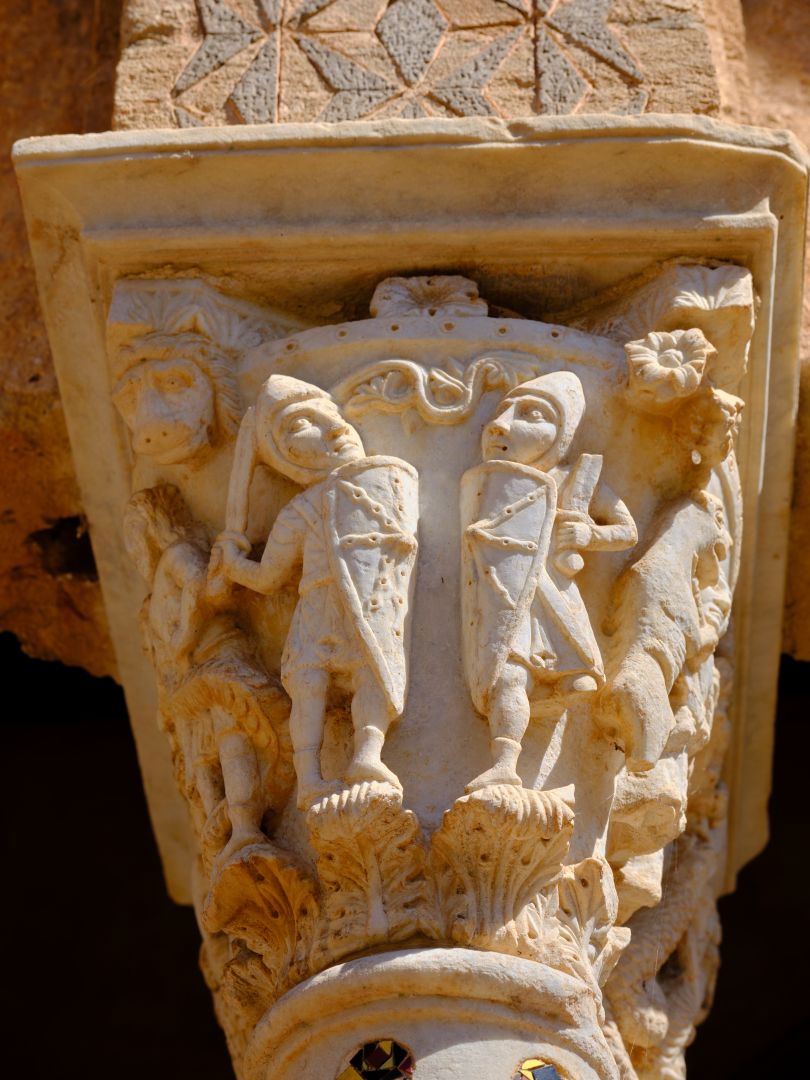
After the fall of the Western Empire, Bari was variously ruled by the Ostrogoths, Byzantines, Lombards and even for a brief period, the Muslim Berbers. Then the Byzantines again. In the early 11th Century the Lombards in Puglia were rebelling against Byzantine rule, and in a move they would come to regret, some Lombard nobles met a couple of Norman knights returning home from a pilgrimage to the Holy Land, and suggested that those Normans might find it lucrative to bring a few of their mates back with them and join the fight. They did come back with their mates, and they did find it lucrative, so much so that under Robert “Guiscard” de Hauteville, they took over the whole place. Robert’s younger brother Roger then reconquered Sicily from the Muslims, and Roger’s son Roger II became king of both Sicliy and the southern mainland. I wrote about this fascinating period in my post on Norman Sicily.
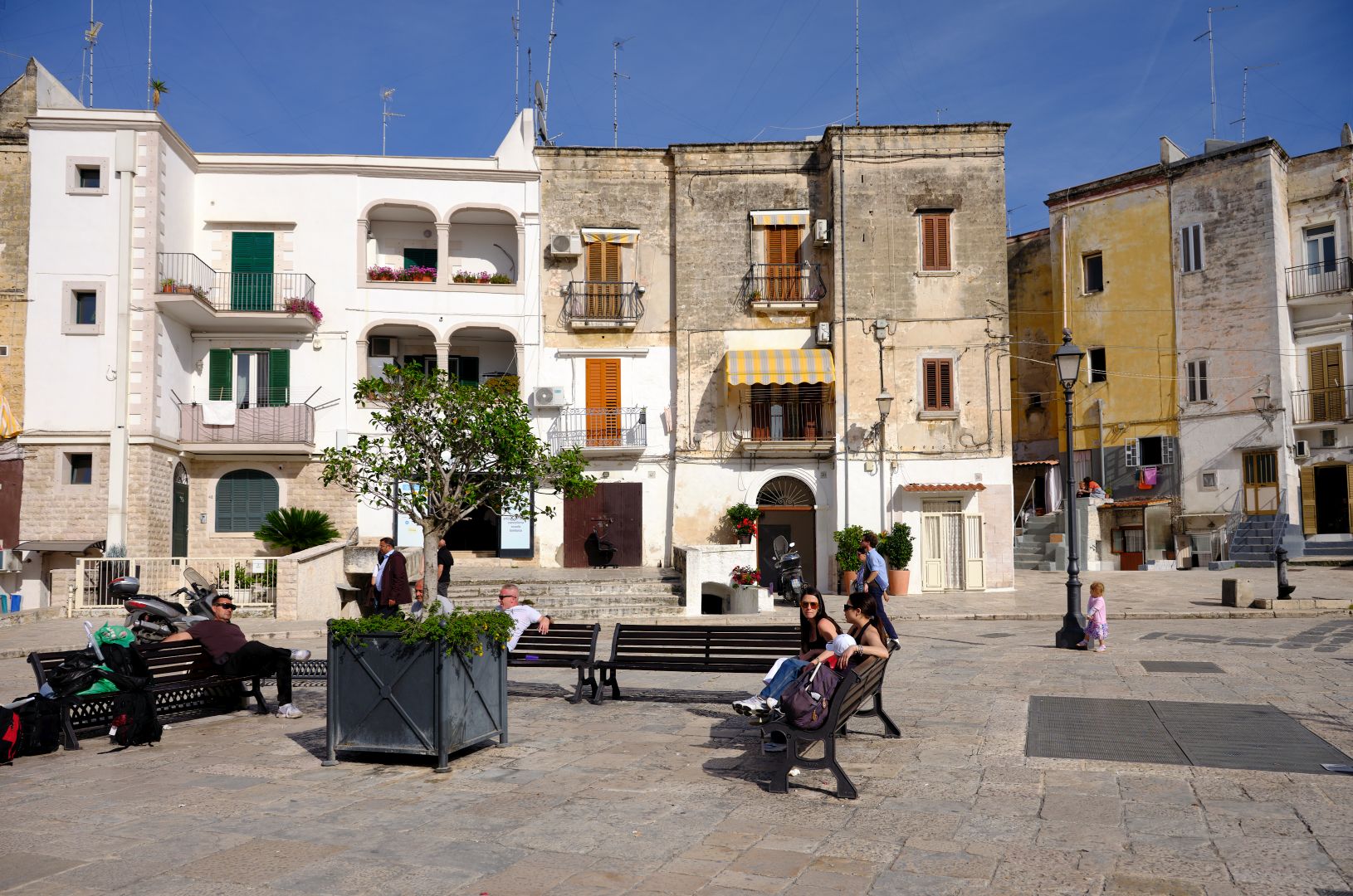
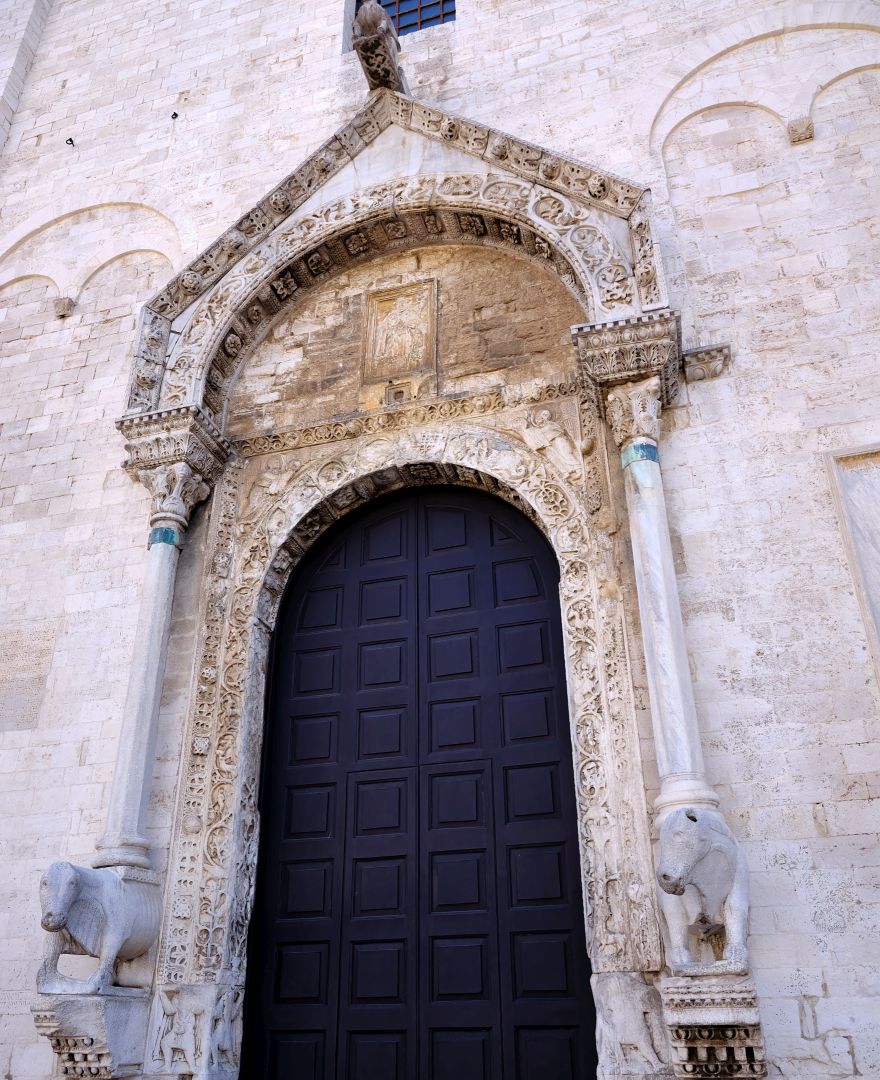
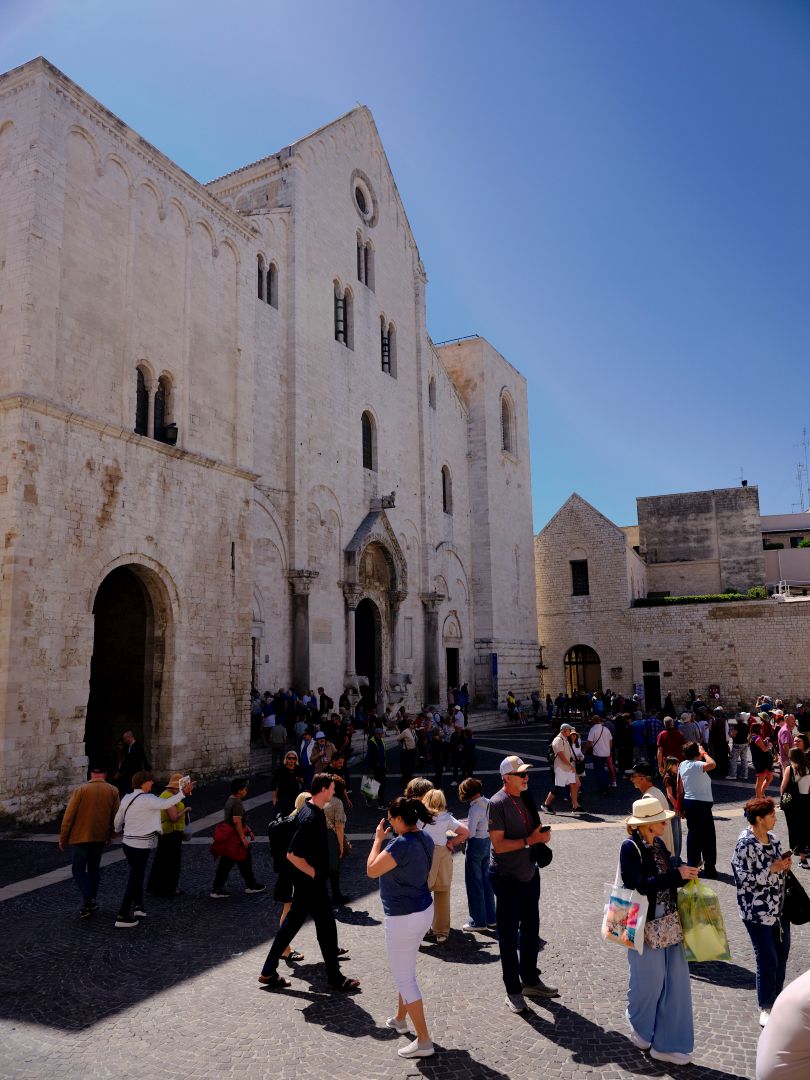
The greatest monument to Norman rule in Bari is, fittingly, the Basilica of Saint Nicholas. Construction began in 1087, the year that the saint’s relics arrived, and continued until 1197.
The greatest Hauteville descendant (through his mother Constance, the daughter of Roger II) was Holy Roman Emperor Frederick II of Swabia, known as Stupor Mundi, the wonder of the world. He left his mark on Bari in the form of the great fortress on the edge of the Old Town, but I do not propose to write about that here because I would like to do a separate post on him one day.
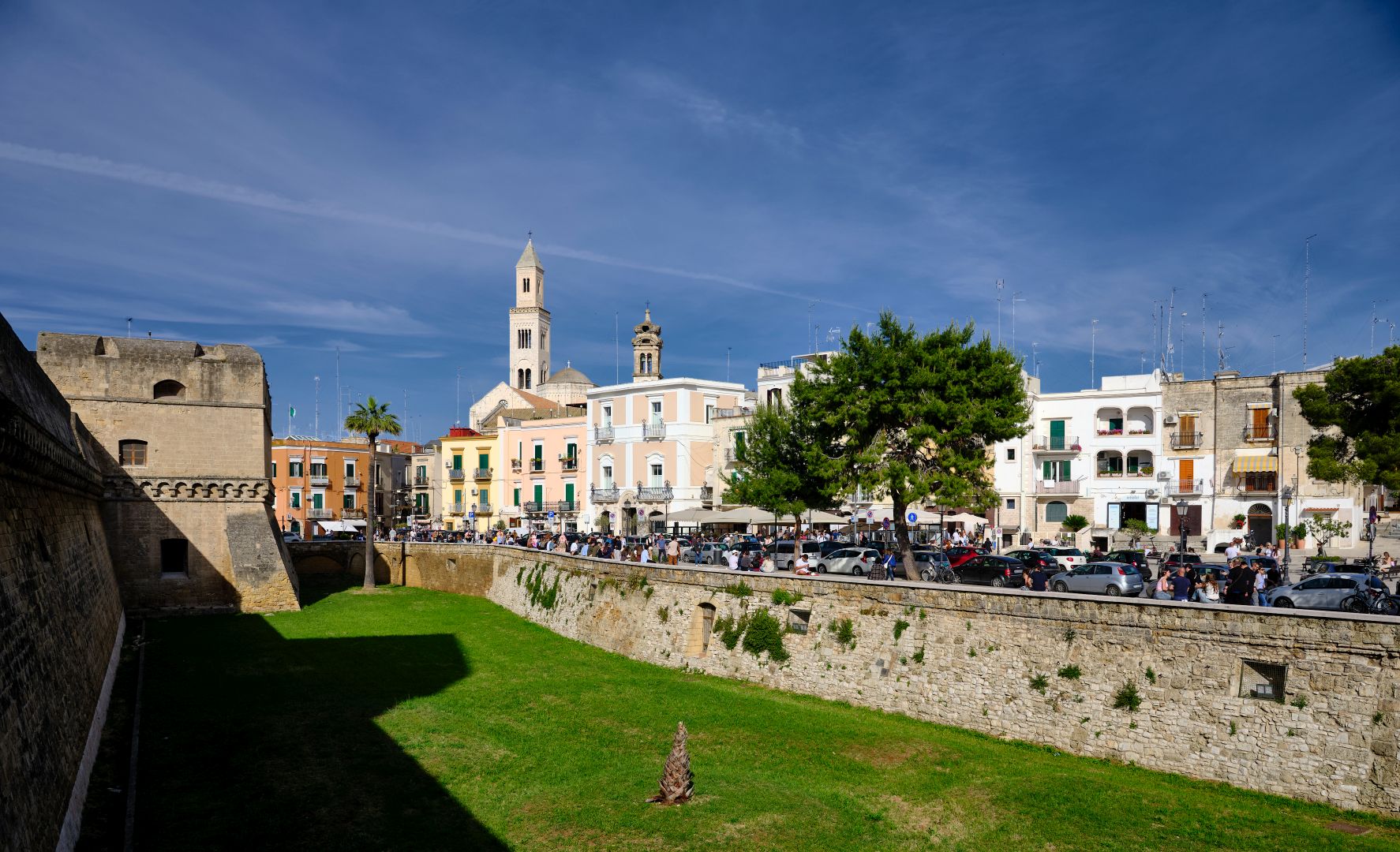
Let’s get back to our visit to Bari. I mentioned earlier that Saint Nicholas’s feast day is in December, but we were there in May. It turns out that in Bari, they celebrate San Nicola (as I shall now refer to him) with a huge party on the anniversary of the arrival of his bones, or “translation”, as the relocation of relics is referred to. So what we were actually celebrating was a medieval heist.
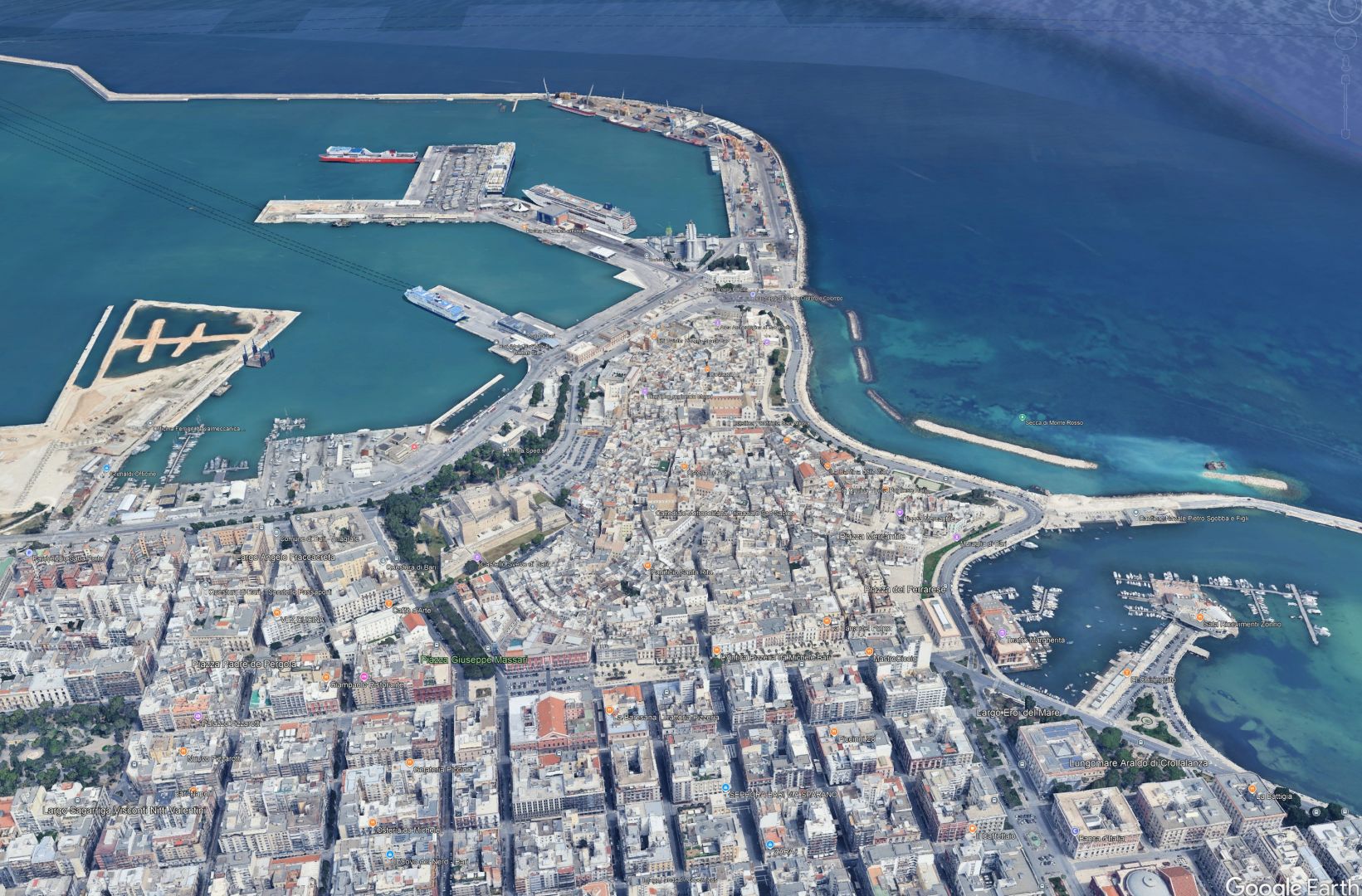
Ancient Bari – founded long before the Romans arrived – was on a promontory sticking out into the Adriatic, with a good harbour, but also with a short defensible landward side. These days the topology is harder to see on a map due to the commercial port that has been built on one side, and the marina on the other, but the picture below, a screenshot from Google Earth, makes the Old Town a bit easier to see – the medieval jumble of the Old Town contrasts with the regular 19th-Century grid to the south..
We had booked accommodation at the edge of the Old Town very close to a car park that I should have been able to drive straight into, but thanks to the road closures I had to drop Lou and our two companions in what I hoped was walking distance, and go off and find a more distant place to park.
The Festival
Once that was sorted out, we headed out to see the festival. The lungomare (sea front road) on the edge of the Old Town had been closed to traffic, and given over to the street food sellers that are found at every such festival in Italy, although we’ve seldom seen them at this scale. Some of the stalls were the same as you find all over Italy – particularly the ones that sell alarmingly coloured sweets and usually a few toys as well. This is not a world that has kept up with modern attitudes so you will see plenty of little girls wheeling toy prams, and little boys wielding toy automatic weapons.
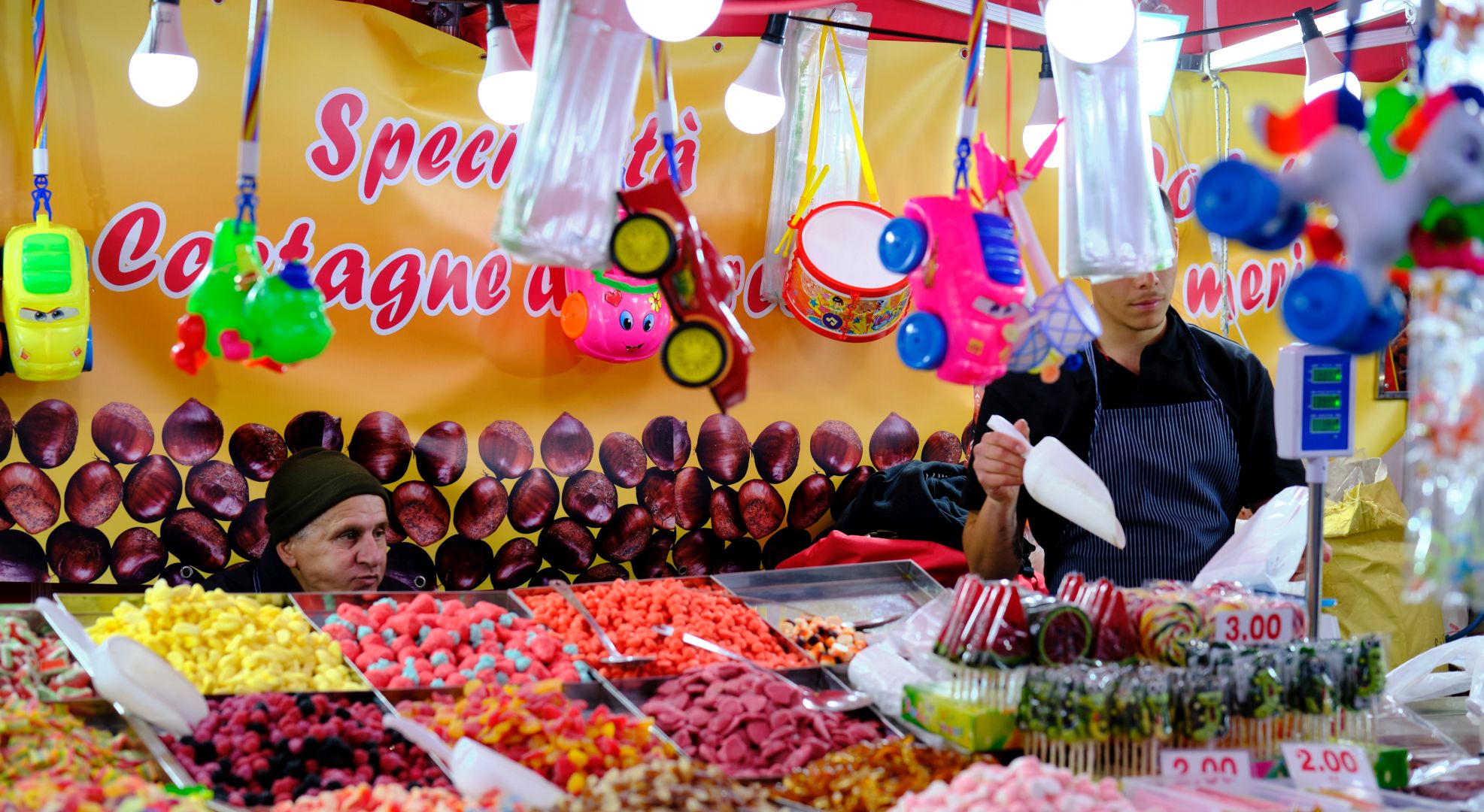
They also tend to sell helium balloons shaped like cartoon characters, and over the course of the evening various spider-men and Disney princesses floated off into the Adriatic sky, to the wails of the children below who had accidentally let them go.
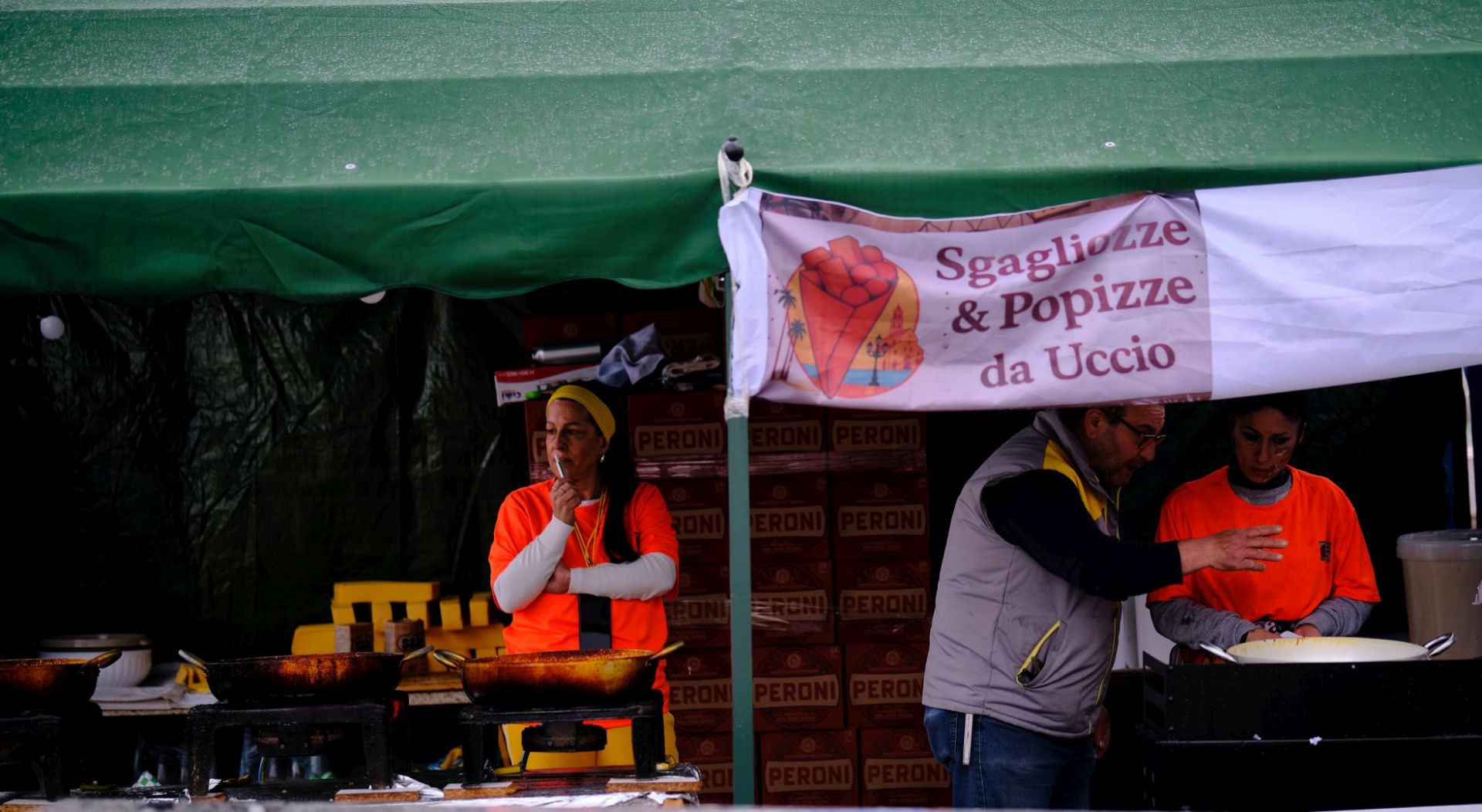
But there were also places selling local specialities, which gives Italian festivals so much character. The only proper way to eat these is “al cartoccio” which means from a rolled-up cone of brown paper.
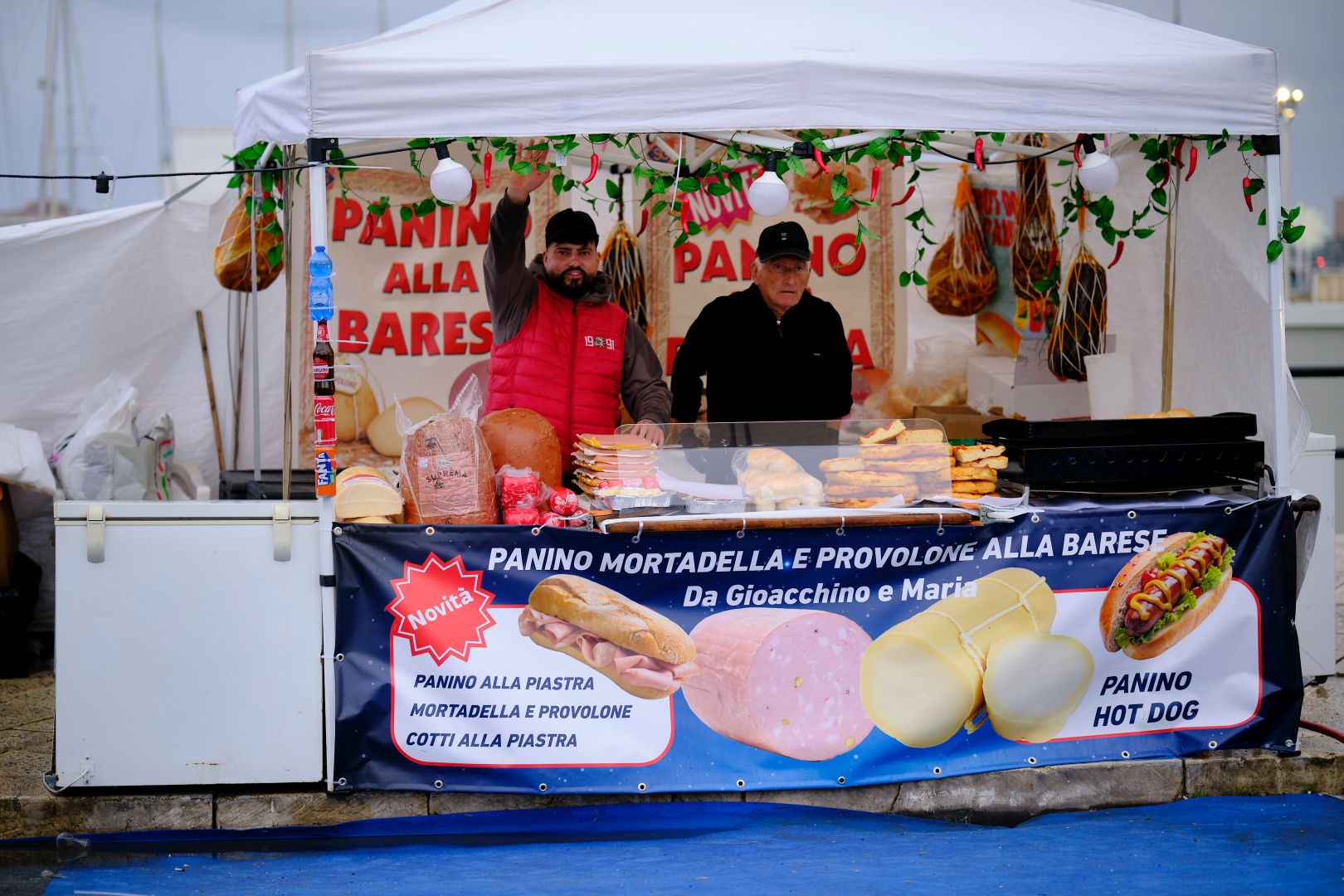
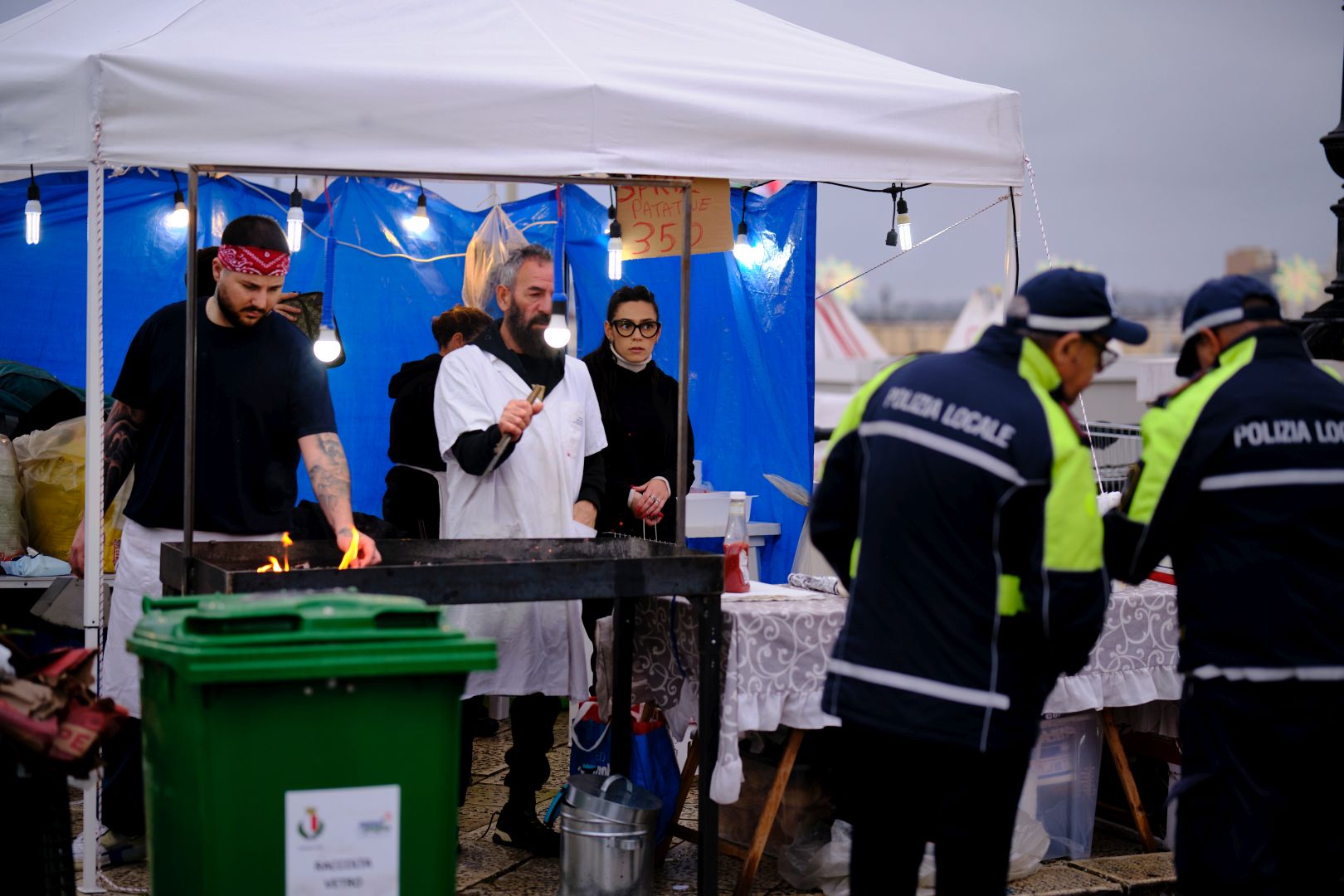
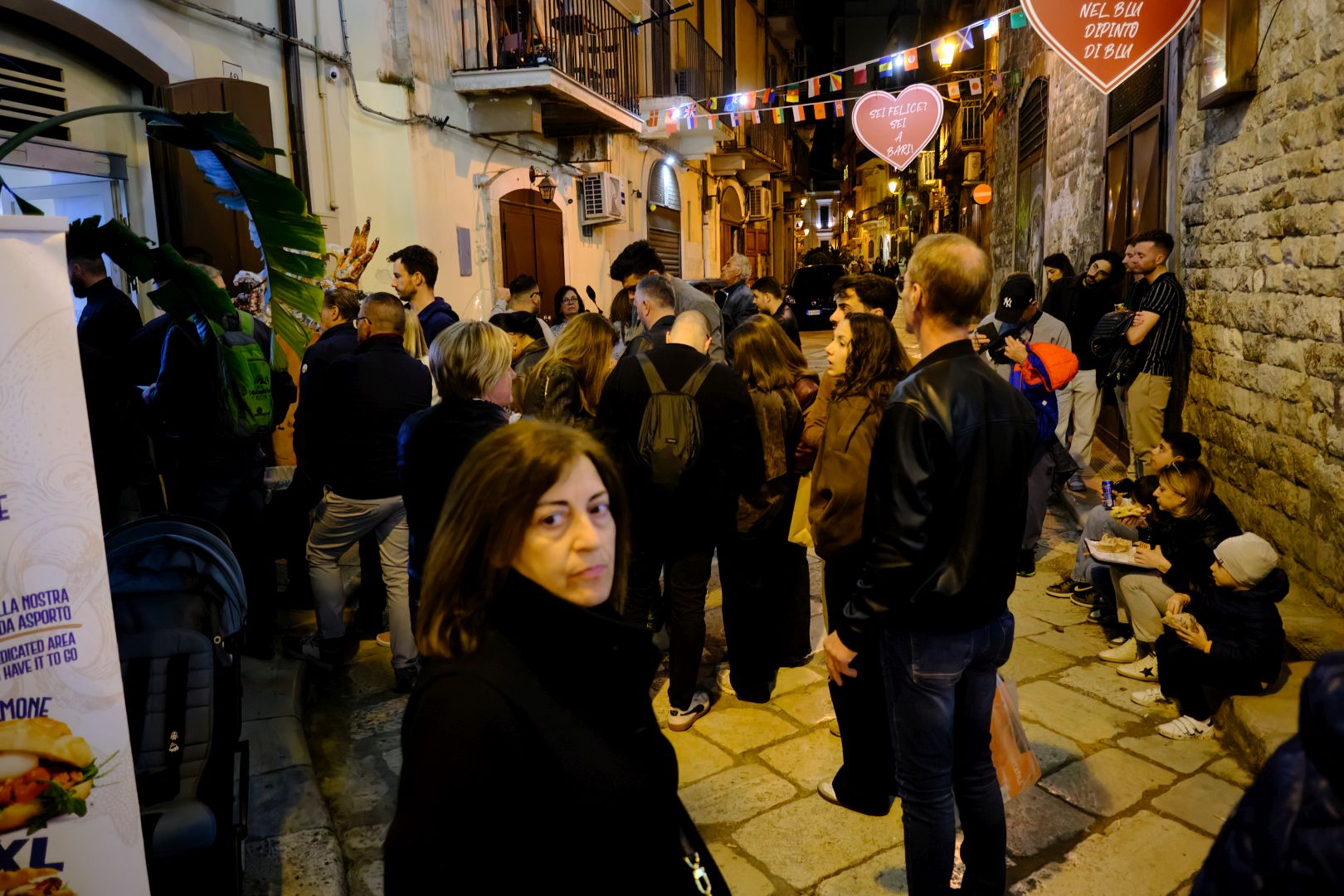
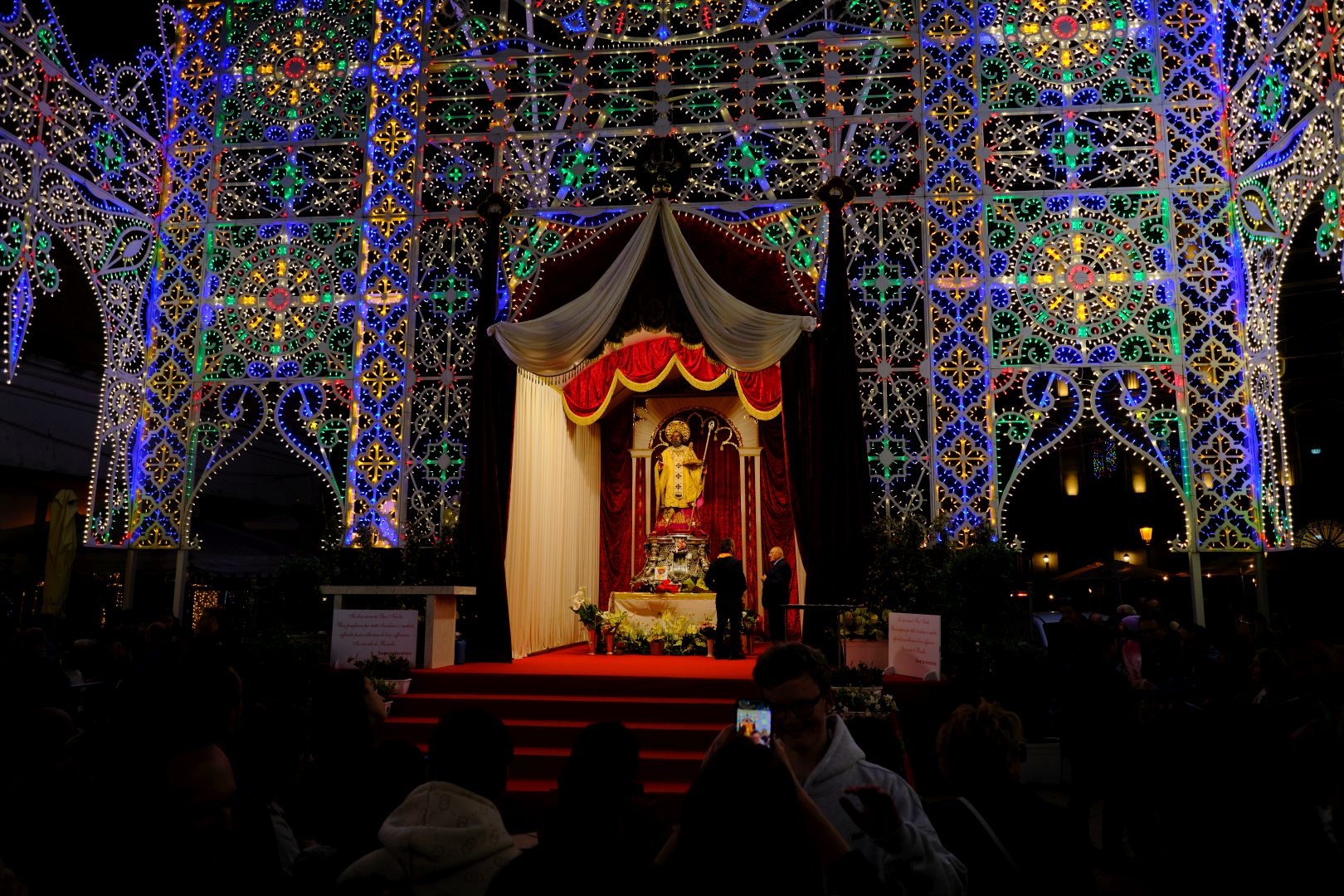
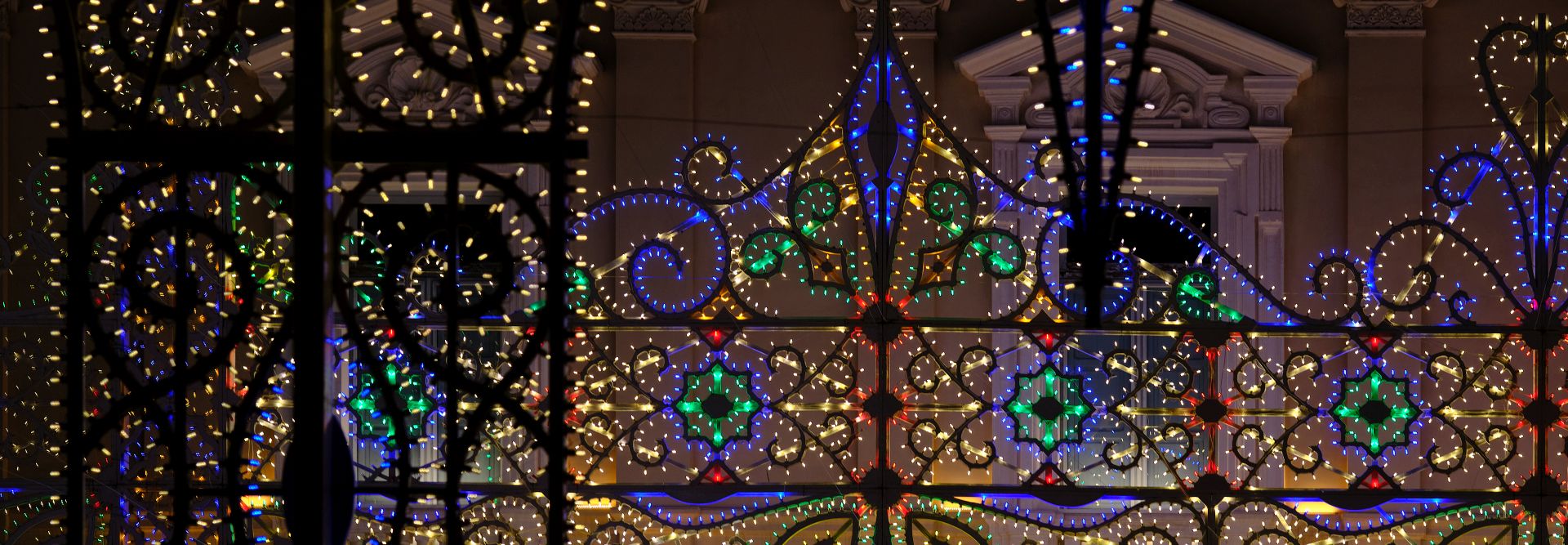
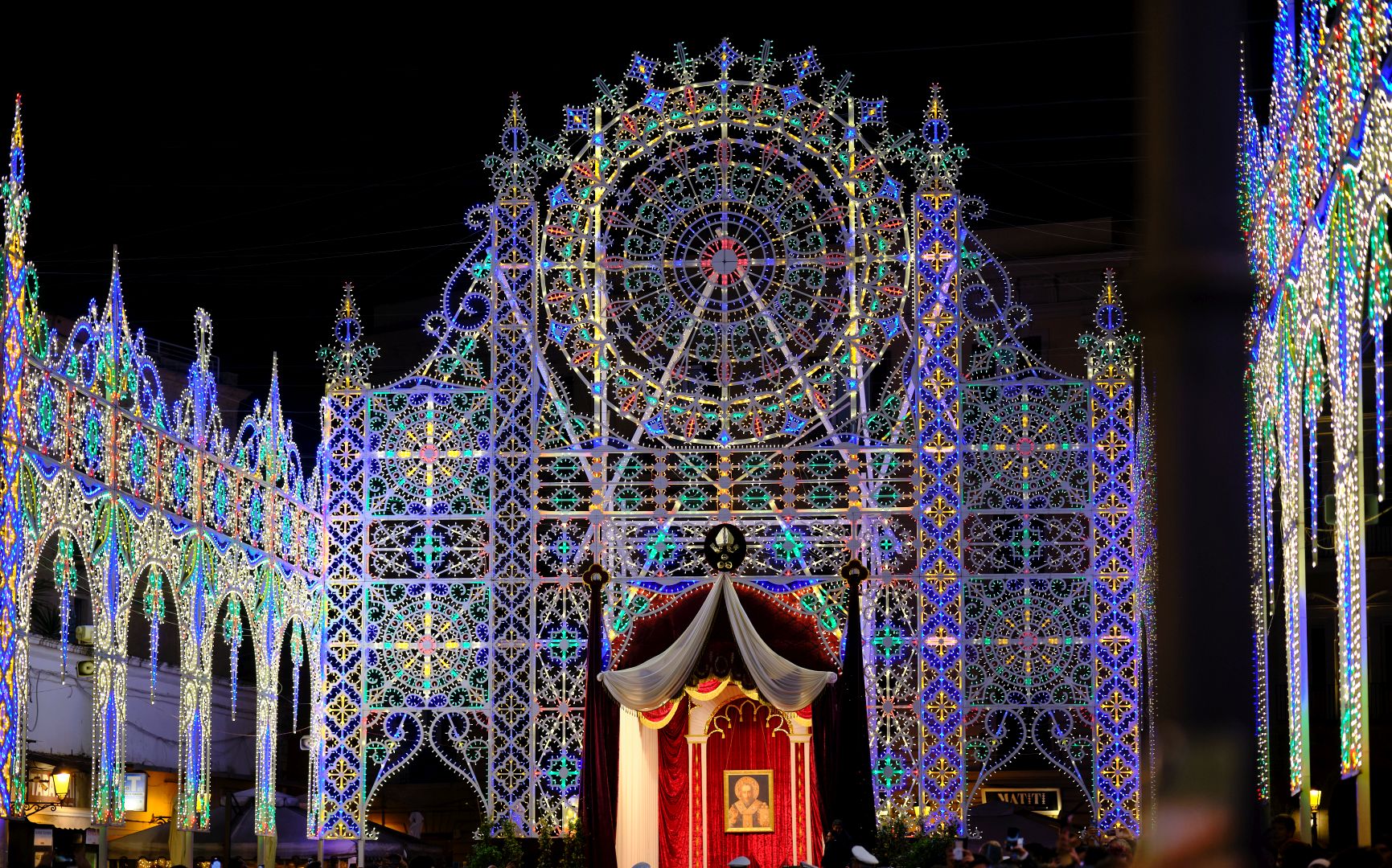
Next to the lungomare, at one corner of the Old Town, is a long thin pedestrian area called Piazza del Ferrarese. This was clearly where the festival action was going to be, because a double line of barricades ran down the middle, and along each side had been erected the elaorate white structures that hold the illuminations, called luminarie. We’ve seen them elsewhere in southern Italy and in Sicily, but in Puglia they are an essential at everything from a wedding to a huge public festival like this one. At the end of the piazza a stage had been erected.
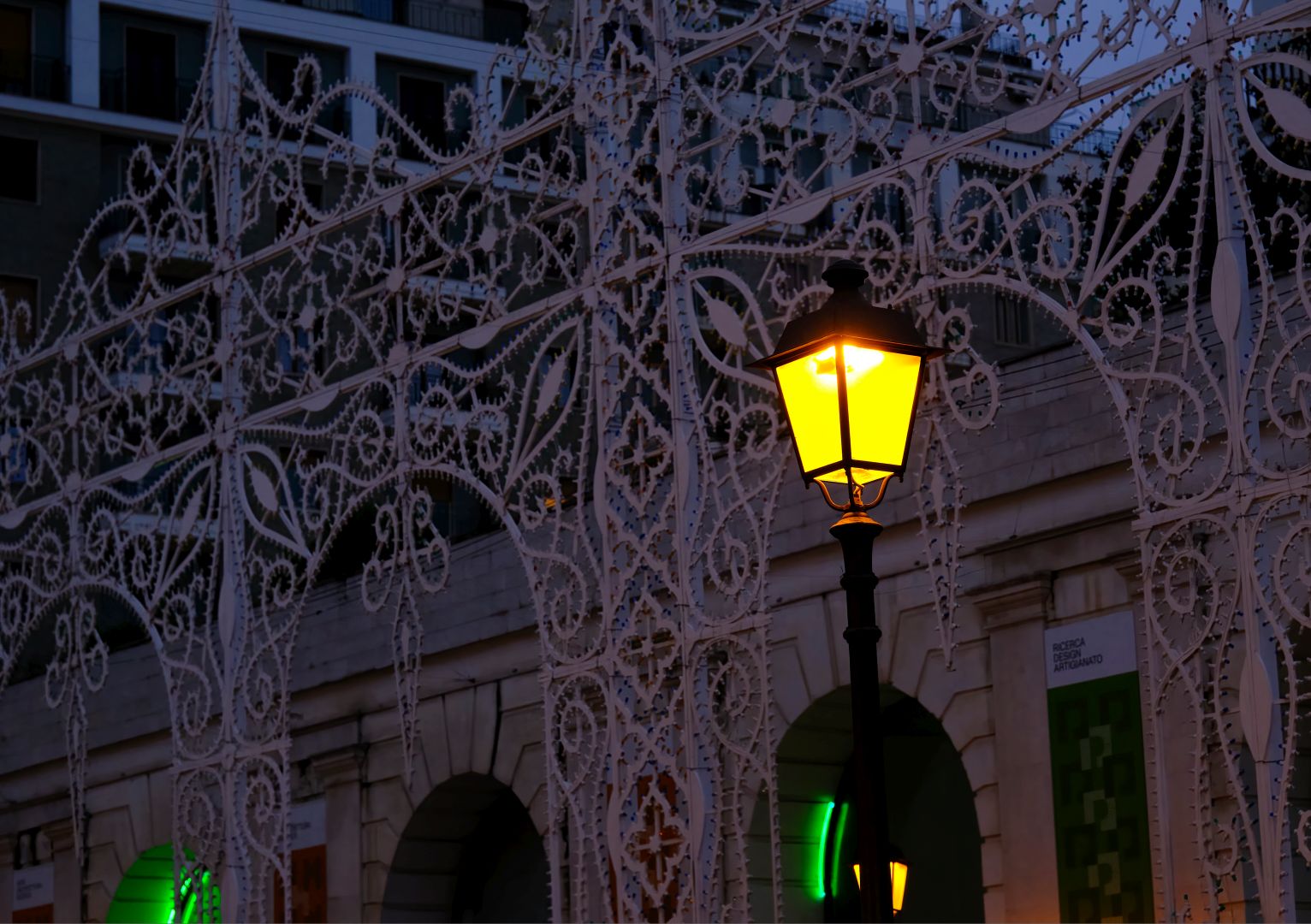
After dinner we headed back down that way, along a street which I was delighted to see was called Strada Roberto Il Guiscardo. Since the crowd was starting to build, we decided to stake a claim to a spot on the barricades about halfway down the piazza, and waited. We were struck by how few of the crowd seemed to be tourists, either foreign or Italian. Instead they were almost all locals – families, adolescents, young adults, old people. The atmosphere was very cheerful and even the adolescents were behaving themselves.
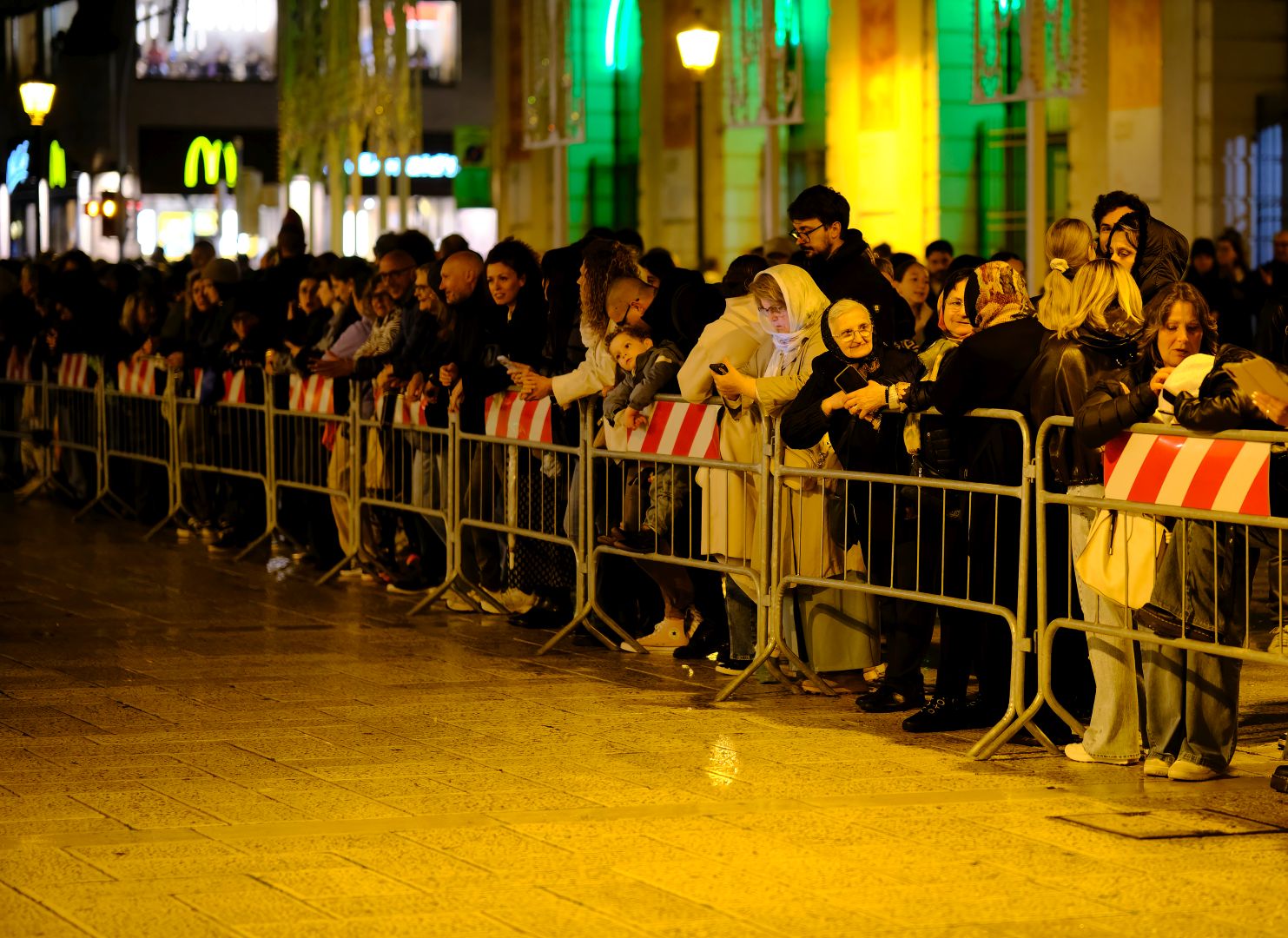
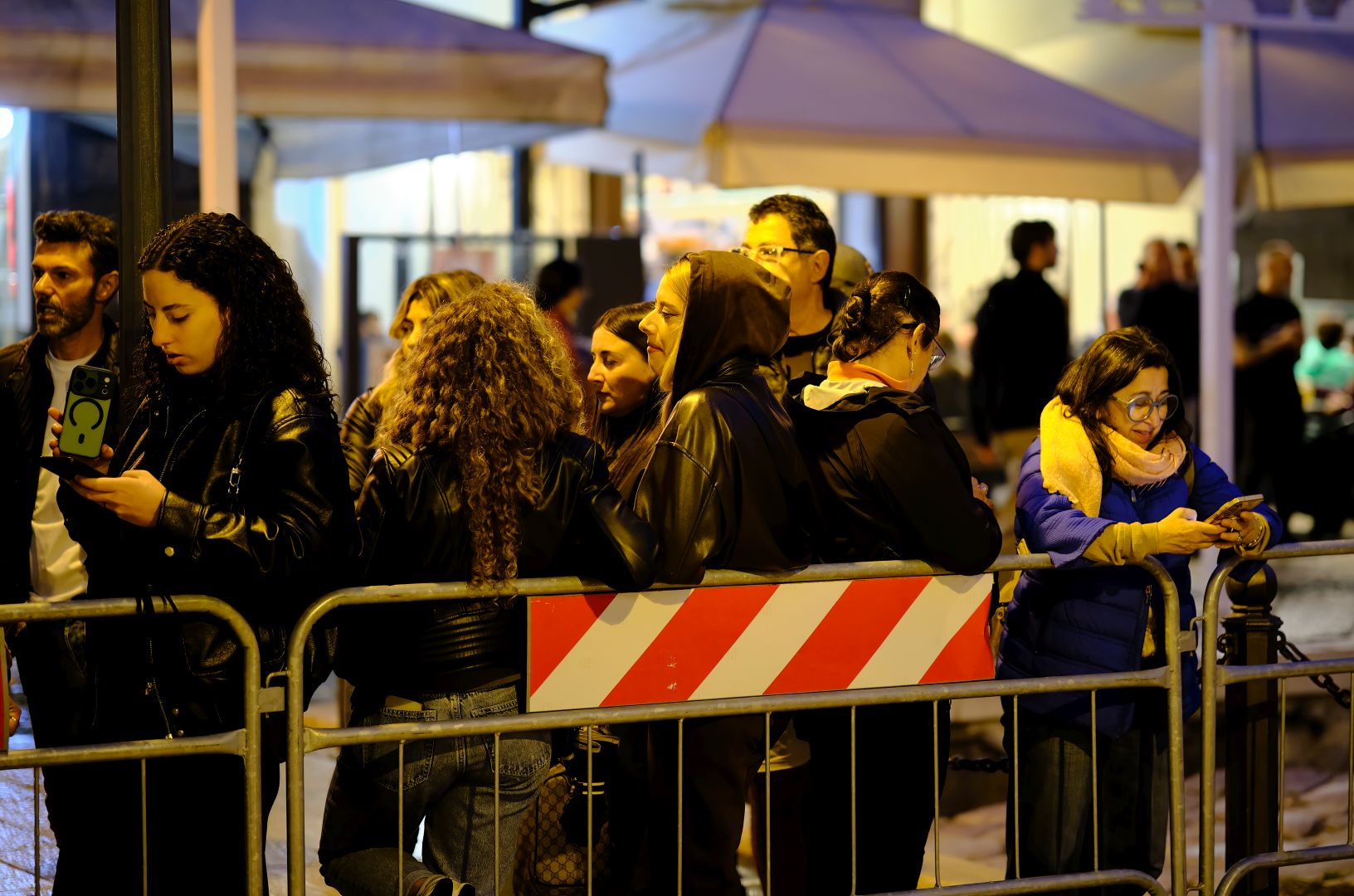
There was no shortage of people to marshal the crowd. Every Italian region seems to have several corps of volunteers who turn out at times like this – civil defence personnel, first aiders and others, all with their own uniforms, and walkie-talkies into which they spoke very seriously, like the bodyguards of a VIP. And the local police, resplendent in their uniforms, appeared regularly to check that everything was OK.
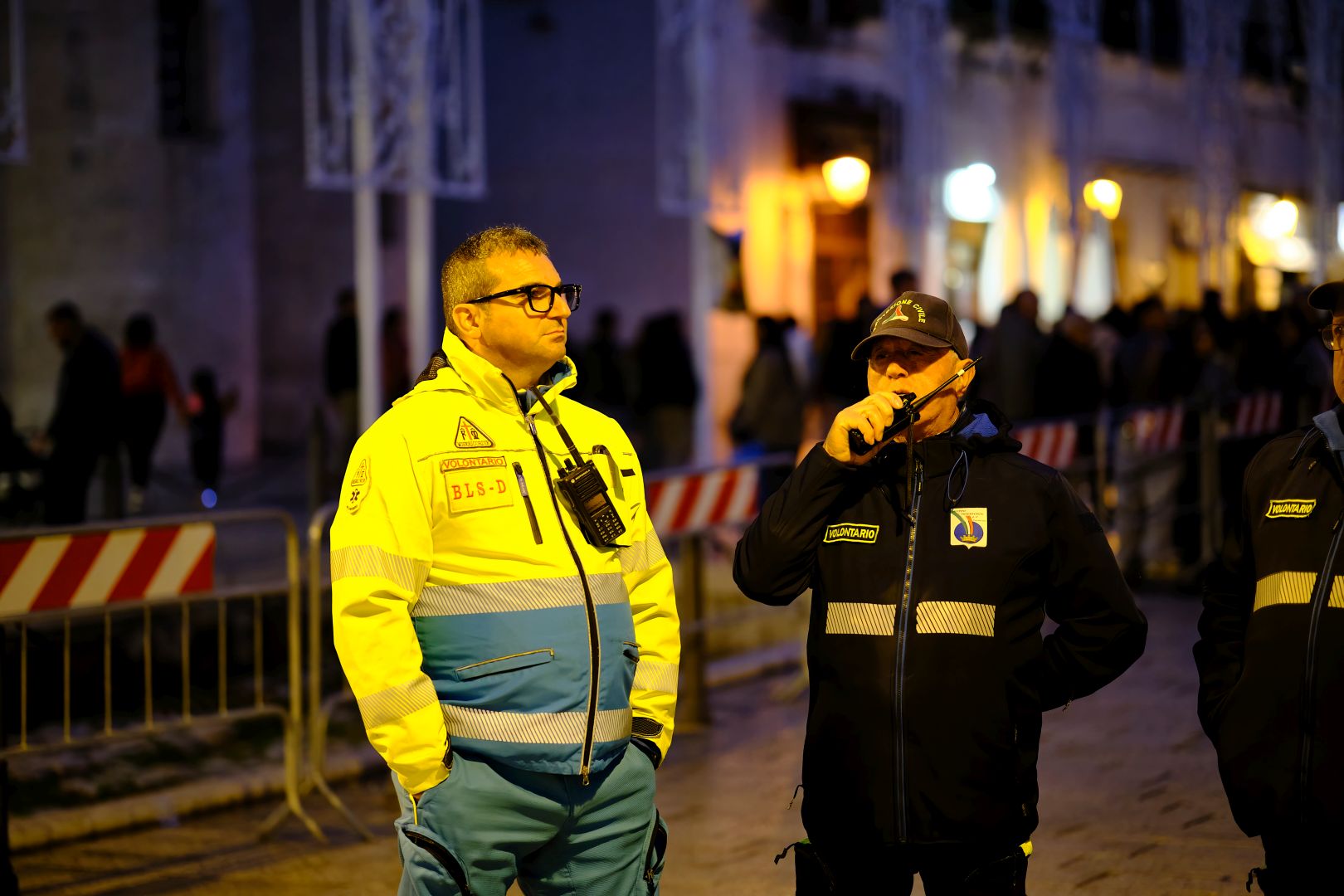
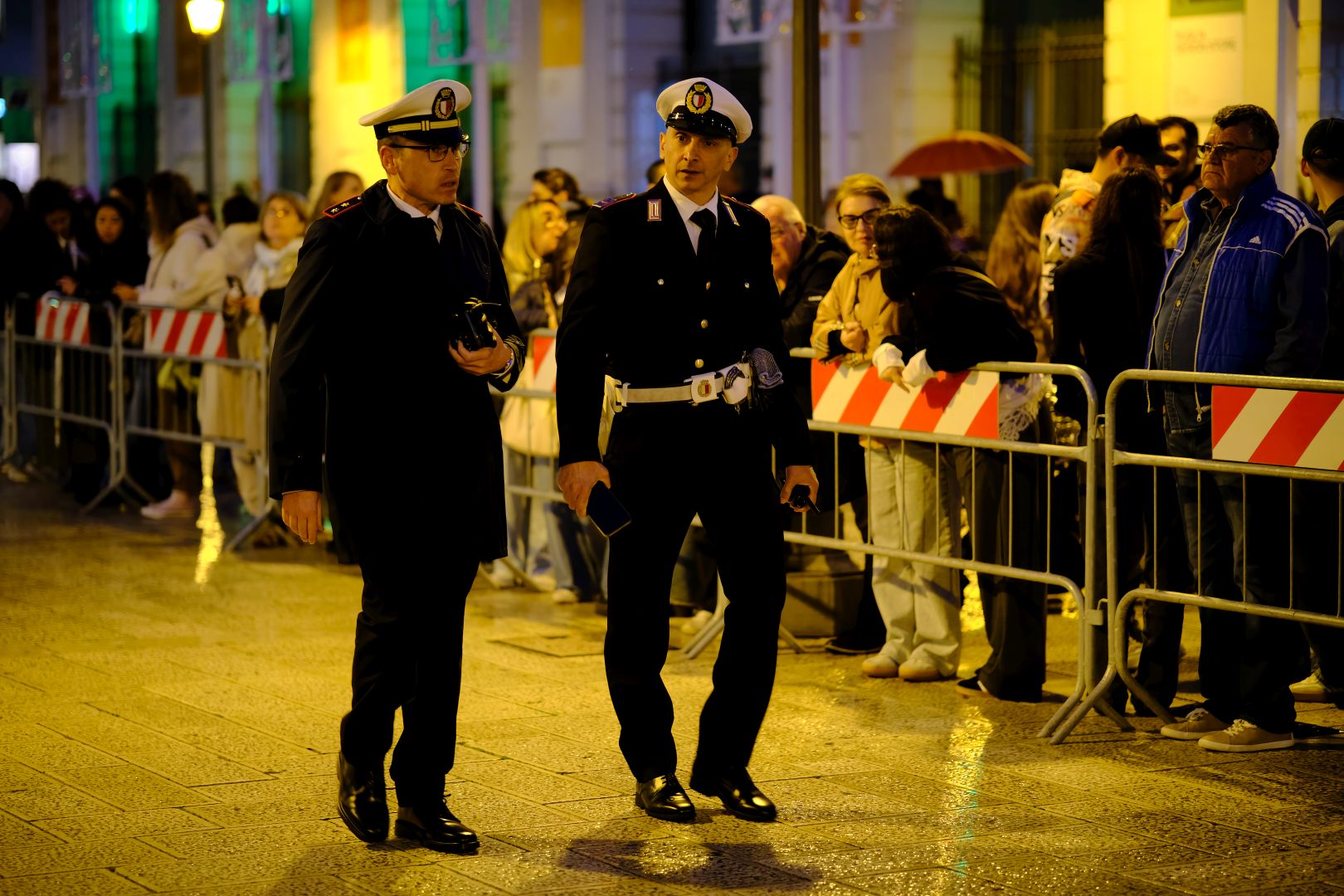
The crowd built further, the visits from the local police grew more frequent, as did the volunteers’ consultations with their walkie-talkies.
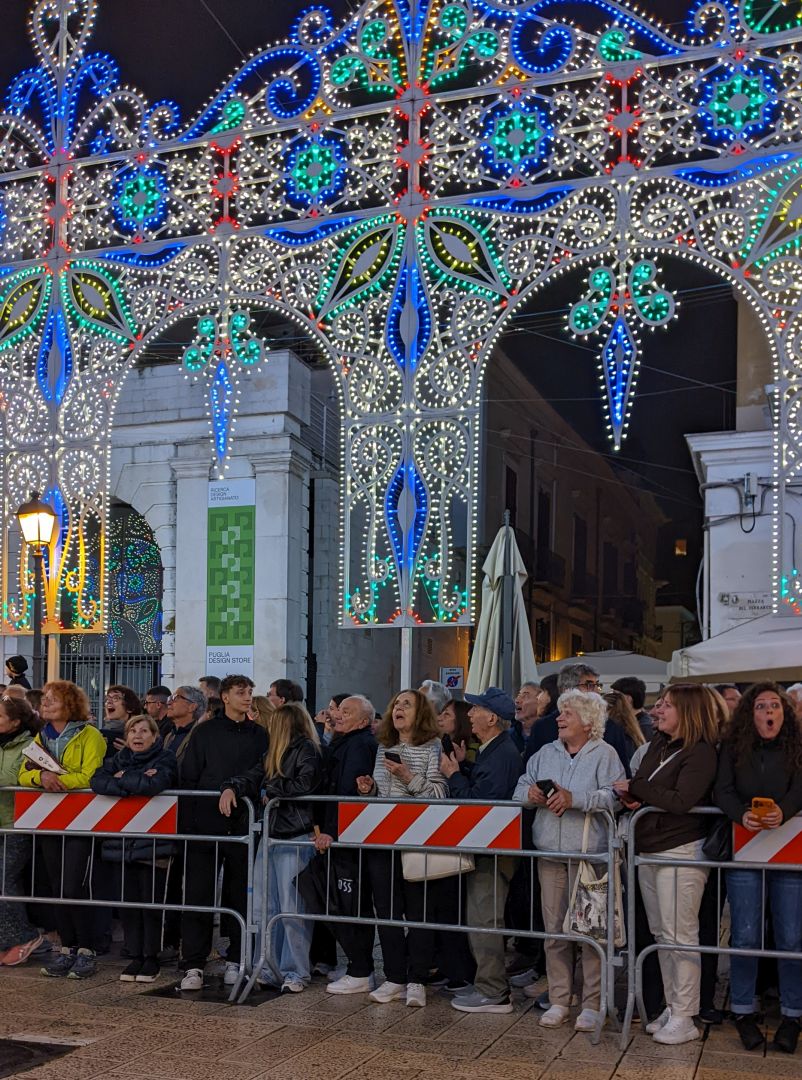
Suddenly, the luminarie lit up gloriously, to gasps of delight and applause from the crowd. Most of us pointed our cameras and phones up at the lights, but Lou pointed her phone at the crowd and got their reaction.
In the distance, we heard the thump of a bass drum, gradually joined by the other instruments of a brass band as they drew closer. Eventually the vanguard of the procession appeared round the corner, and what a very Italian group it was. Such processions, although obviously religious in nature, are remarkable for their inclusiveness. Sometimes it seems that anyone can get to take part, providing they have a uniform to wear.
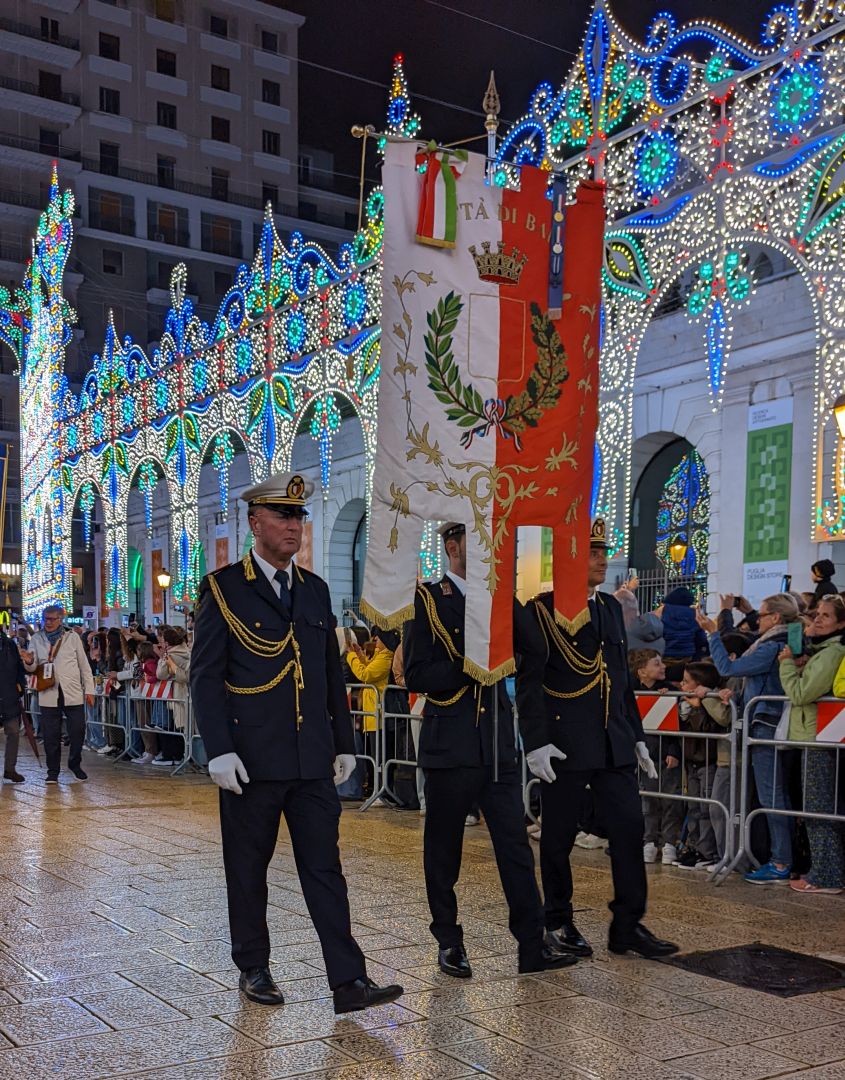
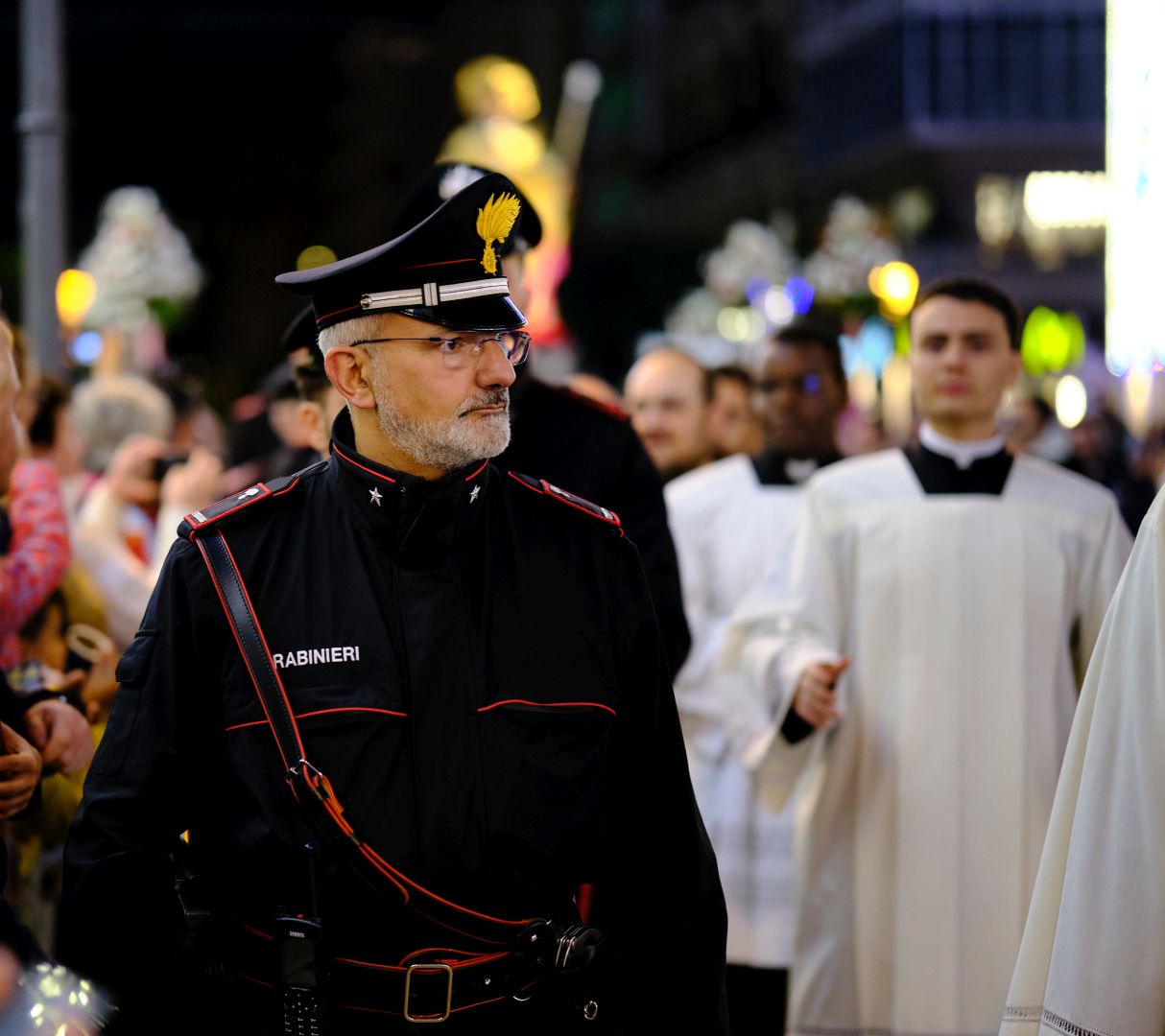
So you will have representatives of the armed services and the several police forces – the Polizia Locale, the Polizia dello Stato, the Carabinieri, the Guardia di Finanzia and sometimes the Forestry Police, although they were absorbed into the Carabinieri in 2017.
The mayor will always be there – dressed in civilian clothes but wearing the tricolour sash of office. And lots of clergy and lay people associated with the Church. Many of them carry beautifully-made banners. Even the organising committee for the festival were there, under their own banner.
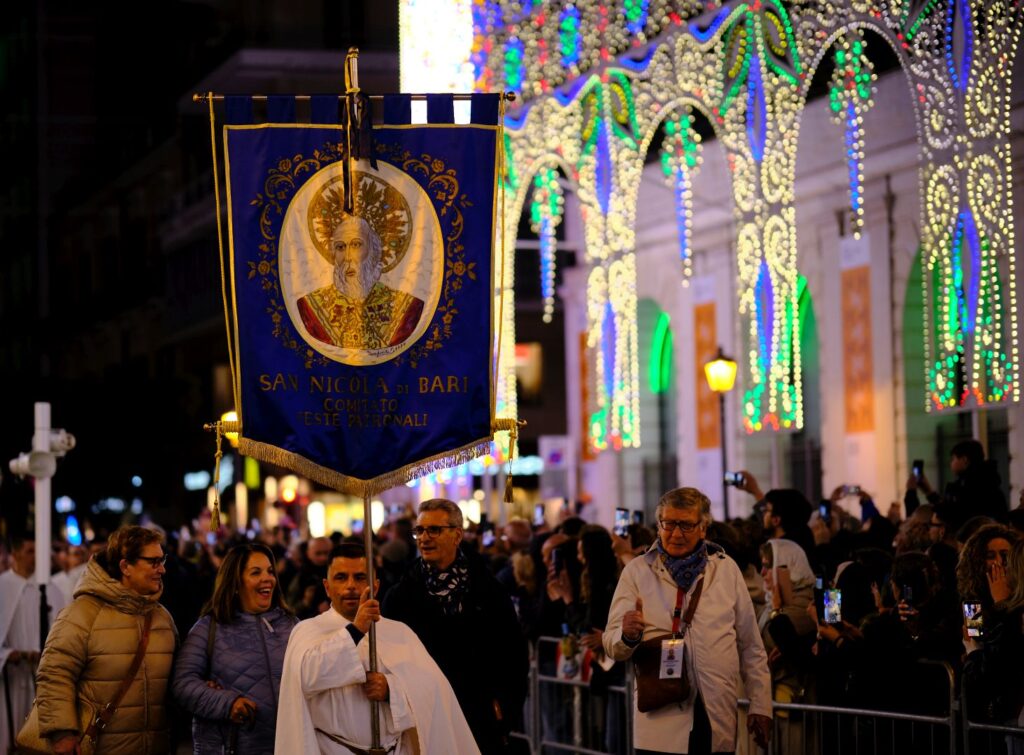
But the main attraction, of course, is the effigy of the saint. And in due course, to applause from the crowd, he appeared around the corner carried on the shoulders of several burly fellows, looming over all the uniformed types mentioned above, plus an archbishop and his attendants, and of course the brass band.
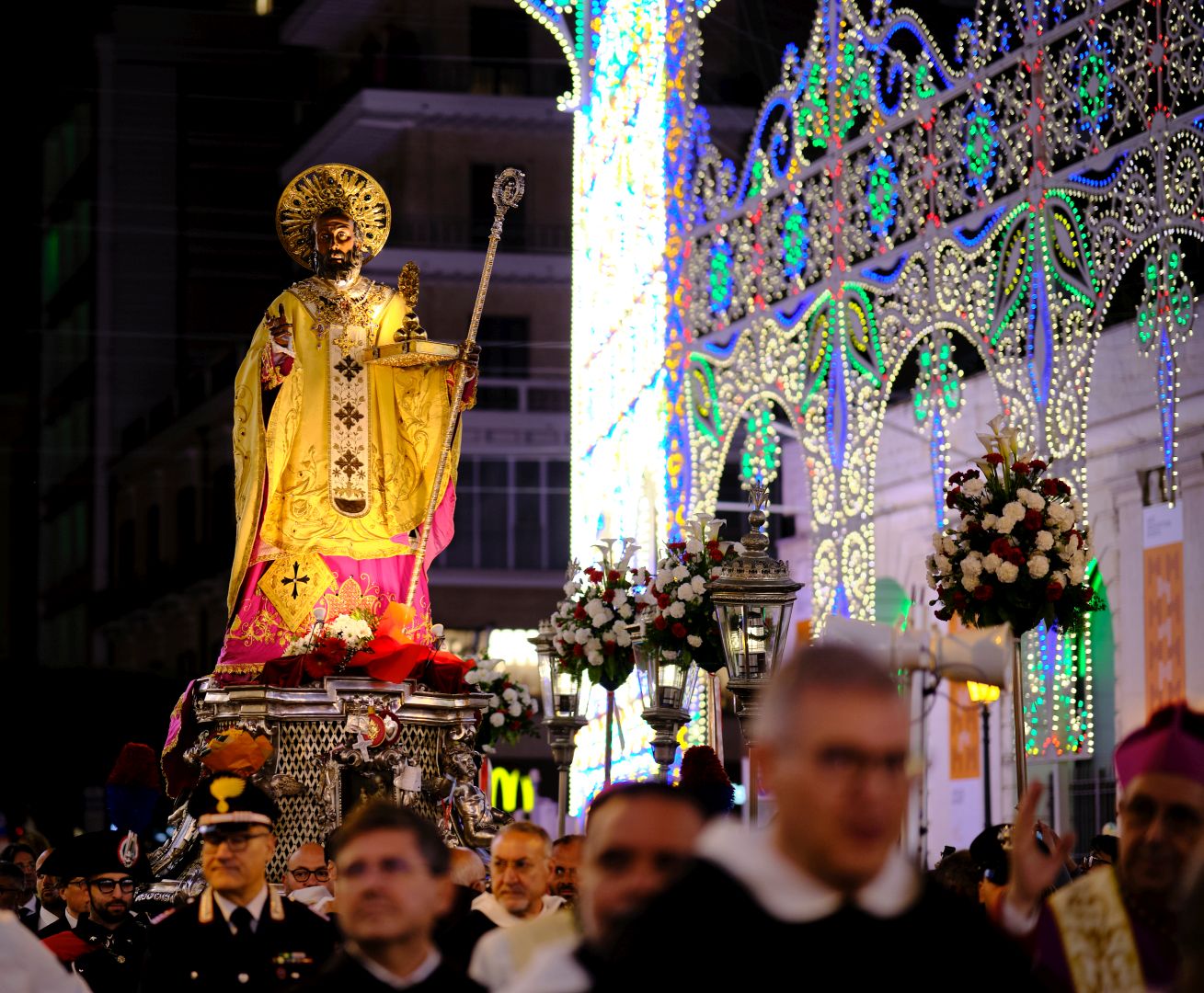
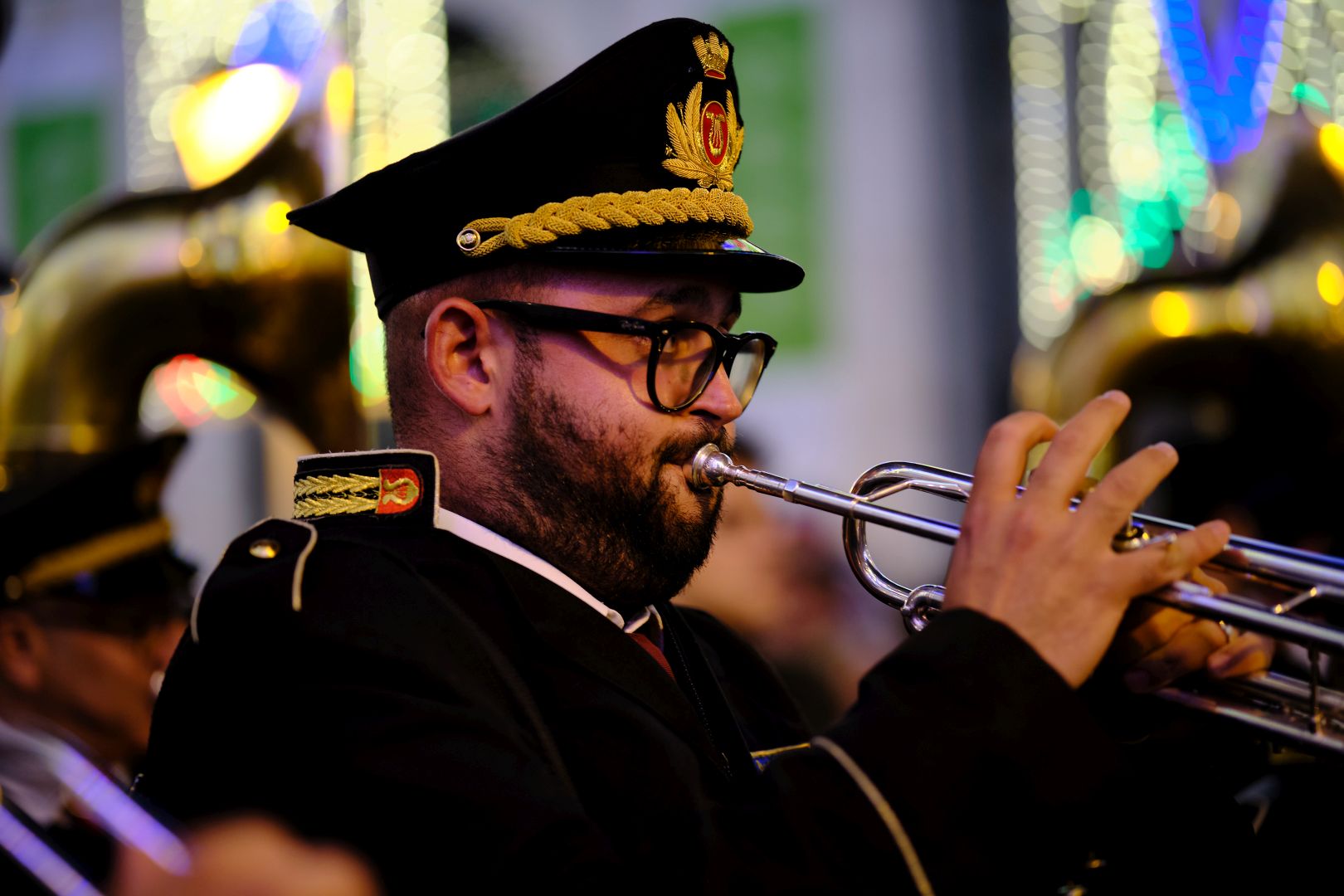
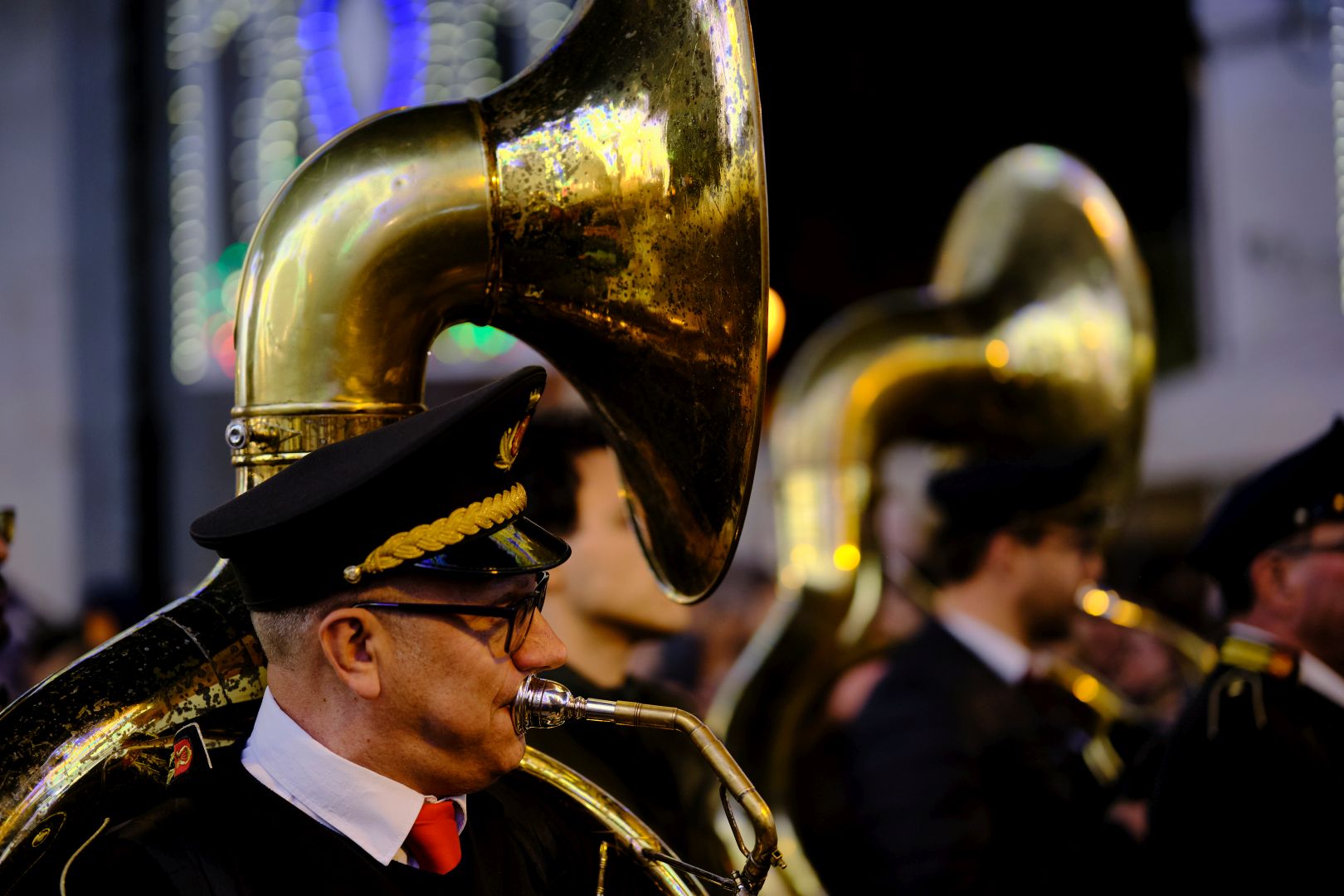
This being a religious procession, you might think that the band would be playing solemn religious music, but no. It was all very cheerful, and San Nicola too was getting into the mood as well, bobbing along jauntily as the burly chaps carrying him moved him up and down and from side to side in time to the music.
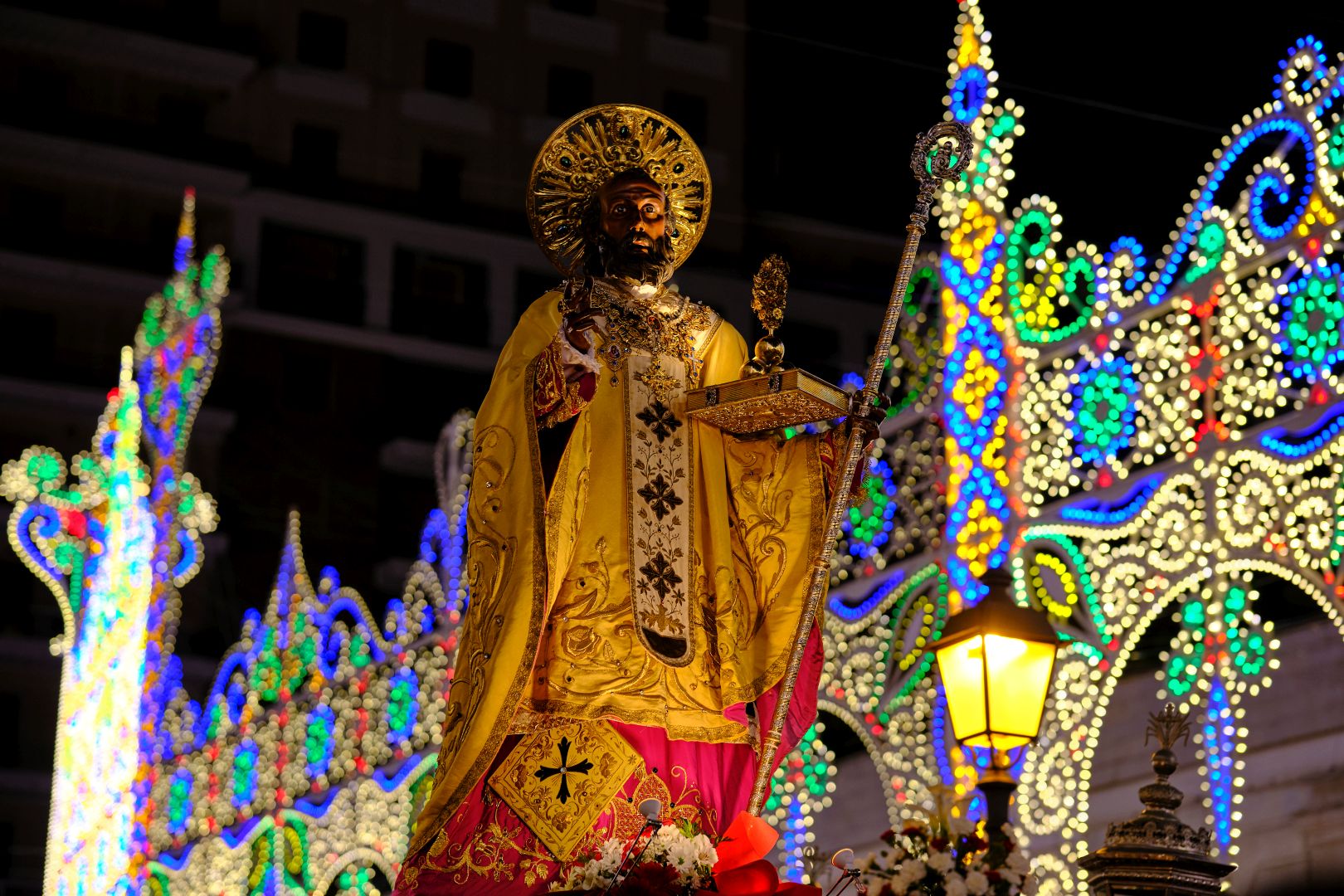
You will note that they have given San Nicola dark skin. This is a common feature in his iconography, apparently to emphasise his foreign origins, although as an Anatolian Greek he would presumably have been as light-skinned as his Barese hosts.
With many pauses, the procession made its way down to the stage, where San Nicola was carefully taken from his travelling frame and placed on the stage, and the main parade participants positioned themselves around him. Then started another fixture of such festivals in Italy: the speeches. The longest one (possibly from the mayor, I couldn’t see) was full of praise for Bari, its history, and the indomitable spirit of its citizens (applause). Then there was an address by the archbishop, and a prayer after which everyone in the crowd crossed themselves.
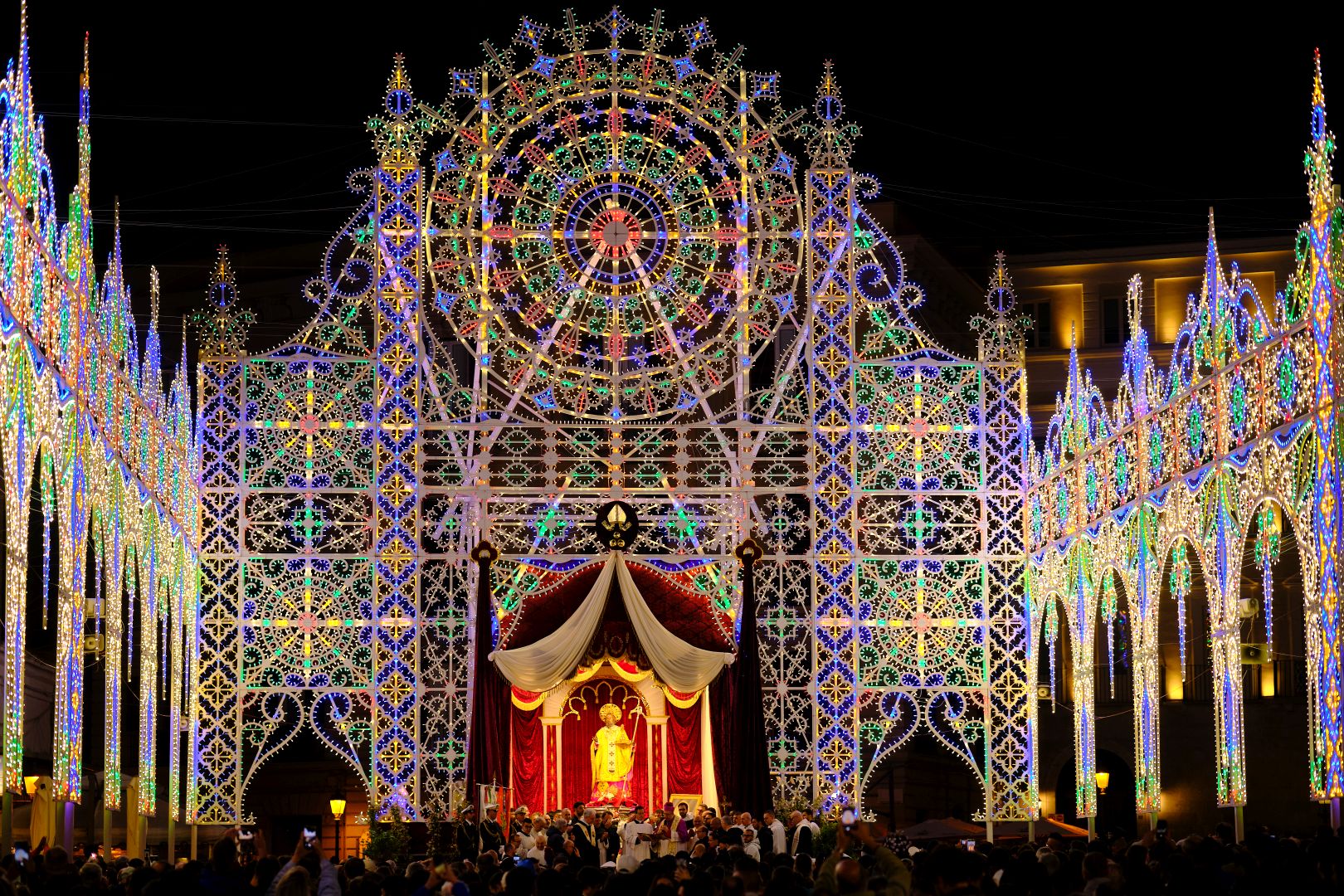
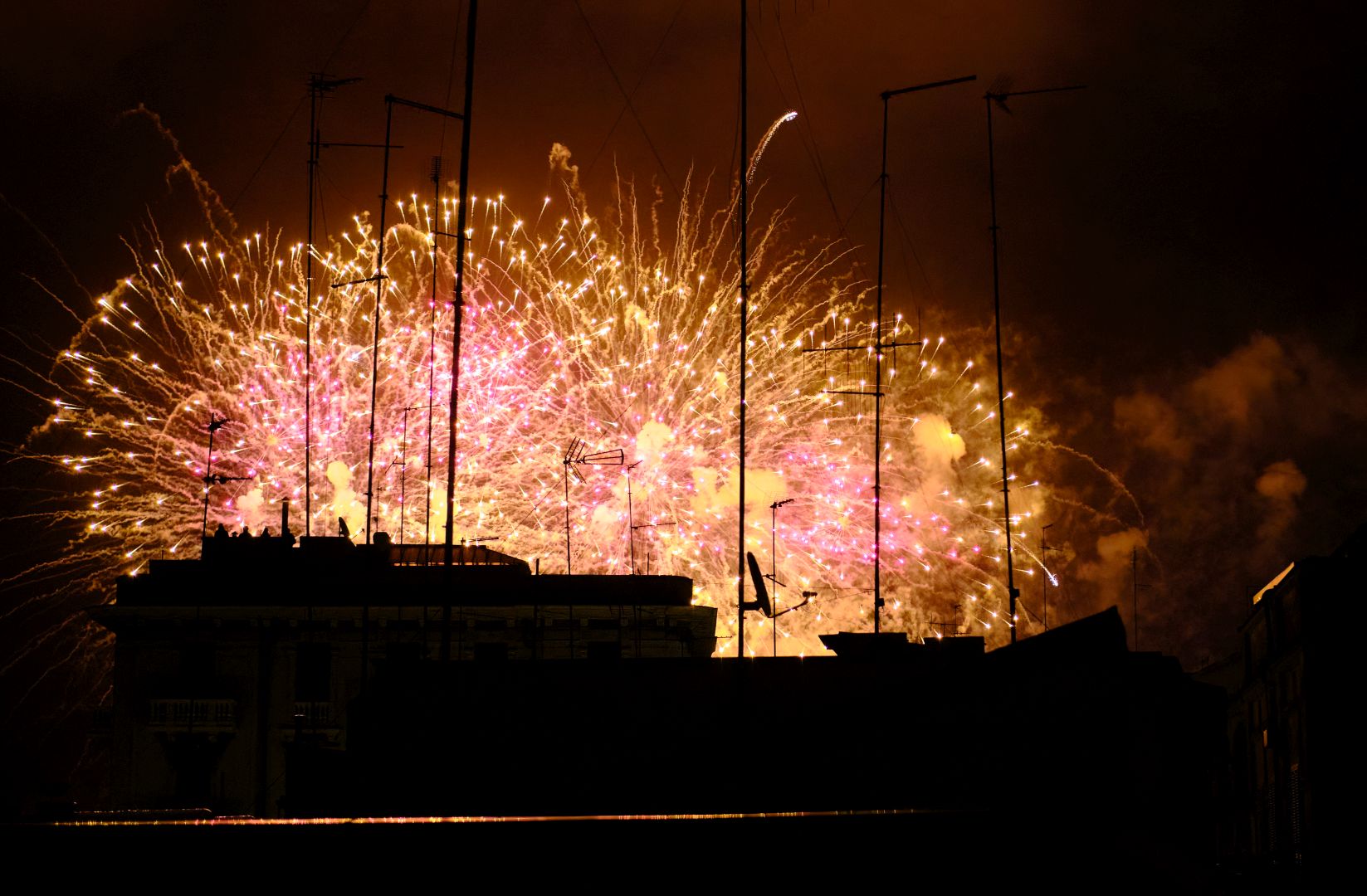
Later there were fireworks, which we could see from our accommodation.
It had been a very wet day with some parts of the festivities cancelled, and although the rain had eased by the evening, it doubtless kept some of the crowds away. So next morning when we set out to explore, it was very pleasant to be greeted by a sunny day.
The Basilica and Old Town
I had wanted to visit Bari for a long time, as its Old Town contains several important buildings from the time of its Norman-Sicilian and Swabian rulers.
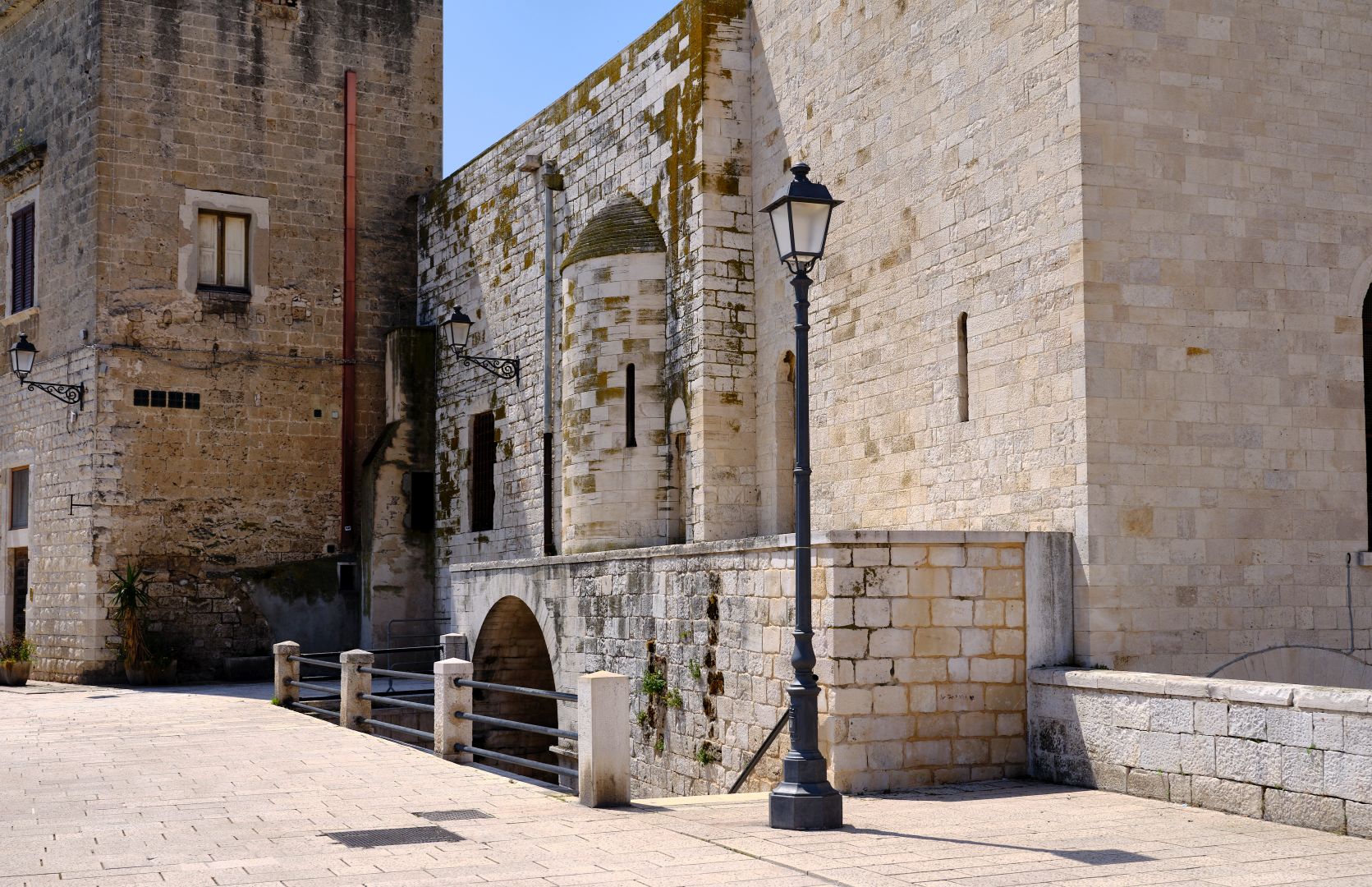
We started at the “Castello Svevo”, or Swabian Castle, so-called because it was built by Frederick II. I won’t dwell on it here because I intend to write on Frederick separately one day, but I will note that its northern outer walls, now a couple of hundred meters inland, originally went straight down into the waters of Bari Harbour.
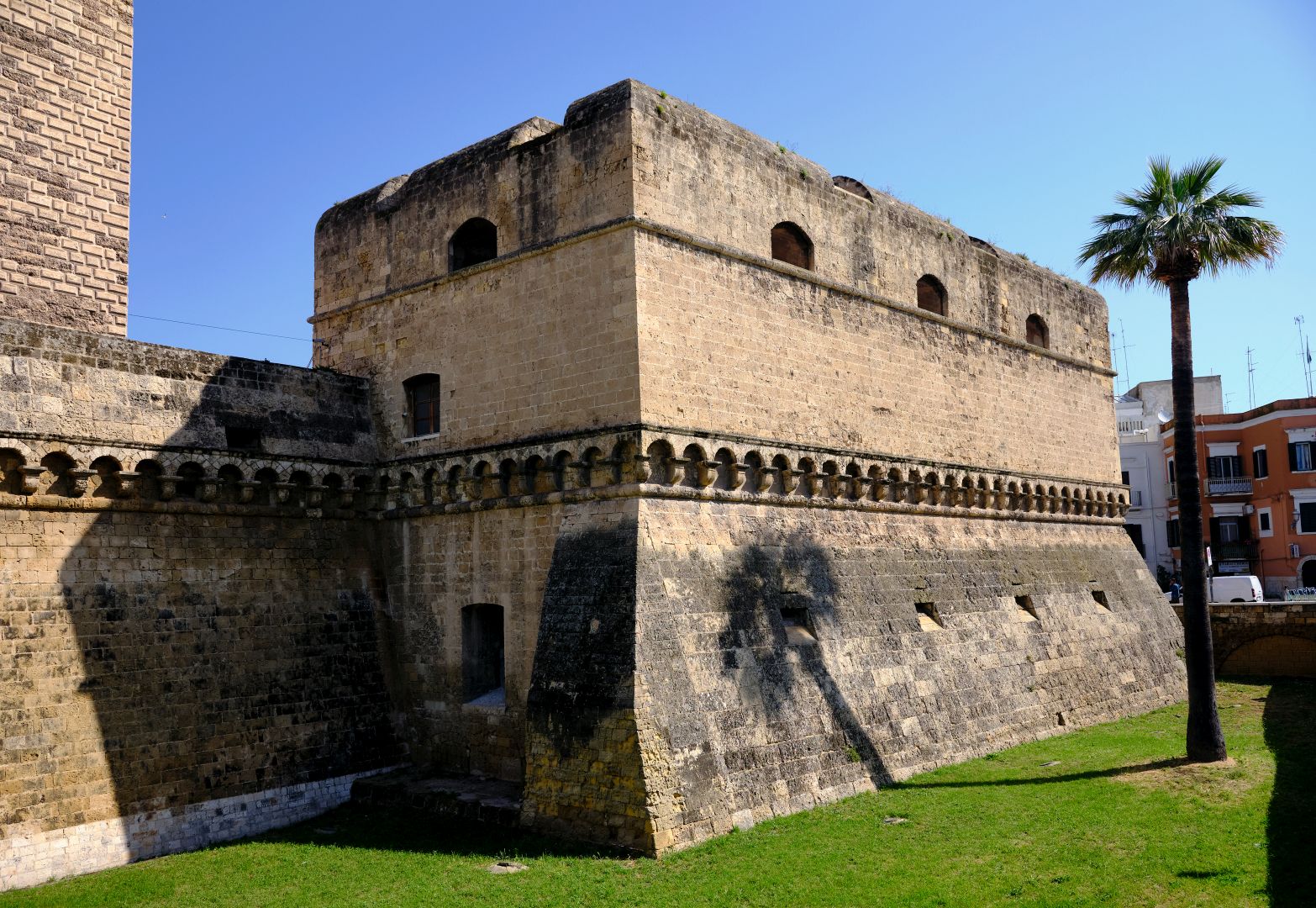
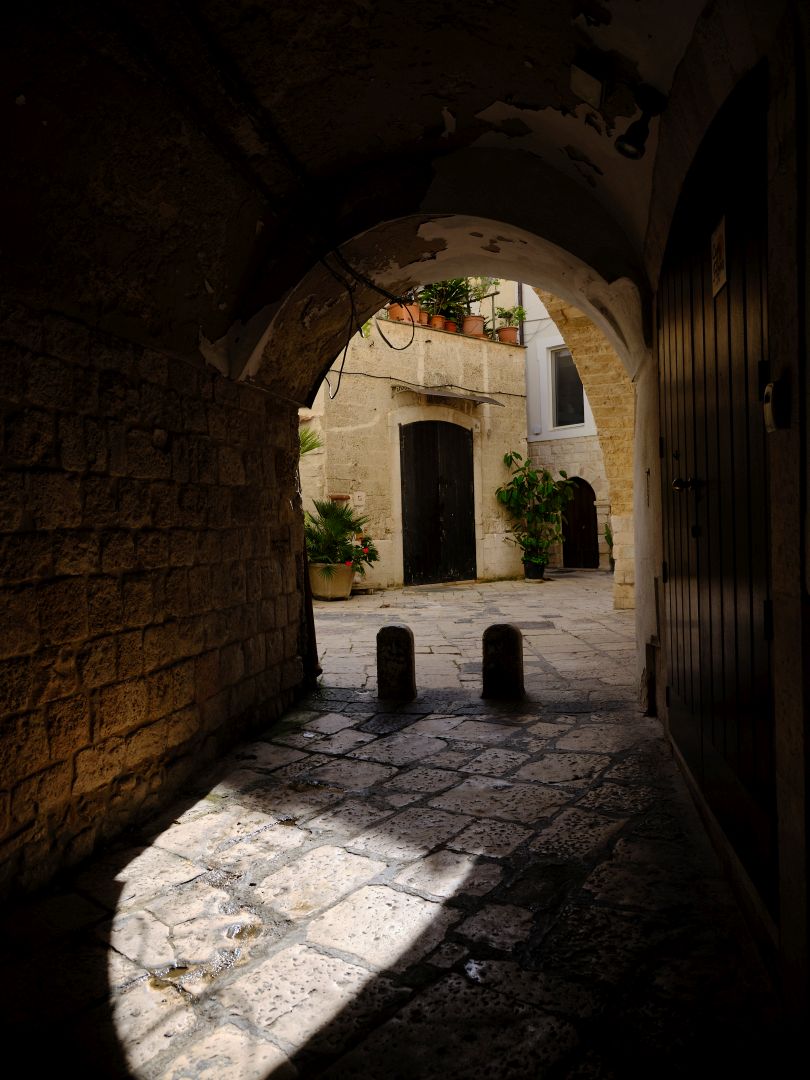
From there we plunged into the winding narrow streets of the Old Town.
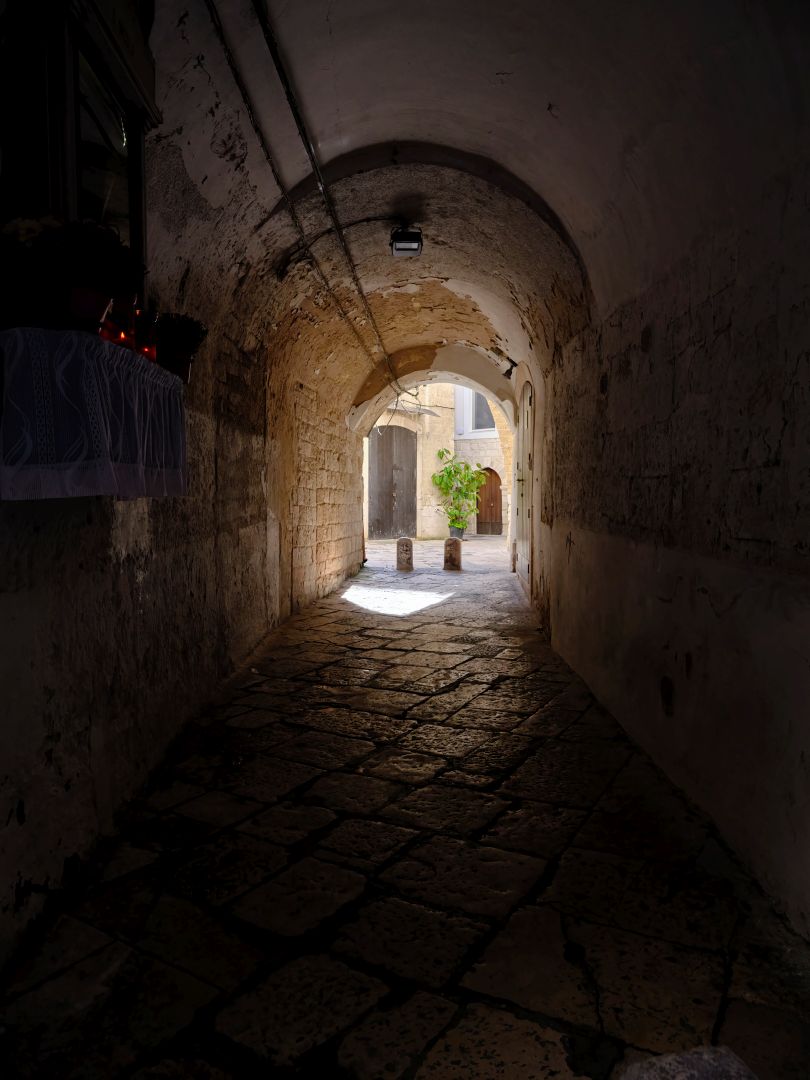
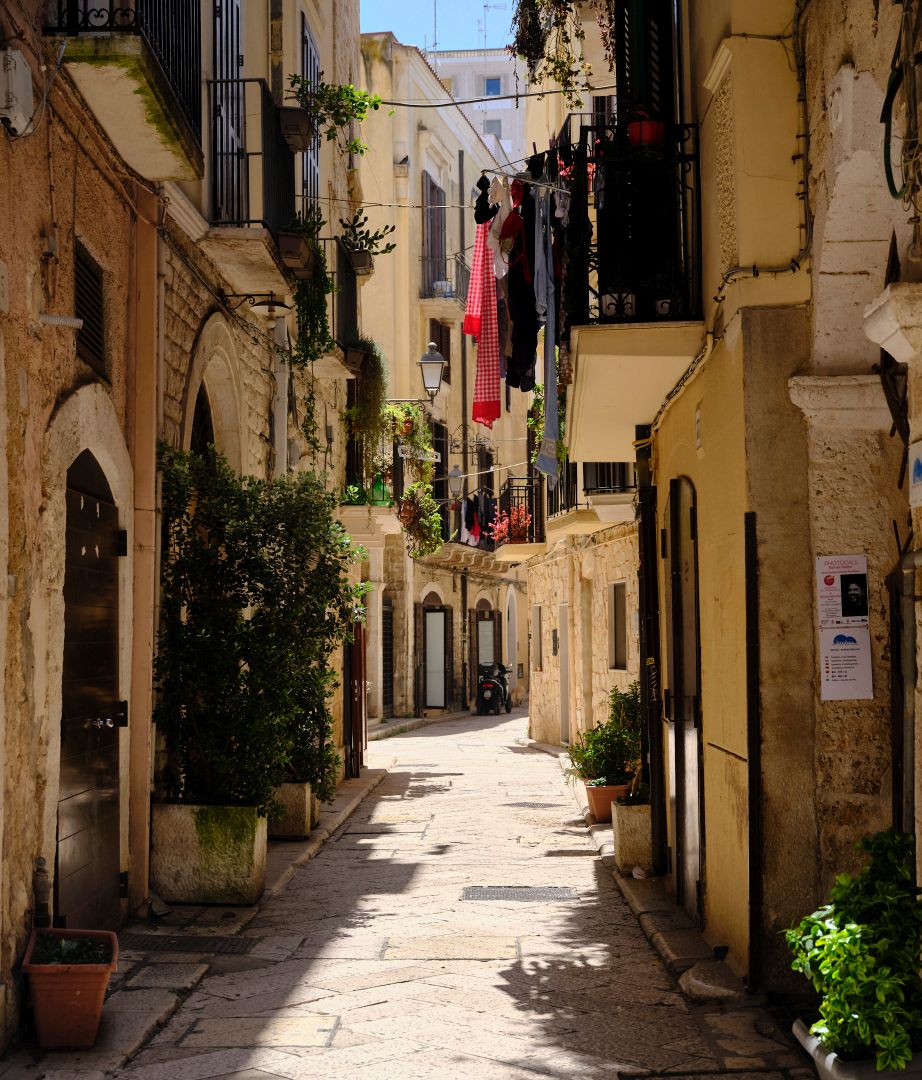
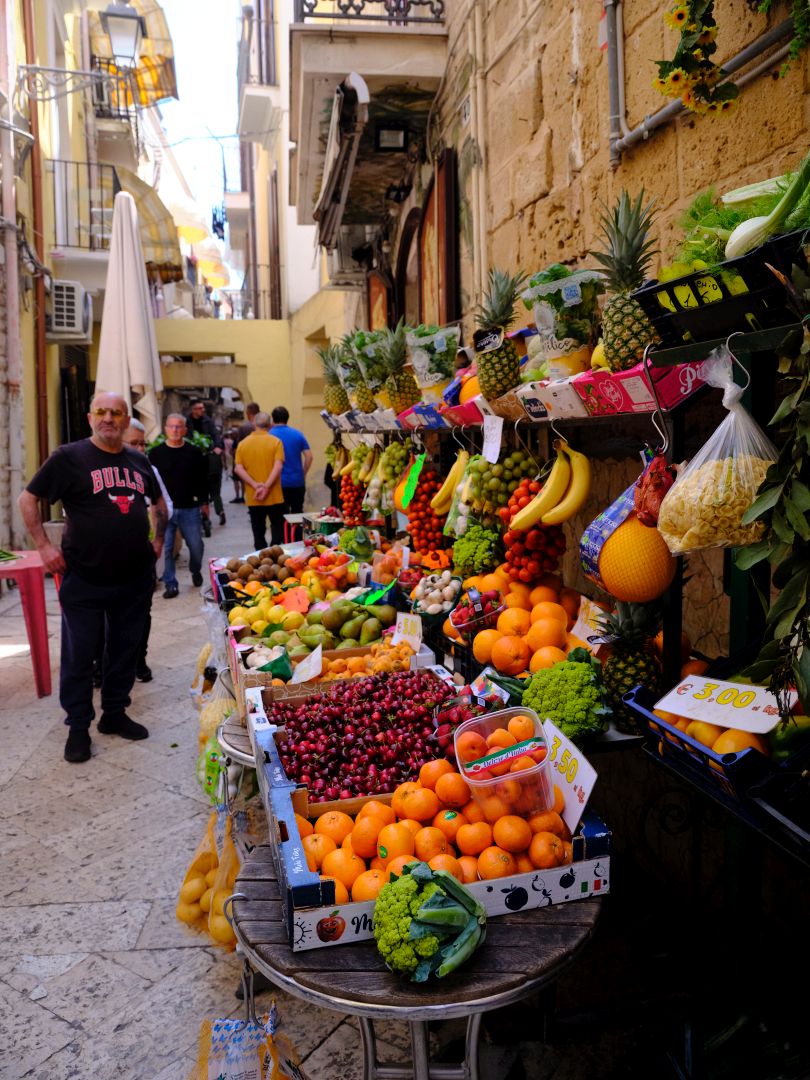
Bari suffered much destruction at the hands of William I of Sicily (“William the Bad”) in 1156 when it was recaptured after a brief Byzantine occupation. Nonetheless I’ve seen nothing to suggest that this altered the basic street plan, so we may reasonably consider this an authentic survival from well before that time.
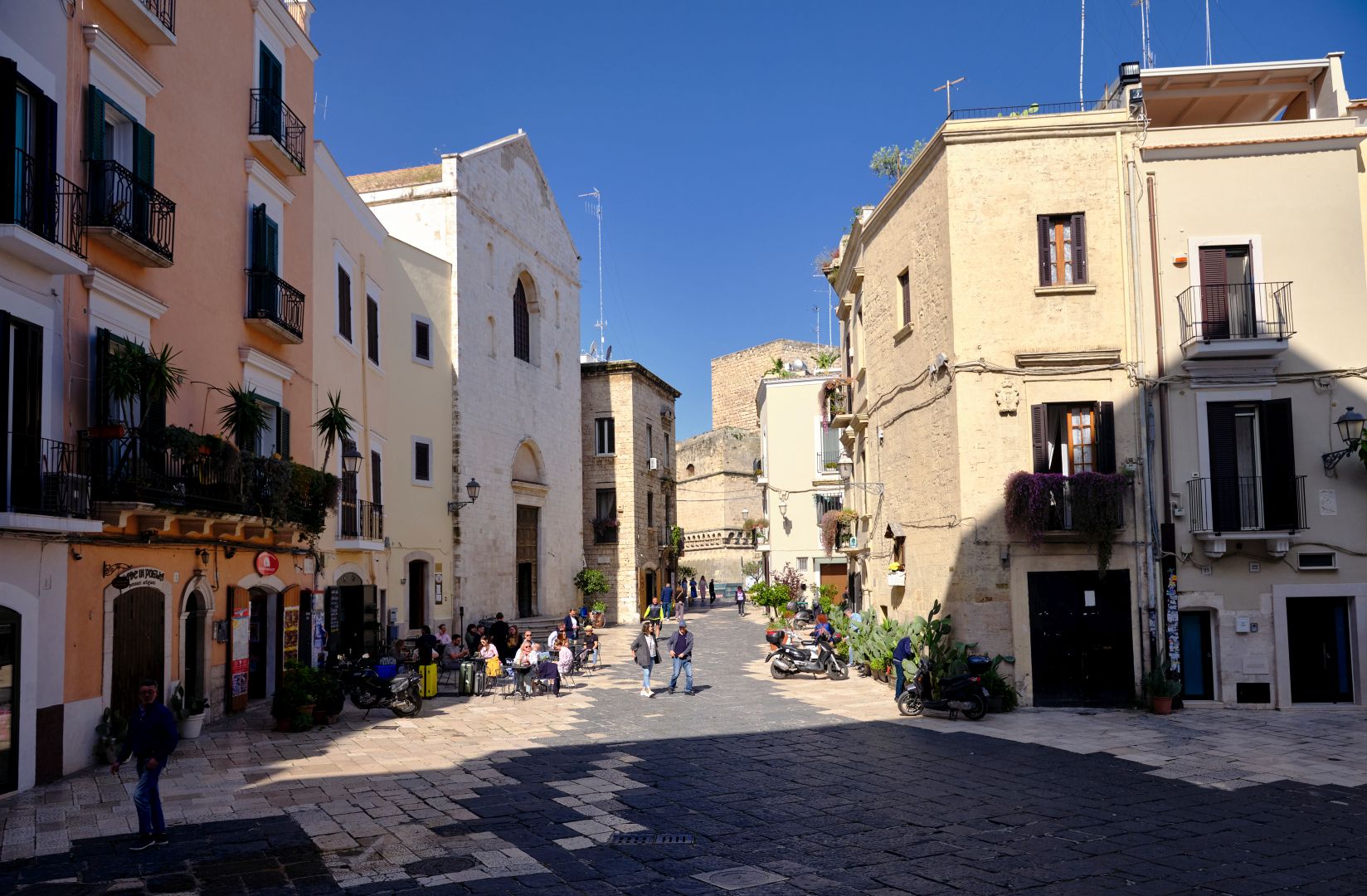
One notable survival from before William’s depredations is, appropriately enough, the Basilica of San Nicola, construction of which began in 1087. On the side of the basilica facing the sea it looks more like a castle than a religious building, and it seems that it was indeed pressed into service as part of the town’s defences a few times.
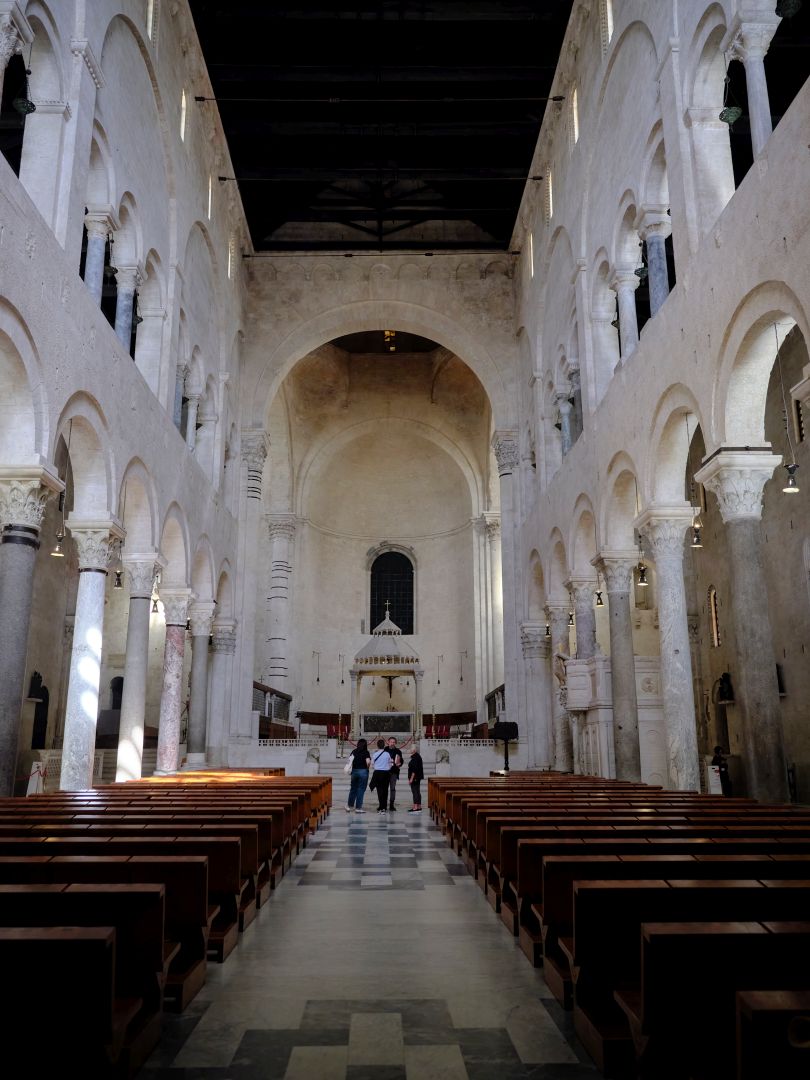
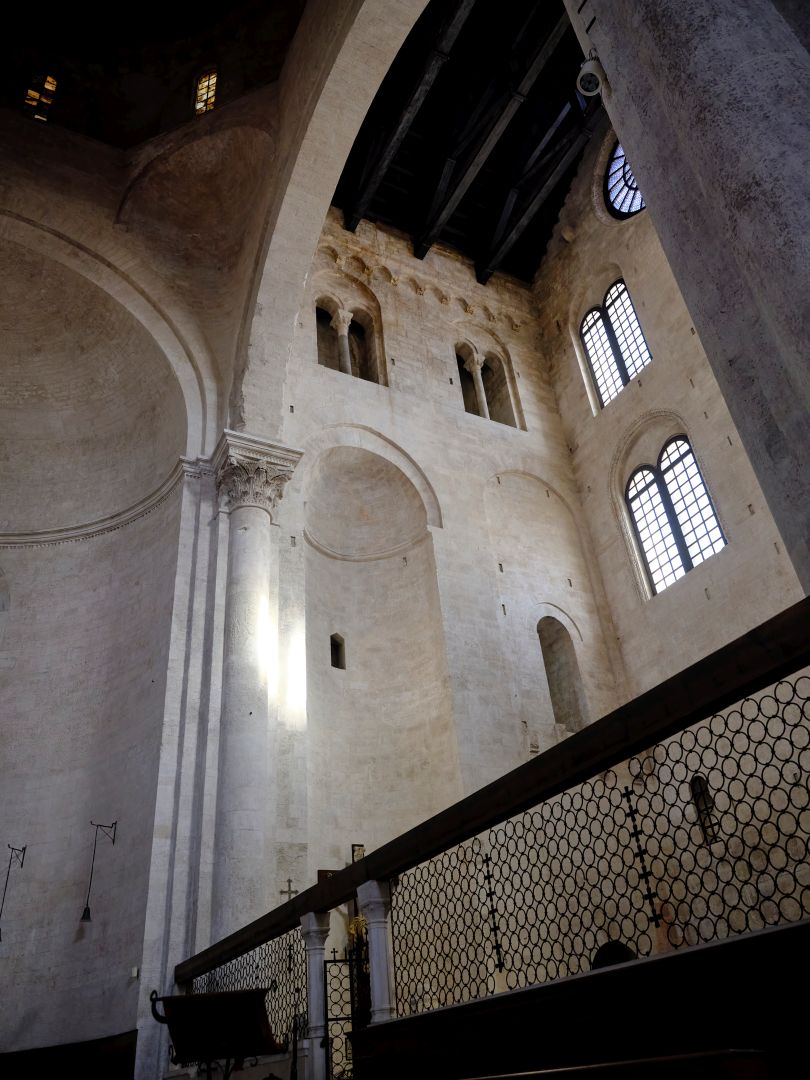
Inside it feels conventionally Romanesque, with semicircular arches. Curiously it lacks the rigid symmetry of most such churches, with one of the arches across the nave being slightly on the diagonal. Searches online suggest that this might have been the result of building the Basilica on top of earlier Byzantine structures that were not themselves lined up.
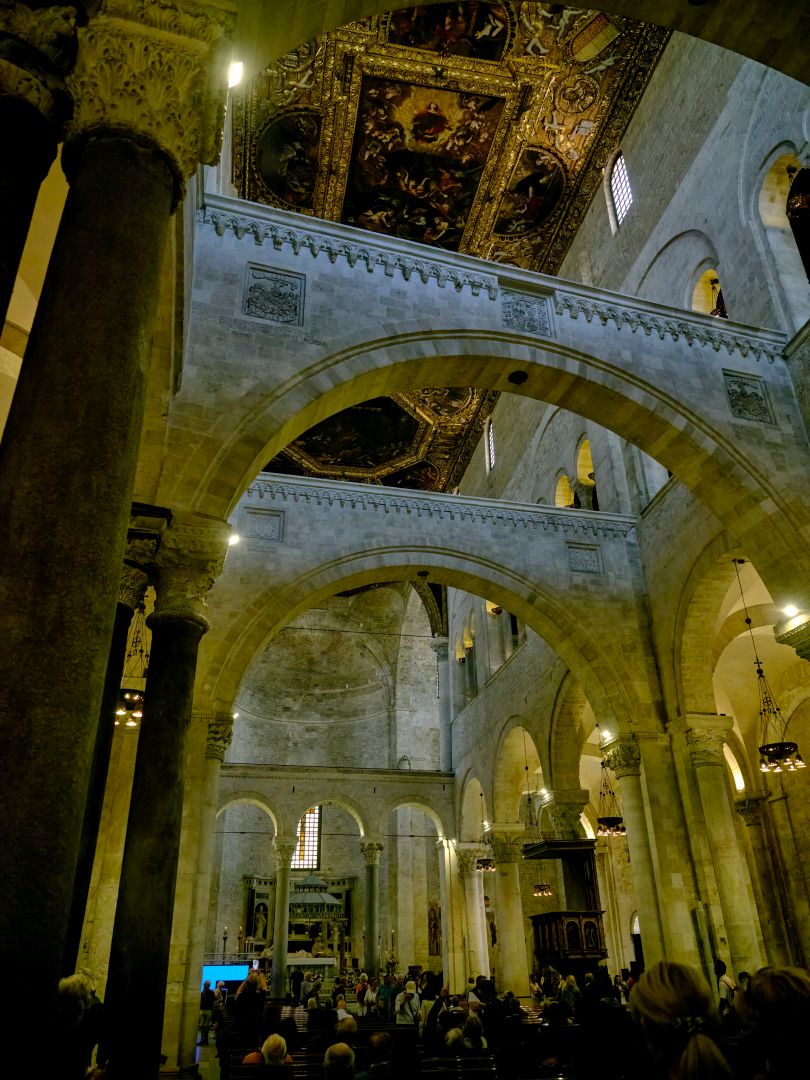
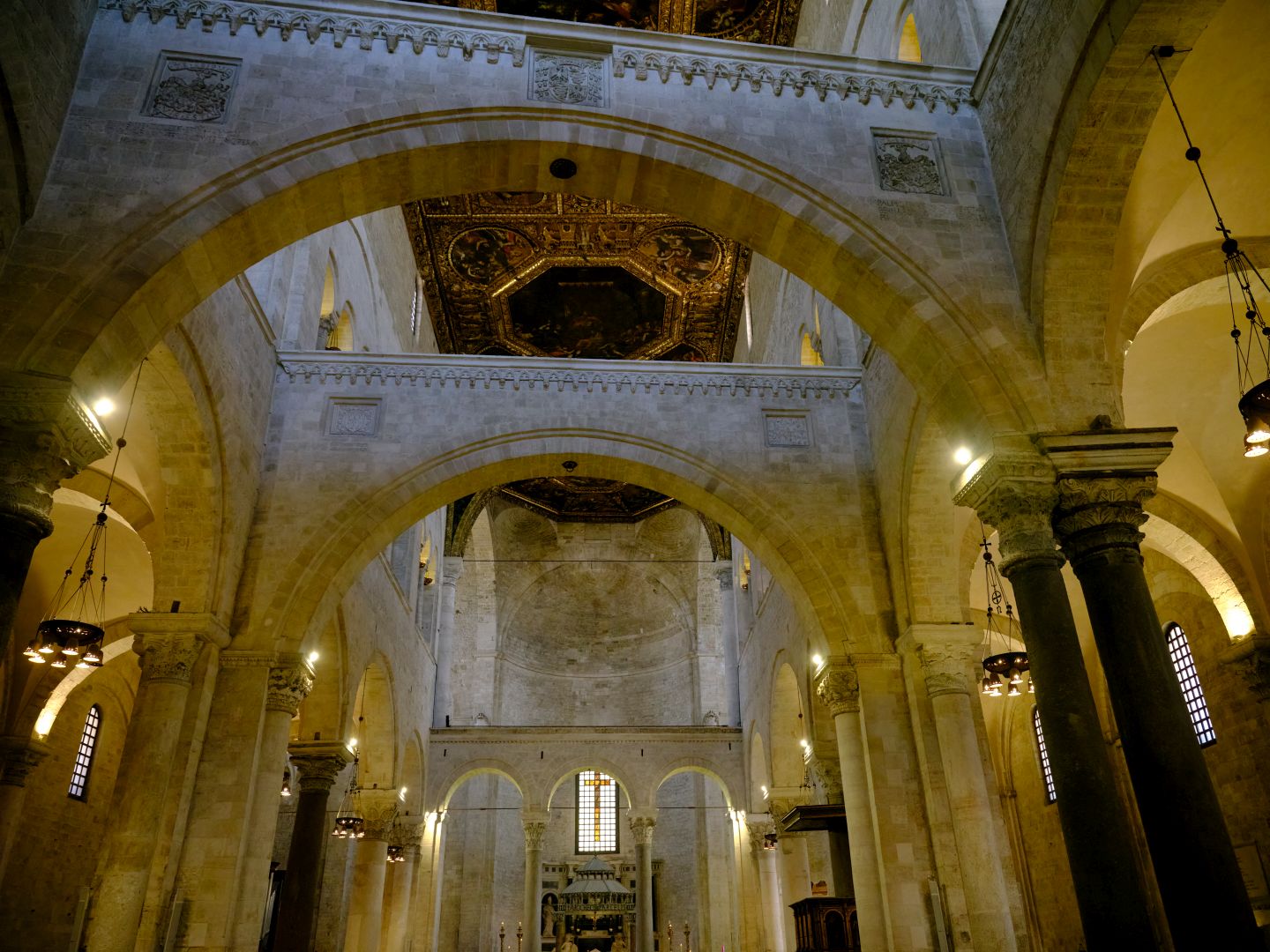
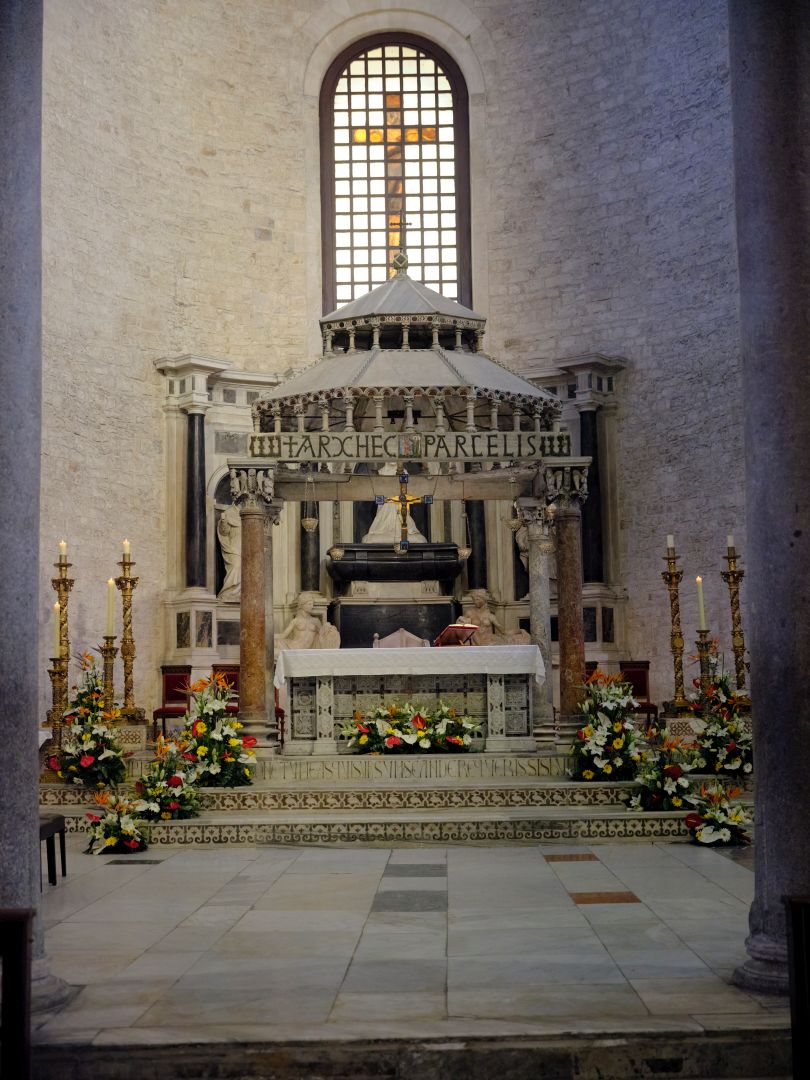
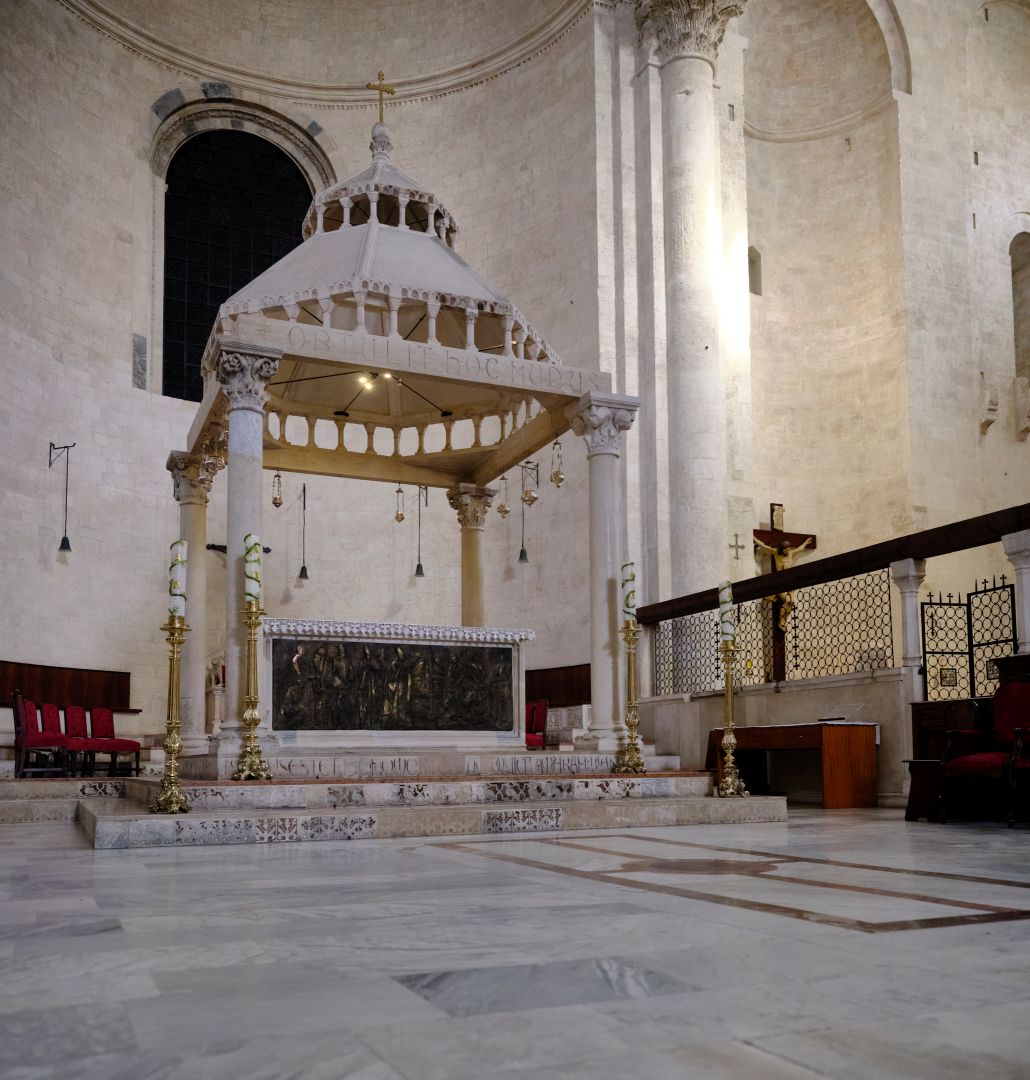
Not surprisingly, this being the festival weekend, there was a large crowd of visitors, which made it hard to get good photographs. In particular behind the altar there is a cathedra, or bishop’s throne, which dates from the 11th Century. Alas, I could not see it due to the area being roped off from the crowd, but the ciborium over the altar partly made up for it. This canopy of marble and stone dates from the early 1100s, so it would have been over a century old when Frederick II kneeled in front of it (as surely he did).
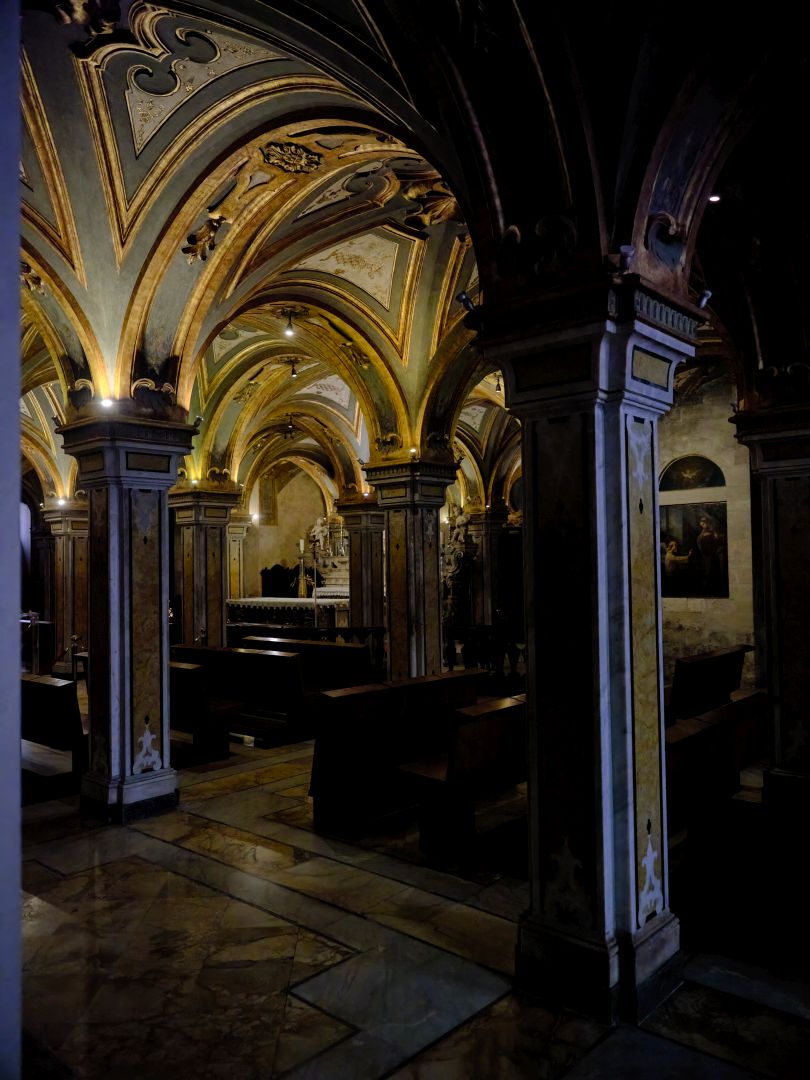
Down in the crypt there was a multi-denominational ceremony of some sort going on, with Catholic and Orthodox clerics of different orders taking turns declaiming and saying prayers. We had noticed groups of Slavic and Greek religious types the night before; obviously San Nicola is pretty important in the East, and of course he belonged to them first. I thought it was pretty sporting of them to take part in a festival commemorating the loss of their saint to Barese body-snatchers.
Unfortunately there were signs in the crypt forbidding photography, so I do not have any to publish here (although it didn’t seem to stop a lot of people).
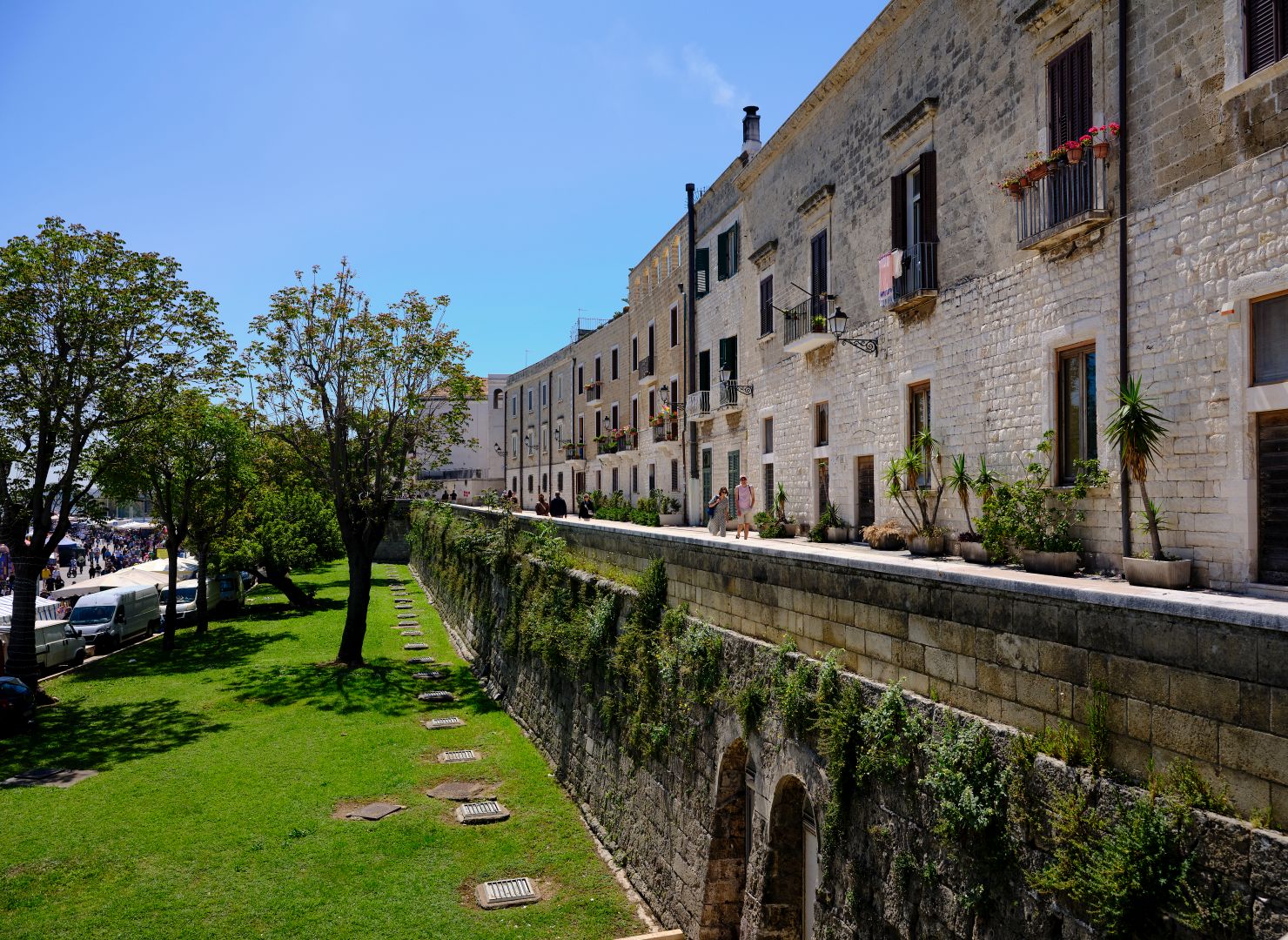
Behind the Basilica were the town walls, now a pleasant place to walk.
The Duomo
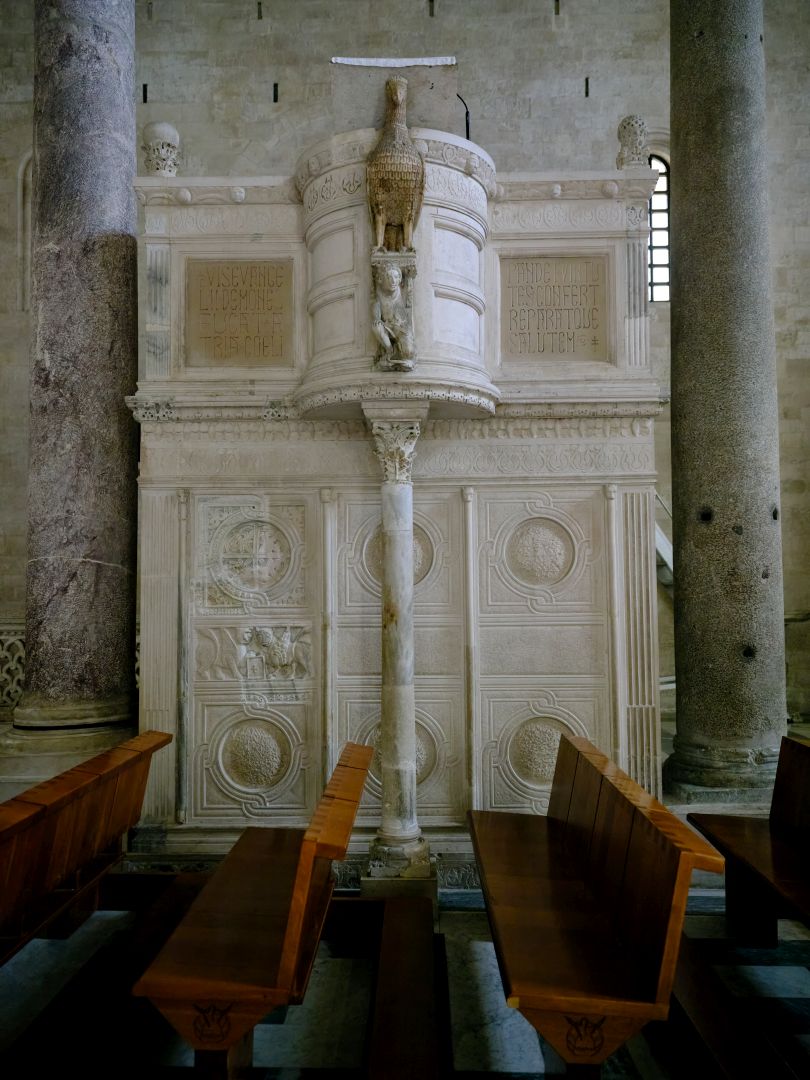
The Duomo itself, not far away, was far less crowded. The first cathedral on this site was probably built in the 6th Century by the Byzantines, then destroyed in the 10th. A second followed in the 11th Century, to be destroyed in the 12th by William I. Finally, a third was built in the 13th Century, and it is that which survives to this day.
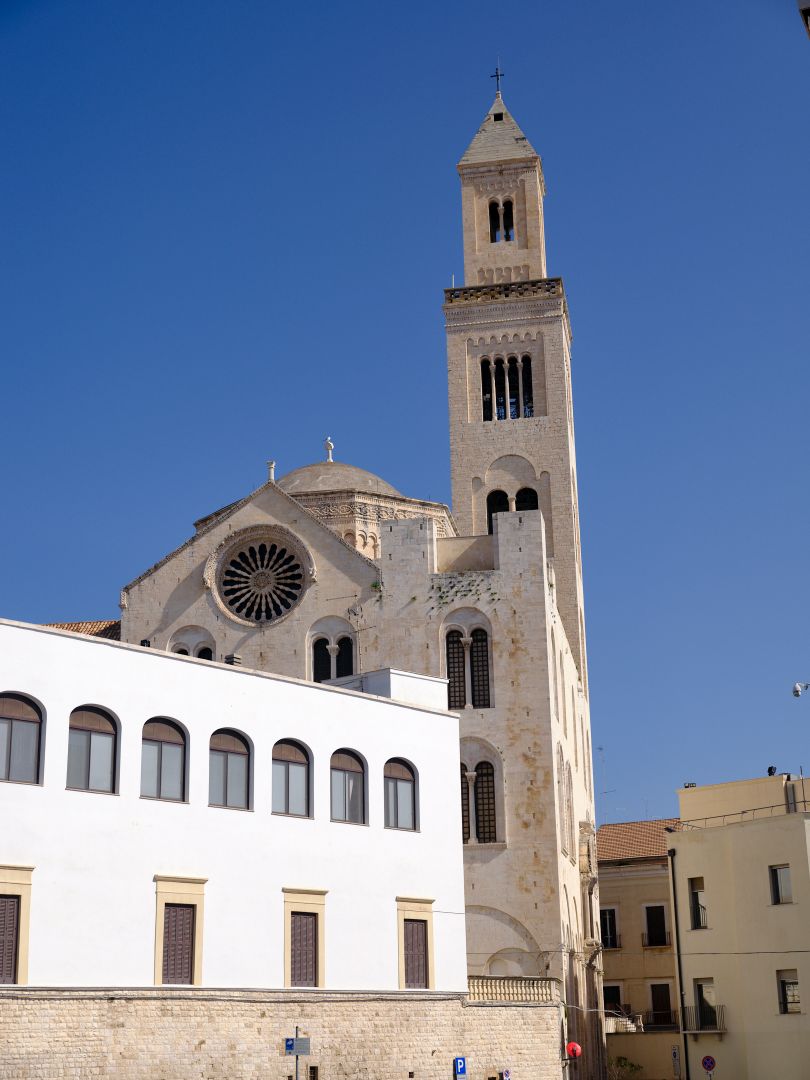
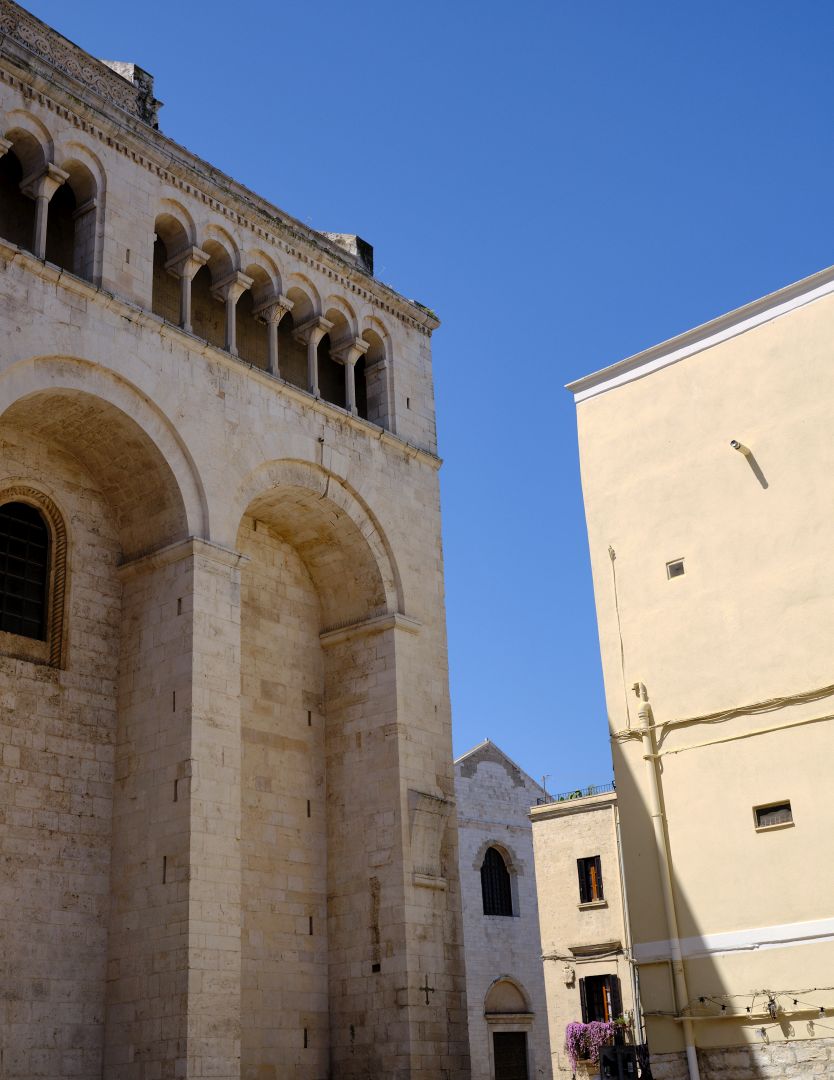
Thanks to a tasteful restoration in the 20th Century which removed most of the Baroque accretions from the 17th, what we can see today is an austerely noble example of the Norman-Romanesque.
That evening, the festival drew to a close with a second fireworks display. But before that, down in the piazza the crowds were still thick in front of the saint. All sorts of people – families with children, old people, teenagers – shuffled forward patiently to get a turn in front of San Nicola, where some prayed, but many, in a 21st-Century variation on the ritual, took selfies, beaming with pleasure at being next to their own saint. And that was how it felt: something ancient and modern, in which piety and fierce local loyalty had fused into a big good-natured party.