Lake Como has been the haunt of the rich and famous since Roman times. Fortunately they let ordinary people like us visit as well.
A while back I wrote a post about Lake Maggiore and the Borromean Islands based on a trip we made through Piedmont, Lombardy and Emilia-Romagna. I’ve been meaning to continue the story to describe our visit to Lake Como – so here it is.
From Lake Maggiore to Lake Como
On Lake Maggiore we had been staying near the town of Stresa; from there we made our way north to the town of Intra, a bit further up the lake, then put the car on the ferry and crossed to Laveno-Mombello on the Lombardy (eastern) shore.
Northern Lombardy was very pretty and there was an increasing Swiss or Austrian feel to the architecture – before long we saw our first onion-domed campanile.
We had decided to head straight for Lake Como. “Straight” in this case meant cutting through a chunk of Switzerland and we were initially game to try (the car rental contract allowed it) but as we got closer to the border we consulted an online guide to driving in Switzerland and it seemed that one must buy a rather expensive permit on arrival in order to drive on Swiss motorways, failure to do so bringing even more expensive fines. It didn’t seem worth it for a quick transit, and since it wasn’t clear whether we would be able to complete our journey without going on a motorway we chickened out and decided to do a loop to the south which would keep us in Italy.
This involved a long hack through a very built-up area near the town of Varese – tiring and mildly stressful. Eventually we found ourselves on an (Italian) motorway and successfully negotiated a spaghetti junction where getting in a wrong lane would have sent us either back to Milan or onwards to Switzerland (and as far as I know, Italians don’t actually use the term “spaghetti junction”).
The slip road where we ended up went down a tight spiral viaduct on the edge of a steep valley and entered a tunnel, then we shot out on the edge of another valley high above the town of Como which is at the bottom of one of the southern arms of Lake Como. It was both spectacular and a bit scary.
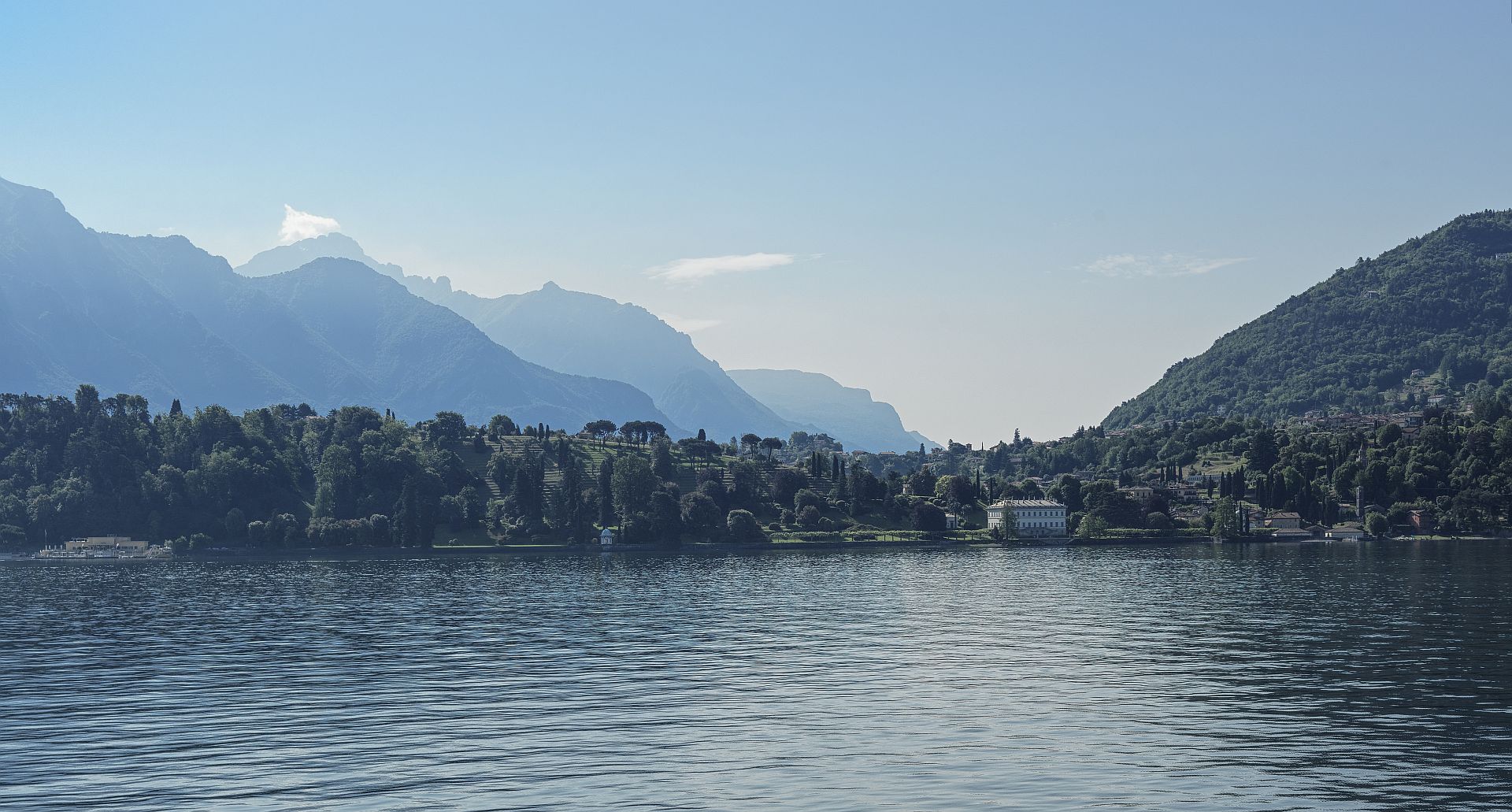
Lake Como is in some ways more spectacular than Lake Maggiore. The mountains are just as high but the valley is narrower and steeper which makes the scale feel a bit more Wagnerian. It’s also a much wealthier area, where very rich foreigners have their holiday houses and George Clooney invites his friends round to show them his latest coffee machine.
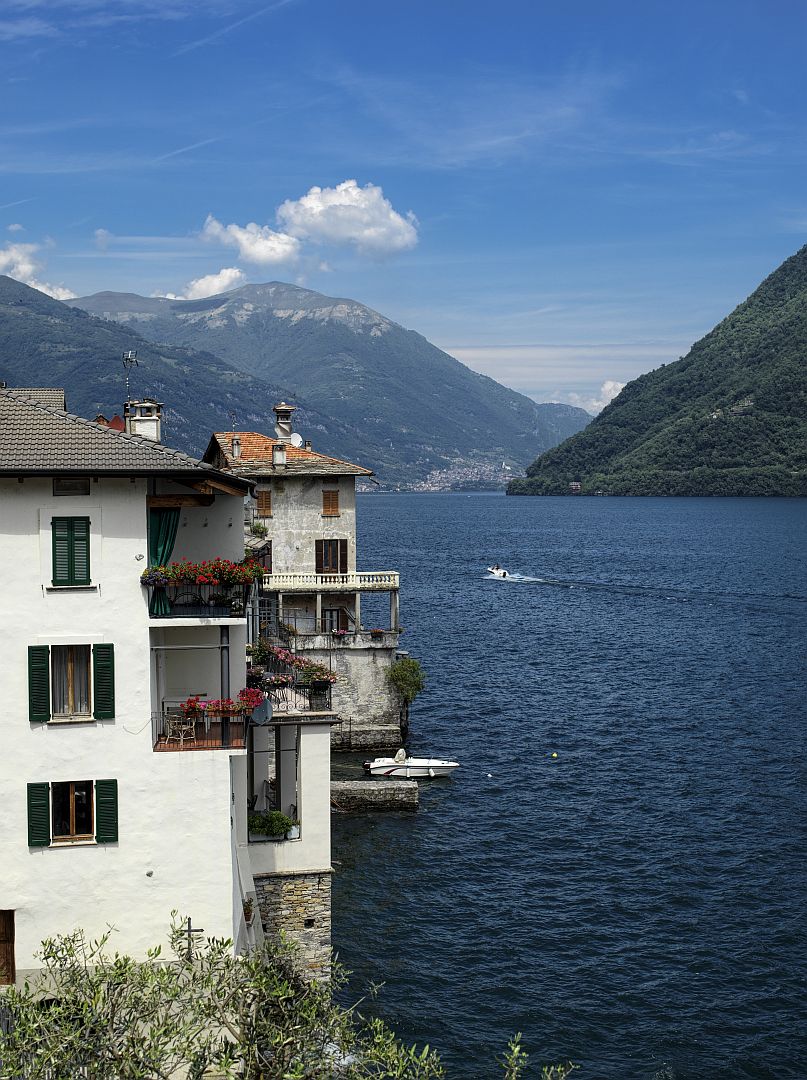
We whizzed along for a bit through tunnels, occasionally emerging to see lake views steeply below us to our right. By now it was quite late and we hadn’t had lunch. We stopped in a town called Brienno and didn’t find anything open so I unwisely undertook to stop at the first open restaurant. This turned out to be quite a swanky place down on the shoreline with an outdoor eating area and a splendid view up the lake. We were given a table between a group of businessmen finishing lunch with some rather expensive-looking wines, a family dressed informally but expensively who, after having called for and paid their bill, departed in a large white speedboat that had been moored at the restaurant’s private jetty, and a group of four obviously wealthy women of a certain age. Lou was fascinated by what these four might have had in common – one was Italian who spoke little English, one was Australian but spoke good Italian, one was Chinese and spoke pretty good Italian, and one was American and didn’t speak much Italian. After sneaking a look the best I could come up with was that they might have shared the same cosmetic surgeon, but Lou eventually decided that they were all agents for very expensive lakeside rental properties.
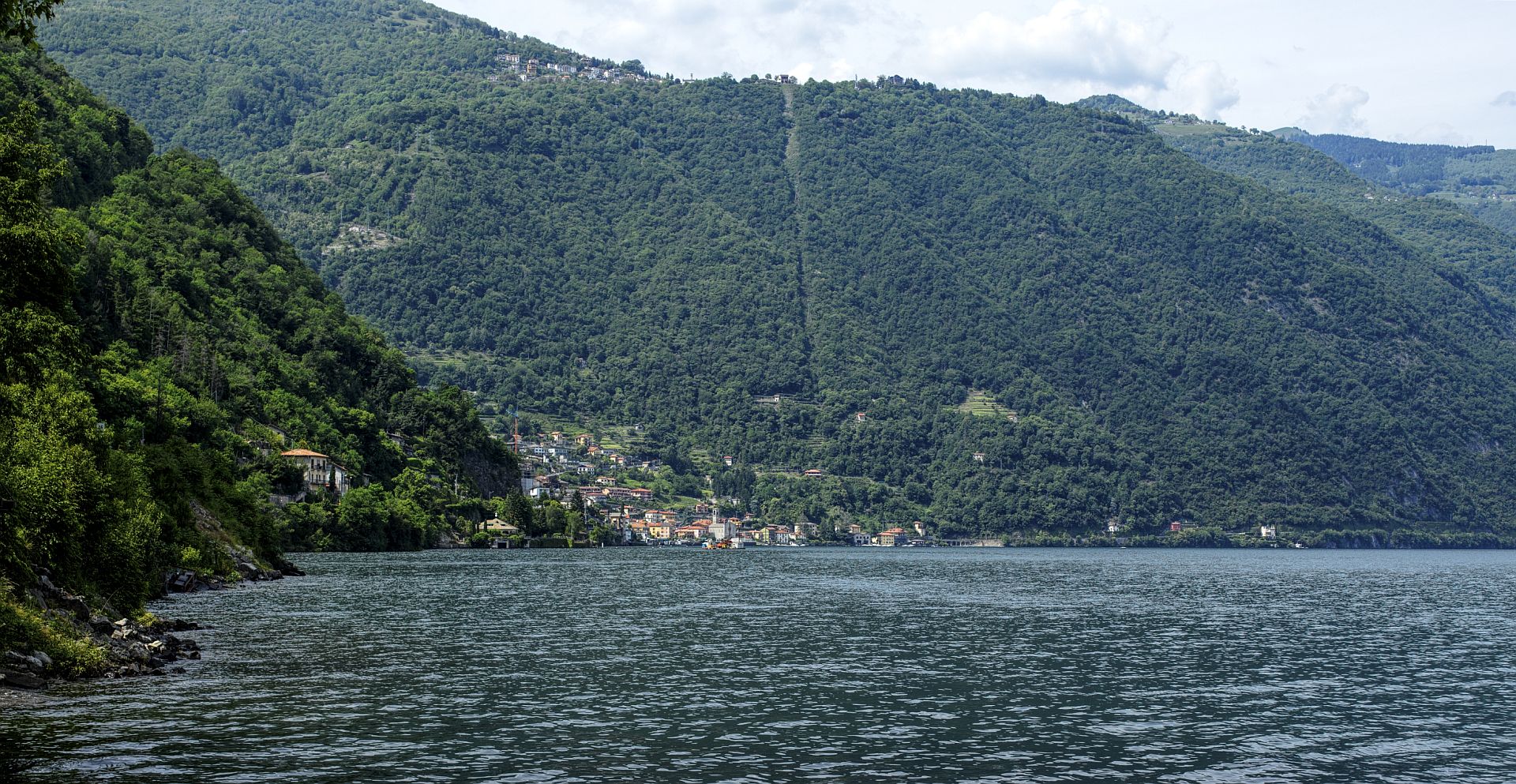
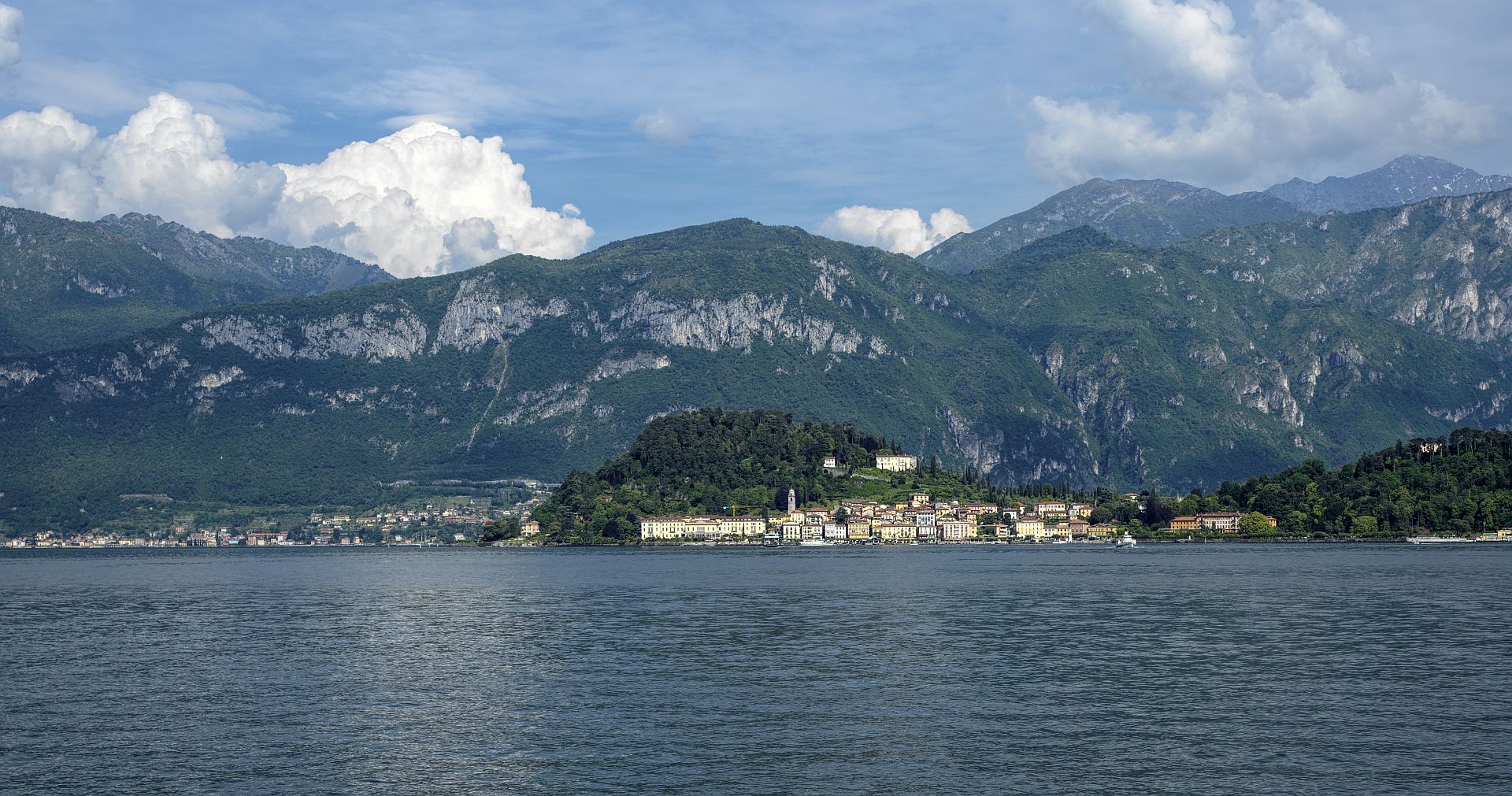
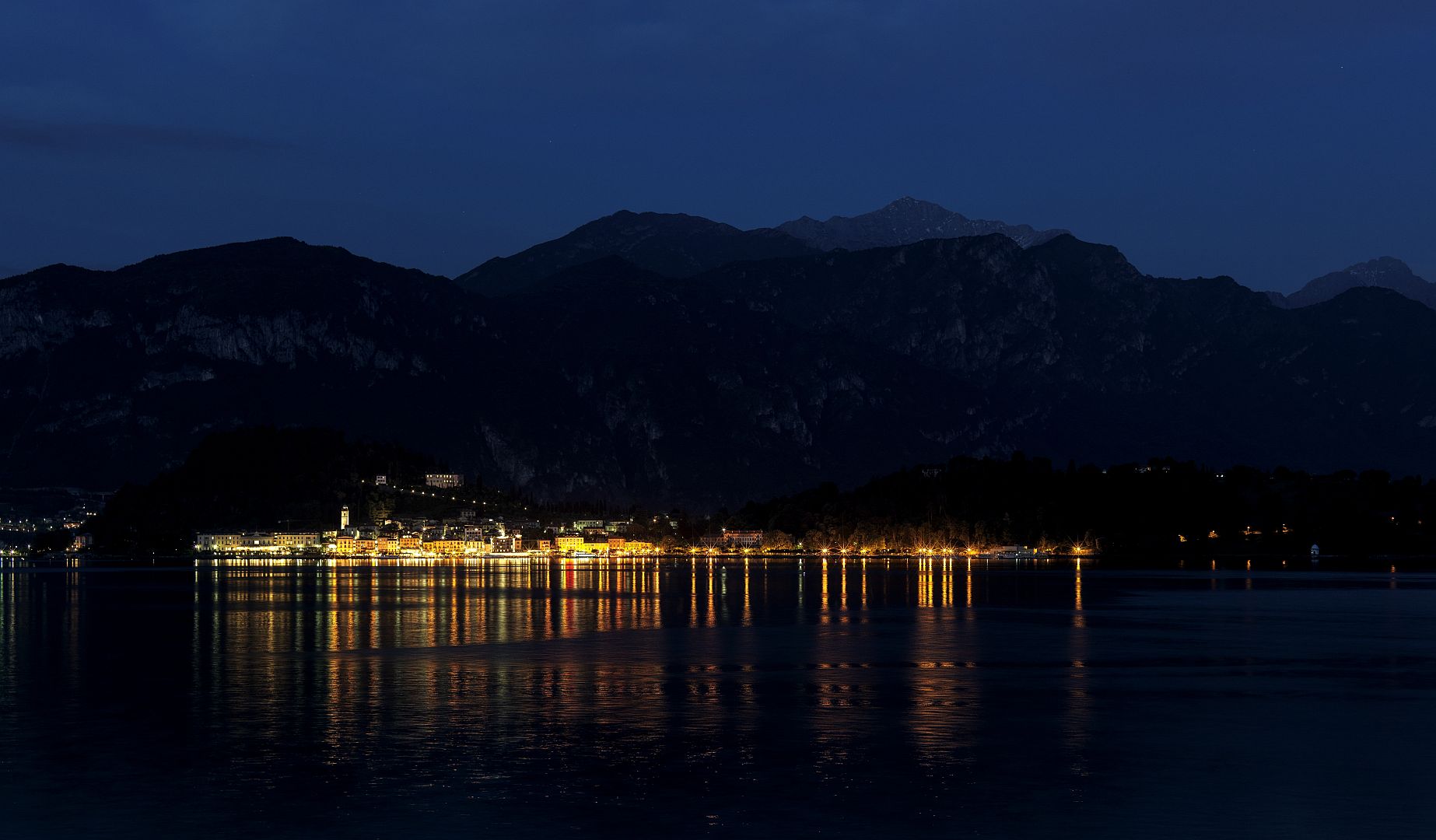
In due course we finished lunch and continued on to the town of Cadenabbia where we found our hotel. It was right on the lake shore and looked across to the beautiful little town of Bellagio.
Cadenabbia
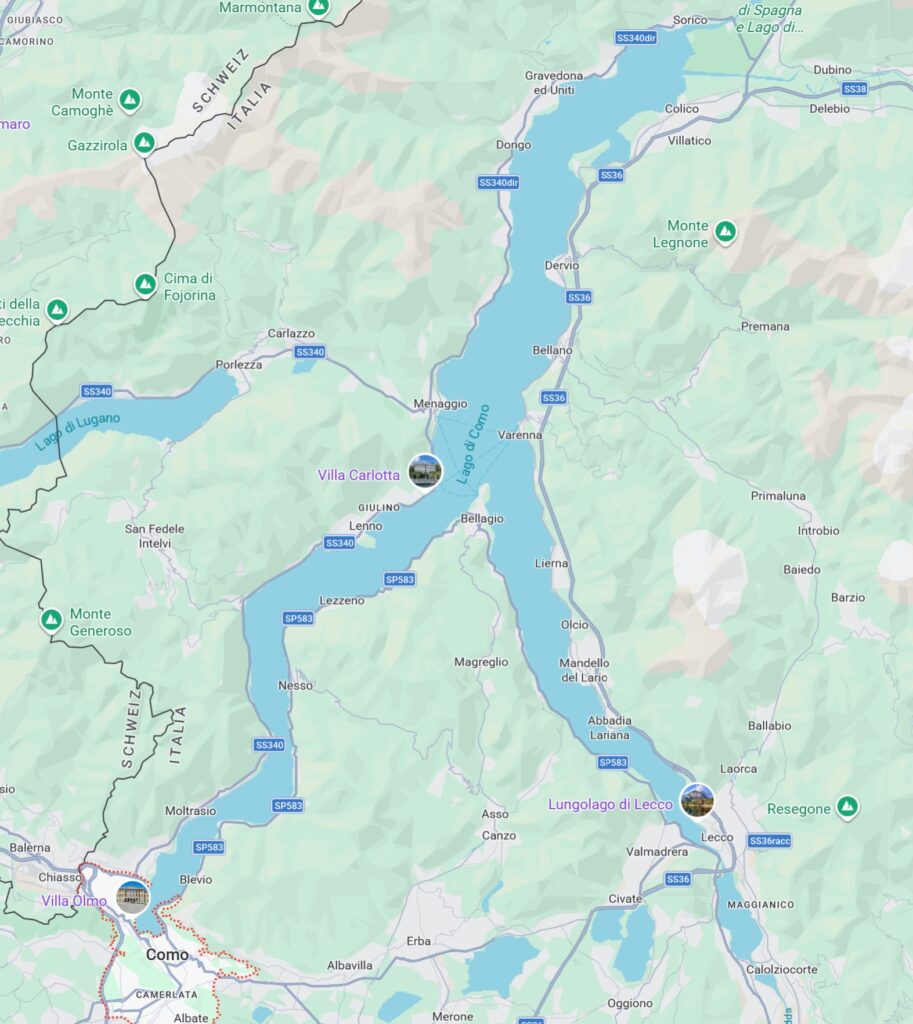
Lake Como looks a bit like an inverted “Y” on the map: the glaciers that formed it split in two directions. This forms a promontory between the eastern and western arms, and Bellagio is at the tip of that promontory, as you can see in this map.
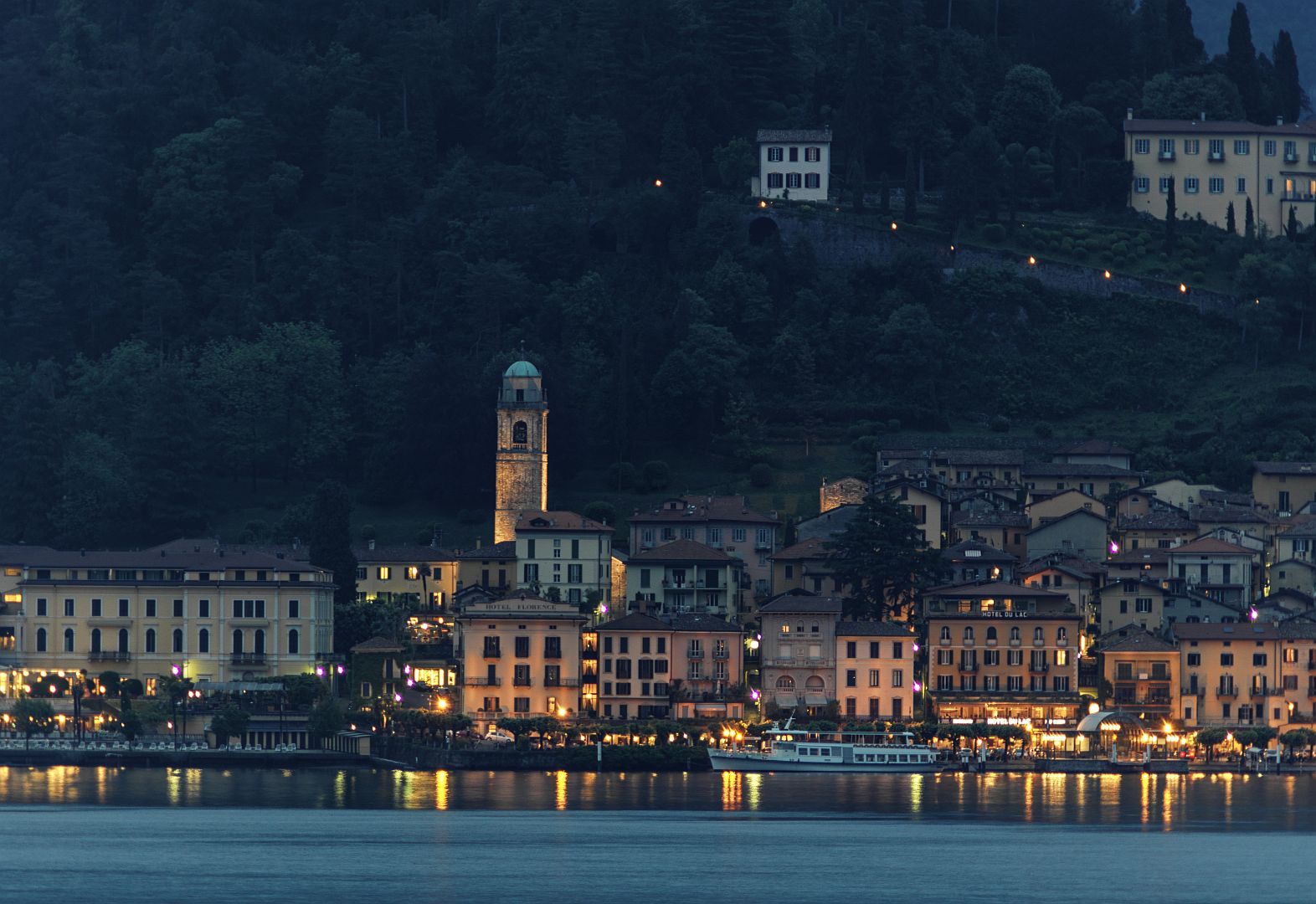
Just before Cadenabbia is the village of Giulino di Mezzegra – where, in April 1945, a truck full of German soldiers trying to escape to Switzerland was stopped and searched by communist partisans and found to contain Mussolini and his mistress, Clara Petacci. The next morning they were shot and their bodies taken to Milan. It is hard to imagine such desperate and violent acts in such an idyllic place.
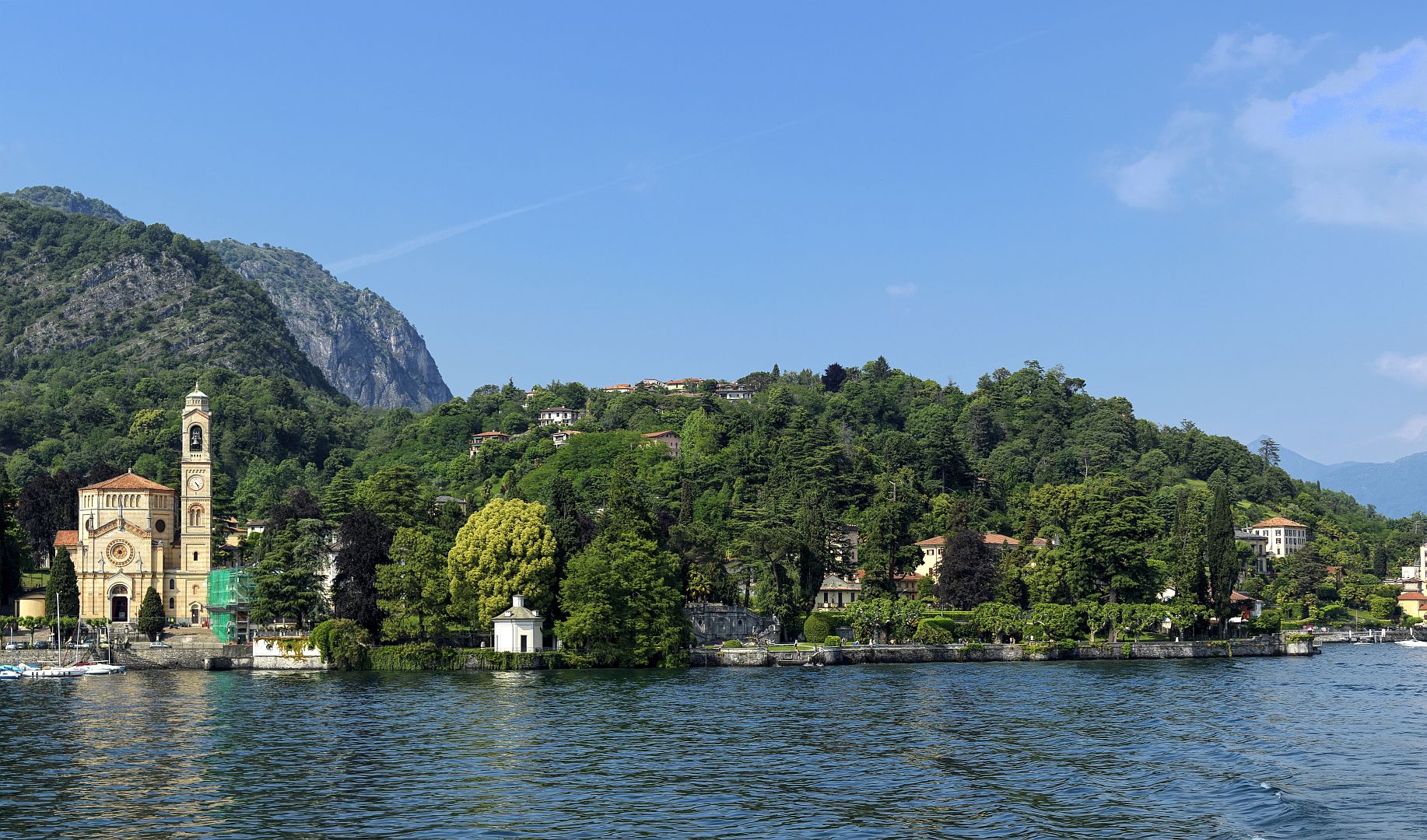
The lake was called Larius in ancient times so is often referred to locally as “Lario”. The Roman historians Pliny the Elder and Pliny the Younger had villas here and wrote poems praising Lake Como. In fact Pliny the Younger had two – one, on a hilltop, was called “comedy”, and the other, down by the lake shore, was called “tragedy”. I wonder if the servants in each villa were supposed to take their cue from the names. Anyway, as far as I have been able to find out, the exact location of the villas is unknown, although “comedy” is thought by some to have been up the hill behind Bellagio. I wrote a bit about Pliny the Younger in my post titled Cospaia – The Accidental Republic.
After the end of the imperial period, the area around Como underwent the decline experienced everywhere in Italy, but perhaps worse up here in the north as it was such a well-trodden path for invaders. With the end of large-scale commerce, estates such as those belonging to the Plinies would have become uneconomic and perhaps reverted to wasteland, while towns shrank into villages or vanished altogether.
But as the estate agents say, there is no substitute for location, and from the Renaissance onwards wealthy people with a bit of spare cash started emulating Pliny, buying land around the lake shore and building luxury villas, often surrounded by elegant gardens.
In the early 19th Century a craze for “English” gardens took off in Italy and wealthy villa proprietors competed with each other to establish more and more impressive examples. In this context, “English” means the artfully naturalistic style associated with the gardens of English stately homes, in contrast to the rigid formalism of Italian Renaissance gardens. But the funny thing is that those English gardens that inspired the Italians had been trying to create an essentially Italian vision. With their neo-classical follies and all, they were based on the Palladian villas and veduta landscape paintings that young British noblemen had seen on their grand tours of Italy in the previous century. So the British tried to create Italian-looking scenes in Britain, which the Italians then emulated in Italy. Culturally, it was all rather circular.
Bellagio and Villa Melzi
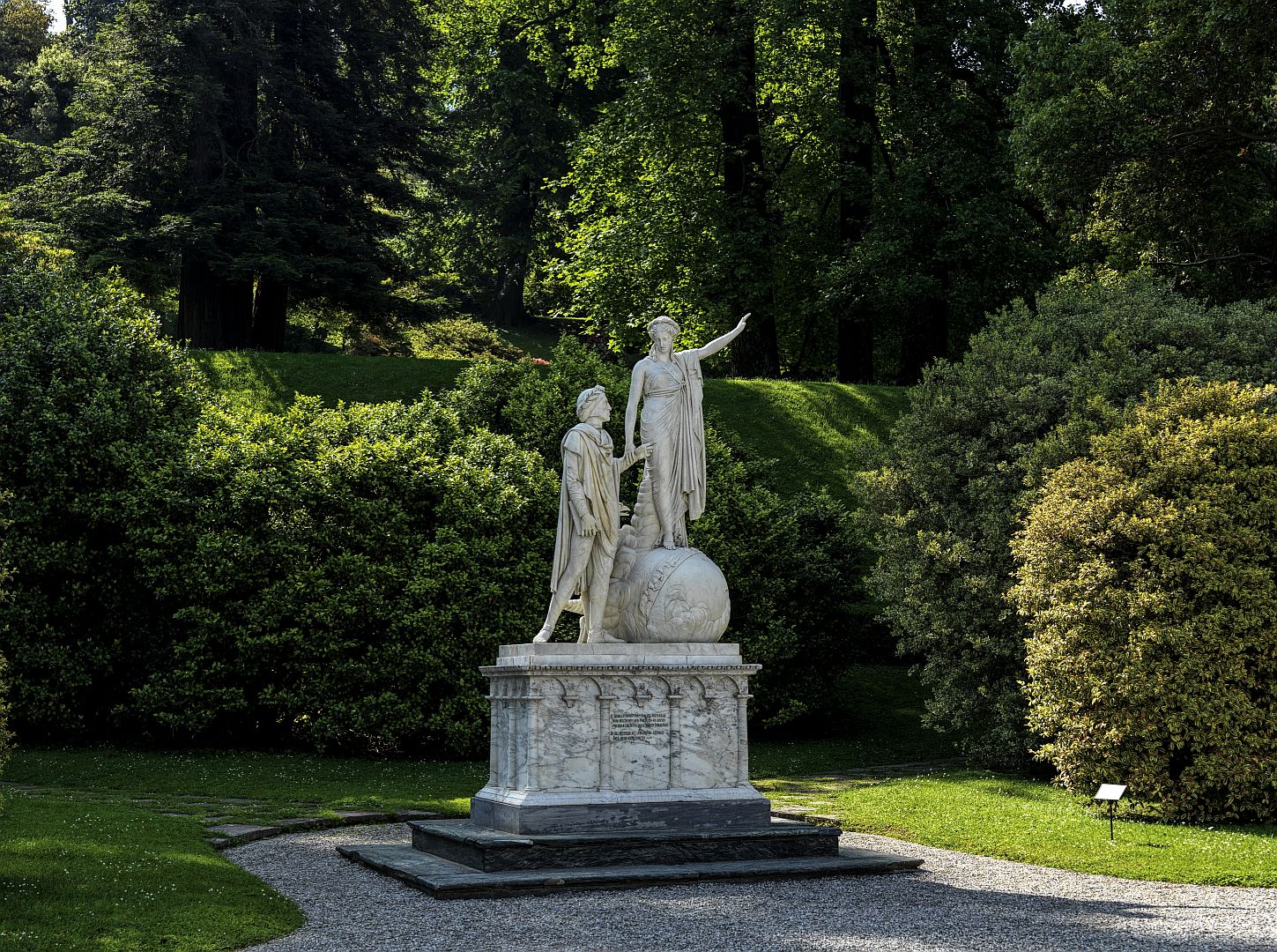
Whatever the origin of the garden craze, and whether they retained Renaissance formalism or adopted the trendy new English style, posterity is the beneficiary, as several such gardens survive on both sides of the lake and can be visited.
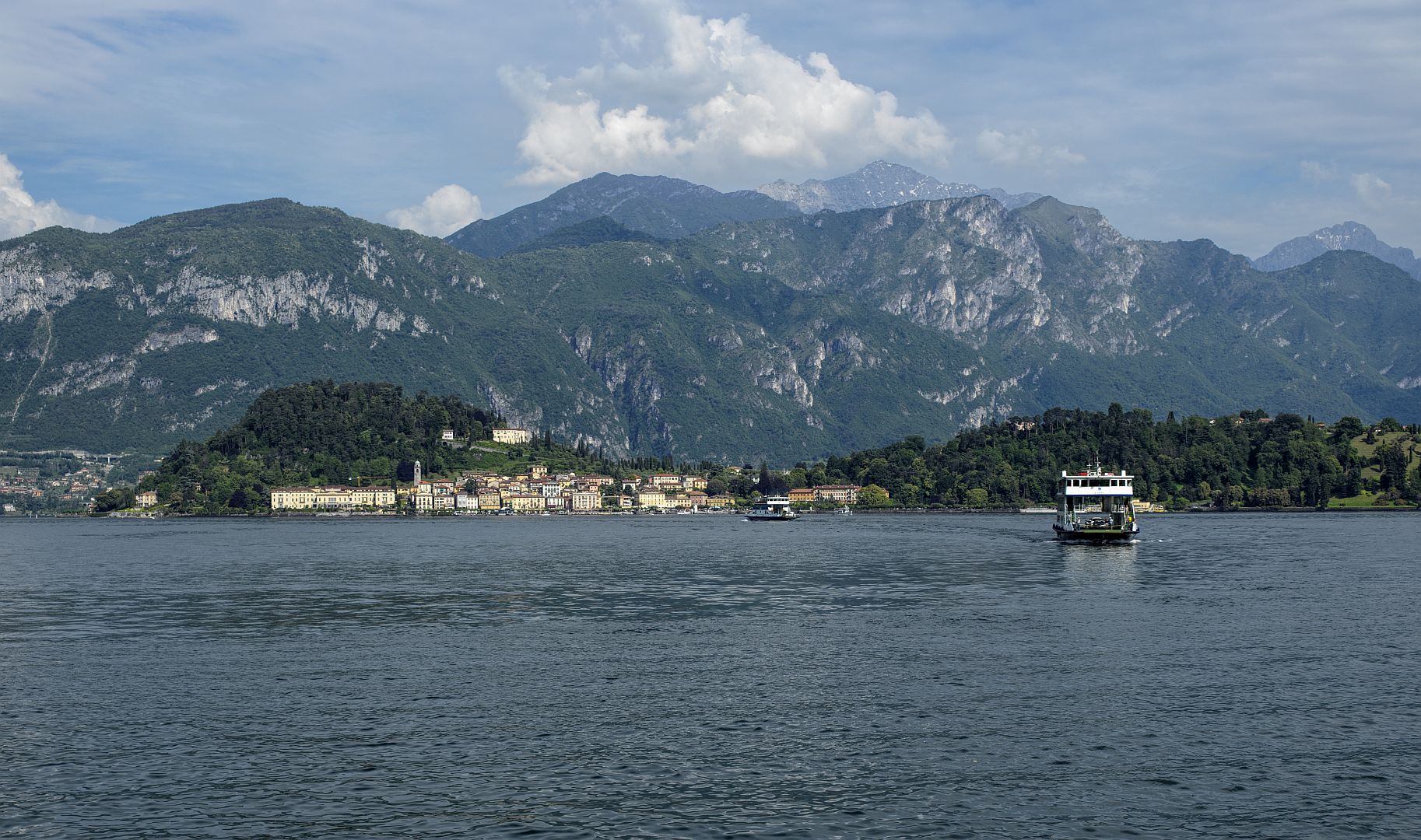
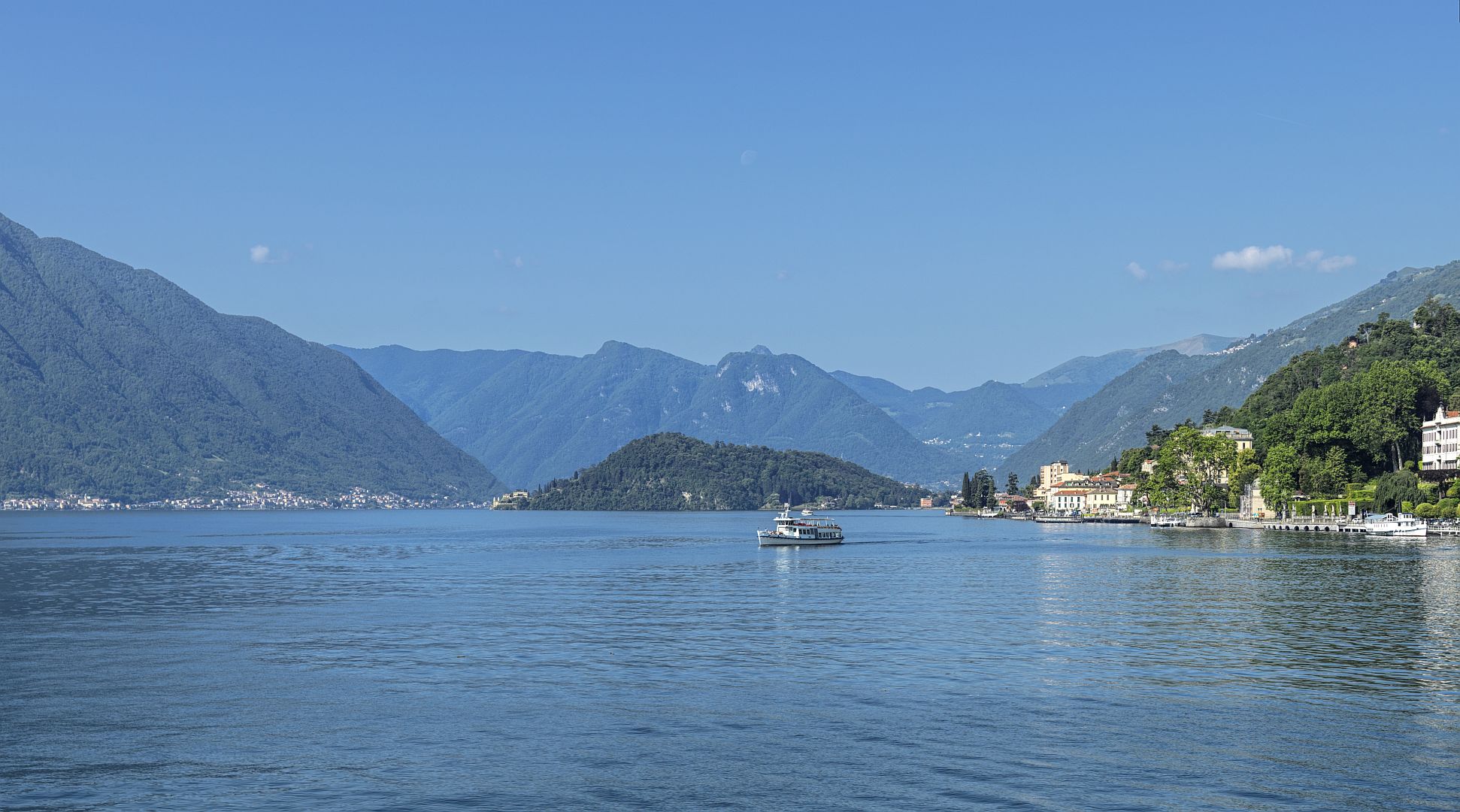
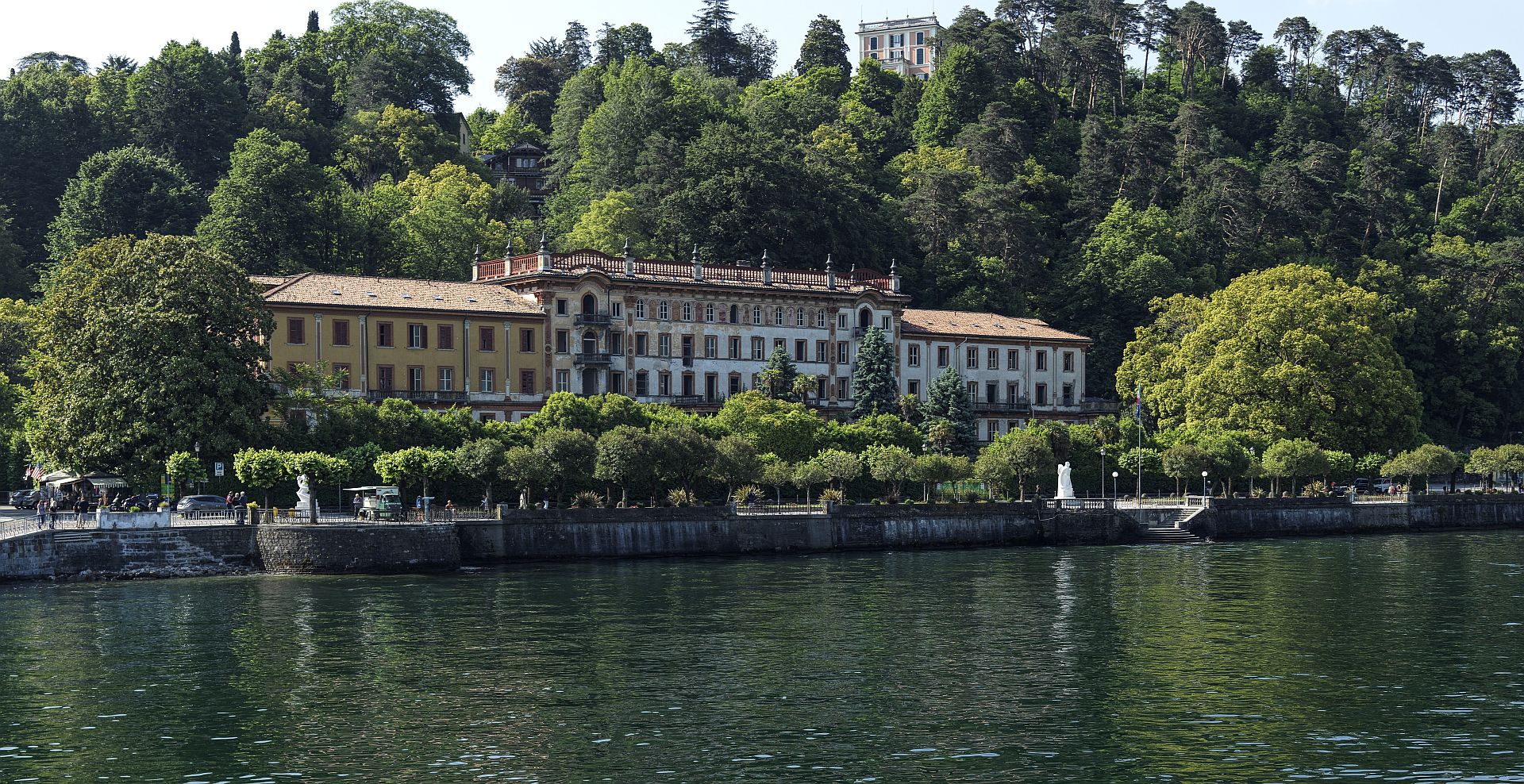
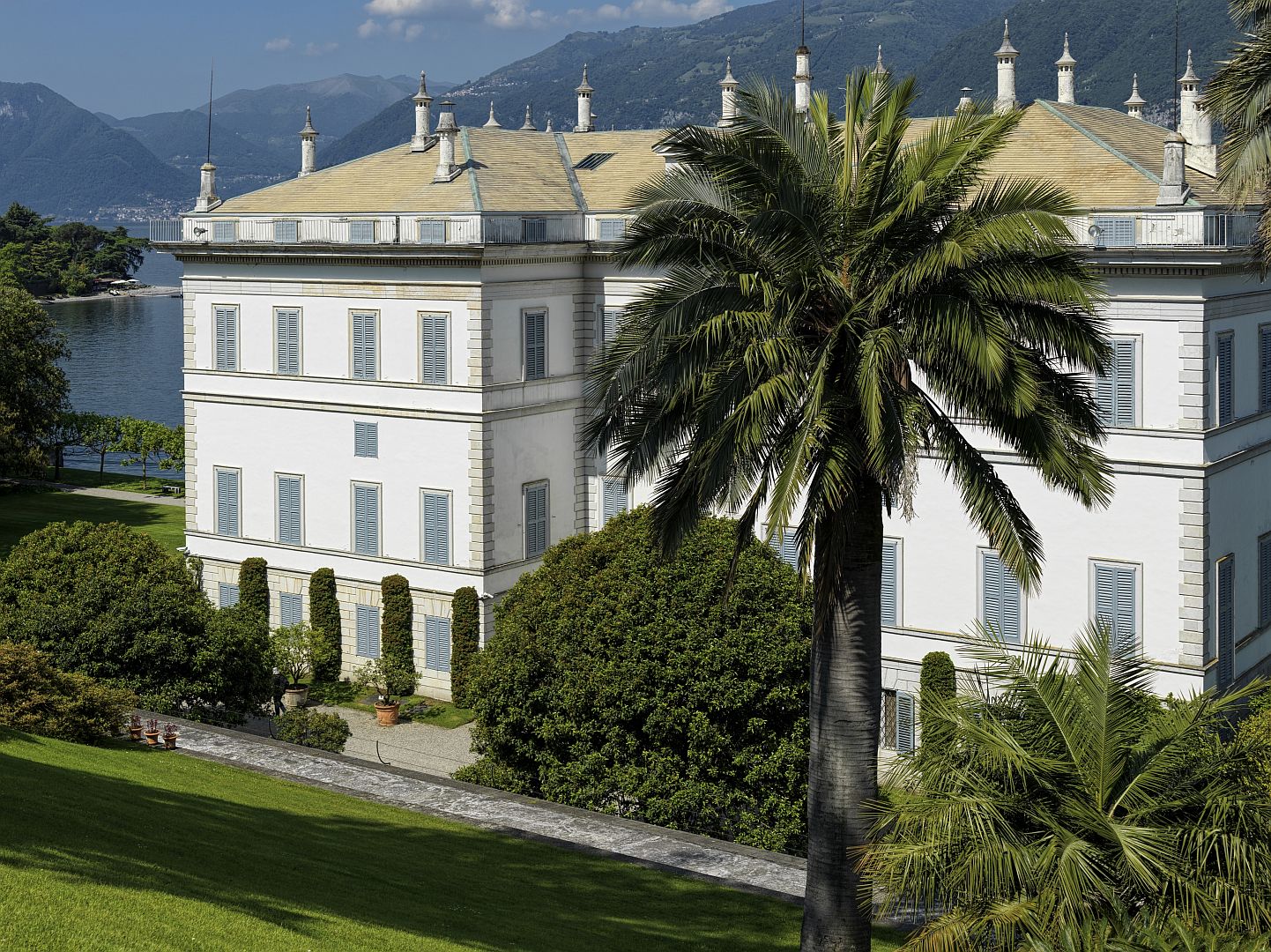
So the next day we took the ferry from Cadenabbia to Bellagio, which is a pretty town in its own right, but has the additional virtue of being right next to one of these grand villas with gardens, the Villa Melzi. This dates from the early 19th Century and was built for Francesco Melzi, Duke of Lodi, who was a minister in the Napoleonic regime in northern Italy and an early supporter of Italian reunification.
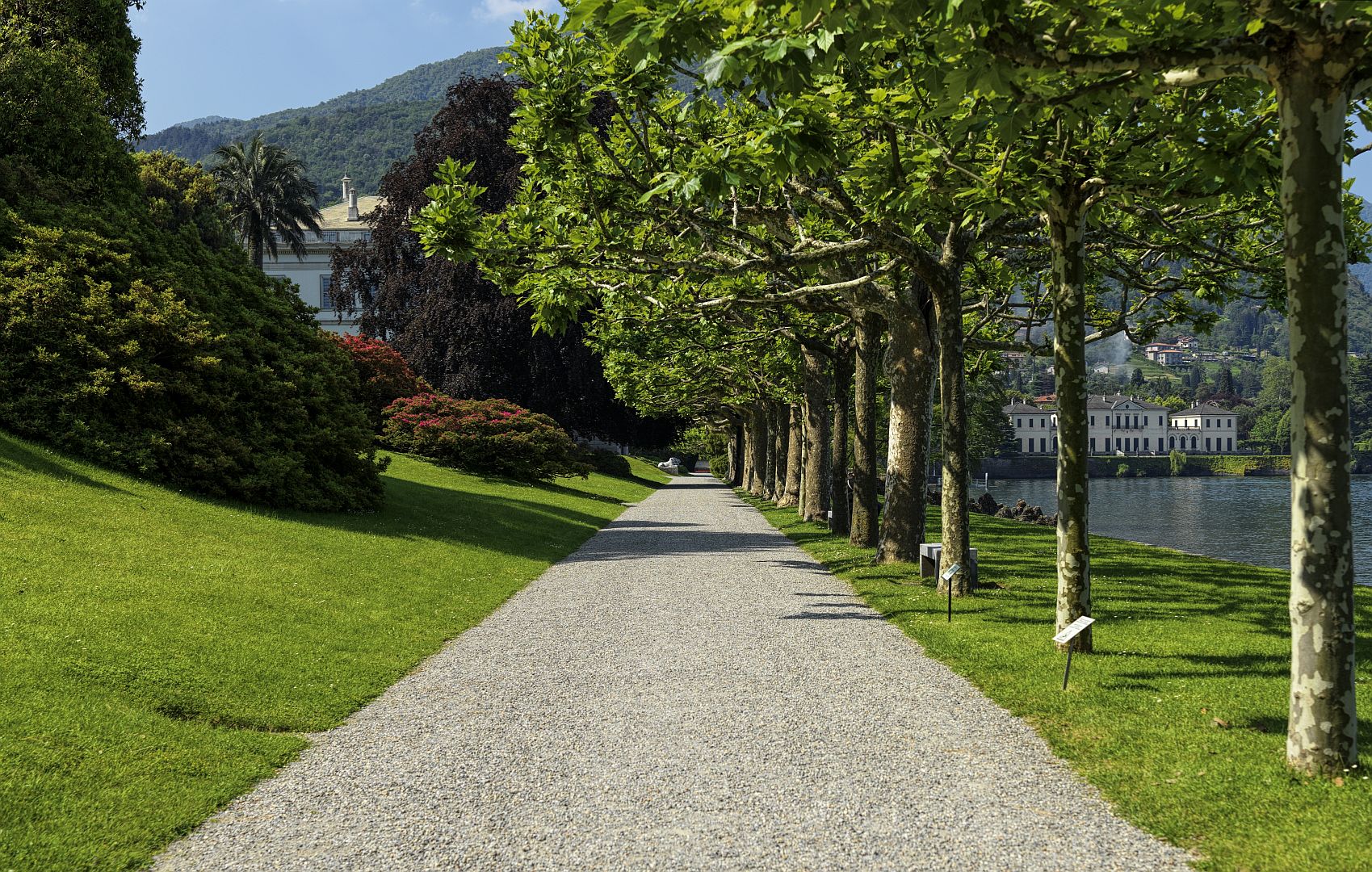
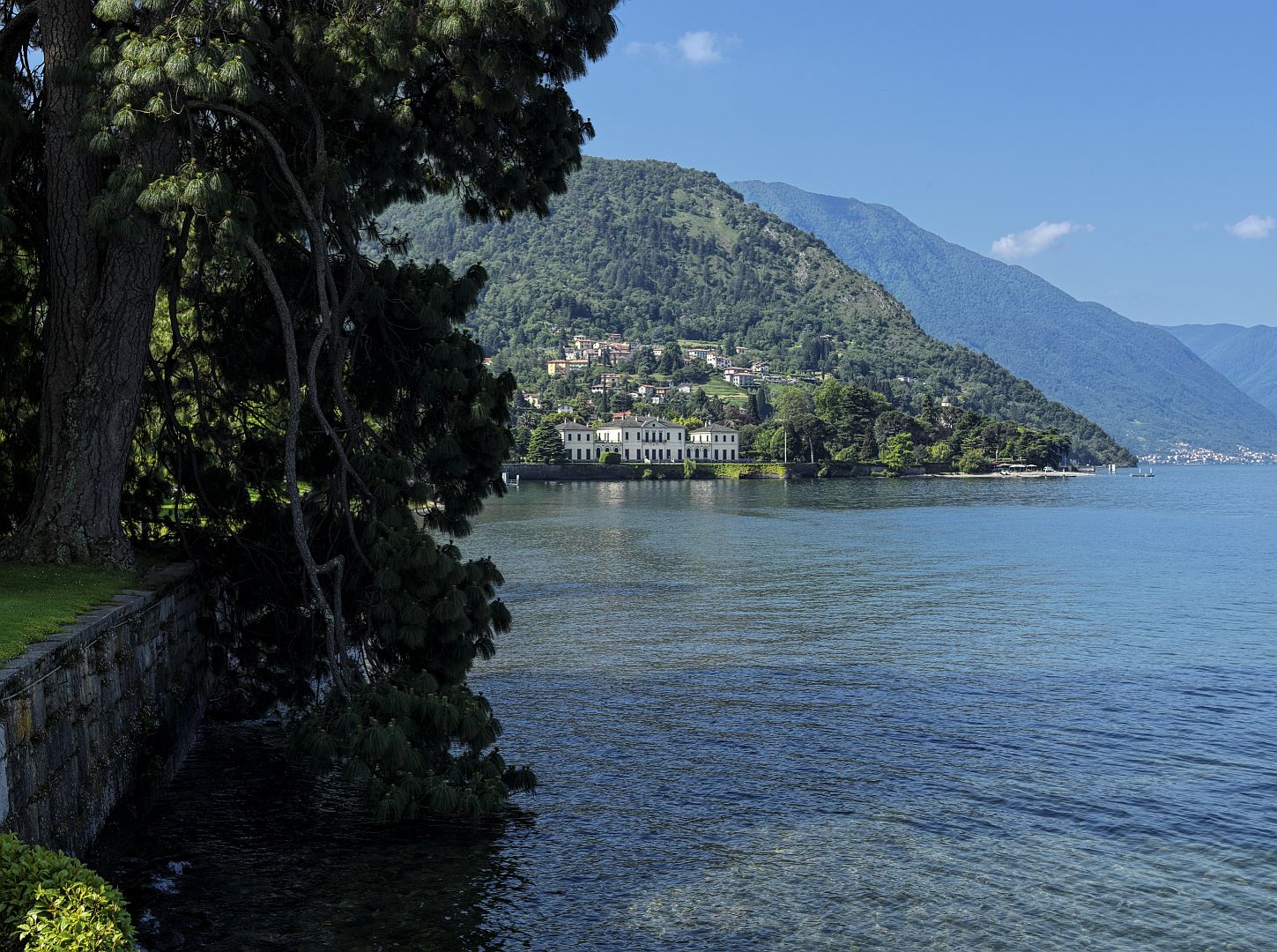
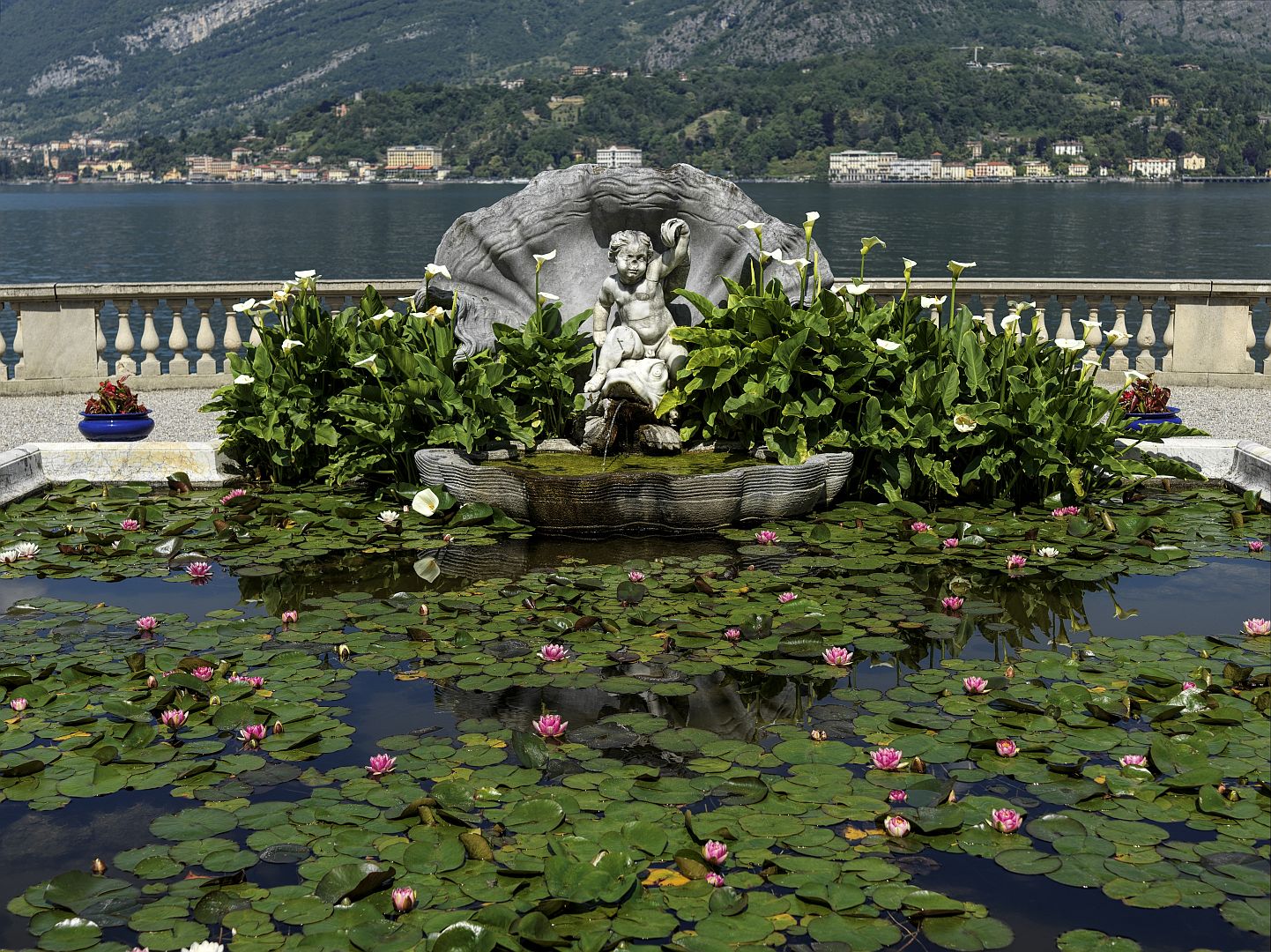
That evening back in Cadenabbia, we went out for a drink in a lakeside bar and found ourselves not in George Clooney territory but surrounded by English and German old-age pensioners.
Como (the town, not the lake)
The next day we decided that we would catch the hydrofoil down to Como itself. That takes about forty minutes and is a little more expensive than the regular ferry, but the regular ferry takes two hours. This involved leaving early enough to miss breakfast in the hotel.
The man in the hydrofoil ticket office had obviously turned up and opened the office, but had then decided to head over the road for a coffee, so we joined a queue outside. The hydrofoil appeared in the distance and still no ticket seller. Eventually he appeared, having clearly been watching, and having calculated how much time he would need to allow to sell tickets to everyone in the queue. Such things can be stressful for foreigners, but are just part of life in Italy.
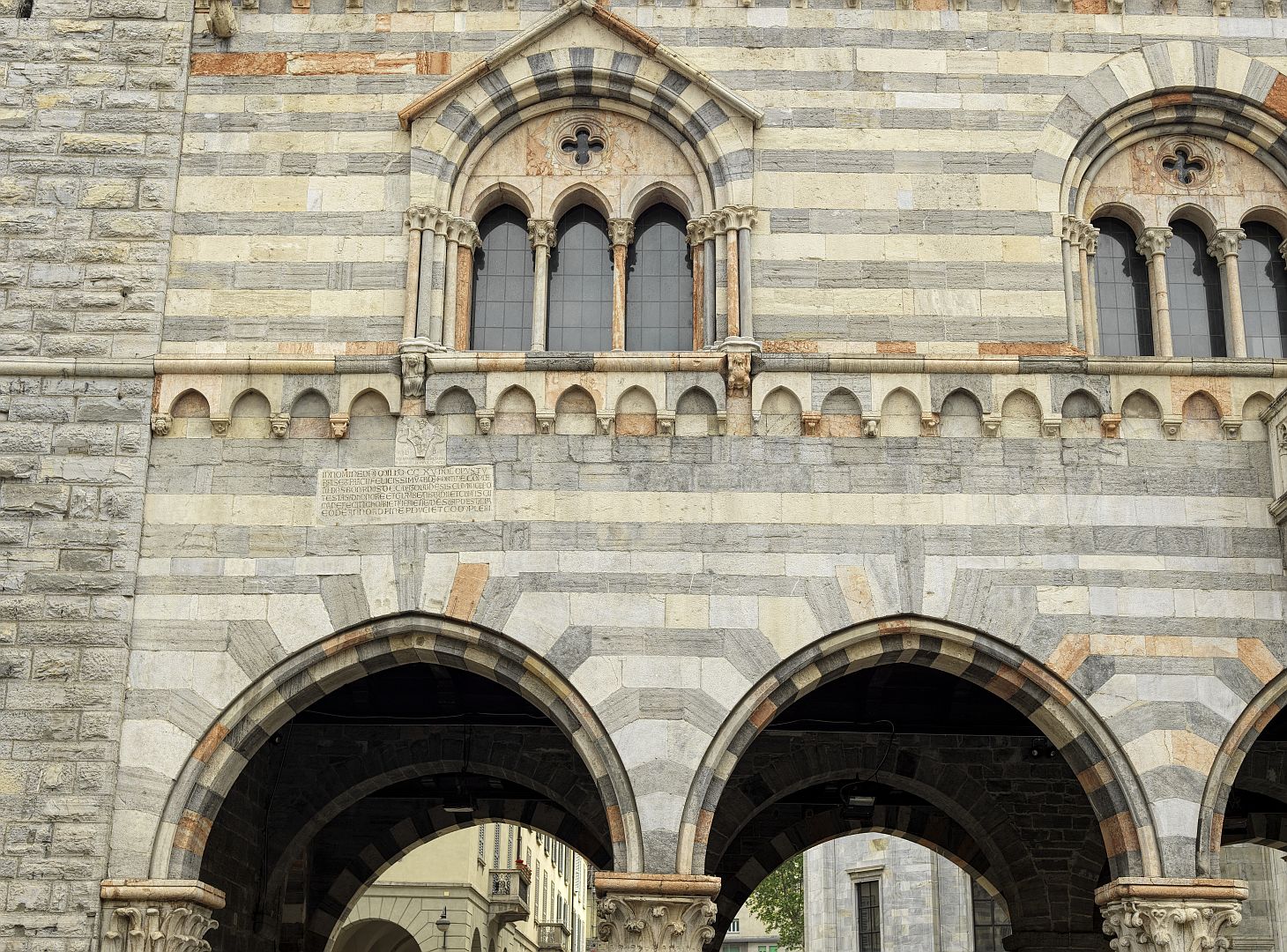
Como is an elegant town, particularly the central part inside the old walls, which is largely pedestrianised. Most of the architecture dates from the 17th and 18th Centuries, although there are some medieval survivals. Next to the Duomo is a very elegant medieval building called the Broletto, made of white, grey and pink stone which once housed the law court.
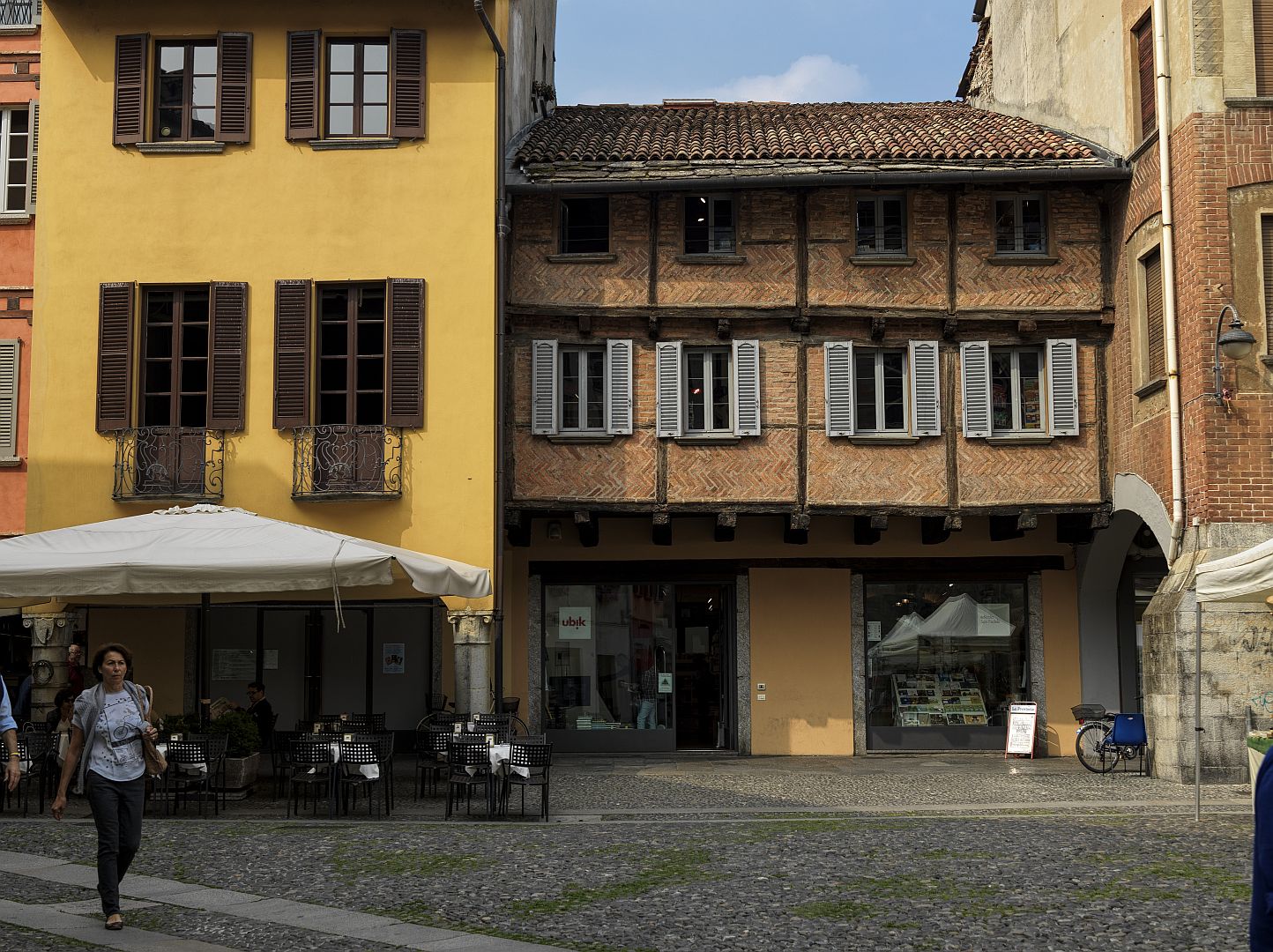
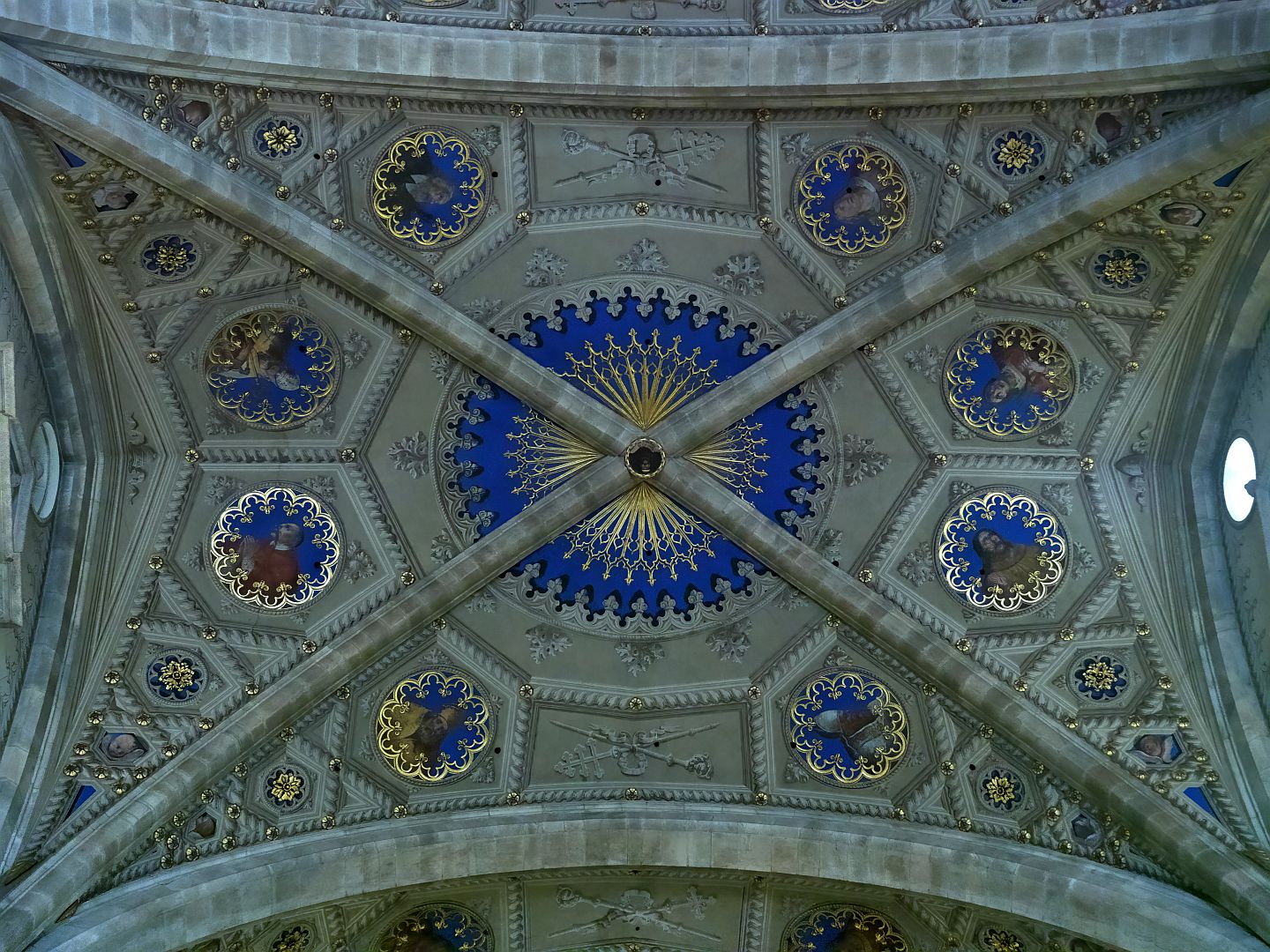
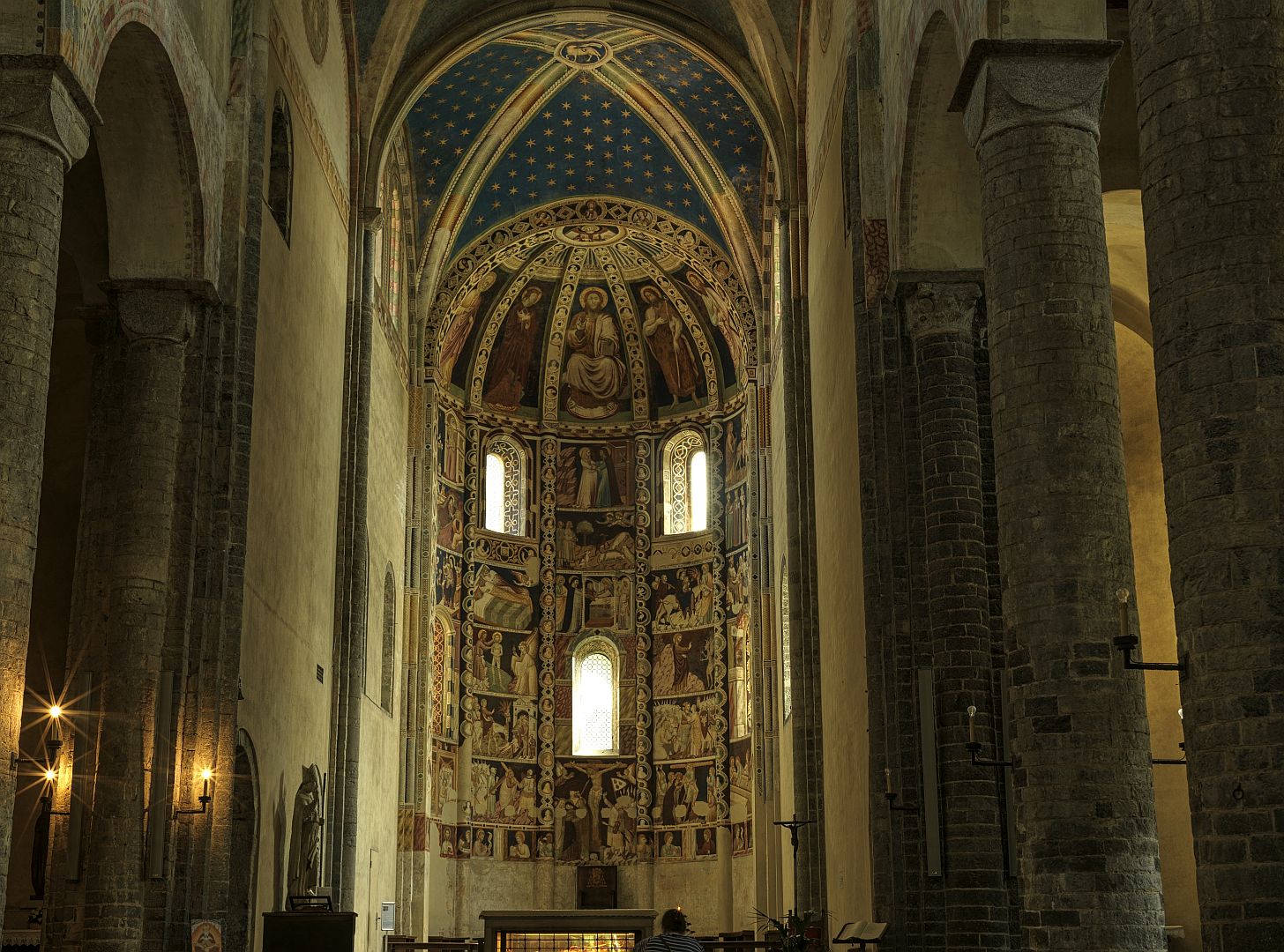
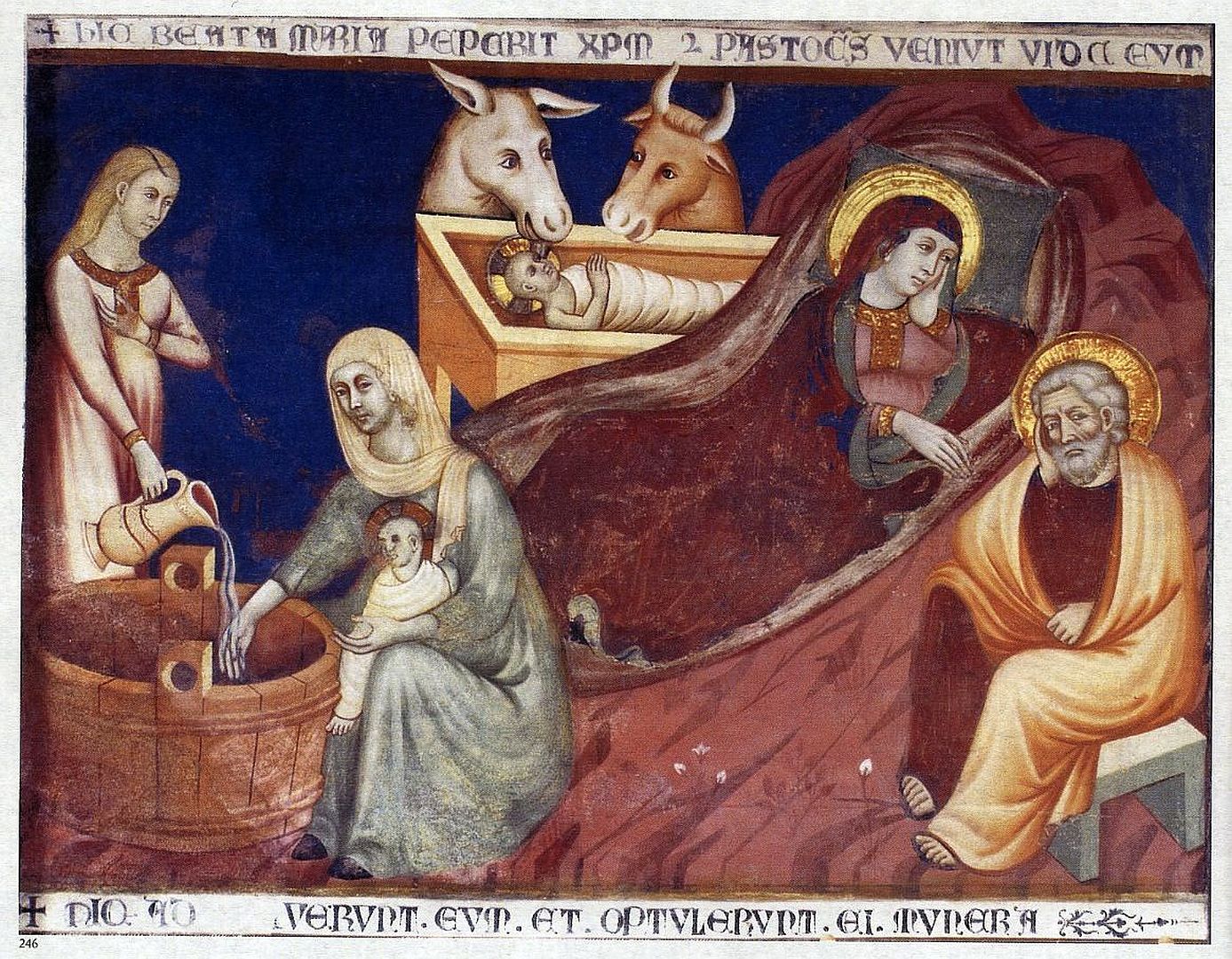
We had a coffee and a pastry sitting outside a café in the Piazza Duomo, to make up for our missed breakfast, then headed off to see the main sights, which was first the medieval Basilica of San Fedele, then we went outside the walls through a suburb containing a lot of fascist-era architecture to see the 11th-Century Basilica of Sant’ Abbondio which is a very fine example of “Lombard Gothic” architecture. In the apse there were some excellent 14th-Century frescoes of the life of Christ, in a sort of naïve sub-Giotto style.
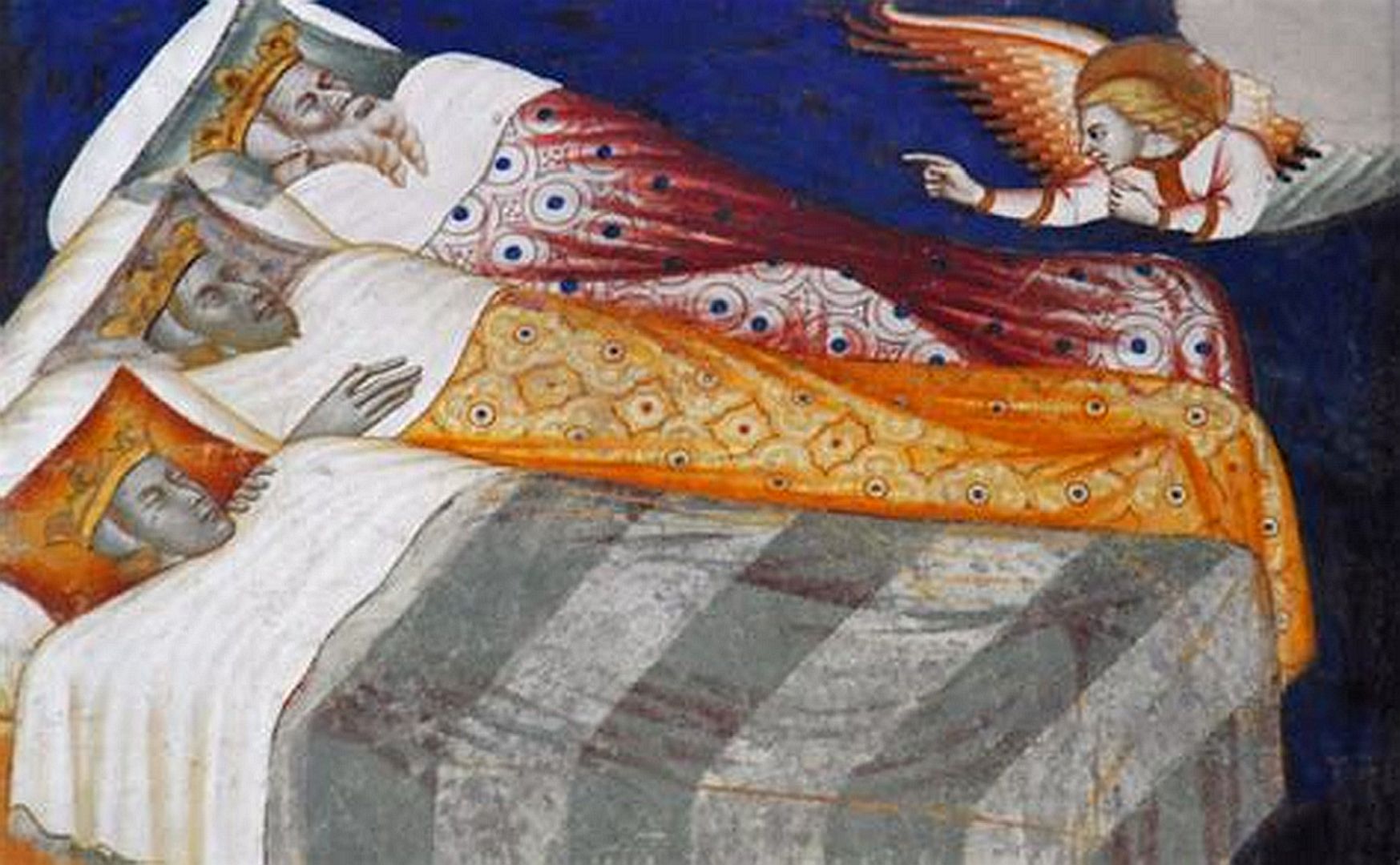
We were particularly taken with the nativity scene featuring a very cheerful looking ox and ass, and the scene where the three kings dream of the birth of Christ – they were all tucked up asleep in bed next to each other in their robes and crowns with an angel appearing above them.
I had the Hasselblad with me but no appropriate lens to take telephoto pictures of the apse frescoes, but there was a vending machine at the back of the church which was supposed to dispense postcards. We only had one 50 Euro cent coin between us so debated which of those two scenes to buy, then the machine took our money and didn’t produce a postcard anyway. I have managed to track down some images on the Internet and will include those instead, which, given the Diocese of Como has my 50c, seems fair to me.
Varenna
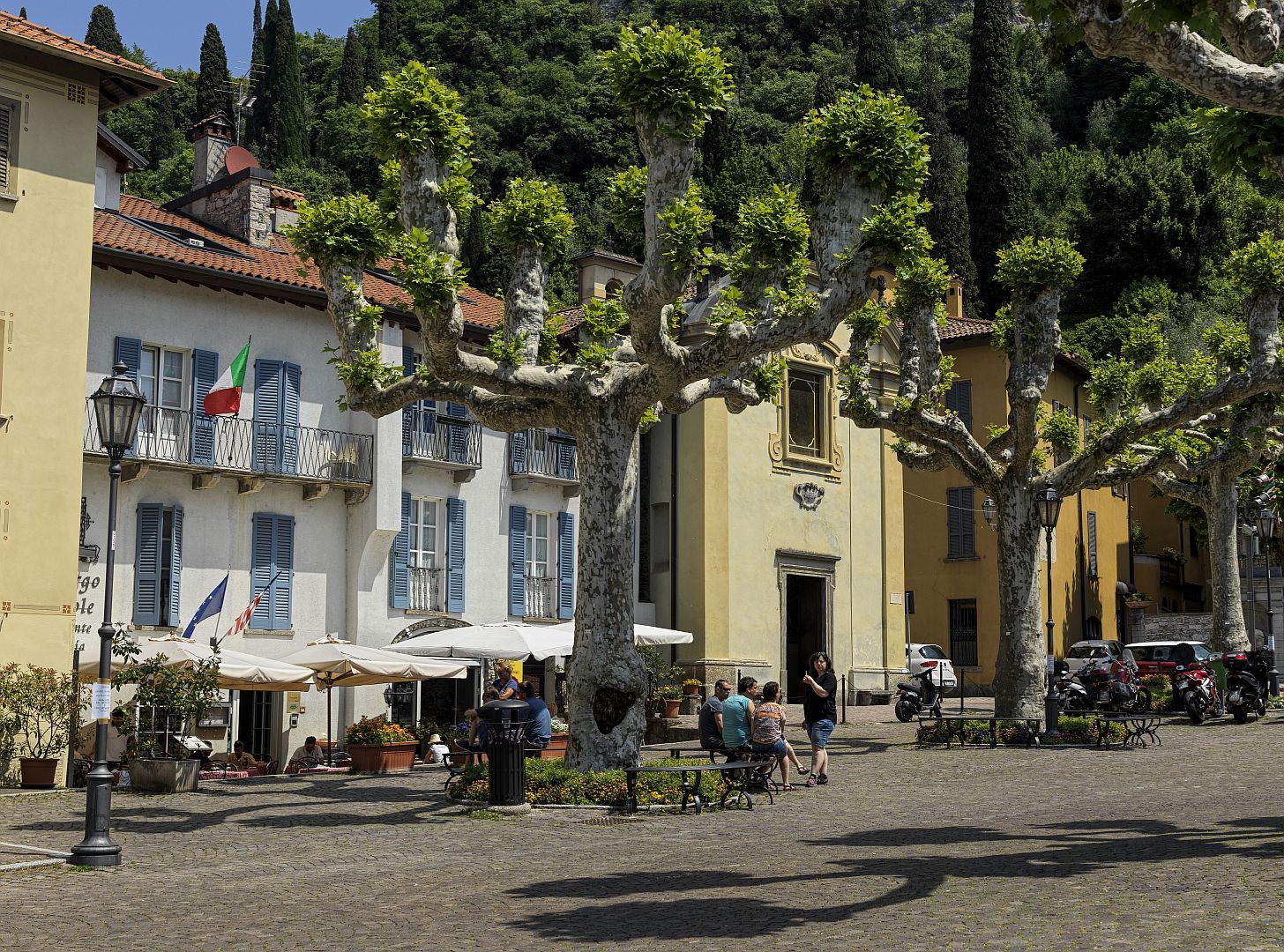
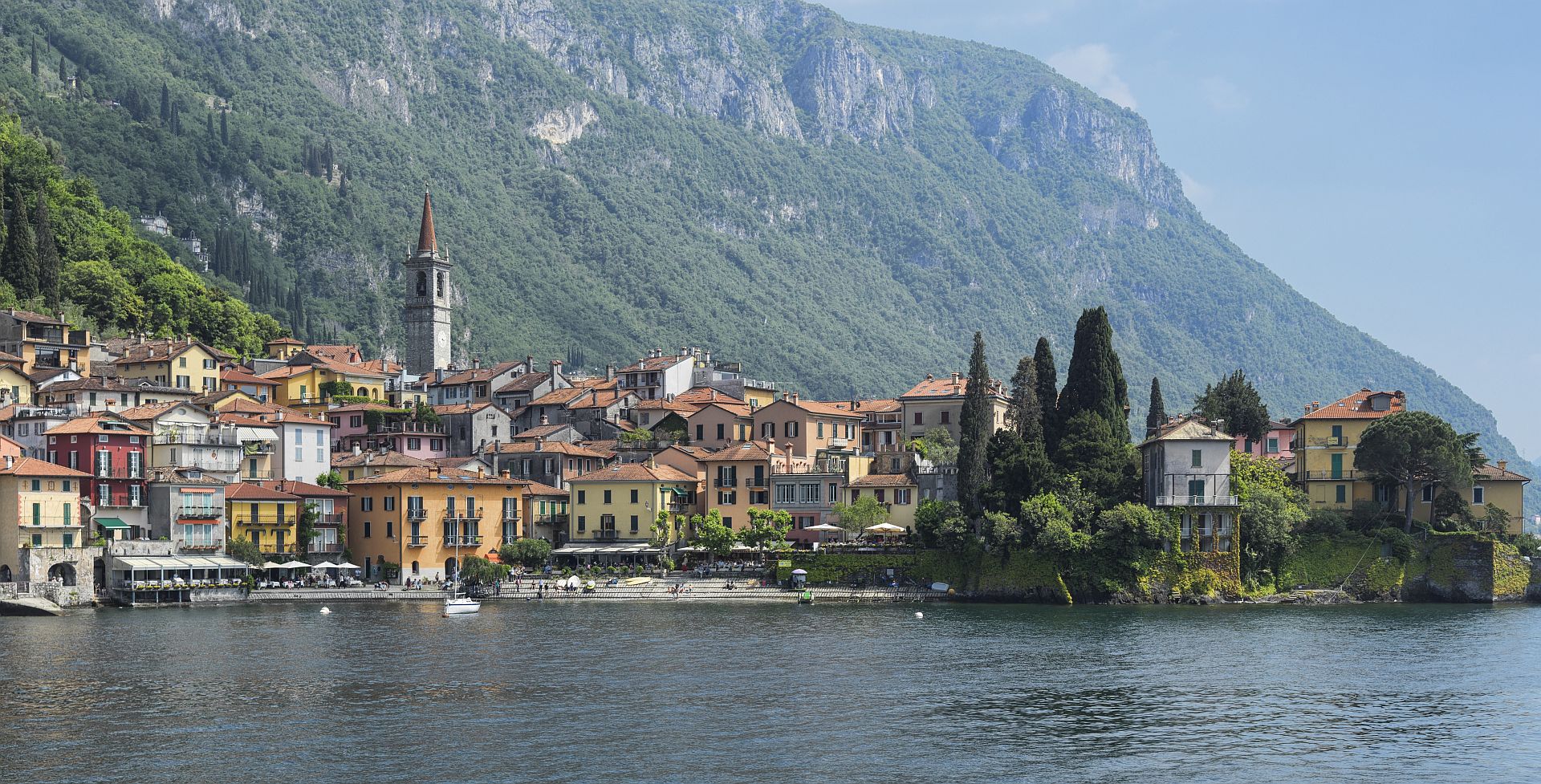
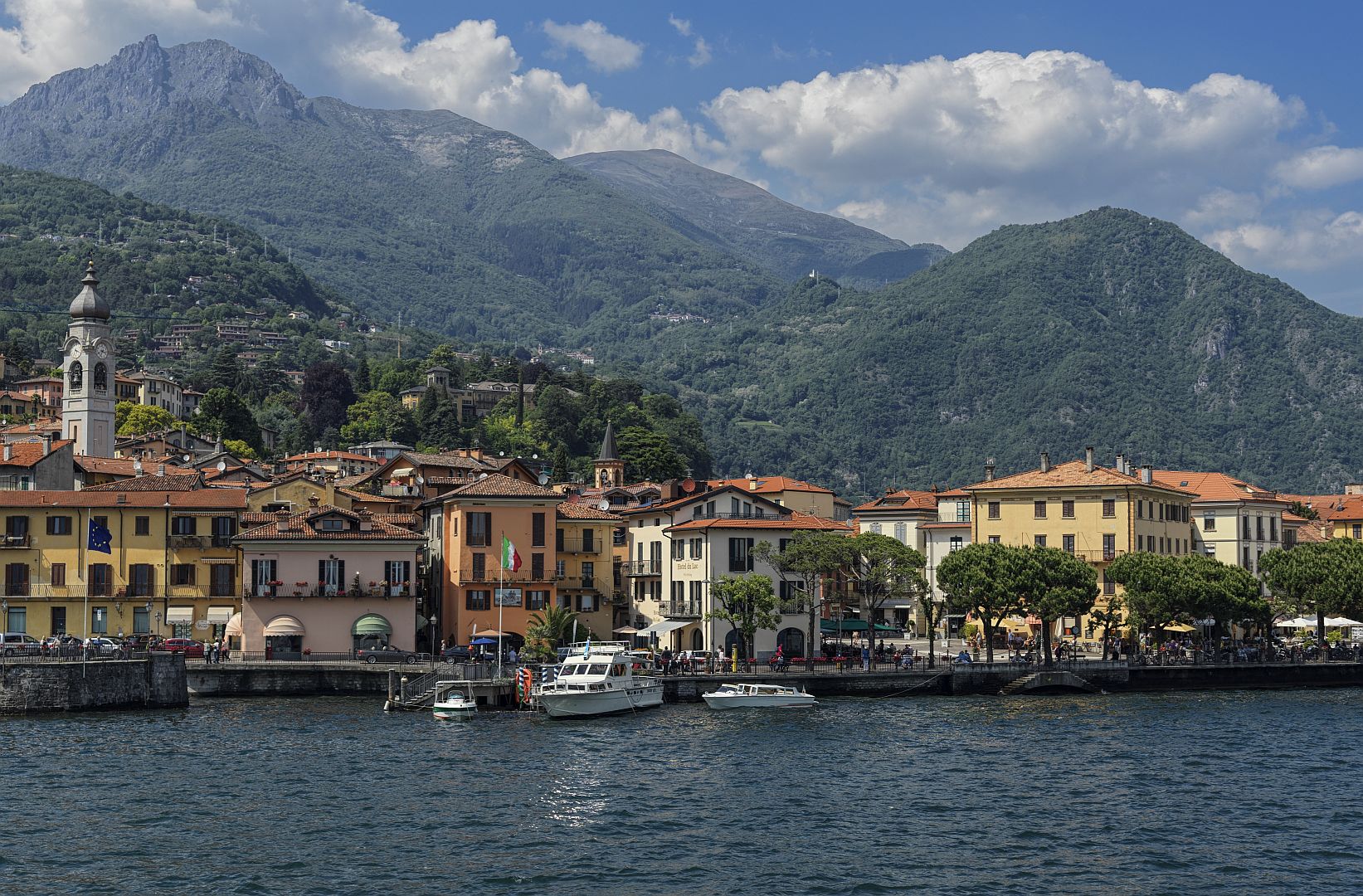
A competition for the most picturesque little town on the shores of Lake Como would have a very crowded field, but Varenna, on the eastern side, would certainly make the semi-finals. A ferry does a round trip from Cadenabbia to Bellagio, Varenna and Menaggio on the western side, and it is a very civilised way to get about and enjoy the views.
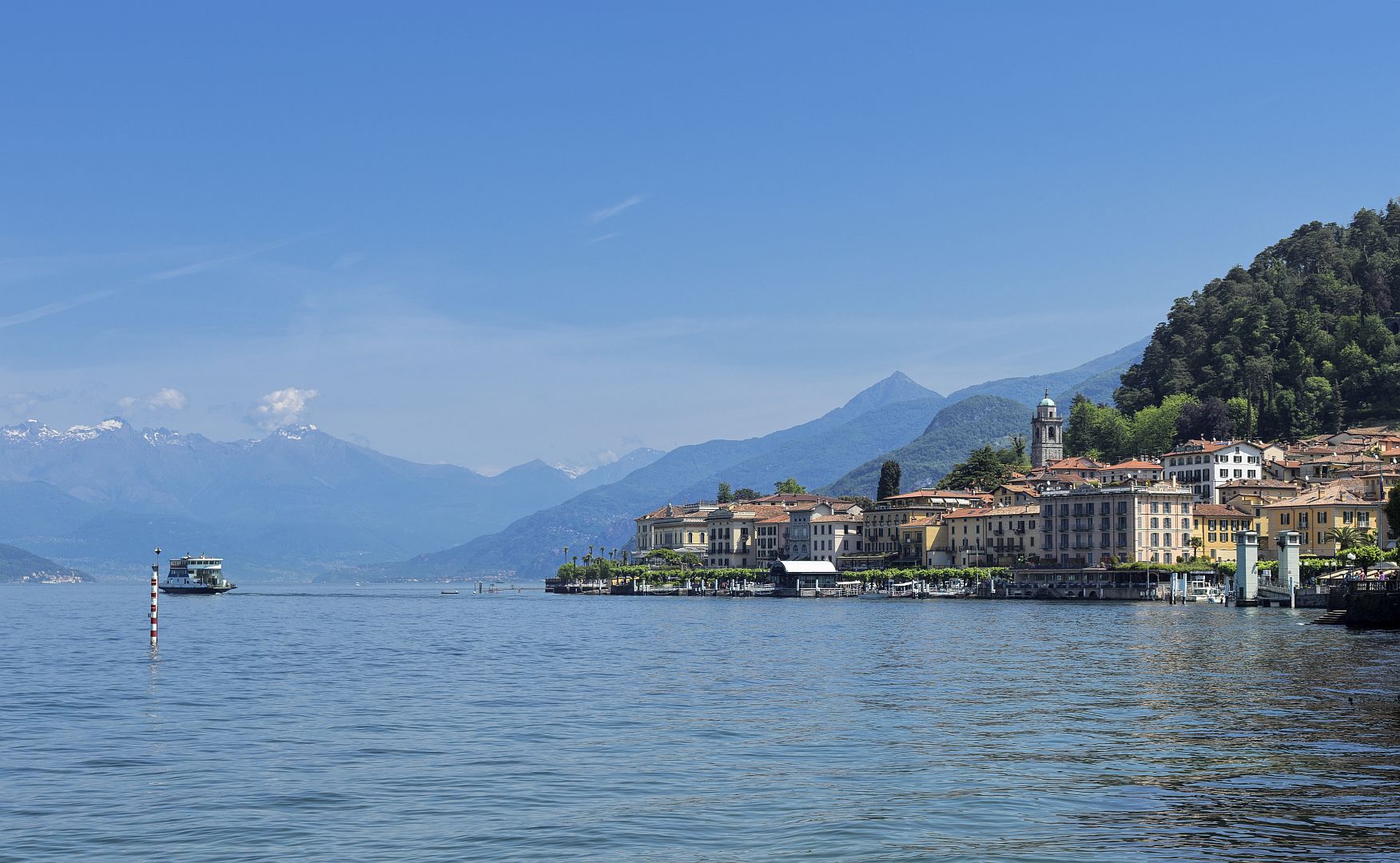
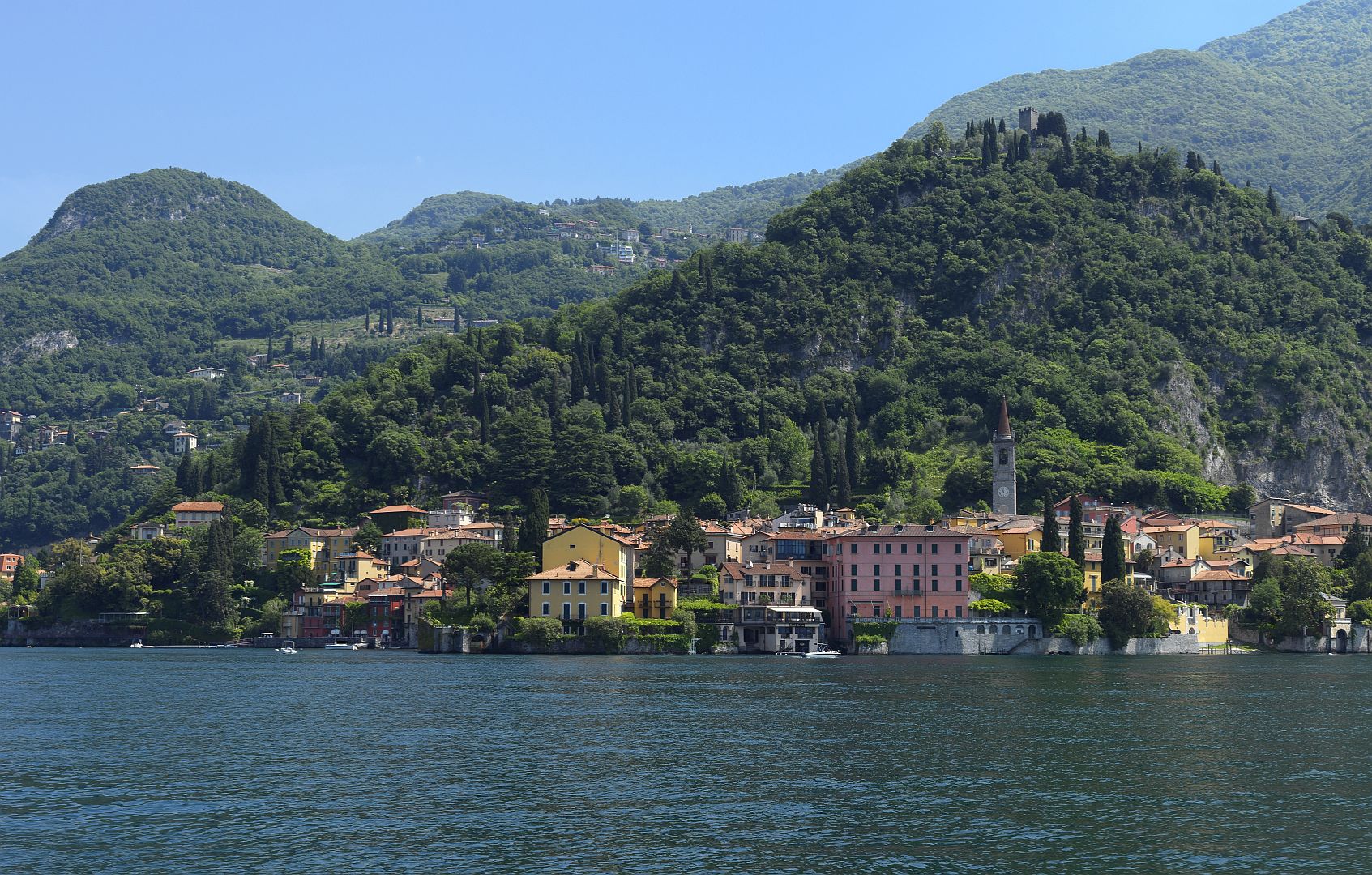
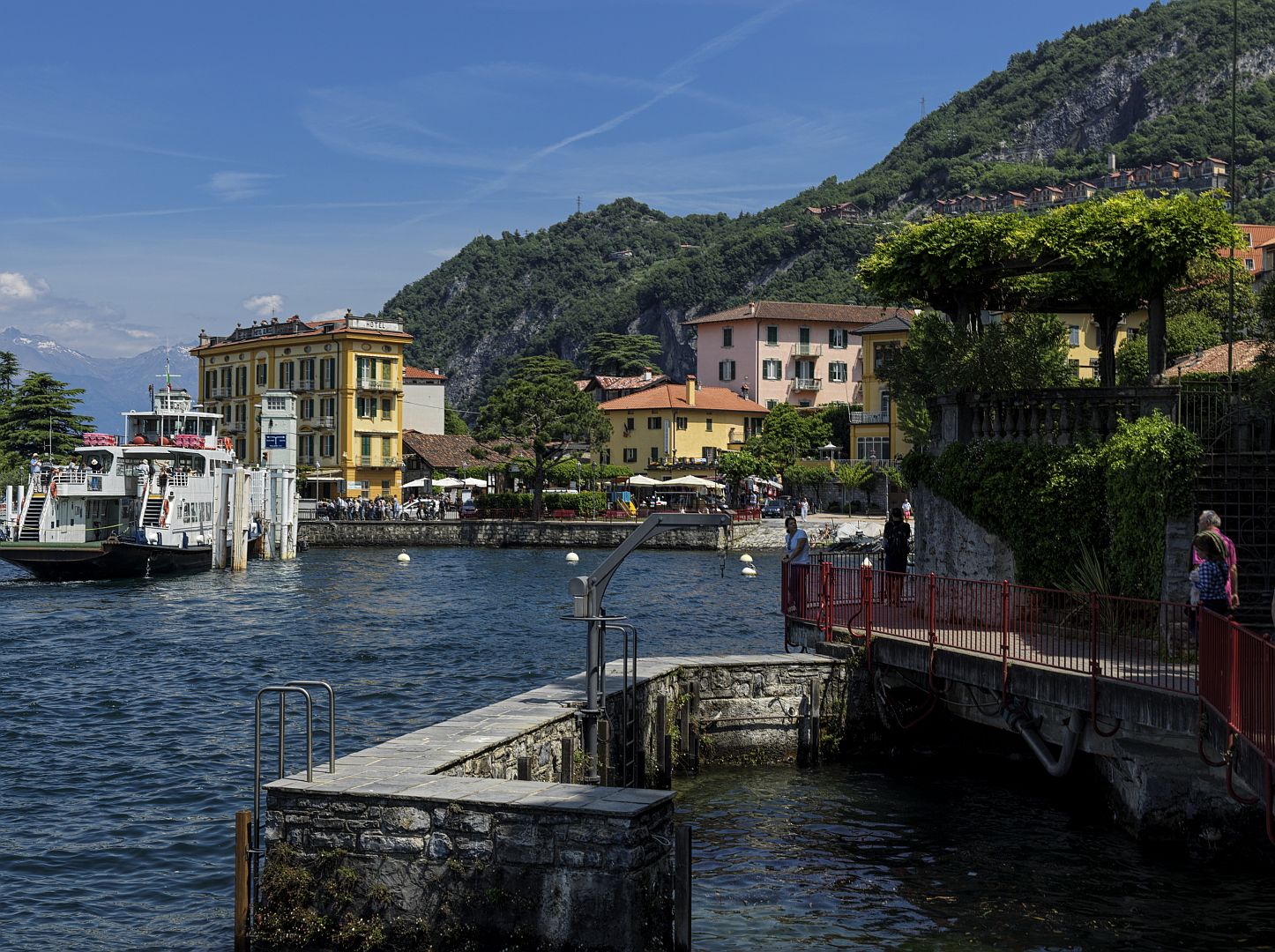
I can’t find any historical claim to fame for Varenna, other than the fact that the founder of the Pirelli tyre company was born there. But its modest past is compensated for by its beauty, which certainly brings lots of visitors.
Valtellina
North of Varenna lies the entrance to the Valtellina, a long thin alpine valley which runs parallel to the Swiss border. It is famous for its views and for its dairy products. They even grow wine grapes here, but only on the northern (that is, the south-facing) side of the valley. There are two types of valley up here; those carved by glaciers run roughly north-south, while those caused by tectonic collisions, and the folding of the earth’s crust which created the Alps, run roughly east-west.
We didn’t get to appreciate the views much – the entrance to the valley has a lot of light industry, while as we progressed further in, the clouds and rain came down. Eventually we circled round to the right and came back down into the Po Valley past Lake Iseo. During the next phase of the trip we visited several of the famous cities in the region, including Cremona, which I wrote about in my post on Claudio Monteverdi, and Mantua, which I wrote about in my post on the Gonzaga family and the painter Mantegna.
Dogs and Steamers
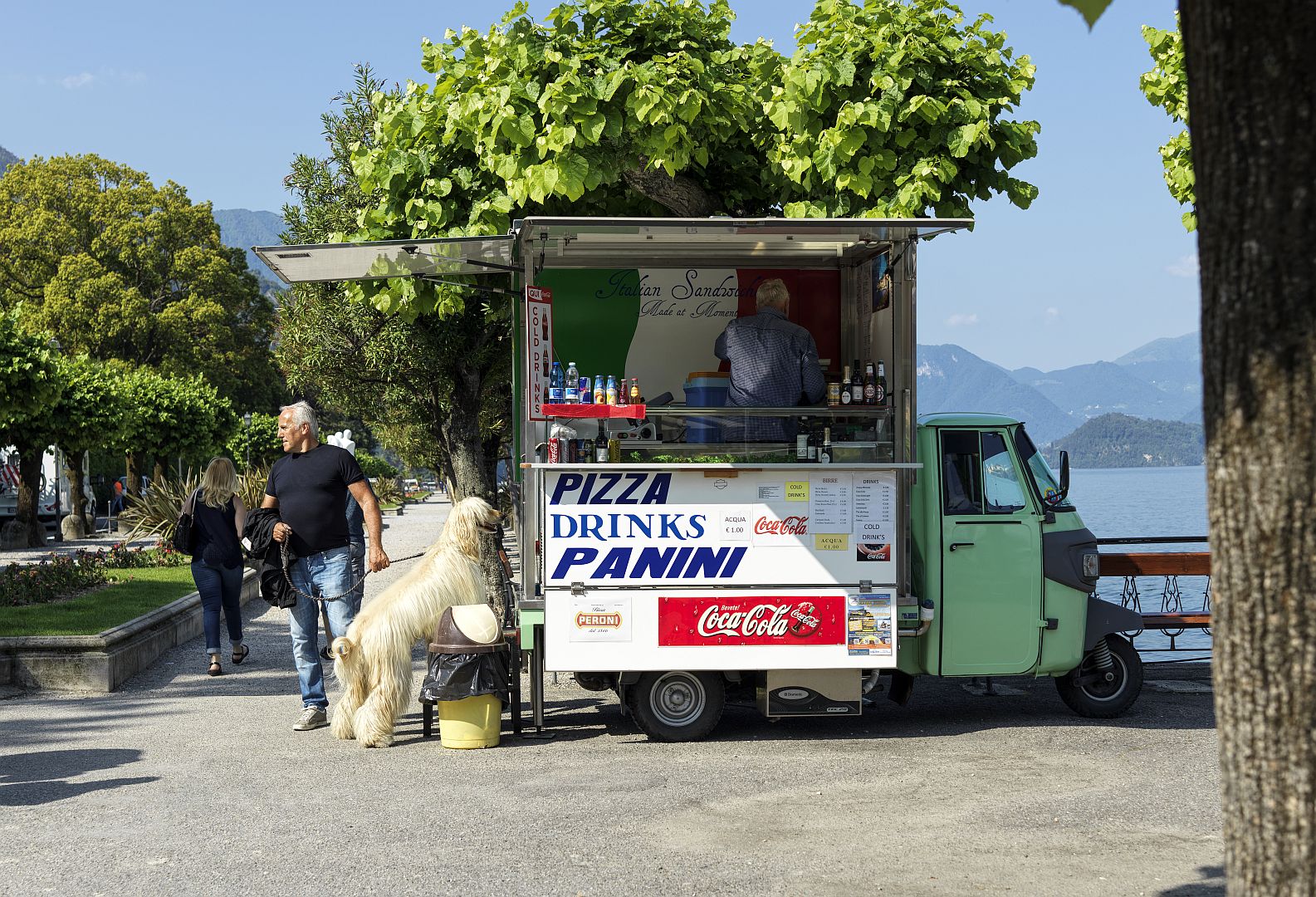
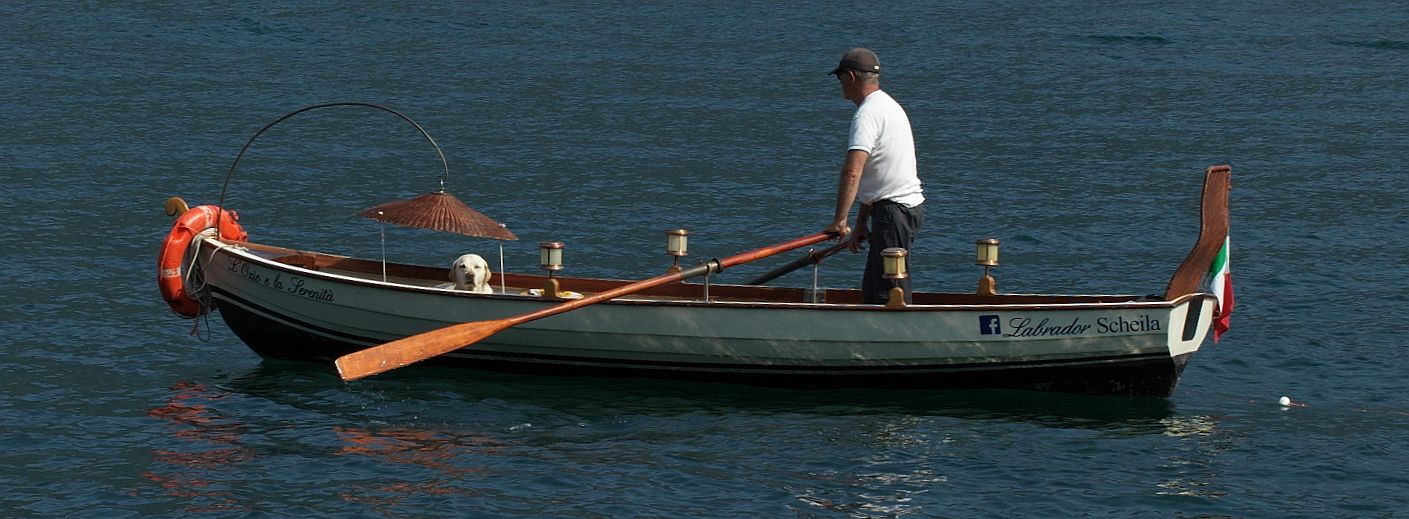
I will finish with pictures of a couple of the dogs of Lake Como – an opportunistic Afghan and a Labrador who seems to be some kind of social media influencer.
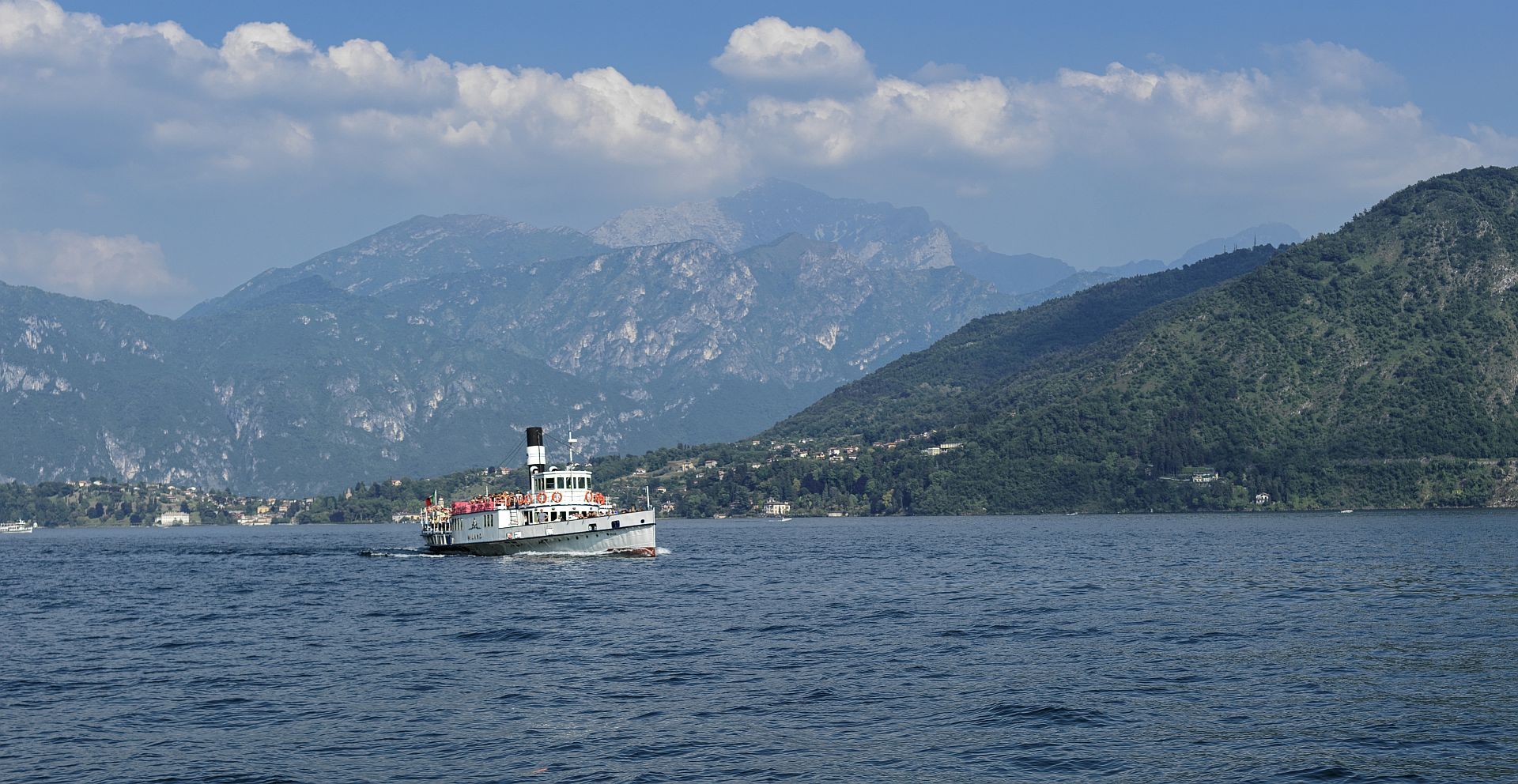
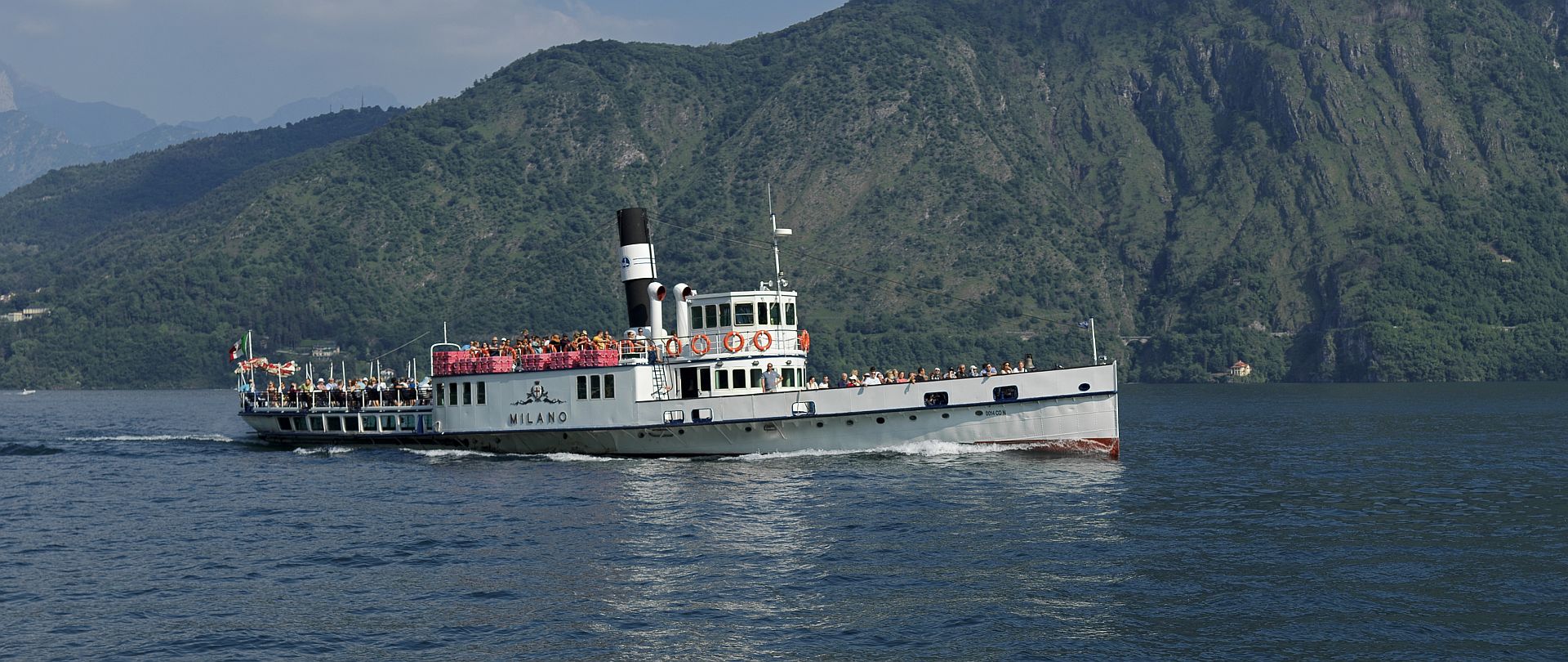
And finally here is one of the pretty little steamers that ply the lake. Although this one has been converted to diesel propulsion, you can see from the housings on the side that it was once a paddle steamer.