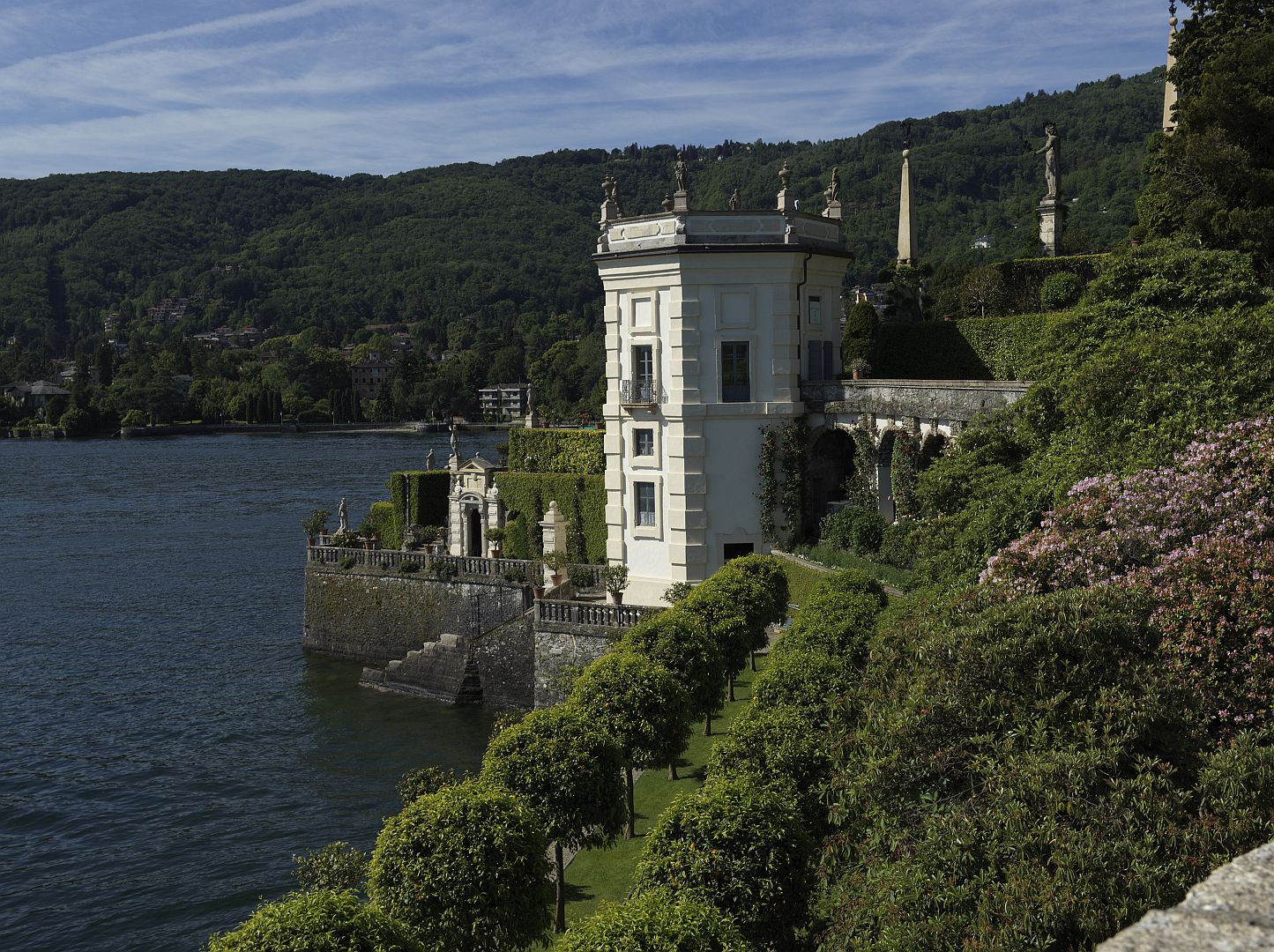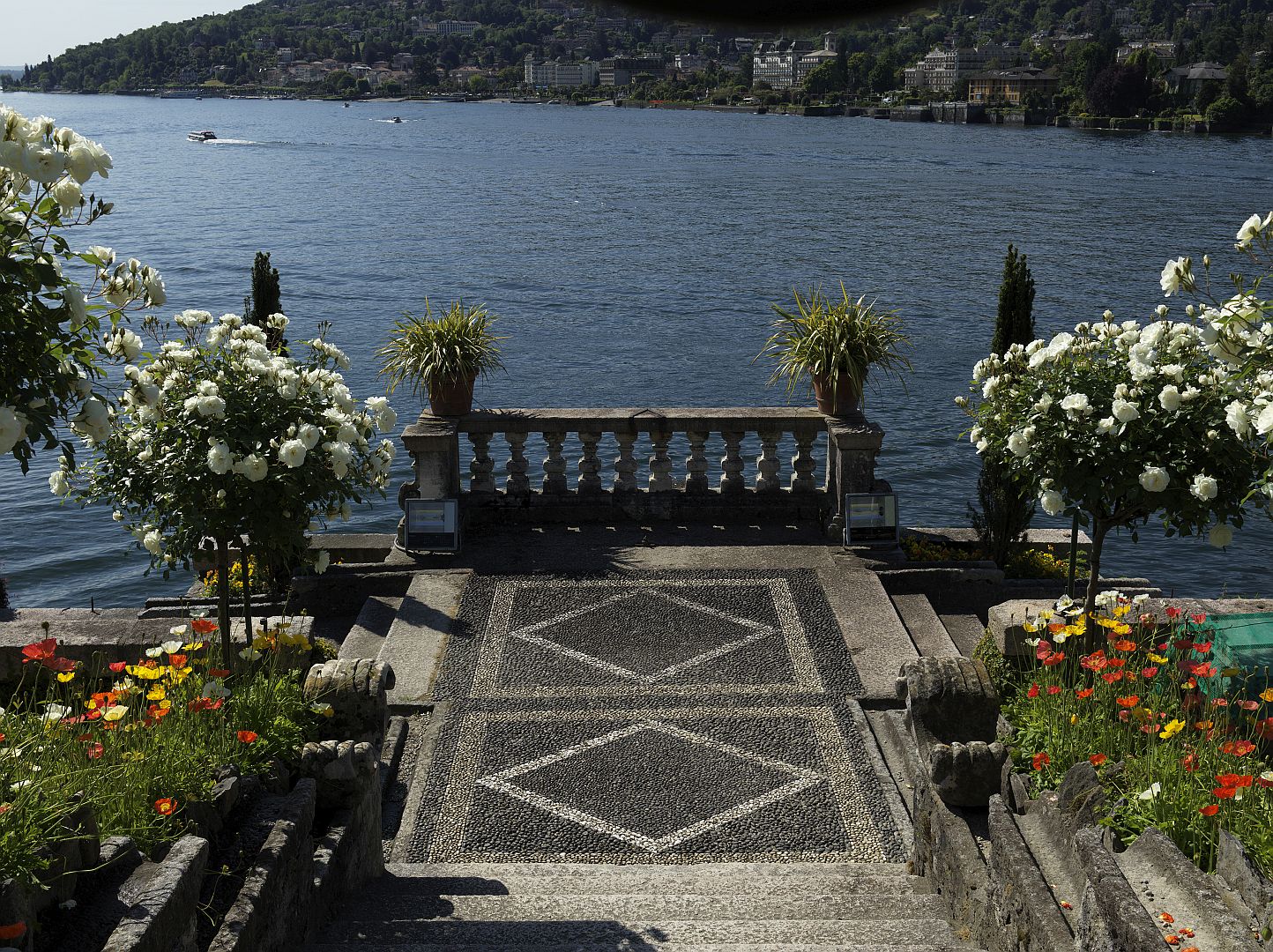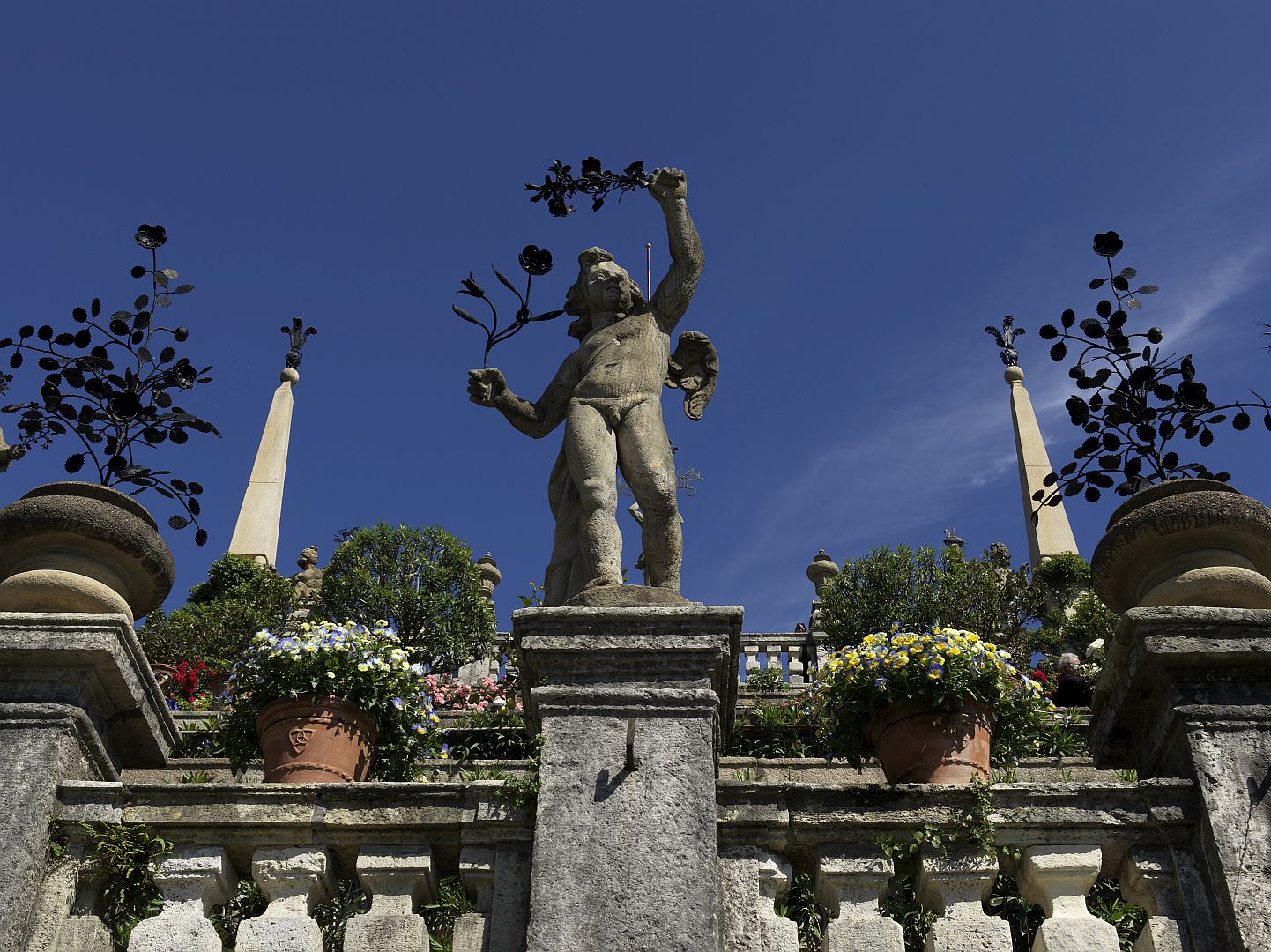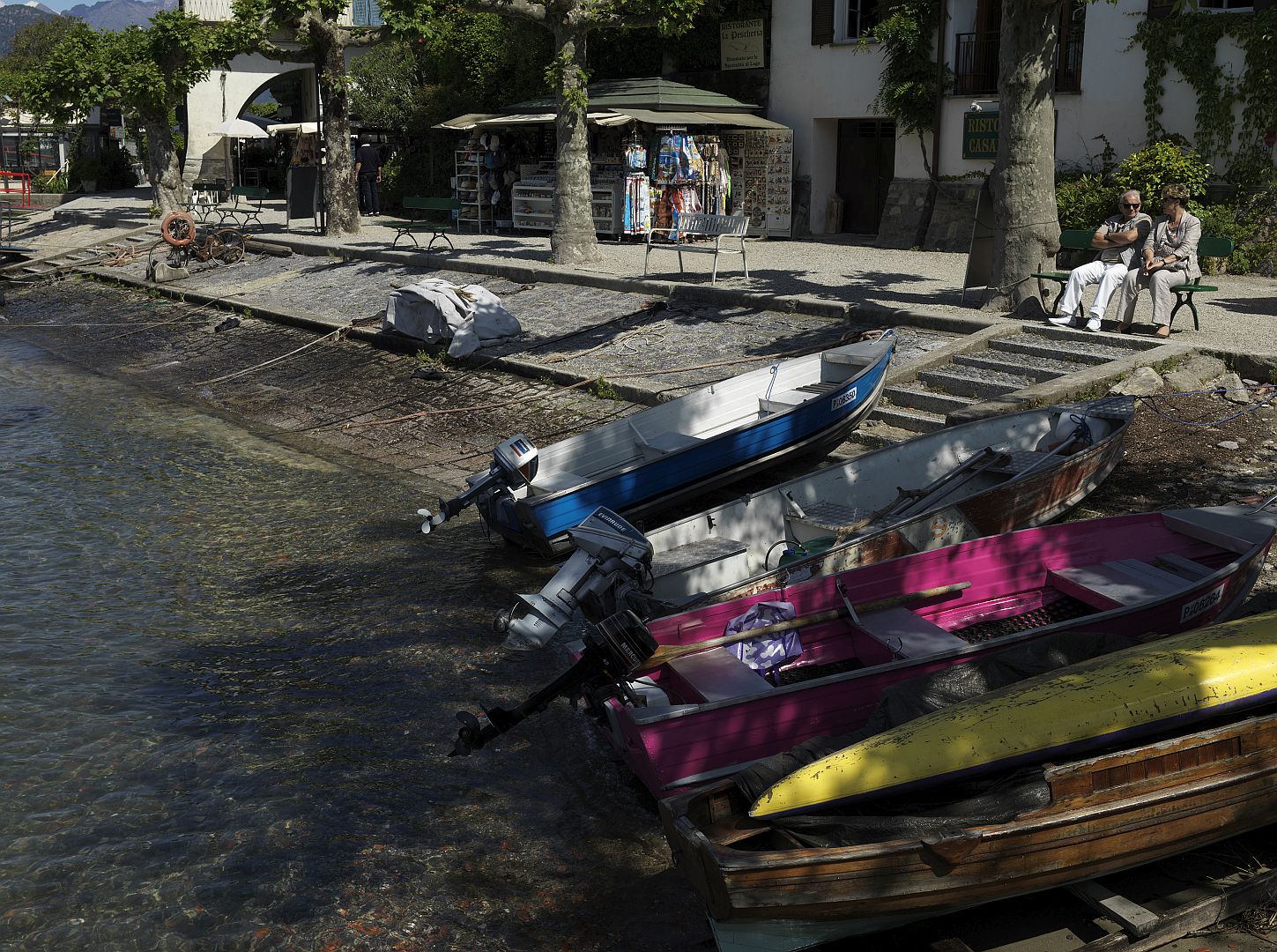
Lake Como

Lake Como has been the haunt of the rich and famous since Roman times. Fortunately they let ordinary people like us visit as well.

A while back I wrote a post about Lake Maggiore and the Borromean Islands based on a trip we made through Piedmont, Lombardy and Emilia-Romagna. I’ve been meaning to continue the story to describe our visit to Lake Como – so here it is.

From Lake Maggiore to Lake Como

On Lake Maggiore we had been staying near the town of Stresa; from there we made our way north to the town of Intra, a bit further up the lake, then put the car on the ferry and crossed to Laveno-Mombello on the Lombardy (eastern) shore.

Northern Lombardy was very pretty and there was an increasing Swiss or Austrian feel to the architecture – before long we saw our first onion-domed campanile.

We had decided to head straight for Lake Como. “Straight” in this case meant cutting through a chunk of Switzerland and we were initially game to try (the car rental contract allowed it) but as we got closer to the border we consulted an online guide to driving in Switzerland and it seemed that one must buy a rather expensive permit on arrival in order to drive on Swiss motorways, failure to do so bringing even more expensive fines. It didn’t seem worth it for a quick transit, and since it wasn’t clear whether we would be able to complete our journey without going on a motorway we chickened out and decided to do a loop to the south which would keep us in Italy.

This involved a long hack through a very built-up area near the town of Varese – tiring and mildly stressful. Eventually we found ourselves on an (Italian) motorway and successfully negotiated a spaghetti junction where getting in a wrong lane would have sent us either back to Milan or onwards to Switzerland (and as far as I know, Italians don’t actually use the term “spaghetti junction”).

The slip road where we ended up went down a tight spiral viaduct on the edge of a steep valley and entered a tunnel, then we shot out on the edge of another valley high above the town of Como which is at the bottom of one of the southern arms of Lake Como. It was both spectacular and a bit scary.

Lake Como is in some ways more spectacular than Lake Maggiore. The mountains are just as high but the valley is narrower and steeper which makes the scale feel a bit more Wagnerian. It’s also a much wealthier area, where very rich foreigners have their holiday houses and George Clooney invites his friends round to show them his latest coffee machine.
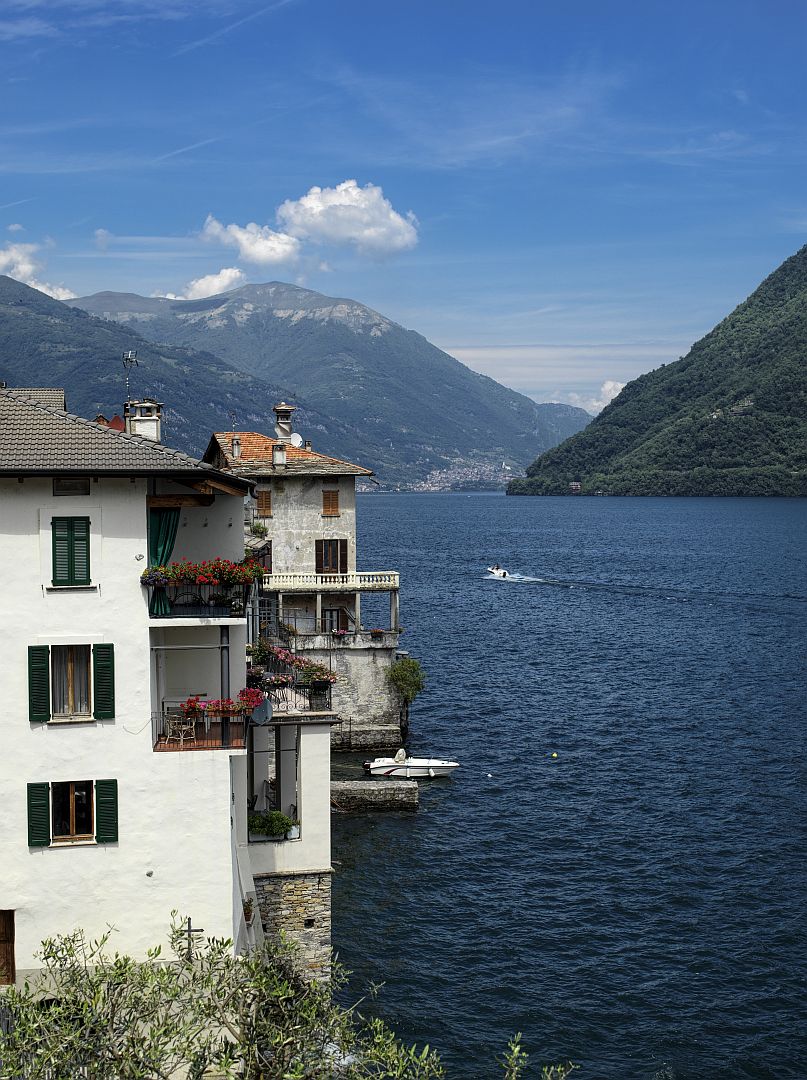
Lake Como from Brienno
Lake Como, looking north from the town of Brienno. Hasselblad 501 C/M camera, Zeiss Distagon CF 60mm lens, CFV-50c digital back (click to enlarge).

We whizzed along for a bit through tunnels, occasionally emerging to see lake views steeply below us to our right. By now it was quite late and we hadn’t had lunch. We stopped in a town called Brienno and didn’t find anything open so I unwisely undertook to stop at the first open restaurant. This turned out to be quite a swanky place down on the shoreline with an outdoor eating area and a splendid view up the lake. We were given a table between a group of businessmen finishing lunch with some rather expensive-looking wines, a family dressed informally but expensively who, after having called for and paid their bill, departed in a large white speedboat that had been moored at the restaurant’s private jetty, and a group of four obviously wealthy women of a certain age. Lou was fascinated by what these four might have had in common – one was Italian who spoke little English, one was Australian but spoke good Italian, one was Chinese and spoke pretty good Italian, and one was American and didn’t speak much Italian. After sneaking a look the best I could come up with was that they might have shared the same cosmetic surgeon, but Lou eventually decided that they were all agents for very expensive lakeside rental properties.
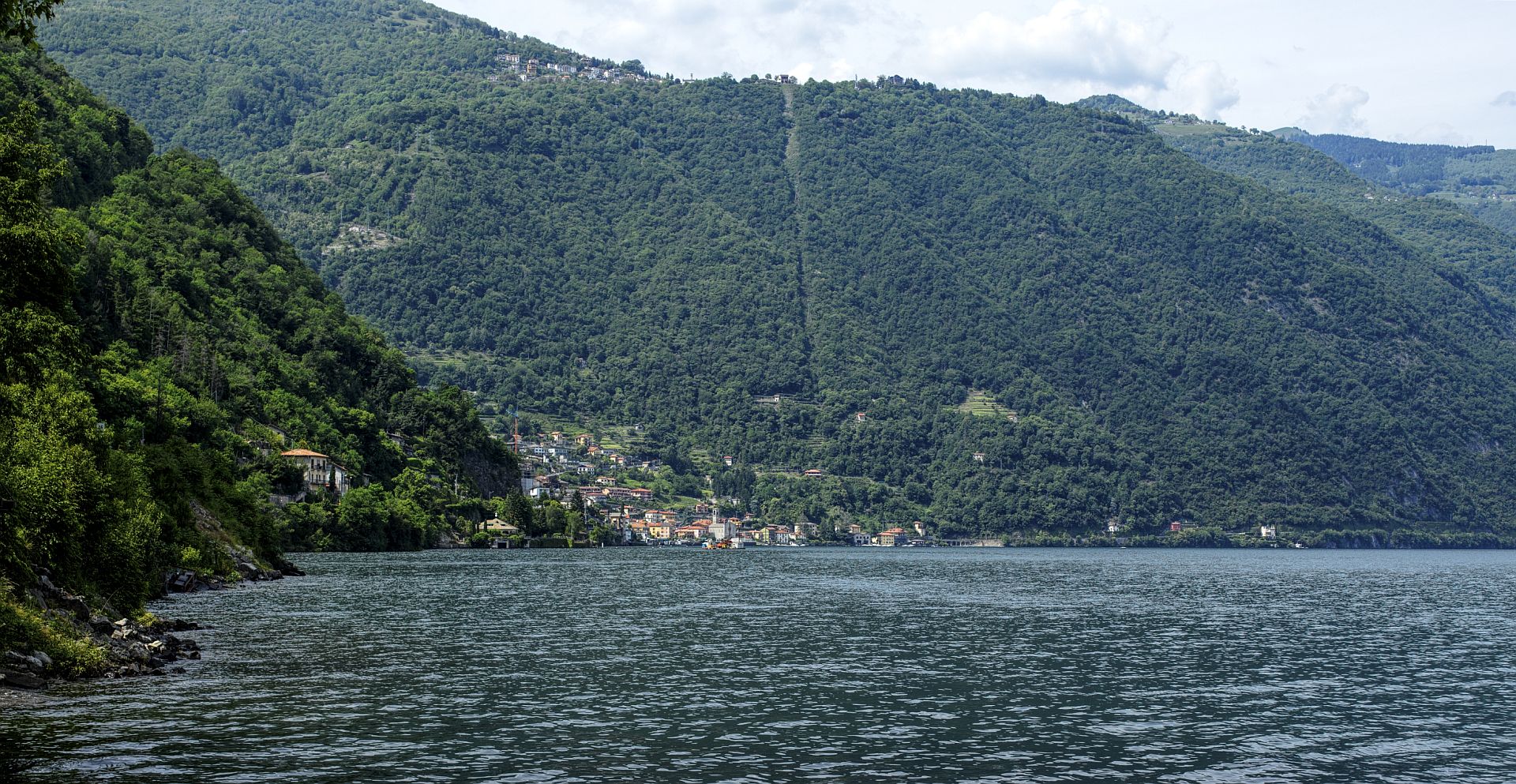
Argegno
The town of Argegno from the restaurant. Hasselblad 501 C/M camera, Zeiss Distagon CF 60mm lens, CFV-50c digital back (click to enlarge).

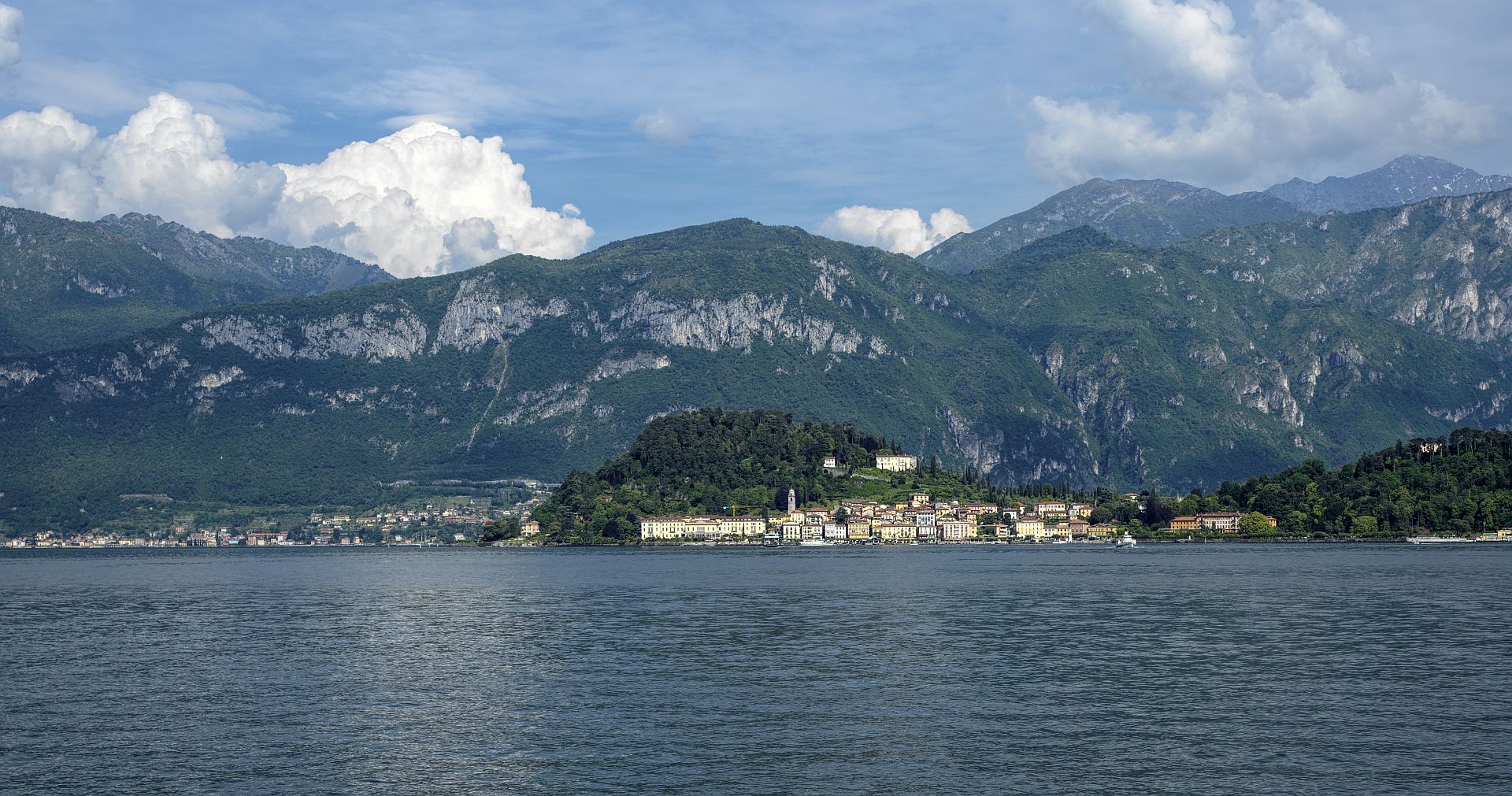
In due course we finished lunch and continued on to the town of Cadenabbia where we found our hotel. It was right on the lake shore and looked across to the beautiful little town of Bellagio.

Cadenabbia

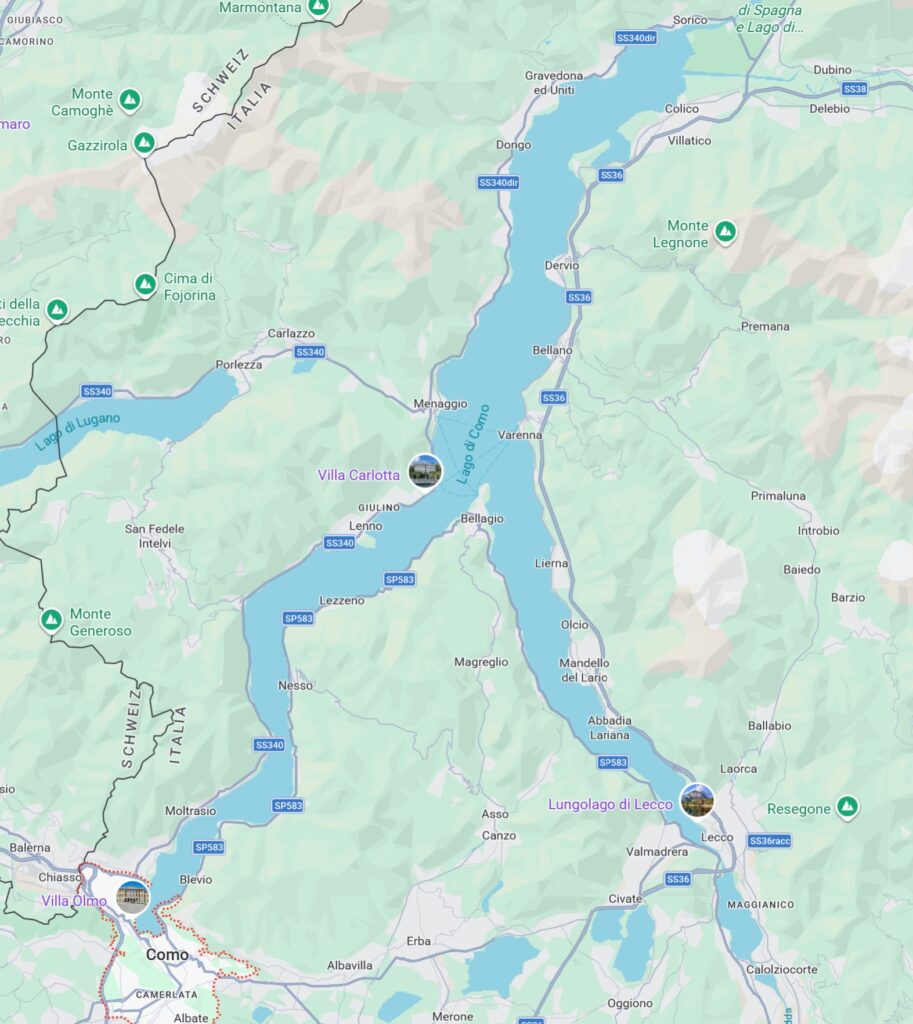
Lake Como looks a bit like an inverted “Y” on the map: the glaciers that formed it split in two directions. This forms a promontory between the eastern and western arms, and Bellagio is at the tip of that promontory, as you can see in this map.
Lake Como
Lake Como. Cadenabbia is where it says “Villa Carlotta”. You can see how close the Swiss border is. (click to open in Google Maps)
Bellagio by Day
Bellagio from Cadenabbia during the day. It is at the head of a promontory, so the mountains behind are on the other side of the eastern arm of Lake Como. Hasselblad 501 C/M camera, Zeiss Distagon CF 60mm lens, CFV-50c digital back (click to enlarge).
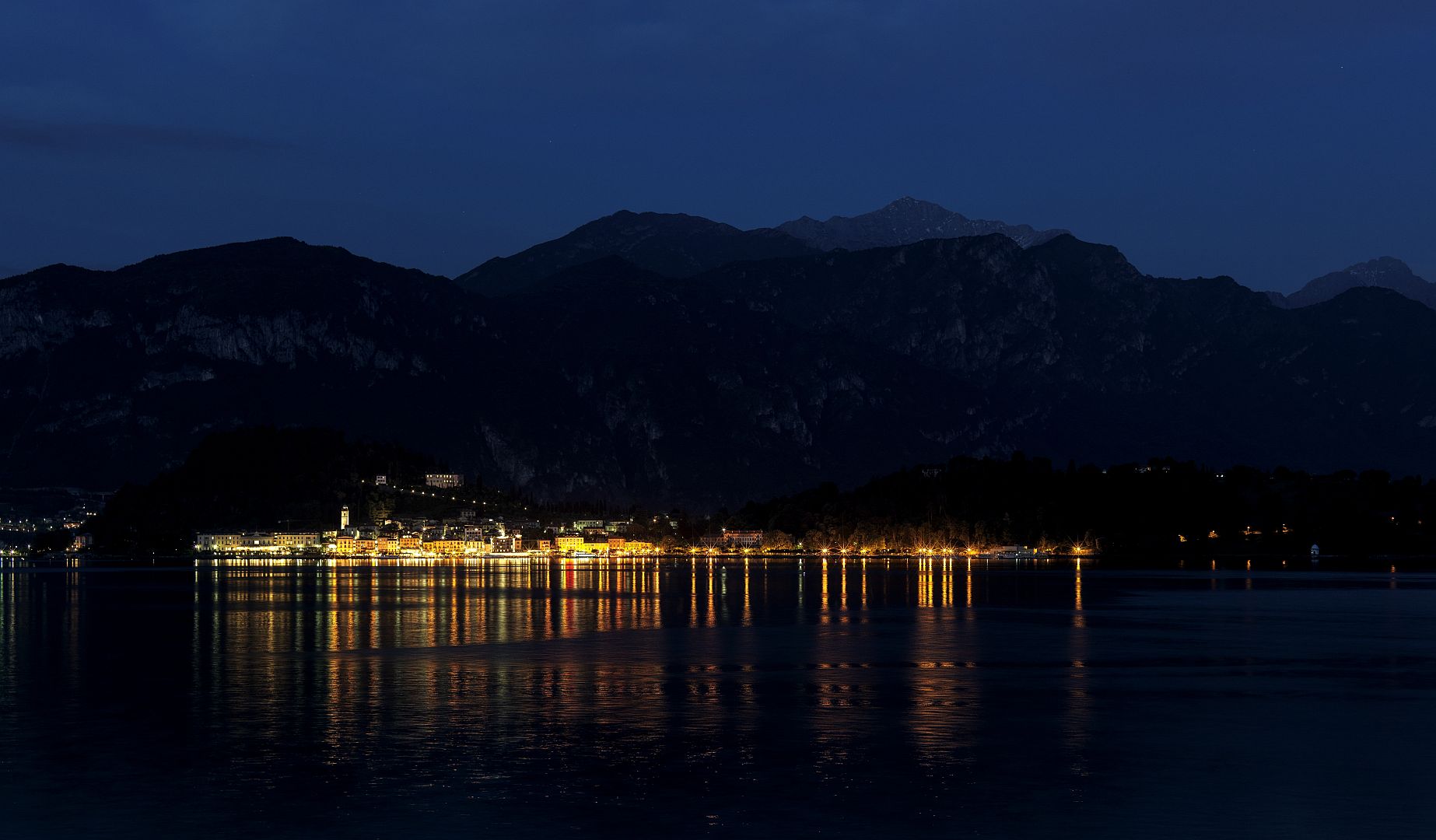
Bellagio by night
Bellagio from the same spot at night. Hasselblad 501 C/M camera, Zeiss Distagon CF 60mm lens, CFV-50c digital back (click to enlarge).
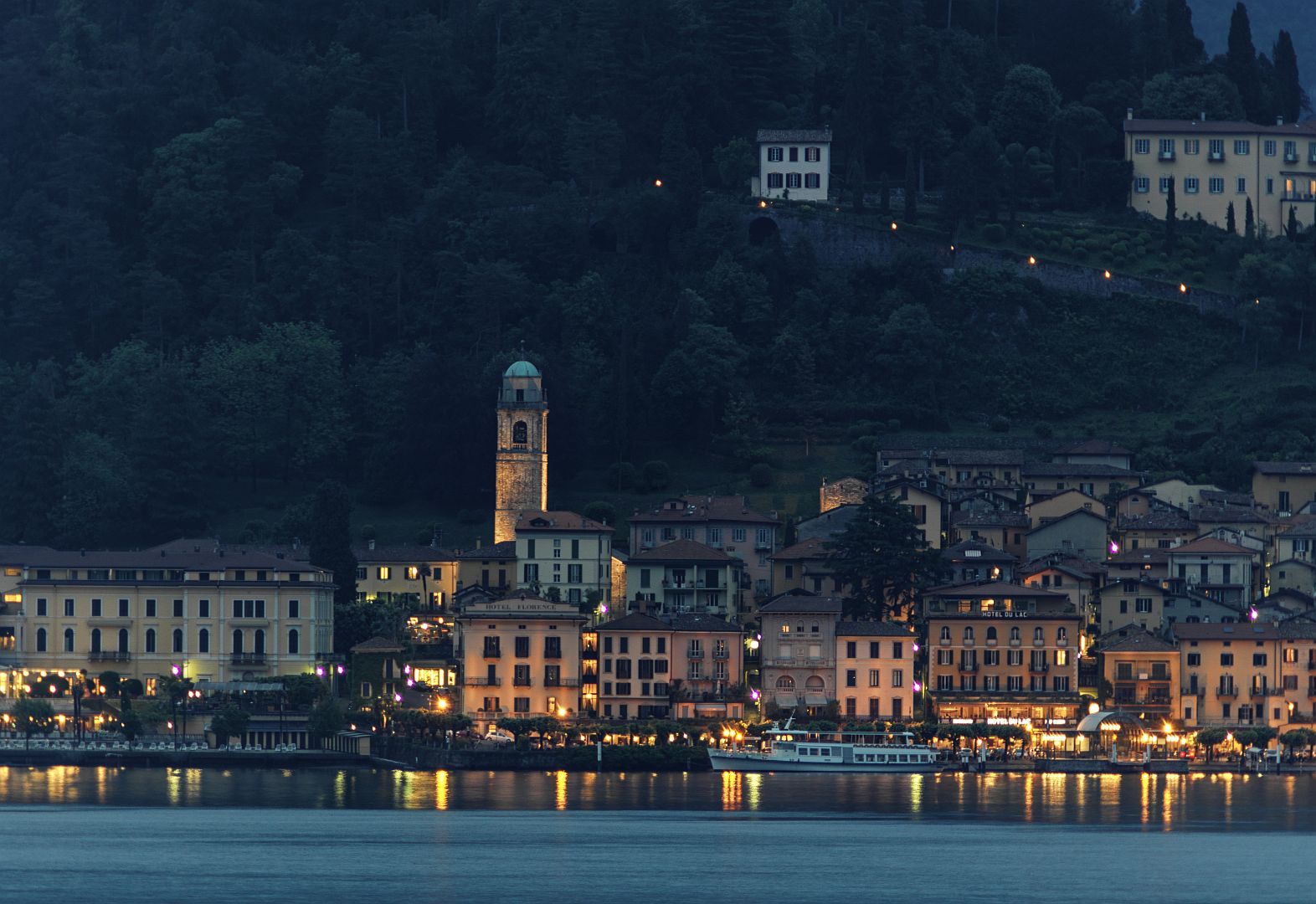
Bellagio at night
Bellagio at night, taken from the same location with a telephoto lens. Hasselblad 501 C/M camera, Zeiss Sonnar C 250mm lens, CFV-50c digital back (click to enlarge).

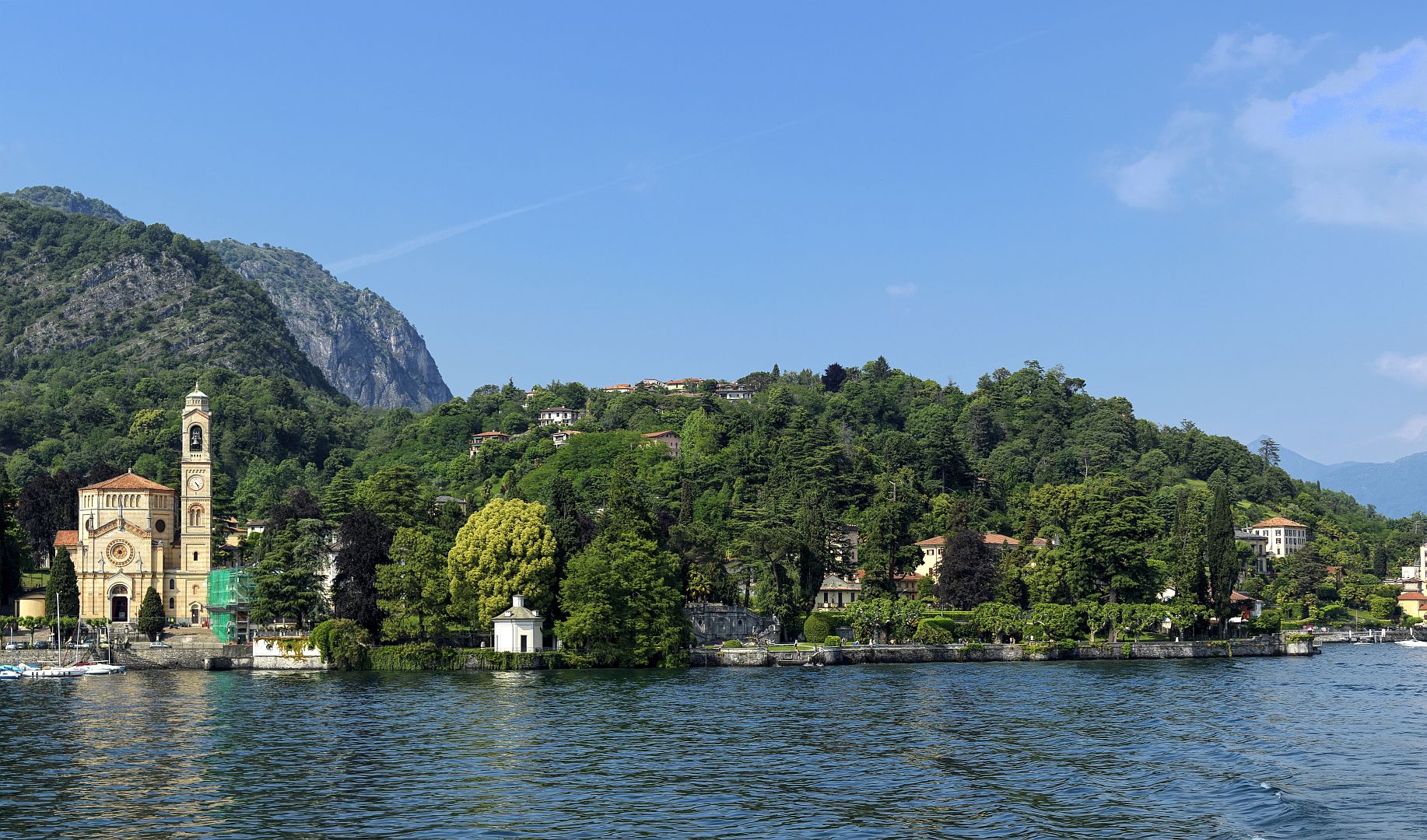
Just before Cadenabbia is the village of Giulino di Mezzegra – where, in April 1945, a truck full of German soldiers trying to escape to Switzerland was stopped and searched by communist partisans and found to contain Mussolini and his mistress, Clara Petacci. The next morning they were shot and their bodies taken to Milan. It is hard to imagine such desperate and violent acts in such an idyllic place.
Giulino
The village of Giulino, taken from the ferry. The place where Mussolini was shot is marked on Google Maps, and it is up the slope just to the left of this picture. Hasselblad 501 C/M camera, Zeiss Distagon CF 60mm lens, CFV-50c digital back (click to enlarge).

The lake was called Larius in ancient times so is often referred to locally as “Lario”. The Roman historians Pliny the Elder and Pliny the Younger had villas here and wrote poems praising Lake Como. In fact Pliny the Younger had two – one, on a hilltop, was called “comedy”, and the other, down by the lake shore, was called “tragedy”. I wonder if the servants in each villa were supposed to take their cue from the names. Anyway, as far as I have been able to find out, the exact location of the villas is unknown, although “comedy” is thought by some to have been up the hill behind Bellagio. I wrote a bit about Pliny the Younger in my post titled Cospaia – The Accidental Republic.

After the end of the imperial period, the area around Como underwent the decline experienced everywhere in Italy, but perhaps worse up here in the north as it was such a well-trodden path for invaders. With the end of large-scale commerce, estates such as those belonging to the Plinies would have become uneconomic and perhaps reverted to wasteland, while towns shrank into villages or vanished altogether.

But as the estate agents say, there is no substitute for location, and from the Renaissance onwards wealthy people with a bit of spare cash started emulating Pliny, buying land around the lake shore and building luxury villas, often surrounded by elegant gardens.

In the early 19th Century a craze for “English” gardens took off in Italy and wealthy villa proprietors competed with each other to establish more and more impressive examples. In this context, “English” means the artfully naturalistic style associated with the gardens of English stately homes, in contrast to the rigid formalism of Italian Renaissance gardens. But the funny thing is that those English gardens that inspired the Italians had been trying to create an essentially Italian vision. With their neo-classical follies and all, they were based on the Palladian villas and veduta landscape paintings that young British noblemen had seen on their grand tours of Italy in the previous century. So the British tried to create Italian-looking scenes in Britain, which the Italians then emulated in Italy. Culturally, it was all rather circular.

Bellagio and Villa Melzi

Whatever the origin of the garden craze, and whether they retained Renaissance formalism or adopted the trendy new English style, posterity is the beneficiary, as several such gardens survive on both sides of the lake and can be visited.
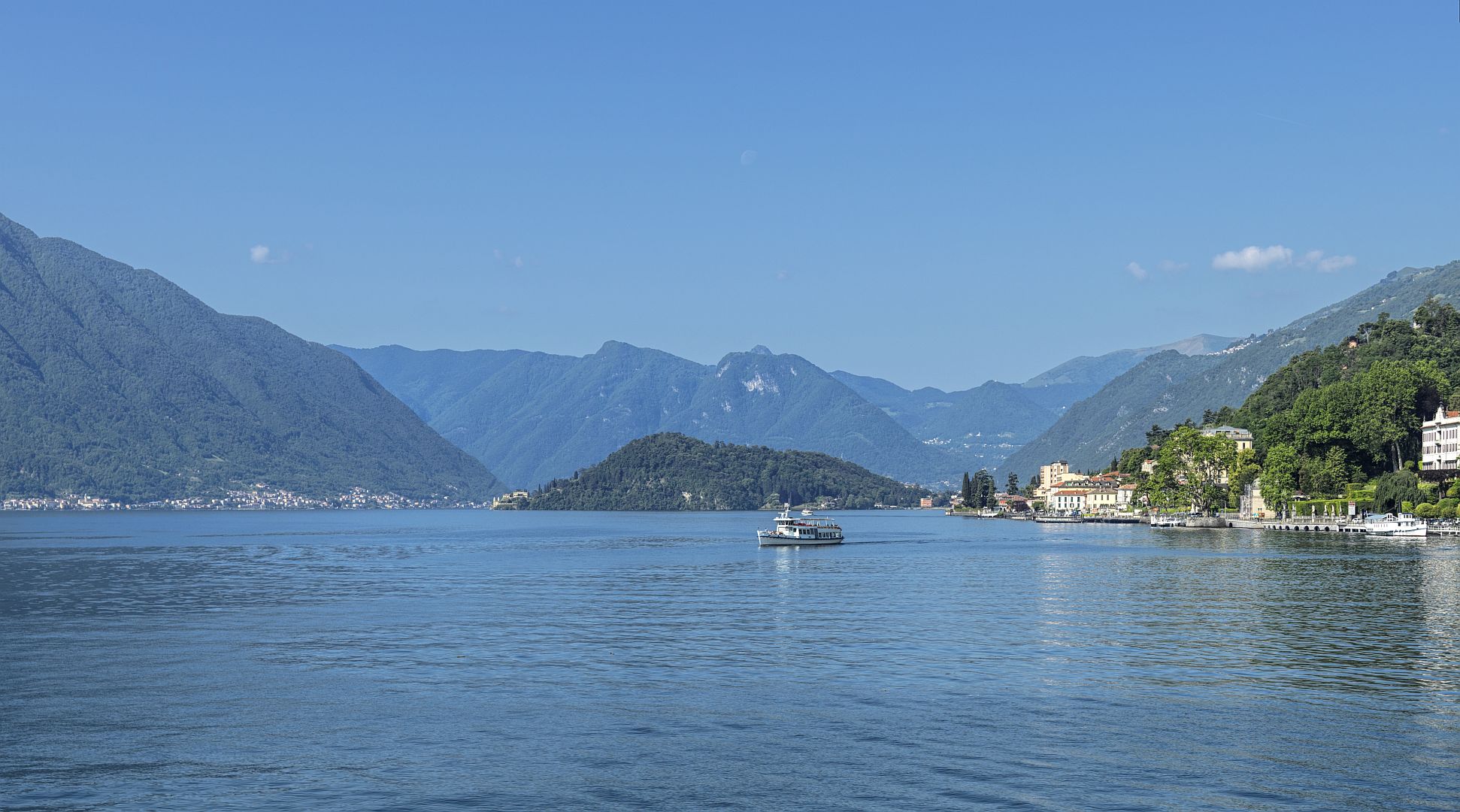
Cadenabbia-Bellagio ferry
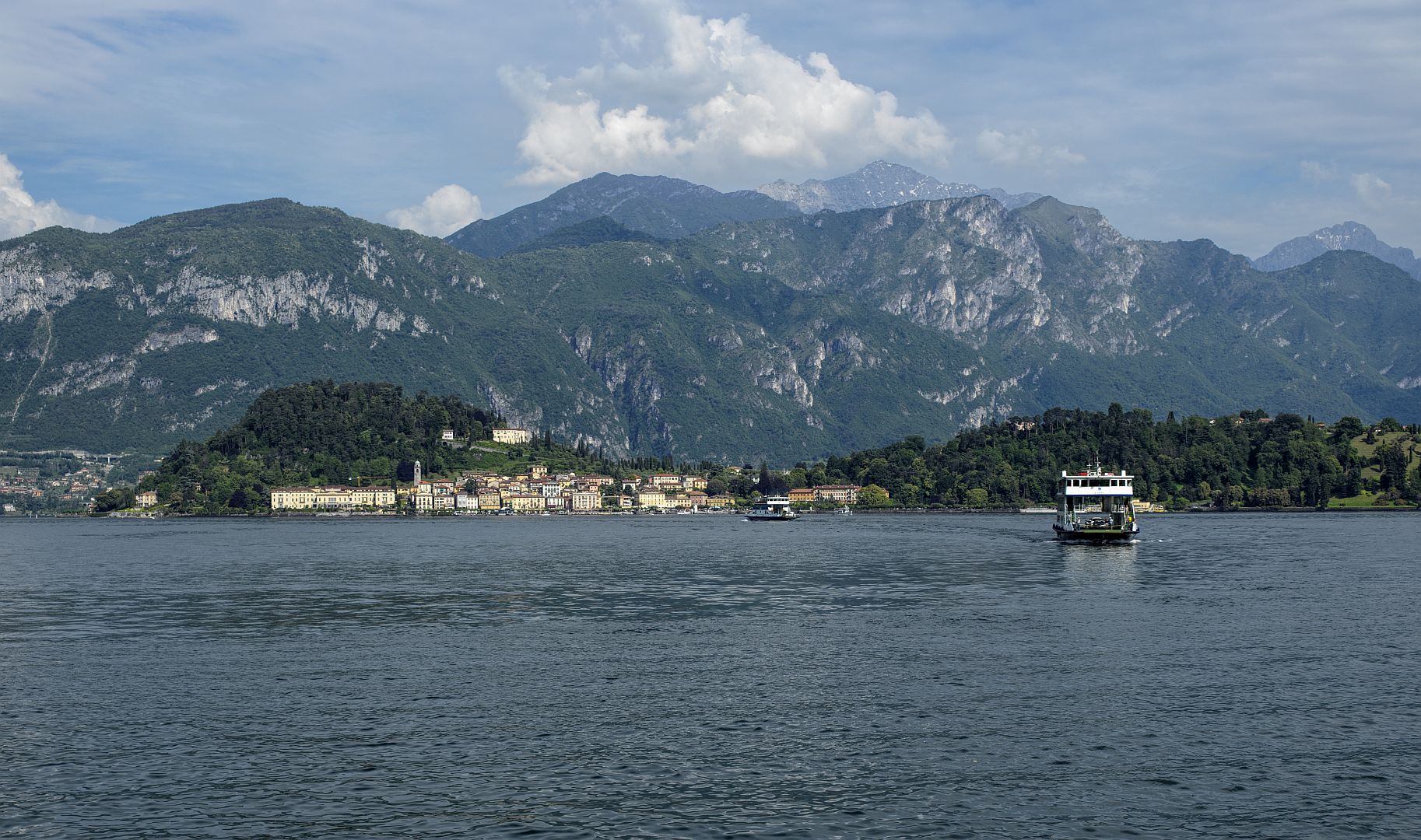
The ferry from Cadenabbia to Bellagio. Hasselblad 501 C/M camera, Zeiss Distagon CF 60mm lens, CFV-50c digital back (click to enlarge).
Como from ferry
From the Cadenabbia-Bellagio ferry, looking south down the western arm of the lake in the direction of the town of Como. Hasselblad 501 C/M camera, Zeiss Distagon CF 60mm lens, CFV-50c digital back (click to enlarge).

So the next day we took the ferry from Cadenabbia to Bellagio, which is a pretty town in its own right, but has the additional virtue of being right next to one of these grand villas with gardens, the Villa Melzi. This dates from the early 19th Century and was built for Francesco Melzi, Duke of Lodi, who was a minister in the Napoleonic regime in northern Italy and an early supporter of Italian reunification.
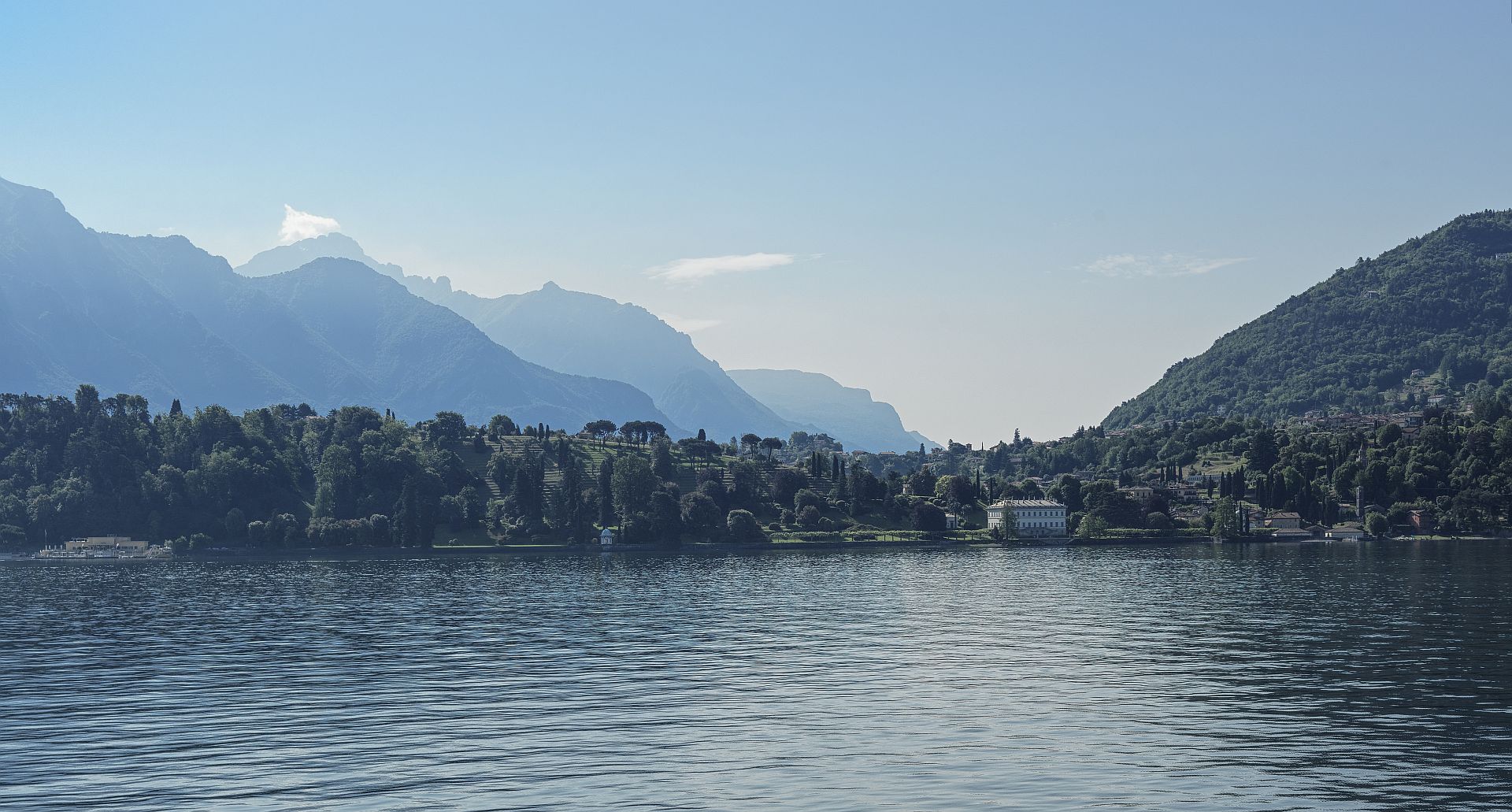
Approaching Bellagio on the ferry. The Villa Melzi is the large white building on the shore. Hasselblad 501 C/M camera, Zeiss Distagon CF 60mm lens, CFV-50c digital back (click to enlarge).
Bellagio
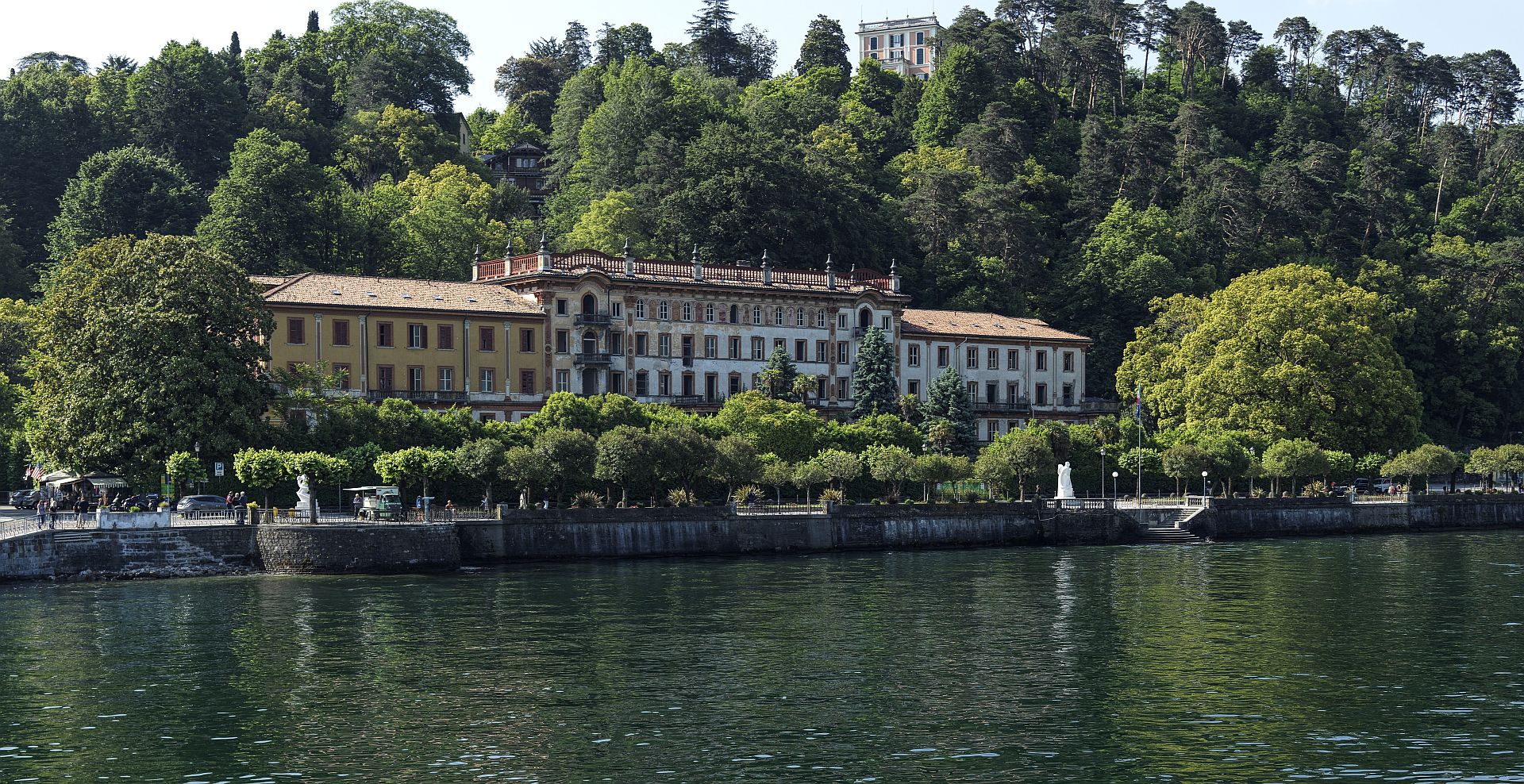
A villa at Bellagio (not the Villa Melzi). It was looking a bit run-down when we were there but I understand it is now being restored as a high-end hotel. Hasselblad 501 C/M camera, Zeiss Distagon CF 60mm lens, CFV-50c digital back (click to enlarge).
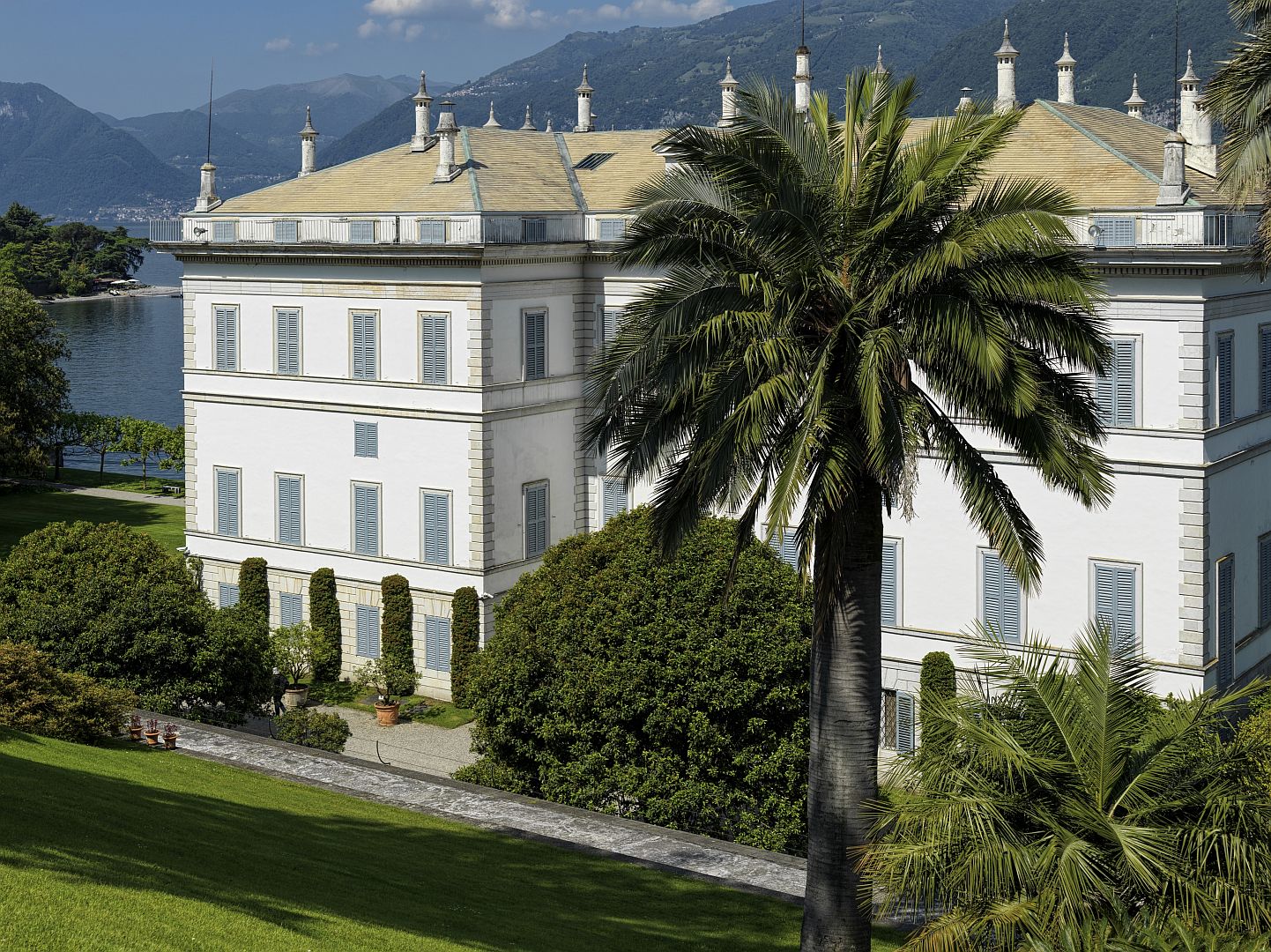
Villa Melzi
The Villa Melzi. Hasselblad 501 C/M camera, Zeiss Distagon CF 60mm lens, CFV-50c digital back (click to enlarge).
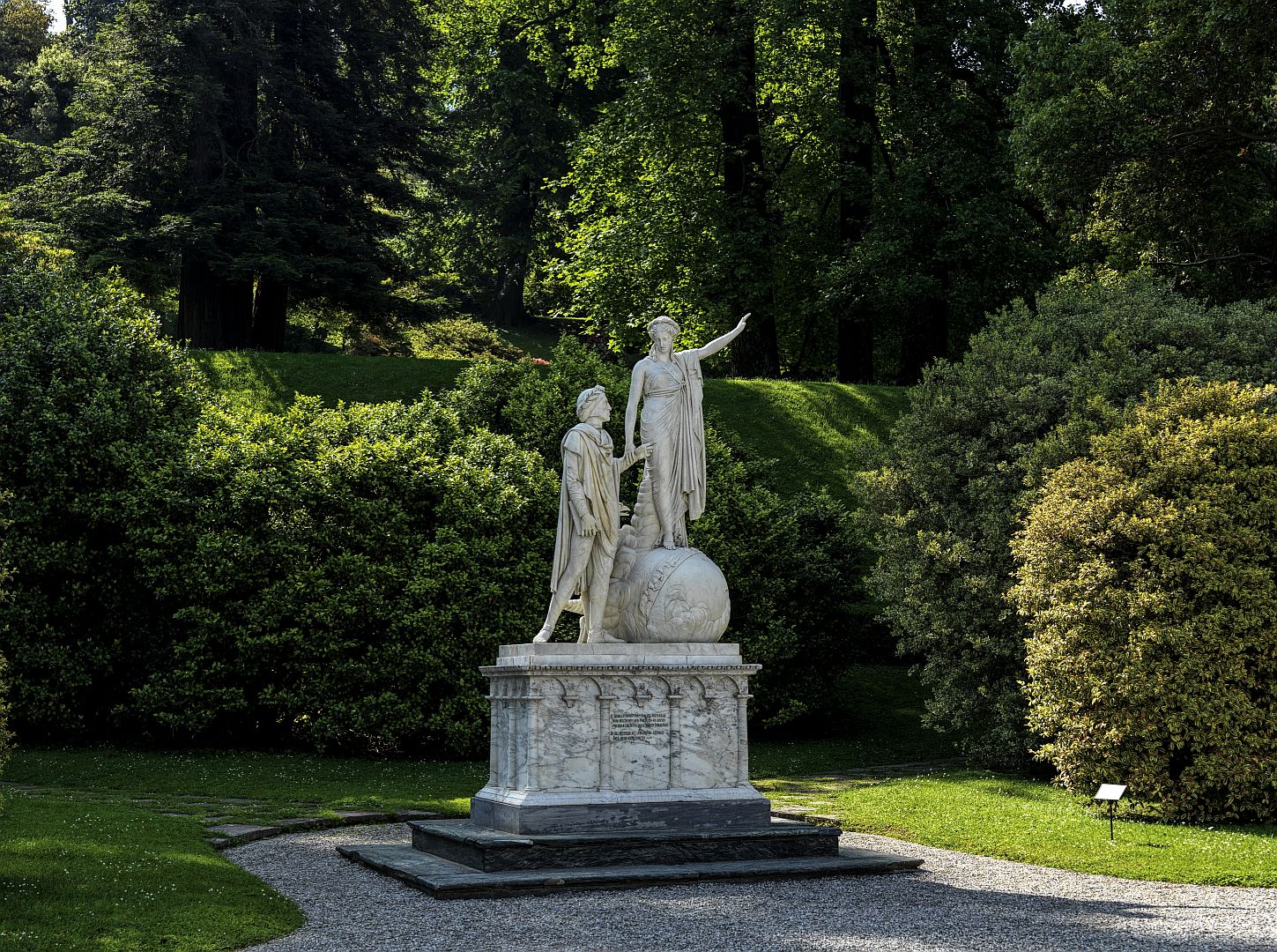
Villa Melzi Dante statue
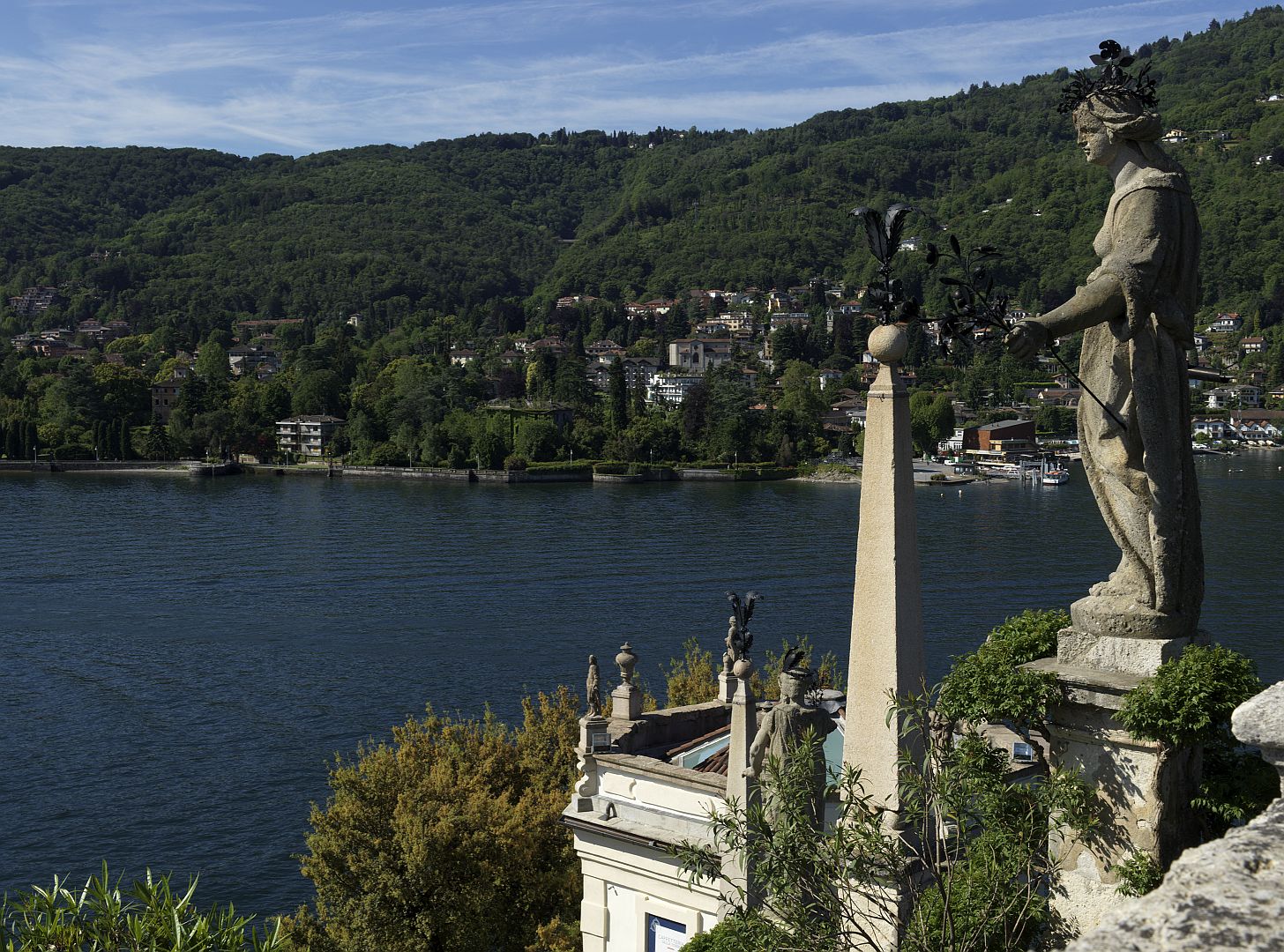
Statue in the grounds of Villa Melzi – Dante receiving instructions from a muse. Hasselblad 501 C/M camera, Zeiss Distagon CF 60mm lens, CFV-50c digital back (click to enlarge).
Villa Melzi
Villa Melzi, the approach to the house. Hasselblad 501 C/M camera, Zeiss Distagon CF 60mm lens, CFV-50c digital back (click to enlarge).
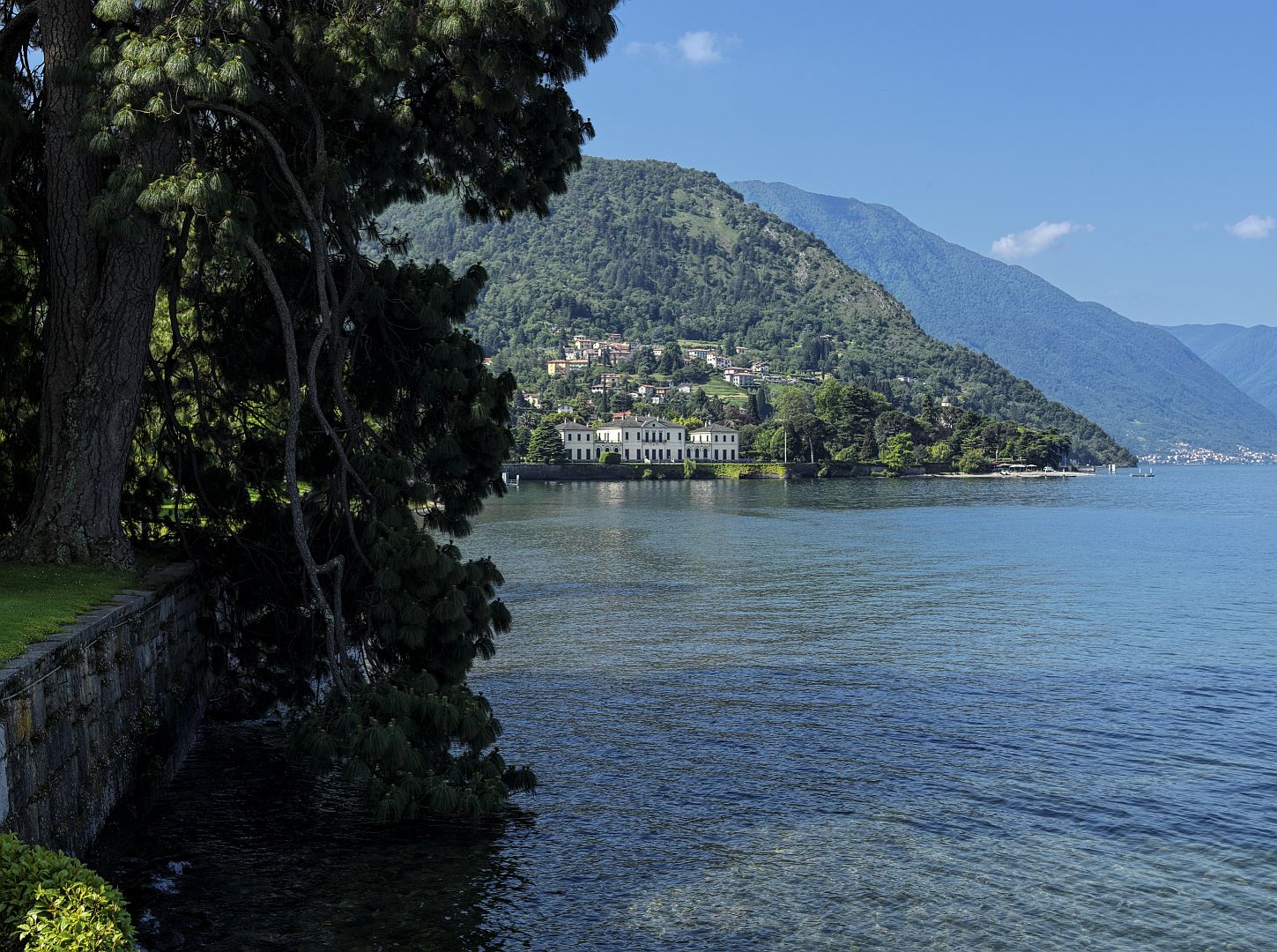
The lake shore at Villa Melzi, looking down the lake towards a competitor’s villa. Hasselblad 501 C/M camera, Zeiss Distagon CF 60mm lens, CFV-50c digital back (click to enlarge).
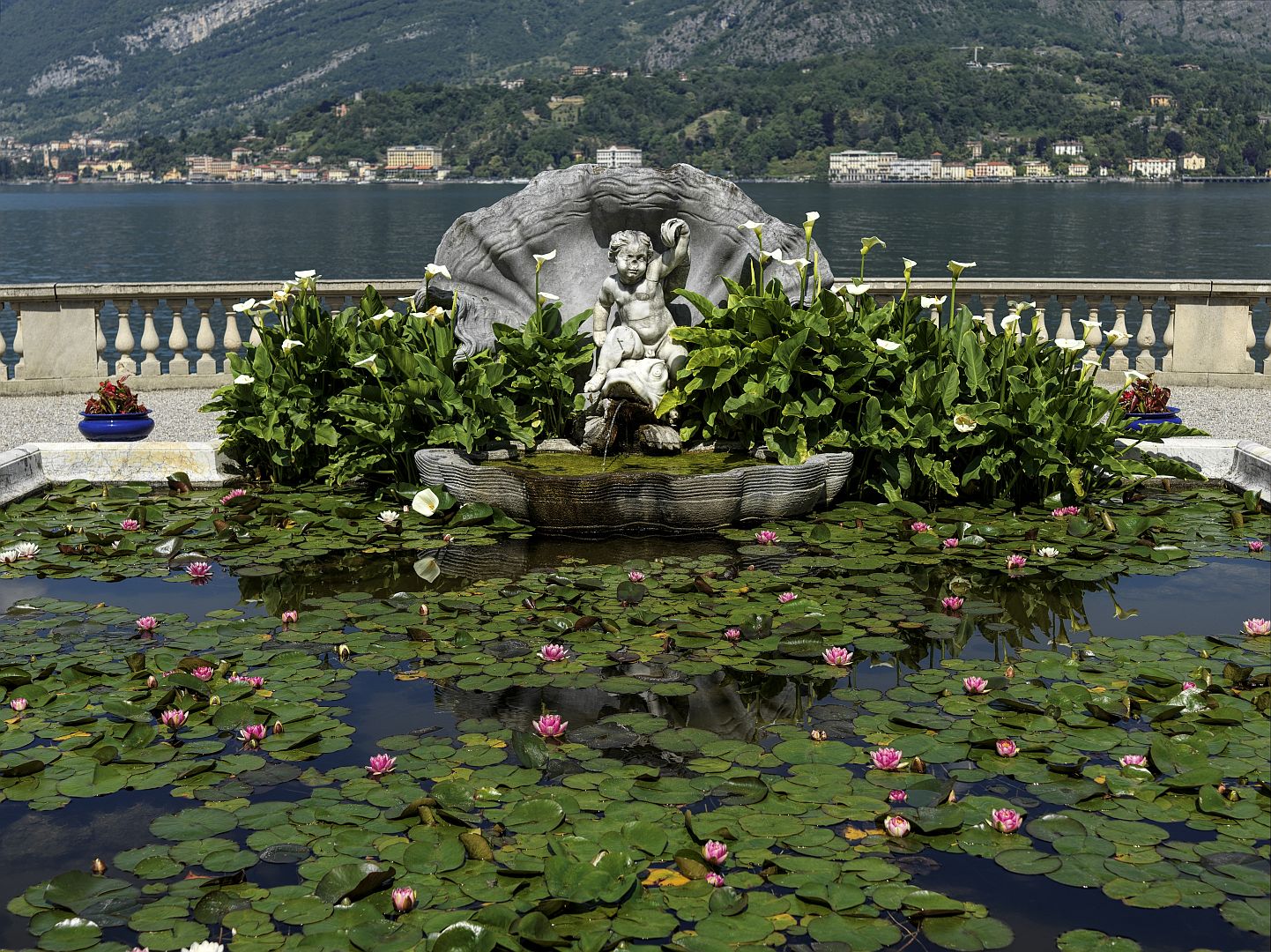
Villa Melzi lily pond
Villa Melzi. A lily pond and fountain with Cadenabbia across the lake in the background. Hasselblad 501 C/M camera, Zeiss Distagon CF 60mm lens, CFV-50c digital back (click to enlarge).

That evening back in Cadenabbia, we went out for a drink in a lakeside bar and found ourselves not in George Clooney territory but surrounded by English and German old-age pensioners.

Como (the town, not the lake)

The next day we decided that we would catch the hydrofoil down to Como itself. That takes about forty minutes and is a little more expensive than the regular ferry, but the regular ferry takes two hours. This involved leaving early enough to miss breakfast in the hotel.

The man in the hydrofoil ticket office had obviously turned up and opened the office, but had then decided to head over the road for a coffee, so we joined a queue outside. The hydrofoil appeared in the distance and still no ticket seller. Eventually he appeared, having clearly been watching, and having calculated how much time he would need to allow to sell tickets to everyone in the queue. Such things can be stressful for foreigners, but are just part of life in Italy.

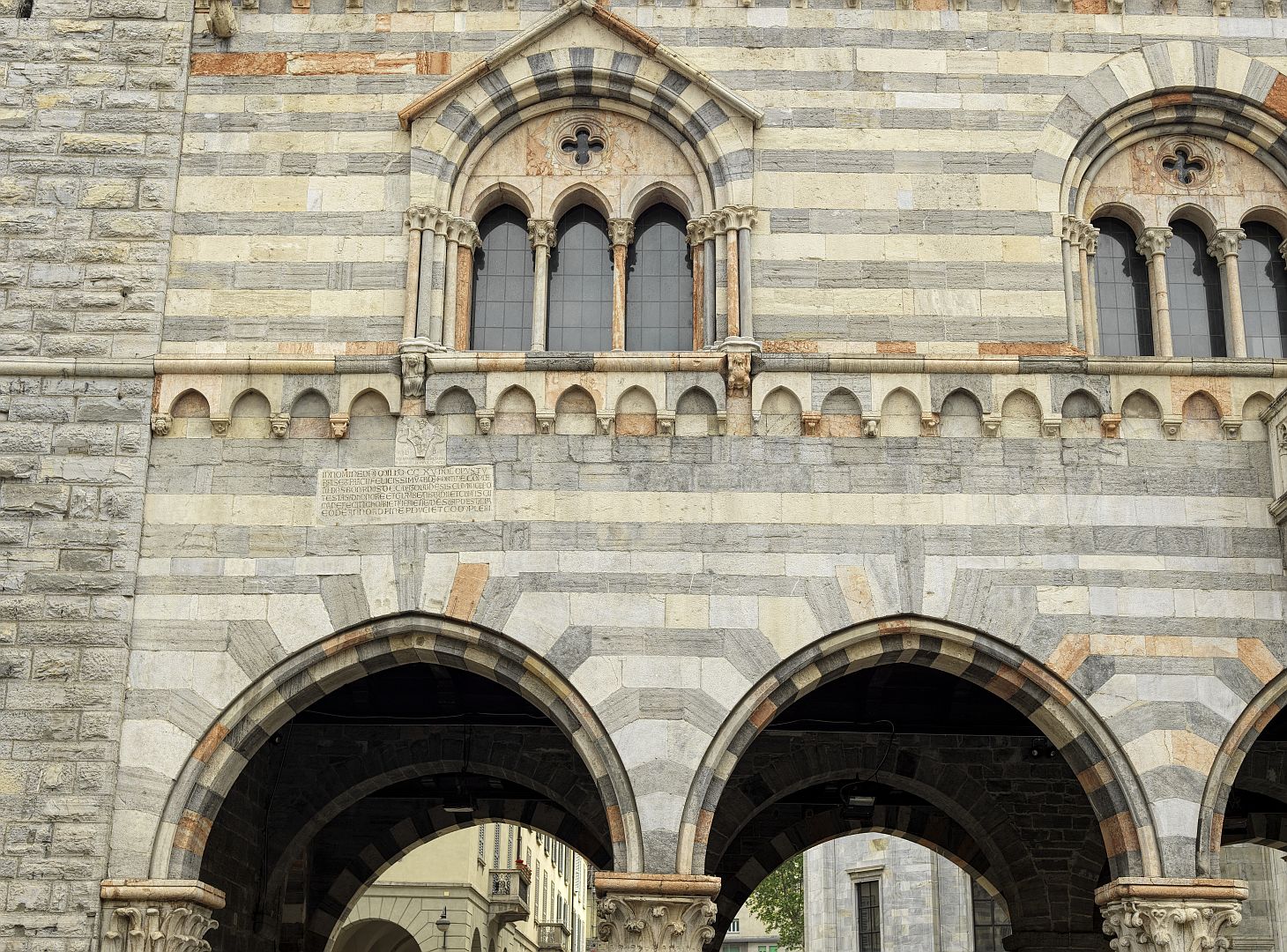
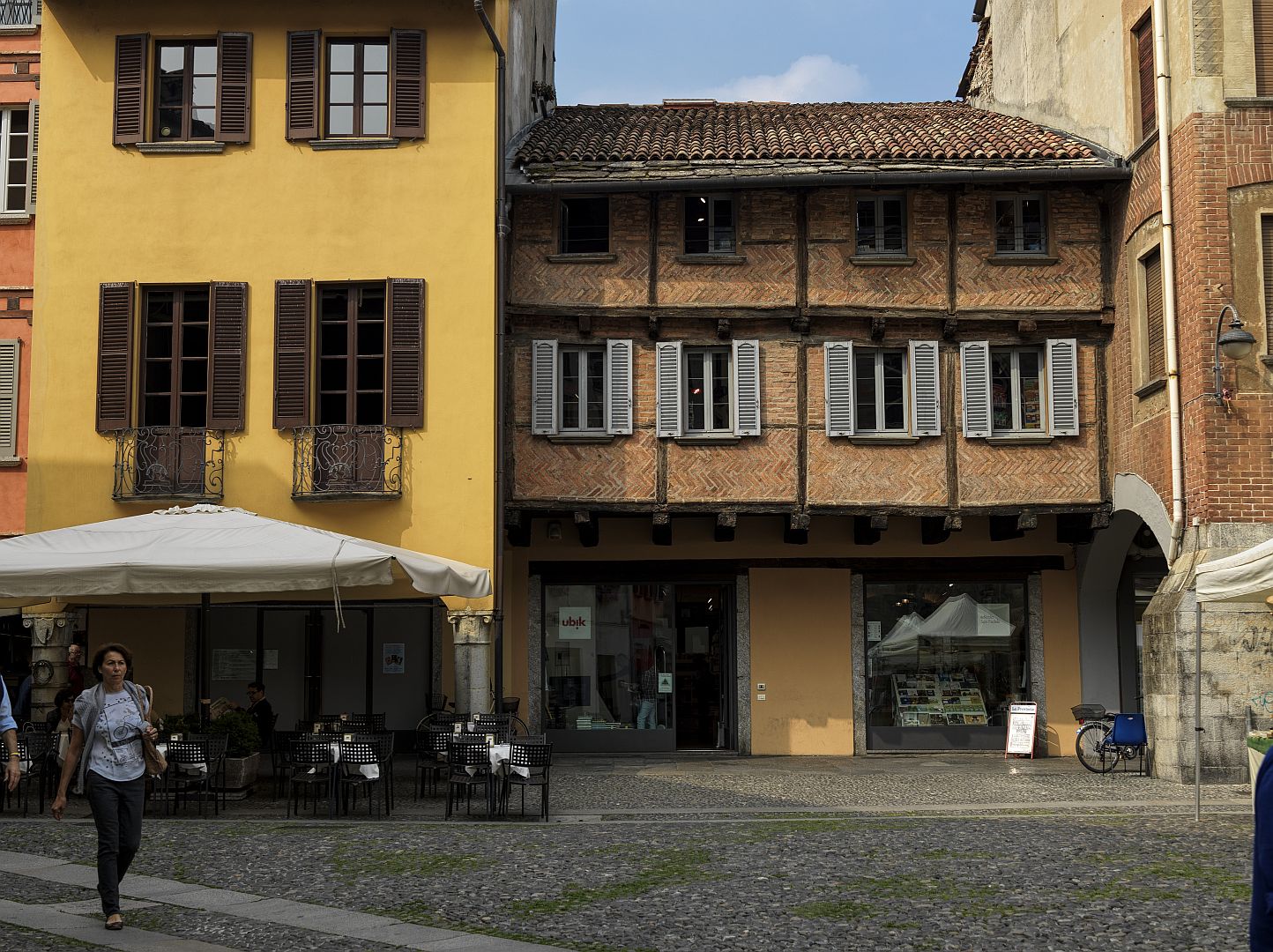
Como is an elegant town, particularly the central part inside the old walls, which is largely pedestrianised. Most of the architecture dates from the 17th and 18th Centuries, although there are some medieval survivals. Next to the Duomo is a very elegant medieval building called the Broletto, made of white, grey and pink stone which once housed the law court.
Broletto
Como, the Broletto. Hasselblad 501 C/M camera, Zeiss Distagon CF 60mm lens, CFV-50c digital back (click to enlarge).
Como Piazza del Duomo
Como, medieval building in Piazza del Duomo. Hasselblad 501 C/M camera, Zeiss Distagon CF 60mm lens, CFV-50c digital back (click to enlarge).
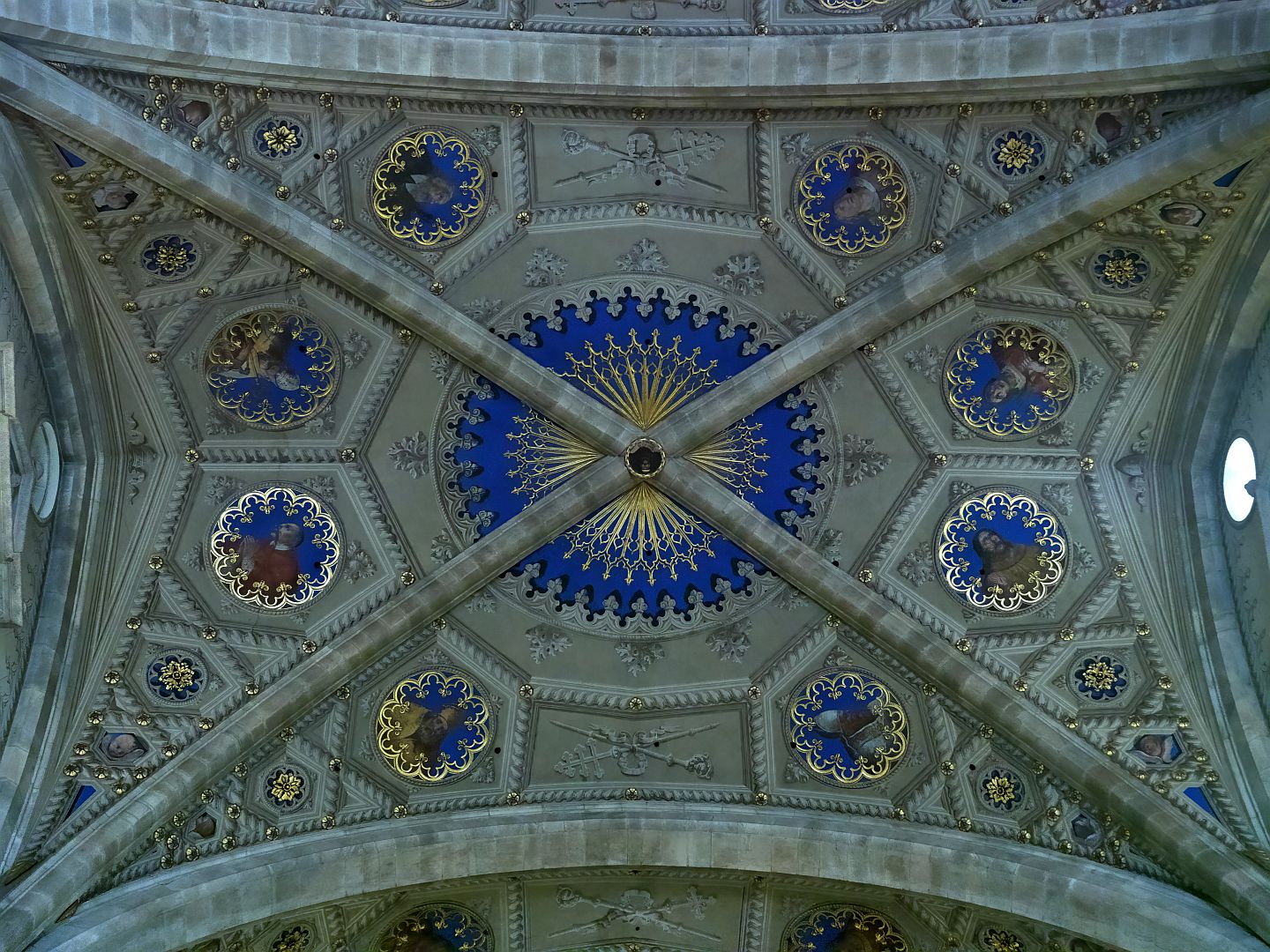
Como Duomo ceiling
Como, the Duomo, ceiling detail. Hasselblad 501 C/M camera, Zeiss Distagon CF 60mm lens, CFV-50c digital back (click to enlarge).

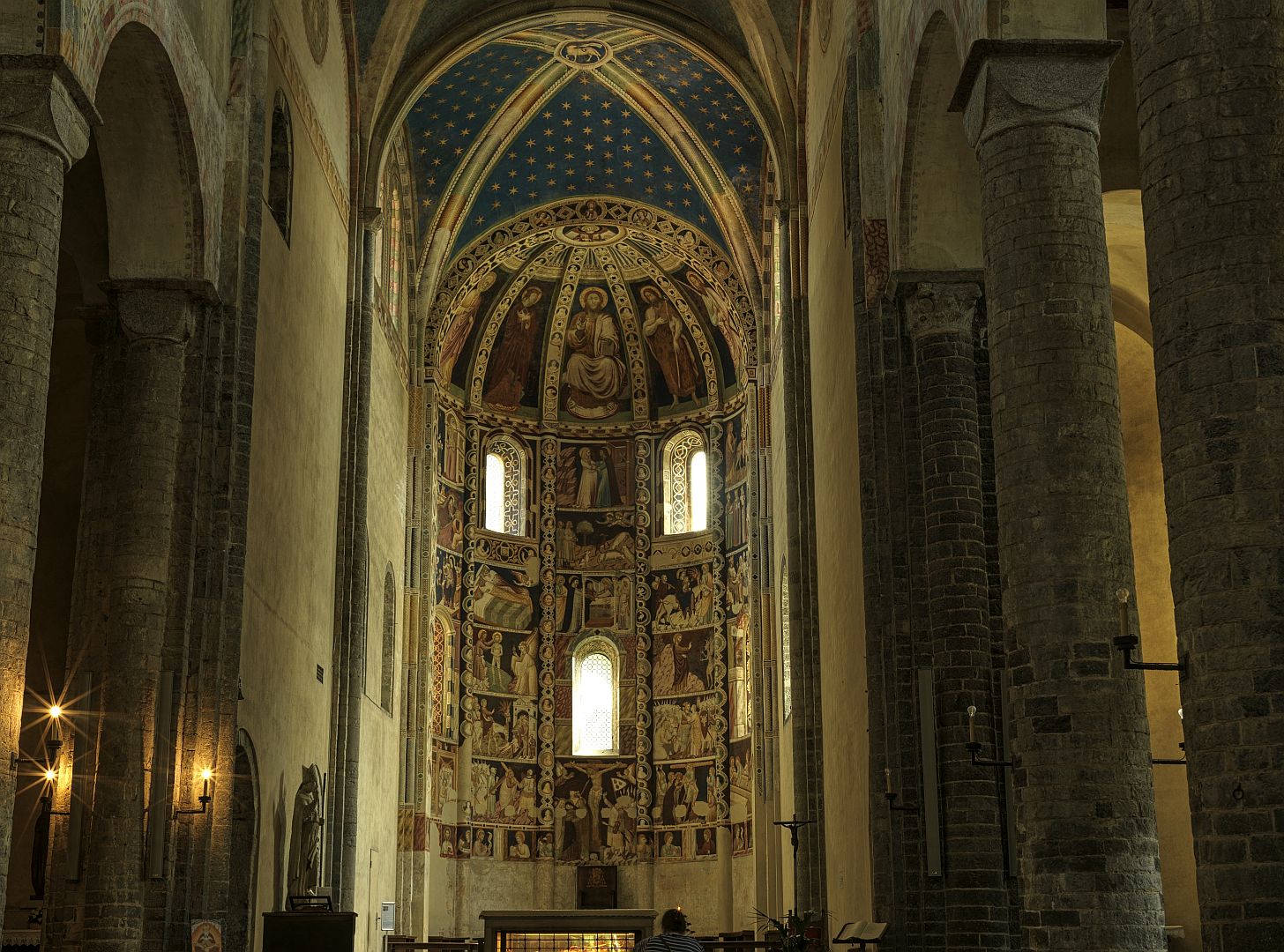
We had a coffee and a pastry sitting outside a café in the Piazza Duomo, to make up for our missed breakfast, then headed off to see the main sights, which was first the medieval Basilica of San Fedele, then we went outside the walls through a suburb containing a lot of fascist-era architecture to see the 11th-Century Basilica of Sant’ Abbondio which is a very fine example of “Lombard Gothic” architecture. In the apse there were some excellent 14th-Century frescoes of the life of Christ, in a sort of naïve sub-Giotto style.

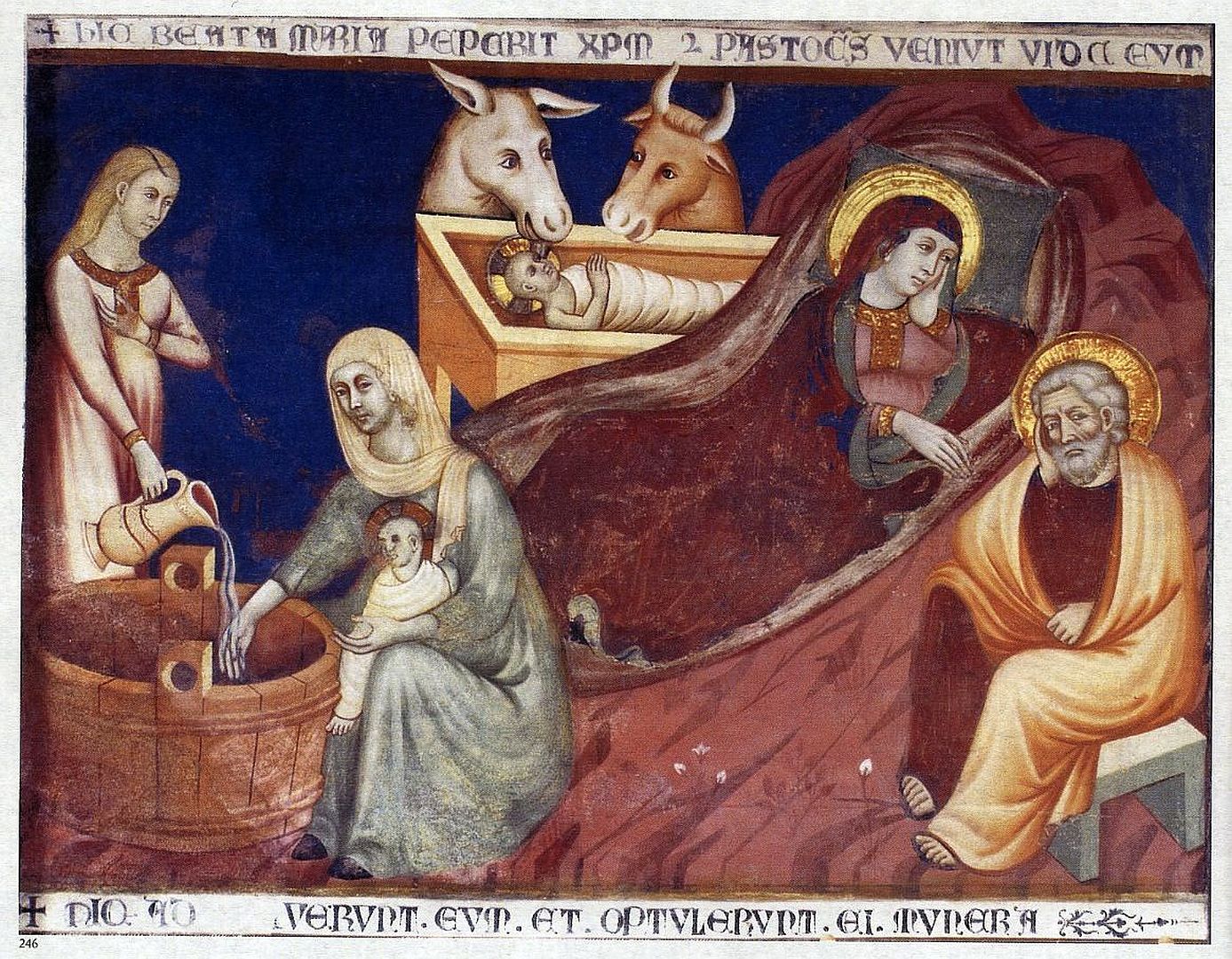
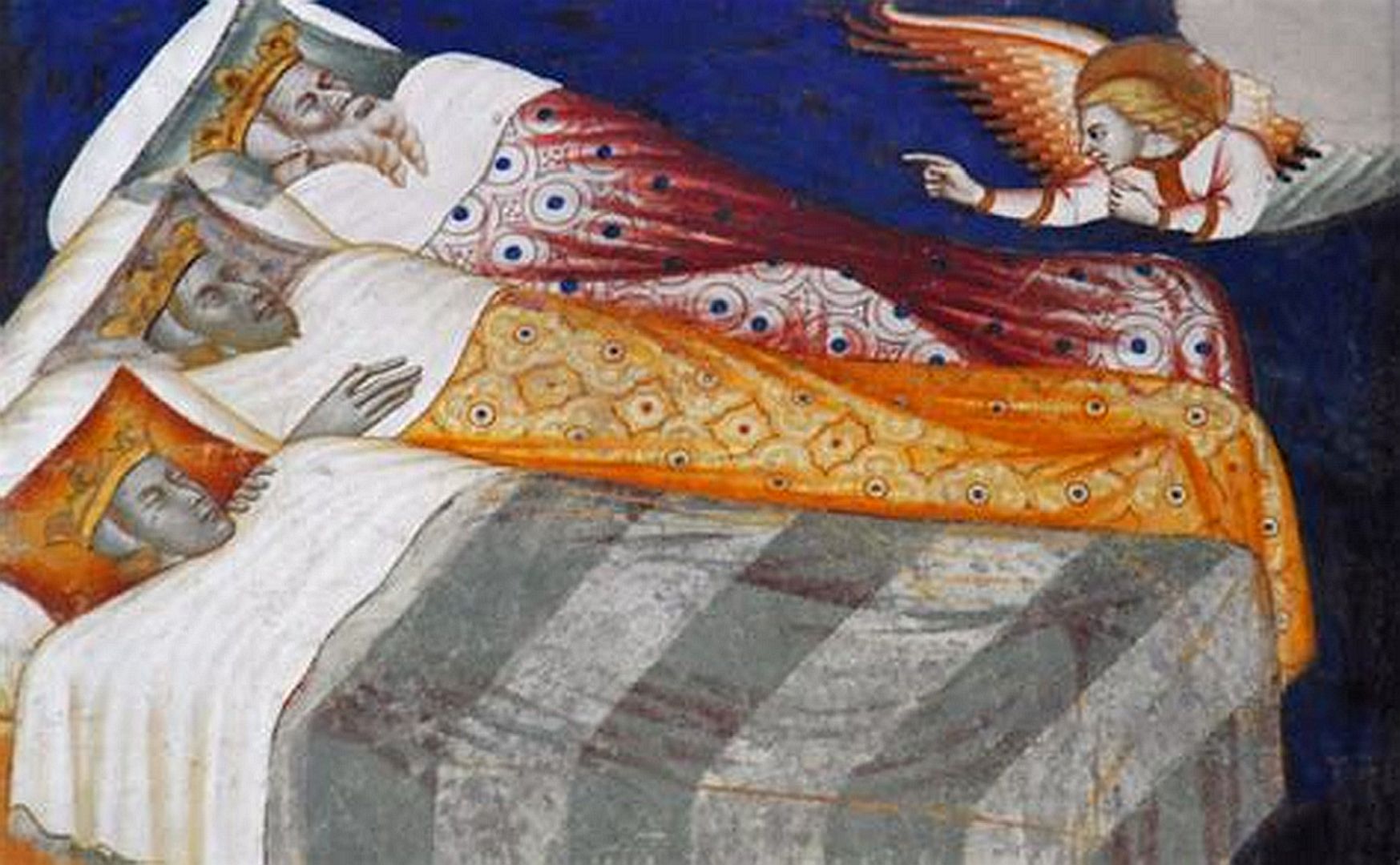
We were particularly taken with the nativity scene featuring a very cheerful looking ox and ass, and the scene where the three kings dream of the birth of Christ – they were all tucked up asleep in bed next to each other in their robes and crowns with an angel appearing above them.

I had the Hasselblad with me but no appropriate lens to take telephoto pictures of the apse frescoes, but there was a vending machine at the back of the church which was supposed to dispense postcards. We only had one 50 Euro cent coin between us so debated which of those two scenes to buy, then the machine took our money and didn’t produce a postcard anyway. I have managed to track down some images on the Internet and will include those instead, which, given the Diocese of Como has my 50c, seems fair to me.
Sant'Abbondio
Distant view of the apse frescoes in Sant’Abbondio, Como. Hasselblad 501 C/M camera, Zeiss Distagon CF 60mm lens, CFV-50c digital back (click to enlarge).
Three kings in bed wearing crowns
Kings always wear their crowns to bed. (Public domain; click to enlarge).
Nativity with cheerful ox and ass.
Nativity scene with very cheerful-looking ox and ass. Note also the attendant lady testing the temperature of the bath water with the back of her hand. (Public domain, click to enlarge).

Varenna

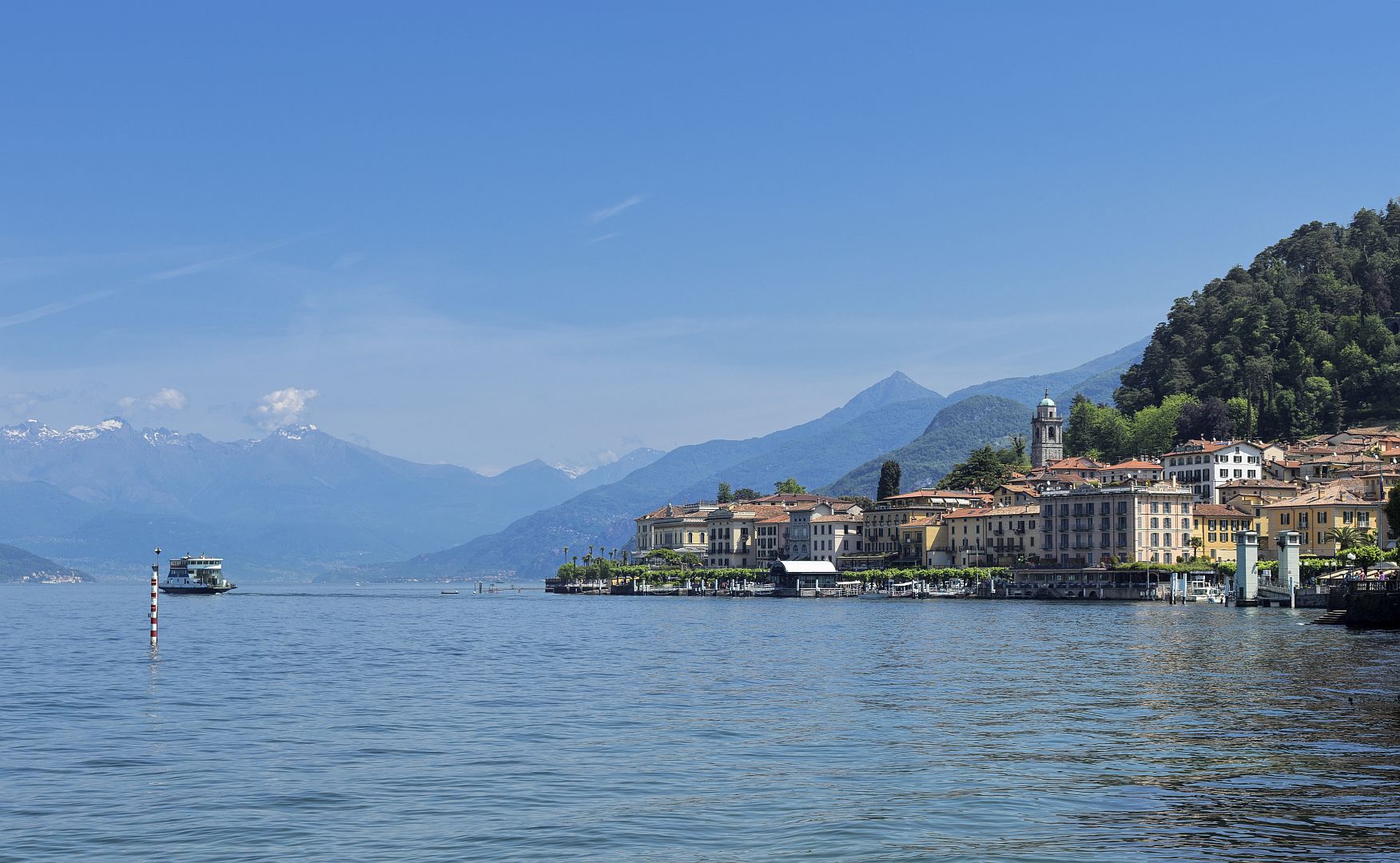
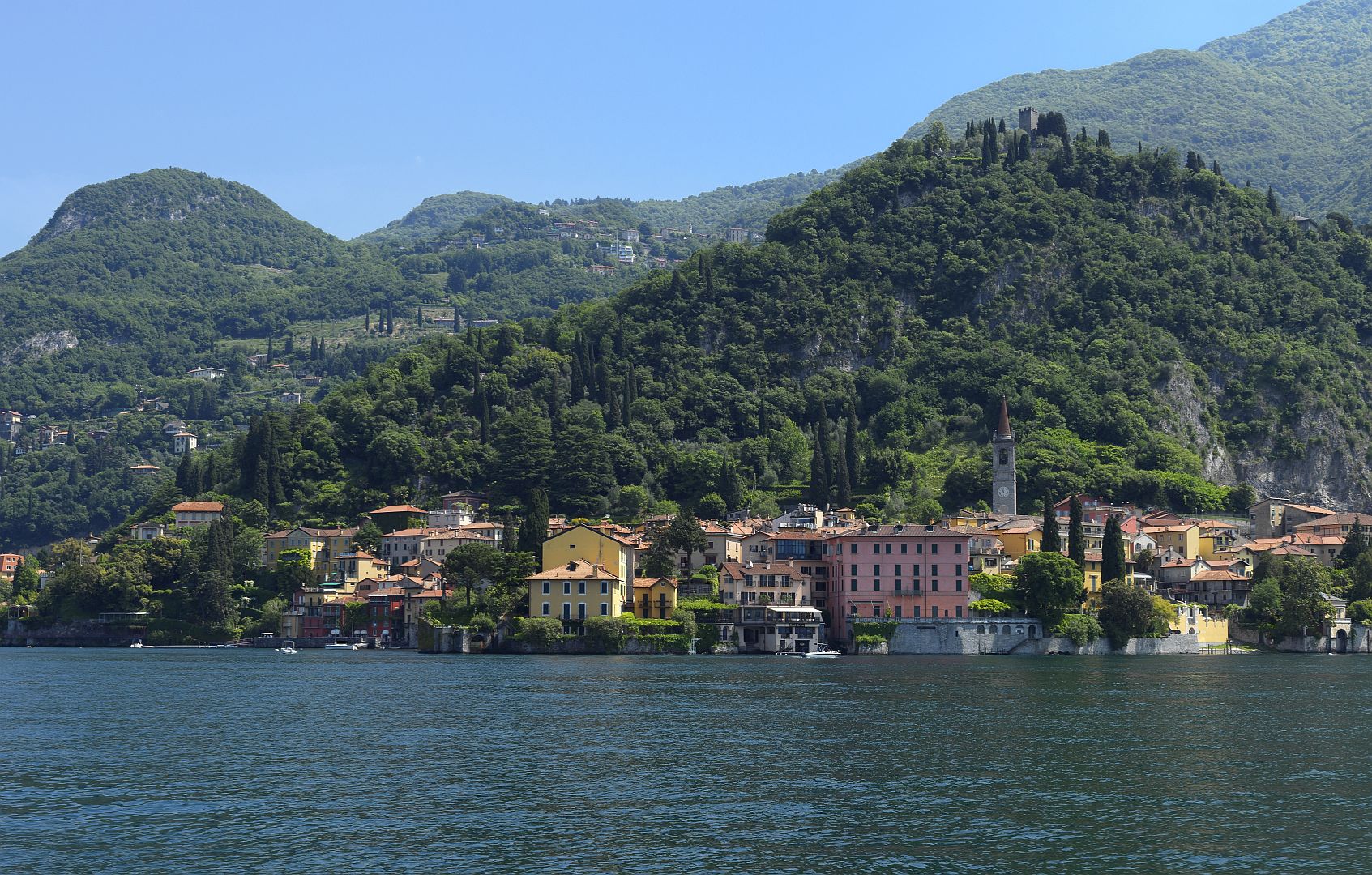
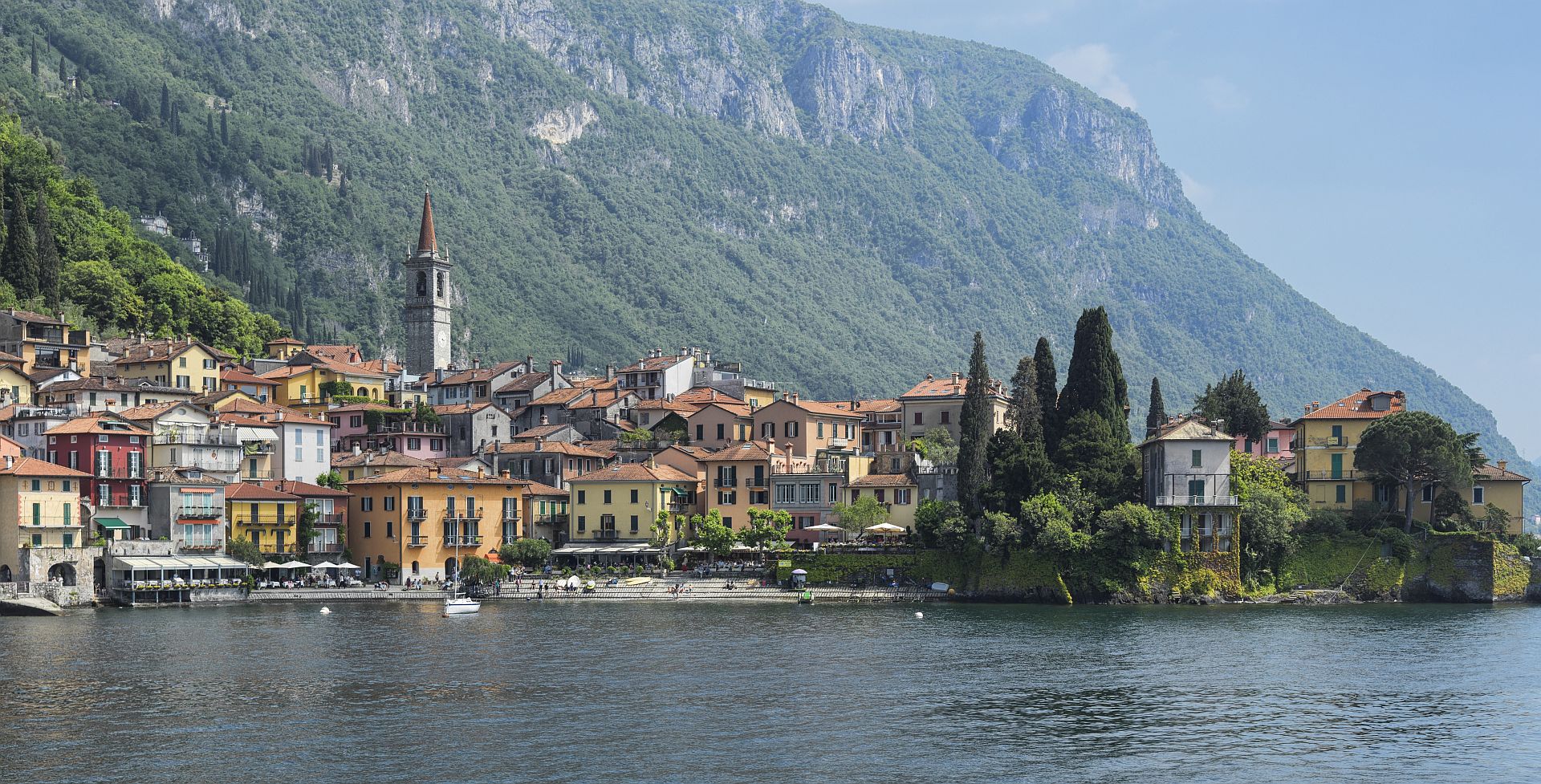
A competition for the most picturesque little town on the shores of Lake Como would have a very crowded field, but Varenna, on the eastern side, would certainly make the semi-finals. A ferry does a round trip from Cadenabbia to Bellagio, Varenna and Menaggio on the western side, and it is a very civilised way to get about and enjoy the views.
Ferry from Bellagio to Varenna
The ferry leaving Bellagio on its way to Varenna (out of sight, around to the right). The distant snow-capped mountains are the Swiss border. Hasselblad 501 C/M camera, Zeiss Distagon CF 60mm lens, CFV-50c digital back (click to enlarge).
Varenna
Varenna from the ferry. Hasselblad 501 C/M camera, Zeiss Distagon CF 60mm lens, CFV-50c digital back (click to enlarge).
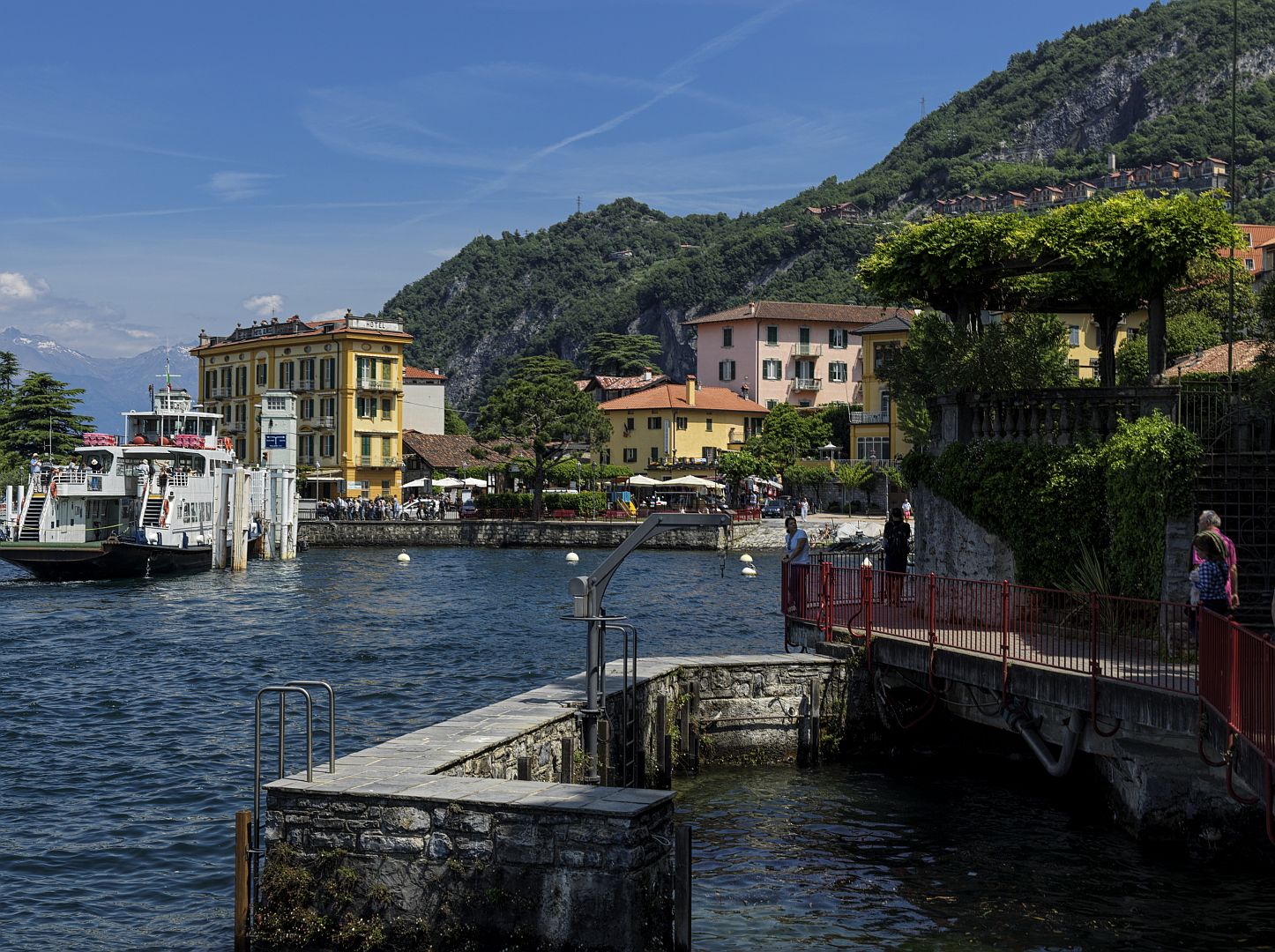
Varenna
Varenna, the ferry terminal. Hasselblad 501 C/M camera, Zeiss Distagon CF 60mm lens, CFV-50c digital back (click to enlarge).

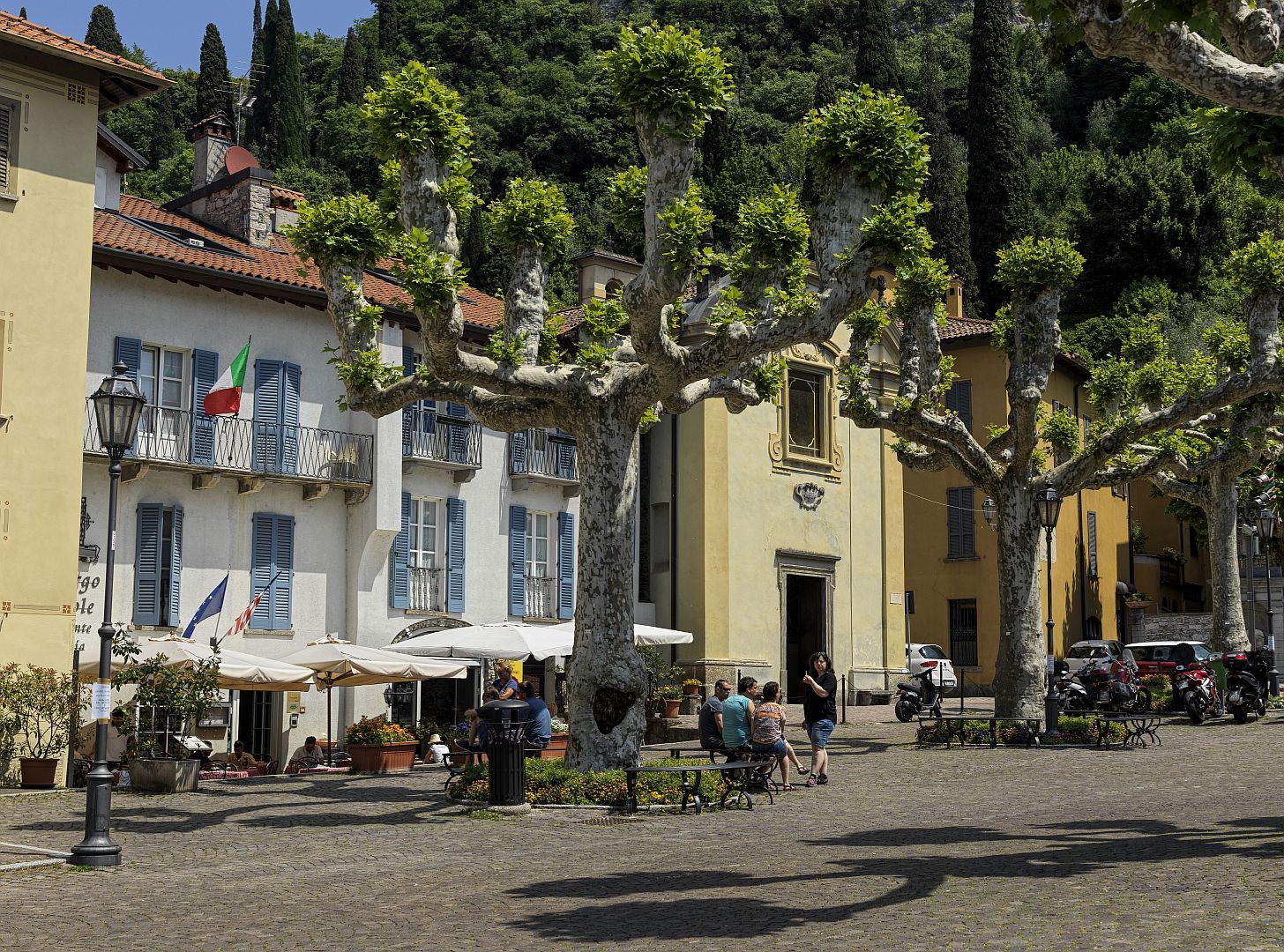
I can’t find any historical claim to fame for Varenna, other than the fact that the founder of the Pirelli tyre company was born there. But its modest past is compensated for by its beauty, which certainly brings lots of visitors.
Varenna main piazza
Varenna, the main piazza. Hasselblad 501 C/M camera, Zeiss Distagon CF 60mm lens, CFV-50c digital back (click to enlarge).
Varenna
Downtown Varenna. Hasselblad 501 C/M camera, Zeiss Distagon CF 60mm lens, CFV-50c digital back (click to enlarge).
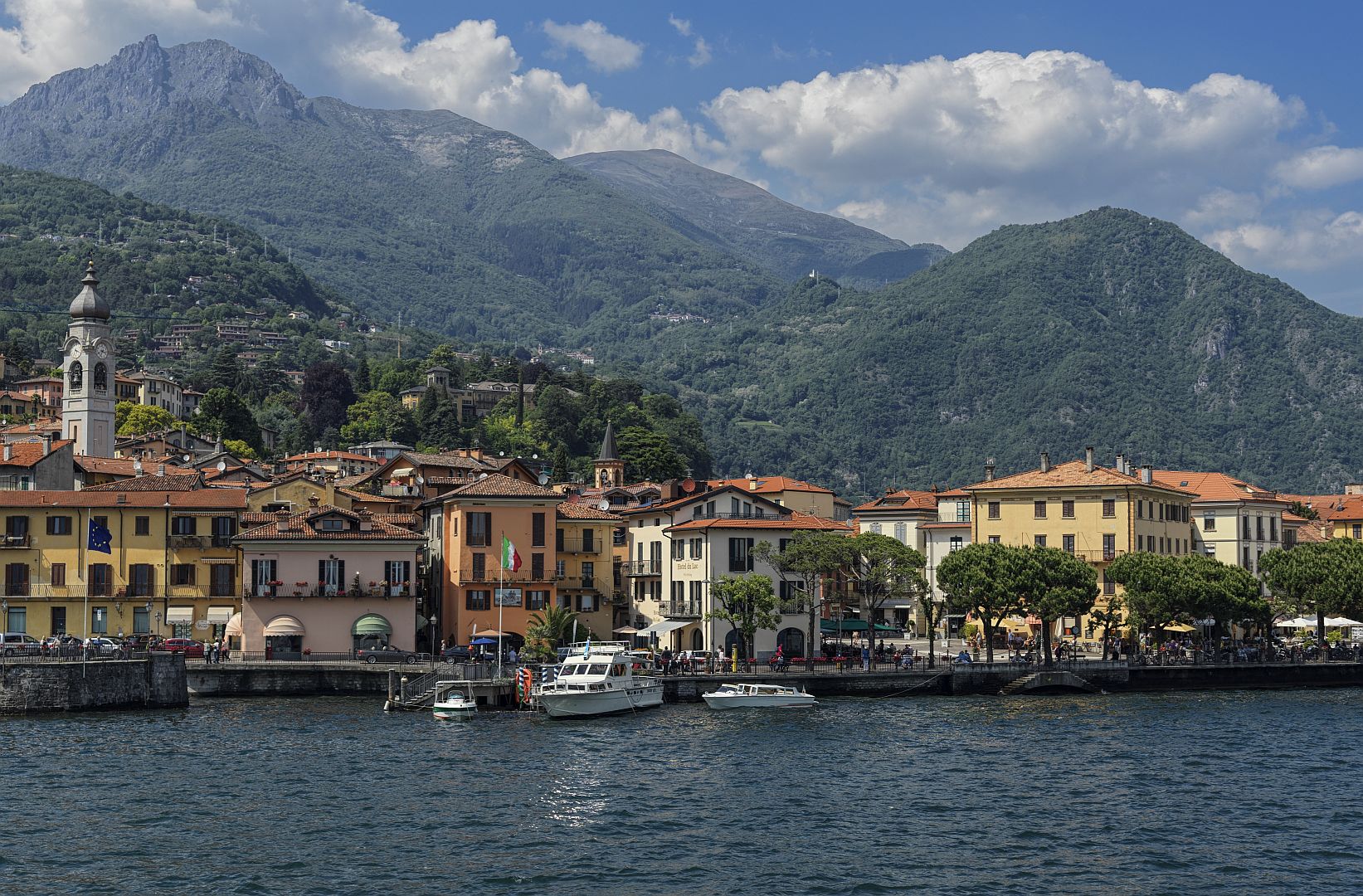
Menaggio
The town of Menaggio, taken from the ferry on the way back to Cadenabbia. Hasselblad 501 C/M camera, Zeiss Distagon CF 60mm lens, CFV-50c digital back (click to enlarge).

Valtellina

North of Varenna lies the entrance to the Valtellina, a long thin alpine valley which runs parallel to the Swiss border. It is famous for its views and for its dairy products. They even grow wine grapes here, but only on the northern (that is, the south-facing) side of the valley. There are two types of valley up here; those carved by glaciers run roughly north-south, while those caused by tectonic collisions, and the folding of the earth’s crust which created the Alps, run roughly east-west.

We didn’t get to appreciate the views much – the entrance to the valley has a lot of light industry, while as we progressed further in, the clouds and rain came down. Eventually we circled round to the right and came back down into the Po Valley past Lake Iseo. During the next phase of the trip we visited several of the famous cities in the region, including Cremona, which I wrote about in my post on Claudio Monteverdi, and Mantua, which I wrote about in my post on the Gonzaga family and the painter Mantegna.

Dogs and Steamers

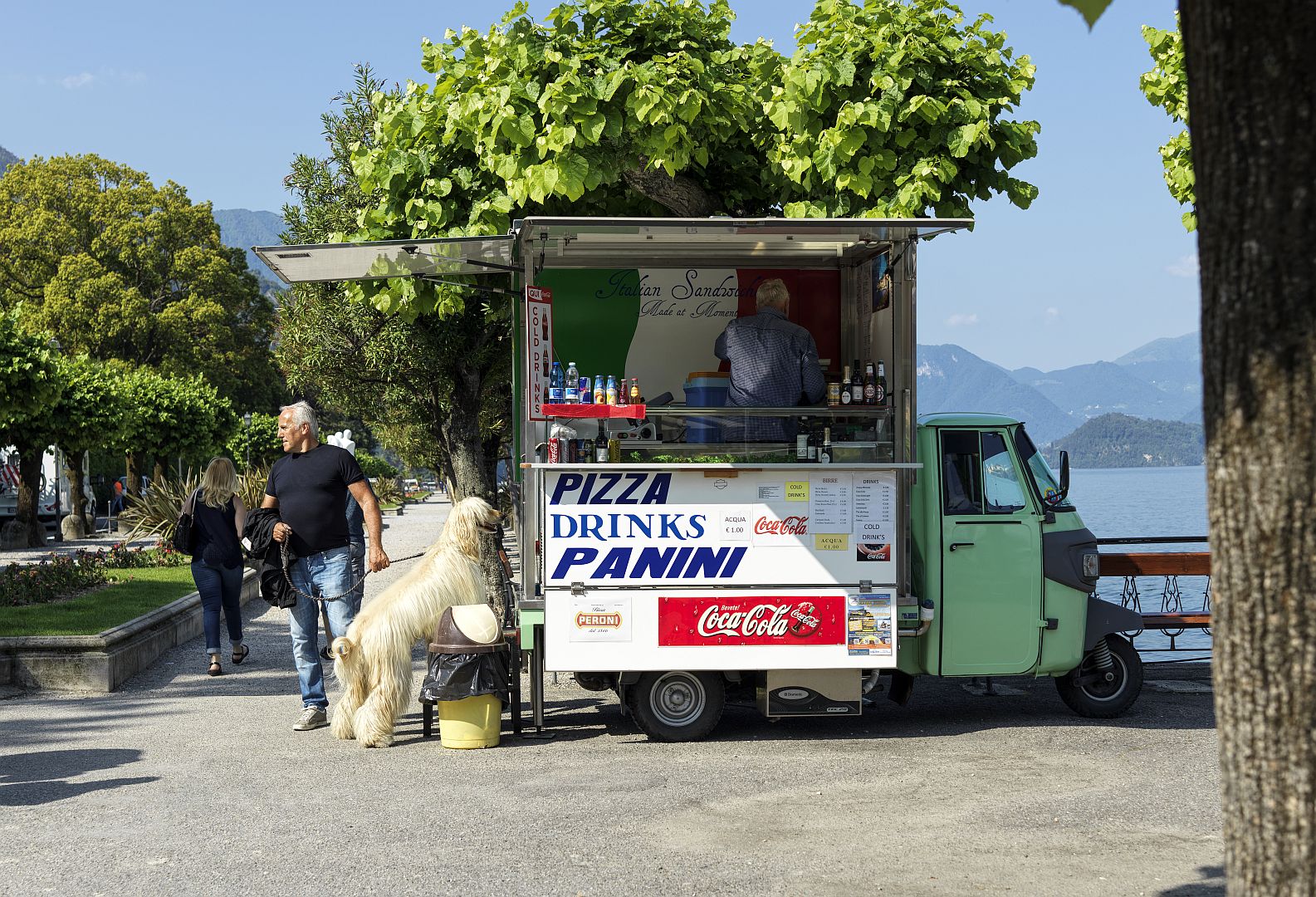
I will finish with pictures of a couple of the dogs of Lake Como – an opportunistic Afghan and a Labrador who seems to be some kind of social media influencer.
Afghan at Bellagio
Bellagio. An Afghan that rather likes the look of the panini. Hasselblad 501 C/M camera, Zeiss Distagon CF 60mm lens, CFV-50c digital back (click to enlarge).
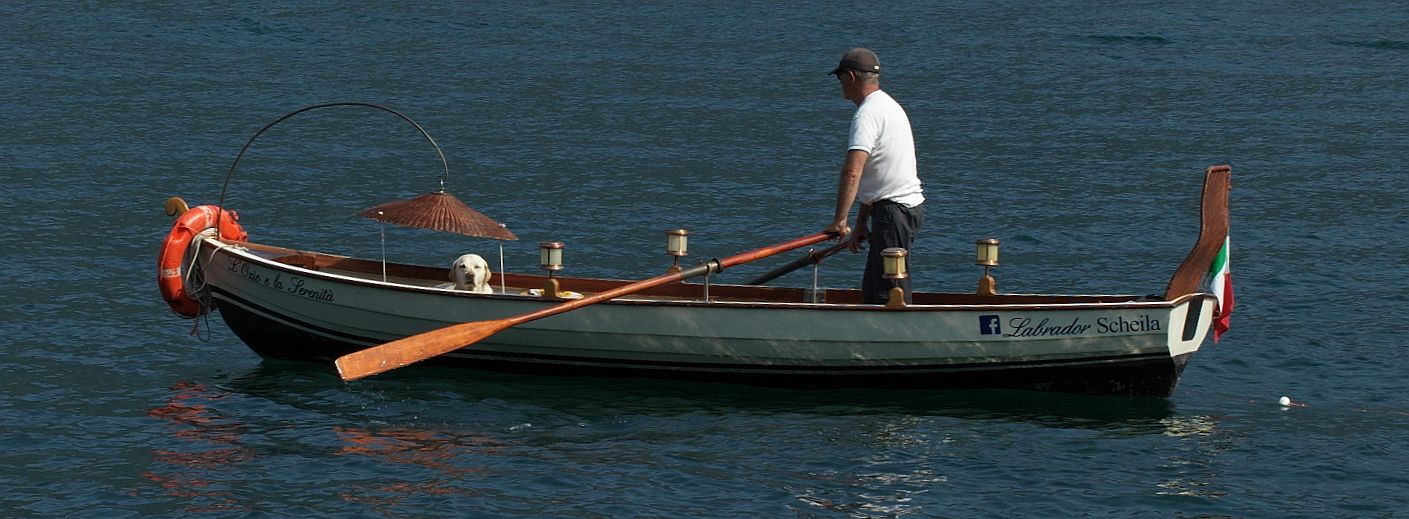
Labrador at Leuno
A Labrador with its own Facebook page. Hasselblad 501 C/M camera, Zeiss Distagon CF 60mm lens, CFV-50c digital back (click to enlarge).

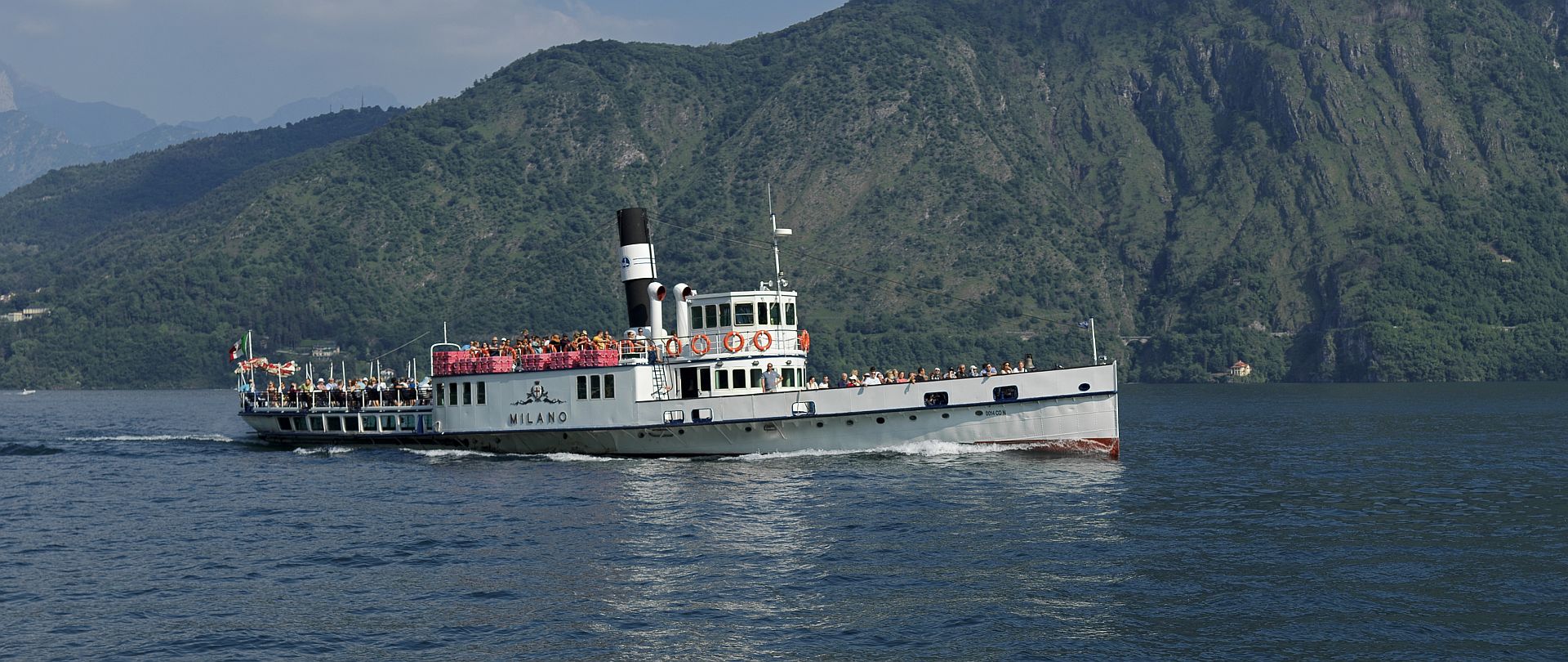
And finally here is one of the pretty little steamers that ply the lake. Although this one has been converted to diesel propulsion, you can see from the housings on the side that it was once a paddle steamer.
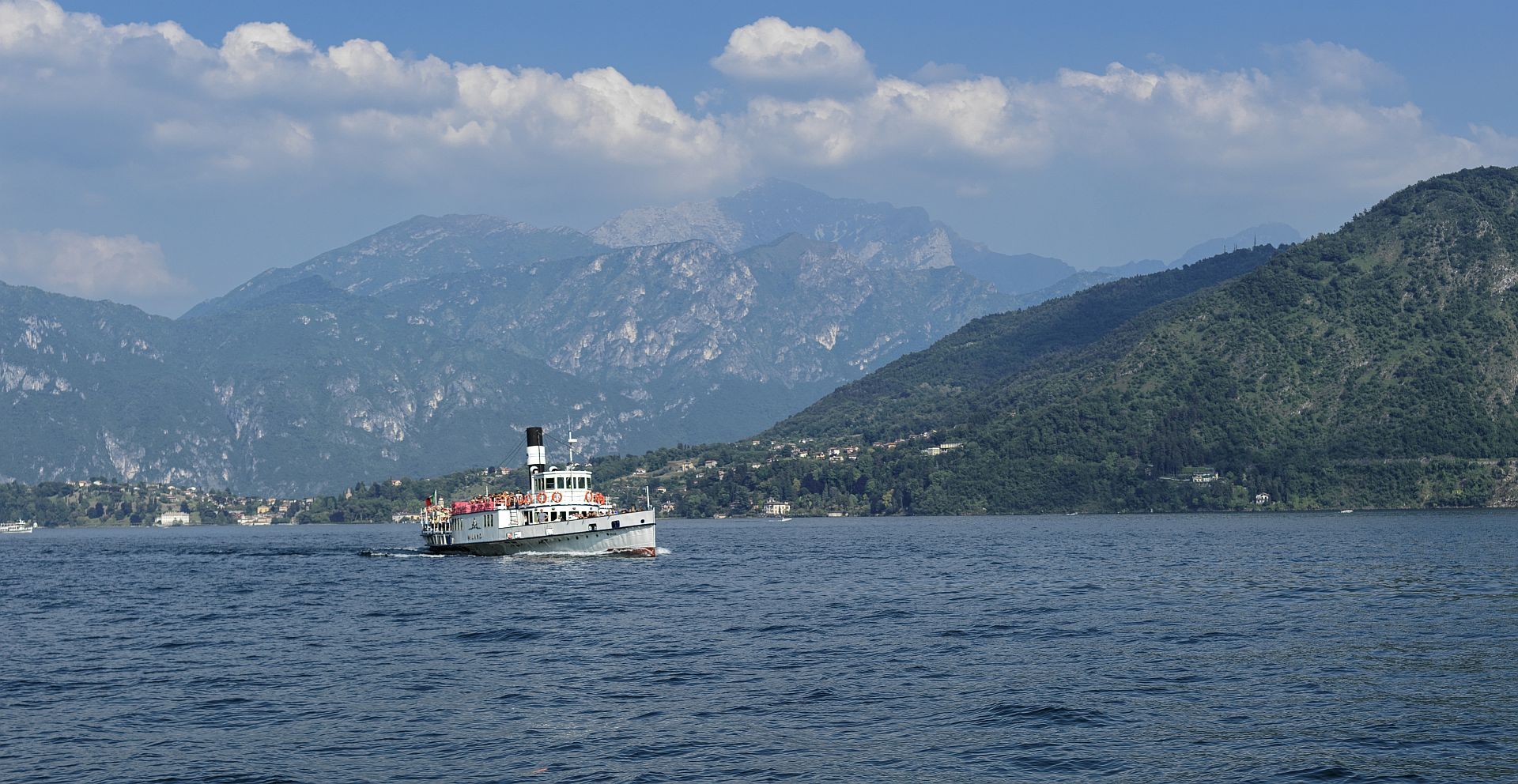
Lake Como steamer. Hasselblad 501 C/M camera, Zeiss Distagon CF 60mm lens, CFV-50c digital back (click to enlarge).
The Honourable Mercenary: Bartolomeo Colleoni and Bergamo

Here is a story about an honourable soldier called Bartolomeo Colleoni, and his home city of Bergamo. A few years ago we were staying near Verona and decided to take a trip along the very busy A4 motorway to visit Bergamo. There was a particular building I wanted to visit – the Colleoni Chapel – of which more later, but first, something about the city itself.

Map of Bergamo
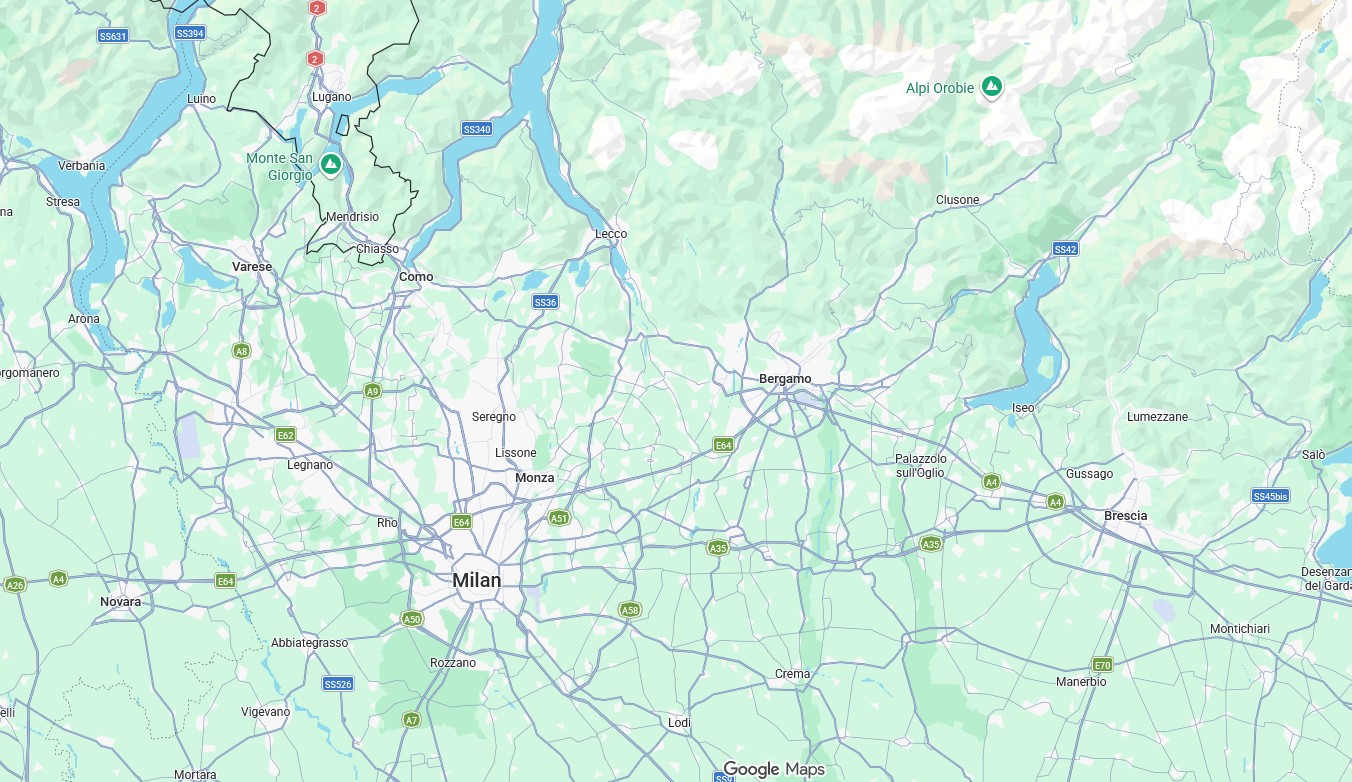
Map showing the relationship of Bergamo to the mountains, the plain of the Po Valley, and Milan. Source: Google Maps (click to open in Google Maps).

Bergamo is situated northeast of Milan, right at the point where the Alps come down to the Lombard plain, and where, at the greatest extent of the Ice Age, the glaciers which carved the lakes of Maggiore, Como, Iseo and Garda finally stopped. Go to Bergamo and you can see this very clearly. Not perhaps in the new Lower Town, which is down in the valley, and which features a good deal of 1930s fascist-style architecture. But take the funicular up to the older Città Alta (Upper Town), and from the Medieval and Renaissance walls, to the north on a clear day you will see the ever-rising ramparts of the Alps. And to the south you will see what Shelley aptly called

The waveless plain of Lombardy,
Bounded by the vaporous air,
Islanded by cities fair.

View south from Bergamo
Looking south-east from Bergamo, showing both Shelley’s “waveless plain of Lombardy” and also a fair bit of his “vaporous air”. I’m not certain, but I rather think that on the left, in the far distance are the Euganean Hills, where Shelley wrote those lines. Hasselblad 501 C/M camera, Zeiss Distagon CF 60mm lens, CFV-50c digital back (click to enlarge).

As with everywhere across northern Italy from Piedmont to the Slovenian border, where the Alps come down from the north the transition between mountain and plain is abrupt. And to the south are the Apennines, marking a more recent tectonic collision. Between the Alps and the Apennines is the Po Valley, the inhabitants of which, since before antiquity, have grown wealthy from the rich productive soils, and put up with the terrible weather – cold and damp in winter, and suffocatingly hot in summer, with frequent thunderstorms on a Wagnerian scale. Both the fertility and the weather are products of the topology; the mountains channel all the rivers and their sediments together, but also keep the vaporous air in.

Each summer in Italy there are distressing news stories of property and even lives lost in the Po Valley due to flash floods, but these are not new. Ferrara was once on the banks of the Po, before a medieval flood redirected the course of the river some distance away, and doubtless the same has been happening for millennia: when it comes to floodplains, the hint is in the name. But whether on the banks of the Po or the slopes of Vesuvius, the risk of a calamity at some unknown time in the future tends to take second place to the promise of a bumper harvest next year.

Fertile lands, wealthy towns and ease of movement made the Po Valley a standard invasion route as well. This way came the Celts, the Goths, the Lombards that gave their name to the region, and then waves of other northerners in the Middle Ages and later.
This inevitably left its mark in the form of a more genetically diverse population. Further south, the complexions of modern Umbrians, Abruzzese and Calabrians tend to be darker and reminiscent of portraits one might see on a fresco in Pompeii. But here in the north, it is easy to imagine the traces of multiple migrations in the varied faces of the people you see about you. Does that girl with red hair and freckles have distant relatives in Ireland? Did the ancestors of that tall fair young man take part in the long migration of the Lombards from southern Sweden? Or is he the result of a more recent dalliance between a local girl and one of Charles V’s landesknechte, who sang “Matona mia cara” beneath her window?

This isn’t just in the imagination of an overexcited history enthusiast. There have been genetic studies in Lombardy that show strong Lombard and Celtic admixtures to earlier Ligurian and Etruscan populations, as well as other non-specific Germanic elements, while similar studies in Umbria, for example, show more continuity with ancient populations.

Bergamo, situated right beside the fertile plain, yet on a defensible hill, does rather reflect that history. Settled by Ligurians in the Iron Age, then conquered by the Celts on their way westwards around 550 BC, then a Roman municipium, it was destroyed by Attila at the end of the Roman period. In the 6th Century it became a Lombard duchy, then in the Middle Ages it spent a period as an independent commune before coming under Milanese rule. Then – bringing us up to the period I wish to discuss today – in 1428 it was ceded by Milan to the Republic of Venice, becoming the most westerly town in Venice’s empire, which at that time stretched as far as the Aegean in the east.

And that brings us to the historical figure at the heart of today’s post.

Bartolomeo Colleoni (1400-1475)

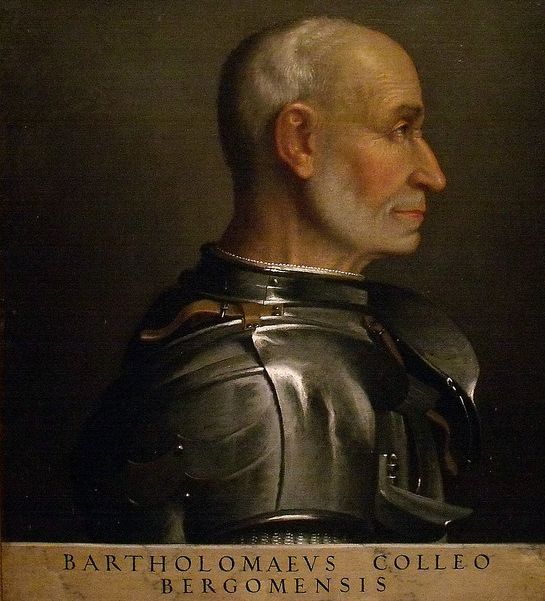
Portrait of Colleoni by Moroni
Portrait of Bartolomeo Colleoni by Giovanni Battista Moroni, in the Sforzesco Castle, Milan. Since Moroni lived a century after Colleoni, it is not clear how accurate a portrait this is. On the other hand Moroni would have had access to Colleoni’s image on his sarcophagus in Bergamo. (Wikimedia Commons: click to enlarge).

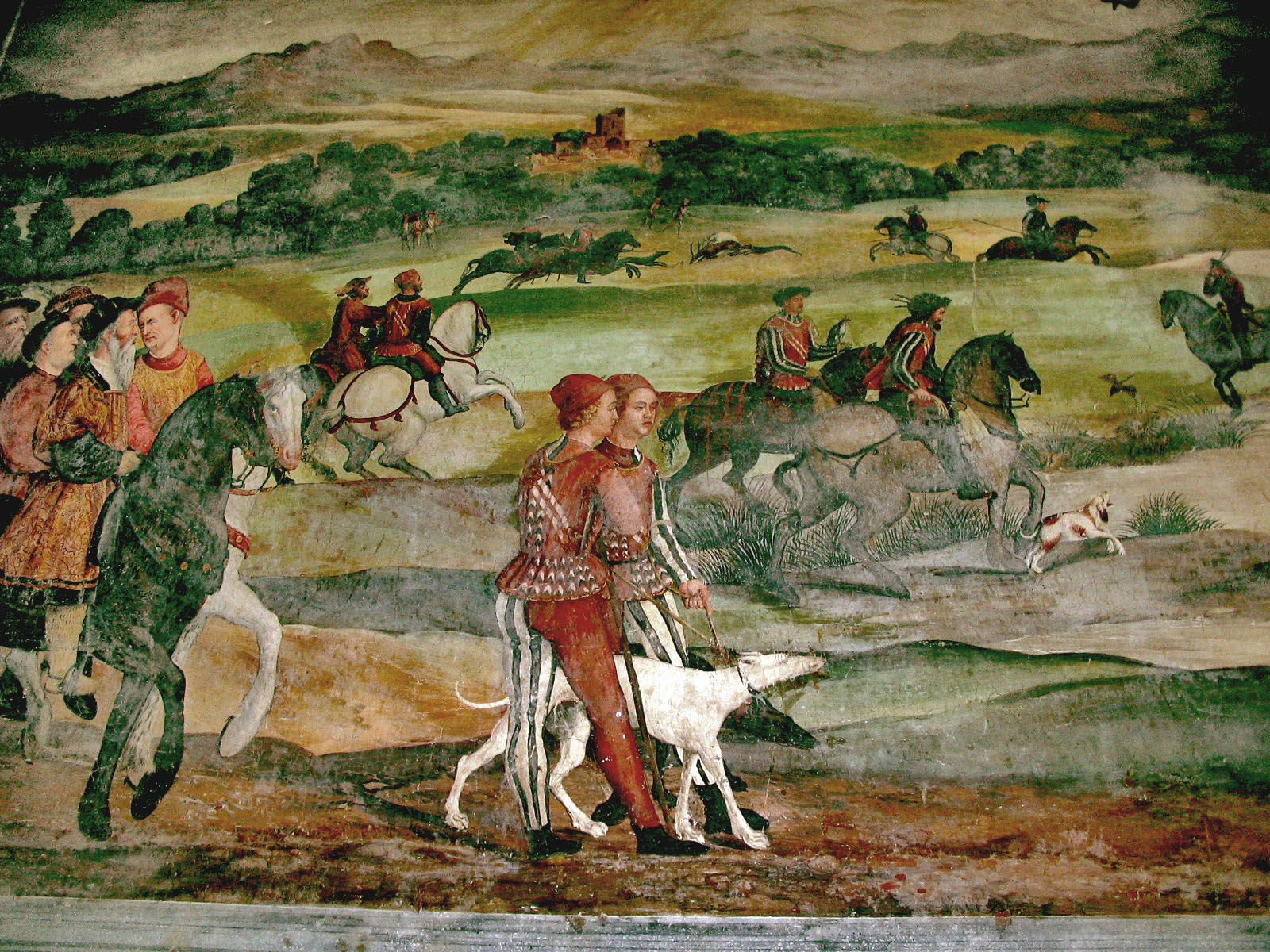
Bartolomeo Colleoni was born just outside Bergamo, then in Milanese territory, and trained to be a soldier – not just a member of the city militia, but a condottiere or mercenary soldier. You cannot talk about Medieval or Renaissance Italian history without dealing with these guys, and I have written about them several times, most recently in the article The Witch, the Warrior and the Preacher – the Story of Matteuccia da Todi. And it was with the warrior of that story, Braccio “Fortebraccio” da Montone, that Colleoni’s career really got started. As I mentioned in that earlier post, Braccio fought on the side of Alfonso of Aragon, but was defeated by the forces of Francesco Sforza, who was fighting for Louis of Anjou at the start of a career that would take him to the Dukedom of Milan.
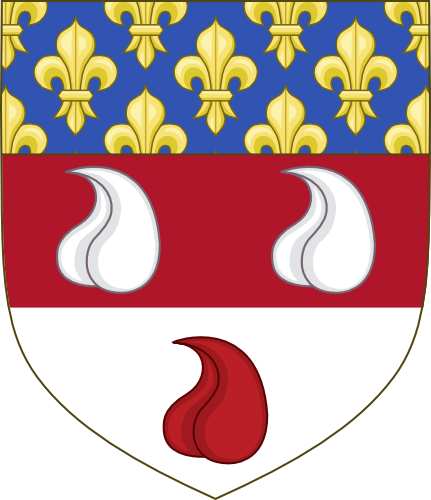
It had not occurred to me until I started researching this, but the name “Colleoni” sounds a bit like coglioni which is a very vulgar word, still used in Italian, for testicles. If he was teased about it at school, it obviously did not worry him all that much, as you may see from the coat of arms he adopted.

Armorial bearings of Colleoni
The arms of Bartolomeo Colleoni, two pairs of testicles argent on a field of gules, one pair of testicles gules on a field of argent. Heraldic puns on people’s names in coats-of-arms were not uncommon, but Colleoni’s is perhaps an extreme example. The French fleurs-de-lys at the top were granted to Colleoni later by René of Anjou (Wikimedia Commons, click to enlarge).

Colleoni’s career took a definitive turn when he enlisted with one of the leading condottieri of the day, Francesco Bussone, known as Carmagnola, fighting for Venice – mostly against the Milanese. History remembers Carmagnola mainly for his death – he lost a few battles, showed a general lack of urgency, and was known to be in correspondence with the Visconti in Milan. The Venetian Council of Ten (which controlled the secret service) started to doubt his loyalty, and summoned him back to Venice on the pretext of consultations. After a meeting in the Doge’s Palace, he was on his way out when a courtier motioned him towards the corridor that led to the prisons. “That is not the way”, said Carmagnola. “Your pardon, my lord, but it is”, answered the official. “Son perduto” (I am lost) muttered Carmagnola as he was led to the cells. After a trial, he was taken to the Piazzetta San Marco and beheaded. It was apparently a fair trial by the standards of the day, with some of the council voting for imprisonment rather than execution, and they did give him a formal funeral and his wife a pension. Falling foul of the Visconti, in contrast, usually just meant poison or disappearance and a discreet strangulation.

Despite this example of robust Venetian performance feedback, Colleoni chose to remain in their  employment. Notionally serving under Gianfrancesco Gonzaga, Marquess of Mantua, Colleoni was the real military brains of the operation, and presumably the Venetian authorities noticed. When Gonzaga changed sides, Colleoni stayed loyal, and presumably the Venetians noticed that too. In their employment he served under other famous mercenaries such as Erasmo di Narni (who went by the wonderful name of Gattamelata – the Honeyed Cat) and his former foe Francesco Sforza.

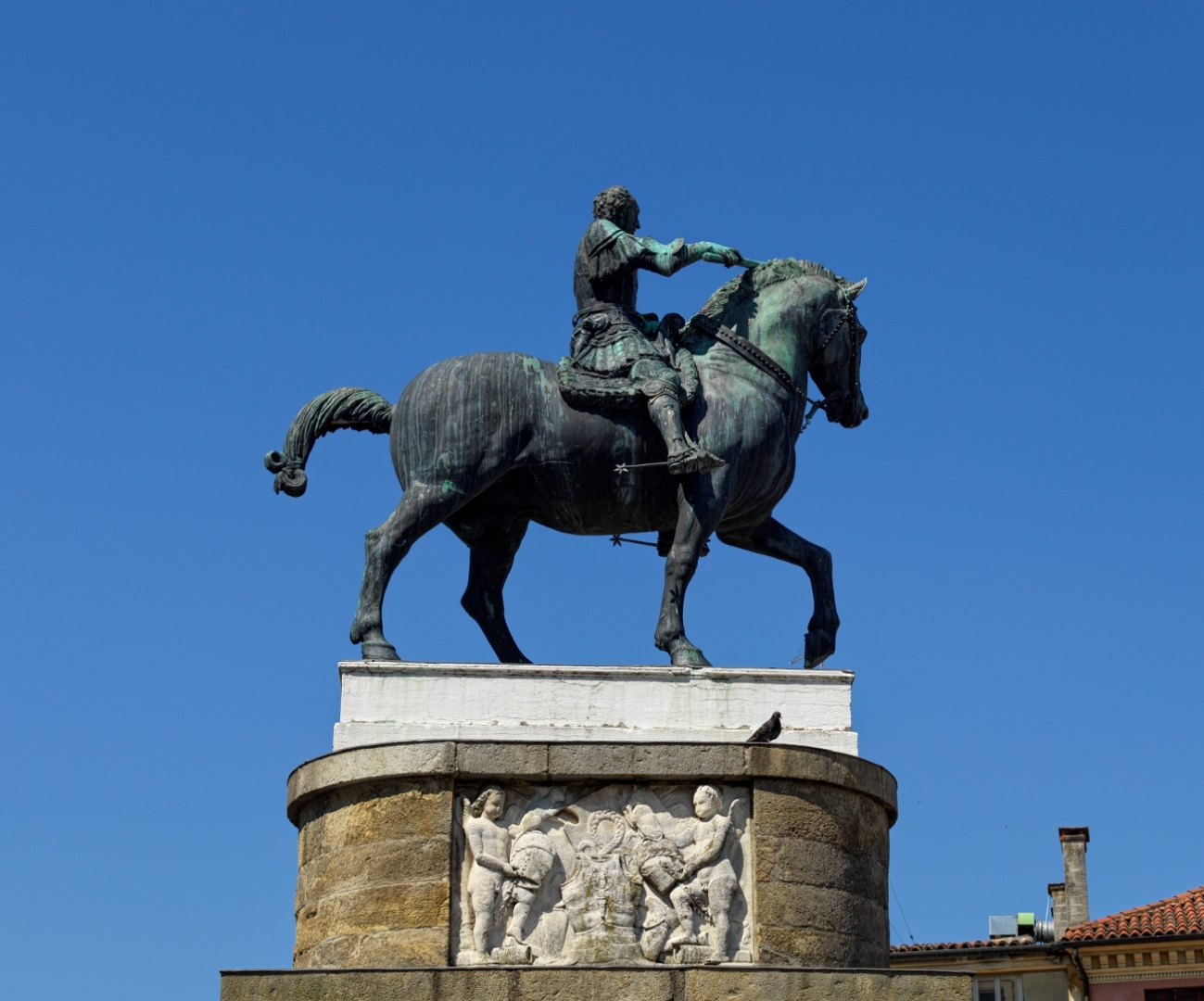
Equestrian statue of Gattamelata in Padua by Donatello. This is reputedly the first free-standing equestrian bronze statue since antiquity – Donatello had to rediscover the technique. At the time of writing (early 2026) the statue has apparently been removed for restoration. Hasselblad 501 C/M camera, Zeiss Distagon CF 60mm lens (cropped), CFV-50c digital back (click to enlarge).

When the war between Venice and Milan ended, Colleoni worked for the Milanese for a while, but the Visconti distrusted him and briefly imprisoned him, so he returned to Venice. But still the Venetians would not put him in charge, and he went back to Sforza, assisting him to take the Dukedom of Milan after the death of the last of the Visconti and a short-lived Milanese republic.

But the Venetians eventually realized both that they could not do without him, and also that he was one of the few mercenary commanders who it seemed could be trusted not to betray his employers. And so in 1455, not only was he appointed Captain-General of the Venetian Republic, but the appointment was for life, and on a salary so substantial that it would be pointless for an enemy to try and bribe him.

One of the other things I remembered about Colleoni is how his military career ended. He did not fall in battle, like Fortebraccio, and of course he was not executed for treachery like Carmagnola. Nor, unlike Sforza, did he “wade through slaughter to a throne”. Instead, he simply retired to a farm. At least that is how I remembered it. In fact, he bought, or was granted, a large estate called Malpaga near Bergamo, still in Venetian territory, which did indeed contain farms, but also a run-down castle.

The castle he restored, enlarged and modernised. It served not just as a magnificent residence, but as a headquarters for his soldiers when they were not active in the field. When he himself was not on active service, he spent his time on more extensions to the castle, on introducing agricultural improvements to his estate, or on charitable works.

While researching A Traveller in Italy (1964), H.V. Morton visited Malpaga and found it still the centre of a working farm, after almost five hundred years. I regret that I have yet to do the same, and the photographs below are not mine, but one day I hope to do so.

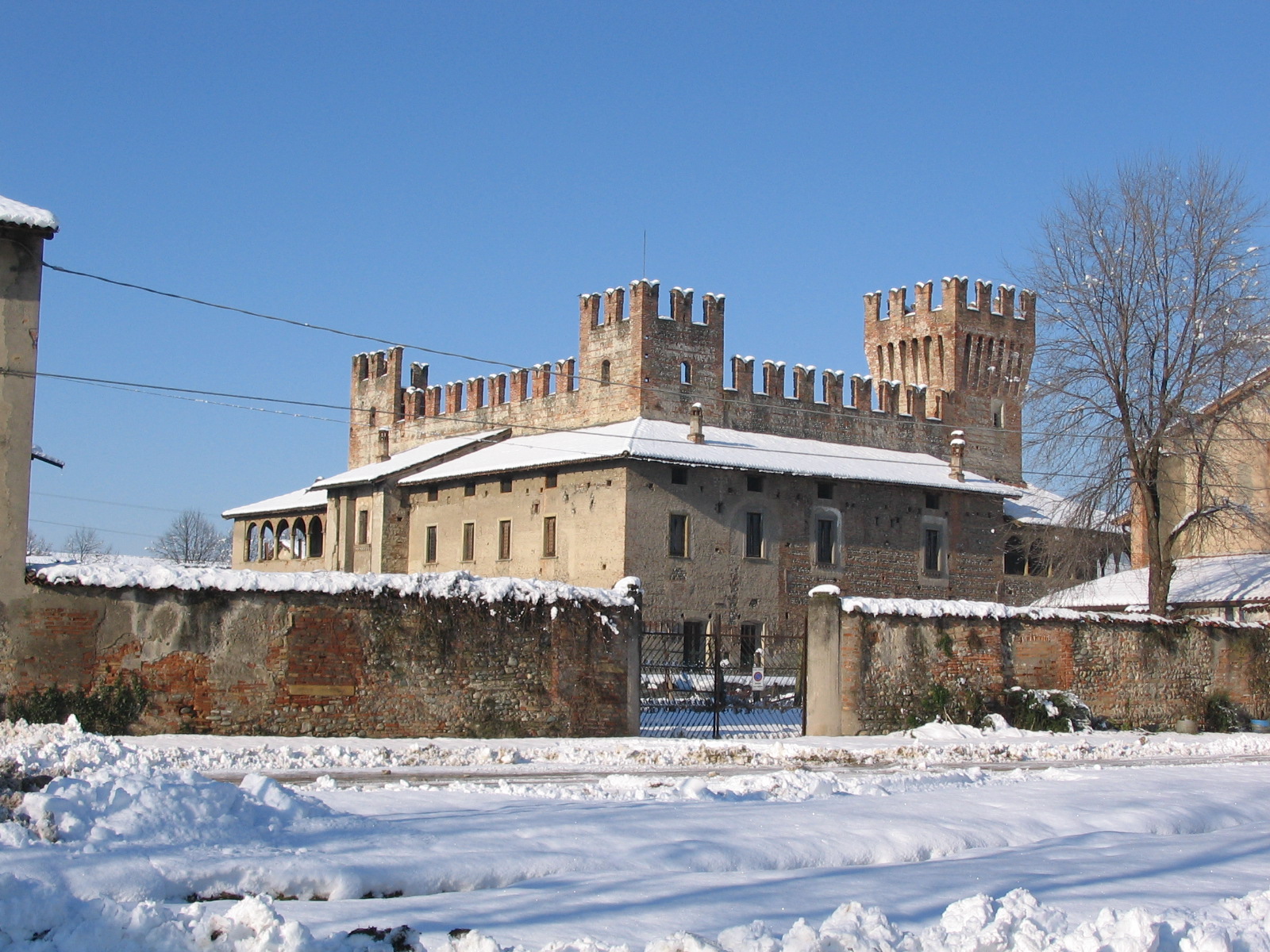
Castle pf Malpaga
Castle of Malpaga in winter. Not my photograph – public domain (click to enlarge).
Fresco in Malpaga Castle
Interior of the Castle of Malpaga showing a fresco that was commissioned by Colleoni’s successors, but which depicts a scene from his life when the old soldier was visited by King Christian I of Denmark, which shows what esteem he must have been held in. Not my photograph – public domain (click to enlarge).

I have not seen this noted anywhere in relation to Malpaga, but it occurs to me that mal paga could be translated as “badly paid”. I can think of few things less appropriate in Colleoni’s case.

The Colleoni Chapel

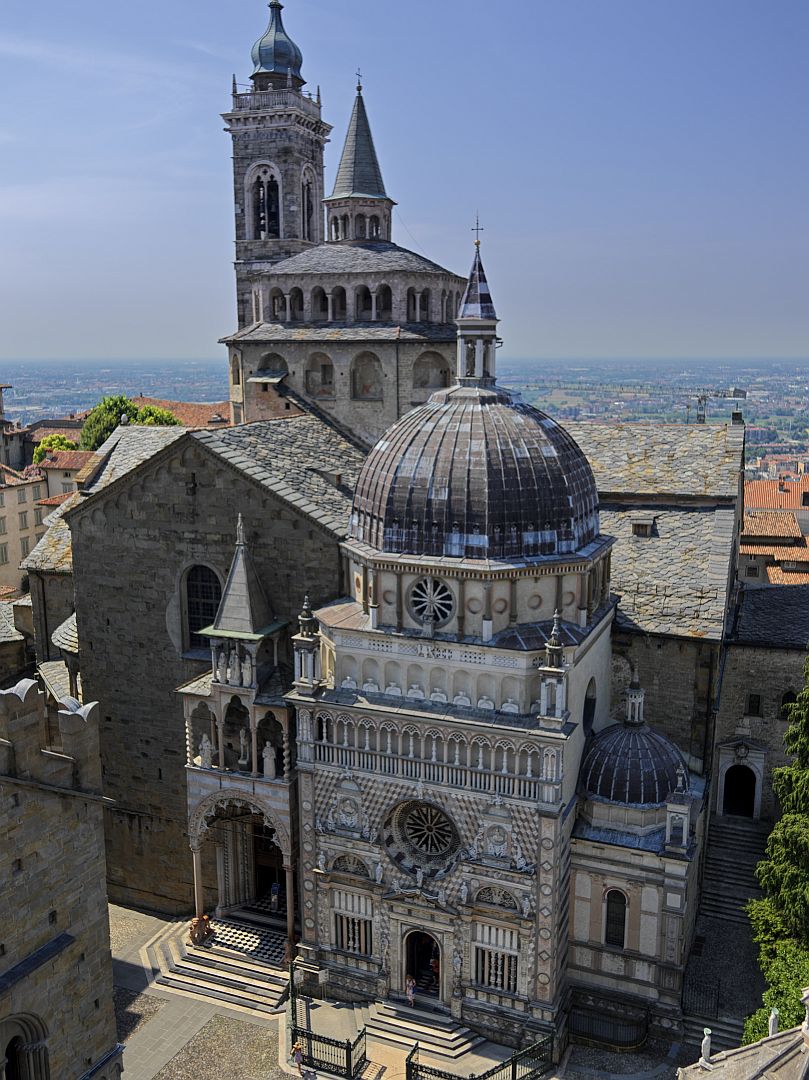
One of Colleoni’s final projects was the commissioning of a chapel, next to the Duomo of Bergamo, that was to serve as his mausoleum and memorial. It is in a beautiful little square in the centre of the old town, next to the Duomo and a baptistry.

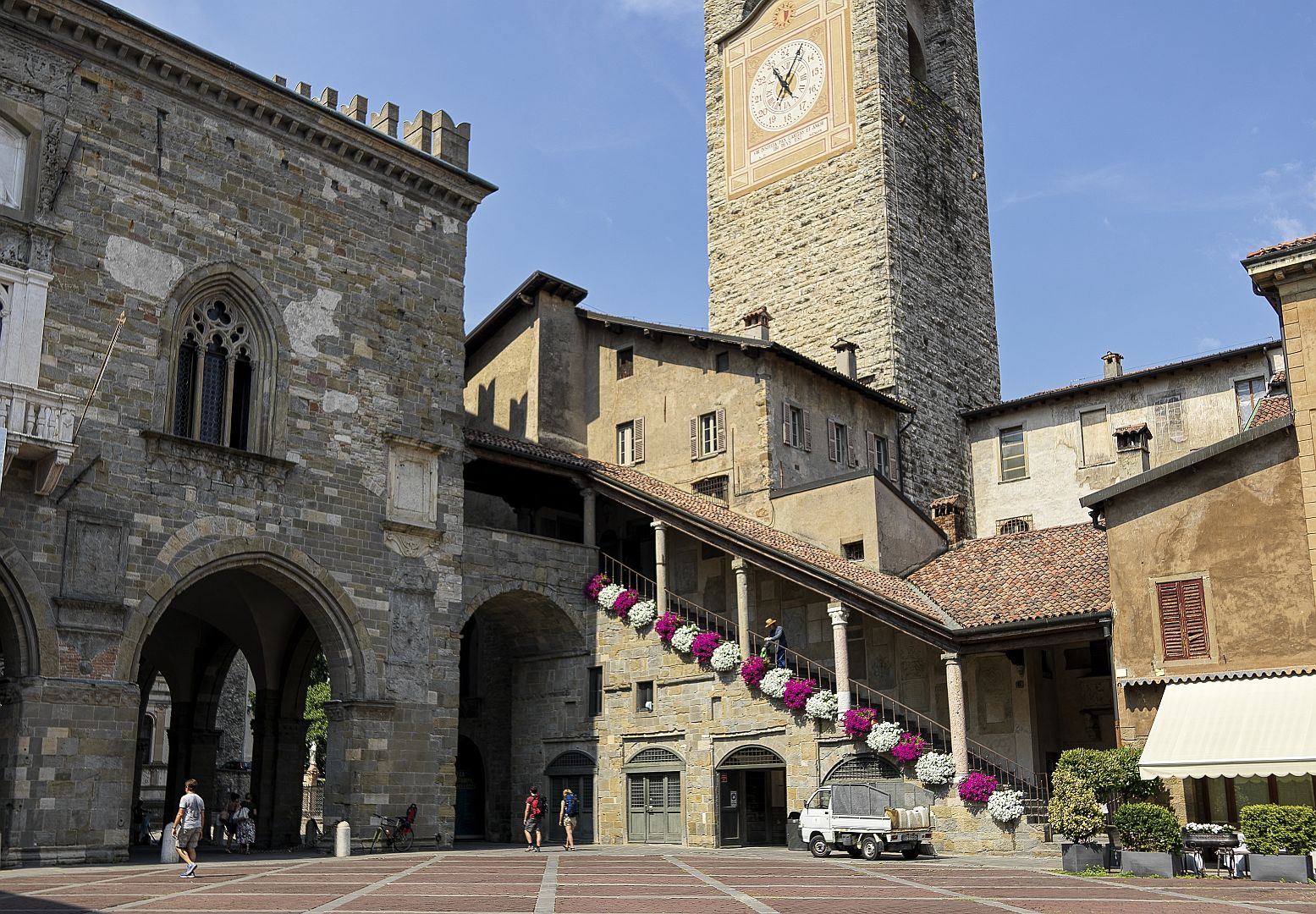
Bergamo
Bergamo, the historic centre. The vaults in the picture lead to the Duomo and Colleoni Chapel. Hasselblad 501 C/M camera, Zeiss Distagon CF 60mm lens, CFV-50c digital back (click to enlarge).
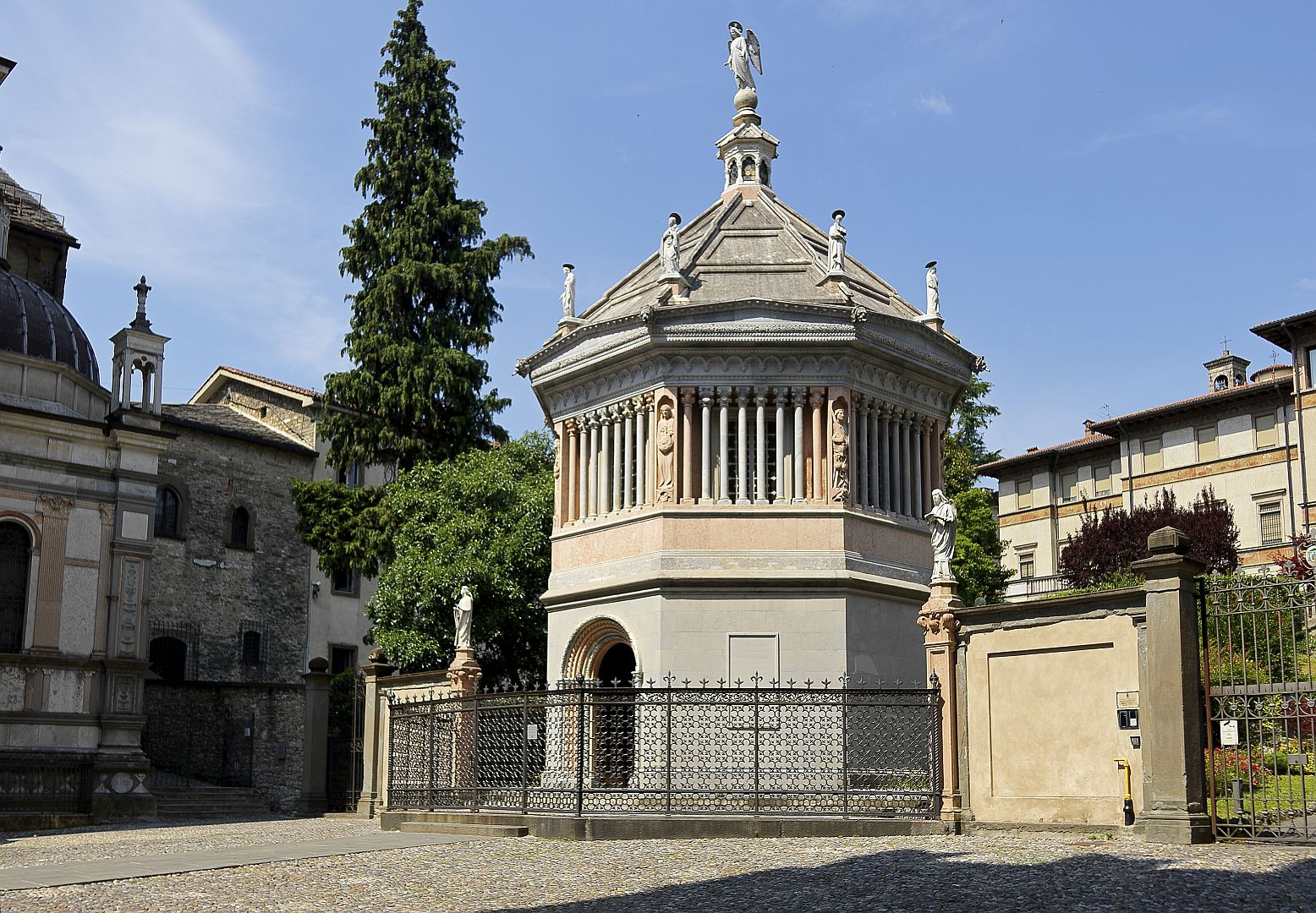
Bergamo Baptistry
Bergamo, the Baptistry, next to the Colleoni Chapel. It dates from 1340 AD and I was going to write a flight of fancy about it having been there when Colleoni commissioned his chapel, but then I found that it was actually originally located at another church nearby, and has been dismantled and moved a couple of times. It has only been in its current location since 1889. Hasselblad 501 C/M camera, Zeiss Distagon CF 60mm lens, CFV-50c digital back (click to enlarge).

There is a campanile – not part of the Duomo but actually the town hall, that you can climb and from which you not only get a good view of the chapel, but of the mountains to the north and the endless plain to the south.

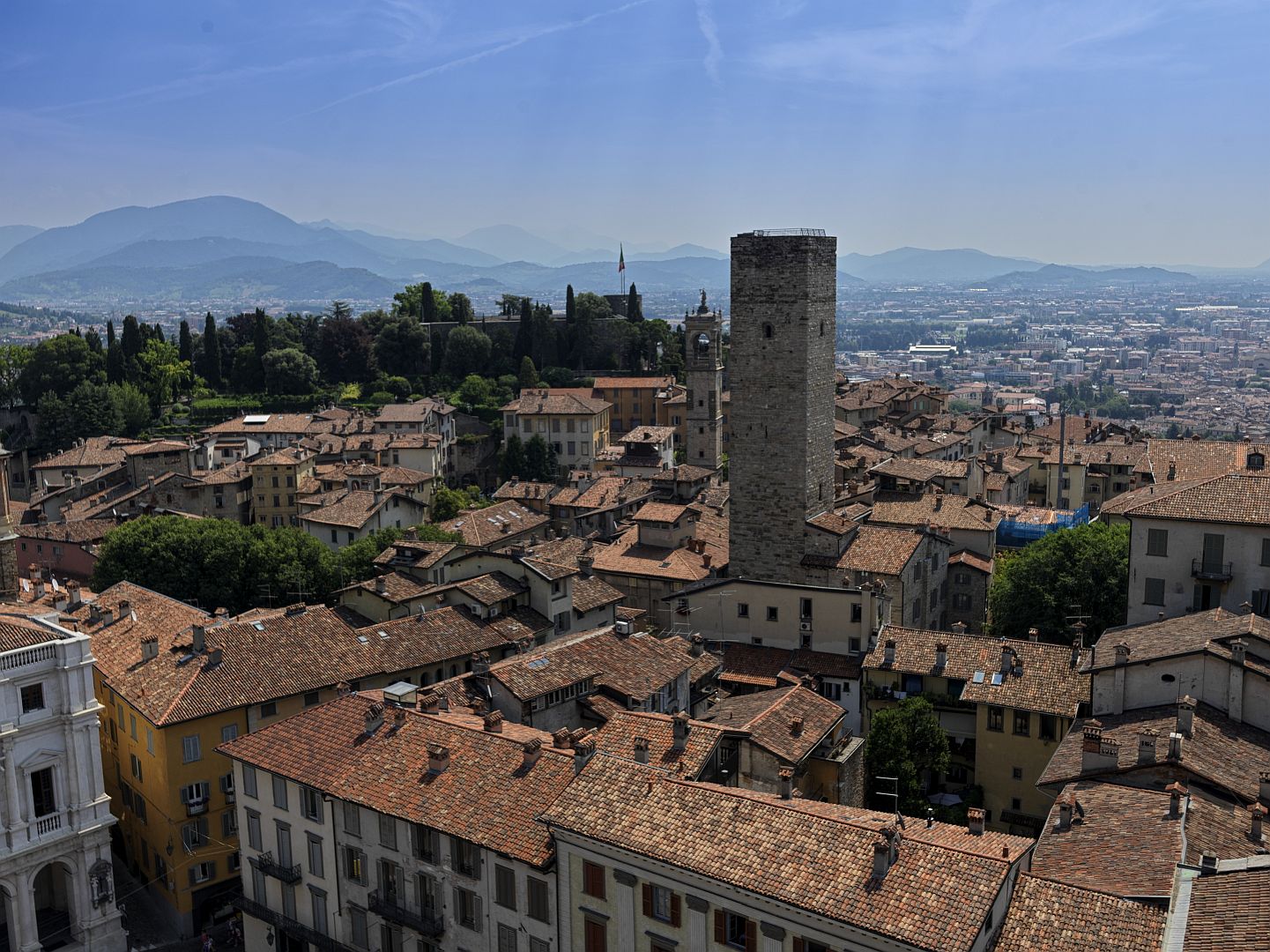
Bergamot from Campanone Torre Civica
Bergamo, the old town from the Campanone Torre Civica. In the distance are the foothills of the Alps on the left, and the new town down on the plain on the right. Hasselblad 501 C/M camera, Zeiss Distagon CF 60mm lens, CFV-50c digital back (click to enlarge).
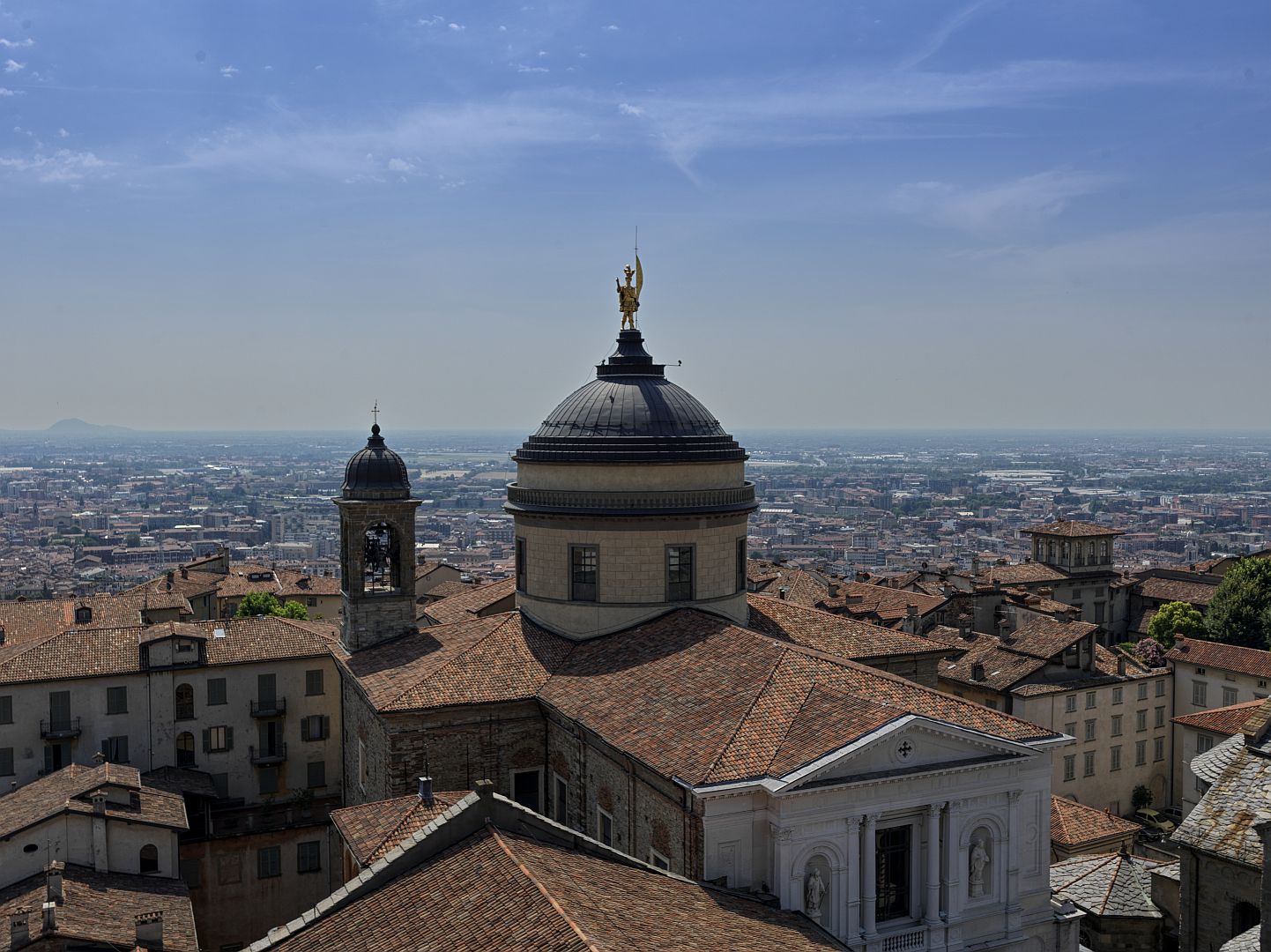
Duomo and Colleoni Chapel
Bergamo, the Duomo and Colleoni Chapel from the Campanone Torre Civica. Hasselblad 501 C/M camera, Zeiss Distagon CF 60mm lens, CFV-50c digital back (click to enlarge).

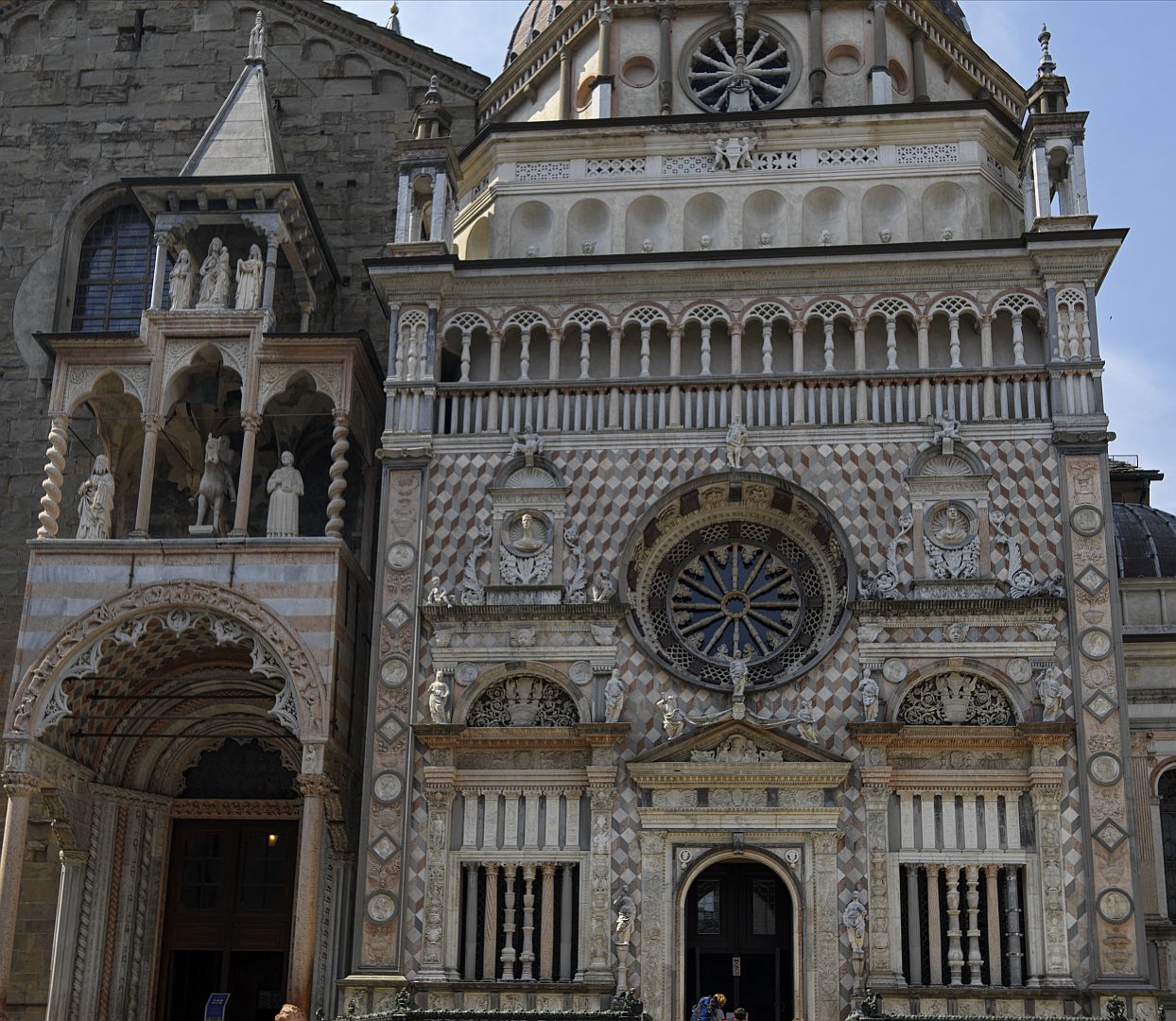
The chapel was probably started before Colleoni’s death, but finished some time afterwards. It contains not only Colleoni’s tomb, but that of one of his daughters, who predeceased him. One curiosity is the columns that make up part of the façade. If you look at the photograph below you will see that the two central columns in each group are rather oddly-shaped, a bit like candlesticks. This is because they are not supposed to be candlesticks, but cannons. Perhaps a strange decoration for a chapel, but apparently not in contemporary eyes.

Colleoni Chapel
Bergamo, the Colleoni Chapel on the right with the entrance to the Duomo on the left. The “cannons” are the curiously-shaped columns in the centre of the groups of columns on either side of the chapel entrance. Hasselblad 501 C/M camera, Zeiss Distagon CF 60mm lens, CFV-50c digital back (click to enlarge).

Although cannons had been around for a century or so already, in the 15th Century improvements in metallurgy and the manufacture of gunpowder meant that they were now more powerful, but also smaller and lighter, so rather than only being useful as static siege engines they could be towed by horses or mules and move with comparative speed from place to place with the armies that deployed them. They were also less likely to burst and kill the gun-laying crew. I read that Colleoni made much use of these more versatile weapons, and hence their commemoration in his chapel.

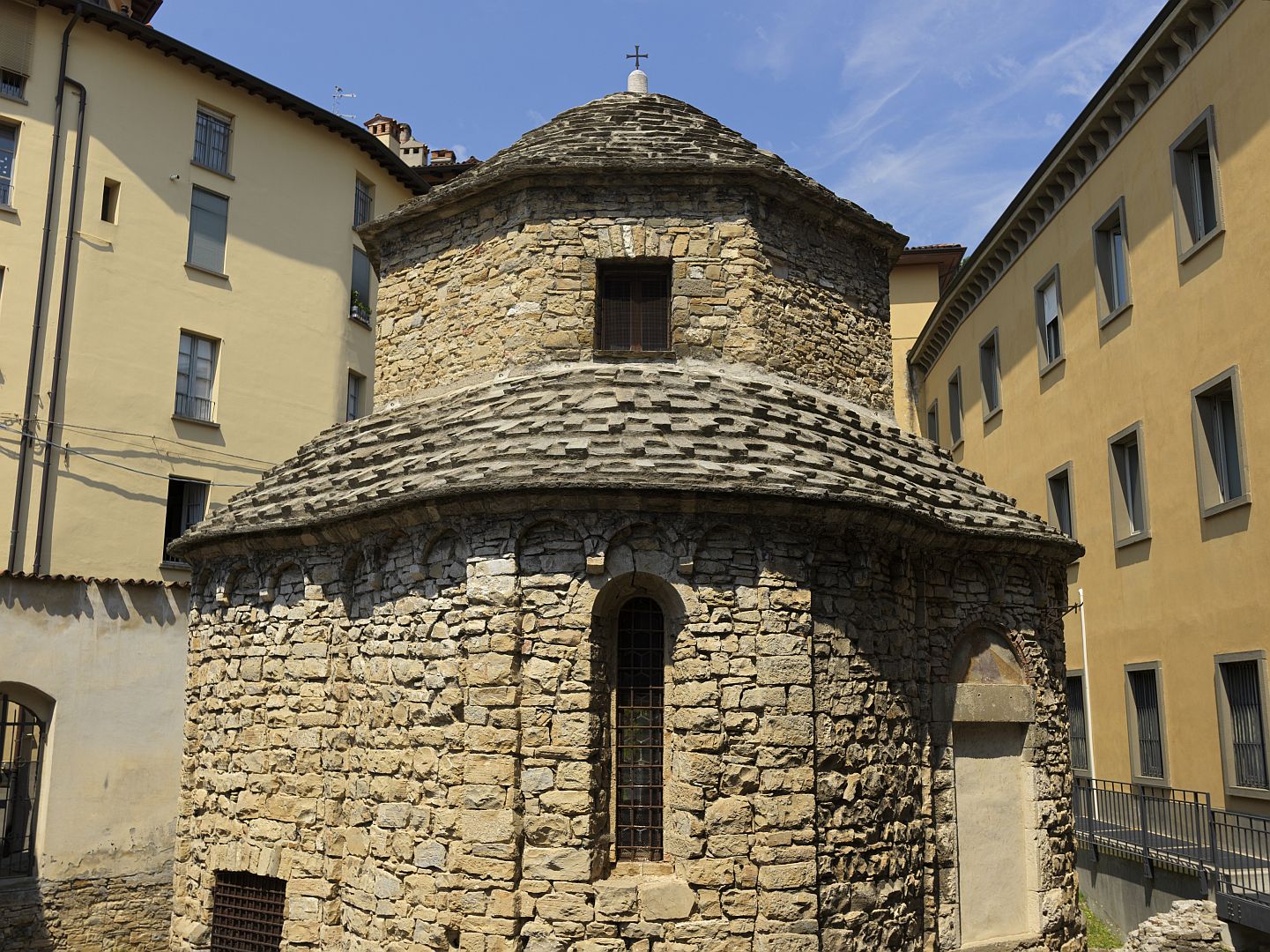
Just behind the Duomo, history nerds can find something as exciting, in its own way, as the later structures. This is the tiny Tempietto of Santa Croce. Much redecorated on the inside, the outside, in what is known as the Lombard Gothic style, looks much as it would have done when built shortly after 1000 AD. And the young Colleoni must have passed it many times, as he would have done again in old age, perhaps while inspecting the site of his future chapel.

Bergamo, the Tempietto di Santa Croce. Hasselblad 501 C/M camera, Zeiss Distagon CF 60mm lens, CFV-50c digital back (click to enlarge).

In 1475 news reached Venice that Colleoni was dying, and emissaries were sent to Malpaga to pay their respects. Venice was facing hard times after a ruinously expensive war against the Turks in the east, so it would have come as a very pleasant surprise when Colleoni told them that he was leaving the bulk of his vast fortune to the Venetian treasury. It is said that they then asked the old warrior for some words of advice on securing the safety of the Republic. His answer was sobering: “Never again give anyone as much power as you gave me. I could have done you much harm”.

The Verrocchio Sculpture

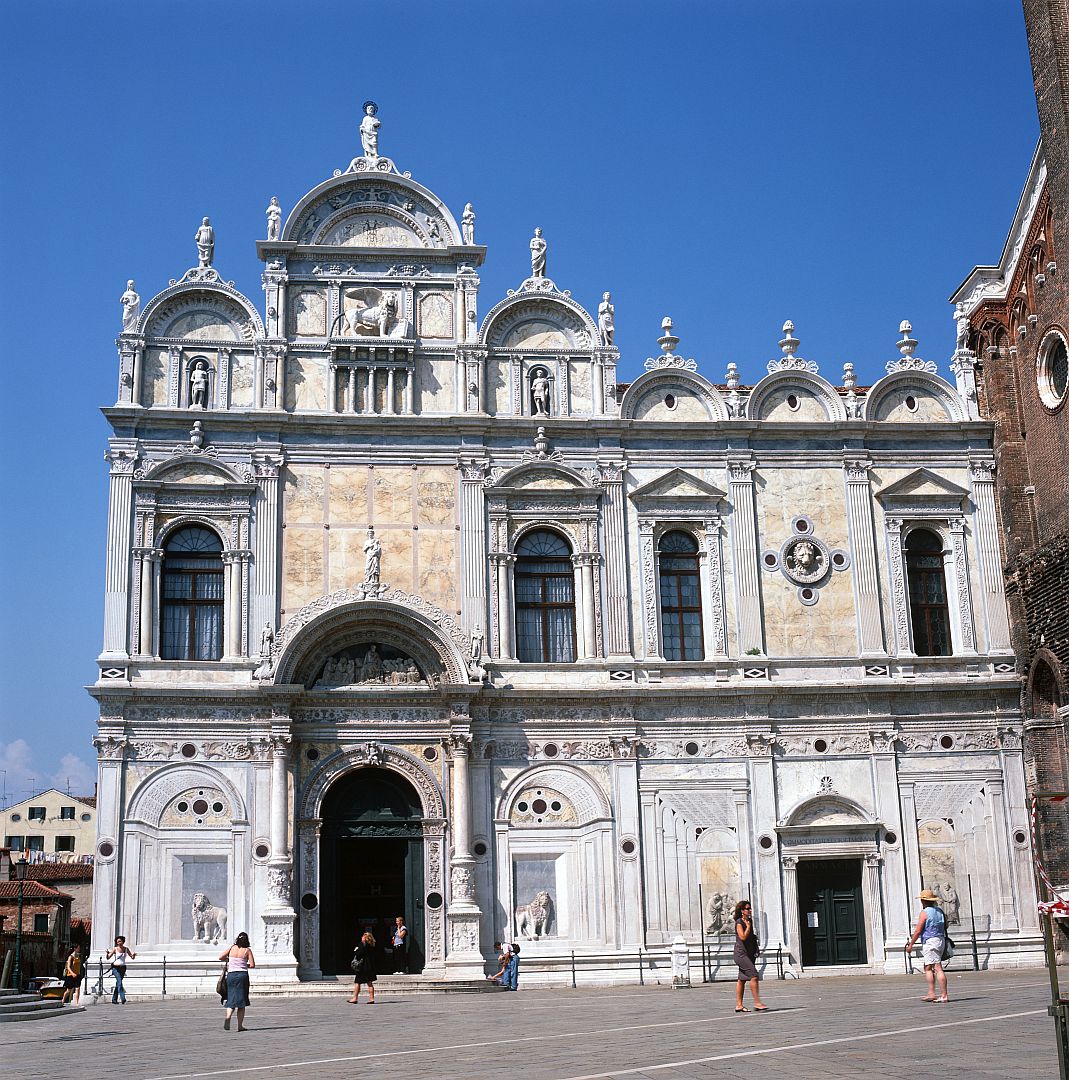
Colleoni’s generous bequest to Venice came with one condition: that they erect a statue of him in St Mark’s Square. This was a problem, as by tradition no statue had ever been placed in the square (and never would be – even Victor Emmanuel had to put up with a location round the corner on the Riva degli Schiavoni). But they needed the money, so a solution had to be found. The solution – which John Julius Norwich describes as typically Venetian, was to place the statue not in St Mark’s Square, but outside the Scuola Grande of St Mark – then the home of one of Venice’s wealthy confraternities, and now the hospital.

Scuola Grande di S Marco
The Scuola Grande di San Marco, now what must be one of the most elegant hospitals anywhere. Hasselblad 501 C/M camera, Zeiss Distagon CF 60mm lens, CFV-50c digital back (click to enlarge).

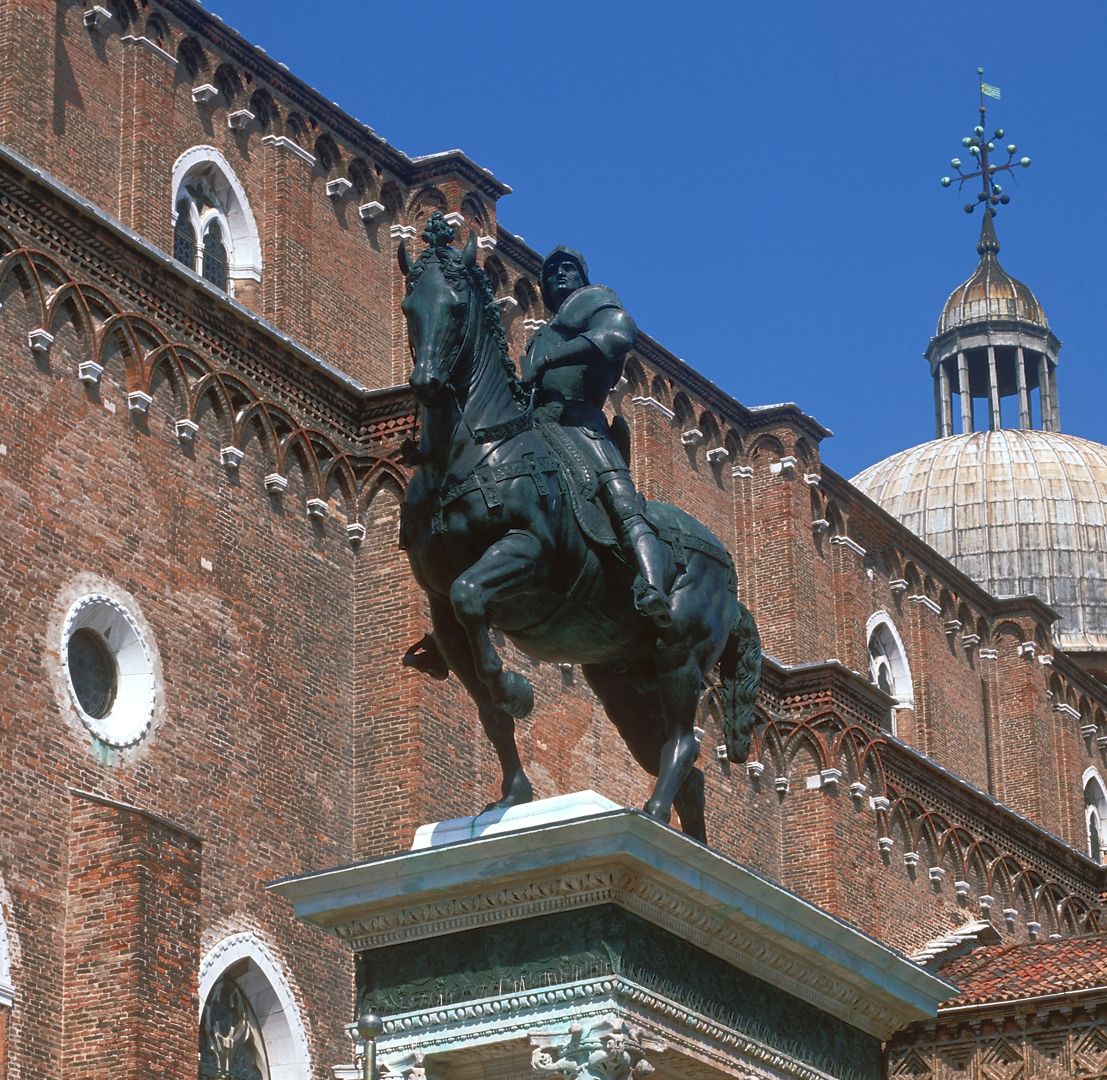
So it was a bit sneaky, but on the other hand the Scuola Grande is a very impressive building, and the statue itself, by the Florentine master Andrea del Verrocchio, the teacher of Leonardo da Vinci, is magnificent. Casting free-standing equestrian figures in bronze was still a newly-rediscovered technique (Donatello’s recent statue of Gattamelata in Padua was the first since antiquity).

Verrocchio statue of Colleoni
Verrocchio’s statue of Colleoni in the Piazza Zanipolo (which is what the Venetian dialect does to the words “Giovanni e Paolo”). The Church of SS. Giovanni e Paolo is behind. Hasselblad 501 C/M camera, Zeiss Distagon CF 60mm lens, CFV-50c digital back (click to enlarge).
Pedestal of Verrocchio statue
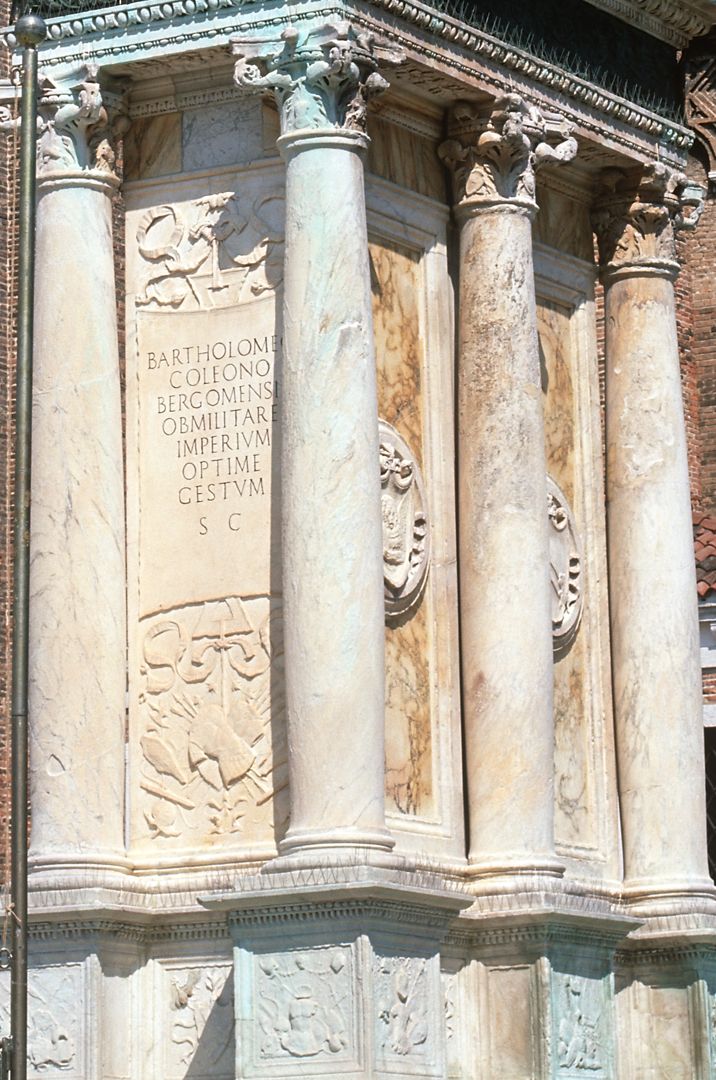
Pedestal of the Verrocchio statue. The Latin inscription reads – I think – “To Bartolomeo Colleoni of Bergamo, for the best management of military command”. I think also that the “S.C.” means “by order of the senate”. Hasselblad 501 C/M camera, Zeiss Distagon CF 60mm lens, CFV-50c digital back (click to enlarge).

Verrocchio’s statue has both the horse and its rider radiating power and determination, with Colleoni’s armoured shoulder thrust forward purposefully on his way to vanquish another enemy of Venice. While not taking away from Donatello’s Gattamelata, I think that Verrocchio’s Colleoni is the superior work. Firstly because of the vigour and air of command of its subject, but also technically. You can’t see it in my earlier photograph of Gattamelata because of my artful composition, but in fact the leading hoof of Gattamelata’s horse rests on a bronze sphere, thus the statue is supported on four points. Verrocchio, on the other hand, manages the trickier problem of balancing the whole (doubtless very heavy) statue on three points, with the front hoof defiantly held aloft. This of course adds considerably to the sense of movement.

So while the signoria of Venice may not have entirely met their obligations under the bequest, one hopes that Colleoni wouldn’t have been too upset.

Insults

There are some negative stereotypes which the unfortunate Bergamaschi have had to put up with over the centuries – the politest form of which is that they are a bit unsophisticated. At worst they are portrayed as uncouth, ignorant bumpkins. In music, a bergamasca is a rustic dance, and in A Midsummer Night’s Dream Shakespeare has his “rude mechanicals” perform a “Bergomask”.

I had assumed that the origin of this prejudice was among the snooty Milanese (perhaps a bit jealous of Bergamo’s cool hilltop in summer). As a former resident of Queanbeyan, I know what it is to be looked down upon by one’s neighbours.

That may well be true, but more recently I discovered that a prime culprit was Baldassare Castiglione, who while he didn’t invent the insult, certainly gave it wide publicity in his book Il Cortegiano or The Book of the Courtier. I mentioned this book in my first post on the “Ideal Renaissance City” of Urbino and it was a real 16th-Century bestseller, spreading the novel idea that aristocrats needed to cultivate skills other than bashing each other over the head.

While I suppose Castiglione needed some homespun hearties to contrast with the elegant and refined courtiers of jewel-like Urbino, he could perhaps have made the location a bit less specific. I think a little less of him now (and I bet he wouldn’t have had the nerve to say it in front of Colleoni).

Odds and Ends

The name Bartolomeo Colleoni rang a faint bell in my memory, and eventually I realised that it was familiar to me from naval history. In the 1920s the Italian government commissioned a new class of light cruisers, named after Renaissance military leaders, and one of them was the Bartolomeo Colleoni. Unfortunately, as with all light cruisers, they compromised on the armour for the sake of speed and firepower, and the Colleoni was sunk by the Australian cruiser HMAS Sydney and a force of British destroyers in the Battle of Cape Spada in 1940.

Another thing associated with Bergamo is that this was one of the first places outside China where COVID-19 hit hard early on, overwhelming the local mortuaries and forcing the Italian Army to lay on convoys to take the many bodies away at night, while the world looked on in horror. At least the ordeal of the people of Bergamo allowed the rest of the world a little warning of what to prepare for.

A final fact about Bergamo is that it is probably not the origin of the word bergamotto (French bergamot) – referring to the highly-perfumed citrus that is responsible for the talcum-powder scent of Earl Grey tea. It is more likely to be an Italianisation of the Turkish name of the fruit, which just happens to sound a bit similar.

Lake Maggiore and the Borromean Islands

Lake Maggiore is the largest of the north Italian lakes, sitting between between Lombardy, Piedmont and Switzerland. The area has some famous attractions, such as the Borromean Islands, and some less famous but very worthy ones.

This post describes a visit we made there a few years ago (pre-COVID). We flew from Australia, and thanks to a delayed flight from Melbourne we missed a connection in Dubai, arriving at Milan six or seven hours late. We then drove into the mountains above Lake Maggiore, arriving very late in the evening where our kindly hosts were still waiting to let us into the property.

The property was located in the strip of cleared land that lies under the cable car connecting the town of Stresa on the lake shore with the top of Mount Mottarone. That gave us some wonderful views, and since the cable car was not then in operation, it was very quiet.

Note: this is the cable car that was involved in a terrible accident in 2021. Investigators found that a safety mechanism had been deliberately disengaged.

Lake Maggiore
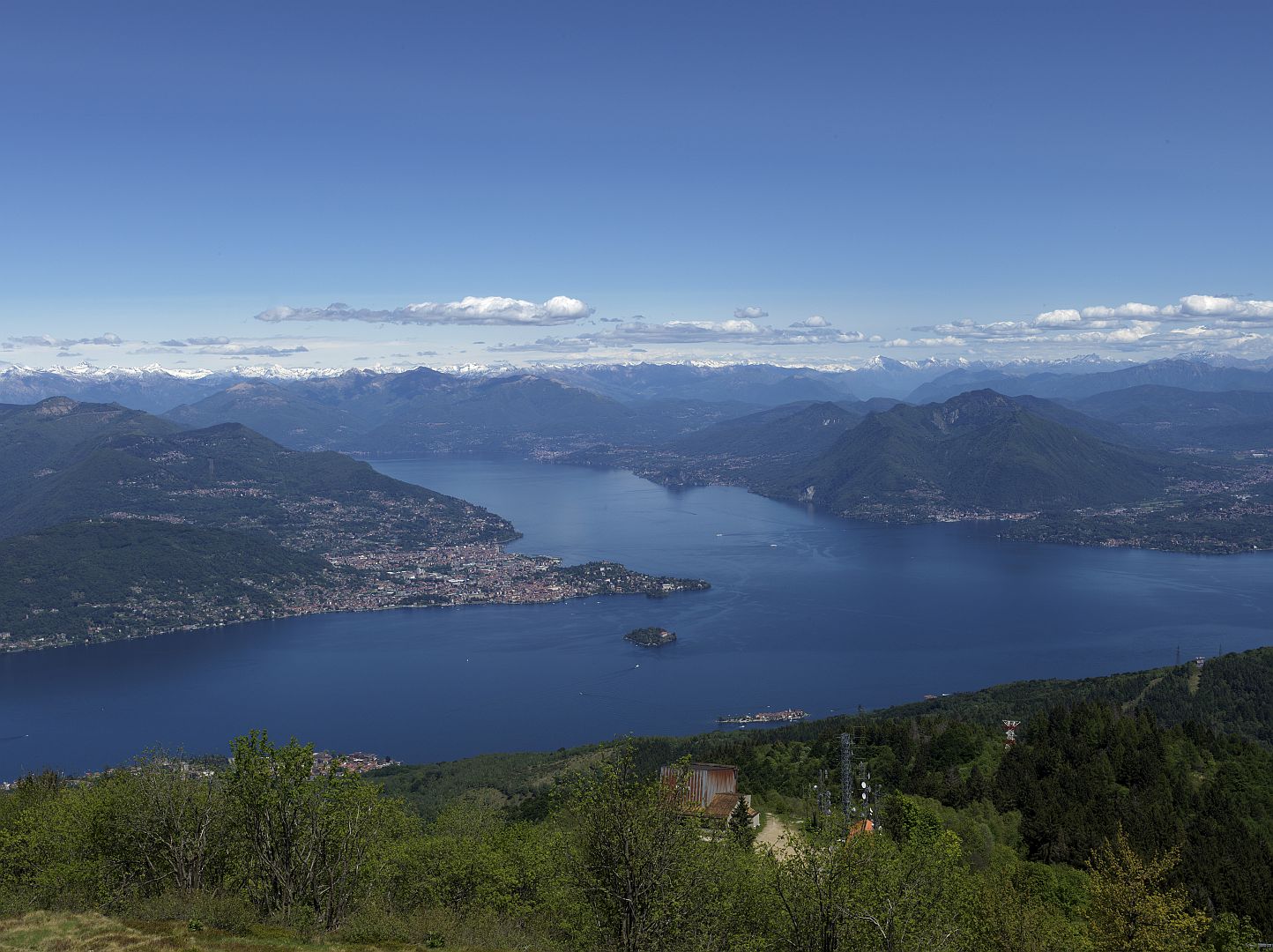
Lake Maggiore, from the slopes above Stresa, looking north to the town of Verbania and beyond to Switzerland. Hasselblad 501C/M camera, Zeiss Sonnar CF 150mm lens, CFV-50C digital back (click to enlarge).

The day after we arrived saw storms and cold weather. The day after that was clear and sunny, and thanks to the bad weather the day before, there had been an unseasonable (it was May) dump of snow on the mountains, making excellent conditions for photography.

Geology

The great lakes of Northern Italy – Maggiore, Como and Garda, were all formed by glacial action in the Ice Age, and thus run roughly from north to south, from the Alps down towards the Po Valley. The Alps, formed by the collision of tectonic plates, run more or less east-west here. This is particularly clear in the case of Lake Maggiore, and makes for some spectacular scenery, particularly from the top of Mottarone, looking northwards to where the Lake enters Switzerland.

Lake Maggiore from Mottarone
Lake Maggiore looking north-east from the top of Mottarone. Hasselblad 501C/M camera, Zeiss Distagon CF 60mm lens, CFV-50C digital back (click to enlarge)

Stresa

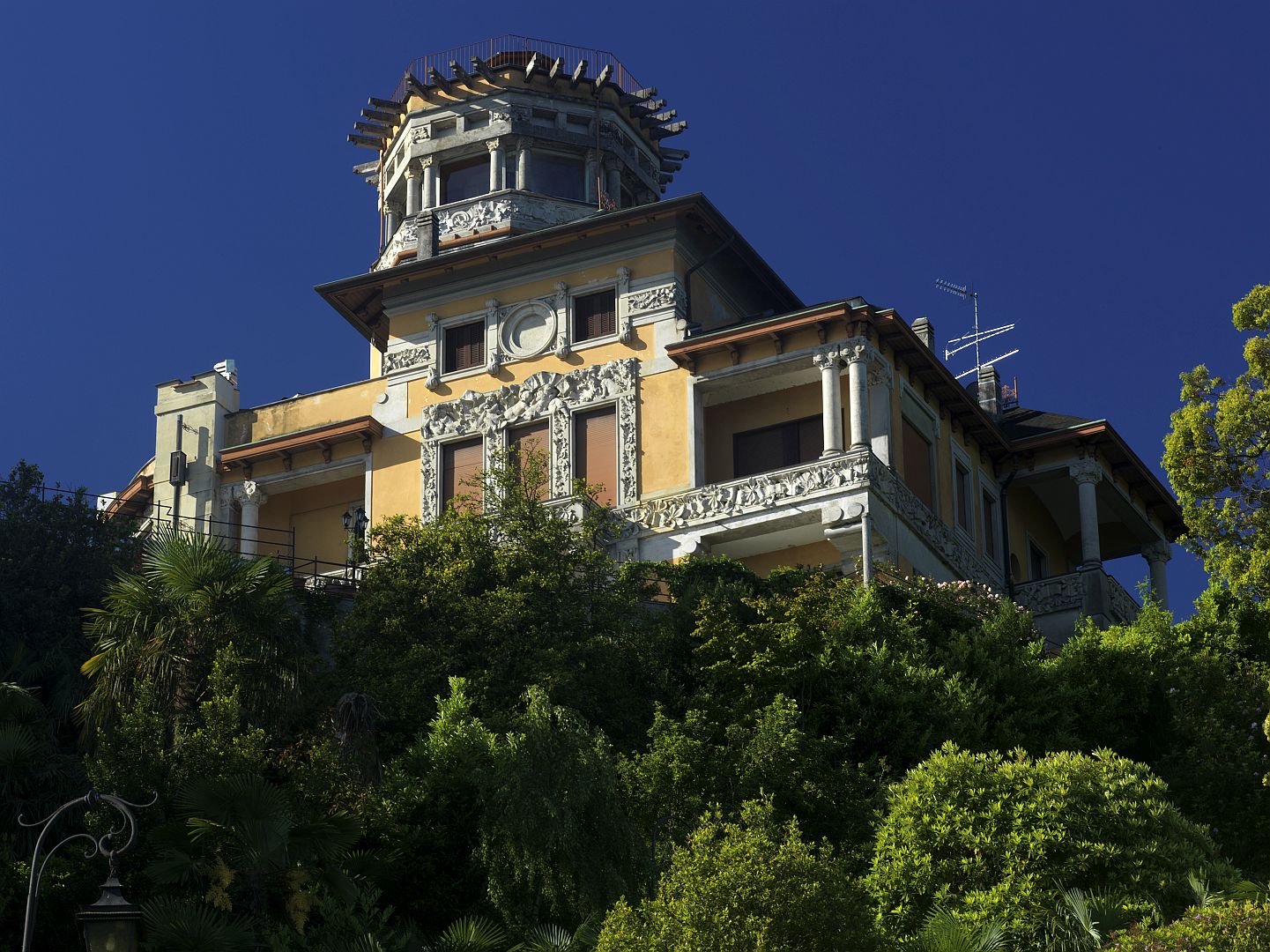
Stresa, while apparently of medieval origin, is today largely a 19th-Century resort town with some large hotels, and villas which are a bit architecturally reminiscent of Victorian-era post offices and fire stations in parts of provincial Australia. It therefore has a slightly faded death-in-Venice atmosphere and one can easily imagine chaps in top hats strolling along the lake front and helping ladies down from carriages. Still, as resort towns go it is an excellent example of the breed, and the scenery obviously keeps the tourists coming in the 21st Century.

Stresa Villa
Stresa, an ornate villa. Hasselblad 501C/M camera, Zeiss Distagon CF 60mm lens, CFV-50C digital back (click to enlarge)
Stresa
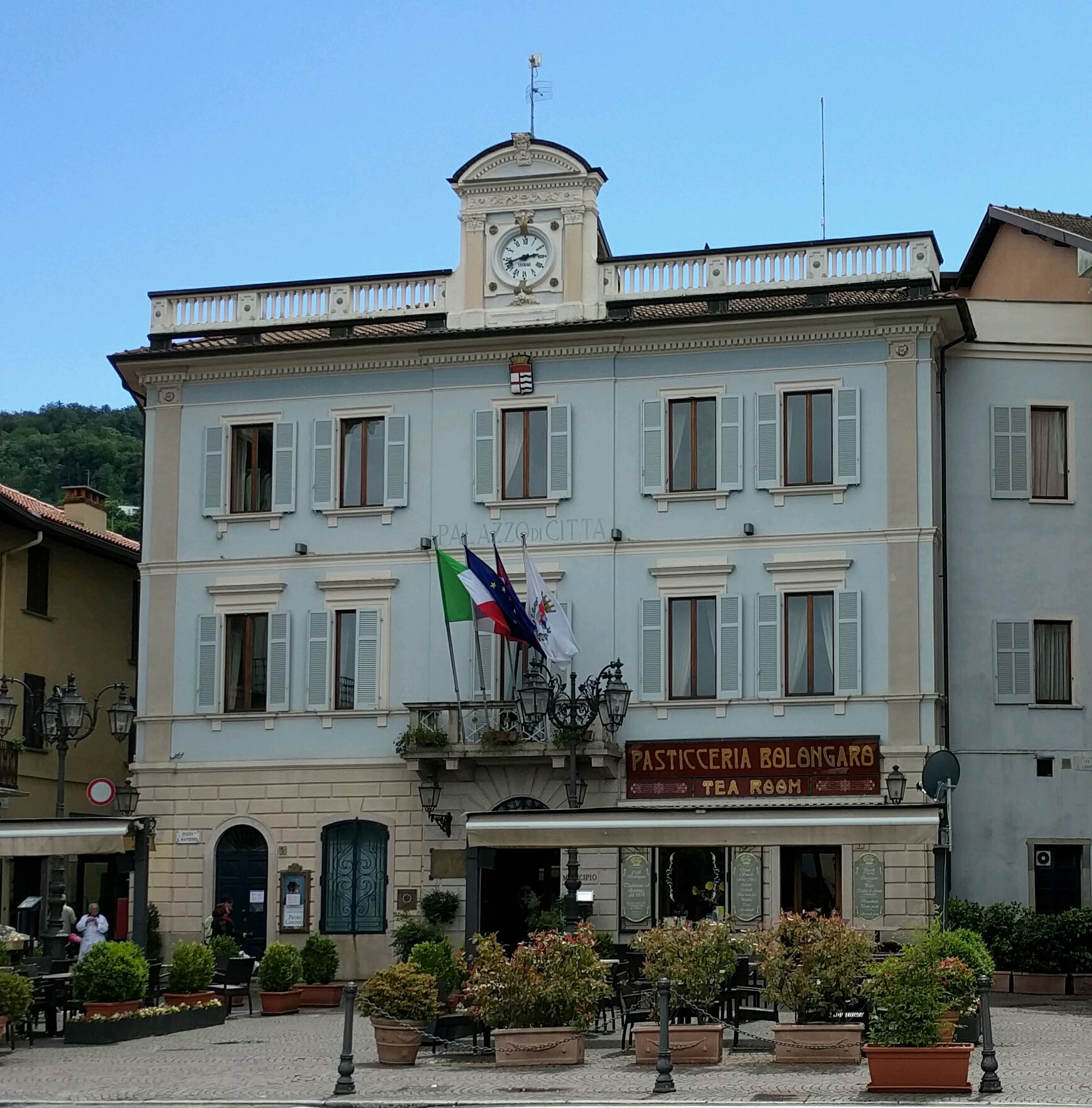
Stresa, Palazzo di CIttà and Tea Rooms. Google Nexus 6P phone camera (click to enlarge).

Lago d’Orta

We were struck by how comparatively few medieval buildings there were around, compared with further south in Italy. I suppose that, it being a wealthy area, people could afford to knock their old places down and rebuild.

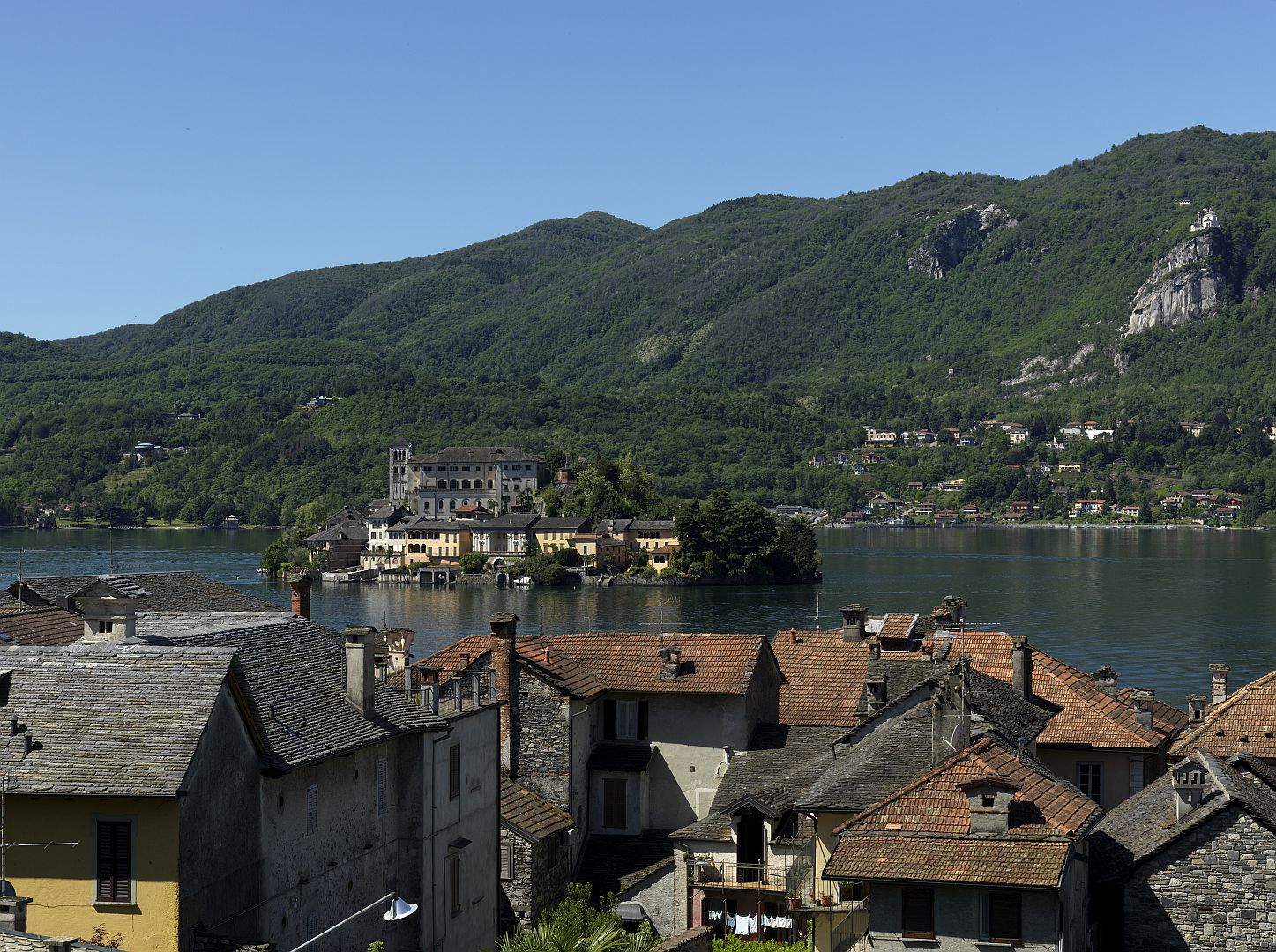
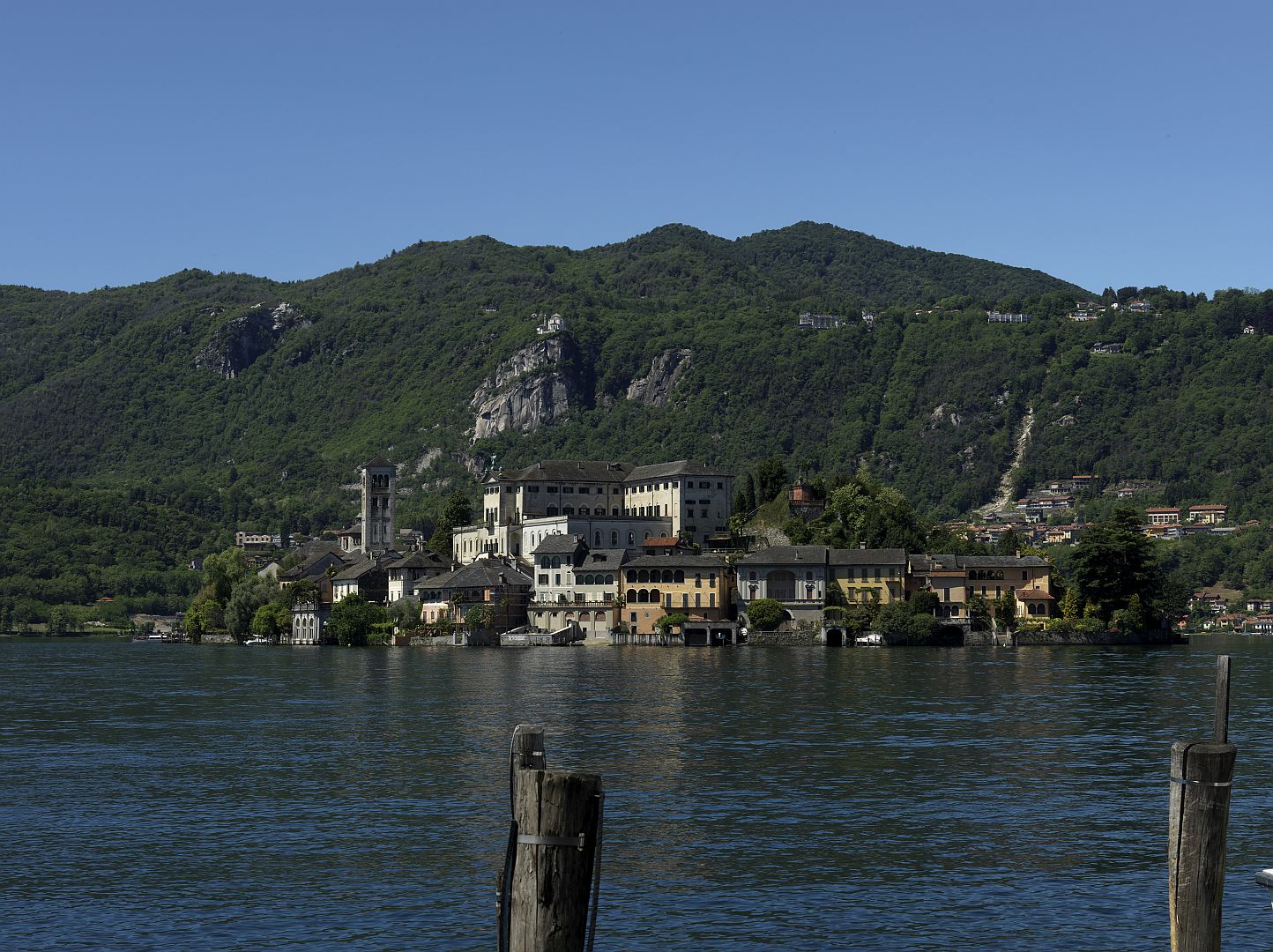
In any case, if it is medieval that you want, a visit to the Lago d’Orta not far away will satisfy you. Lake Orta, just west of Lake Maggiore, is much smaller but formed by the same glacial system. The main town on the lake is Orta San Giulio, named after a Saint Julius who died on the little island nearby and was commemorated by a small oratory there from the 5th Century (completely obliterated by later buildings). The island appears to be some sort of pilgrimage centre these days, but whether this is due to a surviving cult of St Julius or for some other reason I was unable to establish.

Orta San Giulio
The Island of Isola San Giulio, from the town of Orta San Giulio. Hasselblad 501C/M camera, Zeiss Sonnar CF 150mm lens, CFV-50C digital back (click to enlarge)
Isola San Giulio
Isola San Giulio from the shores of Lake Orta. Hasselblad 501C/M camera, Zeiss Sonnar CF 150mm lens, CFV-50C digital back (click to enlarge).

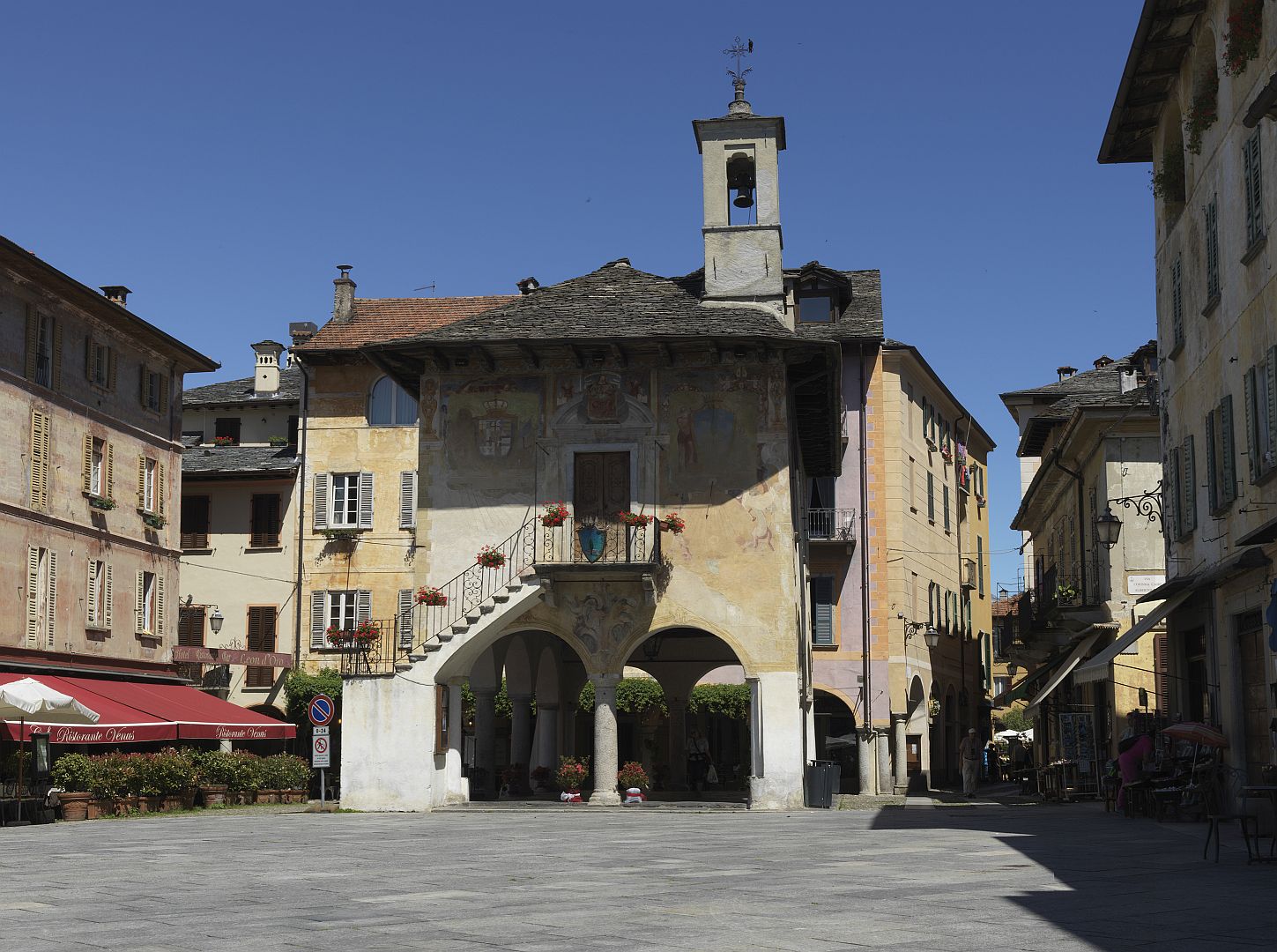
There is a splendid medieval town hall in the middle of the town. This presented a slight photographic challenge, which I will discuss later.

Orta San Giulio
Orta San Giulio, Palazzo della Comunità. Hasselblad 501C/M camera, Zeiss Distagon CF 60mm lens, CFV-50C digital back. Multiple images combined in Photoshop (click to enlarge).

The Borromean Islands

For us, as for many other visitors, the main attraction of the region was a visit to the Borromean Islands. What are they? Well, in Lake Maggiore, just off the shore from Stresa, are three large islands – Isola Bella, Isola dei Pescatori, Isola Madre plus a couple of little ones – and they are owned by the Borromeo Family. This family started out in Milan around 1300 and is still going today – I believe the heir to the family title is a countess who is married to the head of the FIAT empire.

On the way to today they got very rich, produced several cardinals (but no popes) and one saint. The saint (San Carlo Borromeo) was archbishop of Milan during the 16th Century and was canonised not for extraordinary acts of piety but for playing a major part in the purification of the Catholic Church from corruption and the overhaul of doctrine that we call the Counter-Reformation. A bit like getting an Order of Australia for conspicuous service in public administration.

Isola Bella

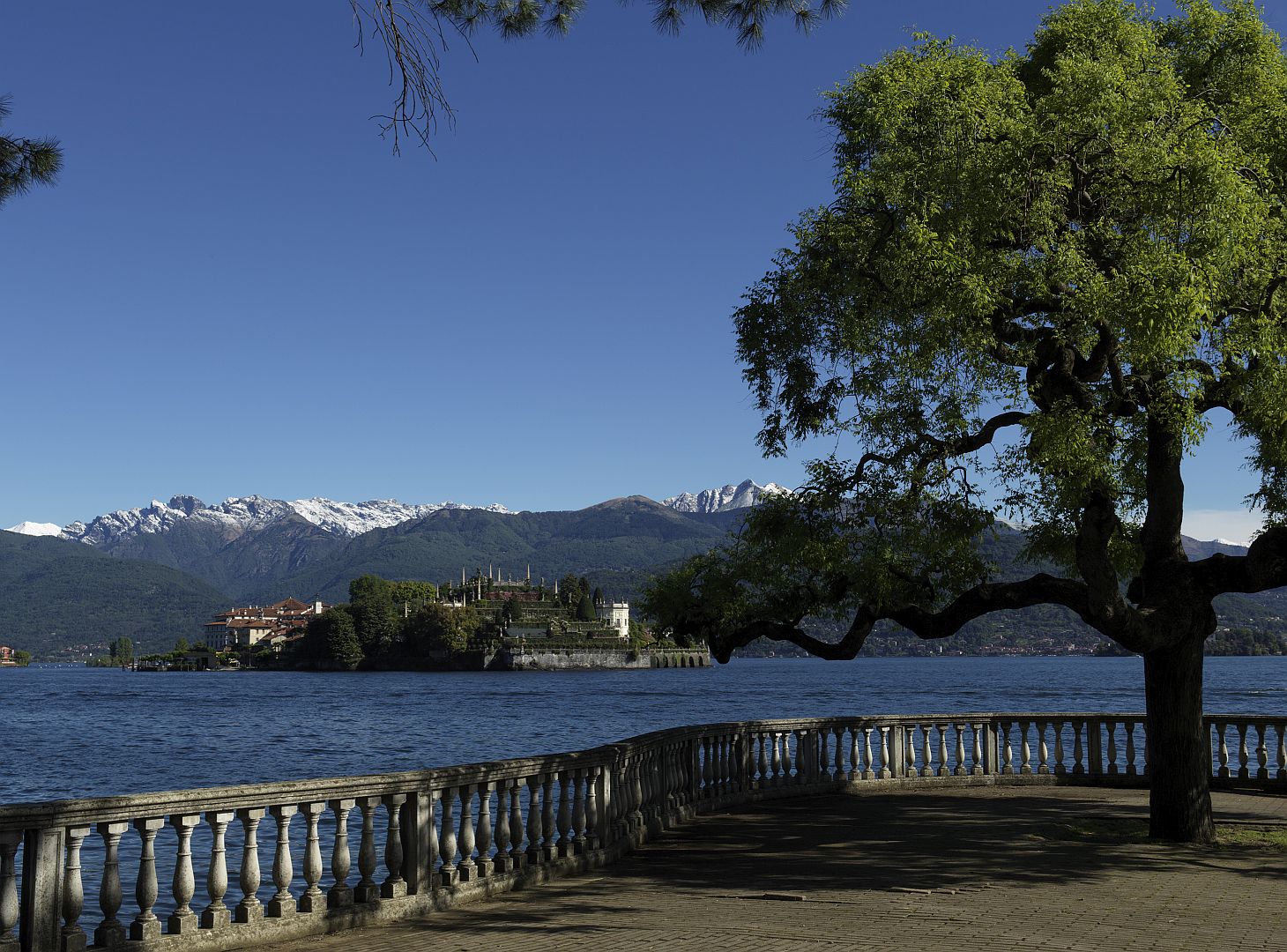
The Borromeo Counts started acquiring the islands in the 16th Century, and in the 17th Century Count Carlo III renamed one of them Isola Bella after his wife, as a present. It means “Beautiful Island”, but it was also a pun on her name, which was Isabella. He then built a palace at one end and started an extraordinary baroque garden at the other, also as a present.

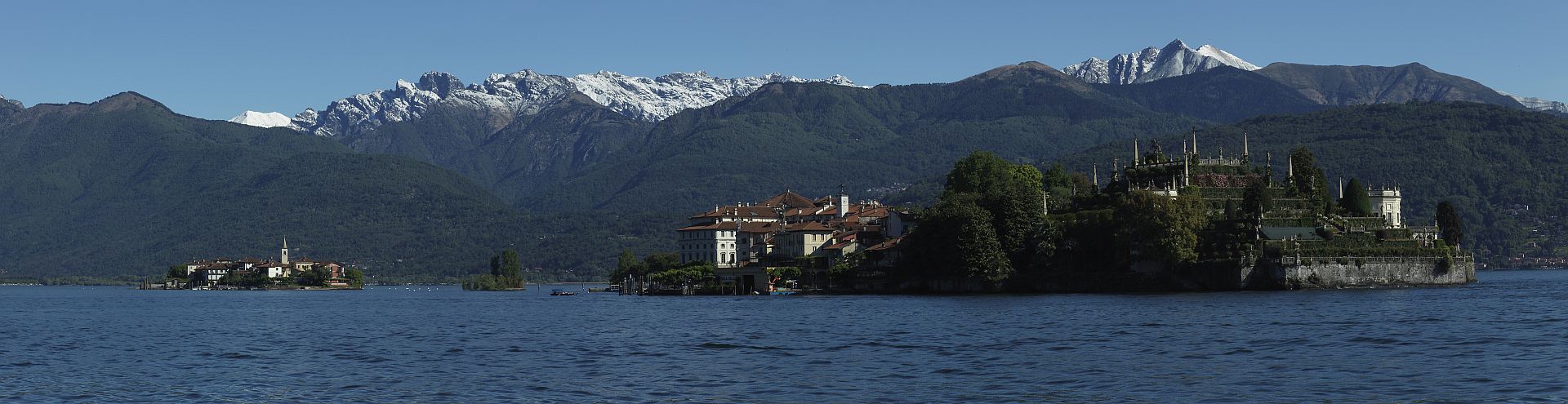
Isola Bella and Isola dei Pescatori
Isola Bella and Isola dei Pescatori. Hasselblad 501C/M camera, Zeiss Distagon CF 60mm lens, CFV-50C digital back. Four images stiched in Photoshop (click to enlarge).

Actually, the count didn’t manage to buy all of Isola Bella. A few indomitable fishermen refused to sell, doubtless with an eye to the profits of the tourist trade in four hundred years’ time, so there is now a small disorderly village running along a part of the lake front, all now converted into souvenir shops and the like.

Isola Bella
Isola Bella from the lake shore. The palace is at the back of the island in this view, the gardens at the front. Hasselblad 501C/M camera, Zeiss Distagon CF 60mm lens, CFV-50C digital back (click to enlarge).

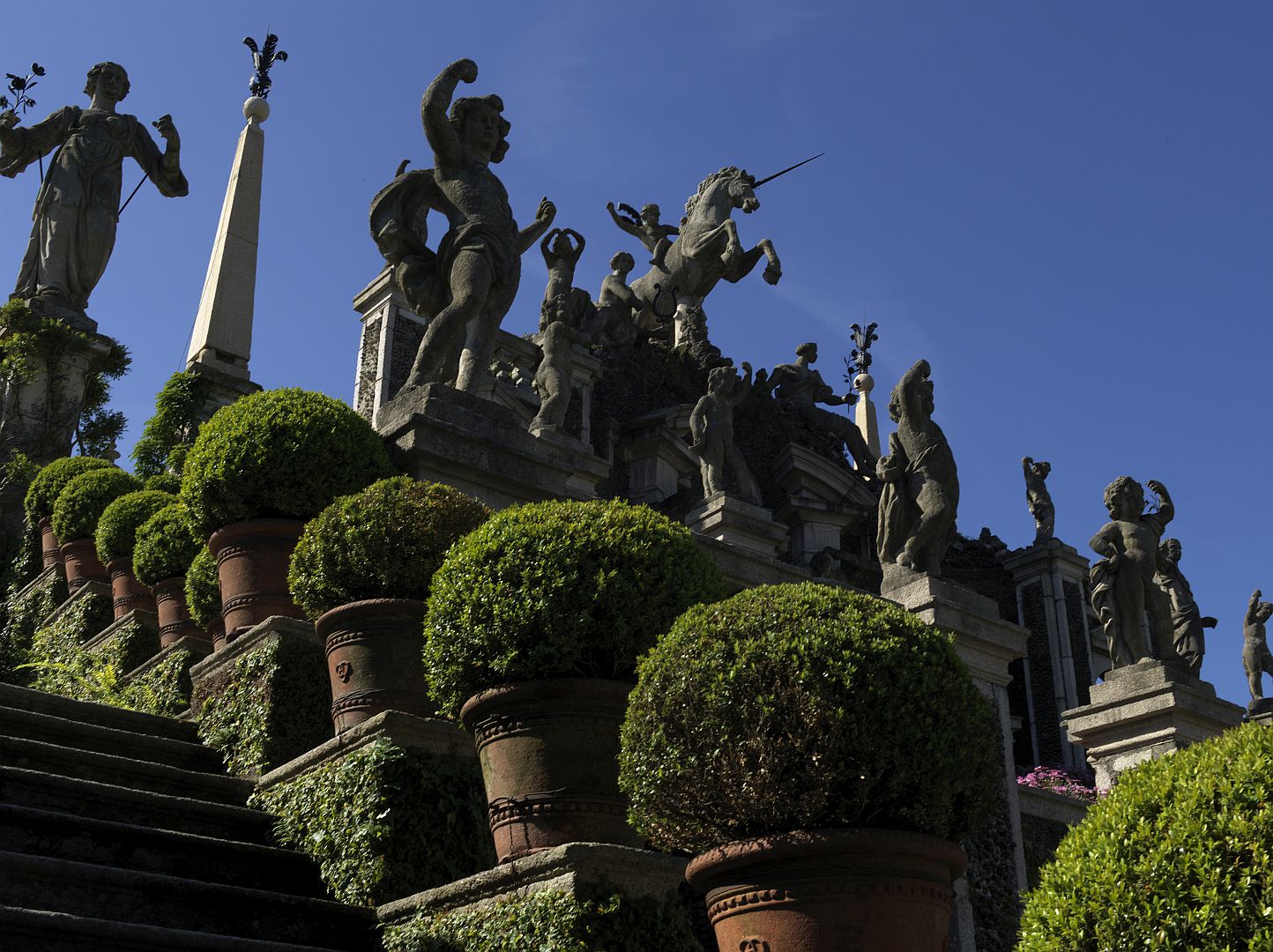
The garden was completed by his next few successors, who had large quantities of soil ferried across to build up a series of monumental terraces. These were exuberantly decorated with statues, including several unicorns, a reference to the Borromeo coat of arms.

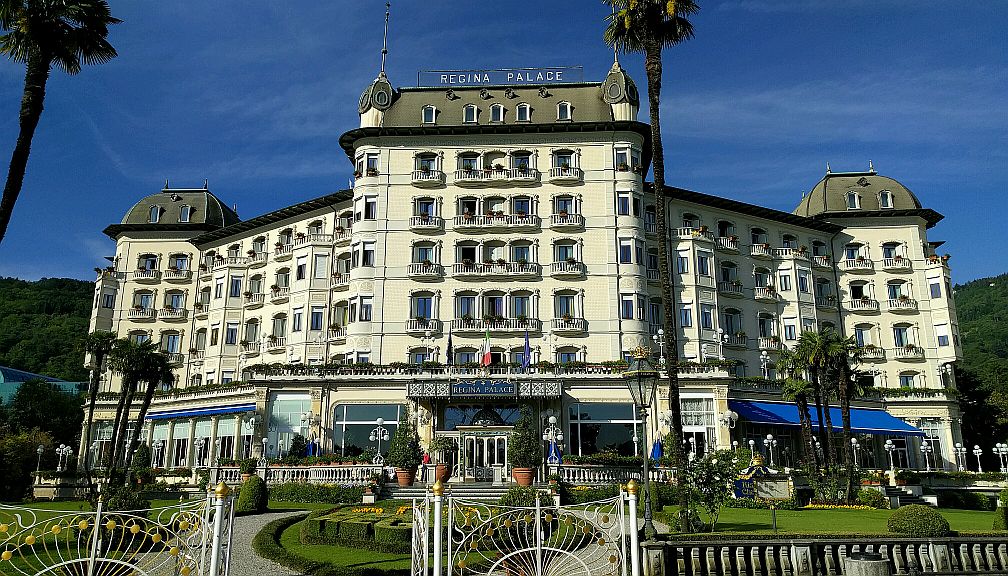
We turned up in Stresa nice and early, early enough to get a free car park opposite the extraordinary Regina Palace Hotel (picture below). Then we walked to the ferry terminal and bought what was basically an all-day ticket for the central section of the Lake Maggiore public ferry system – doubtless for a good deal less than it would have cost to get a ticket to the islands with one of the private tour companies.

Regina Palace Hotel
Stresa, Regina Palace Hotel. Google Nexus 6P phone camera (click to enlarge).

Having started early we therefore ended up on the first public ferry service to Isola Bella for the day. A couple of large French tour groups on private boats had beaten us there. To get to the gardens you have to buy a ticket to the palace, and go all the way through the palace. We took a tactical decision to do a speed tour of the palace and get to the gardens as quickly as possible. This was complicated by the tour groups who would spread out to block access to whichever room they were in but once it became clear that they were not going to move aside for us voluntarily, we did a bit of “scusi… scusi… scusi…” harassment and eventually penetrated their cordon sanitaire and made it into the gardens first. We had the gardens on Isola Bella all to ourselves, in beautiful weather, for probably fifteen minutes before the next few intrepid types broke through the French blockade.

Isola Bella
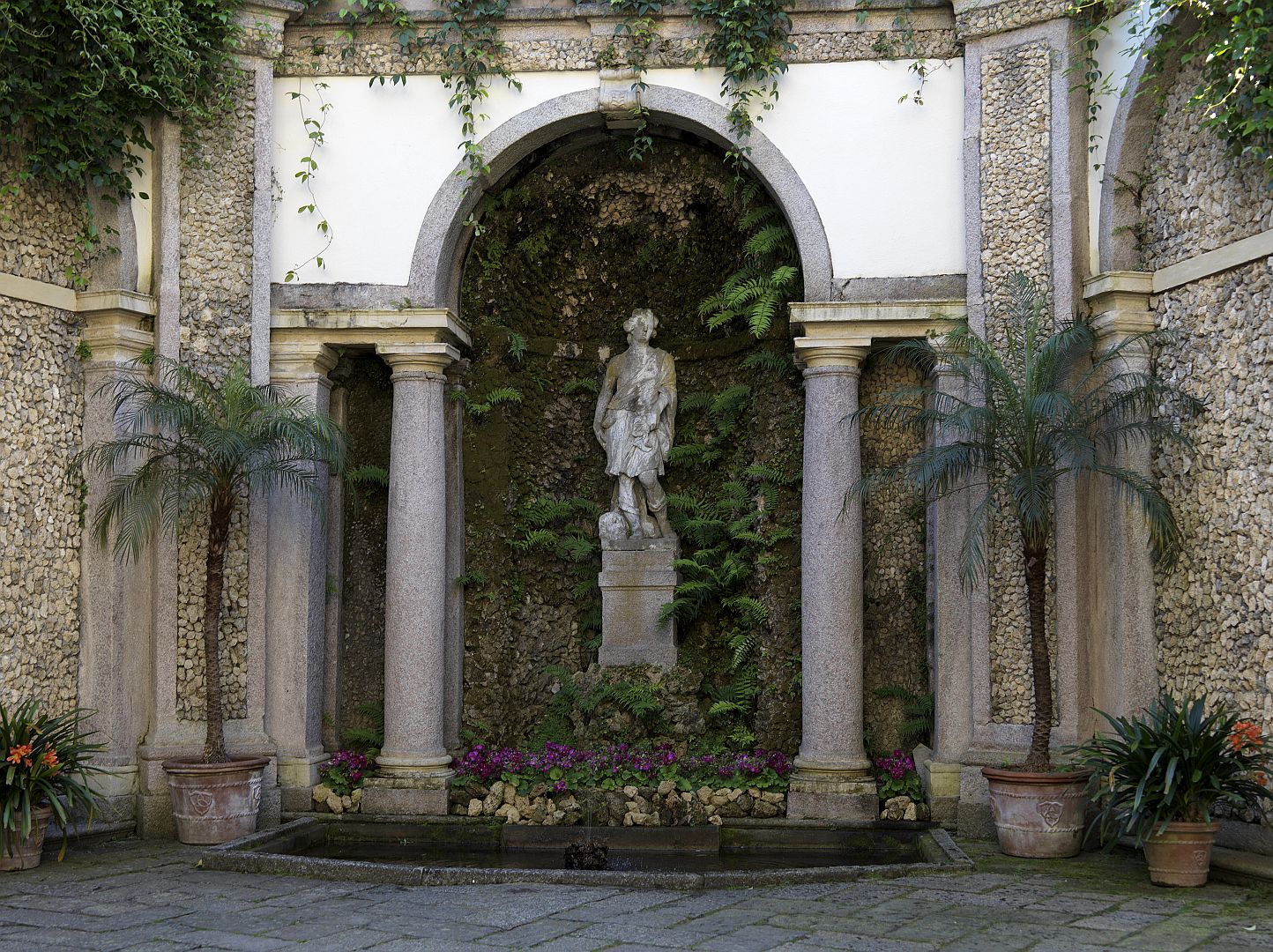
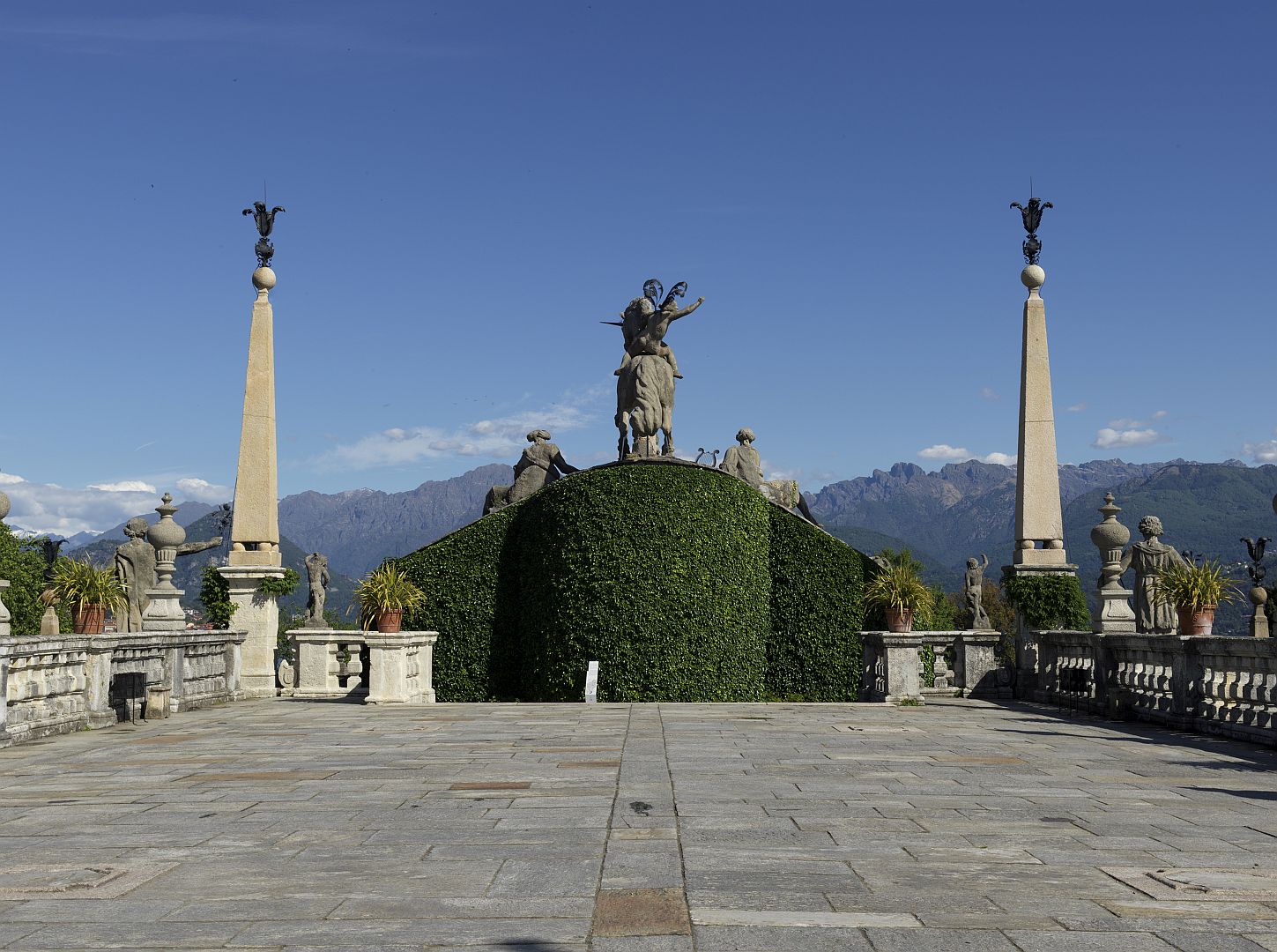
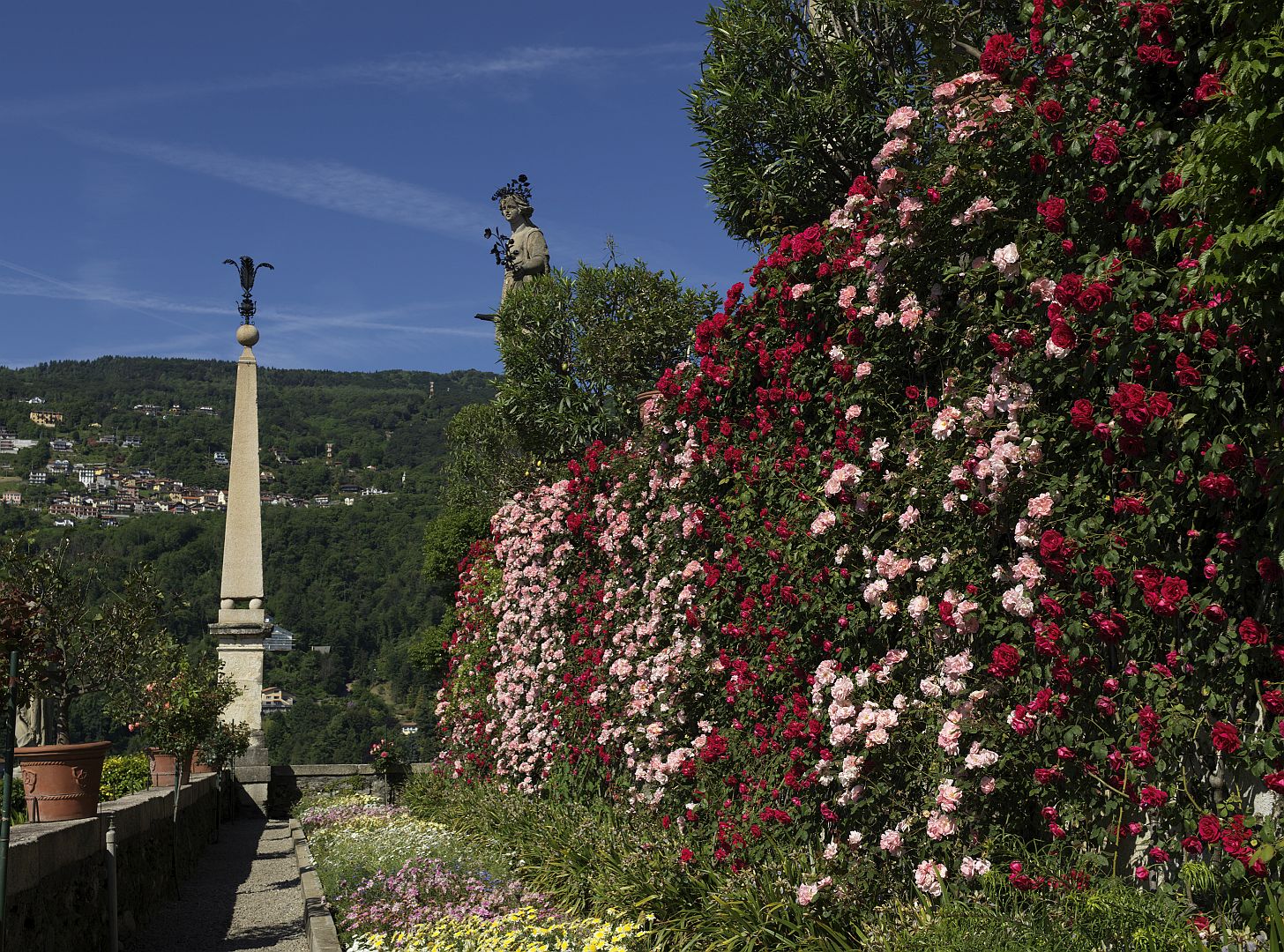
Isola Bella; the gardens. Hasselblad 501C/M camera, Zeiss Distagon CF 60mm lens, CFV-50C digital back (click to enlarge).
Isola Bella
Isola Bella; the gardens. Hasselblad 501C/M camera, Zeiss Distagon CF 60mm lens, CFV-50C digital back (click to enlarge).
Isola Bella
Isola Bella; the gardens. Hasselblad 501C/M camera, Zeiss Distagon CF 60mm lens, CFV-50C digital back (click to enlarge).
Isola Bella
Isola Bella; the gardens. Hasselblad 501C/M camera, Zeiss Distagon CF 60mm lens, CFV-50C digital back (click to enlarge).
Isola Bella
Isola Bella; the gardens. Hasselblad 501C/M camera, Zeiss Distagon CF 60mm lens, CFV-50C digital back (click to enlarge).
Isola Bella
Isola Bella; the gardens. Hasselblad 501C/M camera, Zeiss Distagon CF 60mm lens, CFV-50C digital back (click to enlarge).
Isola Bella
Isola Bella; the gardens. Hasselblad 501C/M camera, Zeiss Distagon CF 60mm lens, CFV-50C digital back (click to enlarge).
Isola Bella
Isola Bella; the gardens. Hasselblad 501C/M camera, Zeiss Distagon CF 60mm lens, CFV-50C digital back (click to enlarge).

Isola dei Pescatori

The “Island of the Fishermen” is the next largest of the islands, and the only one to have a permanent population, albeit a small one. Having finished in the gardens at Isola Bella we made our way to the ferry jetty where one was just arriving and we hopped on to get to Isola dei Pescatori. There we found a little waterfront place called Trattoria Toscanini where we had a drink and watched the motor boats buzzing back and forth. The famous conductor wasn’t a local boy, but was apparently a regular visitor.

Isola dei Pescatore
Isola dei Pescatore. Hasselblad 501C/M camera, Zeiss Distagon CF 60mm lens, CFV-50C digital back (click to enlarge).
Isola dei Pescatore
Isola dei Pescatore. Hasselblad 501C/M camera, Zeiss Distagon CF 60mm lens, CFV-50C digital back (click to enlarge).
Isola dei Pescatore
Isola dei Pescatore. Hasselblad 501C/M camera, Zeiss Distagon CF 60mm lens, CFV-50C digital back (click to enlarge).

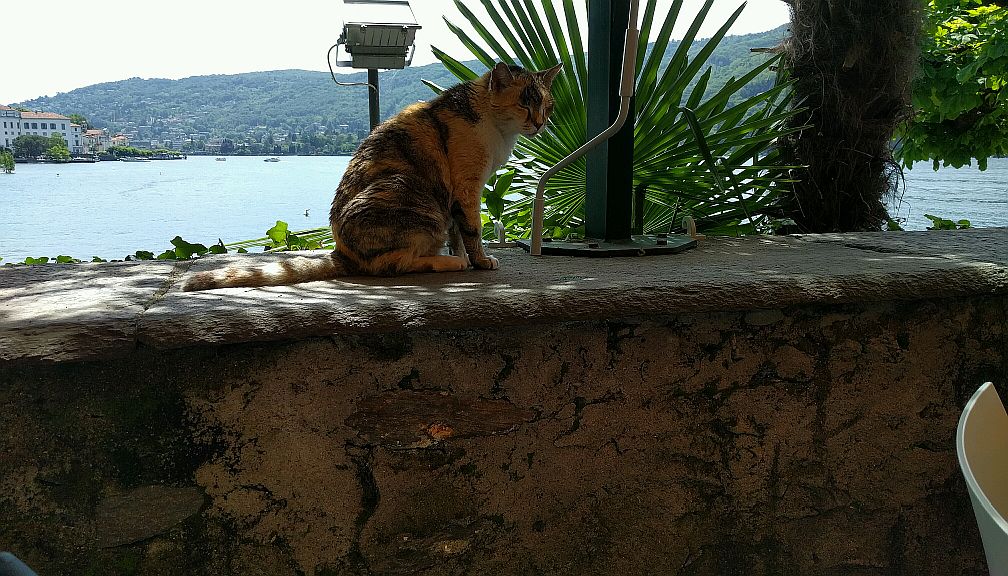
Then we walked around the island – it doesn’t take long – and poked around a few shops before having lunch. After having checked out several restaurants we decided that the Trattoria Toscanini seemed as nice as any and went back there. I had perch from the lake and Louise had a fritto misto of various lake fish. While we were eating, the restaurant cat turned up to check that all was in order. Being the resident cat at a fish restaurant on an island called “Island of the Fishermen” seems like a fairly cushy gig, and the cat did seem to consider that all in all the universe was ordered fairly sensibly. Below is a picture of the cat with the palace end of Isola Bella in the background.

Isola dei Pescatore
Isola dei Pescatore; the restaurant cat. Google Nexus 6P phone camera (click to enlarge).

Santa Caterina del Sasso

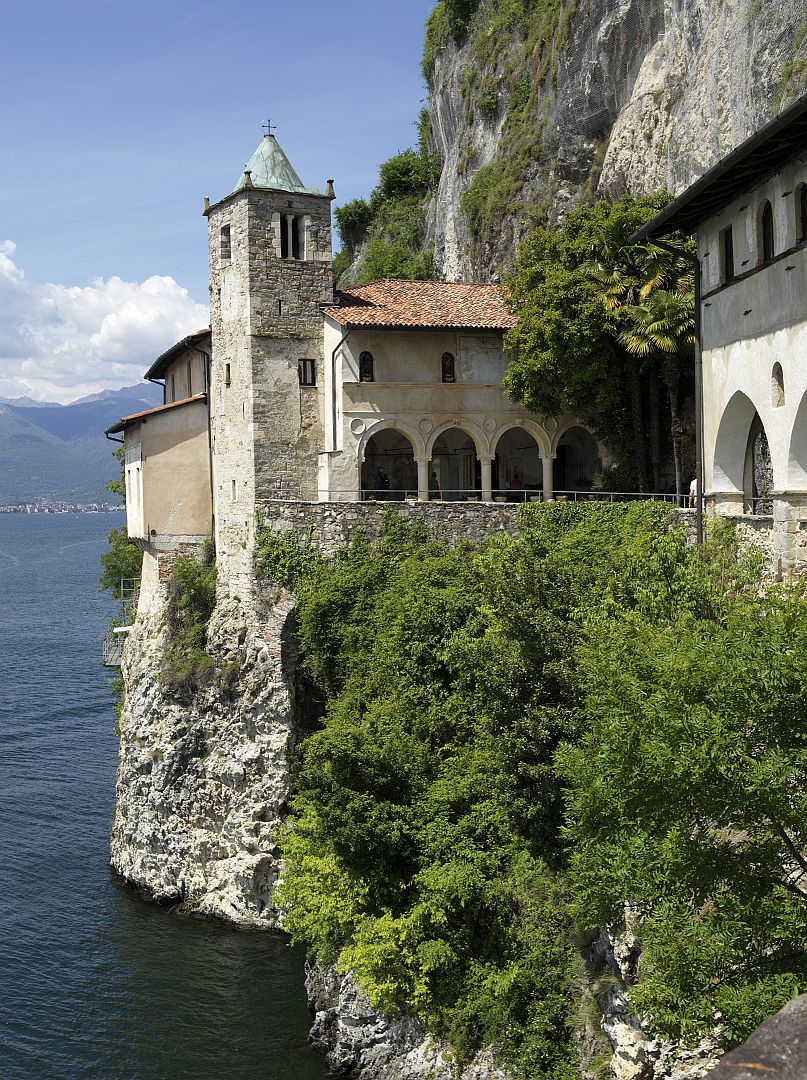
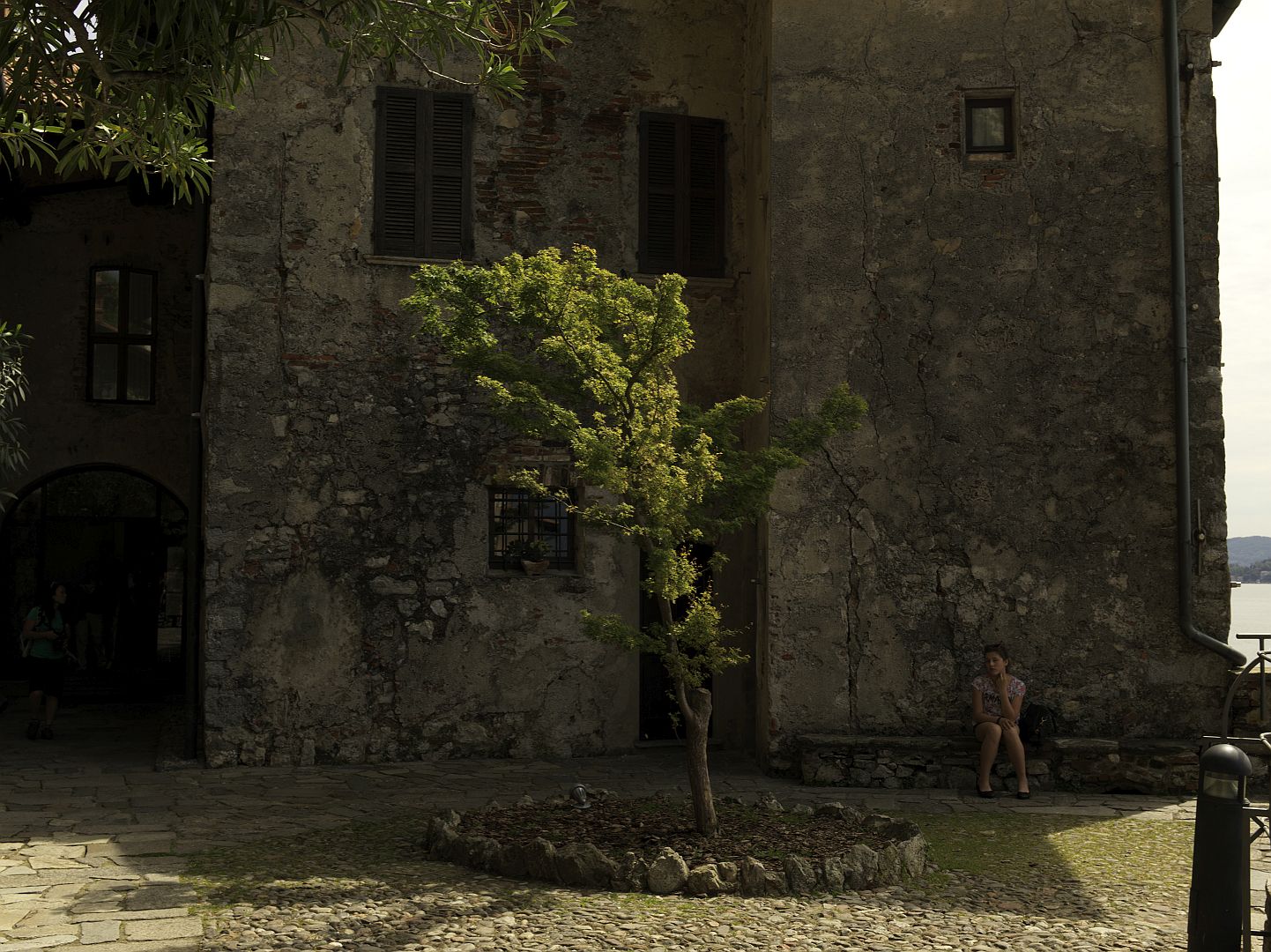
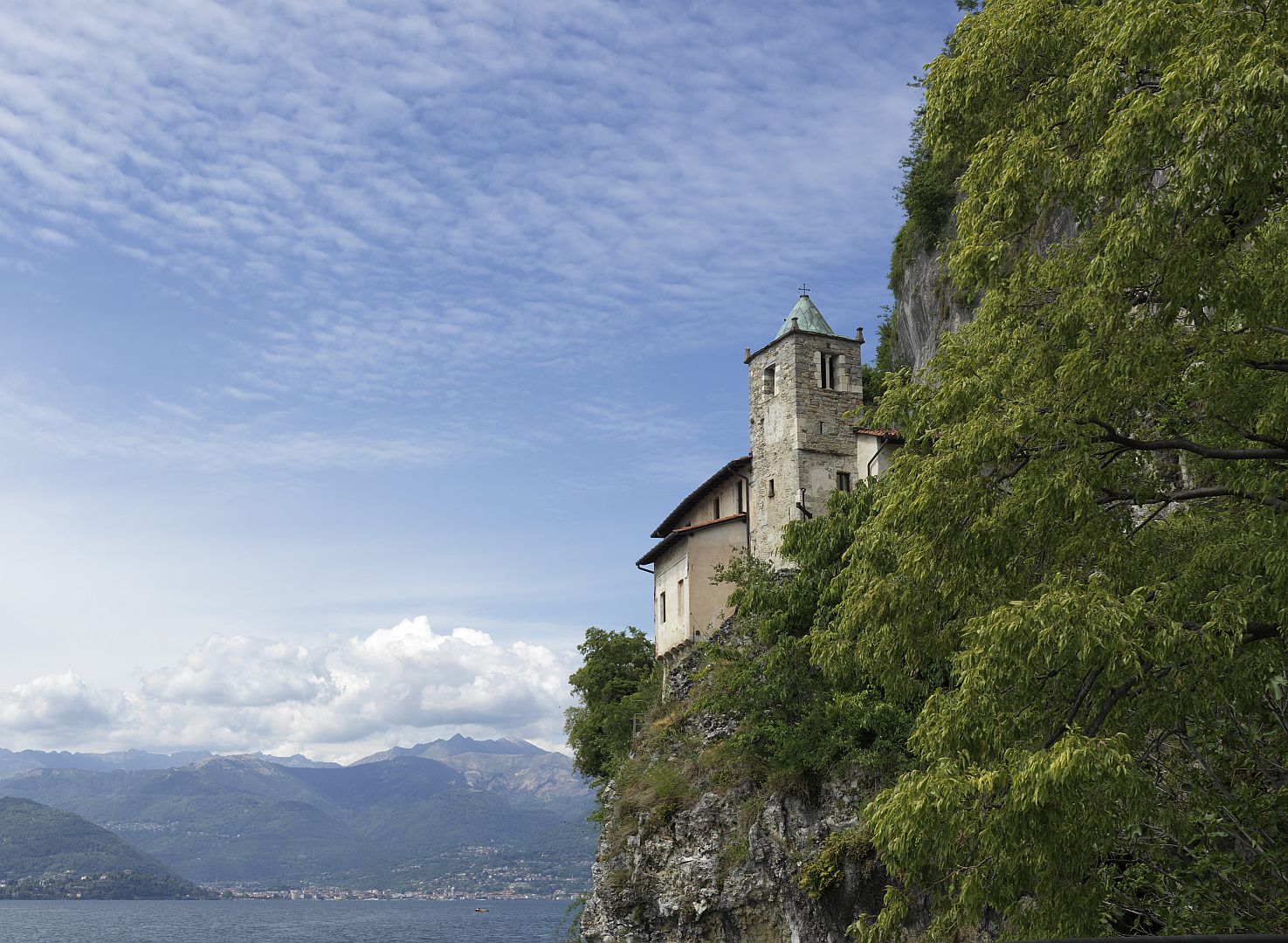
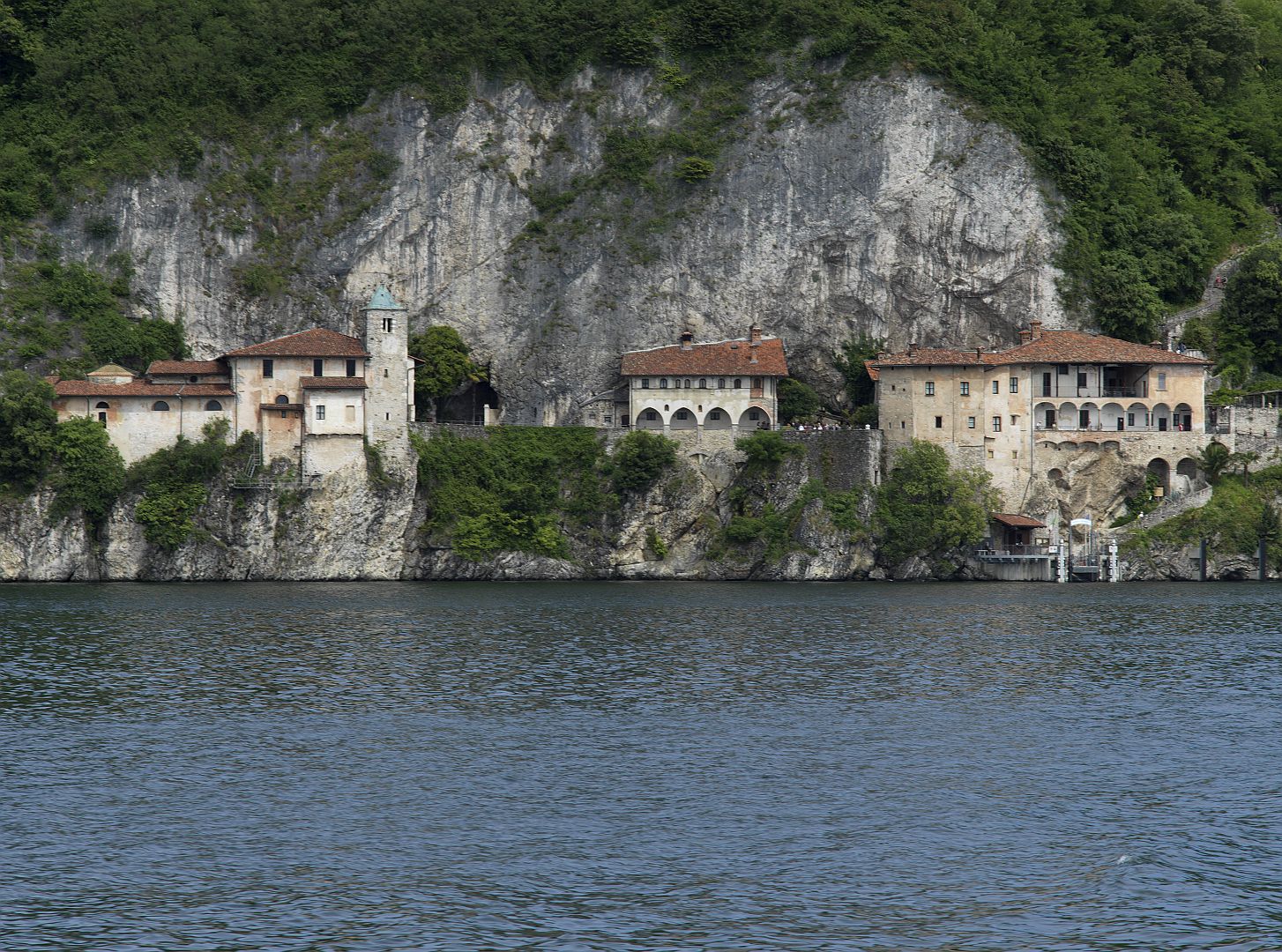
Another ferry trip we did from Stresa was to visit the convent of Santa Caterina del Sasso (Saint Catherine of the Rock). It was originally a hermitage that is built into a sheer rock and which until recently could only have been reached from the water.

Santa Caterina del Sasso
Santa Caterina del Sasso. Hasselblad 501C/M camera, Zeiss Distagon CF 60mm lens, CFV-50C digital back (click to enlarge).

The story of the site is that in the 12th Century a merchant, in gratitude for having survived a storm at sea, became a hermit on this solitary rock, which in the usual way acquired a reputation for sanctity, a chapel and a religious community. The religious community was suppressed by the Austrians in the 19th Century, and the site was re-occupied and restored by the Dominicans in the 1980s.

Santa Caterina del Sasso
Santa Caterina del Sasso. Hasselblad 501C/M camera, Zeiss Distagon CF 60mm lens, CFV-50C digital back (click to enlarge).
Santa Caterina del Sasso
Santa Caterina del Sasso. Hasselblad 501C/M camera, Zeiss Distagon CF 60mm lens, CFV-50C digital back (click to enlarge).

It is now possible to reach the site on foot from above, but approaching it from the water is not only consistent with tradition, but gives by far the best views.

Santa Caterina del Sasso
Santa Caterina del Sasso. Hasselblad 501C/M camera, Zeiss Distagon CF 60mm lens, CFV-50C digital back (click to enlarge).

A Note on the Photography

The challenge in photographing the town hall in Orta San Giulio was that it looked onto a busy square, full of tourists, but if you look back at the photograph above, the square looks deserted.

I don’t mind including the odd human figure in such shots, providing they are of the right kind – an old lady on a bicycle, say, or someone walking a dog, or maybe a shopkeeper. But in this case the tourists were too numerous, and too brightly dressed, to allow me to capture the atmosphere of the place. I waited a while in the hope that they would move off, but in a phenomenon well-known to photographers, as each group left, a new one arrived. So I decided to try a creative method of making them go away (shouting “fire!” would not have worked).

You can of course “paint out” a figure in Photoshop or similar software, but the more figures there are, and the more complex the background, the harder it is. That wasn’t going to be an option here.

I had a nice sturdy Manfrotto tripod with me, so I set it up in a corner of the square where it would not obstruct anyone, and mounted the Hasselblad on top, attaching a shutter release cable so I could take multiple identical pictures from exactly the same place.

The aim was that each part of the square should be free of people in at least one picture. So as the tourists ambled about, I took the several shots I thought I needed. In the event five was enough – all identical, you will recall, except for the moving people.

I then combined them into several “layers” in Photoshop, erasing each figure to reveal the empty space in the next layer down. The result is as you see in the photograph above. If you look hard you can see three figures I didn’t bother about – someone with a shopping bag under the arches of the building, a gentleman approaching down the street to the right, and a lady in a pink dress bending over and looking at the wares in a shop on the right. All three are in shadow and don’t really disturb the composition.

These days you can achieve the same effect with a lot less effort, with clever software which merges the layers and deletes anything that is only present in one layer. I tried it just now using Affinity Photo 2 software (which is what I use these days instead of Photoshop) and it was almost instantaneous, even on a rather old laptop. It even aligns the photos if you haven’t taken them with the camera on a tripod.