Sardinia – the North: Dancing Monks and Hidden Billionaires

Welcome to the fourth and final article based on material from a trip around Sardinia in May 2025. The three preceding ones are Cagliari and the Festa di Sant’Efisio, Ancient Sardinia and The West Coast.

Castelsardo
Castelsardo
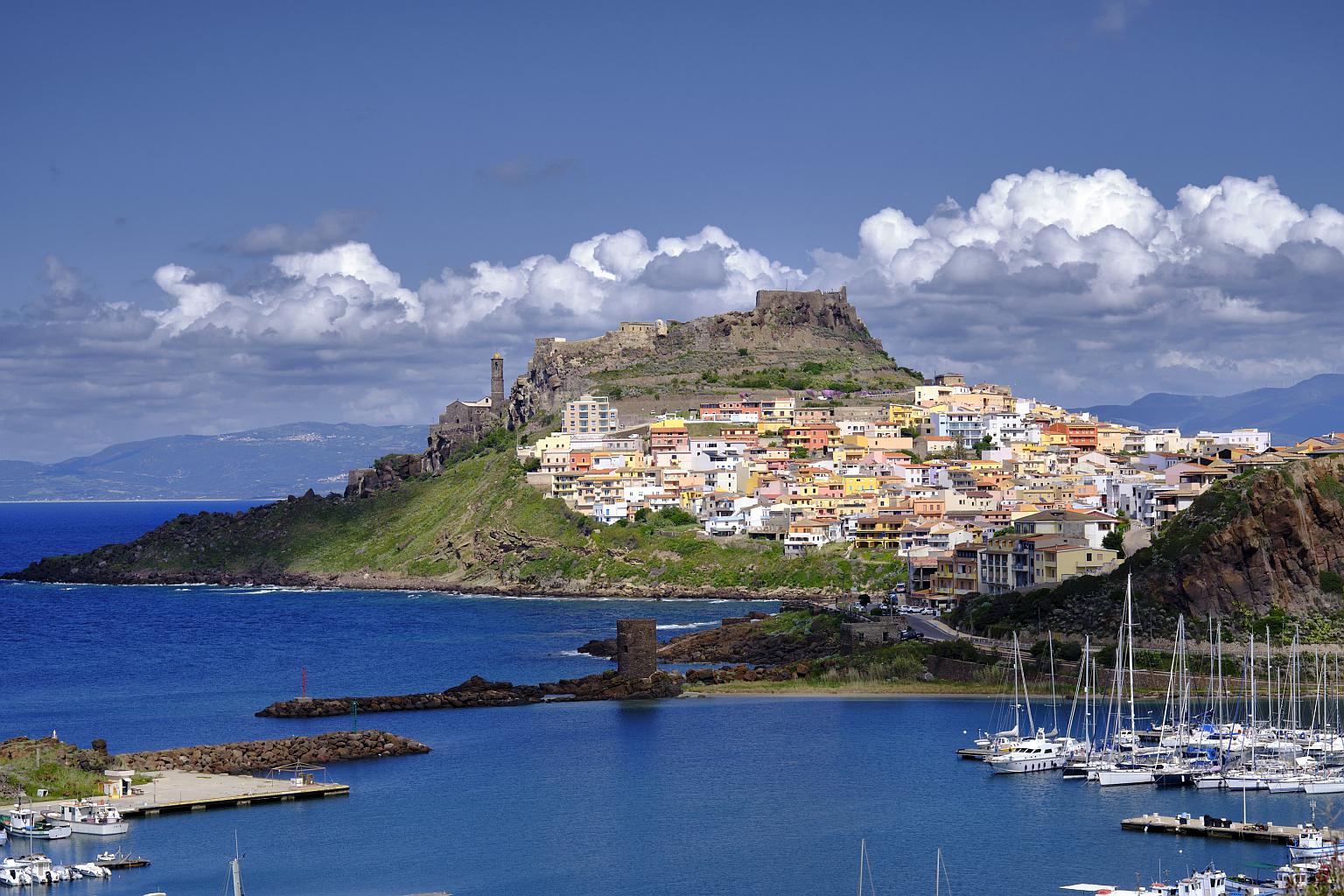
Castelsardo, showing the new town on the southern side of the hill, with the castle at the top and the duomo on the left. Fujifilm X-Pro 3 digital camera, 56mm lens (click to enlarge).

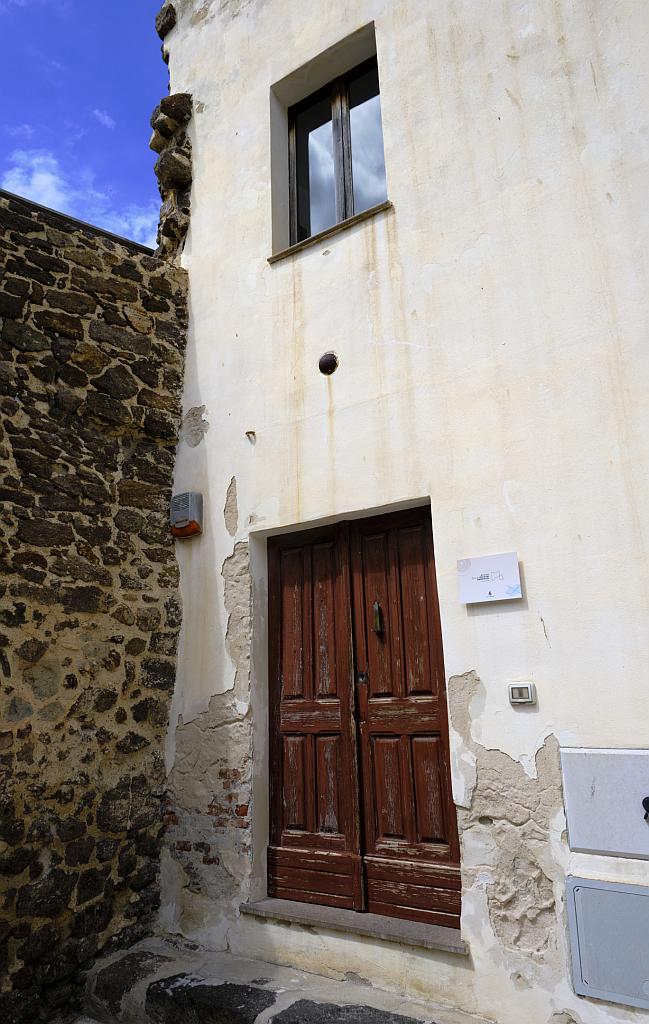
Having finished our stay on the west coast (with trips into the centre of Sardinia), from Bosa we headed to our final destination, a town called Castelsardo, on the north coast. This is a very picturesque place – like Bosa it has a castle and pastel-coloured houses, but the hill is higher and right next to the sea. The castle was originally built by the Genoese in 1102 and called “Castelgenovese”. At some point it was captured by the Aragonese and renamed “Castelaragonese”. The Genoese tried to re-take it a few times and one can still see a Genoese cannonball that supposedly lodged in the wall of a convent during one such attempt.
Genoese cannonball
Castelsardo, Oratorio di Santa Croce. According to a plaque nearby the metal ball above the door is a Genoese cannonball that stuck here during a bombardment. It seems a bit too symmetrically-placed to have lodged there by accident, and the wall also faces away from the sea, where the bombardment would have been coming from. Fujifilm X-Pro 3 digital camera, 16mm lens (click to enlarge).

Eventually, not through warfare but by dynastic marriages, Sardinia passed under Savoyard/Piedmontese control. The new rulers tactfully did not rename the town “Castelpiemontese” but instead “Castelsardo”, the Castle of the Sardinians, as it remains.

Our accommodation had a magnificent view over the sea and when the weather was clear we could see France, which is to say the southern tip of Corsica. But the photograph below was taken not looking north, but eastward along the coast towards the town of Badesi.
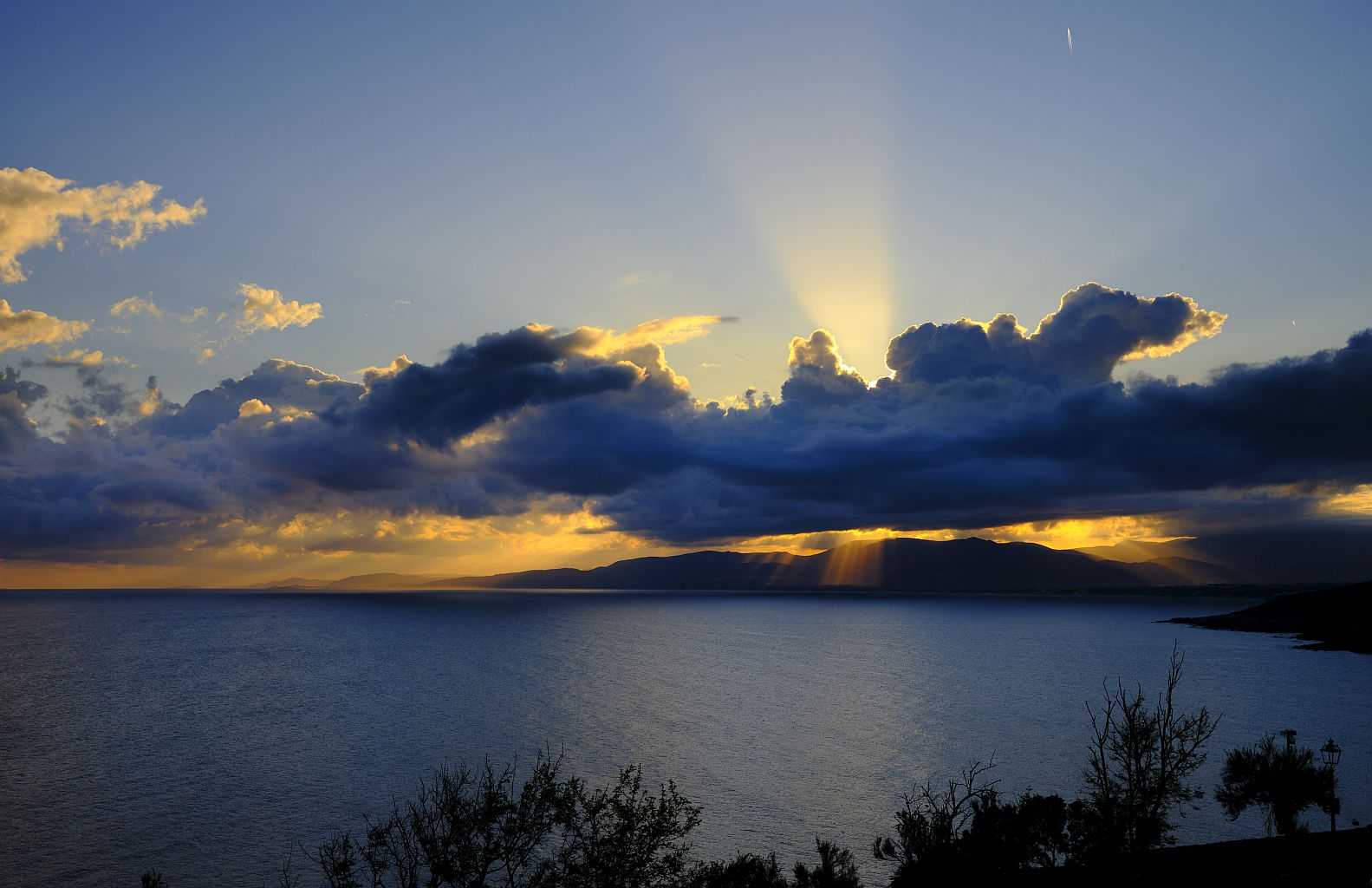
Dawn in Castelsardo
Looking east from Castelsardo at dawn. Fujifilm GFX 50R medium-format digital camera, 32-64mm lens (click to enlarge).

Castelsardo is a town of two halves – the old town faces the sea, while on the other side of the hill, the new town faces south and inland. While both the old and the new towns maintain the excellent Sardinian practice of painting their houses in pastel colours, to get the full effect of this in the old town you would need to get in a boat and look at it from out at sea.
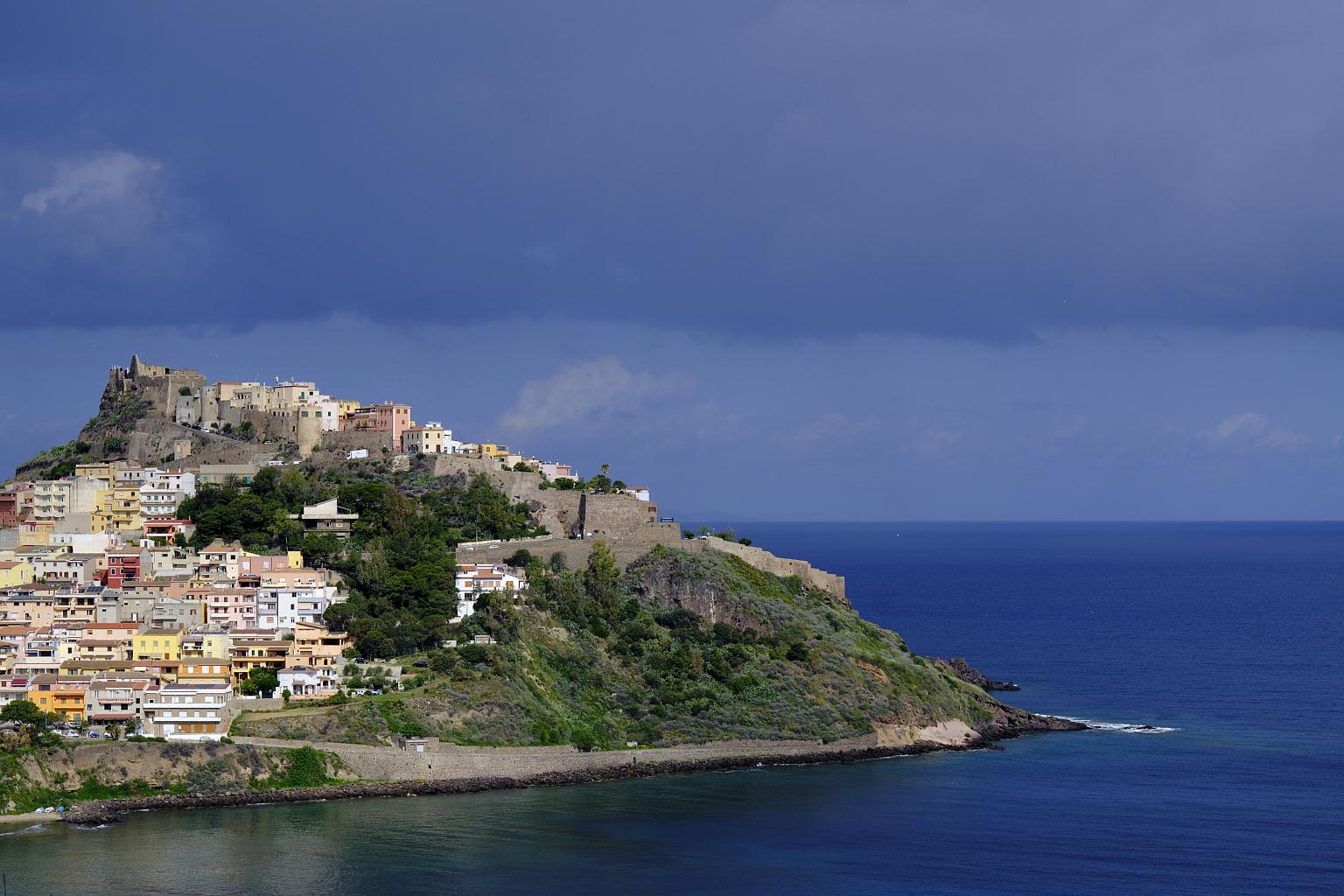
Castelsardo from the East
Castelsardo from the East, with the old town visible at the top right, and the new town at the lower left. Fujifilm X-Pro 3 digital camera, 56mm lens (click to enlarge).
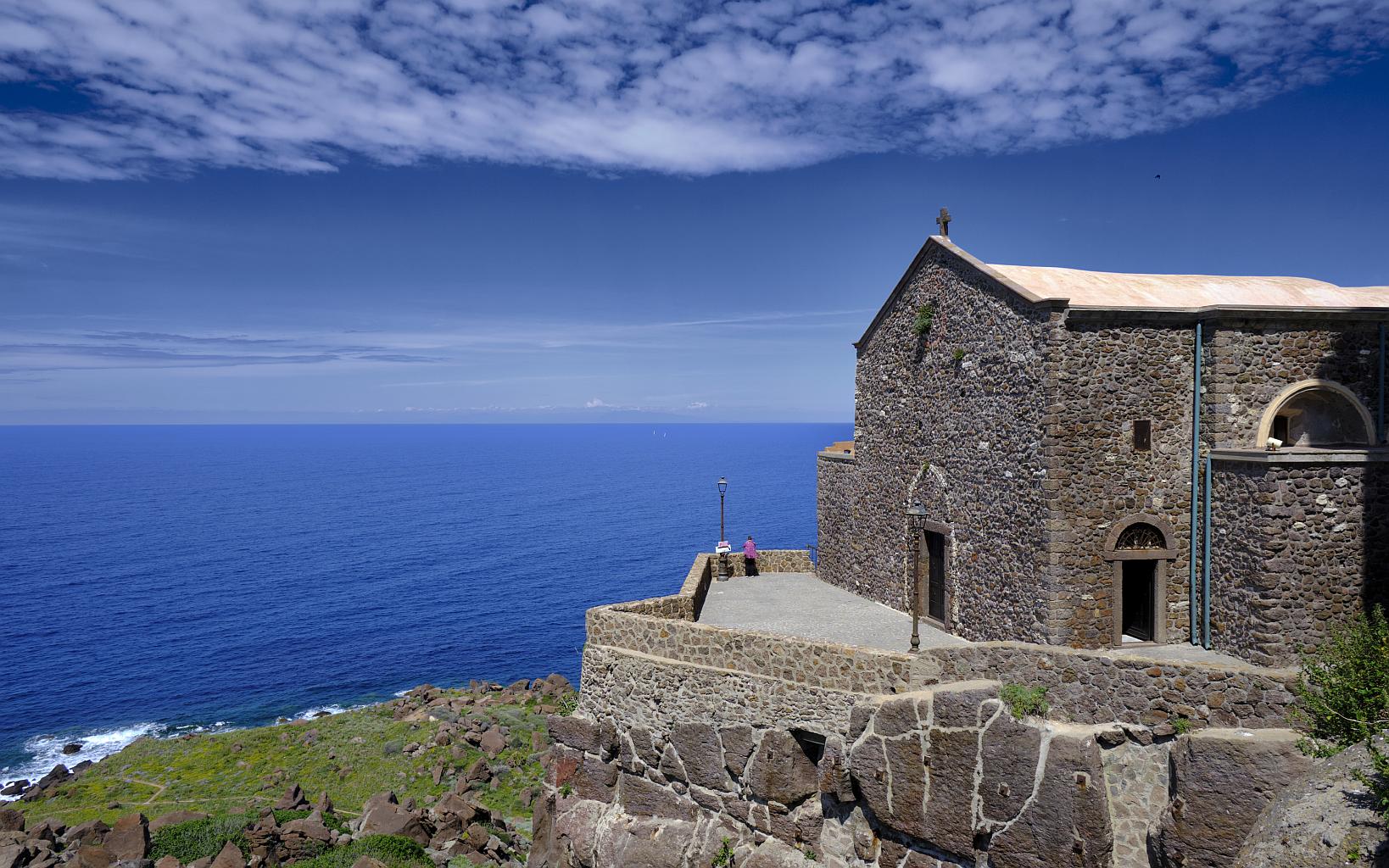
Castelsardo duomo
Castelsardo, the back of the Duomo, with the mountains of Corsica visible in the distance. Fujifilm X-Pro 3 digital camera, 16mm lens (click to enlarge).

As is the way of such things in popular holiday destinations, the old town is full of restaurants, bars and AirBNBs, but the only little supermarket appears to have closed. Fortunately the new town is easy to get to, and we found a very well-stocked supermarket down at the port.
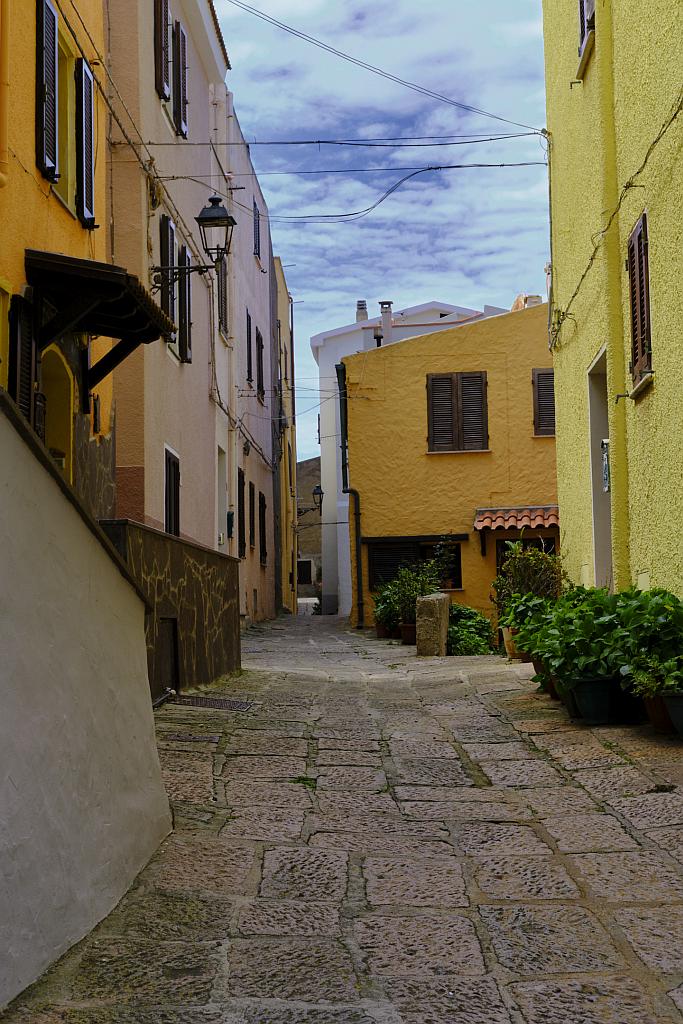
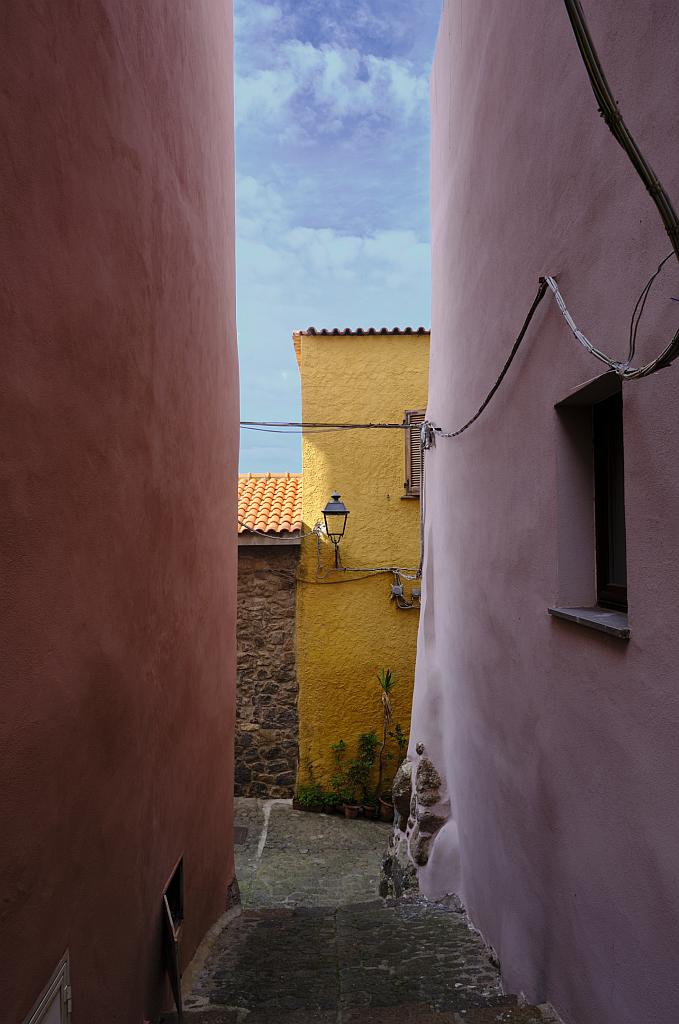
Castelsardo old town
Castelsardo, inside the old town. Fujifilm X-Pro 3 digital camera, 35mm lens (click to enlarge).
Castelsardo old town
Castelsardo, another view inside the old town. Fujifilm X-Pro 3 digital camera, 16mm lens (click to enlarge).
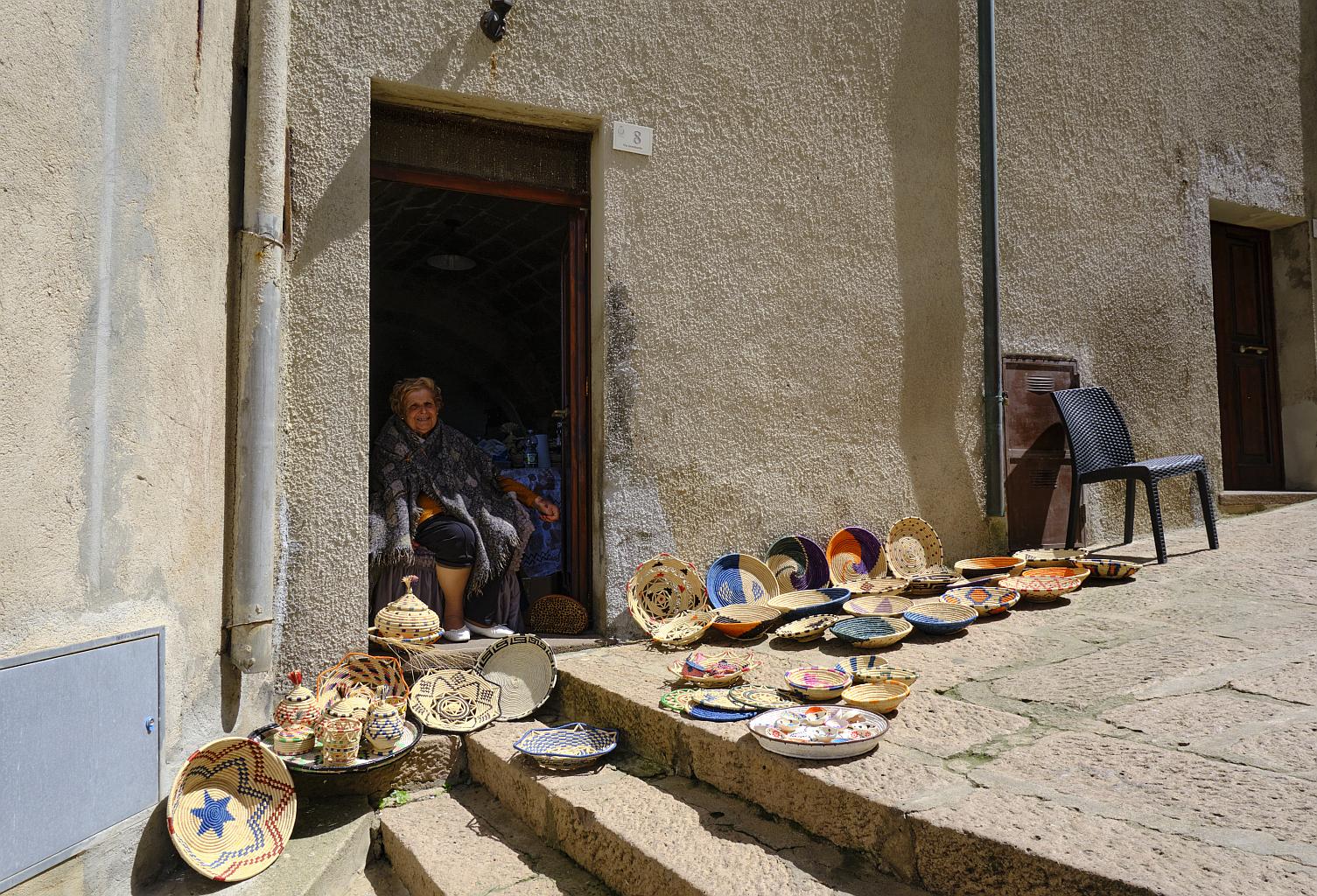
Castelsardo basket seller
Basket-weaving is a traditional craft in northern Sardinia and this lady was using the street to display her wares. Fujifilm X-Pro 3 digital camera, 16mm lens (click to enlarge).

The “Sardinian Romanesque” Churches

A feature of northern Sardinia is its Romanesque medieval churches, which appeared in a flurry of building activity in the 11th and 12th Centuries. Some sources describe these as being in the Pisan style, dating, surprisingly enough, from a period of domination by Pisa. Others say they represent a local synthesis of Tuscan and Lombard architectural styles – either seems plausible enough to an inexpert eye such as mine. Certainly those constructed from alternating courses of white limestone and black basalt seemed very reminiscent of Tuscan churches, not just famous ones like the Duomo in Siena, but also several smaller ones in the Arno Valley, such as in Pistoia, for example.

We had been aware of these churches before the visit, but when the apartment turned out to contain a guide book with a tour of them, that made our minds up, and we plotted a route that would take us on a circular tour from Castelsardo, passing several. They varied from large imposing places that are still in use as parish churches, to one stuck next to a major road junction, to small neglected buildings in remote fields.
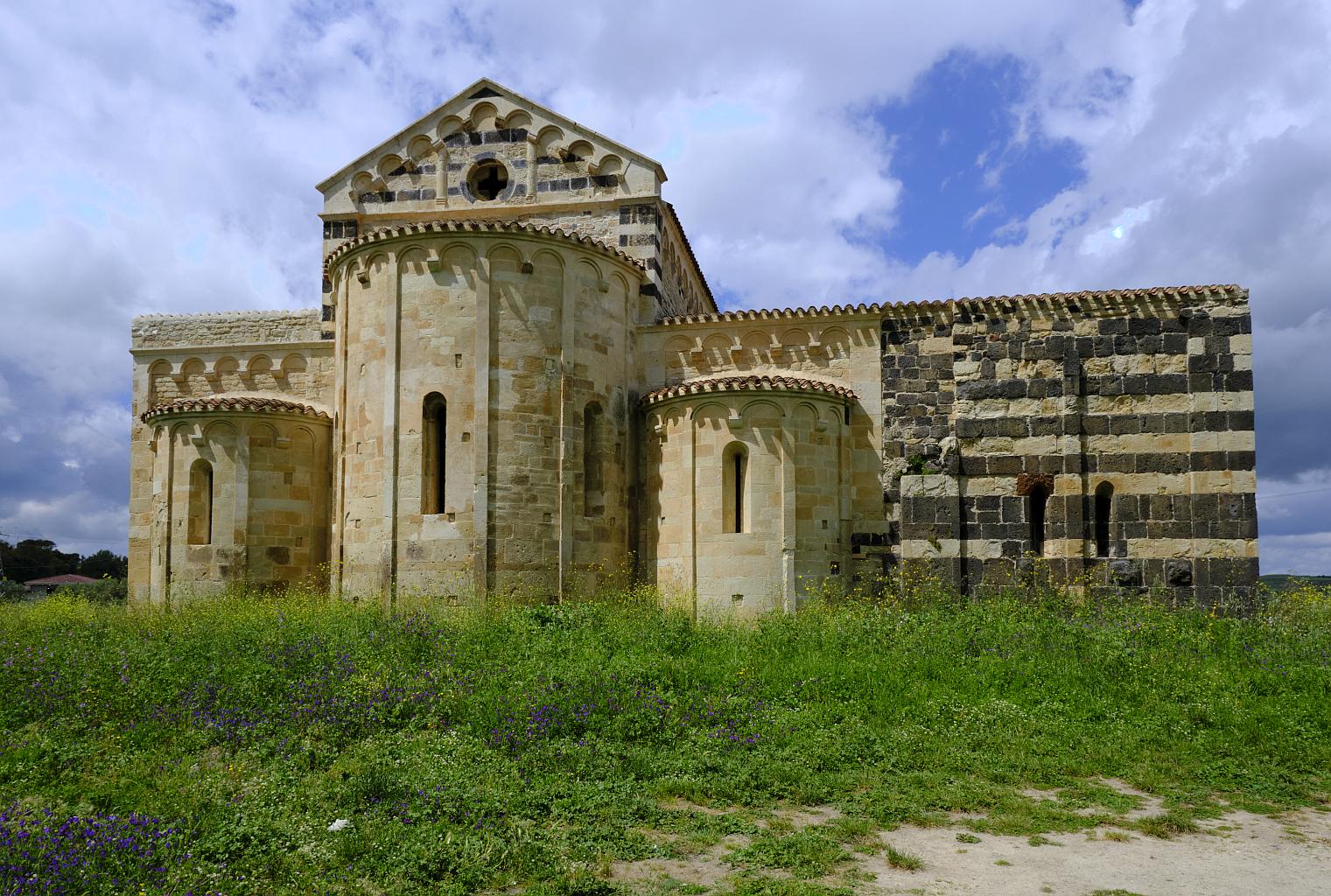
San Michele di Salvareno
San Michele di Salvareno, the church that is right next to a major road junction. Fujifilm X-Pro 3 digital camera, 16mm lens (click to enlarge).

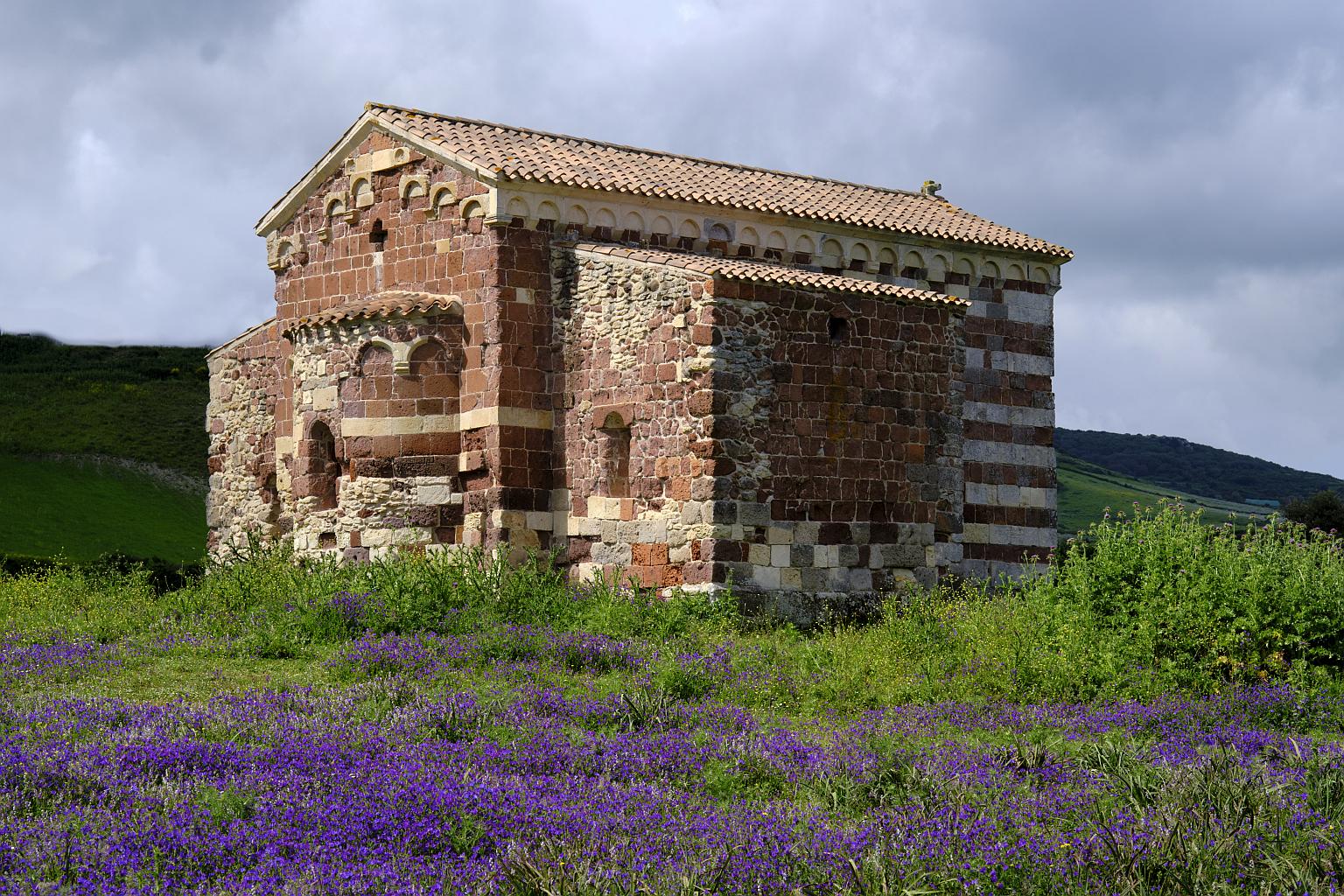
One example of the latter was the church of Santa Maria Maddalena, to get to which we followed a narrow winding road past farms. When we got there we found another car parked, with someone flying a drone over the church. I assumed he was a hobbyist, and was irritated. The church was in a paddock full of the purple flowers that in Australia we call Paterson’s Curse, but there seemed no way to enter from the road. After taking a few pictures we were about to leave when the drone operator came up to us and said that someone from the council would be along soon to let us in, if we were interested, so of course we stayed.
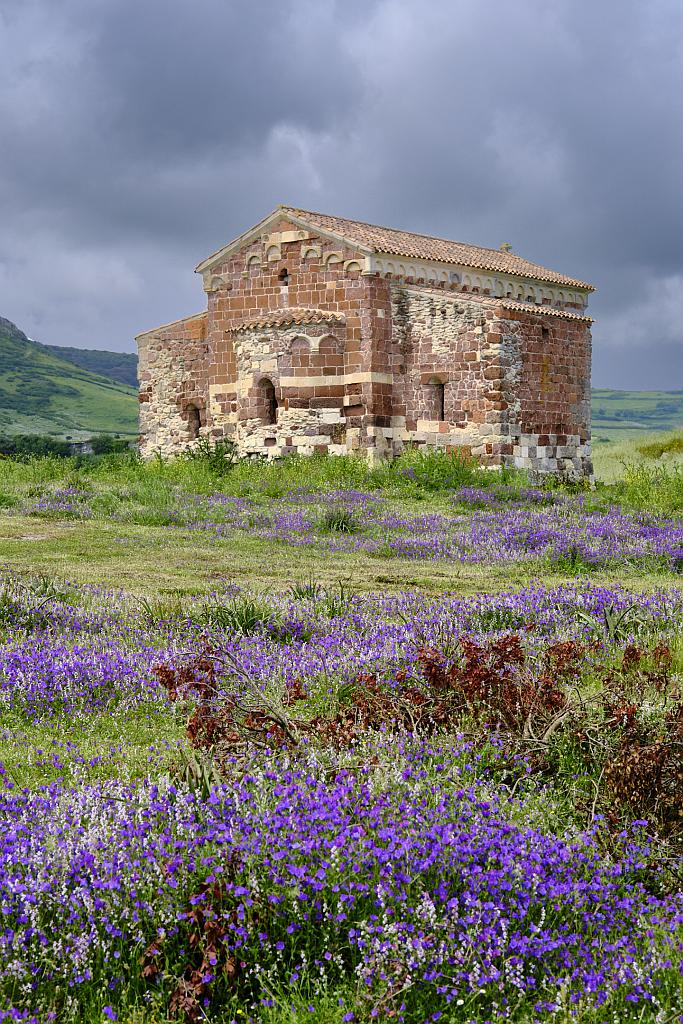
Santa Maria Maddalena
The church of Santa Maria Maddalena, solitary in its paddock. There was a drone in this picture but I edited it out. Fujifilm X-Pro 3 digital camera, 56mm lens (click to enlarge).
Santa Maria Maddalena
Santa Maria Maddalena. Fujifilm X-Pro 3 digital camera, 56mm lens (click to enlarge).

After ten minutes or so a couple of blokes from the council turned up to let us in. By which I mean that they showed us where it was possible, just, to scramble over the fence and then unlocked the church for us. They explained that the council had recently bought the land from the farmer and intended to make it into a proper destination, but for now the fences needed to stay up because the farmer grazed his horses there. The drone guy and his companion then produced a very high-tech device that looked as if it could make 3D scans of the church, at which point I realised that he was probably there in a professional capacity and that I should be grateful to him for letting us take advantage of the arrangements he had made to get in.
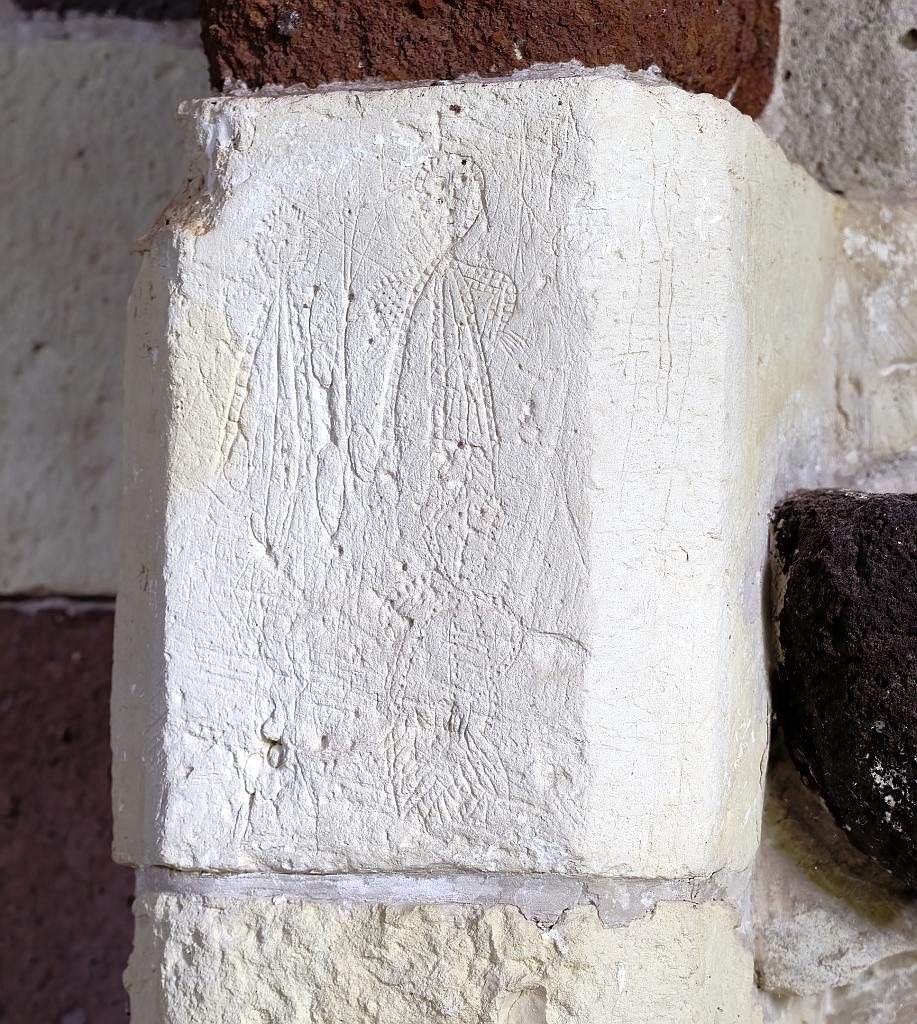
Graffito Sardinian dancing
800-year-old graffito of figures dancing, church of Santa Maria Maddalena. Fujifilm GFX 50R medium format digital camera, 32-64mm lens (click to enlarge).

Inside the church – trying to stay out of the way of the scanners – I took a couple of pictures and then one of the chaps from the council drew my attention to some scratched graffiti on the wall which I would certainly have otherwise missed. It was, he said, of three figures “ballando in modo Sardo” – dancing in the Sardinian style – dating from the 13th Century. In the photograph above you can see that Sardinian-style dancing involved the hands on the hips, and with a bit of imagination you can see that the costumes were as ornate as the ones we saw during the parade in Cagliari. It would have taken quite a long time to scratch that picture, so it must have been a very boring sermon. I thanked everyone, and then scrambled back over the fence.
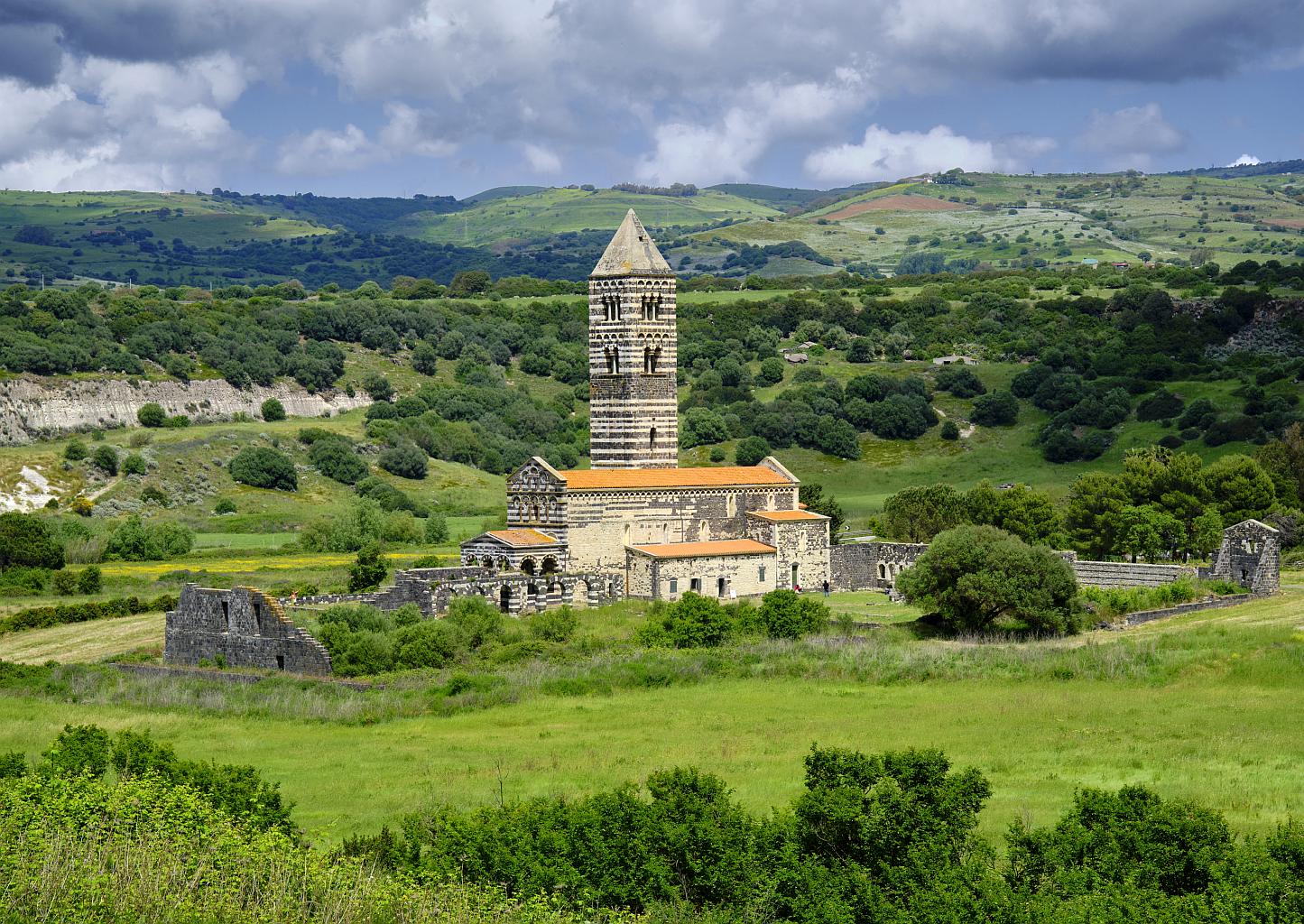
SS Trinità di Saccargia
SS Trinità di Saccargia. Fujifilm X-Pro 3 digital camera, 56mm lens (click to enlarge).

The largest and grandest of the churches we saw was the Chiesa di SS Trinità di Saccargia, near a town called Codrongianos.
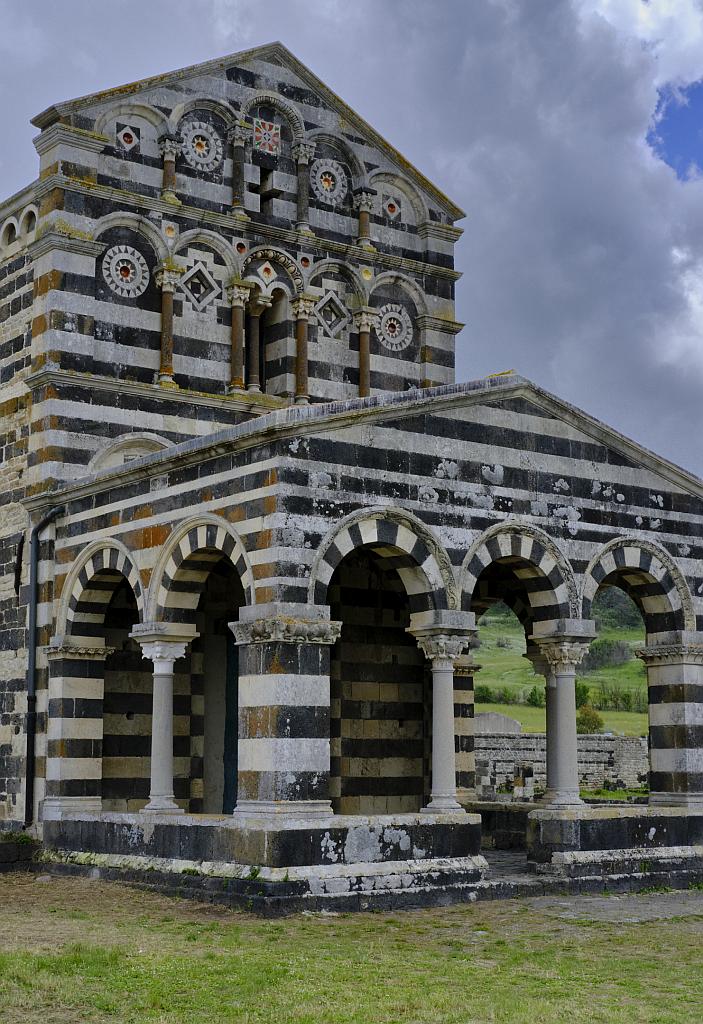
SS Trinità di Saccargia portico
The facade and portico of SS Trinità di Saccargia. Fujifilm X-Pro 3 digital camera, 35mm lens (click to enlarge).

The church dates from 1116, was abandoned in the 16th Century, and then restored and re-opened in the late 19th. The exterior is as much like a giant liquorice allsort as anything you would find in Tuscany, with a very elaborate façade and portico. The masons who built it were supposedly from Lucca, which would explain it.
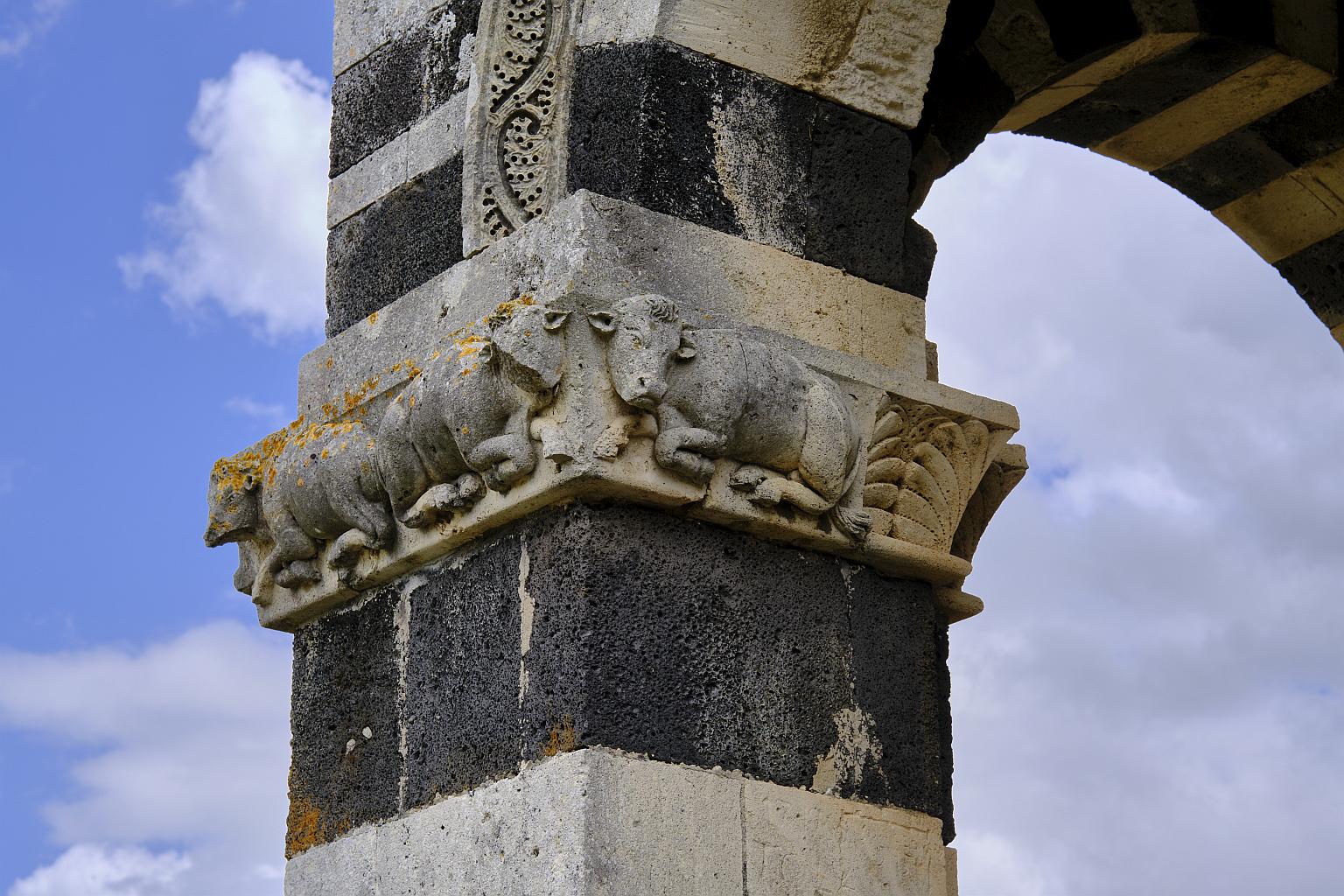
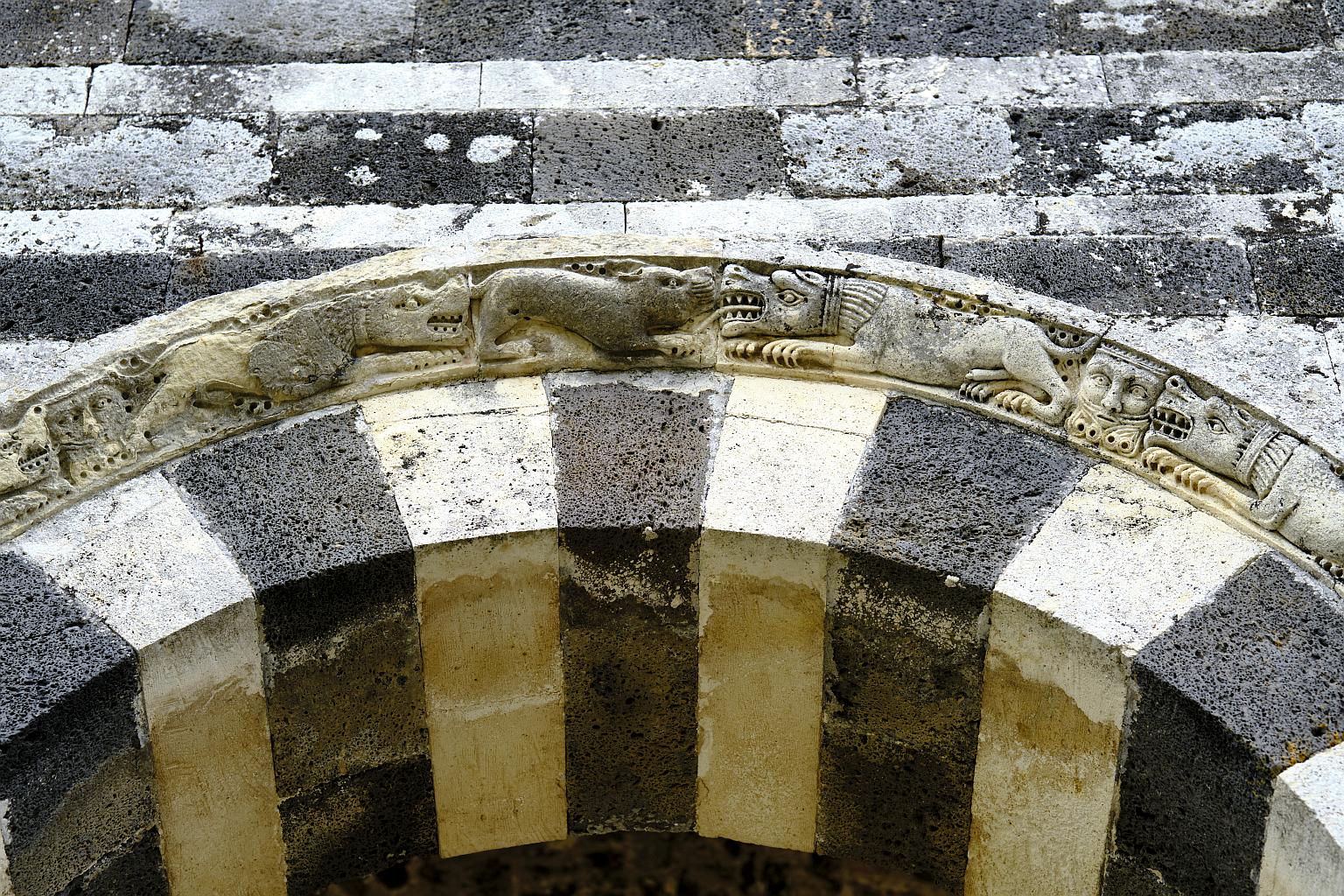
SS Trinità di Saccargia
Detail of carvings on the portico, SS Trinità di Saccargia. Fujifilm X-Pro 3 digital camera, 56mm lens (click to enlarge).
SS Trinità di Saccargia
Carvings on the front of the portico at SS Trinità di Saccargia – a hunting scene. I’m guessing that those on the left are original while those on the right date from the late-19th Century restoration. Fujifilm X-Pro 3 digital camera, 56mm lens (click to enlarge).

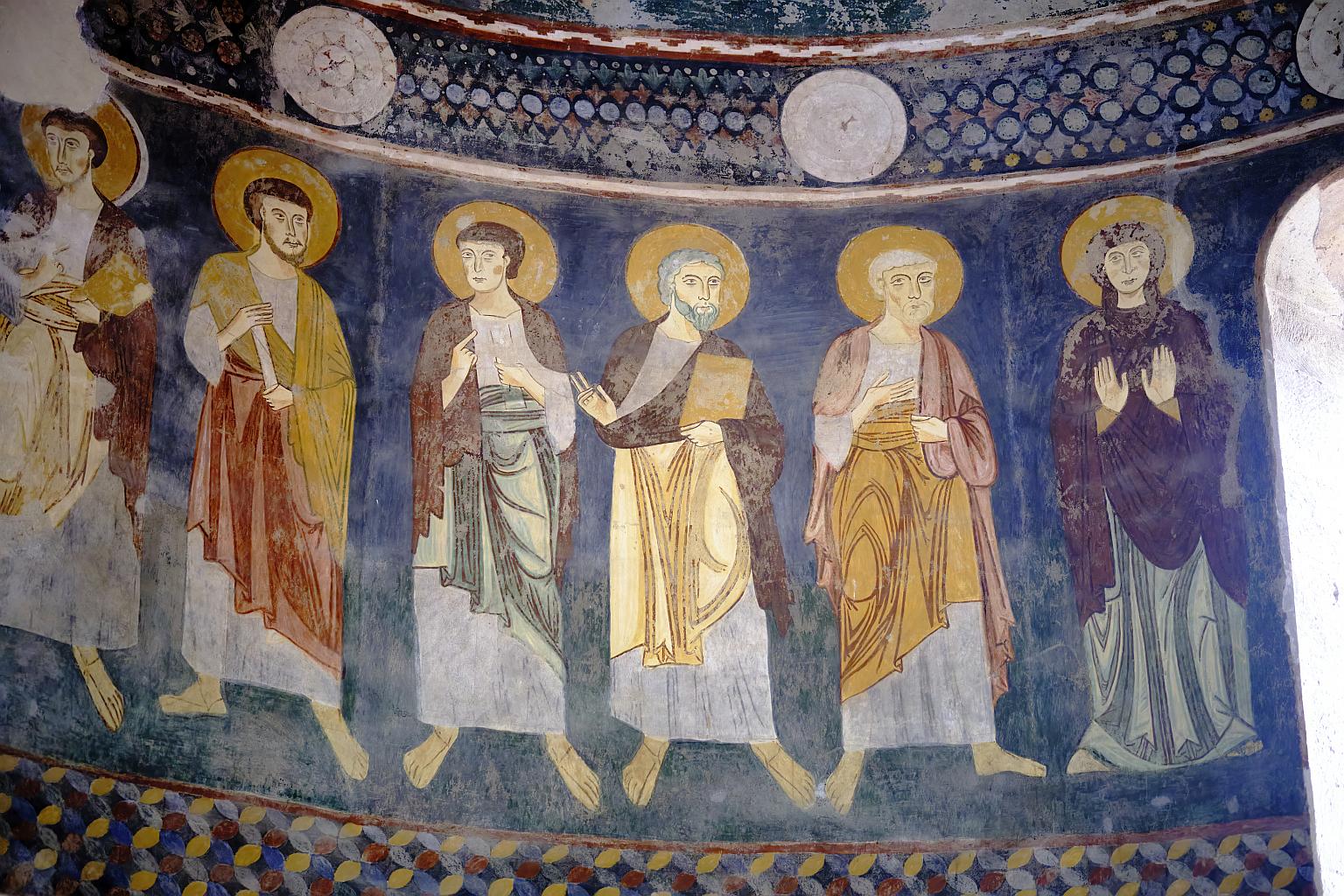
Inside, there is an apse fresco which dates from not long after the construction of the church in the early 12th Century, and which, according to the Italian-language version of the Wikipedia entry, is one of the few surviving examples of Romanesque fresco work in Sardinia.
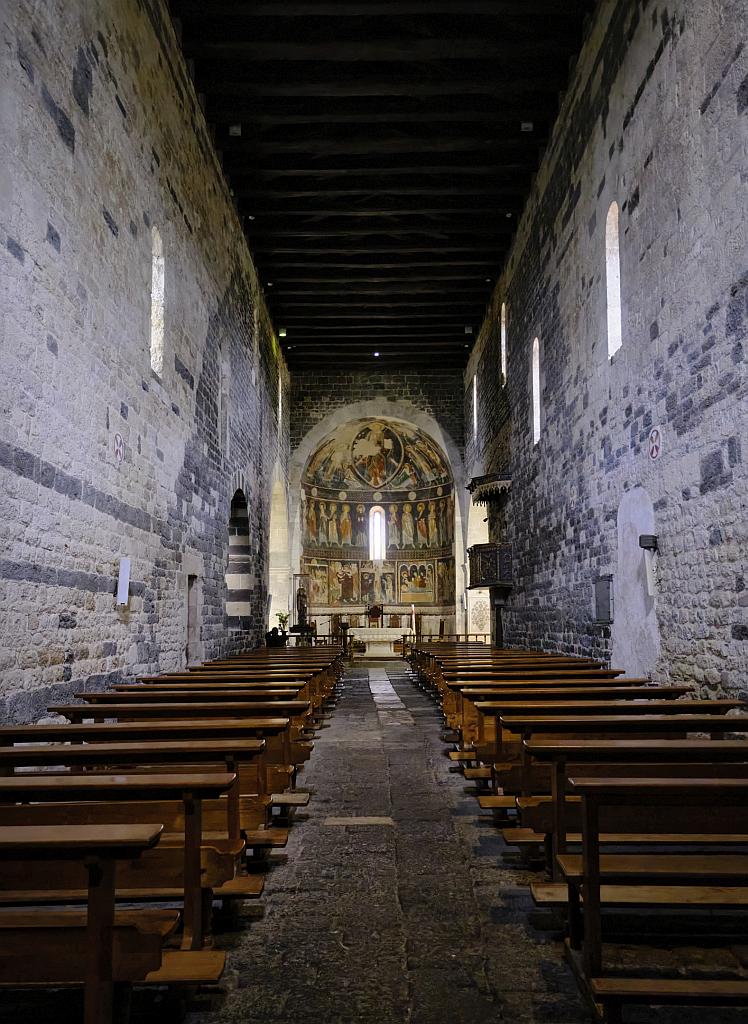
SS Trinità di Saccargia interior
Interior of the nave, SS Trinità di Saccargia. Fujifilm X-Pro 3 digital camera, 16mm lens (click to enlarge).
SS Trinità di Saccargia Apse Frescoes
Apse frescoes, SS Trinità di Saccargia. Fujifilm X-Pro 3 digital camera, 56mm lens (click to enlarge).

Another very elaborate church is Nostra Signora di Tergu, in the town of that name. This dates from about the same time as the church of Saccargia, but is in a very attractive pinkish stone, rather than black and white.
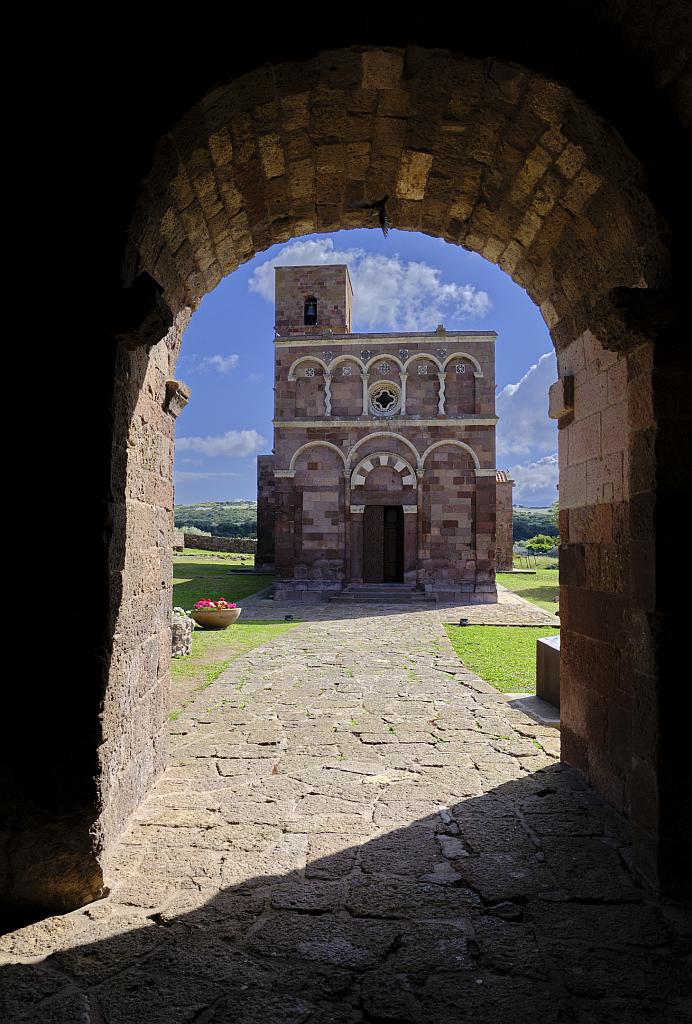
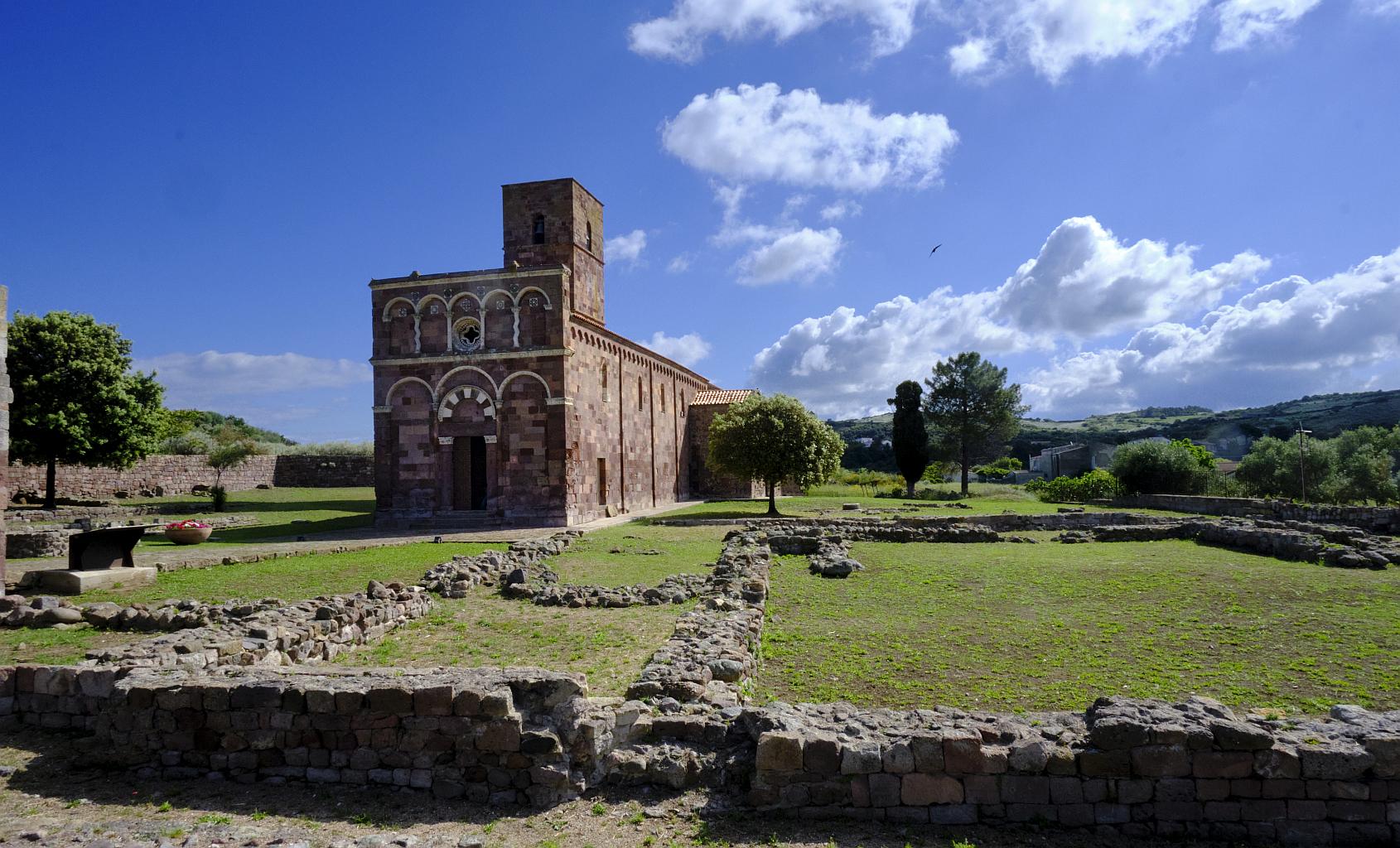
Nostra Signora di Tergu
Nostra Signora di Tergu. Fujifilm X-Pro 3 digital camera, 16mm lens (click to enlarge).
Nostra Signora di Tergu
Nostra Signora di Tergu, with remains of the medieval Benedictine Monastery in the foreground. Fujifilm X-Pro 3 digital camera, 16mm lens (click to enlarge).

Originally the abbey church for a monastery, the church is located on the edge of Tergu and has become a rather elegant parish church for the town.
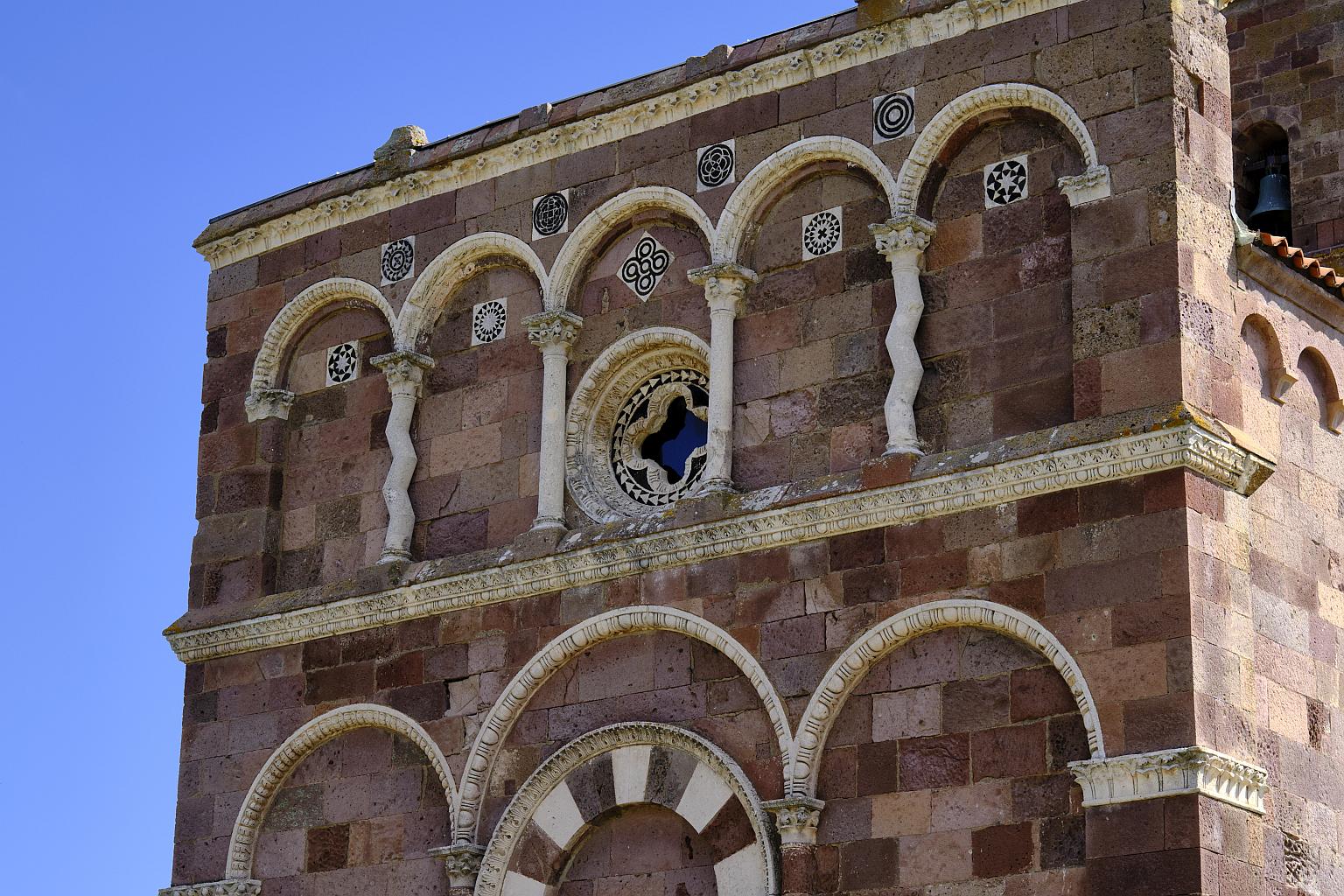
Nostra Signora di Tergu
Close-up of the facade of Nostra Signora di Tergu. Apparently the facade was originally taller, but the upper parts crumbled away. Fujifilm X-Pro 3 digital camera, 56mm lens (click to enlarge).

I will end this short ecclesiastical tour with another isolated little church – quite a curious one, called San Pietro delle Immagini (St Peter of the Images).
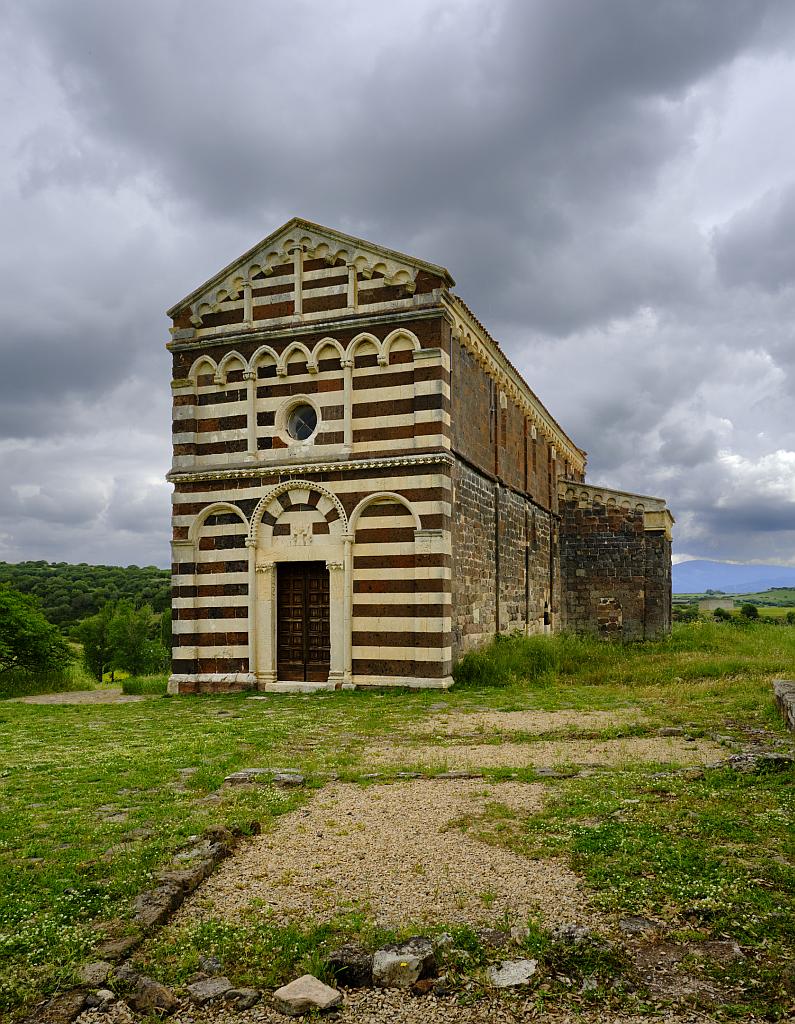
S Pietro delle Immagini
San Pietro delle Immagini. Fujifilm X-Pro 3 digital camera, 16mm lens (click to enlarge).

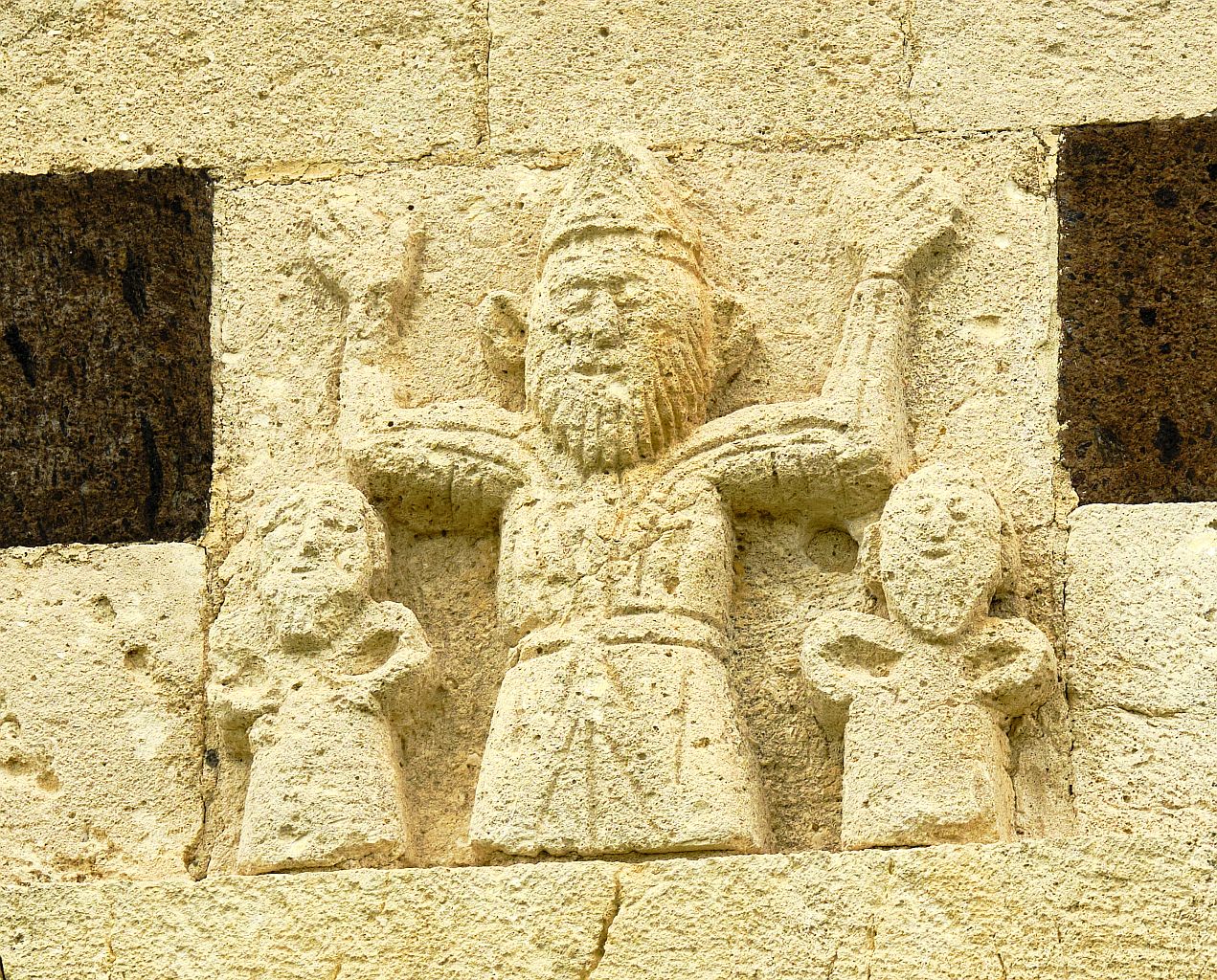
The images in question are in a mysterious carving over the front door. The information panel at the site describes them as “an abbot and two monks”, while an online article I read said they were “people praying”. Well, maybe, but if so it is not a conventional representation of prayer.
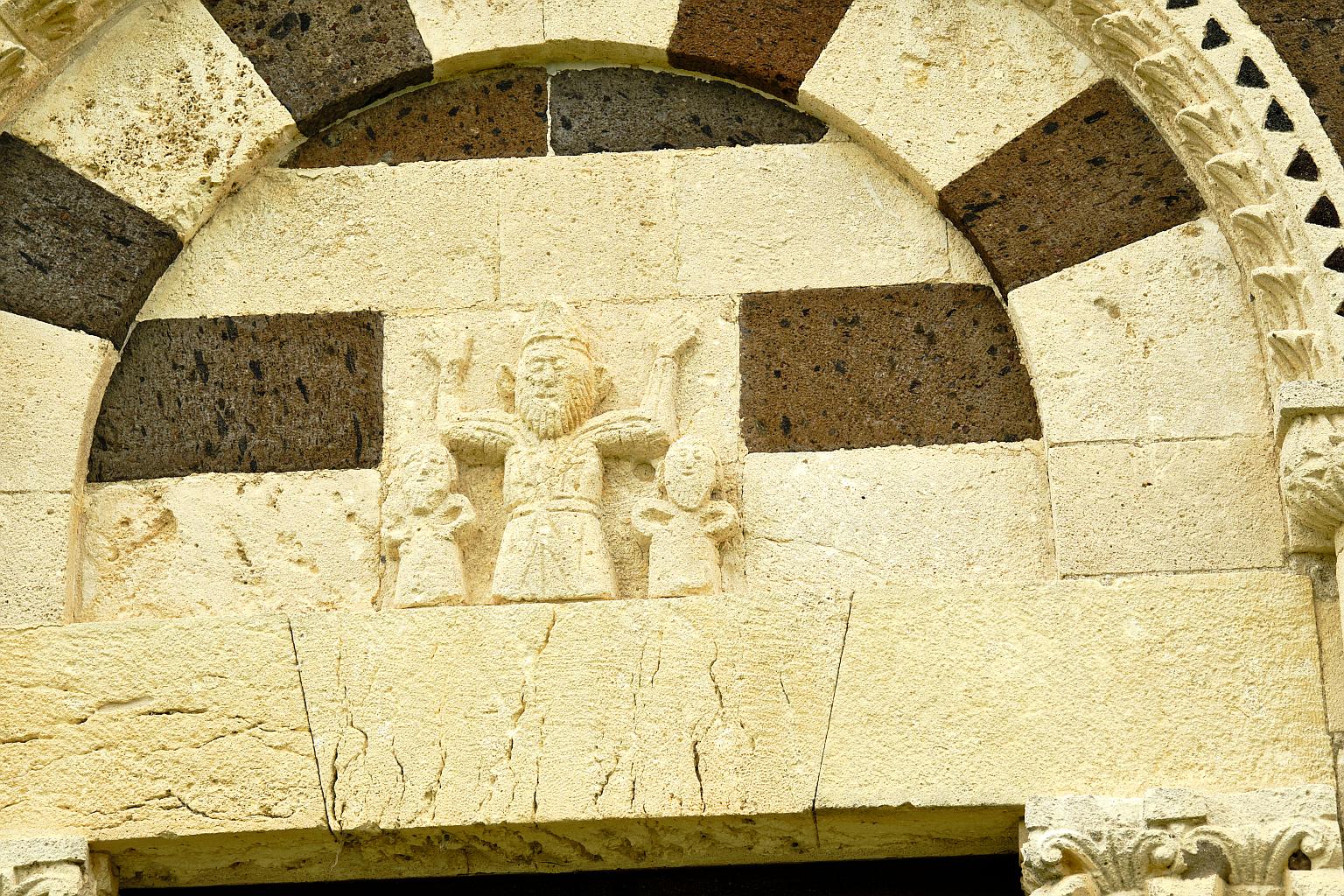
S Pietro delle Immagini
San Pietro delle Immagini. Fujifilm X-Pro 3 digital camera, 56mm lens (click to enlarge).

In fact what you have is the big chap in the middle waving his arms in the air, between two cheerful fellows with their hands on their hips, just like the figures in the graffito in Santa Maria Maddelena, who are “dancing in Sardinian style”. Could these people actually  be dancing? It seems an implausible decoration for a church, but it is a hard image to get out of one’s head, especially once I started thinking about “Let’s Do the Time Warp Again” from the Rocky Horror Show. I’ll just leave that thought with you.
San Pietro delle Immagini crop
Crop of the mysterious figures, San Pietro delle Immagini. Fujifilm X-Pro 3 digital camera, 56mm lens (click to enlarge).

Hidden Billionaires

On the last day we had to find our way back to Olbia for the overnight ferry to Civitavecchia. Boarding wouldn’t start until 7:30pm so we had plenty of time to play with. We decided to make our way there around the northeast tip of of the island, which would take us through the fabled Costa Smeralda – the Emerald Coast, playground of billionaires, film stars and – until recently when their yachts were impounded – Russian oligarchs. The late Silvio Berlusconi’s infamous bunga-bunga parties were held in his villa here.
Costa Smeralda
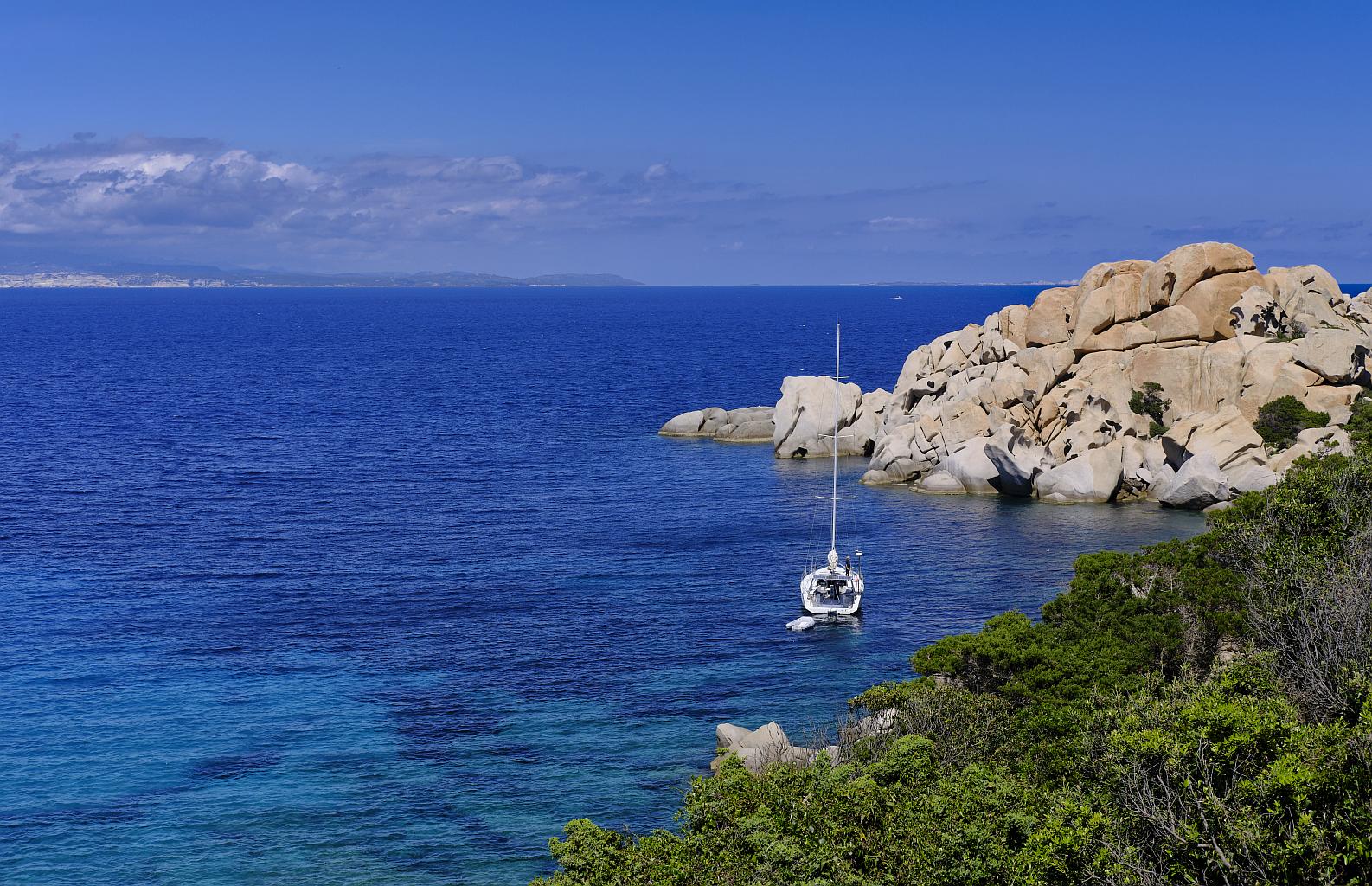
The Costa Smeralda, looking every bit as the name would imply. Fujifilm X-Pro 3 digital camera, 56mm lens (click to enlarge).

Before we reached the Costa Smeralda we went to a town called Santa Teresa Gallura. That is right at the top of Sardinia and from there Corsica is a mere 10 kilometres away. There is a ferry between there and a place called Bonifacio in Corsica so we saw a few groups of motorcyclists coming the other way having got off the ferry and started their tour of Sardinia. It was probably just in my imagination that I saw the looks of horror on their faces as they realised the condition of the roads.

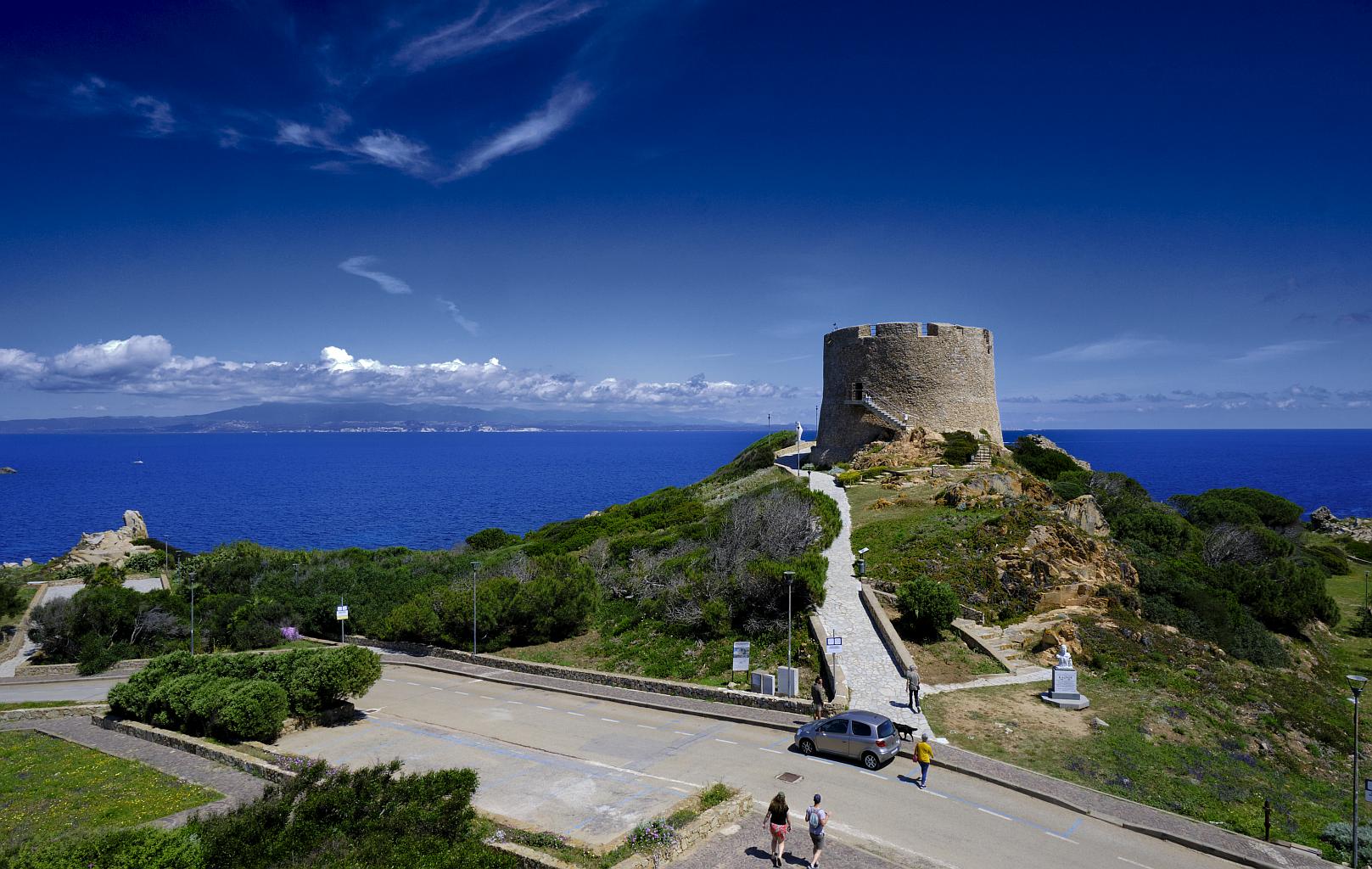
We drove through Santa Teresa Gallura on a complicated one-way system and eventually found ourselves in a large carpark on a promontory, on which there is a watch tower dating from when the town was a Spanish outpost. We wandered about a bit and found a seafood restaurant where we had lunch. This was the last of a good many seafood meals we had in Sardinia, and while they were mostly excellent, I feel the need to mention that on no menu did we ever see sardines. Can it be that they don’t serve sardines in Sardinia?
Santa Teresa Gallura
Santa Teresa Gallura, the Spanish watch tower. The land across the water is Corsica. Fujifilm X-Pro 3 digital camera, 16mm lens (click to enlarge).

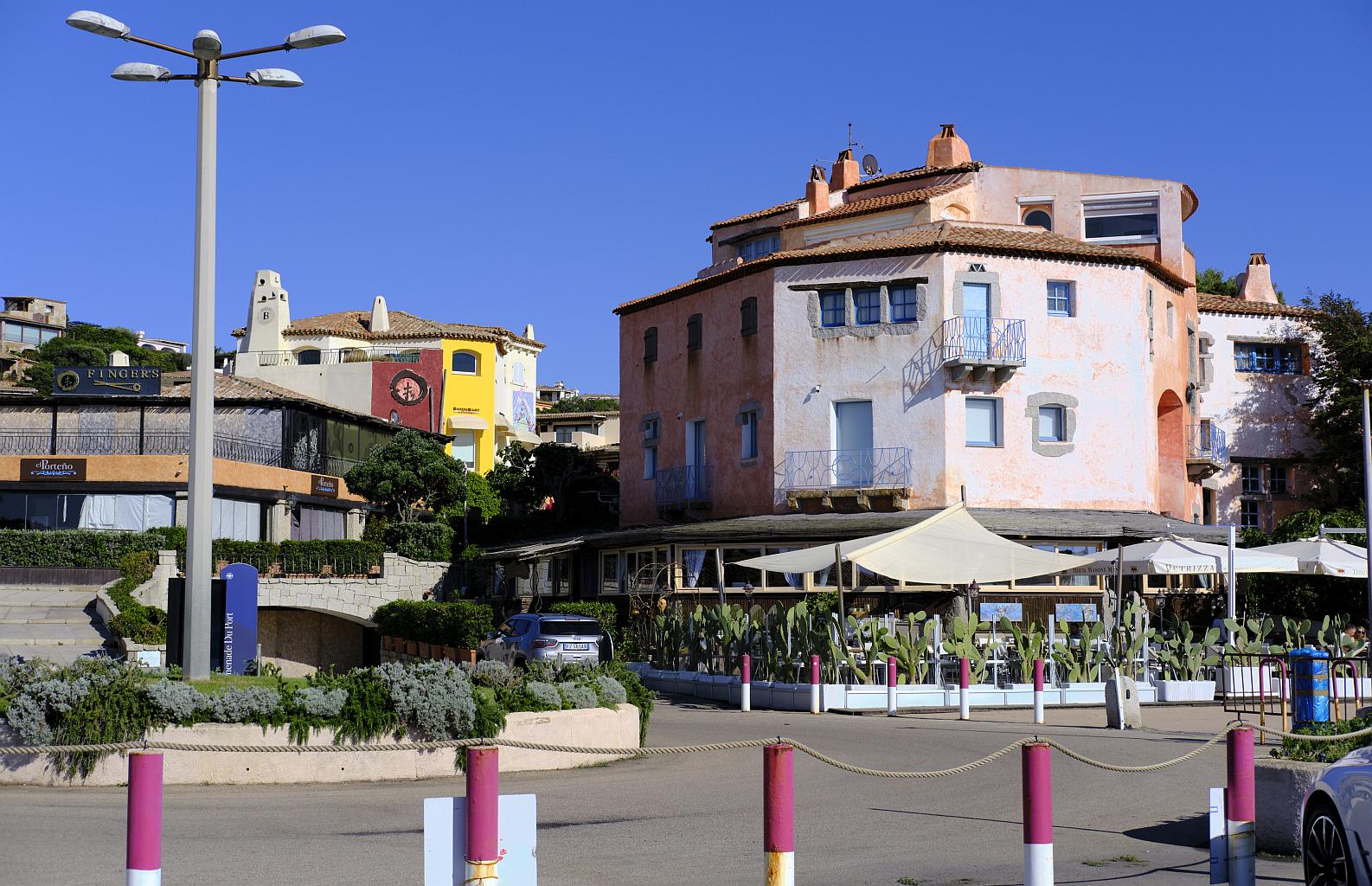
And so to the Costa Smeralda. It is certainly true that the sea there is beautifully clear and blue-green, so no misrepresentation there. The centre of the coast is a place called  Porto Cervo which as far as I know doesn’t have much history. It was developed in the 1960s as a sort of fantasy Italian coastal resort for rich foreigners, as a result of which it doesn’t feel very Italian at all. I guess we should have realised when on the way into town we passed a branch of the UK pharmacy chain Boots. The architecture is all the same in a way that seemeds almost creepy – it would be a good place to film some kind of dystopian TV show. There was a little tourist trenino train trundling about, but none of the people on it looked like billionaires to me. I was expecting to see lots of Ferraris and Lamborghinis as one does in places like Portofino, but not here. On reflection if I had a Ferrari I wouldn’t drive it on Sardinian roads either. We did see a Bentley – that could probably handle the potholes.
Porto Cervo
Porto Cervo, the “capital” of the Costa Smeralda.Fujifilm X-Pro 3 digital camera, 35mm lens (click to enlarge).

Still, we had a couple of hours to kill before setting off back to Olbia so we parked the car and had a very expensive coffee and lemonade in a waterfront cafe. While we were there a large motor yacht, registered in Southampton, berthed next to us and a couple of elegant young people with cut-glass English accents got off and came across to the cafe. That was about it as far as billionaire-spotting went. Of course they might have been crew members.
Sardinia – The West Coast

In this post I describe a trip up the west coast of Sardinia in May 2025, visiting a couple of the Spanish-influenced towns there. I’ve previously written on Cagliari and the Festa di Sant’Efisio and Ancient Sardinia. (Edit: and now I’ve added a final one: Dancing Monks and Hidden Billionaires.)

You left us down in the south, after visiting the Phoenician/Carthaginian/Roman archaeological site of Nora. From there we drove back – almost – to Cagliari before taking the only decent road in Sardinia, the “Carlo Felice”, northwards. Near a place called Macomer we left the main highway and headed for the coast. This involved encounters with nuraghe (Bronze Age stone towers) and enormous potholes in the road, which I have already described.

Bosa

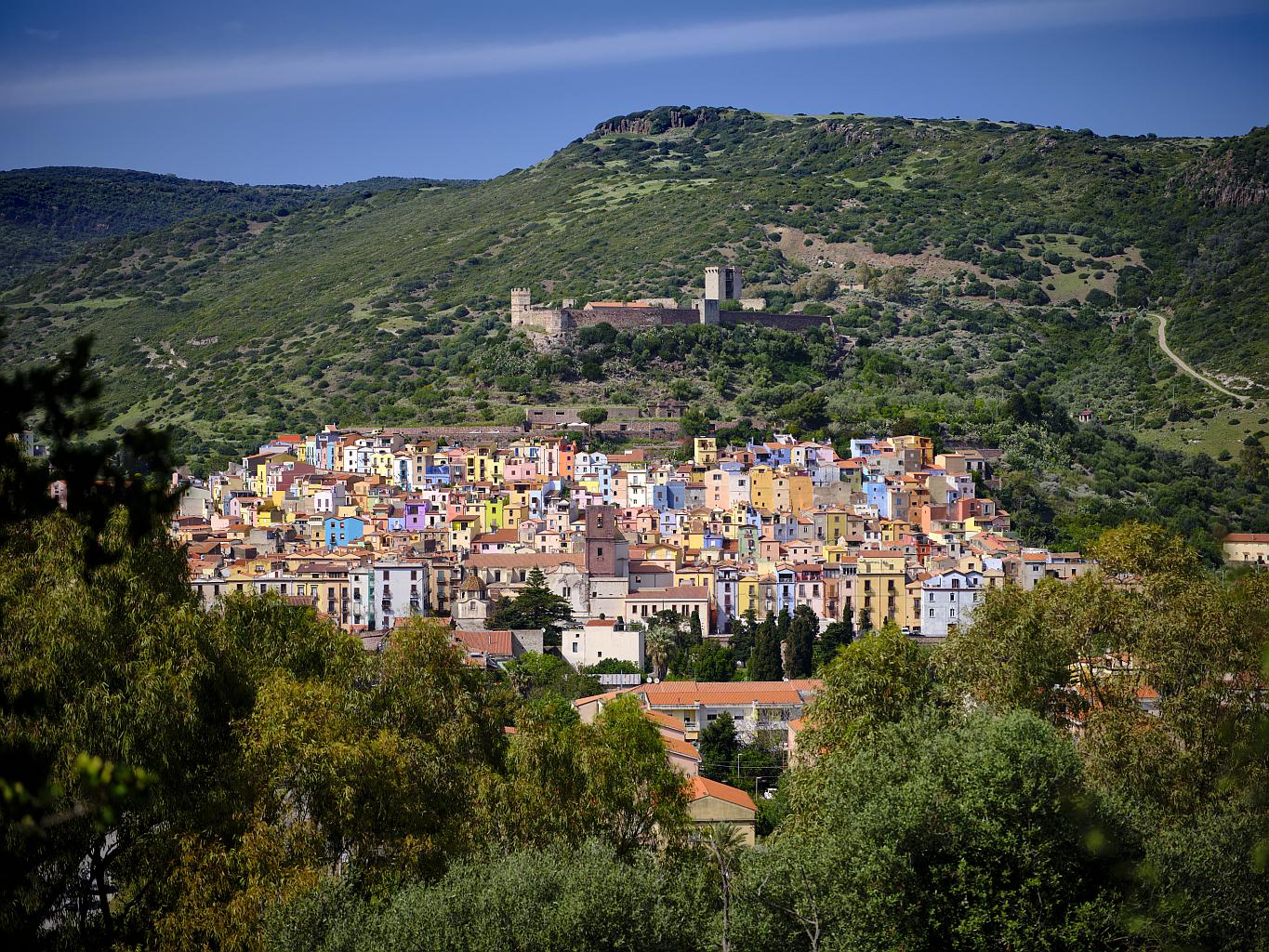
Our first stop was a town called Bosa on the west coast, which we had chosen firstly because it seemed likely to be a convenient base for exploring central and north-west Sardinia, and secondly because the pictures in guide books made it look like a really pretty place. Both assumptions turned out to be correct.

Bosa
Bosa from the south, with the Malaspina castle behind it. Fujifilm GFX-50R digital camera, 100-200mm lens (click to enlarge).
Bosa riverside view
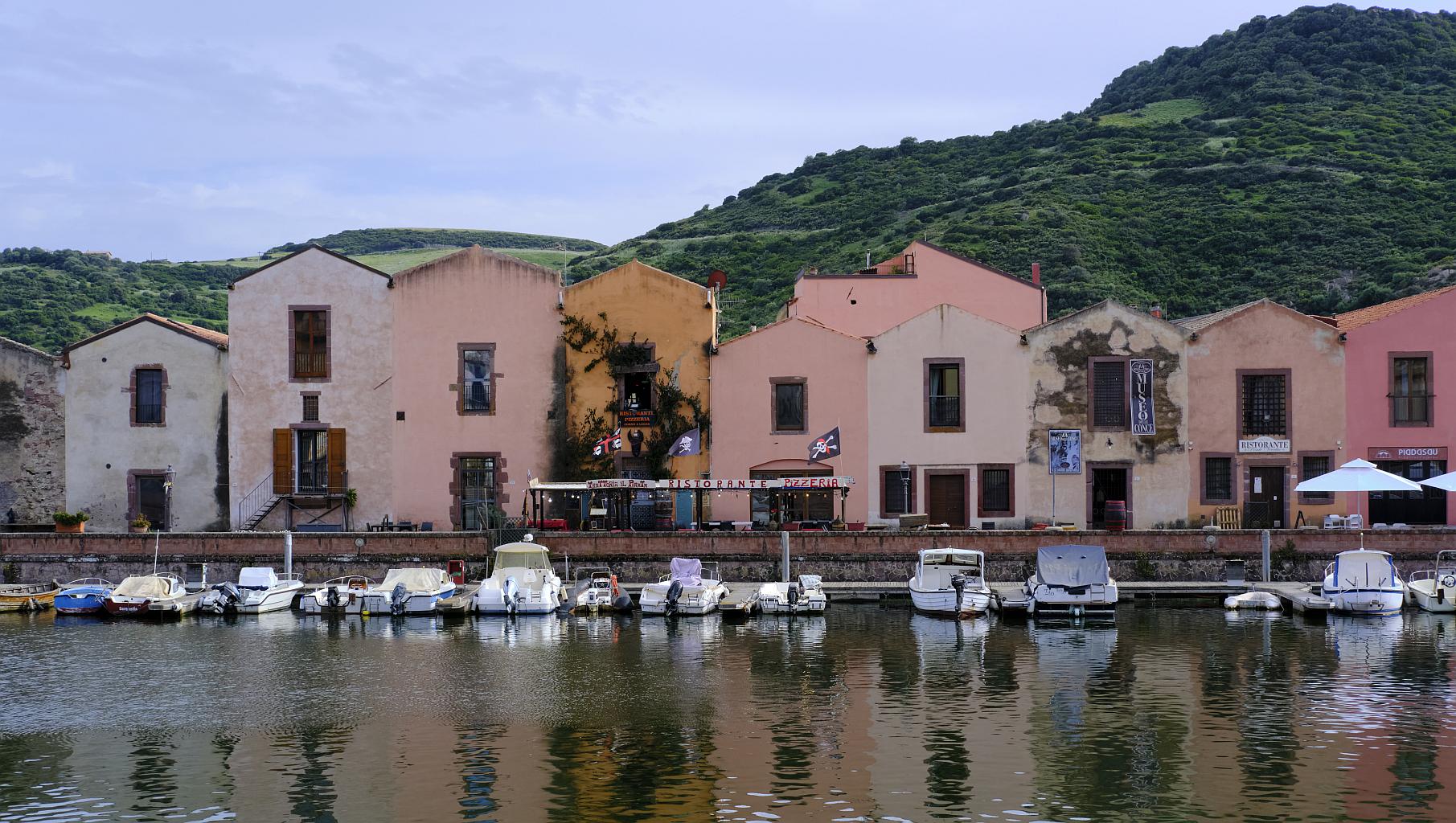
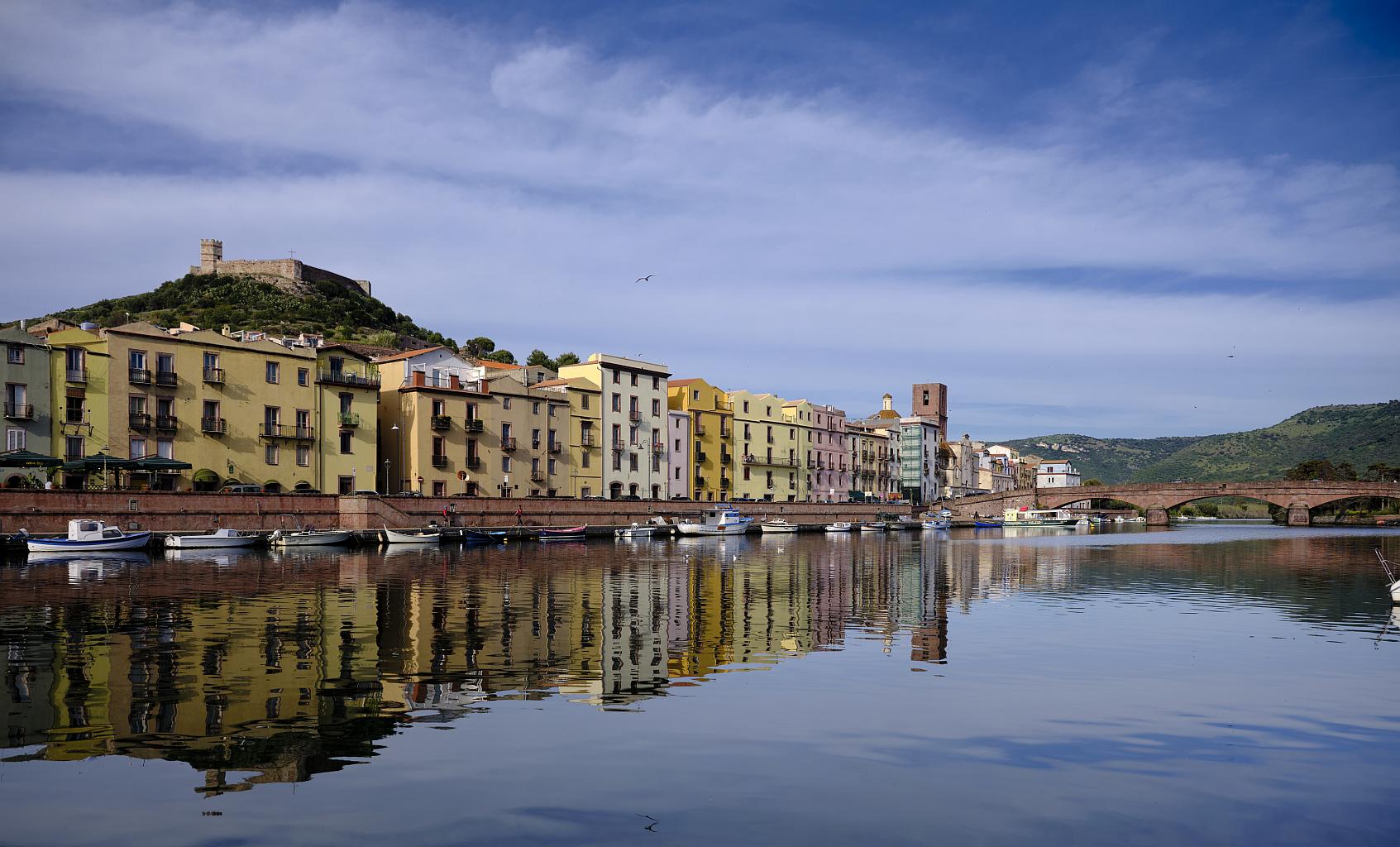
Bosa, view from the south bank of the river. Fujifilm GFX-50R digital camera, 32-64mm lens (click to enlarge).

The modern town of Bosa is a settlement on the Temo River about 3km upstream from the sea, and was founded in the 13th Century by the Malaspina family that also built the castle above the town. However there were Phoenician and Roman settlements closer to the coast in antiquity, since this would always have been an obvious place from which to trade into the interior.

In the 14th Century the town was acquired by the Aragonese, and it is said that the local language retained a distinct Aragonese influence. I’m not sure how robust these Sardinian sub-dialects are – firstly because they are competing with the officially-sanctioned Sardo, and secondly because in many regions of Italy younger people, if they use dialect at all, do so only when talking to their grandparents. Not that we would have noticed anyway because if not in English, people spoke to us in the clear standard Italian of which the Sardinians are proud.

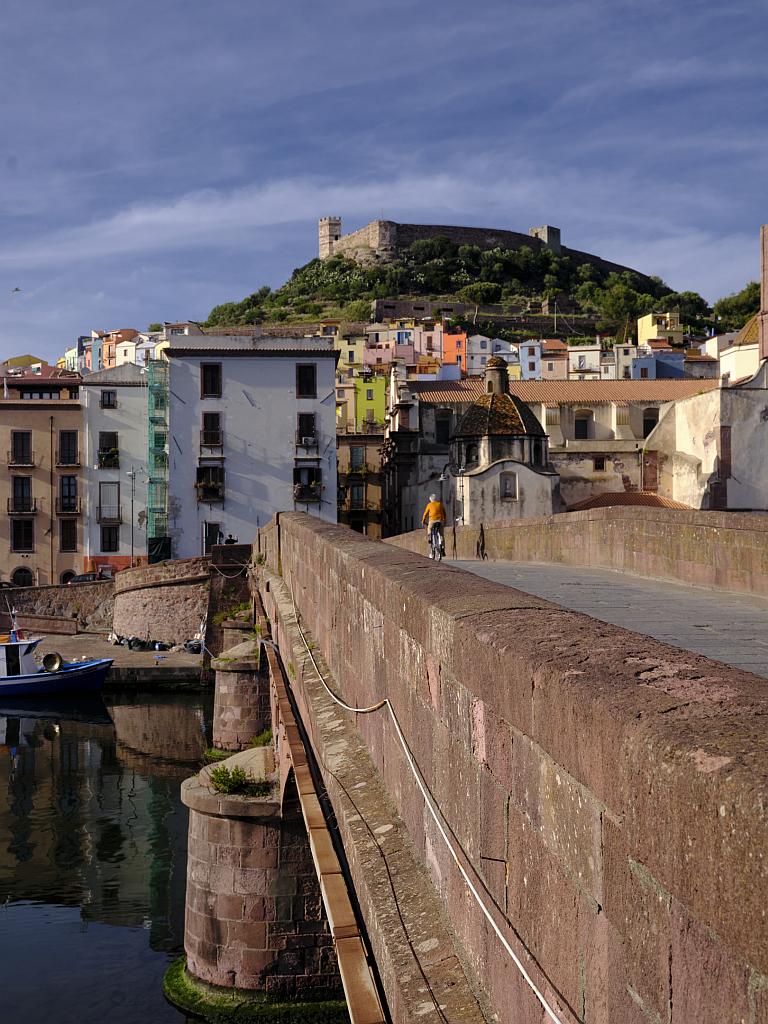
Bosa bridge
Bosa, the old bridge. Fujifilm GFX-50R digital camera, 32-64mm lens (click to enlarge).
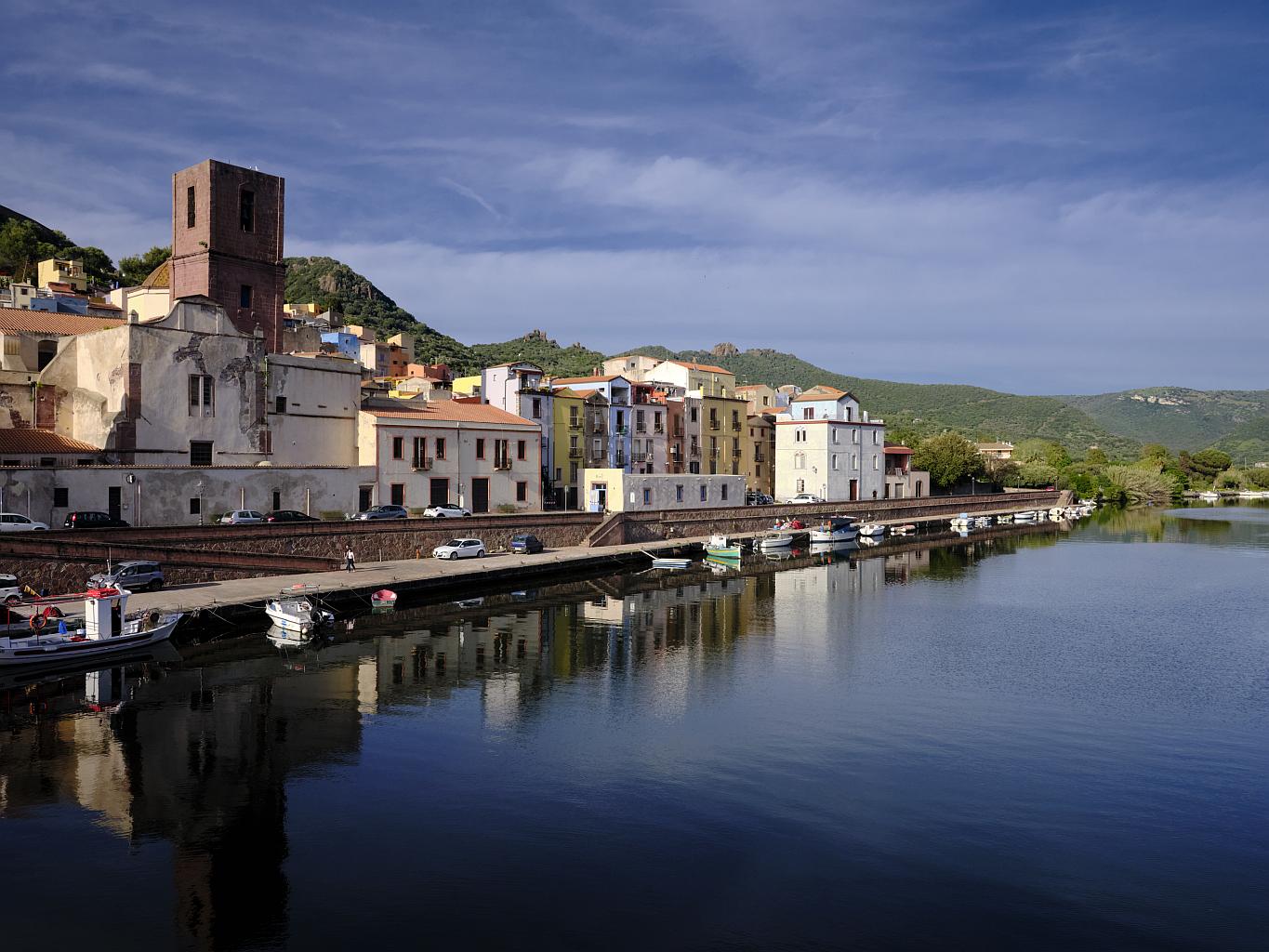
Bosa
Bosa, looking upstream from the bridge in the evening. Fujifilm GFX-50R camera, 32-64mm lens (click to enlarge).

The river is navigable as far upstream as the town, so despite its distance from the coast fishing would still have been part of the economy. Another major contributor to the local economy was the tanneries (conce) that lined the south bank of the river and operated until the 20th Century. Tanning leather produces a lot of smelly liquid waste so being on a river would have helped to get rid of it. After a period of lying derelict, these old tanneries are starting to be redeveloped into bars and restaurants.

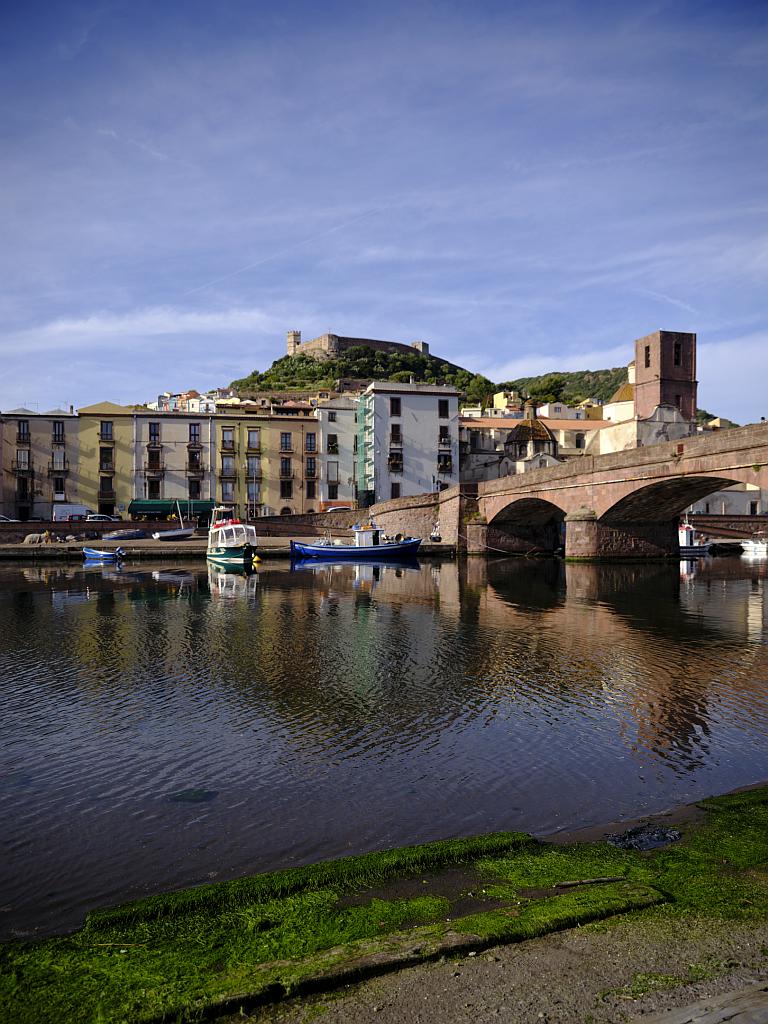
Bosa
Bosa, the old bridge from the south bank. The ramp on which I am standing is in front of the old tanneries, where presumably the hides would have been unloaded. Fujifilm GFX-50R digital camera, 32-64mm lens (click to enlarge).
Bosa tanneries
Bosa, the old tanneries. Fujifilm X-Pro 3 digital camera, 56mm lens (click to enlarge).
Bosa Tanneries
Bosa, the old tanneries at dusk. Fujifilm X-Pro 3 digital camera, 35mm lens (click to enlarge).

The Coast Road

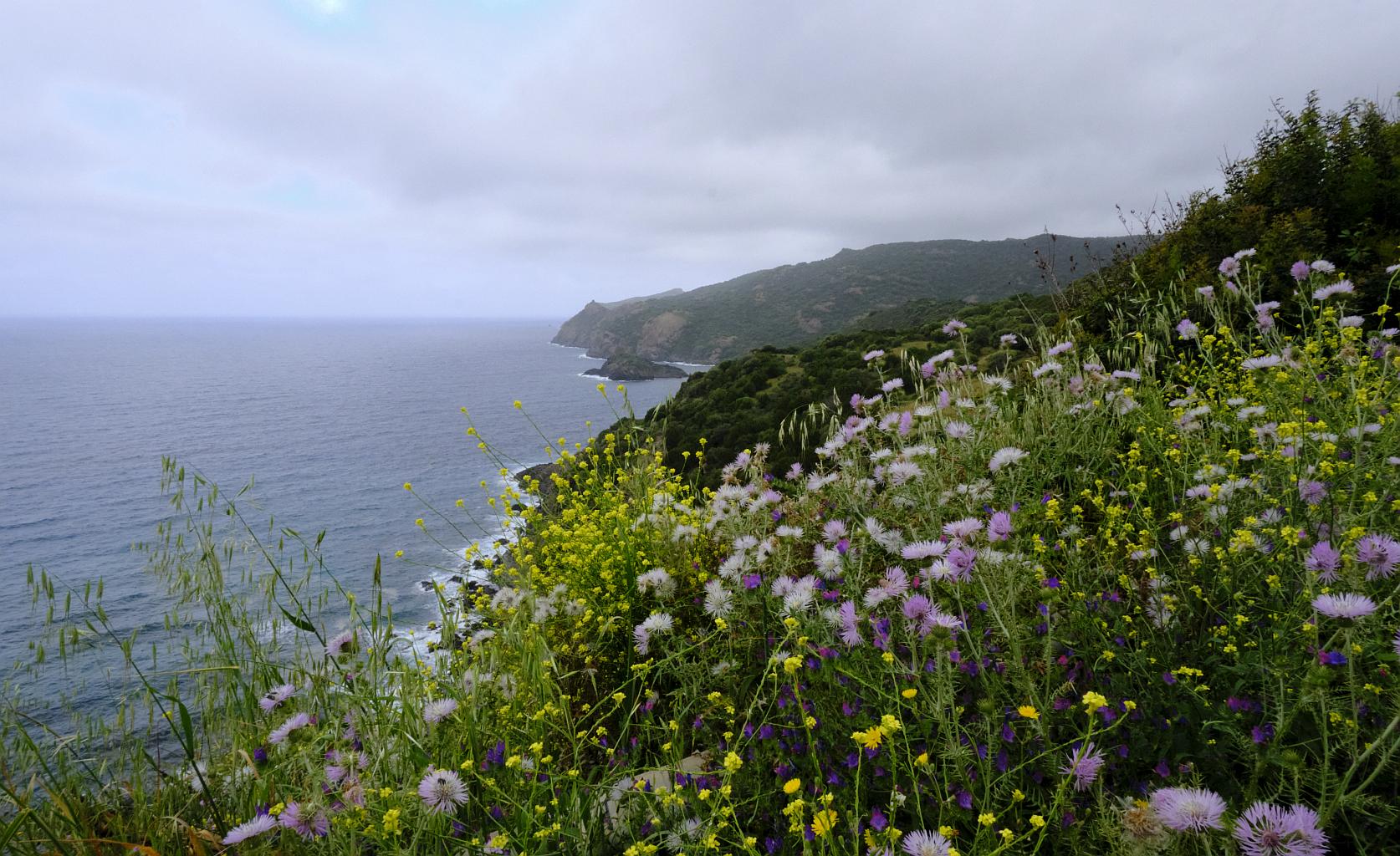
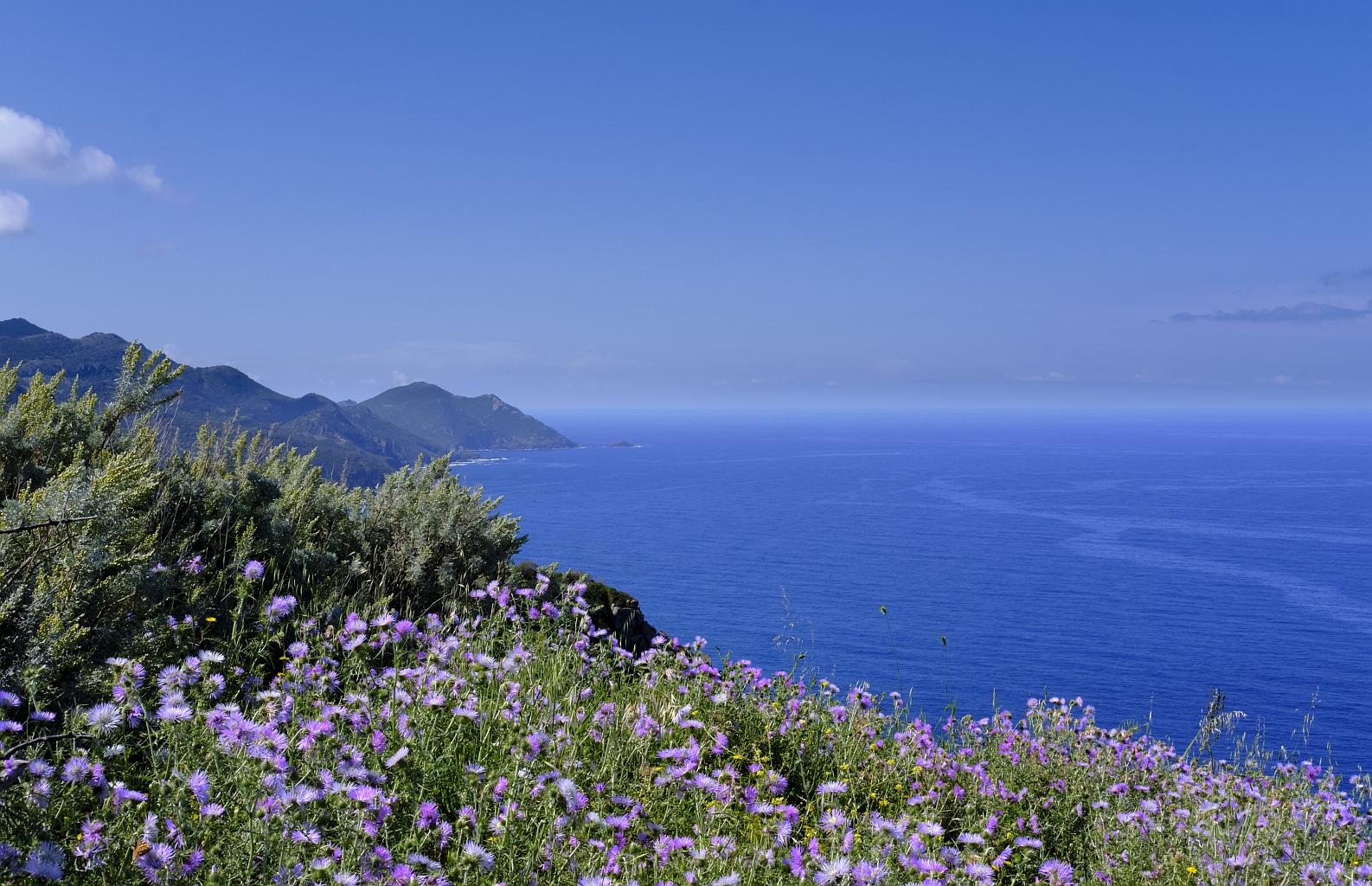
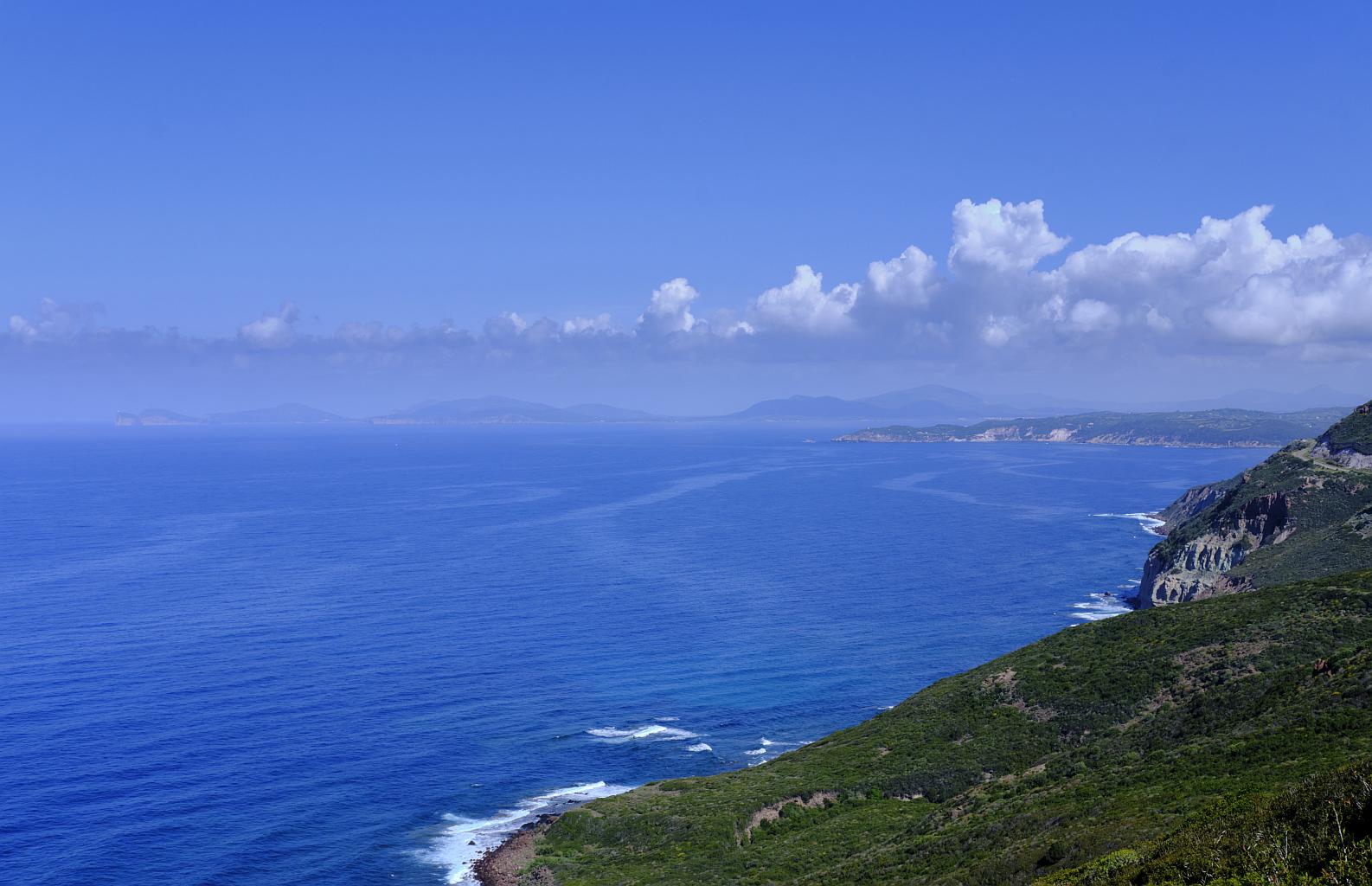
One of the trips we did from Bosa was to the town of Alghero, on the coast about 50km to the north. Rather than take the main roads on the inland route, we took the coastal road (SP49) which is genuinely spectacular and – apart from the typically challenging Sardinian road surface – deserves to be ranked among the great coastal drives of the world. We did it twice; the first time in rather changeable weather, the next day in bright sunshine. The clouds on the first day were to be expected as the west coast of Sardinia is a weather coast where the warm moist air comes in off the sea and hits the mountains, which generates clouds. There is even a local saying which translates to “do like in Bosa, when it rains, let it rain” or in other words, don’t try and change what you can’t control.

SP49 Cloudy
View from the coast road on a cloudy day. Fujifilm X-Pro 3 digital camera, 16mm lens (click to enlarge).
SP49
A similar view on a sunny day. Fujifilm X-Pro 3 digital camera, 16mm lens (click to enlarge).
SP49
Getting closer to Alghero. In the distance you can see the cliffs of Capo Caccia. Fujifilm X-Pro 3 digital camera, 35mm lens (click to enlarge).

One attraction of Sardinia for the non-Italian visitor is the number of so-called “wild” beaches, which are beaches that are not operated as commercial concessions and covered in rows and rows of umbrellas, doubtless lined up with laser devices, such is the uniformity of the distance between them. Instead you can just walk onto them and sit down anywhere you like. In other words, “wild beaches” in Italy are what in Australia we call “beaches”.

Wild beach
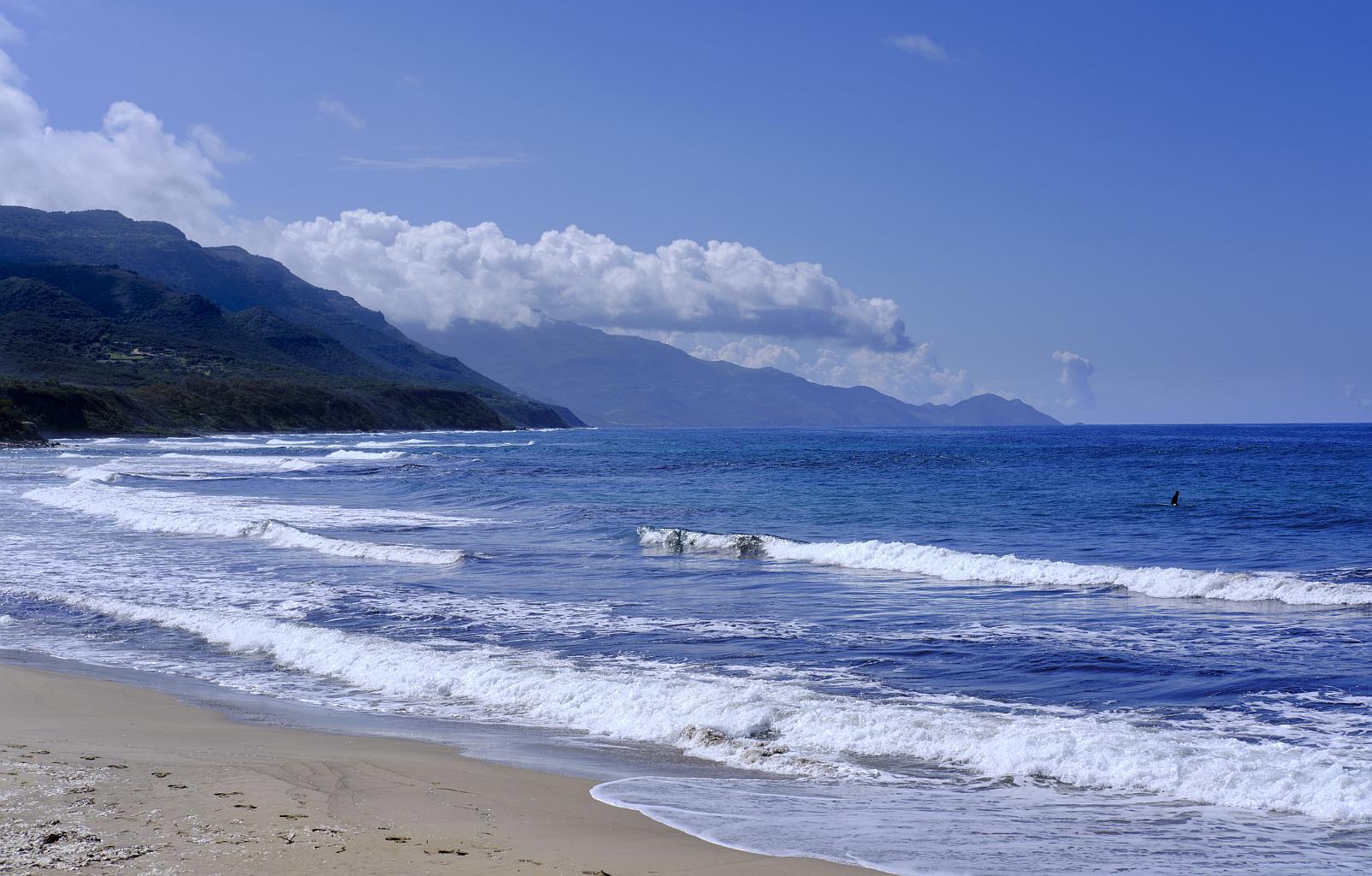
A “wild beach” on the road from Bosa to Alghero. Note the clouds forming over the mountains as the moist sea wind hits them. Fujifilm X-Pro 3 digital camera, 35mm lens (click to enlarge).
Wild beach
Two concrete machine gun emplacements at the end of the beach. Fujifilm X-Pro 3 digital camera, 35mm lens (click to enlarge).

A reminder of the 1940s is that at the end of such beaches you are likely to see concrete machine-gun bunkers located where they could put down fire on an attempted amphibious landing. However apart from the heavy bombing of the naval and air bases at Cagliari, World War II, like many other wars, bypassed Sardinia. Before the Allies could launch an invasion the Italians had surrendered, and the Germans withdrew to Corsica.

Alghero

Alghero is in a picturesque setting; to the north the coast curves around, ending in the sheer cliffs of Capo Caccia. It has quite a large population and there is a lot of modern development surrounding the old town, but the approach from the south offers a few viewpoints from which the modern parts can be largely excluded, with the right focal length lens.

Alghero
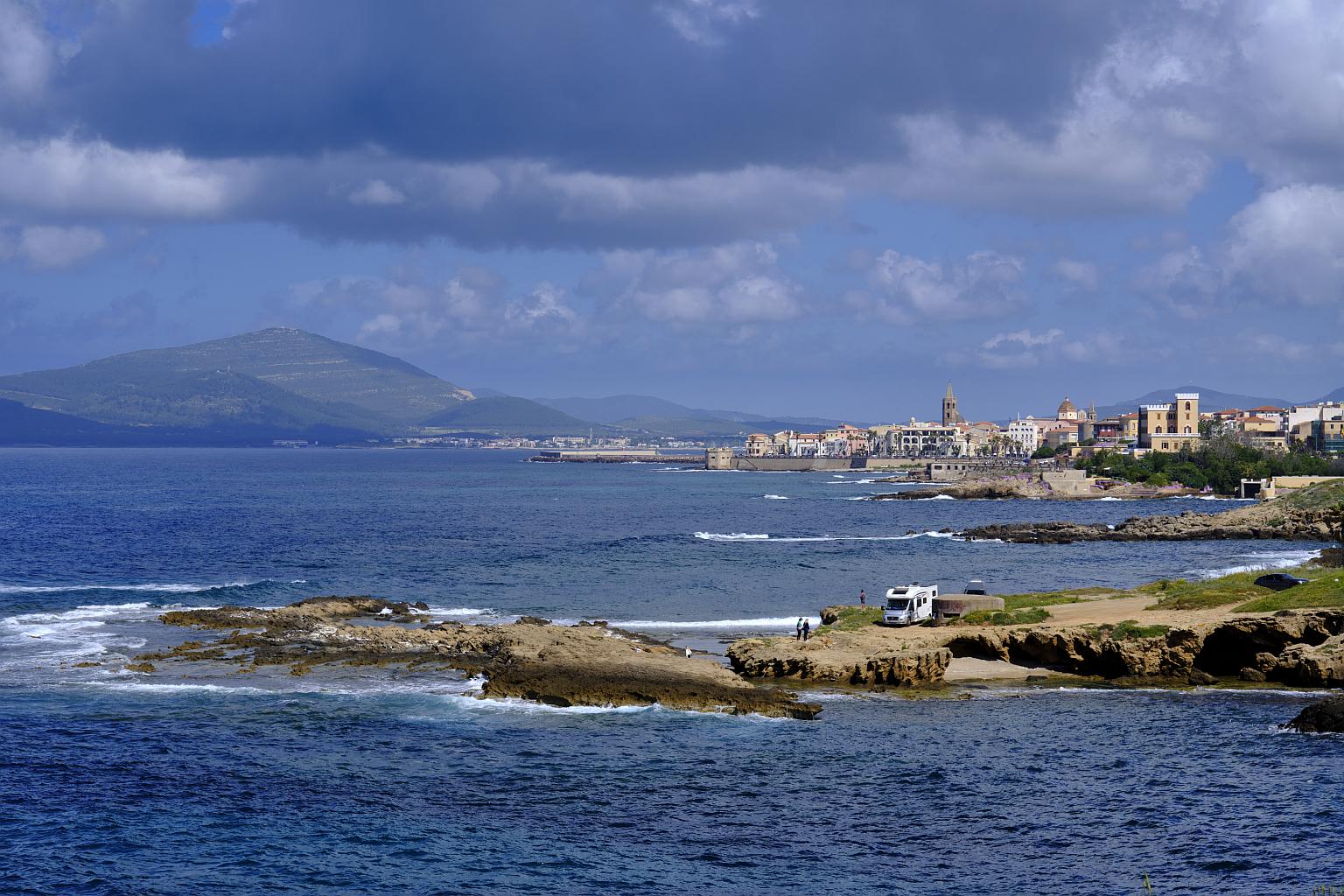
Alghero from the south. Note that the camper van is parked next to another World War 2 concrete bunker. Fujifilm X-Pro 3 digital camera, 56mm lens (click to enlarge).

The history of Alghero is as we were coming to expect from Sardinian coastal towns – the Phoenicians arrived in the 8th Century BC and established a town of mixed Phoenician and Sard population that traded metal ore from inland, refined it locally, and traded the results with foreigners, including the Etruscans on mainland Italy. The Phoenicians were followed by the Carthaginians, then the Romans, the Vandals and the Goths, then a period of self-government.

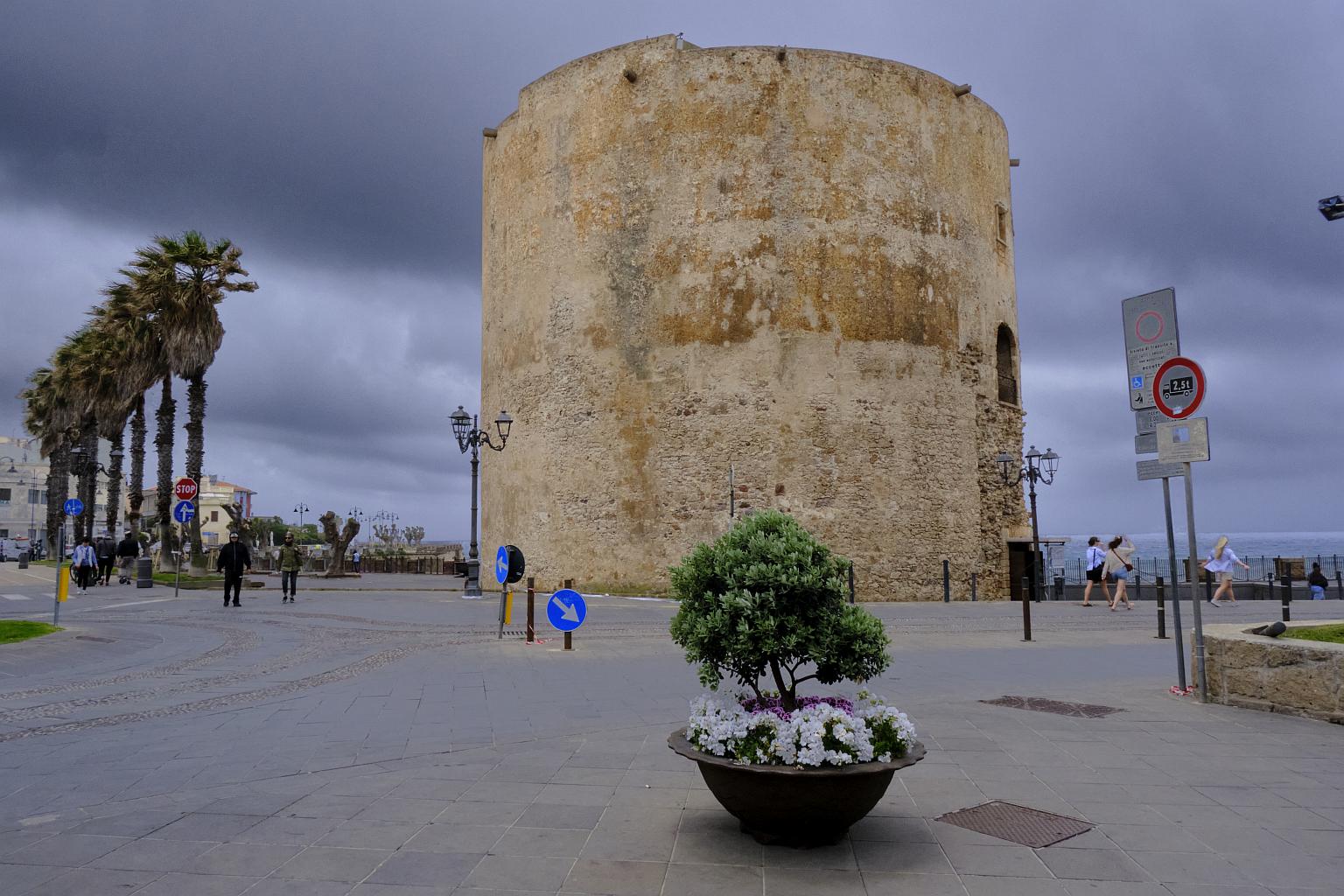
By the early 1100s, the Genoese had established a fortified port on the present site, near the site of the ancient town. The fortifications on the seafront date from then, but were repaired and improved several times until the 17th Century, so it is hard to tell how much the modern ones look like the original. My rule of thumb is that round towers and rounded fortifications post-date the introduction of cannon, so most of what you see is probably from later eras.

Alghero
Alghero – Torre de l’Esperó Reial, with what I assume to be a Catalan-influenced name. Fujifilm X-Pro 3 digital camera, 16mm lens (click to enlarge).
Alghero
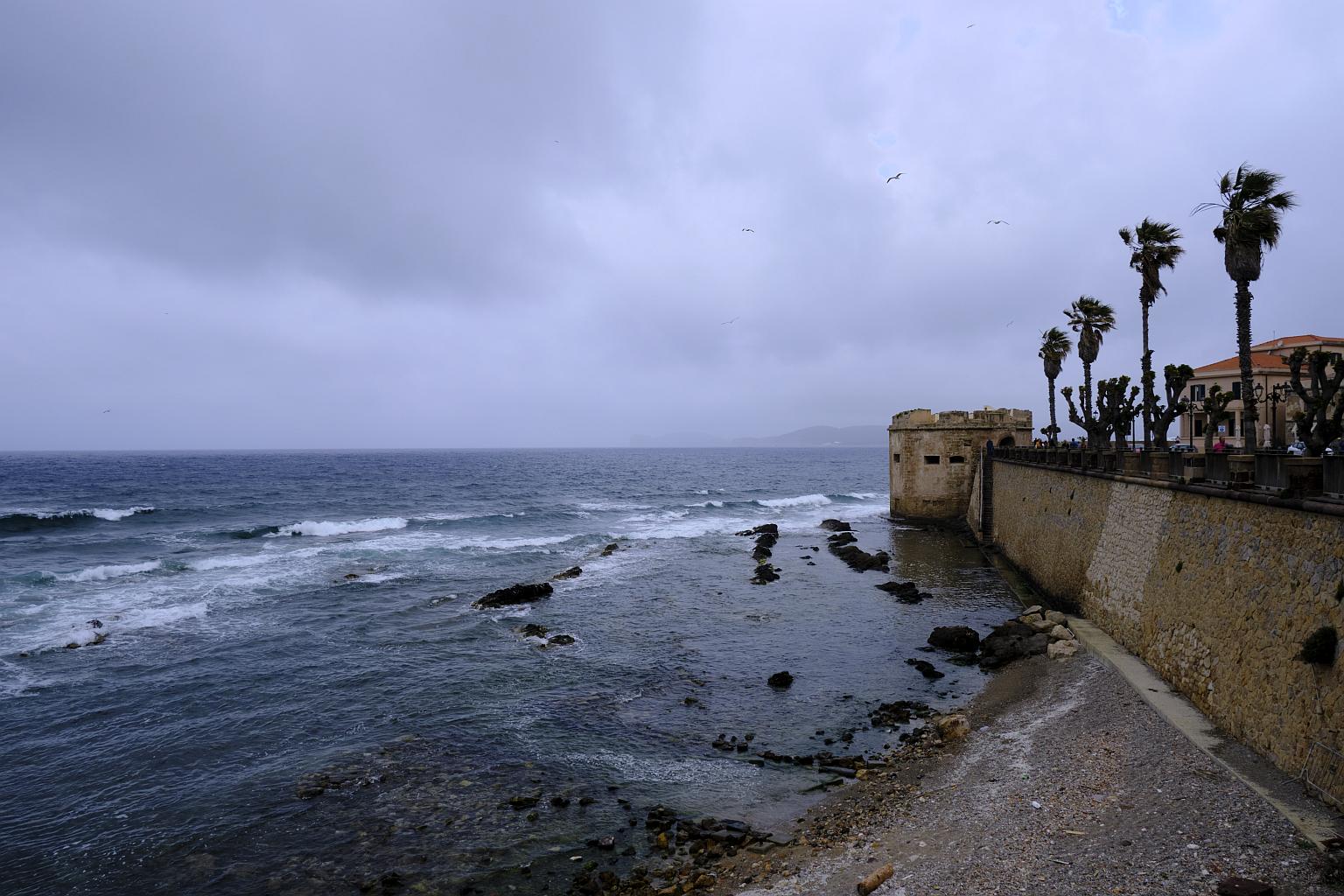
Alghero, the sea-facing fortifications. Fujifilm X-Pro 3 digital camera, 16mm lens (click to enlarge).

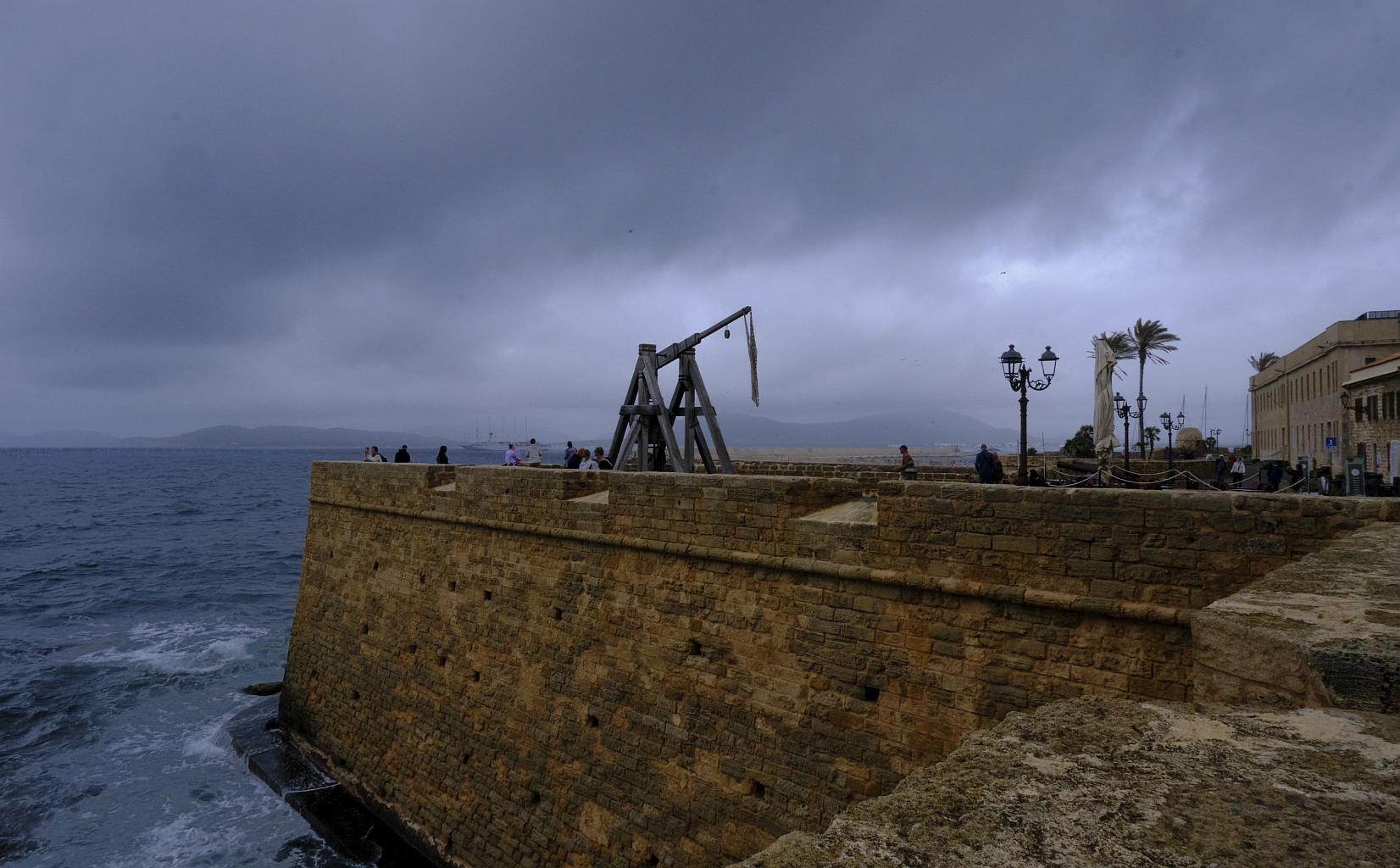
Some time in the considerably more recent past, someone had the bright idea of placing replica medieval catapults like trebuchets and mangonels on the top of the sea wall. The enthusiasm did not last long enough to keep them in good condition, so they are now somewhat deteriorated. Nonetheless the captain of a visiting French cruise ship obviously decided to play it safe and anchored well out of range of even a well-maintained trebuchet.

Trebuchet
Medieval catapult on the seafront at Alghero. Fujifilm X-Pro 3 digital camera, 16mm lens (click to enlarge).
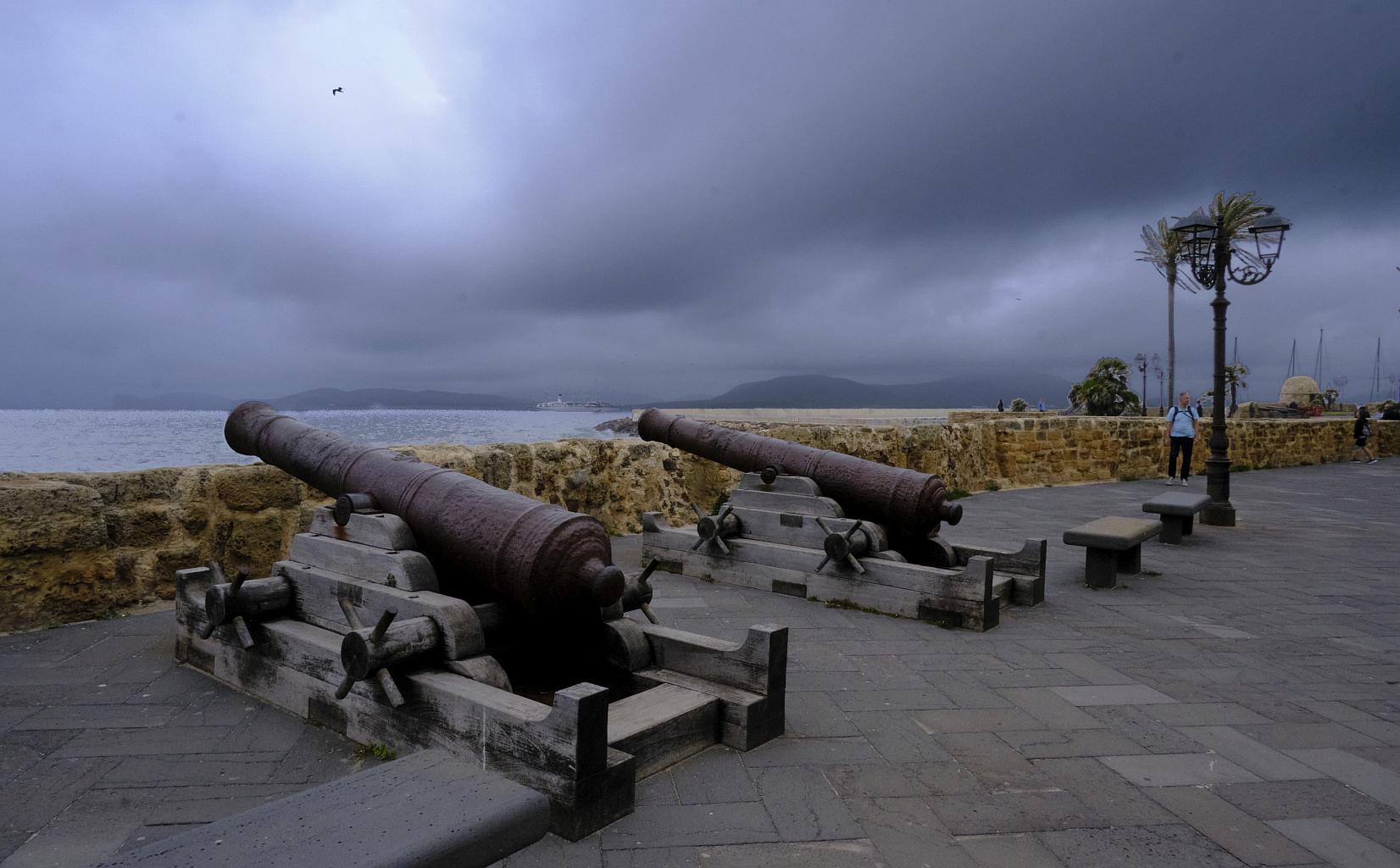
Cannons
These cannons might have been a bit more use against the cruise ship but they are pointing in the wrong direction. Fujifilm X-Pro 3 digital camera, 16mm lens (click to enlarge).

In the 14th Century, the Aragonese took Alghero from the Genoese, and encouraged colonisation from their domains in Spain, particularly Catalonia. Modern Algherese are very proud of their Catalan heritage, although to my untutored eyes and ears the signs of it are subtle. One is that the local restaurants offer paella, or a Sardinian variant thereof. Another is that the trenino, the little tourist train that meanders slowly through the town ruining people’s photographs, is called the Trenino Catalano. There are linguistic influences visible in street and shop names, but who knows whether these are genuine survivals or the results of more recent cultural enthusiasms. I wrote in A Brief Political History of the Italian Language that in the past there was some hostility to minority languages, especially under the Fascists, but I don’t know how that played out in Sardinia.

I did find an article online that says that Algherese Catalan is now spoken by only 18% of the population. The article also says that one factor in the relative decline has been the growth in the population of Alghero. Most of the immigrants came from the rural areas inland, and to the extent that they speak anything other than Italian, it would be Sardo.

The weather was cloudy and windy and a bit cool but we still had a pleasant wander along the waterfront with its fortifications, before finding a restaurant in a sheltered spot that offered Sardinian, rather than mock-Catalan, cooking.

Ancient Sardinia

Ancient Sardinia is something you cannot avoid – the remnants are everywhere and tell a fascinating story. Welcome to the second post based on material from a visit to Sardinia in May 2025. The first contained a general introduction and a series of photographs taken at the spectacular Festa di Sant’Efisio. In this one I propose to talk a bit about the many ancient remains to be seen, and to try and put them in a bit of historical context. But I’m not an expert – just a history dilettante with a camera. (Edit: I followed this post with one on The West Coast, and another called Dancing Monks and Hidden Billionaires.)

Nuraghi

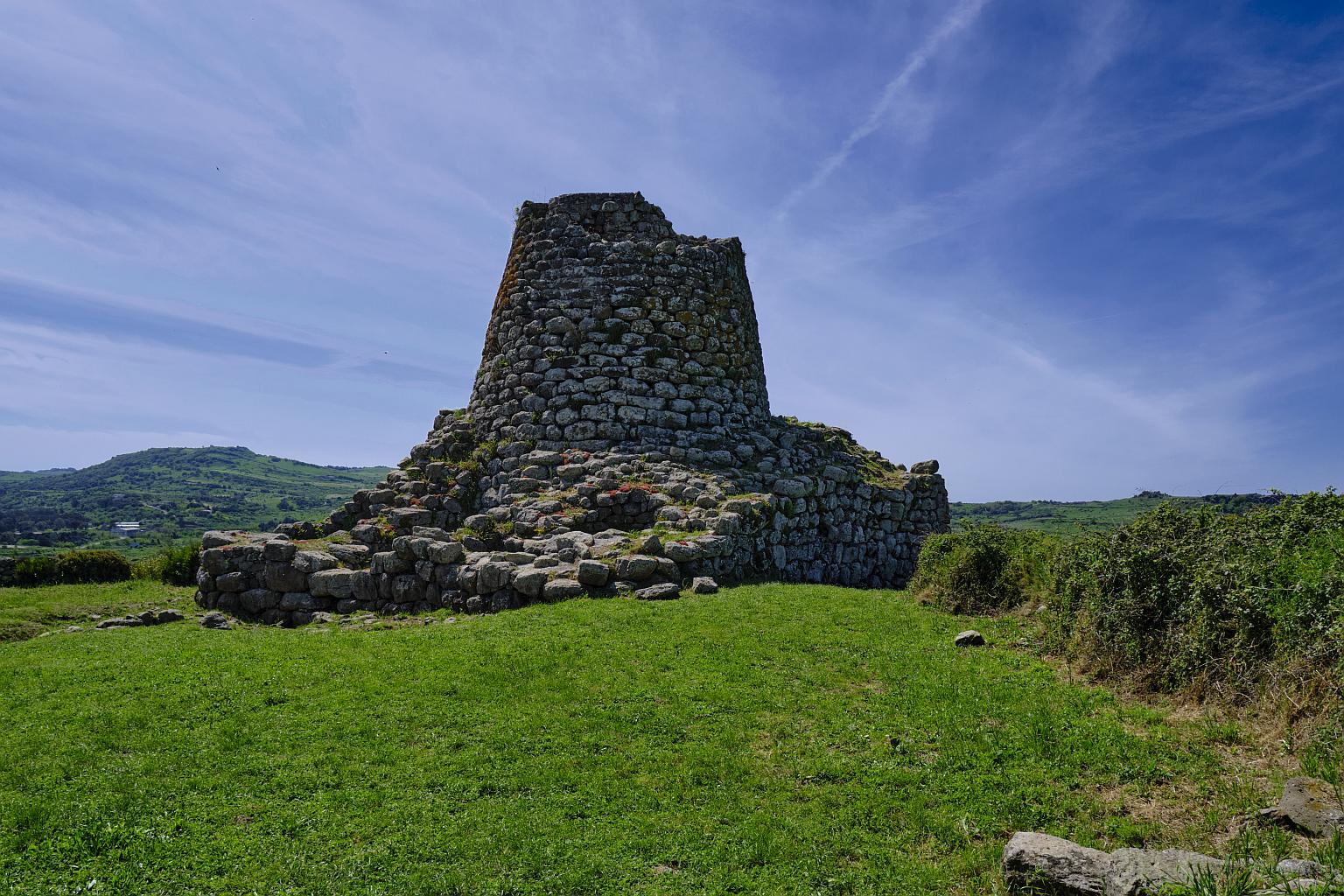
And what a lot of ancient things there are to photograph, especially the round towers called nuraghi, which gave their name to the “Nuragic” culture which lasted about a thousand years from the mid-Bronze Age into the Iron Age. The first time we got an opportunity to stop and look at a nuraghe I was very excited and walked briskly for about 20 minutes up a steep path for the privilege. By the next day we had seen so many that we only stopped if they were in particularly attractive settings, or they were in recognised archaeological sites that we intended to visit. After a week or so we had almost ceased to notice them. Apparently around 7,000 remain of an estimated 10,000, and Sardinia is not that big, so it is hardly surprising that you keep coming across them.

Nuraghe Santa Barbara
Nuraghe Santa Barbara near the town of Macomer, which I walked 20 minutes to see. Fujifilm X-Pro 3 digital camera, 16mm lens (click to enlarge).

We noticed that most nuraghi bore the names of Christian saints. I didn’t read anything that said they were ever used as churches (although who can say what happened in early medieval times). But if a nuraghe was associated with a saint then perhaps they were considered to come under the that saint’s protection, and maybe that is why so many survive, at least partially. No doubt there are scholars who can answer that.

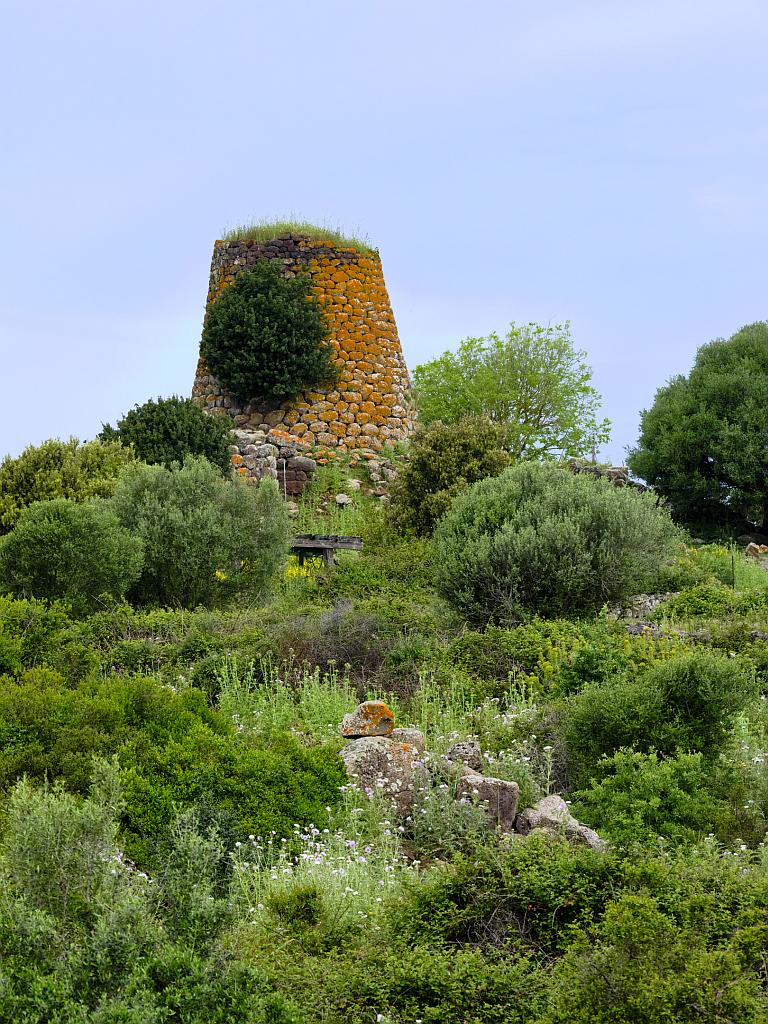
Nuraghe near Suni
Unnamed but picturesque nuraghe near the town of Suni, right beside the road so no walking needed. You might think that it was in a cultivated garden, but that is all just native “macchia” vegetation in spring. Fujifilm GFX-50R digital camera, 100-200mm lens (click to enlarge).

But let us step back a bit and try and put the Nuragic culture in context. Signs of human habitation in Sardinia date back to palaeolithic times, including temples and Stonehenge-style dolmens. But it was in the Bronze Age that signs of a thriving, wealthy and distinctive culture start to appear.

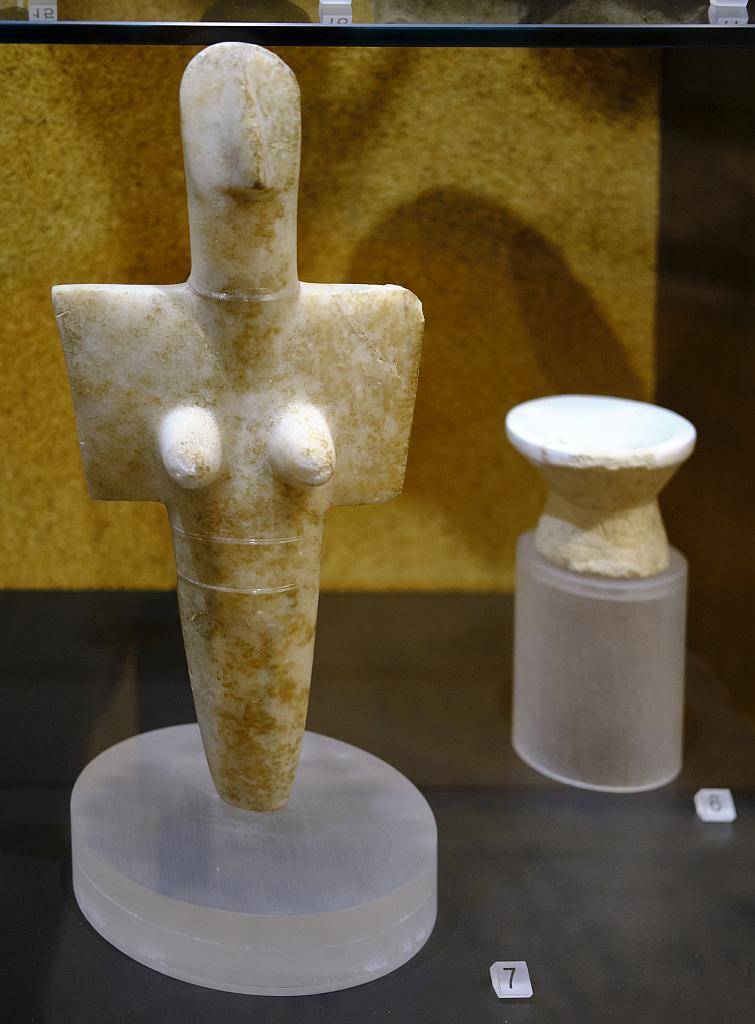
Female Divinity
Statue of a female divinity from the late Neolithic, Cagliari Archaeological Museum. Fujifilm X-Pro 3 digital camera, 35mm lens (click to enlarge).
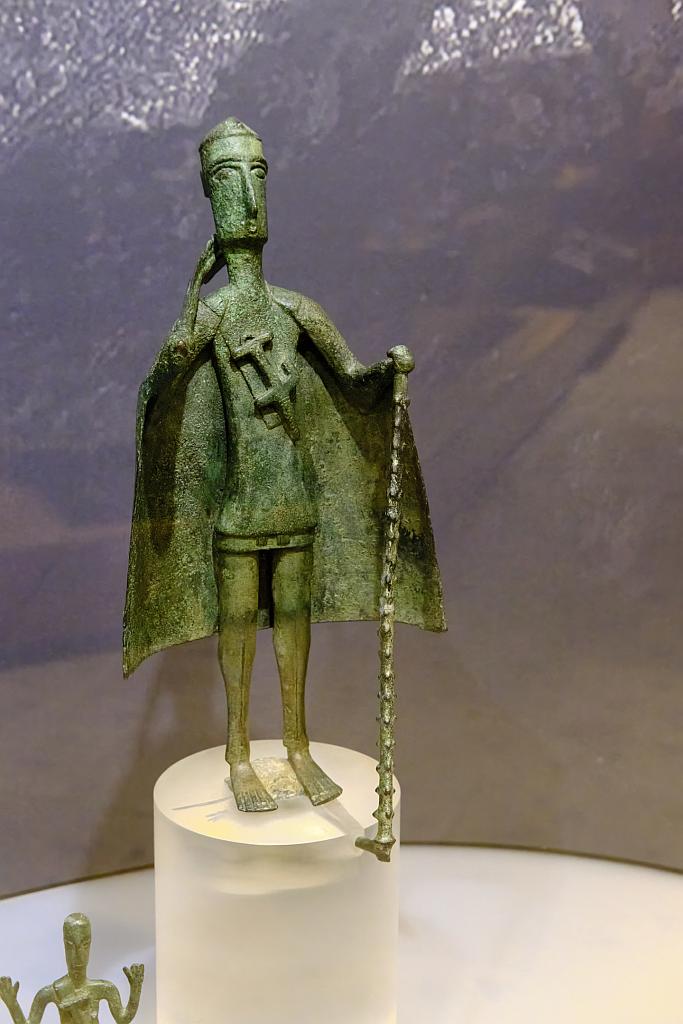
Chieftain
Bronze Age figure of a chieftain, with a dagger worn across his chest. The museum has an example of an actual dagger with the same characteristic crooked hilt, but my photograph of it was ruined by reflections in the glass. Cagliari Archaeological Museum. Fujifilm X-Pro 3 digital camera, 35mm lens (click to enlarge).
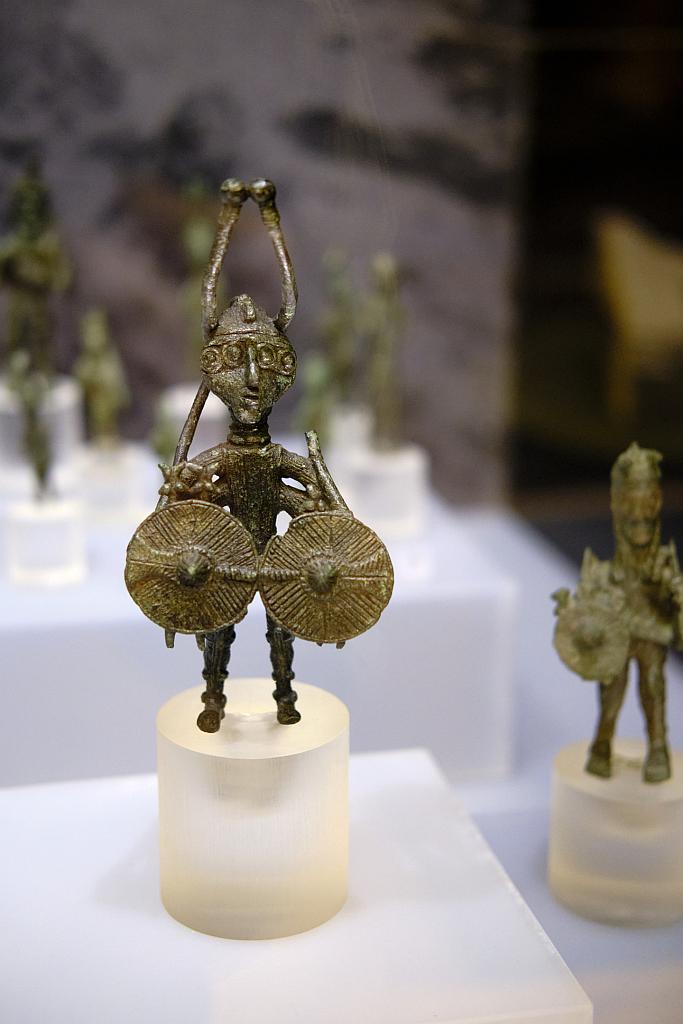
Warrior
Bronze figure, of what I am not sure. Cagliari Archaeological Museum. Fujifilm X-Pro 3 digital camera, 35mm lens (click to enlarge).
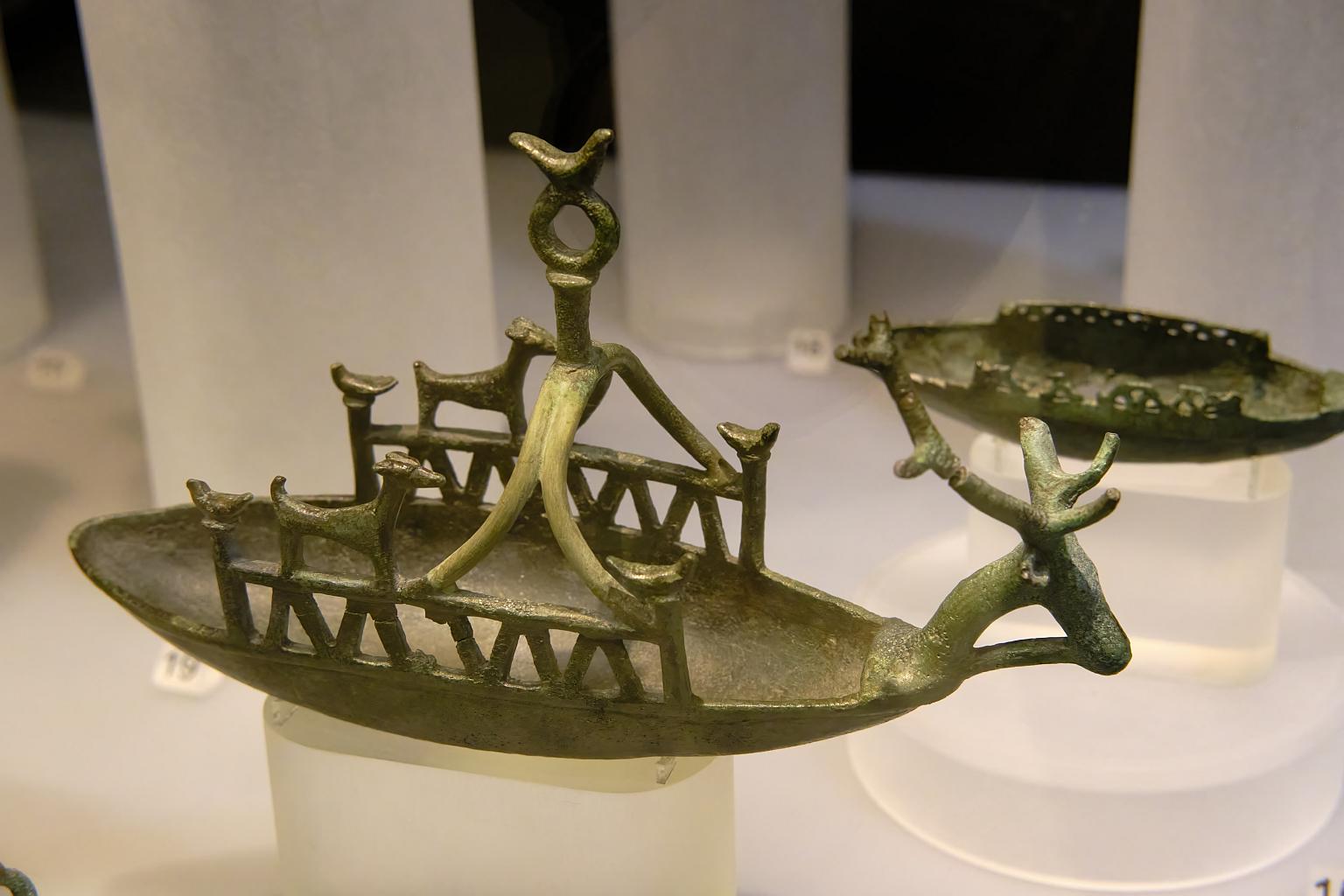
Votive boats
Votive models of boats, with dogs and birds. Cagliari Archaeological Museum. Fujifilm X-Pro 3 digital camera, 35mm lens (click to enlarge).

I mentioned briefly in the earlier article how Sardinia is geologically different from mainland Italy. One feature of that geology is that it was rich in minerals including silver, tin and copper – the latter two of course being the constituents of bronze. So the Sards had things to trade, and some artefacts from Mycenaean Greece have been found in Sardinia. Wealth means the emergence of a hierarchical society, included priestly and warrior classes.

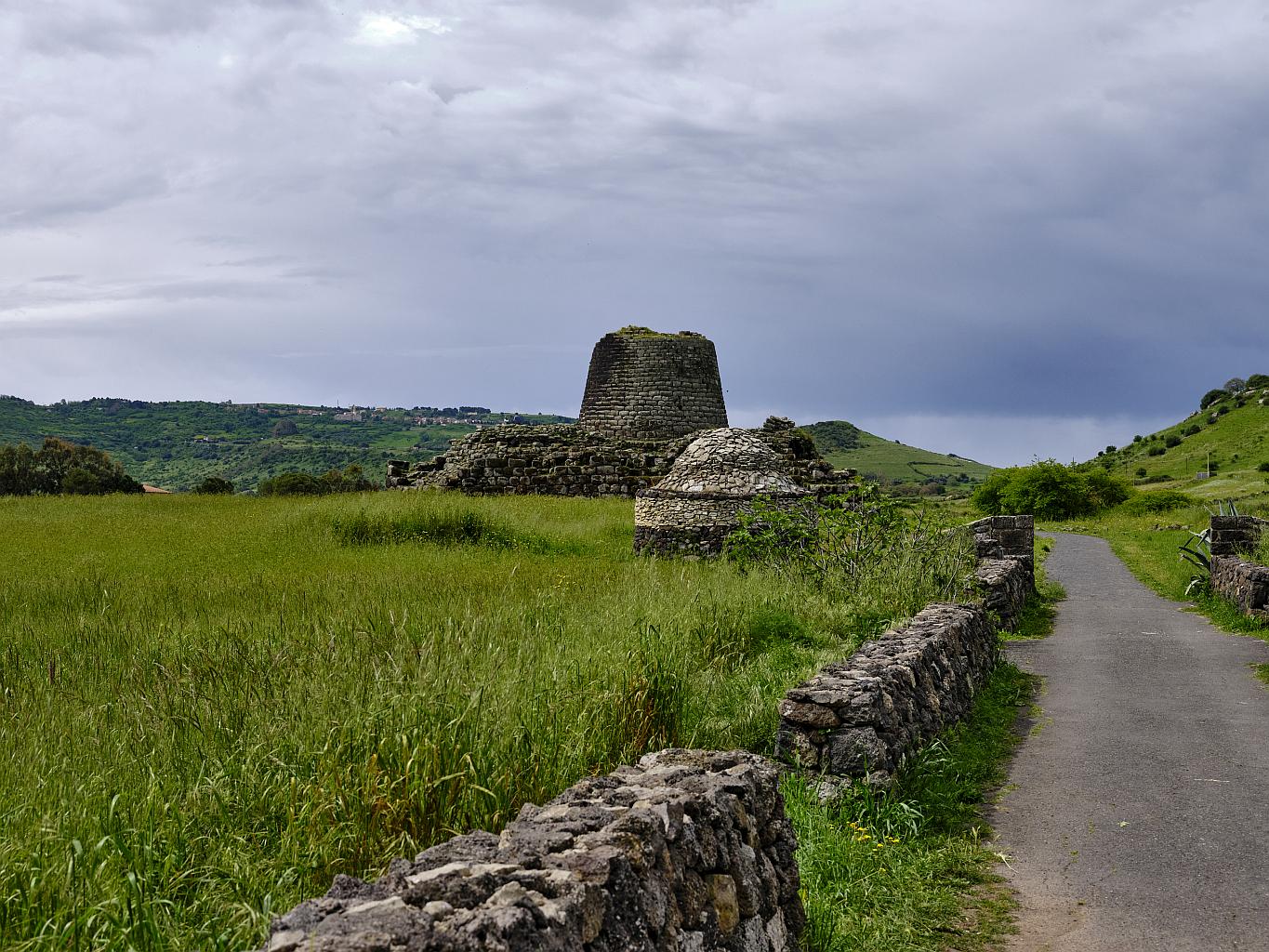
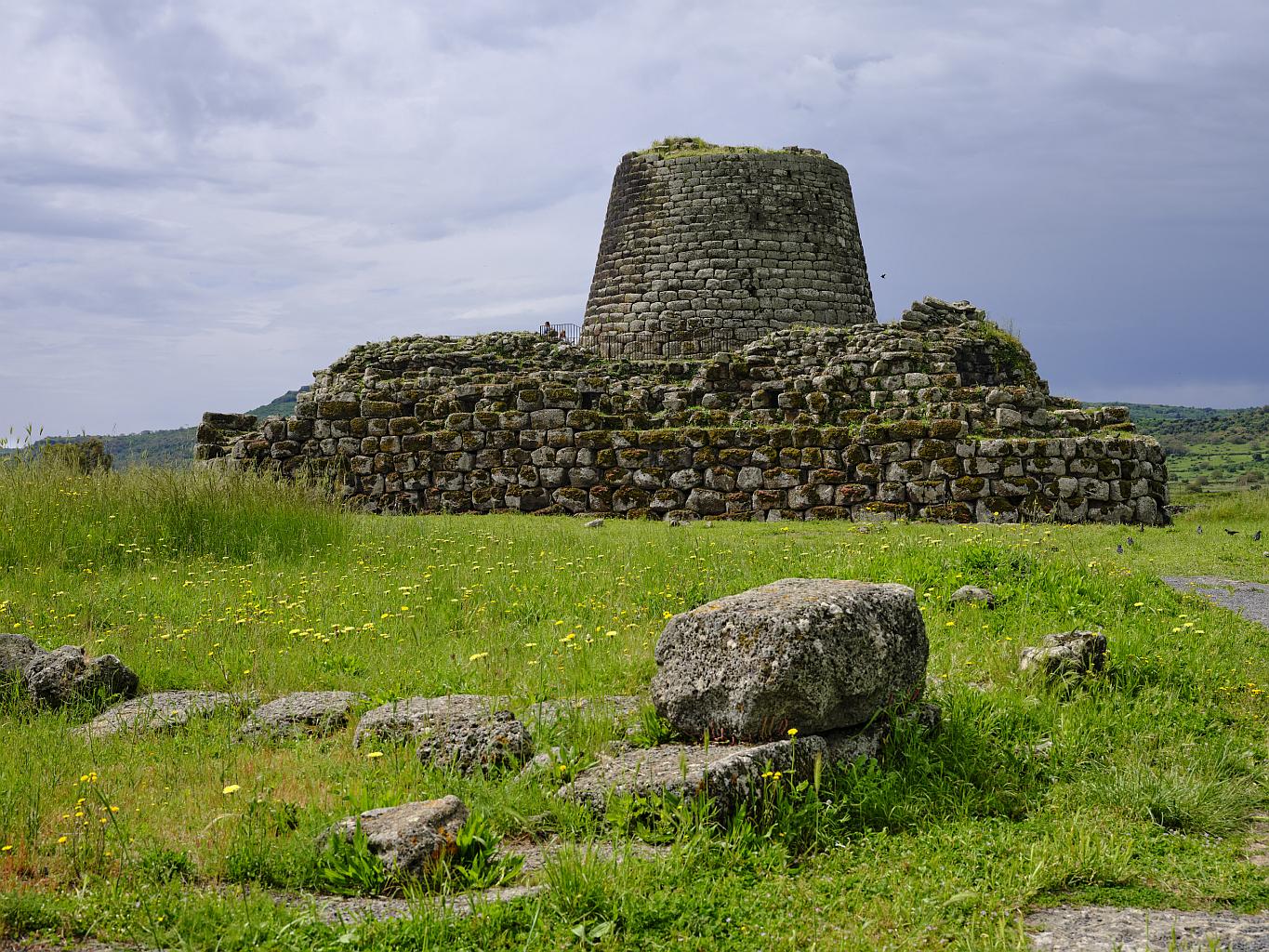
Most nuraghi are single round towers, but some major ones, described as palaces, were complexes of towers. Our guide book recommended one such, called Santu Antine, near the town of Torralba, so we paid it a visit.
Nuraghe Santu Antine
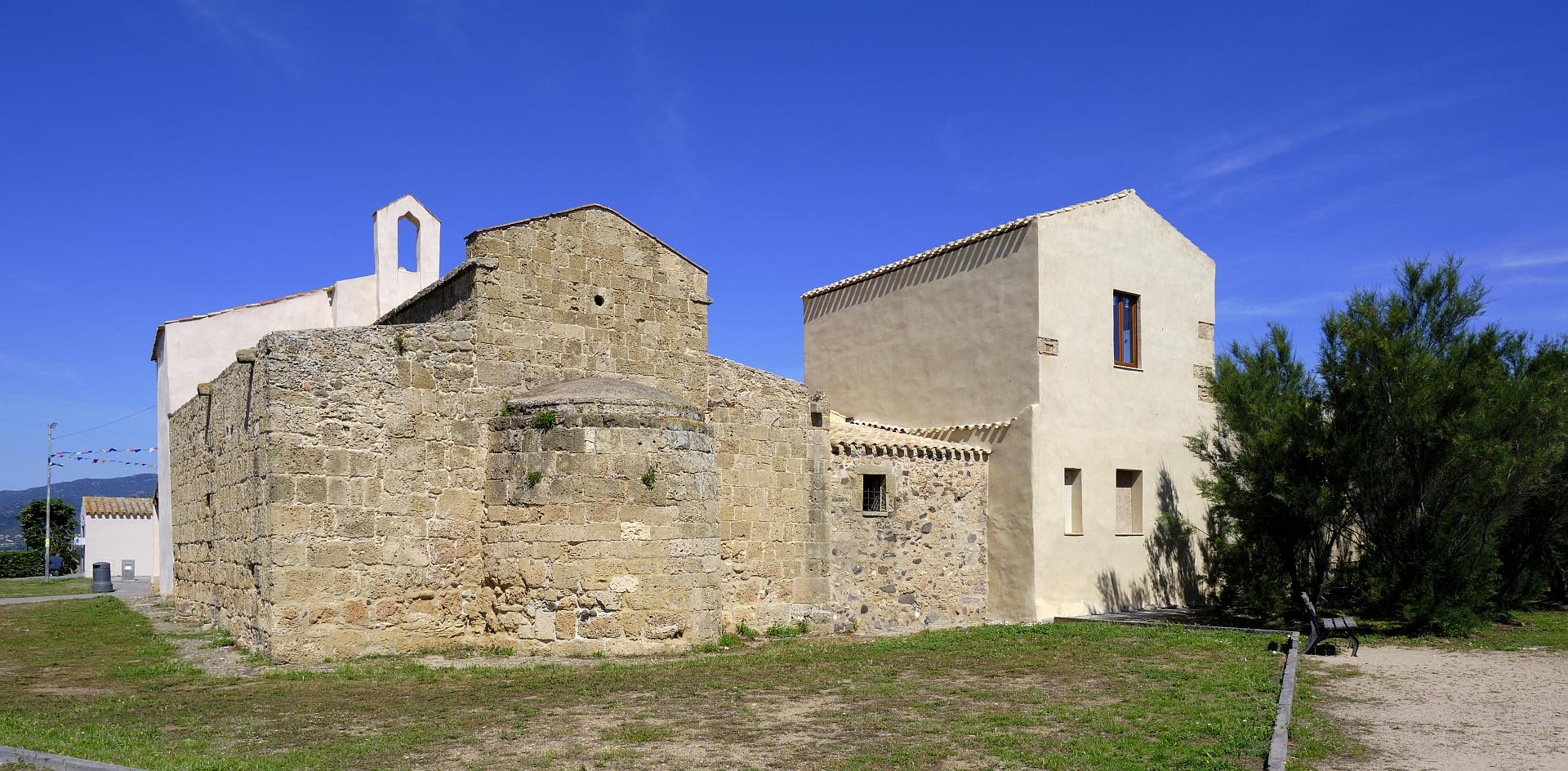
Nuraghe Santu Antine. The little hut in the foreground is mostly a reconstruction. Fujifilm GFX-50R digital camera, 32-64mm lens (click to enlarge)

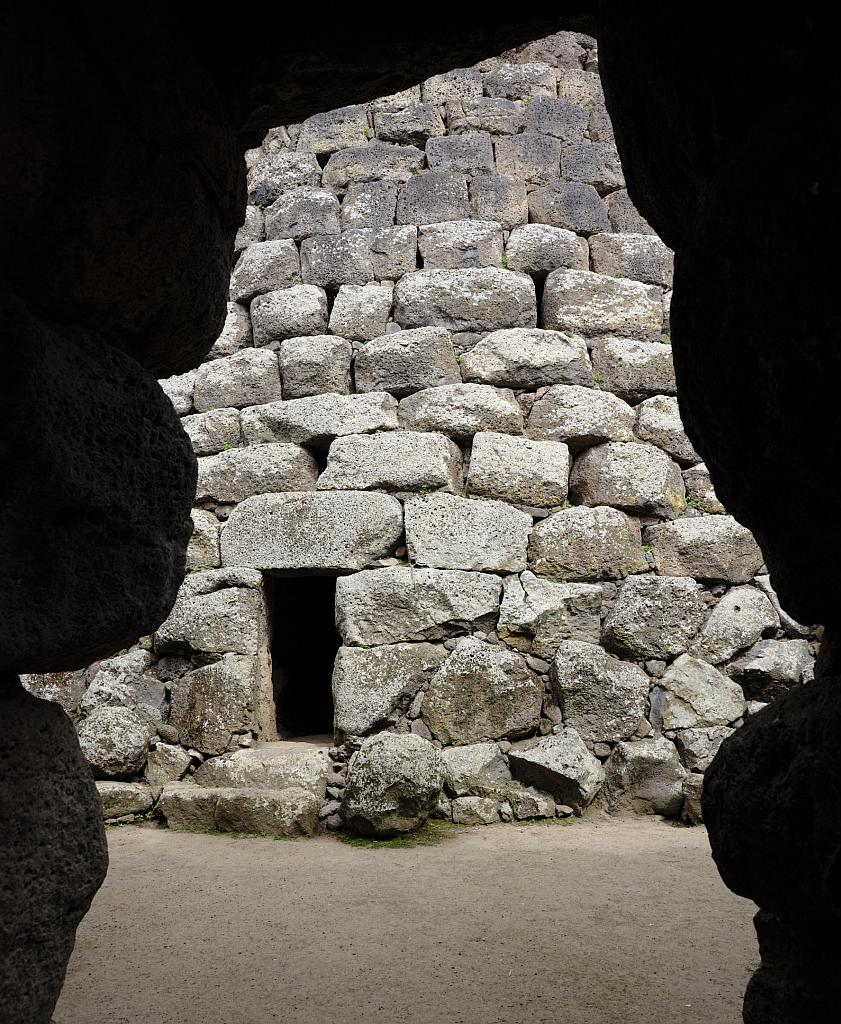
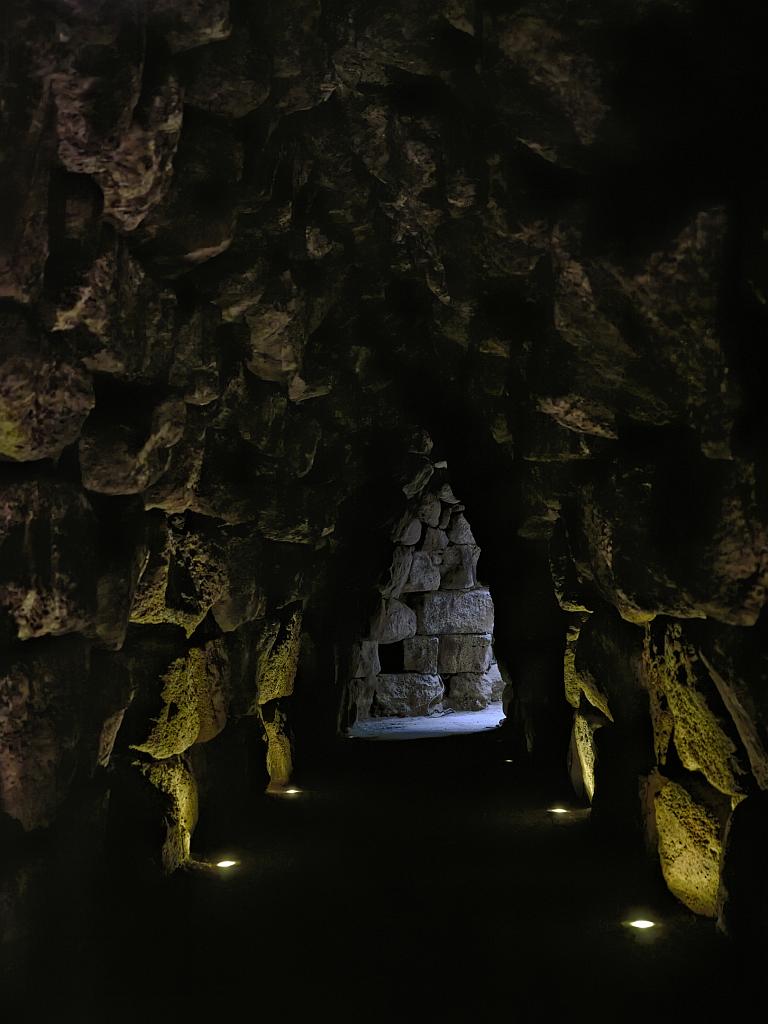
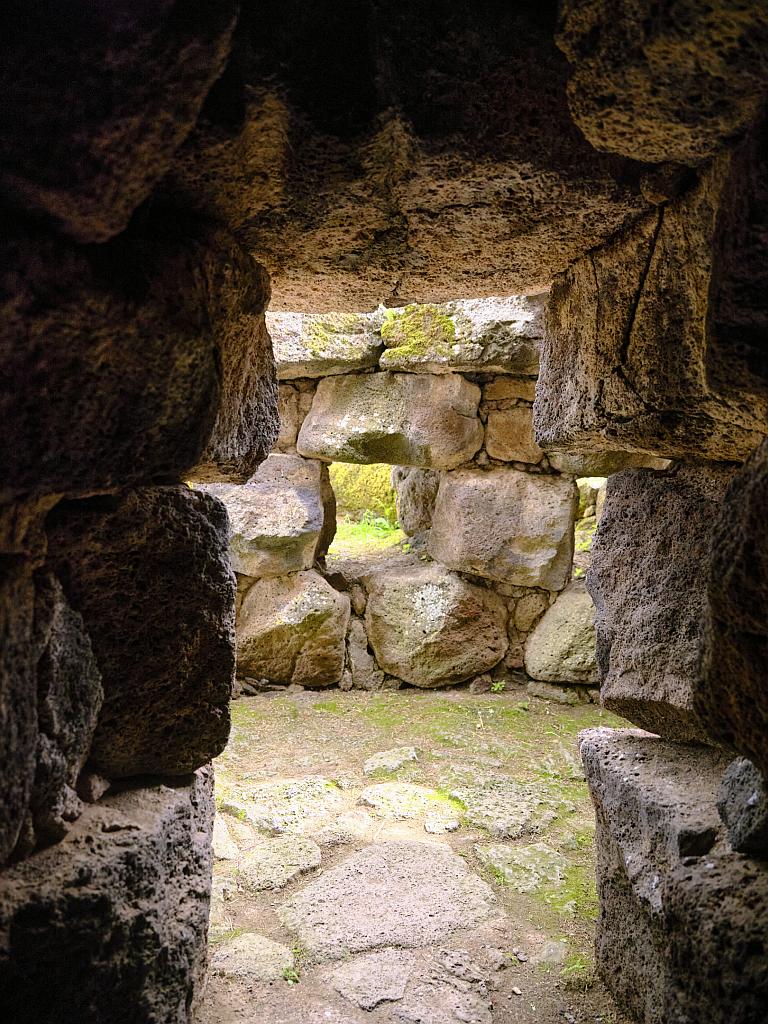
Not only is Santu Antine bigger than the average, but it is surrounded by the remains of a couple of dozen houses, so it must have been a substantial community. For something that is about four thousand years old, and of drystone construction (ie. made without mortar) it is in very good condition. What is even more remarkable is that you can access the internal chambers and climb up the narrow staircase that winds up inside the walls. Rather than an empty cylinder with levels separated by wooden floors, the insides of nuraghi were actually more like a series of domed stone chambers on top of each other, so very robust and hence still largely intact. The timescales involved challenge the imagination. Santu Antine has been abandoned for two thousand years, but was continuously inhabited for fifteen hundred years before that.

Nuraghe Santu Antine
Nuraghe Santu Antine. To get an idea of the scale, you can make out a couple of visitors just to the left of the circular tower. Fujifilm GFX-50R digital camera, 32-64mm lens (click to enlarge).
Nuraghe Santu Antine
Nuraghe Santu Antine, inside the outer wall, with one of the entrances to the tower. Fujifilm GFX-50R digital camera, 32-64mm lens (click to enlarge).
Nuraghe Santu Antine
Nuraghe Santu Antine. An internal passage, showing the massive stone vaulting. Fujifilm GFX-50R digital camera, 32-64mm lens (click to enlarge).
Nuraghe Santu Antine
Nuraghe Santu Antine. Emerging onto the platform halfway up. Fujifilm GFX-50R digital camera, 32-64mm lens (click to enlarge).

Like every nuraghe we saw, the upper part was missing. The technique of building them was that as the tower got higher, the basalt blocks of which it was made got smaller and lighter. This presumably made the upper stones easier to scavenge for reuse in other buildings. We certainly saw a few churches that had what looked like nuraghi stones in the walls.

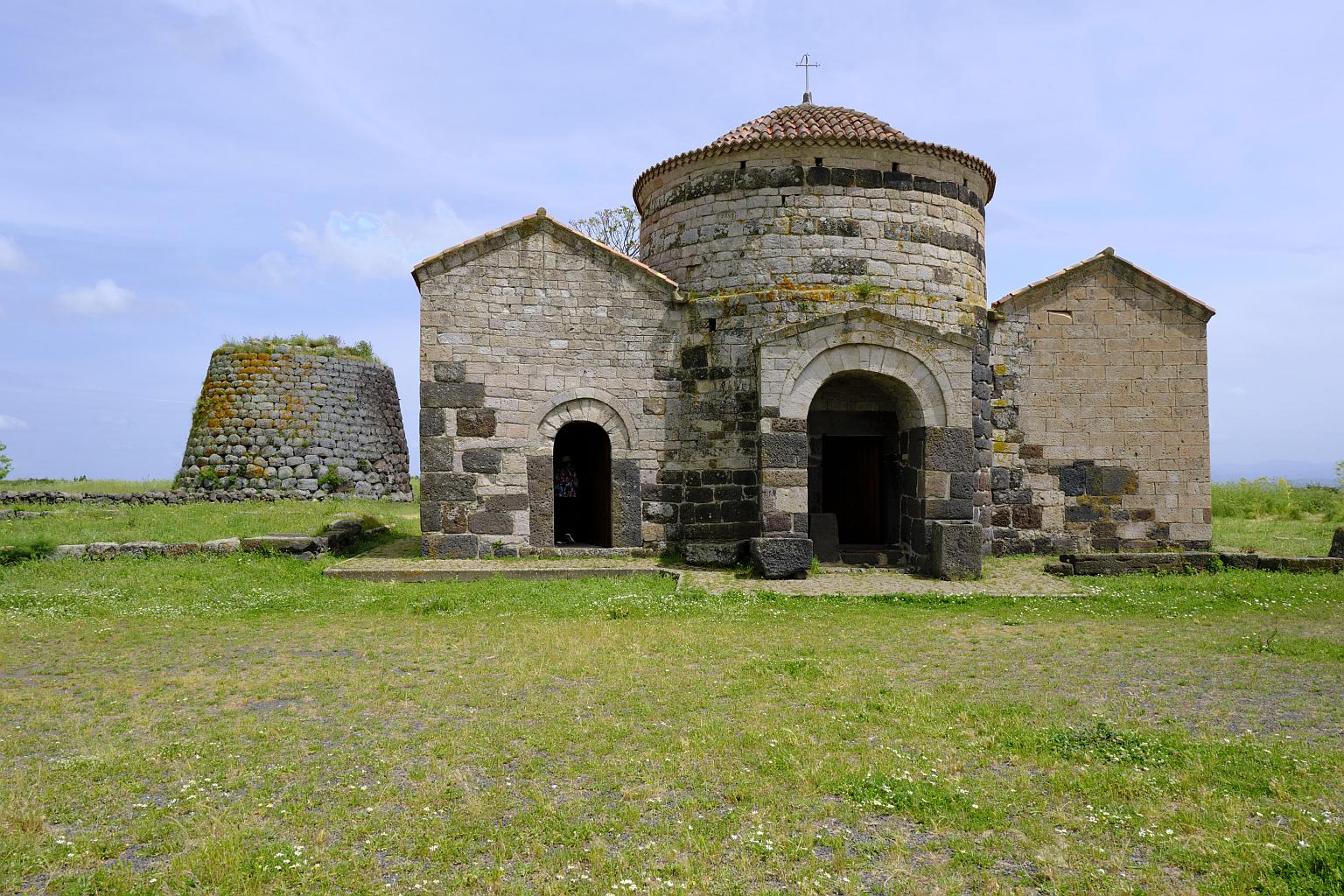
Santa Sabina
The little 11th-Century Church of Santa Sabina and its associated nuraghe, near the town of Silanus. The church looks as if scavenged stones from the nuraghe have been incorporated into the structure. Fujifilm X-Pro 3 digital camera, 16mm lens (click to enlarge).

Archaeologists say that the tops of the towers would have supported wooden platforms, and there was an illustration at the Santu Antine site with a hypothetical reconstruction, suggesting that the original building would have been quite a lot taller, and more sophisticated.

Santu Antine illustration
Information panel at Nuraghe Santu Antine, showing a hypothetical reconstruction of the complete structure, looking almost medieval. Fujifilm GFX-50R digital camera, 32-64mm lens (click to enlarge).

In the ticket office we downloaded an audio guide to the site, which was interesting, although it was a bit revisionist – trying to argue that because there was evidence of trade between Nuragic centres, the society was more peaceful than previous historians thought. We thought this a case of projecting 21st-Century AD attitudes onto the 19th Century BC. Firstly, trade and conflict have never been mutually exclusive states of society. Secondly, most European Bronze Age cultures were warlike; we know that not only from surviving artefacts such as weapons and figurines of armed men, but also because population increase leads to competition for resources such as agricultural land and cattle (many of the heroic battles of the archaic age, celebrated in legend, were probably just cattle raids). And finally there is the practical aspect. There is a lot of work in building a strong tower out of large basalt blocks, by hand. It is not something you would do simply in order to enjoy the view from the top.

Nuraghe Santu Antine
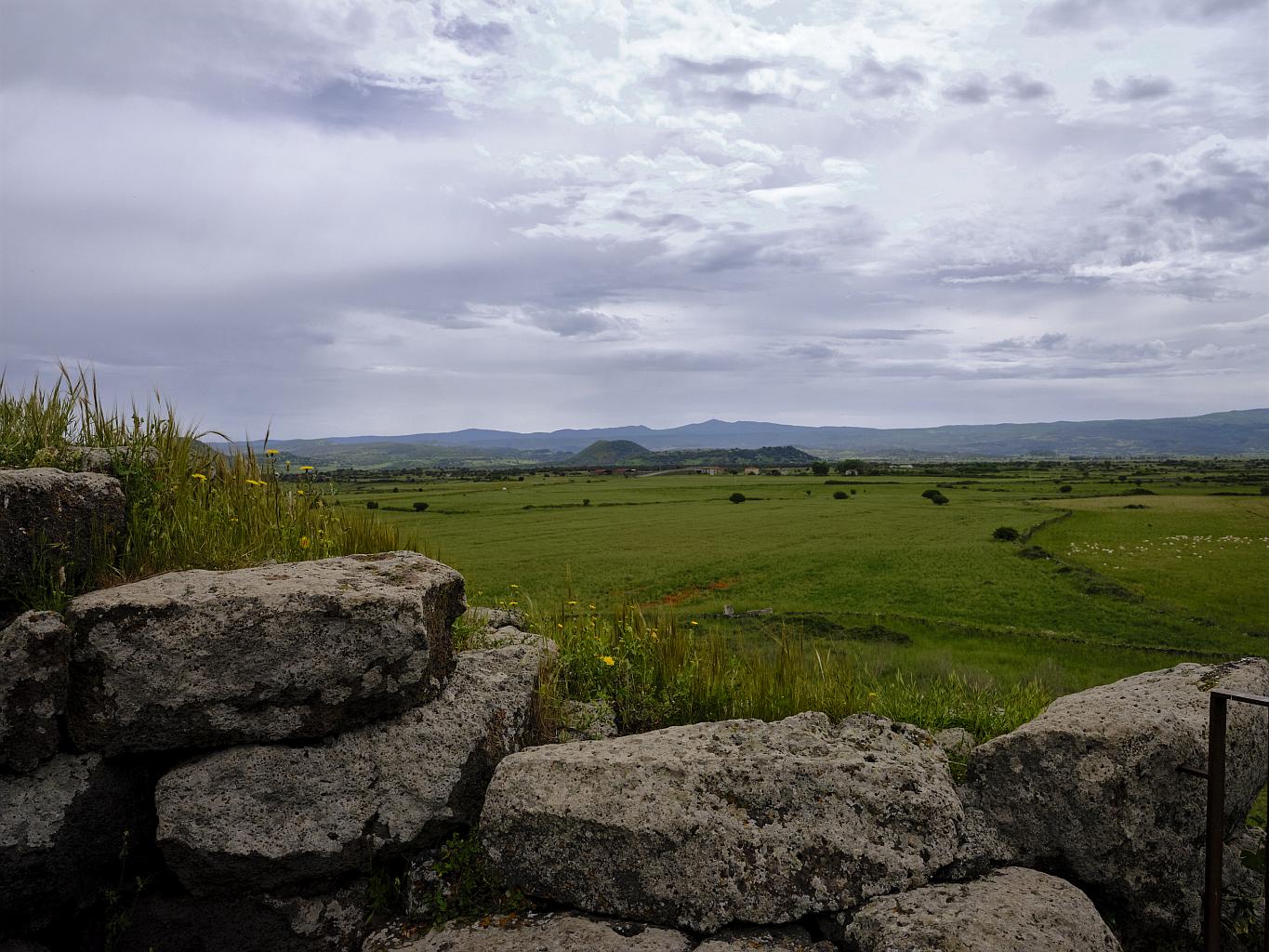
Nuraghe Santu Antine, the view from the top of the surviving structure. Fujifilm GFX-50R digital camera, 32-64mm lens (click to enlarge).

The price of the ticket to visit Santu Antime includes entry to the modest museum in nearby Torralba – probably not worth a visit otherwise, but since we’d already paid for it we went along.

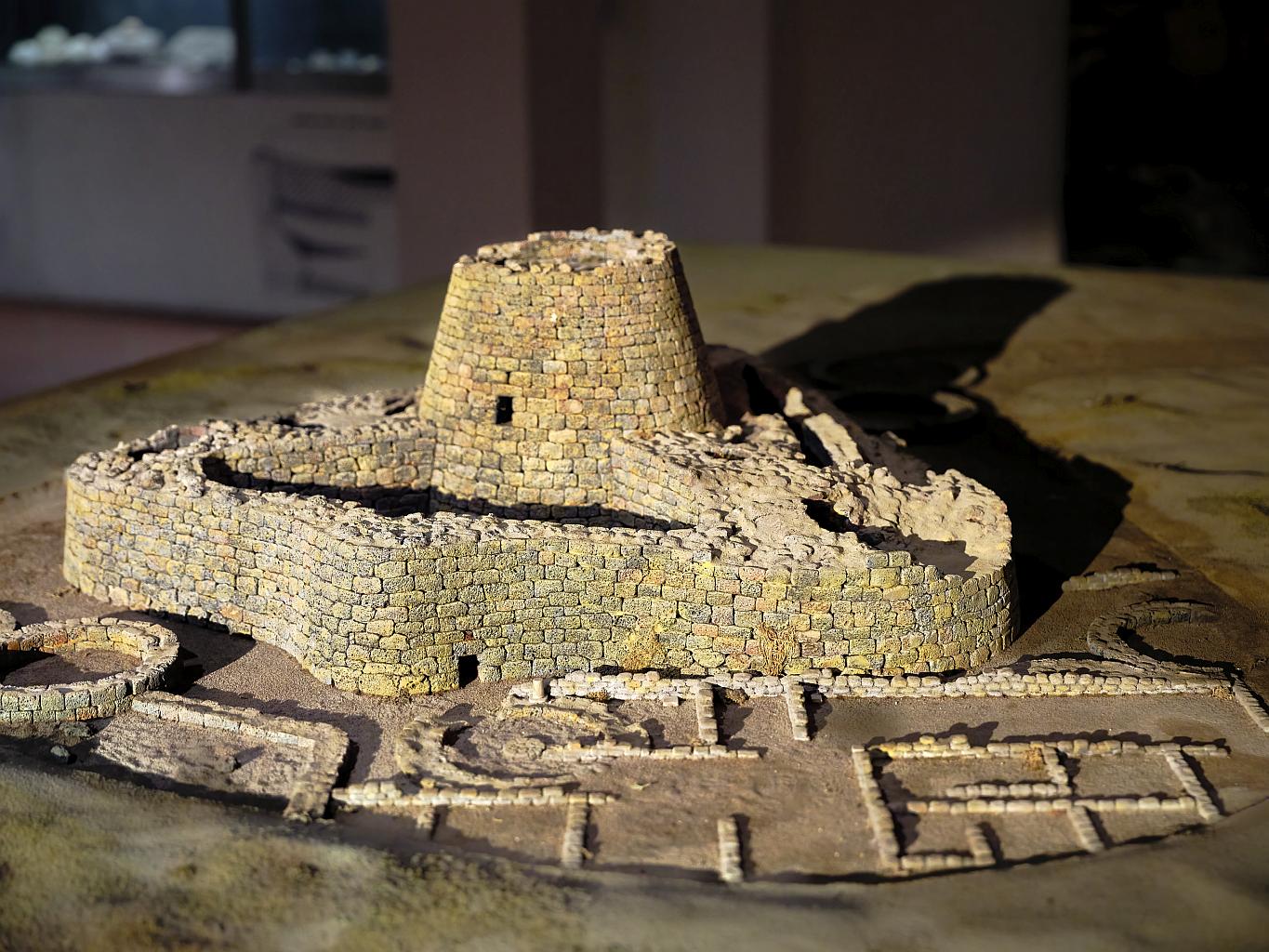
Nuraghe Santu Antine
Model of Nuraghe Santu Antine in the museum at Torralba, showing the remains of some of the surrounding houses. Fujifilm GFX-50R camera, 32-64mm lens (click to enlarge).

Colonies and Empire

Mediterranean trade in the second millennium BC was surprisingly extensive. You can’t have a Bronze Age without bronze, which is an alloy of copper and tin, and the Phoenicians famously went as far as Cornwall in search of the latter. So the Phoenicians established trading posts on the Sardinian coast, which in time became towns which were governed by the colonists, but where most of the population were native Sards. Quite possibly, like Singapore and Hong Kong in the 19th Century, originally in sparsely-populated areas but becoming population centres by virtue of the establishment of a trading post.

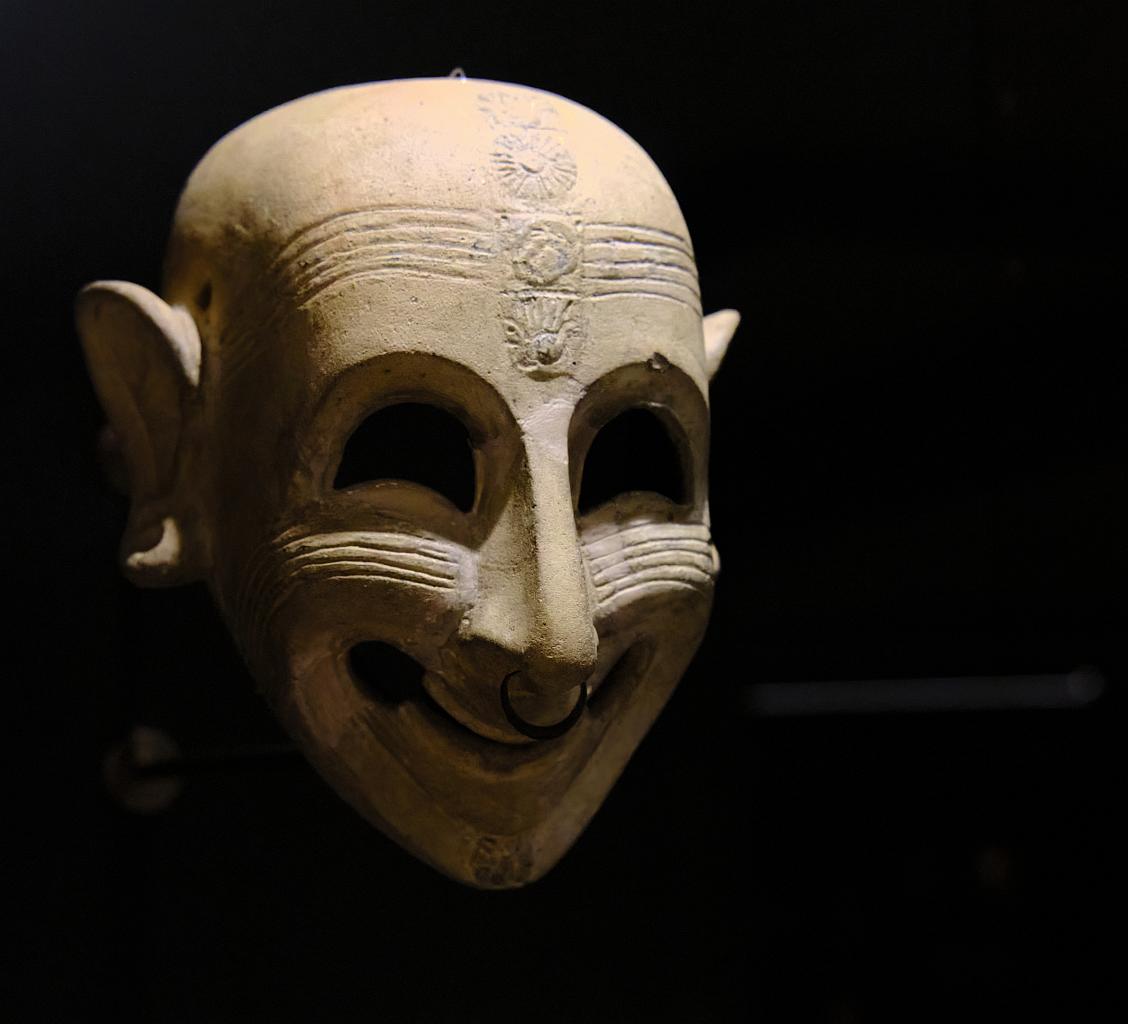
Grinning mask
A grinning mask of either Phoenician or Carthaginian origin, Cagliari Archaeological Museum. The manic expression is intended to scare evil spirits away, we are told. Fujifilm X-Pro 3 digital camera, 35mm lens (click to enlarge).

In time the Phoenicians were replaced by Carthaginians (Carthage was itself a Phoenician colony), and after the Punic Wars the Romans replaced the Carthaginians. Being Romans, they brought the place more formally into imperial administration, although not without some local revolts from Carthaginian remnants.

Even though all of Sardinia was nominally part of the empire, the central parts remained essentially ungoverned. These days the region is called the Barbagia, a name which supposedly derives from a rude remark by the Roman orator Cicero, who described it as being inhabited by barbarians. The term is now a badge of pride for the locals, referring to their independence from central government rule over many centuries. And one can see why. Although the mountains are not enormously high they are very steep and spiky – a punitive military force would have had great difficulty catching up with locals who knew the terrain. Until the mid-19th Century most of the various dynasties that claimed ownership of Sardinia took their lead from the Romans and left the people of the interior largely to their own devices as long as they didn’t do anything completely outrageous – small local disputes were OK.

I read somewhere a suggestion that the inhabitants of the Barbagia retained pagan or semi-pagan beliefs into the Middle Ages, which is plausible, I suppose.

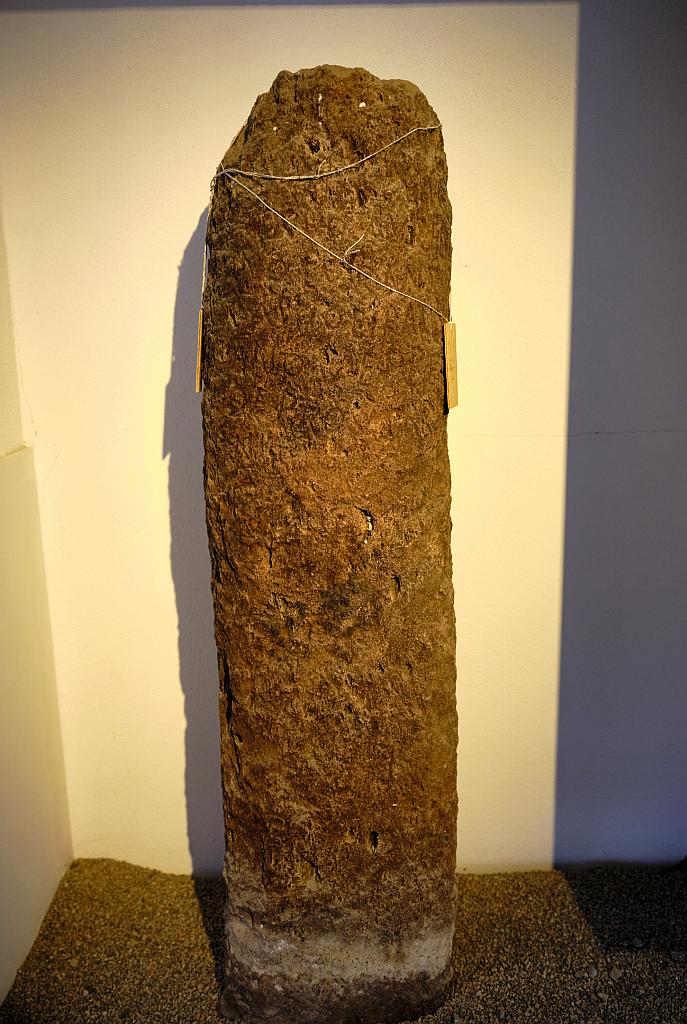
Milestone
Roman milestone in the Civic Museum at Torralba. Fujifilm GFX-50R digital camera, 32-64mm lens (click to enlarge).

The Romans, unlike other Mediterranean powers at the time, invested in public infrastructure (in the words of Monty Python, “what did the Romans ever do for us?”). The photograph above is of a milestone on display in the Civic Museum in Torralba. The inscription is too hard to make out in the photograph, but someone has gone to the trouble of transcribing it, and according to the adjacent information panel, it was dedicated to the recently-deceased Emperor Aurelian in around 275 AD, and is 118,000 paces from… somewhere (the label didn’t tell us where).

A Roman Coastal Town

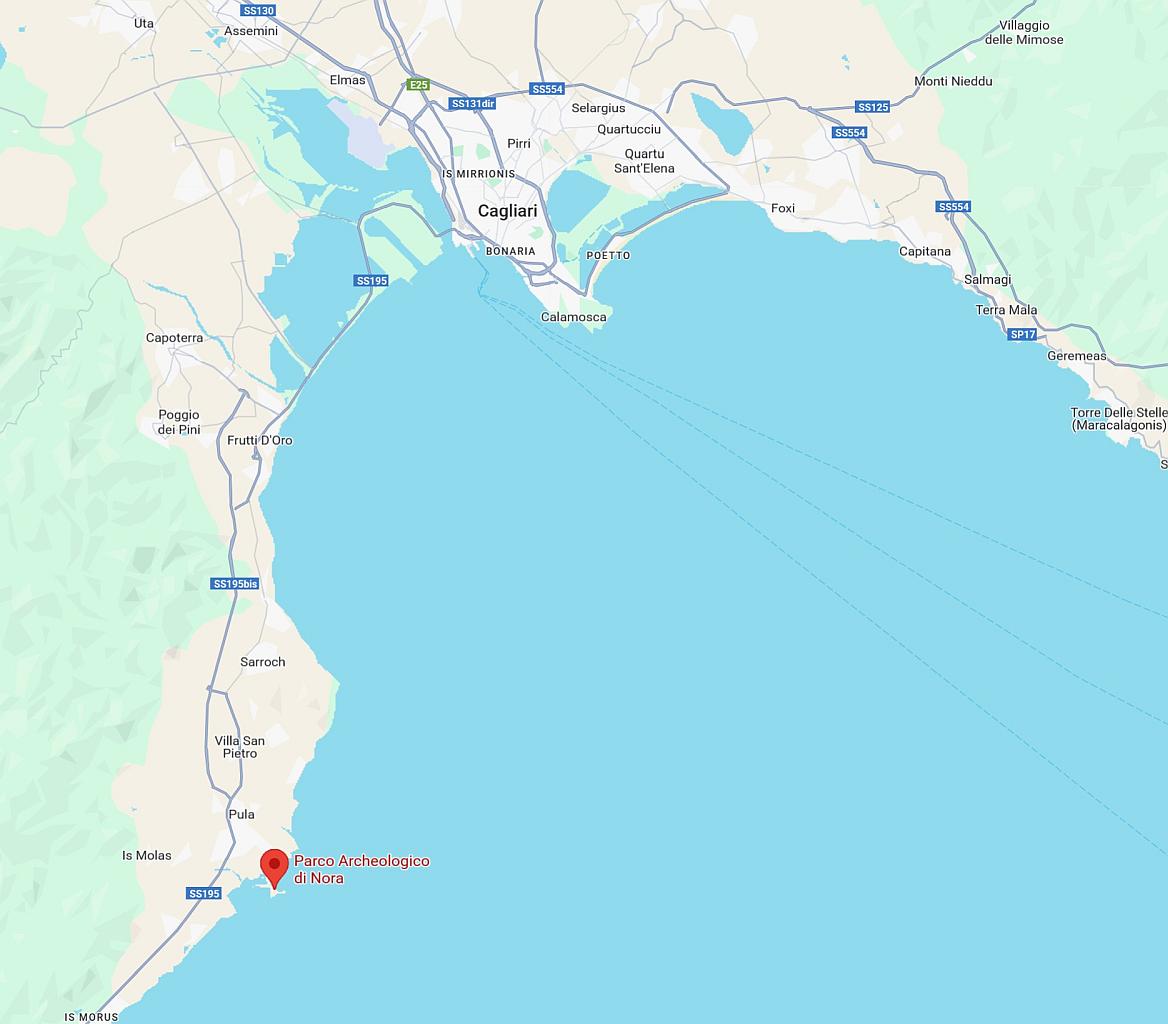
I mentioned in the post on Sant’Efisio that after the main parade around the streets of Cagliari, the saint’s effigy was then carried to the traditional site of his martyrdom, a town called Nora about 40km down the coast. On the way there, local communities turn out for mini-versions of the parade. Nora also has a highly-rated archaeological area, so we decided that on our way north from Cagliari to our next stop on the west coast, we would  first head south.

Source: Google Maps (click to enlarge).

On the way we were occasionally held up on the road by decorated carts or people on horseback, on their way to honour the saint. Passing by the modern town of Pula, we arrived at the Nora archaeological area, which is close to where the little Romanesque church, dating from 1089, marks Sant’Efisio’s martyrdom site.

Chiesa di Sant'Efisio
The 11th-Century church of Sant’Efisio at Nora, where the Saint’s procession finally ends. It’s very pretty from the back, less so from the front where there is a plain rendered facade next to a wall with pictures of the parade. Fujifilm X-Pro 3 digital camera, 16mm lens (click to enlarge).

On the approaches to the church, people were setting up for a traditional Italian religious festival, which is to say they were setting up trailers from which would be sold sweets, nuts, children’s toys and in Sardinia, great quantities of nougat.

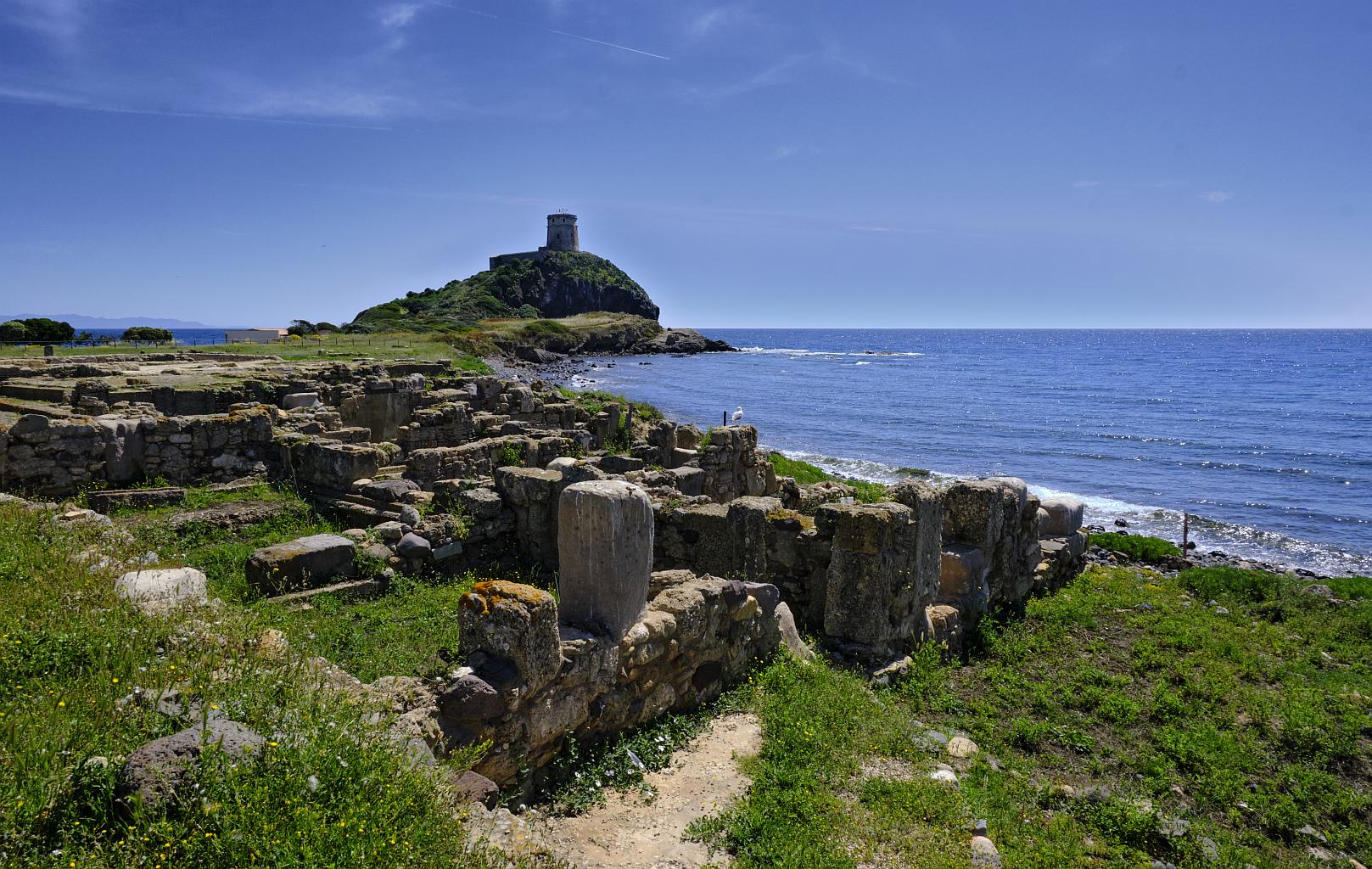
The history of the site starts with the fact that it is next to a little headland that would no doubt shelter the trading vessels that anchored there. This anchorage led to the establishment of a Phoenician trading post, then a  settlement. These days the headland is occupied by a watchtower of Spanish origin.

Nora
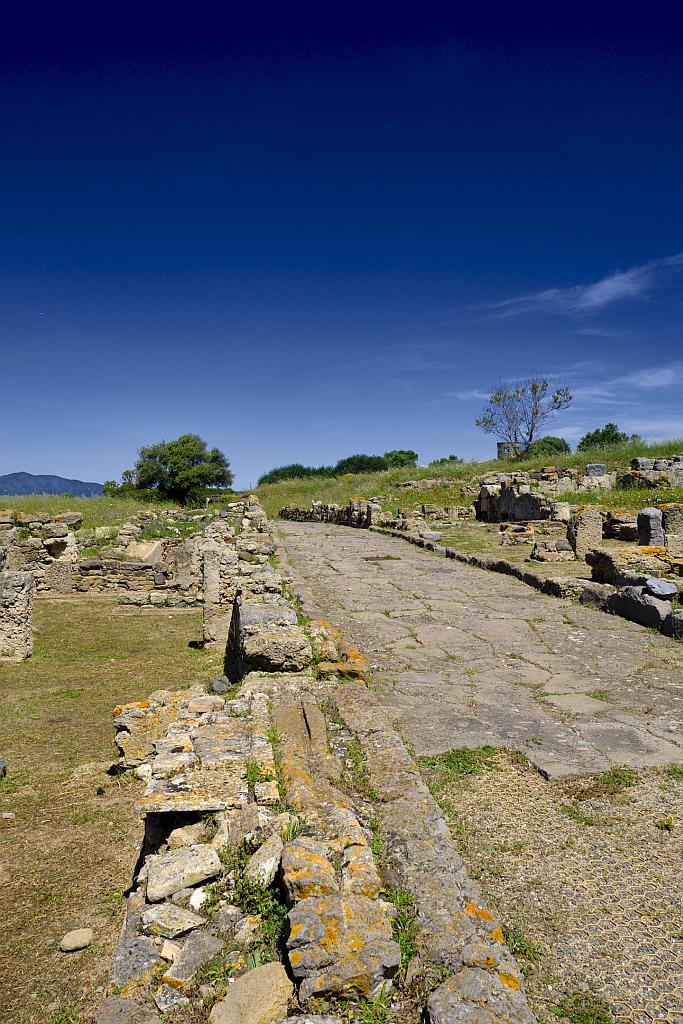
Nora. A Roman road leads towards the town, with the Spanish watchtower in the background. Fujifilm X-Pro 3 digital camera, 16mm lens (click to enlarge).

A stone found in the 18th Century, bearing an inscription in the Phoenician language and now in the Archaeological Museum in Cagliari, records the Phoenician presence there and, according to one interpretation, shows that the island was called something that sounded like Sardinia as long ago as the 9th or 8th Century BC. Adding spice to the story is where this precious artefact was located when it was identified – ignorant of its meaning, medieval builders had found it lying about at Nora and used it as building material for the apse of the church of Sant’Efisio. Fortunately the inscription was facing outwards where it could be recognised, or it would still be there today.

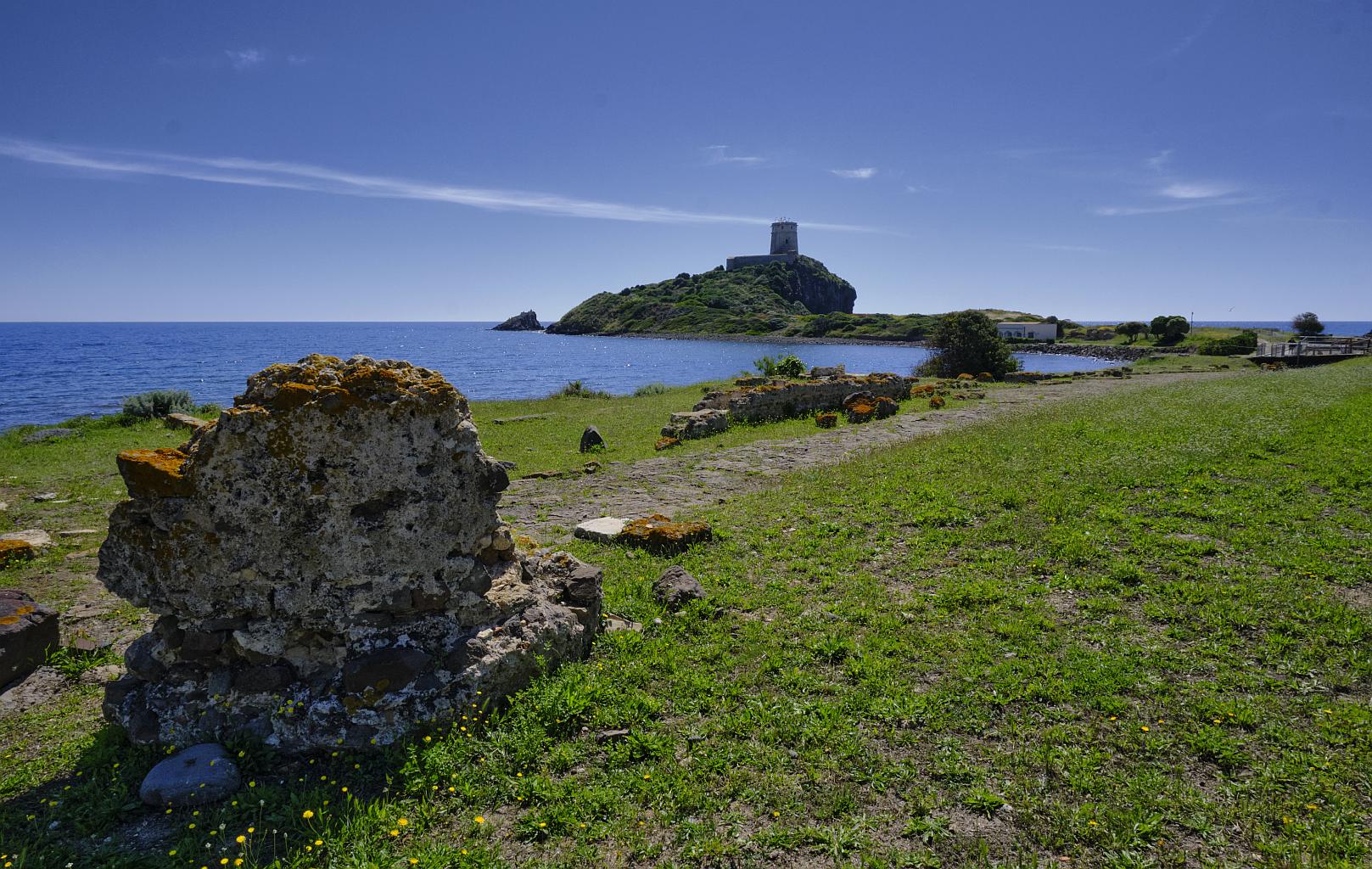
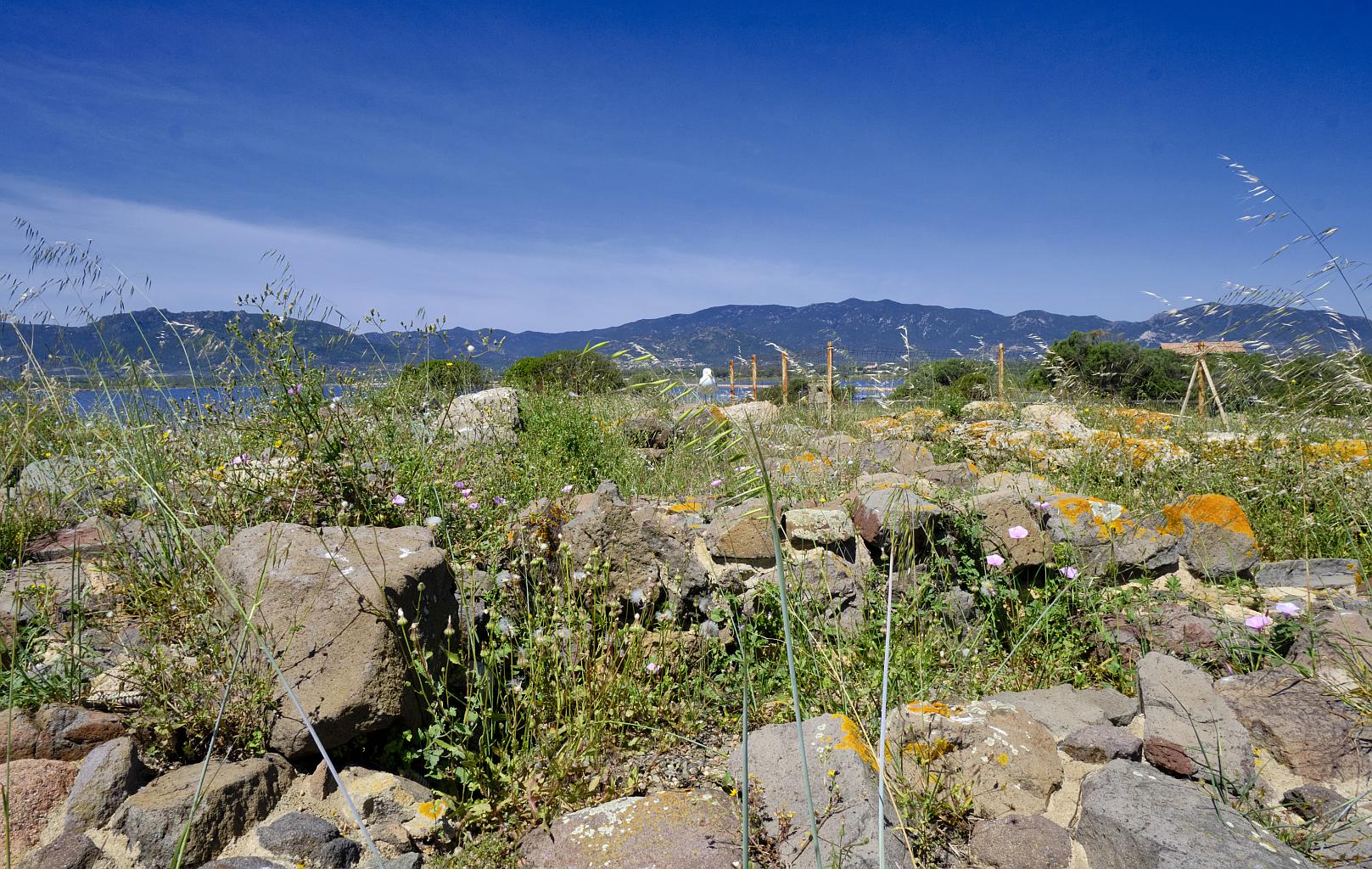
As the Phoenicians were supplanted as a trading nation by their colony Carthage, Nora became in due course a Carthaginian colony, then after the Punic Wars a Roman one. It is therefore a palimpsest of early Sardinian colonial history, although to the casual observer what you see is mostly Roman. Of the Phoenicians, a few burial sites were found in the 19th Century before the sea washed them away, and on a small rise there are the remains of a Carthaginian temple, although when I was there it was hard to distinguish any pattern in the stones under the profusion of spring wildflowers.
Temple of Tanit
Nora. Remains of a Carthaginian temple to the god Tanit. I assume that the fence on the right is the boundary of the as-yet unexcavated military reserve. Fujifilm X-Pro 3 digital camera, 16mm lens (click to enlarge).

Looking at the remains of Nora, one is reminded that the “Pax Romana” was a real thing. While the Dark-Age people that followed Rome all had to live in fortified towns on hilltops for fear of attacks, during their centuries of peace Romans who could afford it generally got to choose, like us, places that were nice to live in. And Nora is a lovely place beside the sea. It must have been very pleasant indeed to live there.

Nora
Prime beachfront real estate in Nora. Fujifilm X-Pro 3 digital camera, 16mm lens (click to enlarge).
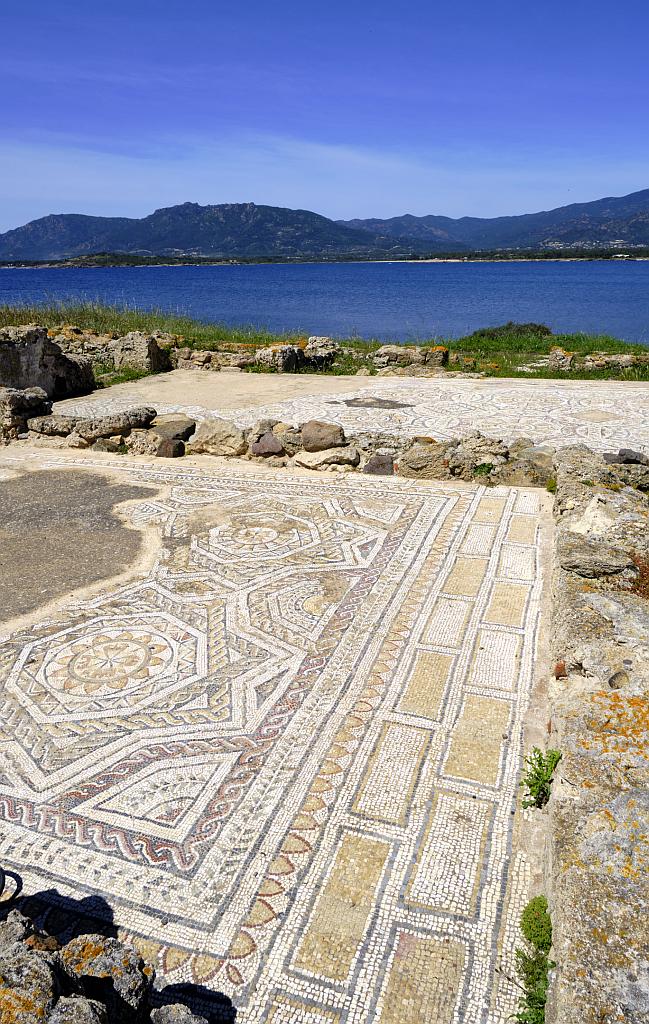
Nora Mosaic
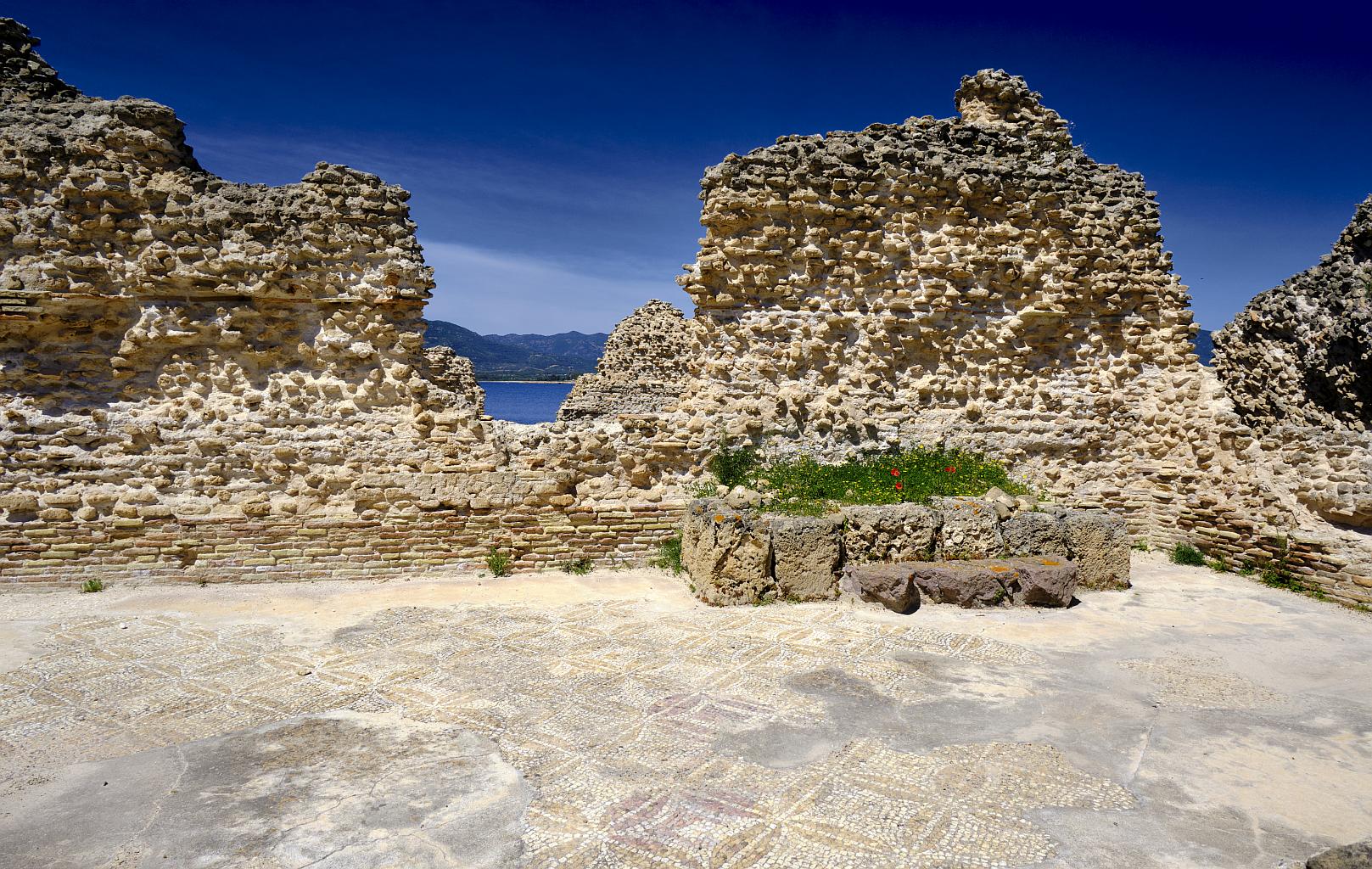
Nora, mosaic floors. Fujifilm X-Pro 3 digital camera, 16mm lens (click to enlarge).
Nora mosaic
Nora, another mosaic floor. Fujifilm X-Pro 3 digital camera, 16mm lens (click to enlarge).

With some of the ancient town lying under land owned by the Italian Ministry of Defence and yet to be excavated, Nora doubtless has a few secrets still to be revealed.

Nora road
Nora, the road through the centre of town. The grassy bank in the distance marks the current limit of excavations. Fujifilm X-Pro 3 digital camera, 16mm lens (click to enlarge).

After Rome

After the fall of the Western Empire Sardinia was invaded first by the Vandals (perhaps it is their descendants who are responsible for the current graffiti problem in Cagliari) and then the Goths, but with the end of the Gothic War on the mainland, and the failure of the Lombards to invade, Sardinia remained part of Byzantine domains.

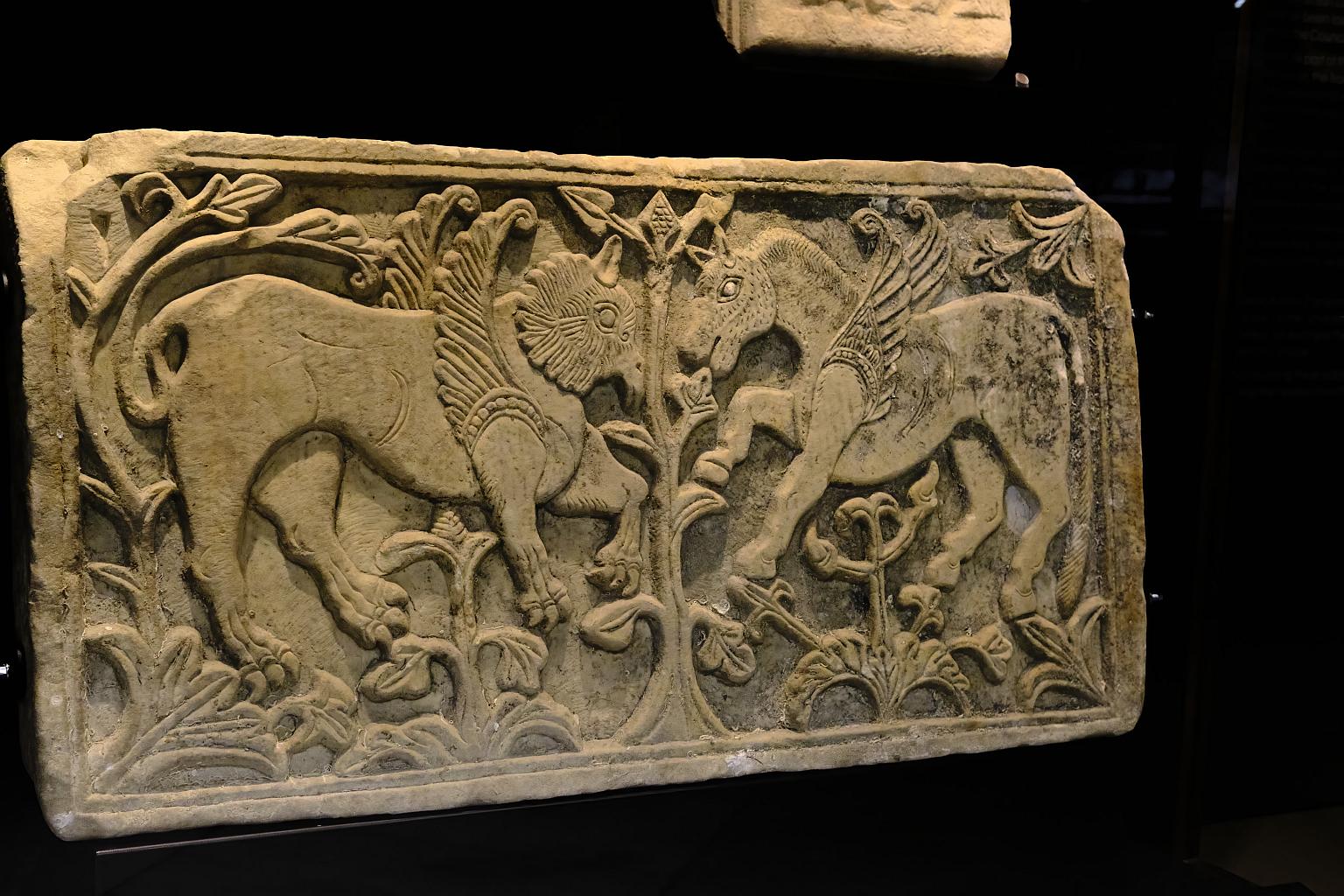
Byzantine carving
Byzantine-era carving, Cagliari Archaeological Museum. Fujifilm X-Pro 3 digital camera, 16mm lens (click to enlarge).

In time Byzantine power in the west became ever more attenuated, and unable to assist against the next threats, which were from Muslim Spain and North Africa. At that point Sardinia turned for help to the emerging maritime republics of the mainland – Pisa and Genoa – and we may say that antiquity, as far as Sardinia was concerned, was over.

Postscript: Flamingoes

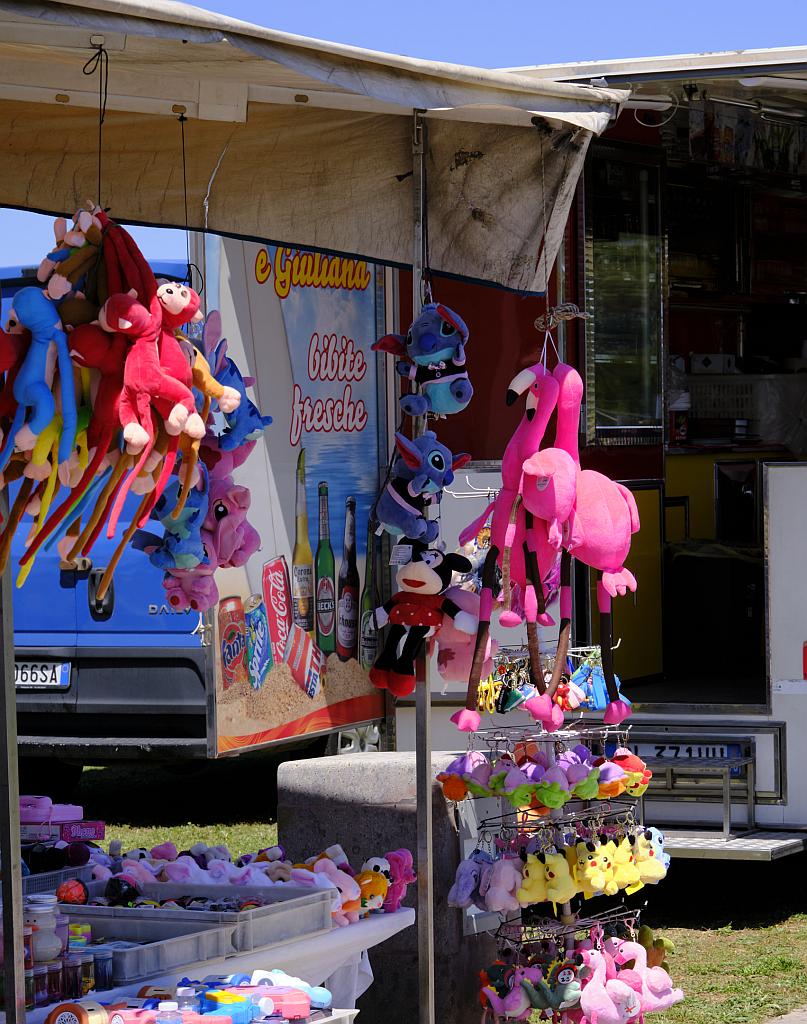
The salt flats that surround Cagliari are famous for their flocks of flamingoes. I was excited for the photographic possibilities and brought my longest lens along on the trip. However on the drive from Cagliari to Nora the flamingoes were uncooperative, mostly with their heads underwater. Not only that but the vivid pink colour featured in my childhood book of birds was quite absent – they were practically white. The lens stayed in the bag.

Eventually in one of the toy stalls set up outside the church of Sant’Efisio in Nora I was able to photograph some, but not quite in the way I had anticipated.

Flamingoes
Flamingoes at Nora. Fujifilm X-Pro 3 digital camera, 56mm lens (click to enlarge).

Sardinia, Cagliari and the Festa di Sant’Efisio

The procession for the Festival of Sant’Efisio in Calgiari is one of the most spectacular – and authentic – religious festivals in Italy, and a celebration of Sardinian folk culture.

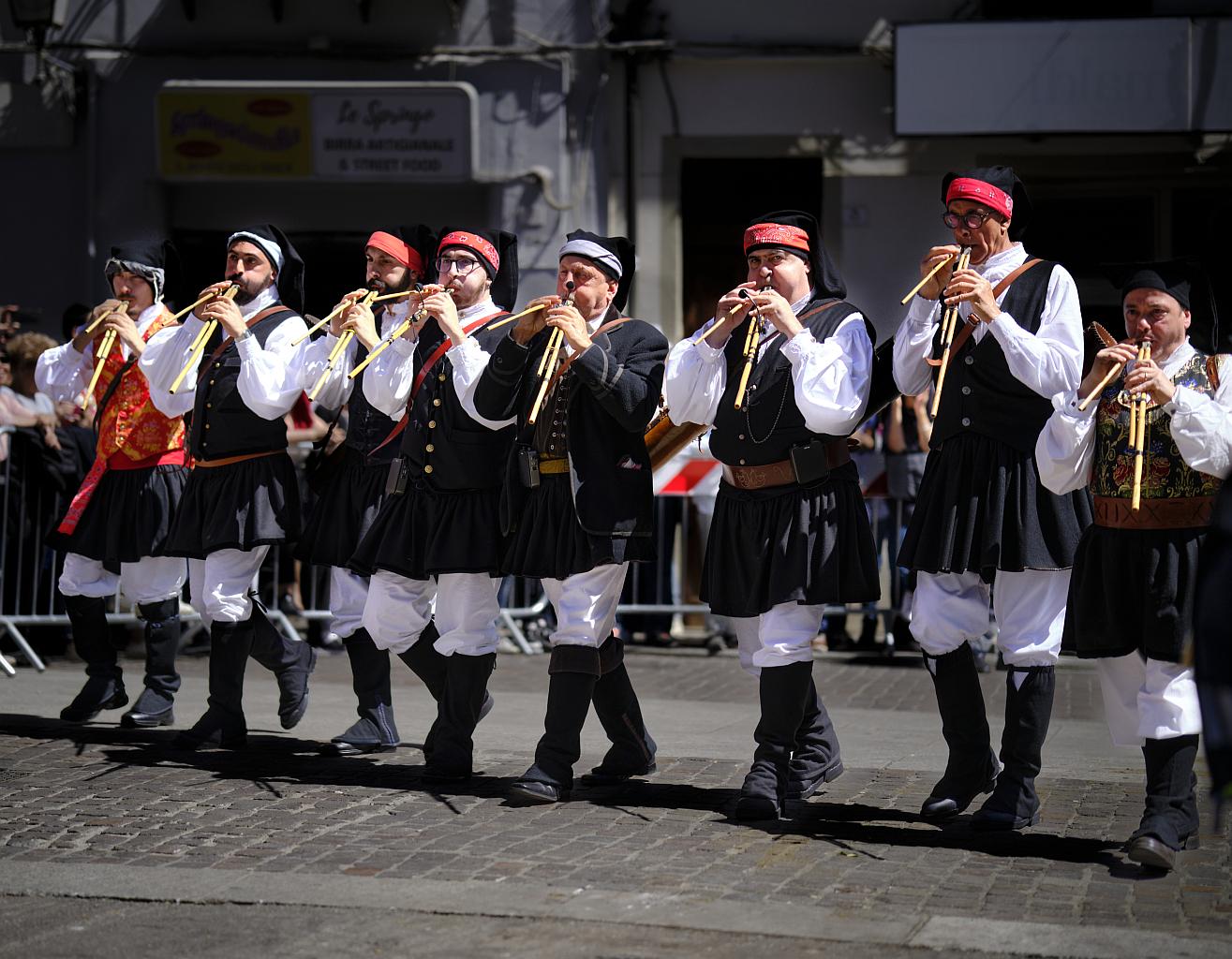
Musicians
Musicians at the Festa di Sant’Efisio. Fujifilm X-Pro 3 digital camera, 35mm lens (click to enlarge).
Sant'Efisio
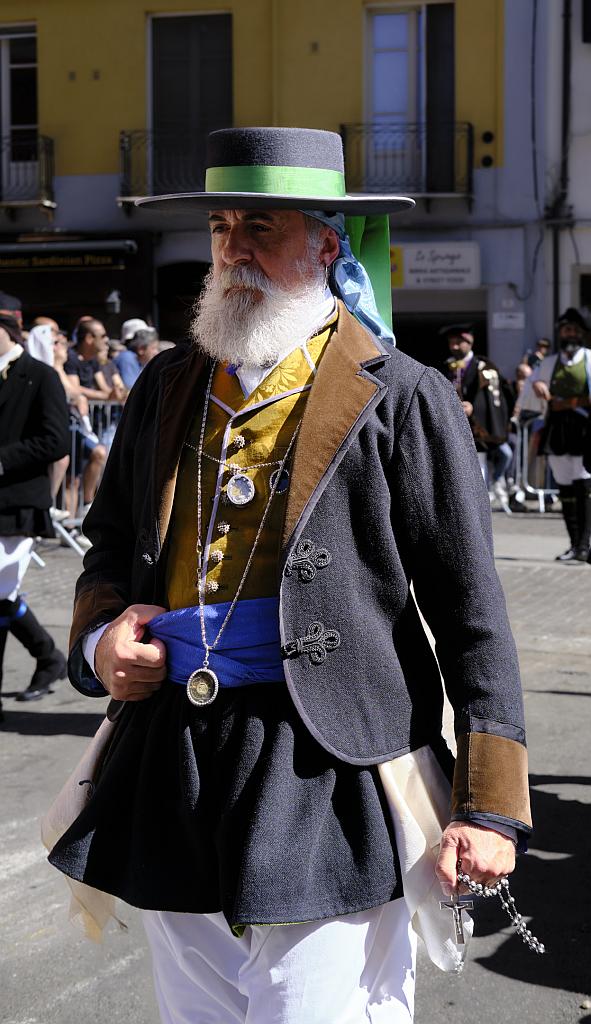
A participant in the Sant’Efisio parade. Fujifilm X-Pro 3 digital camera, 56mm lens (click to enlarge).

In 25 years of visiting Italy, and more recently of living here for part of each year, there was one region of the country that we had yet to set foot in – Sardinia. So in May 2025 we finally rectified that, and took the overnight car ferry from Civitavecchia to Olbia for a ten-day visit.

First impressions of Sardinia, and comparison with Sicily

We weren’t sure what to expect, but despite Sardinia being another large island stuck out in the Mediterranean, it didn’t feel like Sicily, and that impression was only strengthened over the next few days as we got to know the place better. Sicily is geologically part of the Apennines, while (as I discovered in the archaeological museum in Cagliari) Sardinia and Corsica broke off from southern France and sort of drifted south-east.

The geological difference means that there are lots of lumps of basalt lying around which lend themselves to building things (of which more in a subsequent article). And unlike the limestone of most of mainland Italy, the basalt of Sardinia means that the tap water is comparatively pleasant to drink. The vegetation is much more reminiscent of the maquis of southern France or the macchia of Italy’s northern Mediterranean coast than anything you would see in Sicily, and while Sardinia’s mountains are not extremely high, they are very rugged and steep, especially in the interior, making manoeuvring difficult for any army trying to establish control, so few did.

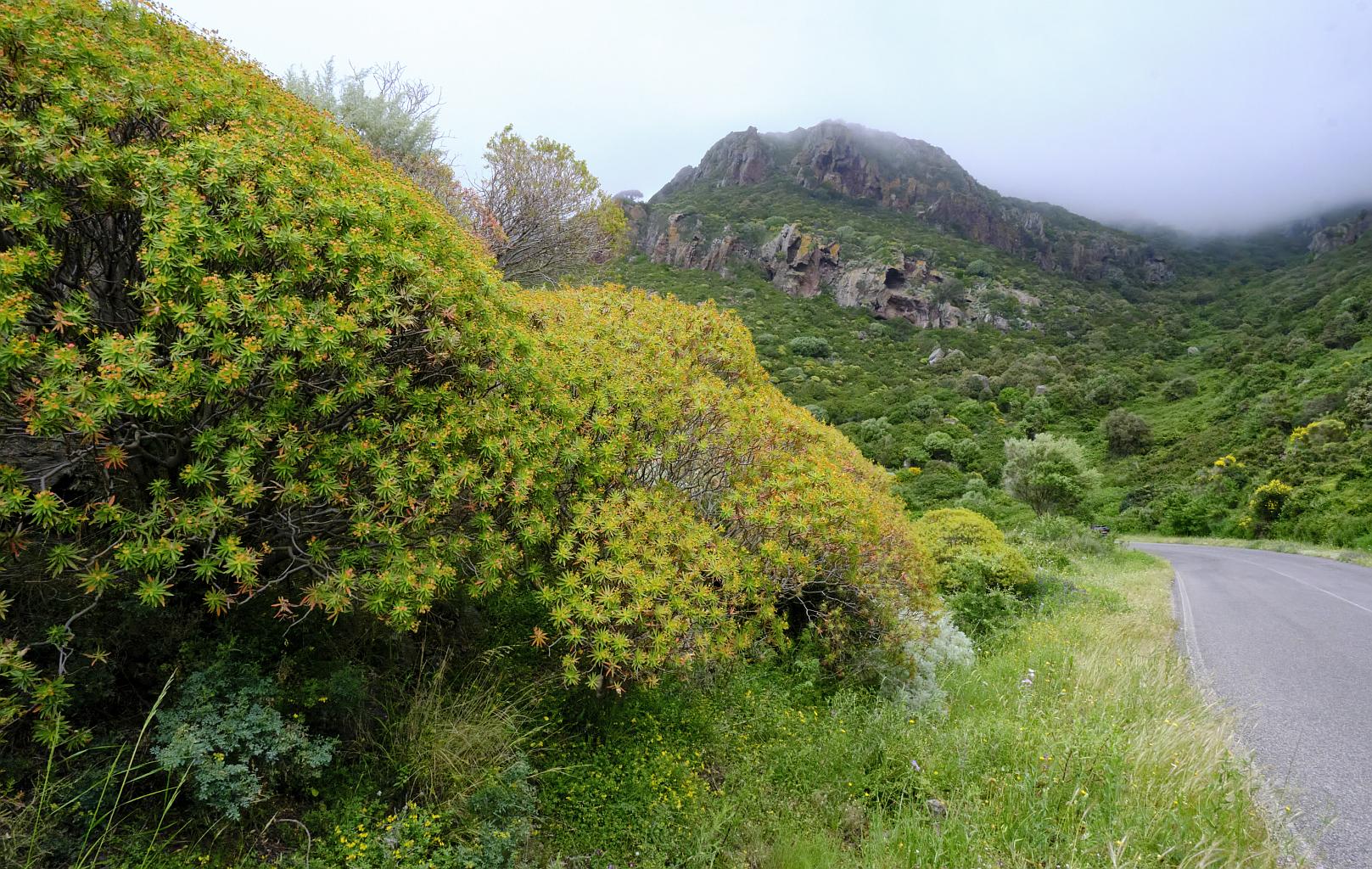
Macchia
“Macchia” vegetation on the west coast of Sardinia. Fujifilm X-Pro 3 digital camera, 16mm lens (click to enlarge).

Culturally and historically Sardinia is very different from Sicily as well. Not for Sardinia were the momentous conquests by the Greeks, the Carthaginians, the Romans, the Arabs, the Normans, the Angevins and so on. Instead many Mediterranean powers established towns around the coast, or took possession of existing ones, but these were in effect just trading posts for Sardinia’s abundant minerals. In medieval times these outposts – Pisan, Genoan, Aragonese and Catalonian – exerted strong local cultural and linguistic influences. According to our guide book, some of the regional dialects were so different that after Italian unification Sardinians were quick to adopt standard Italian as a means to mutual intelligibility, and that it is for this reason that Sardinians pride themselves on speaking the clearest Italian. We can attest to that. Overhearing people in the street talking to each other or on their phones, it was like listening to the state broadcaster RAI.

Another source of linguistic pride is that of all Italian dialects, Sardo is considered by some to be “purest” in the sense that it is closest to vulgate Latin. I’m not sure how that squares with the idea that there was so much linguistic diversity, but no doubt there is a coherent path through it all. As in other areas of Italy, the monoglot policy of previous eras has been replaced by official endorsement of the minority language in the form of duplicate place names and street signs. How much effect that will have on preserving Sardo remains to be experienced by future generations, but Sardo is is definitely identified with regional politics – political posters often use it instead of Italian. And on a bilingual Italian/English information sign outside a church, someone had placed a sticker over the Italian text which read “e in Sardo?” (“and in Sardinian?”).

History also took Sardinia on a different path into the unitary state of Italy. Before unification Sicily was part of the deeply conservative southern kingdom of the Bourbons, ruled from Naples. Sardinia was part of the state of Piedmont, ruled from Turin, comparatively forward-looking and aligned with northern European countries like France and Britain. And when Italy was finally united, it was under the Piedmontese, so Sardinia was on the winning side, in a sense. How much notice the shepherds in their remote mountains took of all this is another question.

Sardinia has a reputation for truly awful roads, and this is completely deserved. The one decent road is the main north-south highway, still called the “Carlo Felice” after the king who commissioned it, but everything else is pretty bad. One learns to watch the car ahead as it weaves between patches of broken tarmac, and to adapt accordingly. At one point I put the left front wheel of our leased Peugeot into a monstrous pothole. I was sure that I had inflicted some mortal injury on the car, but it seemed OK. The next time we took that route we kept a lookout for the pothole and successfully avoided it, but I had noticed a tow truck following us. Sure enough, a couple of hundred metres past the pothole an expensive Mercedes was pulled over with its hazard lights flashing, and the tow truck pulled in behind it.

Cagliari

The capital city of Sardinia is not blessed with a spectacular setting. Certainly there are distant mountains on three sides, and the sea on the fourth, but closer by are salt pans, an oil refinery, power stations and wind farms. In the centre of the old town is a modest hill called the Castello on which was the old fortress. Unfortunately during the war Cagliari was a major naval base and was severely bombed as a result. Much of the inner town is therefore rather ugly postwar reconstruction.

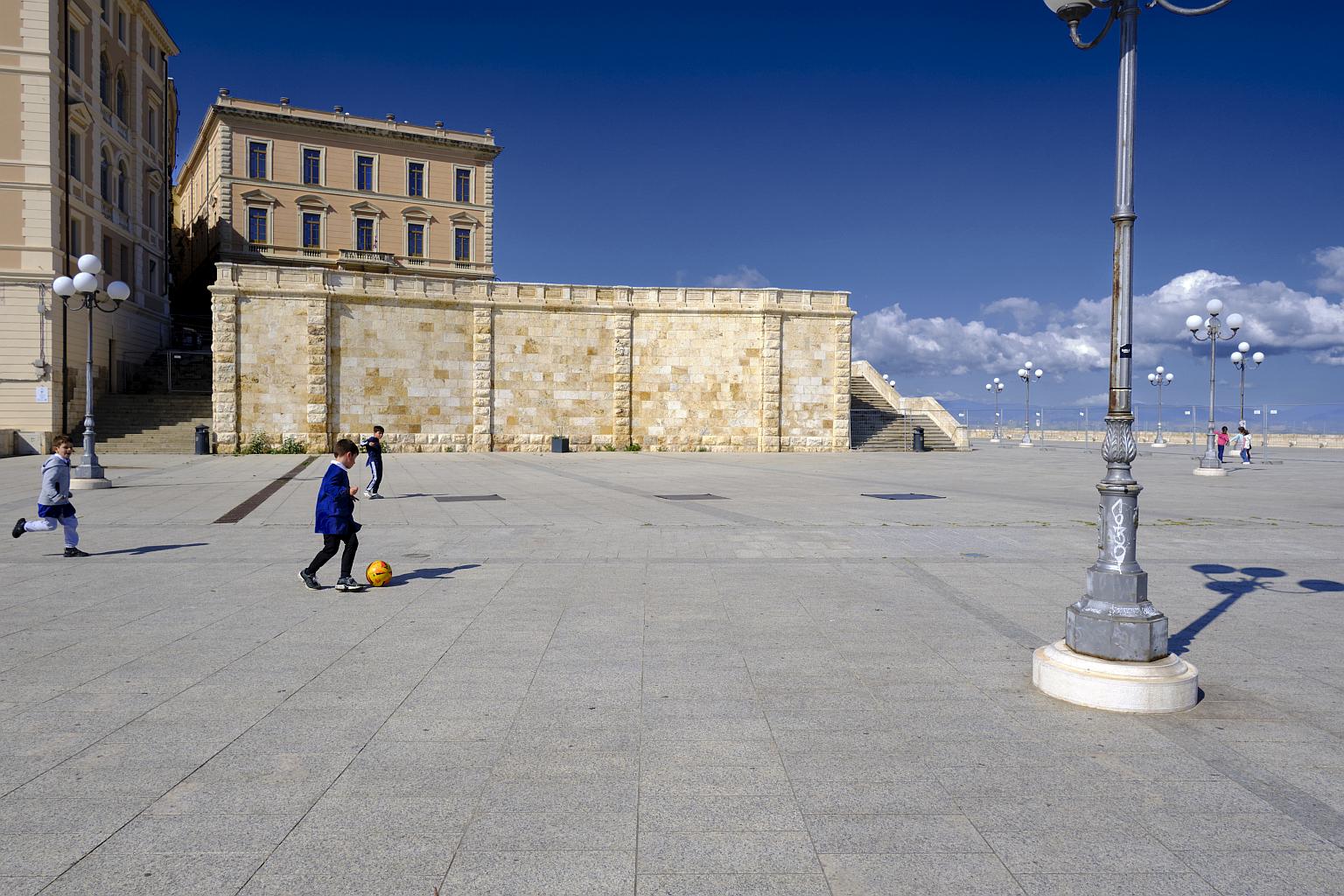
Bastione Saint Remy
Children playing football on the Bastione Saint Remy, Castello district, Cagliari. Fujifilm X-Pro 3 digital camera, 16mm lens (click to enlarge).
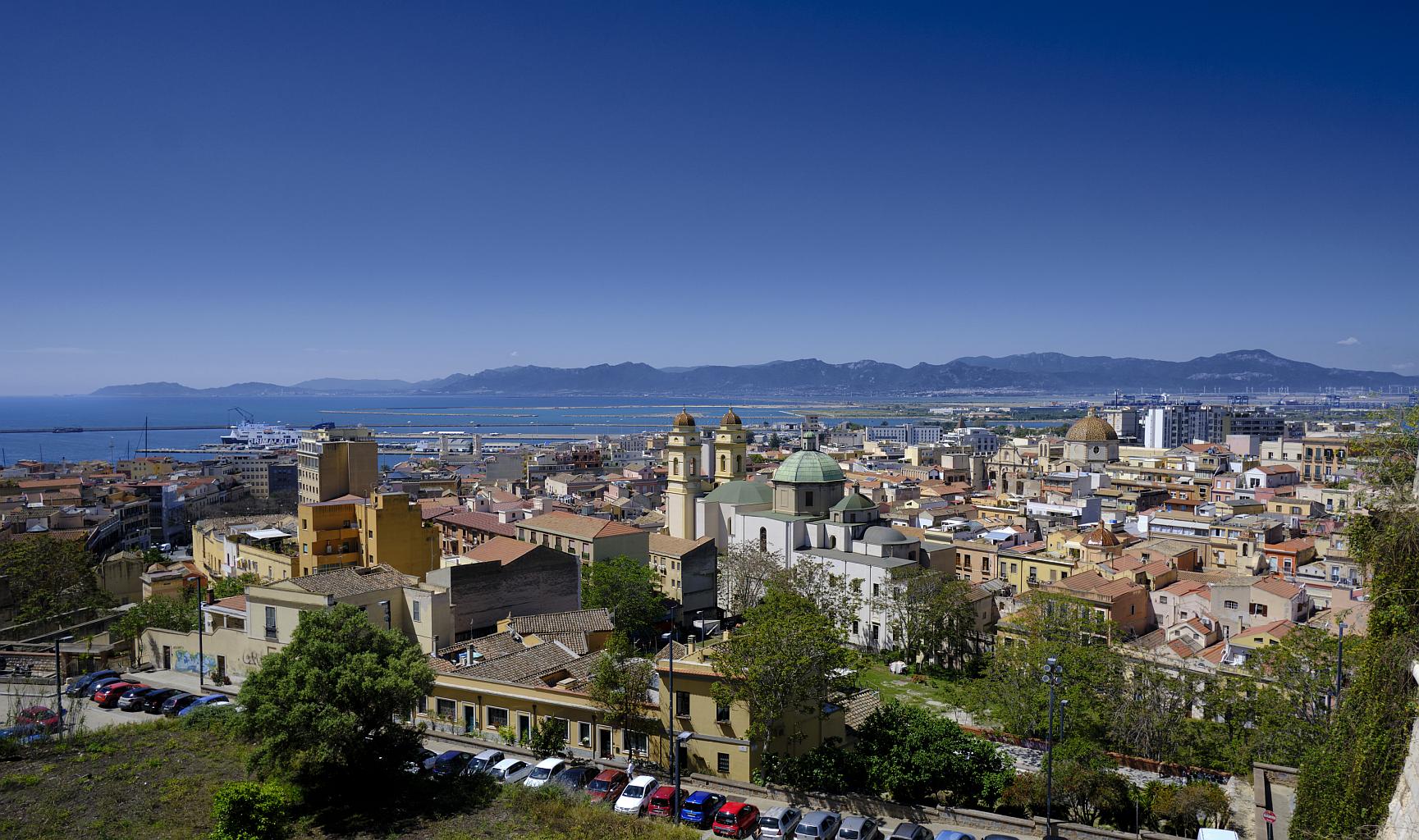
Cagliari from the Castello
Cagliari from the Castello. Fujifilm X-Pro 3 digital camera, 16mm lens (click to enlarge).
Castello from below
Cagliari; the Castello from below. Fujifilm X-Pro 3 digital camera, 56mm lens (click to enlarge).

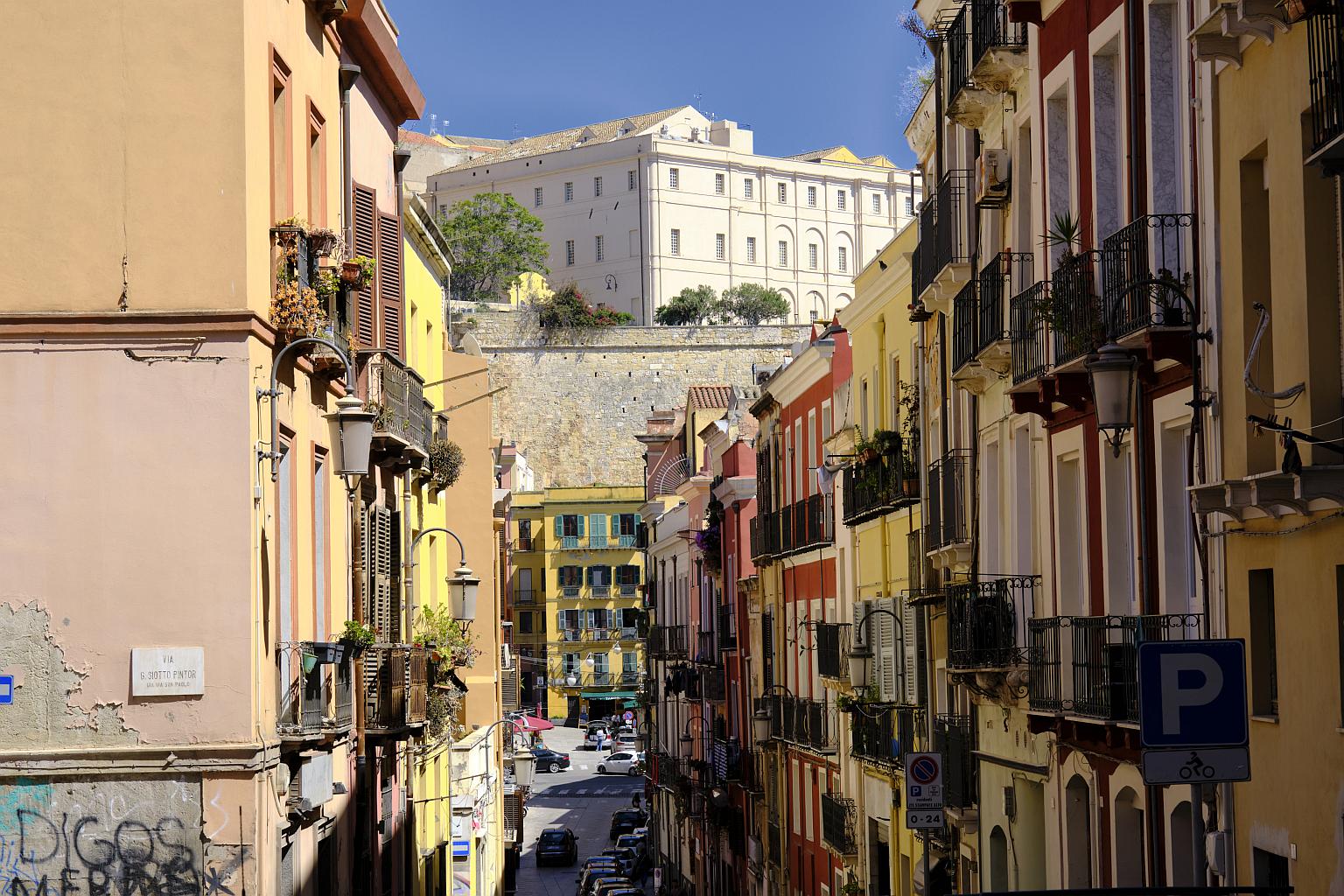
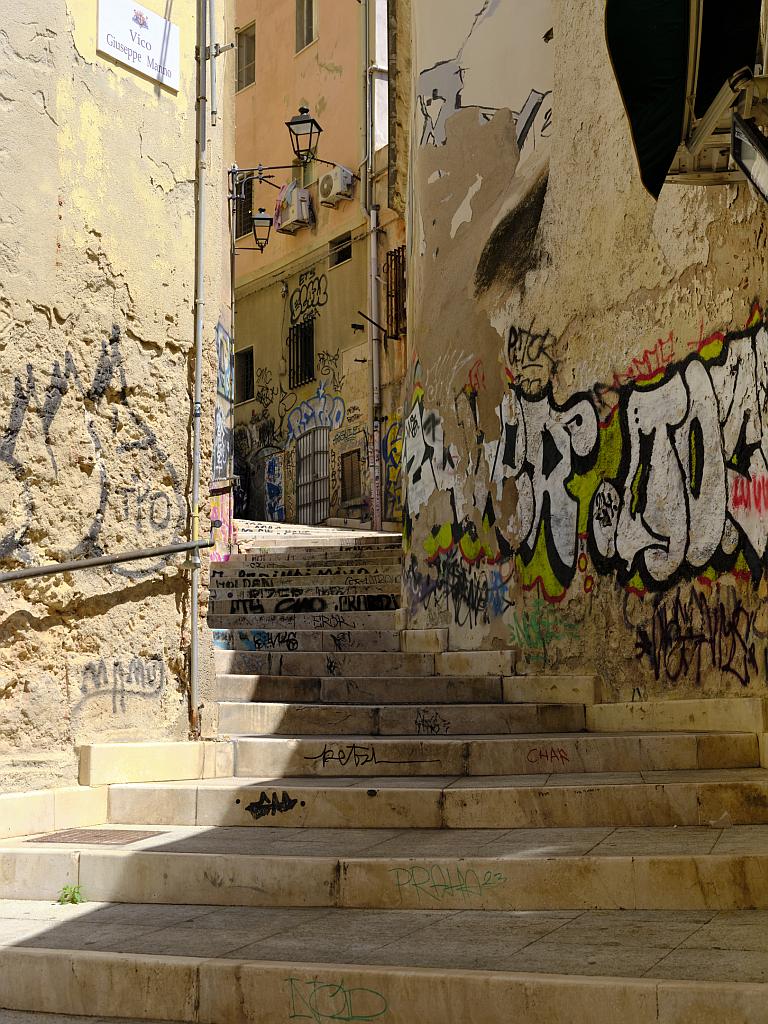
It must also be said that Cagliari has a rather severe graffiti problem. That’s a problem in most Italian cities these days, but in most the graffitists avoid the older monuments. Not here, alas. Some of it, especially around the university, is undergraduate political opinion. Some is ironic comment in the tradition of Italian pasquinade; at a lookout over some soulless 1950s buildings, one graffito says “bel cimento, no?” (“nice concrete, eh?”). But most of it is unoriginal and destructive.

Cagliari graffiti
Cagliari; graffiti in the Marina district. Fujifilm GFX50R digital camera, 32-64mm lens (click to enlarge).

The Festa di Sant’Efisio

But nonetheless we wanted to come here, and were glad to be here on the 1st of May, because that is the feast day of Cagliari’s patron saint, Sant’Efisio, when there is a spectacular parade in his honour. Not one of the better-known saints elsewhere, Efisio was apparently a Roman soldier from Antioch in Asia Minor called Ephysius, who was posted to Sardinia and martyred at a place called Nora a few miles from Cagliari during the persecution of Diocletian. And that’s it. History tells us nothing else about him, but that is enough for the Cagliaritani and indeed the rest of the Sardinians to have adopted him as their own. His statue, in the church dedicated to him in Cagliari, shows a cheerful-looking fellow in ornate armour with curly light brown hair and a neat little moustache and goatee beard.

And obscure as he may be, the Sardinians throw a huge party for him every year, with what is said to be the longest religious procession in the Mediterranean. It was certainly long – it took about two and a half hours to pass.

As I discussed in The Serious Business of Dressing Up, many such processions elsewhere are comparatively recent revivals going back to perhaps the 1980s at most. Of course statues of saints have always been carried about town on their feast days, but as for lots of people dressing up in historic costumes of varying degrees of authenticity, that’s a more recent thing.

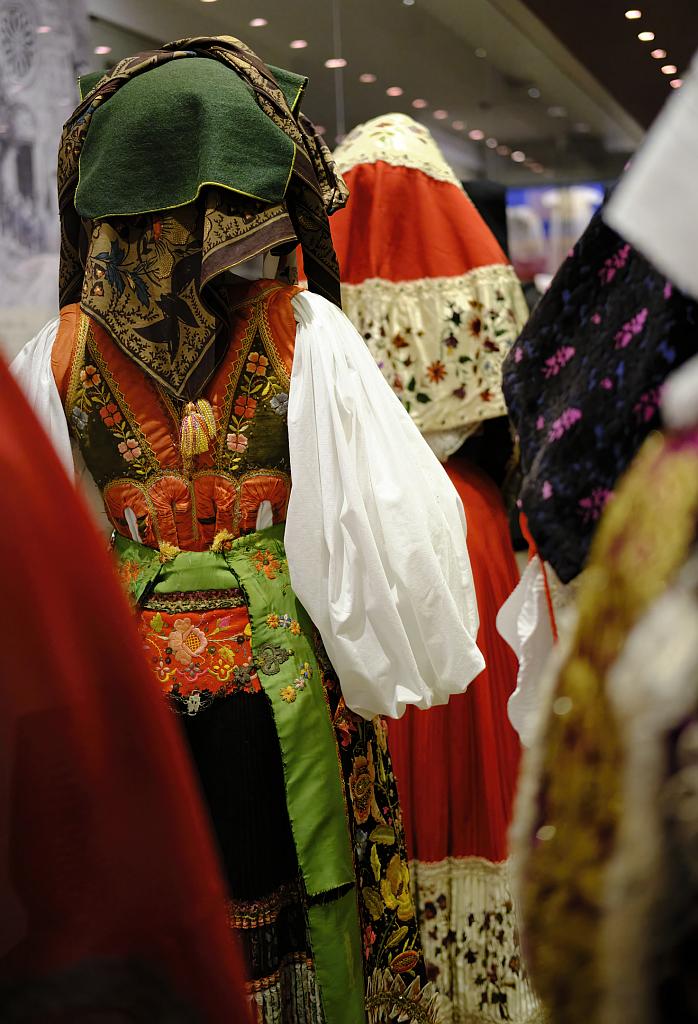
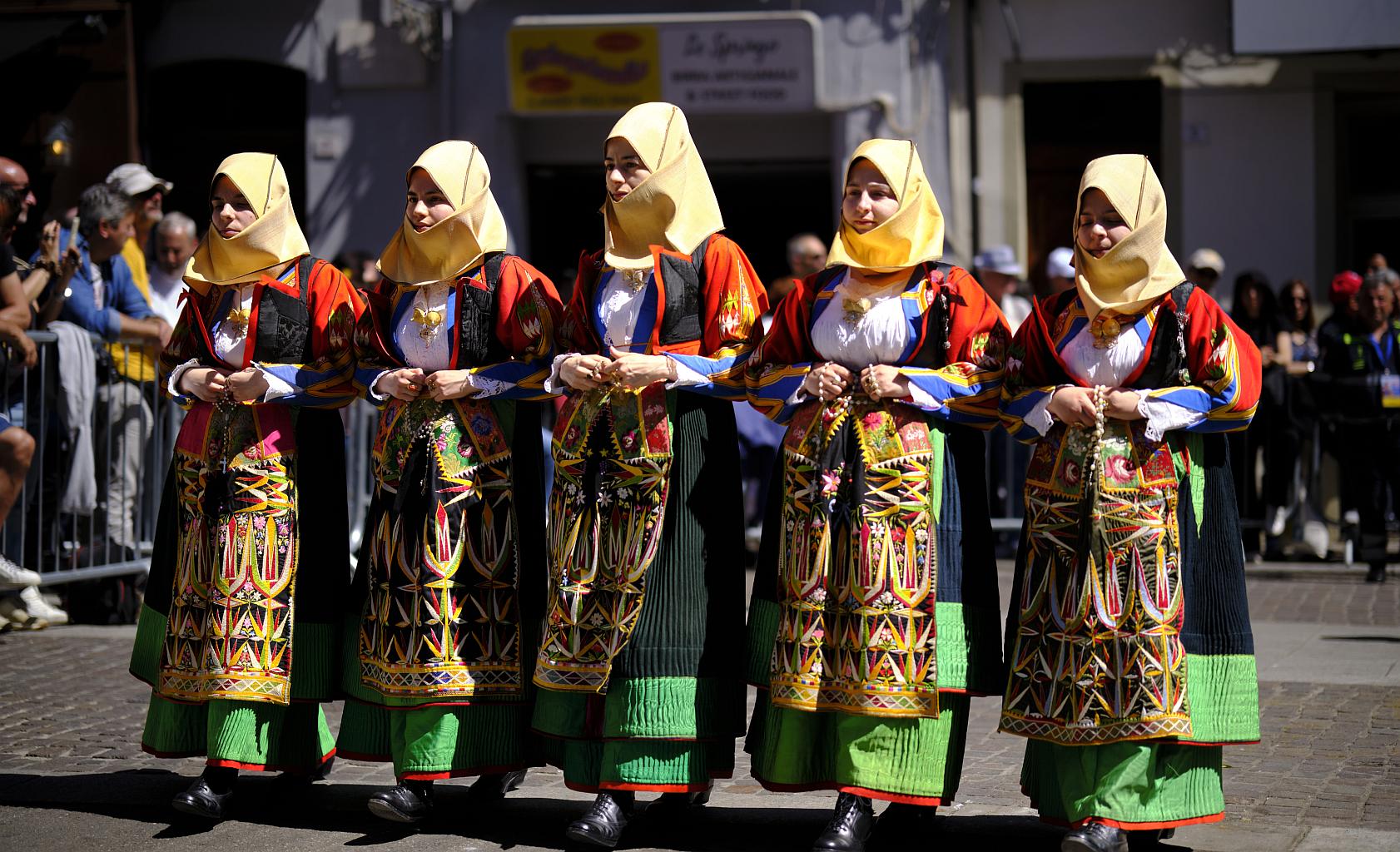
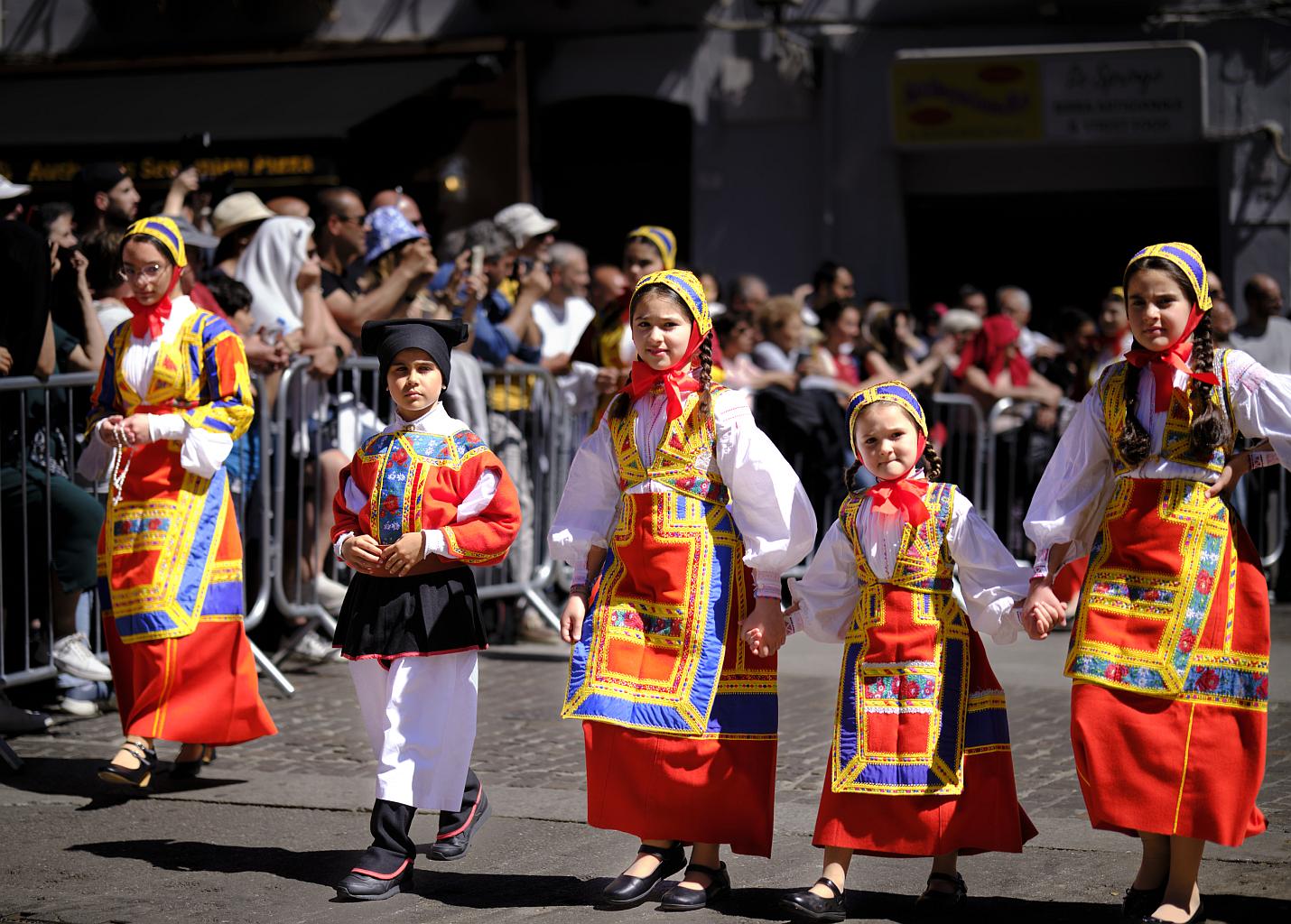
Not here. The Sant’Efisio parade is a genuine survival, and what’s more the costumes are not based on the participants’ own somewhat elastic interpretations, but are the traditional dresses worn by men and women from towns and villages all over Sardinia. The contingent from each place walk (or ride) together, and the costumes they are wearing are those proper to the town or village. And they are extremely ornate, especially the women’s ones. A few days later we visited an ethnographic (ie folk) museum in a town called Nuoro in central Sardinia. The costumes there, whether from the 1950s or the 1850s, could have been those worn in the parade.

Nuro Museo Etnografico
Costumes on display at the Ethnographic Museum in Nuoro. Fujifilm X-Pro 3 digital camera, 35mm lens (click to enlarge).

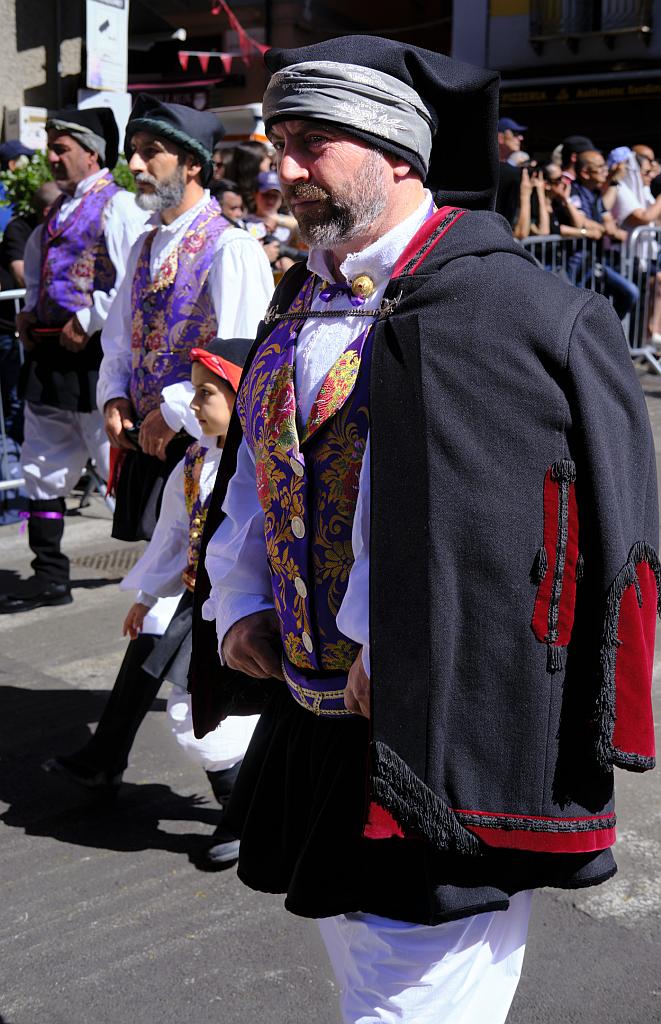
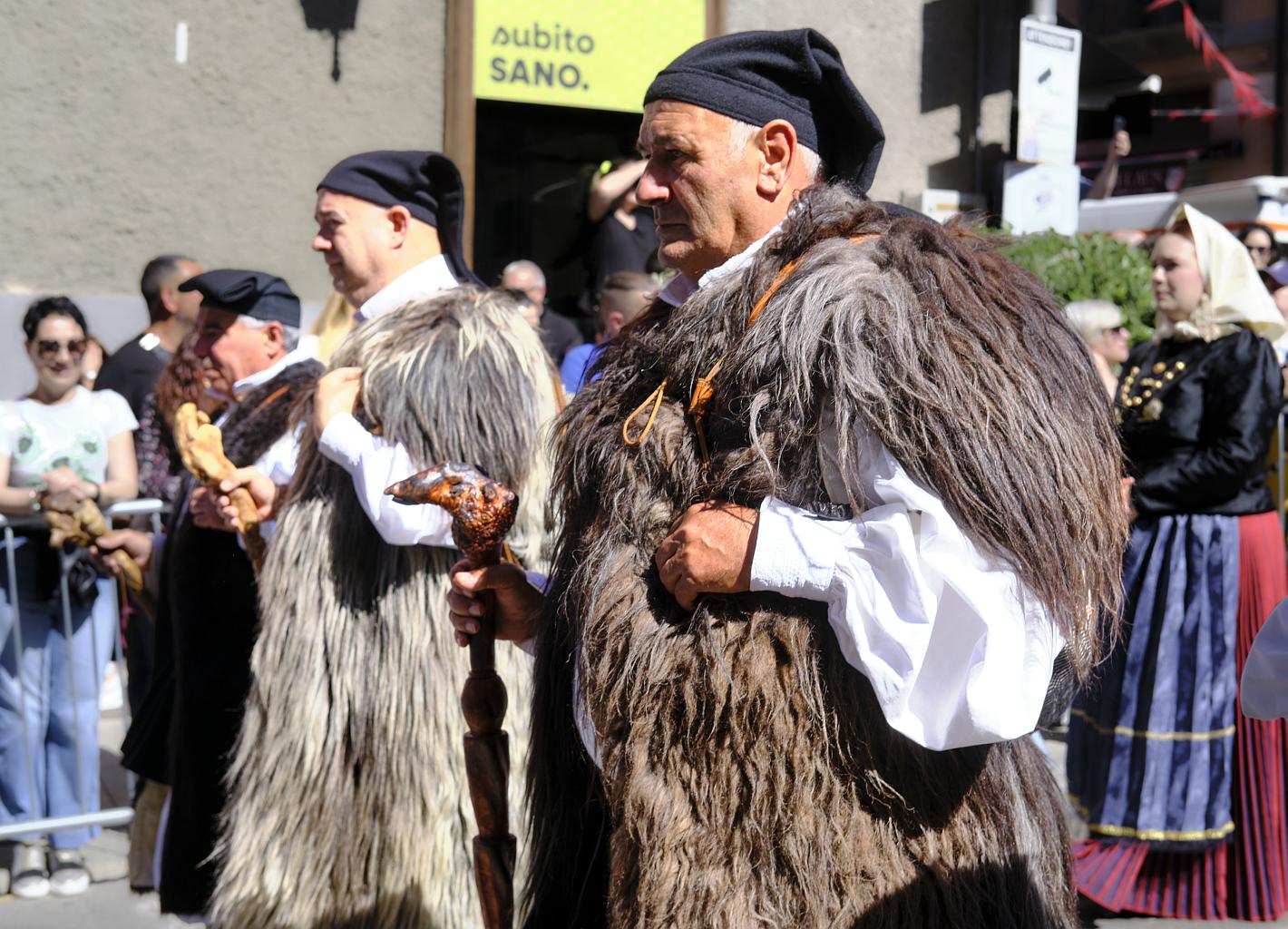
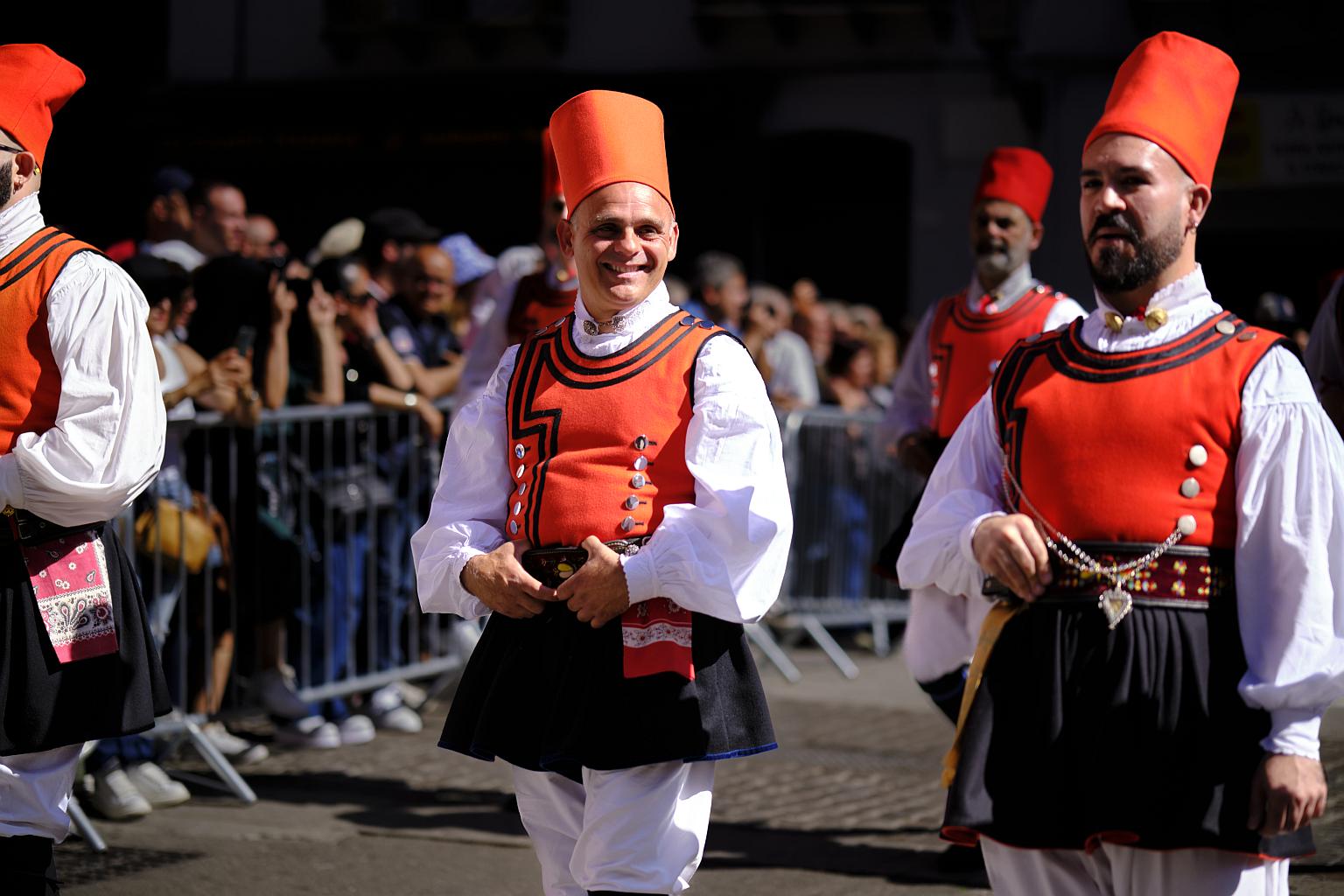
The male costumes are mostly fairly similar – white blouses and baggy pants with a black, embroidered or coloured waistcoat or tunic and black gaiters. Sometimes the tunic is extended to become a sort of kilt. Sometimes the kilts are separate, and sometimes they are actually rather baggy shorts. They wear tubular hats, usually black, which are folded or rolled in different ways. Some shepherd costumes featured a coat made from the hide of a sheep that looked as it would have been very warm on a cold and wet mountain top, although less suited to a sunny day in Cagliari in May. There were also some very exotic-looking fellows in orange jackets and orange flower-pot hats who looked very oriental, like Ottoman Bashi-Bazouks or something, but the Ottomans were one of the few Mediterranean cultures not to have touched Sardinia, so I can’t explain that.

Musicians
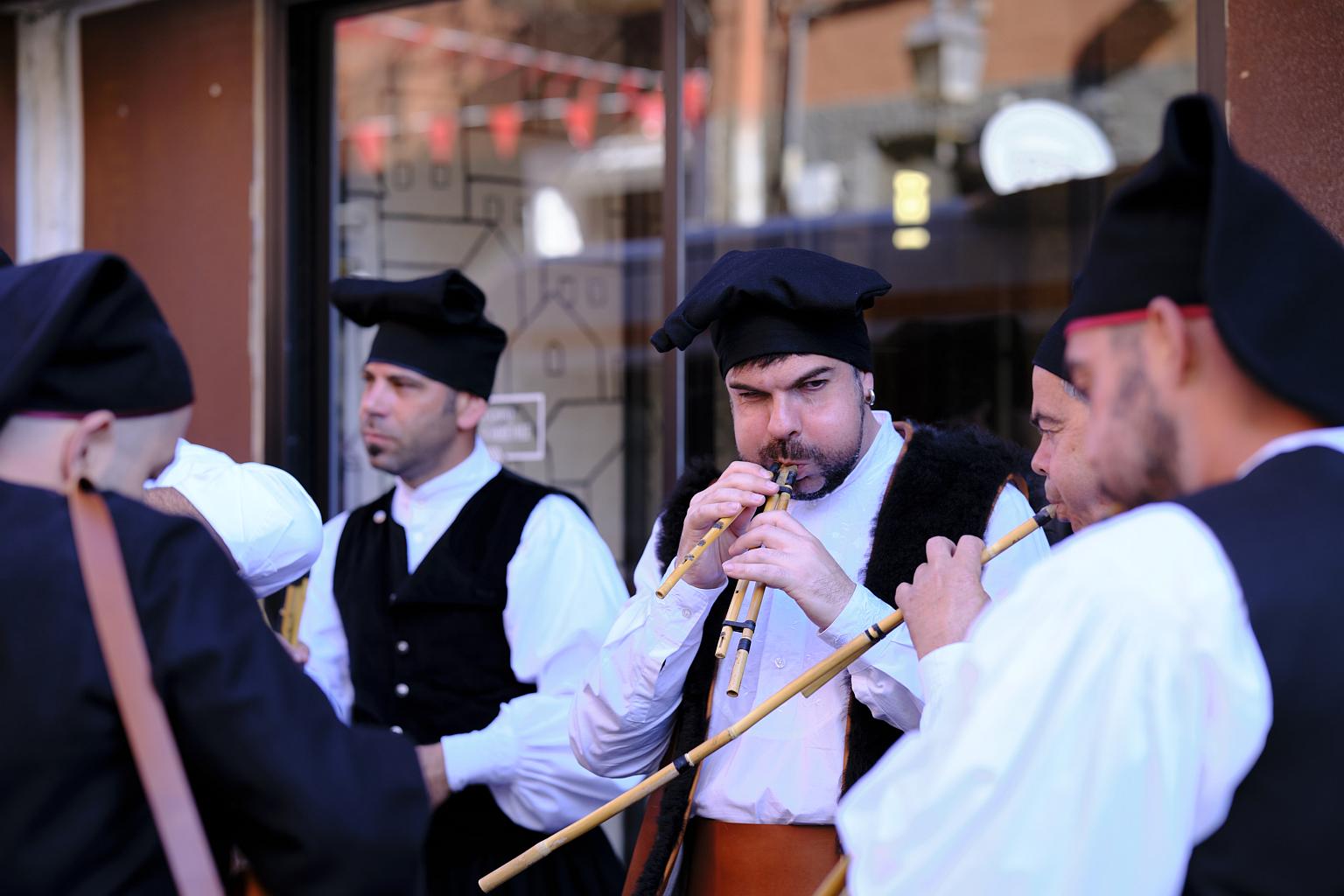
Musicians, Festa di Sant’Efisio. Fujifilm X-Pro 3 digital camera, 56mm lens (click to enlarge).
Sant'Efisio male costume
Male costume, Festa di Sant’Efisio. Fujifilm X-Pro 3 digital camera, 35mm lens (click to enlarge).
Shepherds costumes
Shepherds in their nice warm coats. Festa di Sant’Efisio. Fujifilm X-Pro 3 digital camera, 35mm lens (click to enlarge).
Bashi-Bazouks
Male costumes, Festa di Sant’Efisio. Fujifilm X-Pro 3 digital camera, 56mm lens (click to enlarge).
Musicians, Festa di Sant’Efisio. Fujifilm X-Pro 3 digital camera, 56mm lens (click to enlarge).

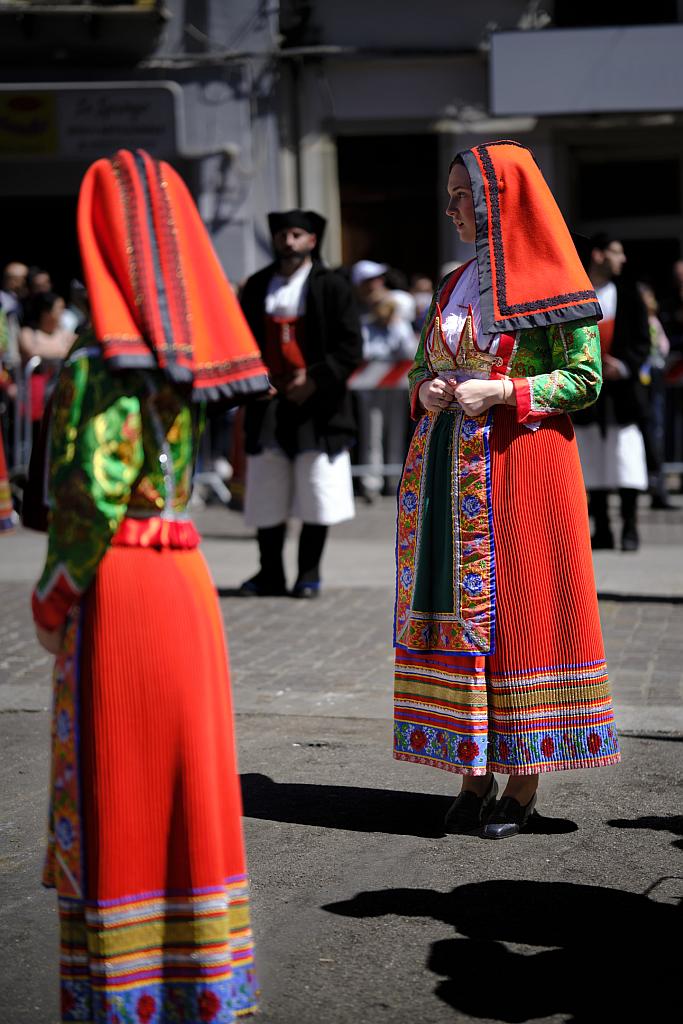
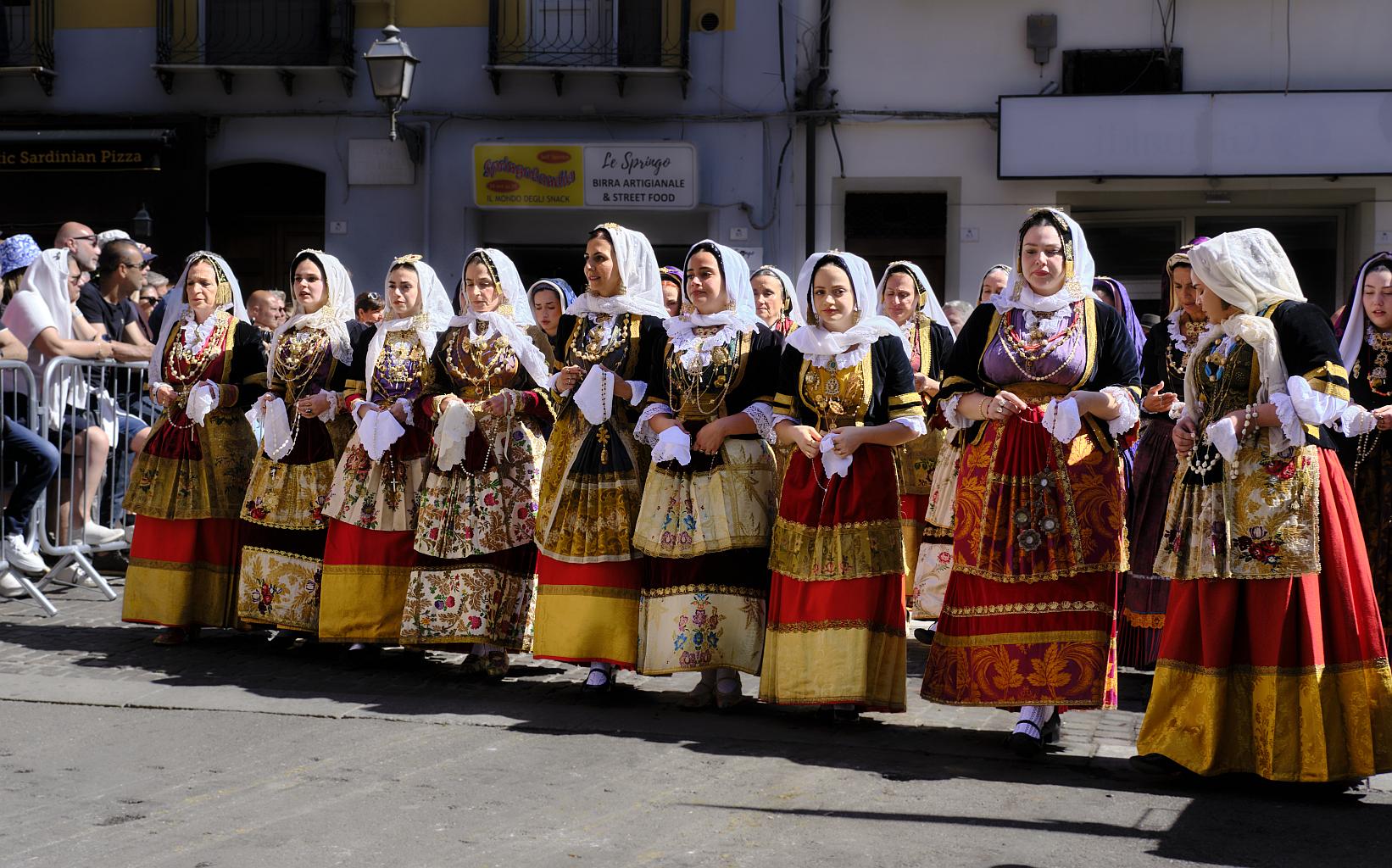
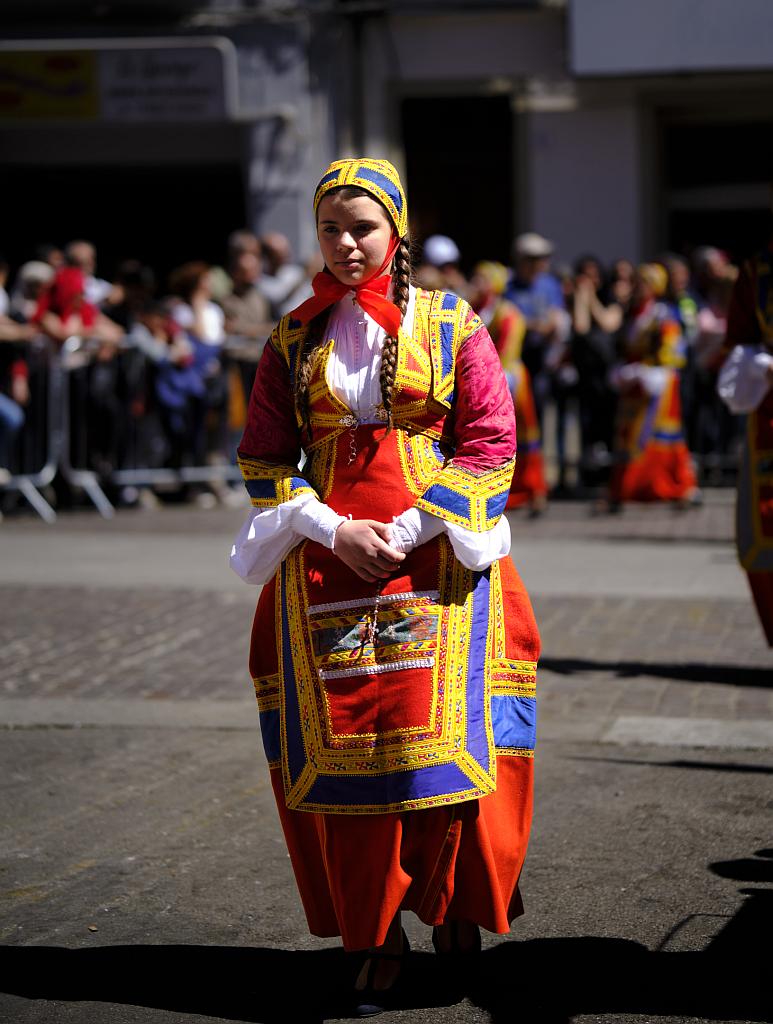
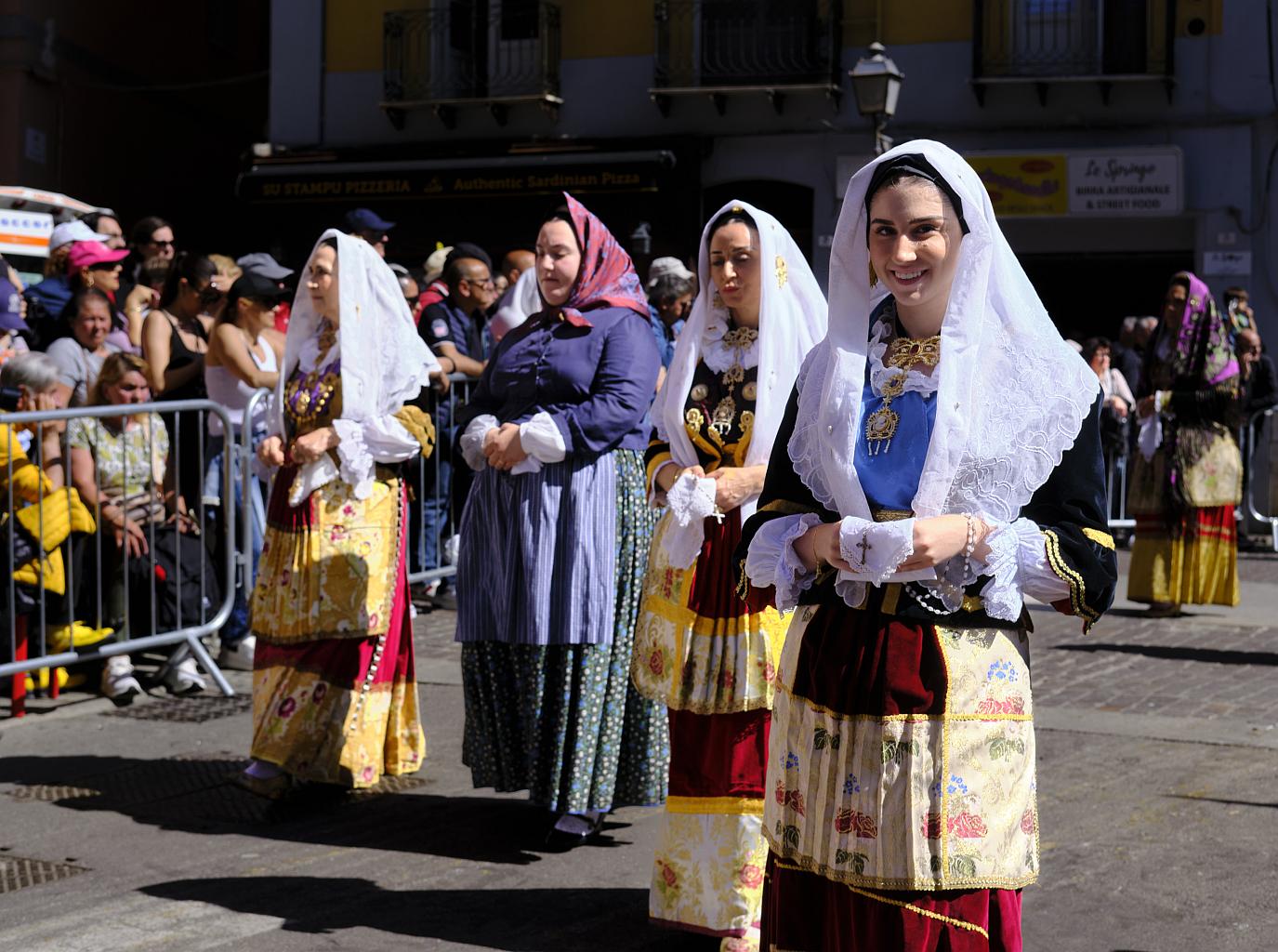
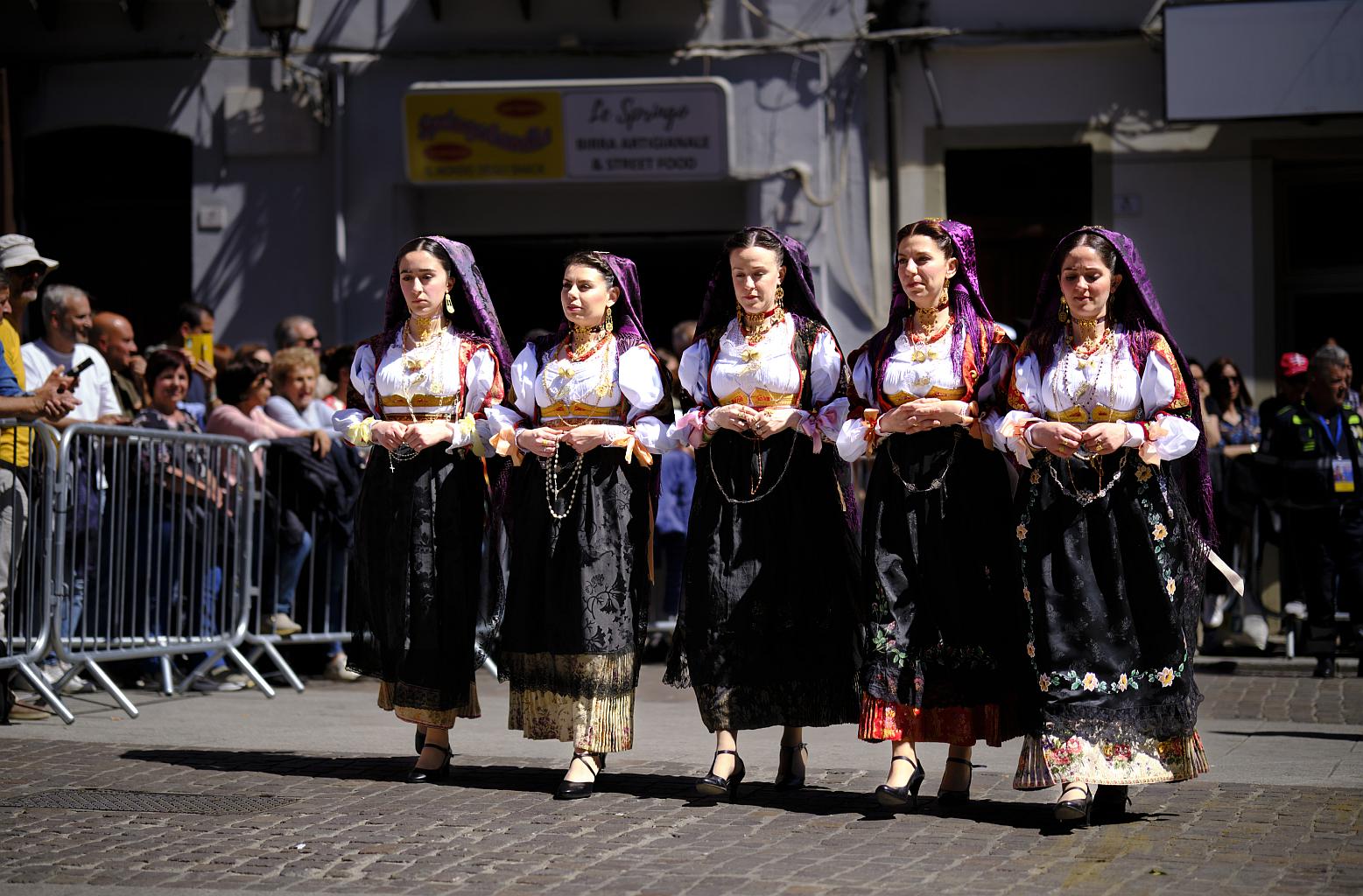
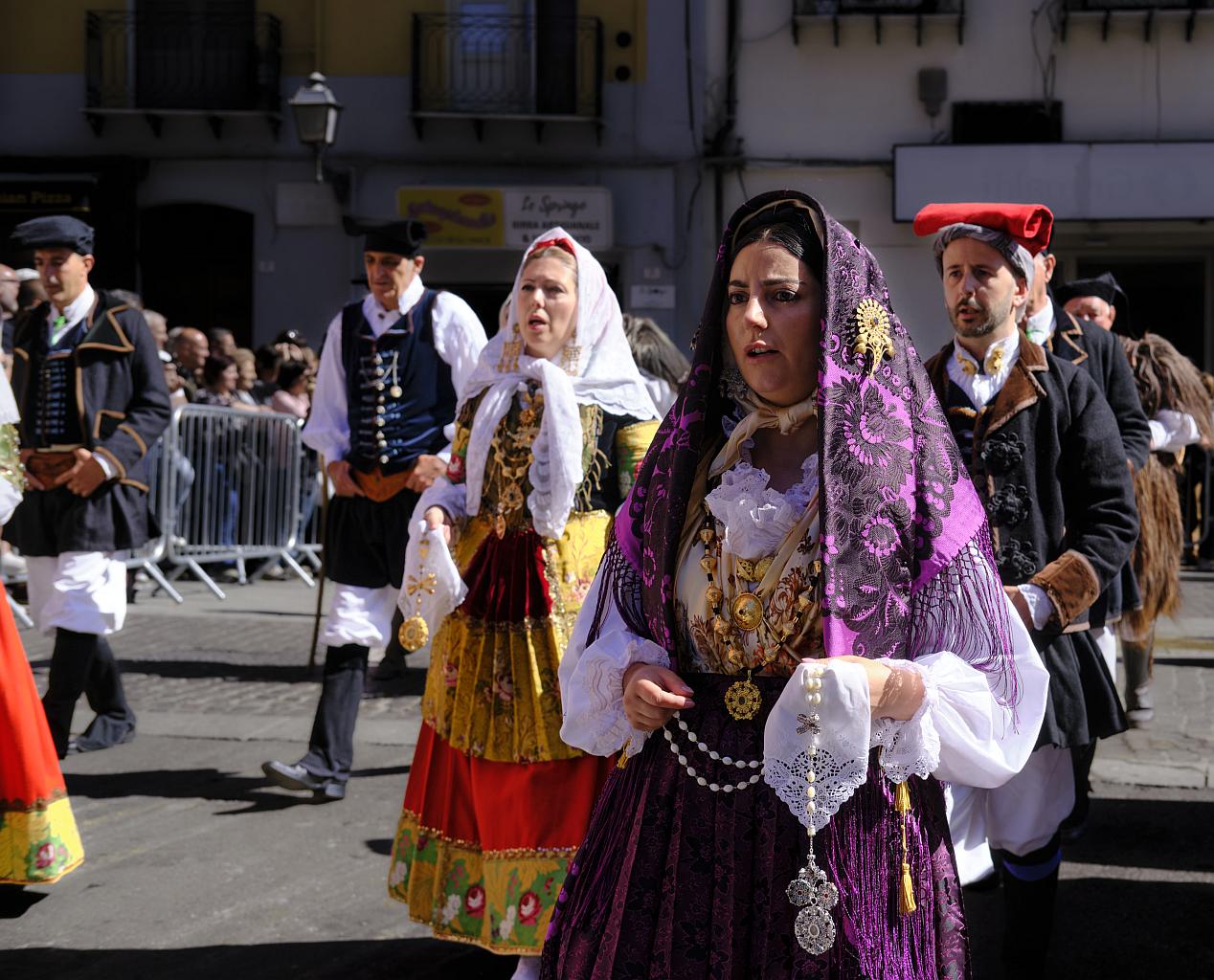
The female costumes, on the other hand, were of a beauty and variety that defy description, so you will have to look at the photographs. I say “variety”, but the variety is between places, not within them. Every lady (and young girl) from the same place was dressed similarly. I guess that if you want to wear something very different, you have to move to a different town. According to the ethnographic museum, these dresses were wedding dresses as well being as for special occasions.

Many of the women (and a few of the men) were also wearing elaborate jewellery; again, of designs that were indistinguishable from examples in museums that were a couple of hundred years old.

Sant'Efisio
Female costumes, Festa di Sant’Efisio. Fujifilm X-Pro 3 digital camera, 56mm lens (click to enlarge).
Sant'Efisio
Female costume, Festa di Sant’Efisio. Fujifilm X-Pro 3 digital camera, 56mm lens (click to enlarge).
Sant'Efisio
Female costumes, Festa di Sant’Efisio. Fujifilm X-Pro 3 digital camera, 35mm lens (click to enlarge).
Sant'Efisio
Female costume, Festa di Sant’Efisio. Fujifilm X-Pro 3 digital camera, 56mm lens (click to enlarge).
Sant'Efisio
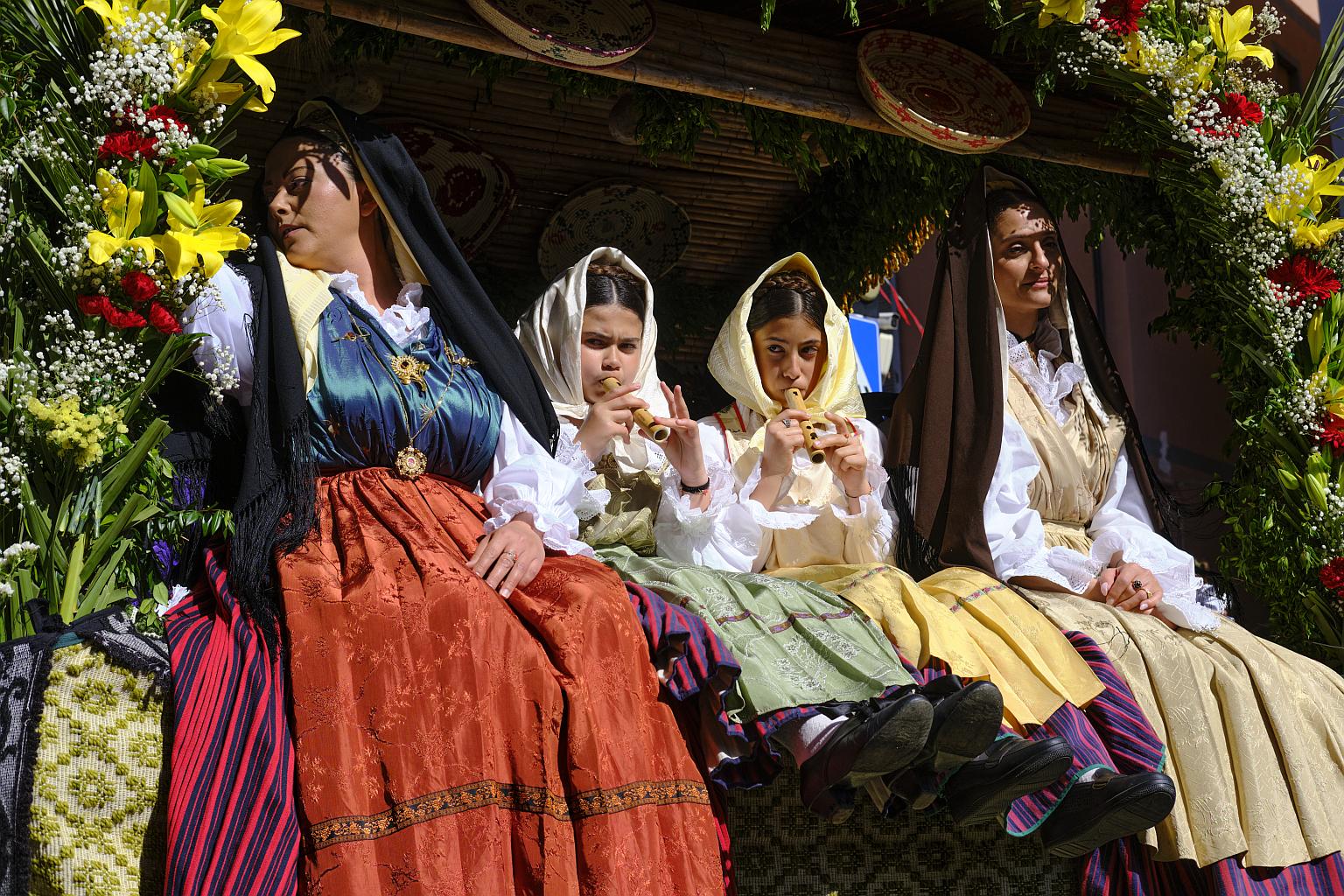
Junior versions, Festa di Sant’Efisio. Fujifilm X-Pro 3 digital camera, 56mm lens (click to enlarge).

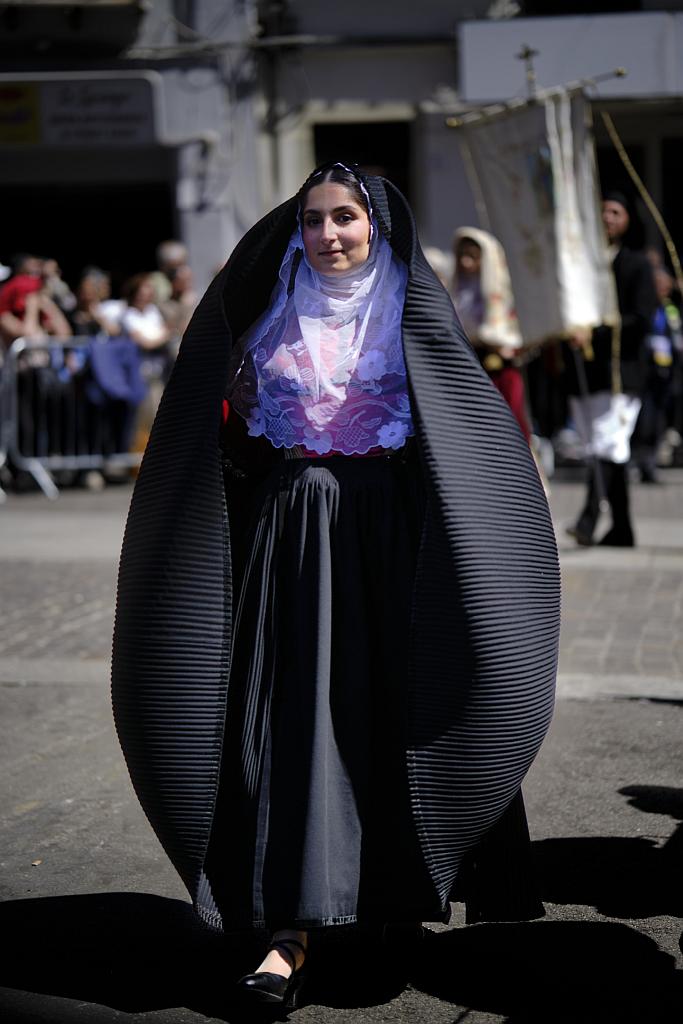
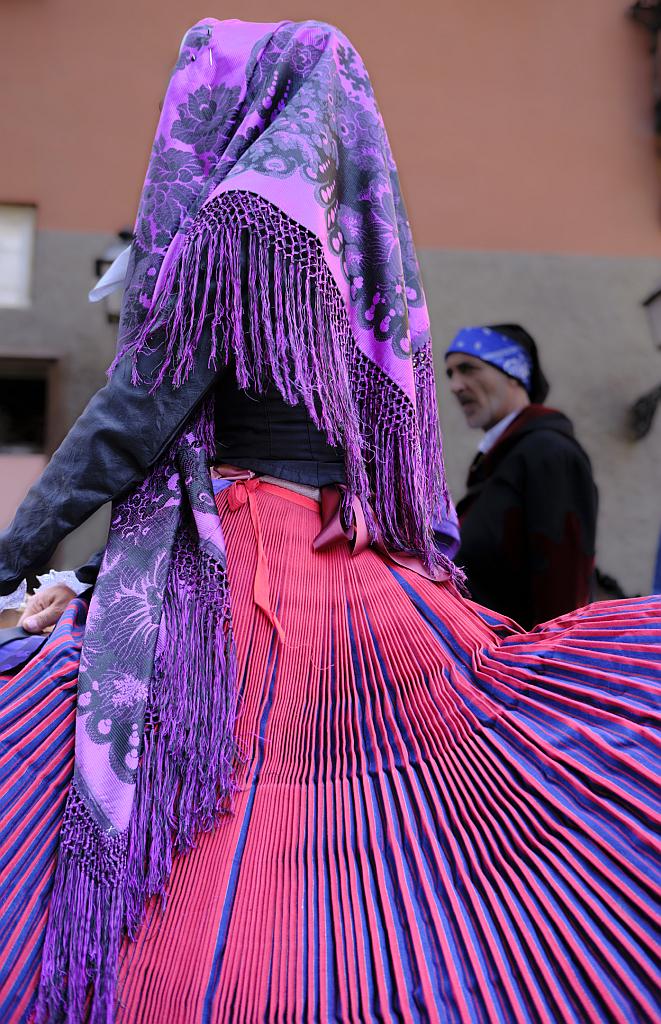
Some of the ladies’ dresses seemed like something rather avant-garde from a Milanese catwalk. These involved the hem of an outer layer of the skirt being lifted up and turned into a sort of hood.

Sci-fi
Avant-garde. Festa di Sant’Efisio. Fujifilm X-Pro 3 digital camera, 56mm lens (click to enlarge).
Hems as hoods
The hems-as-hoods seen from behind. Festa di Sant’Efisio. Fujifilm X-Pro 3 digital camera, 56mm lens (click to enlarge).

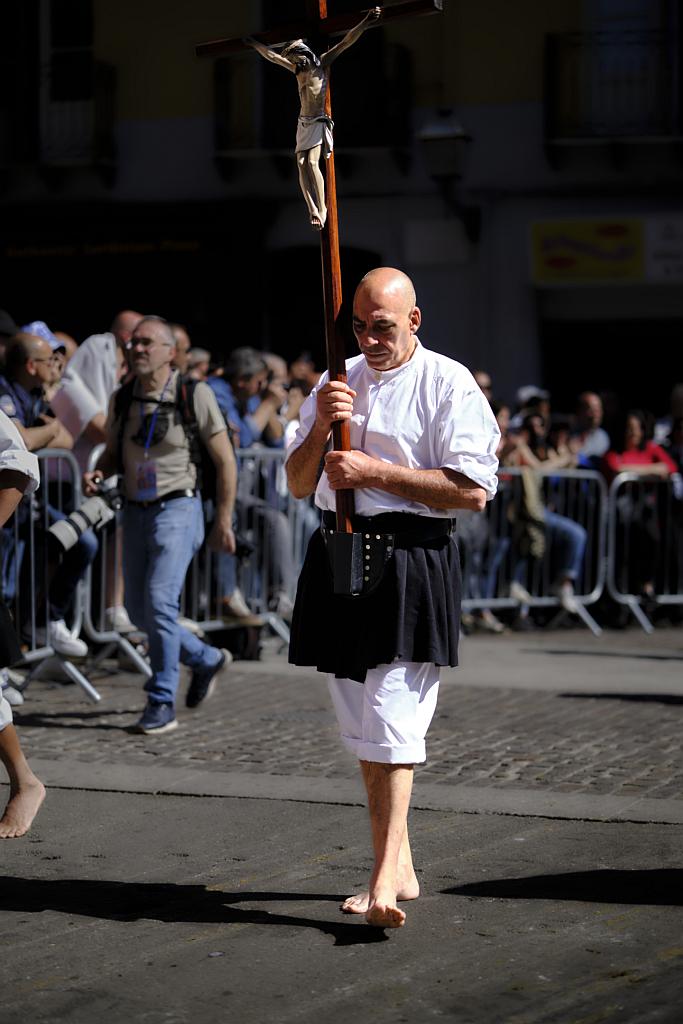
Even before the saint or any clergy appeared, the religious nature of the festival was apparent. Participants sang hymns, many of the ladies (and a few men) carried rosary beads, and a few men walked the cobbled streets barefoot while carrying crucifixes.

Crucifix
A barefoot penitent carrying a crucifix, Festa di Sant’Efisio. Fujifilm X-Pro 3 digital camera, 56mm lens (click to enlarge).

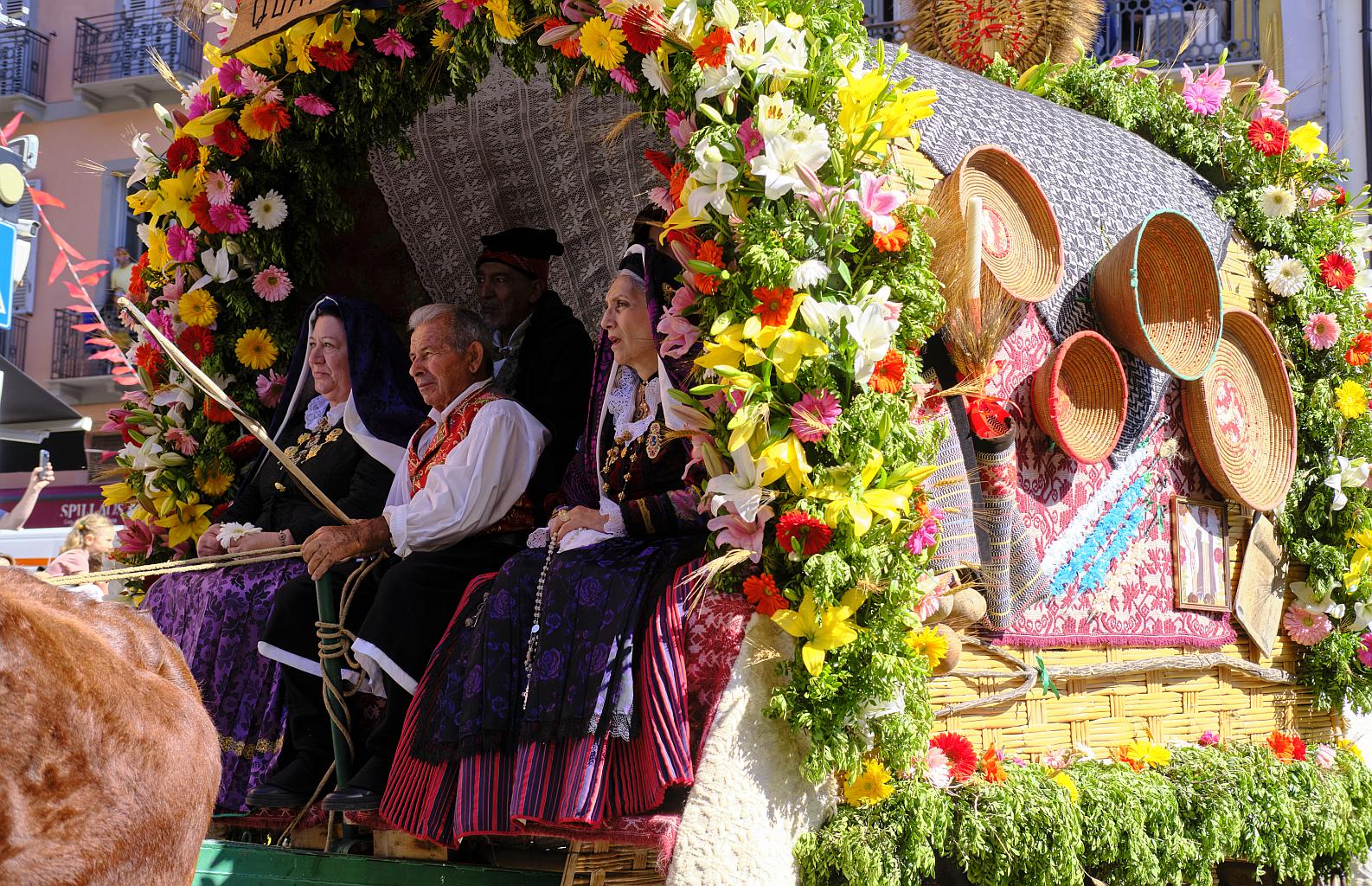
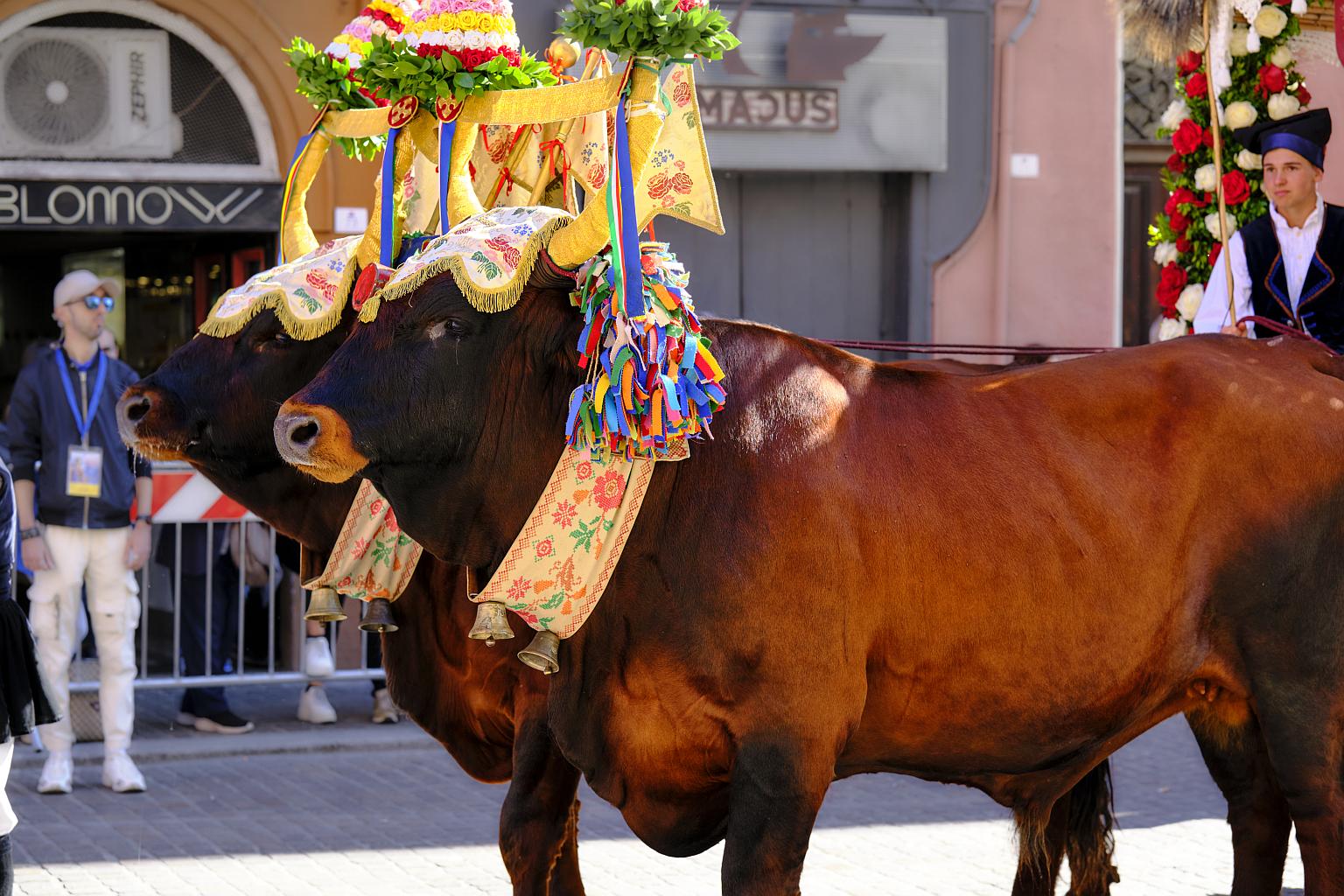
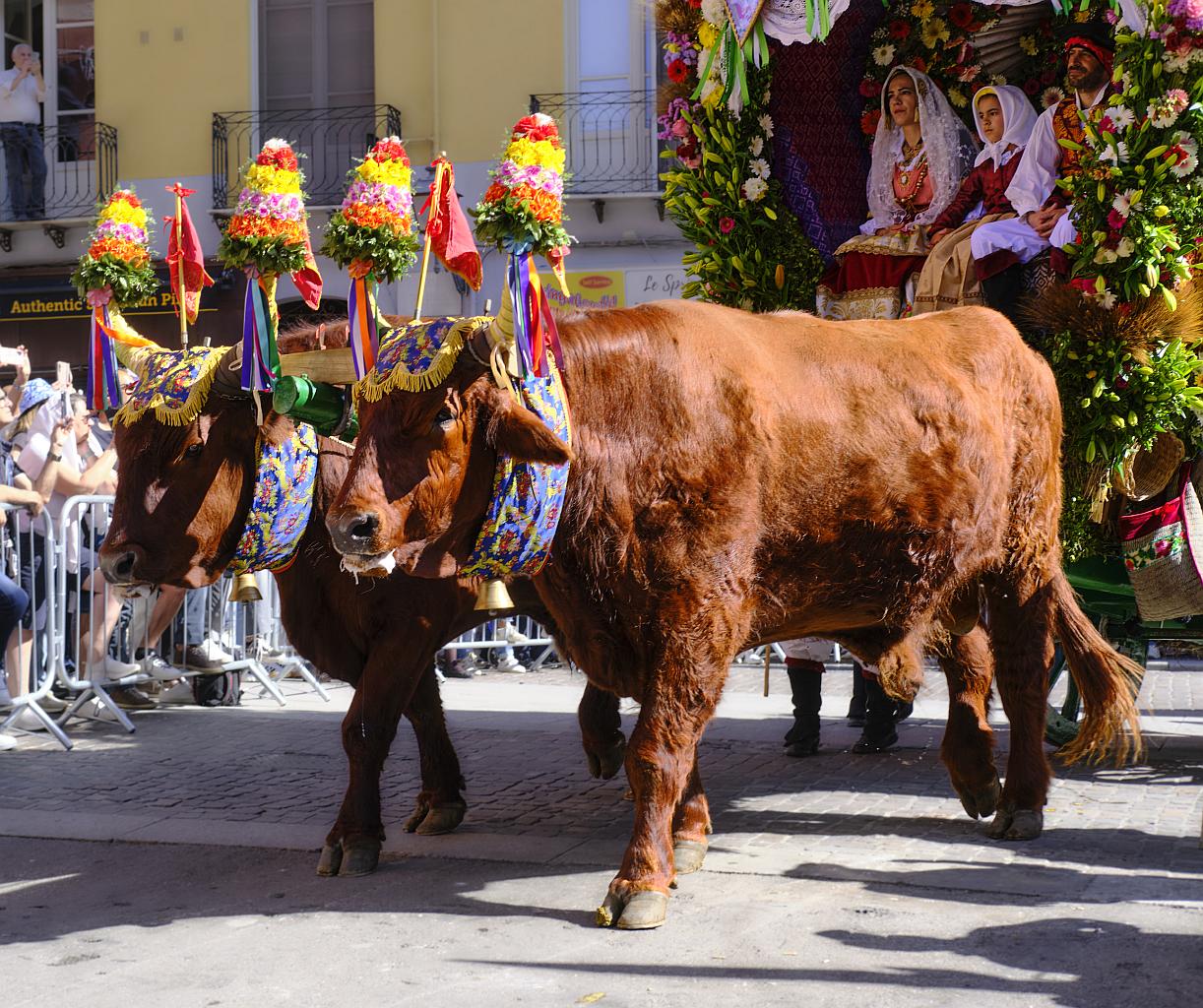
The parade was led by highly-decorated carts drawn by oxen (also decorated). These enormous beasts, hugely powerful but very patient and placid, would once have drawn ploughs but although that job has presumably been taken over by tractors, I’m glad people keep them around for this sort of thing.

Sant'Efisio Ox Cart
Ox cart, Festa di Sant’Efisio. Fujifilm X-Pro 3 digital camera, 56mm lens (click to enlarge).
Oxen, Festa di Sant’Efisio. Fujifilm X-Pro 3 digital camera, 56mm lens (click to enlarge).
Oxen
Oxen, Festa di Sant’Efisio. Fujifilm X-Pro 3 digital camera, 56mm lens (click to enlarge).
Ox cart
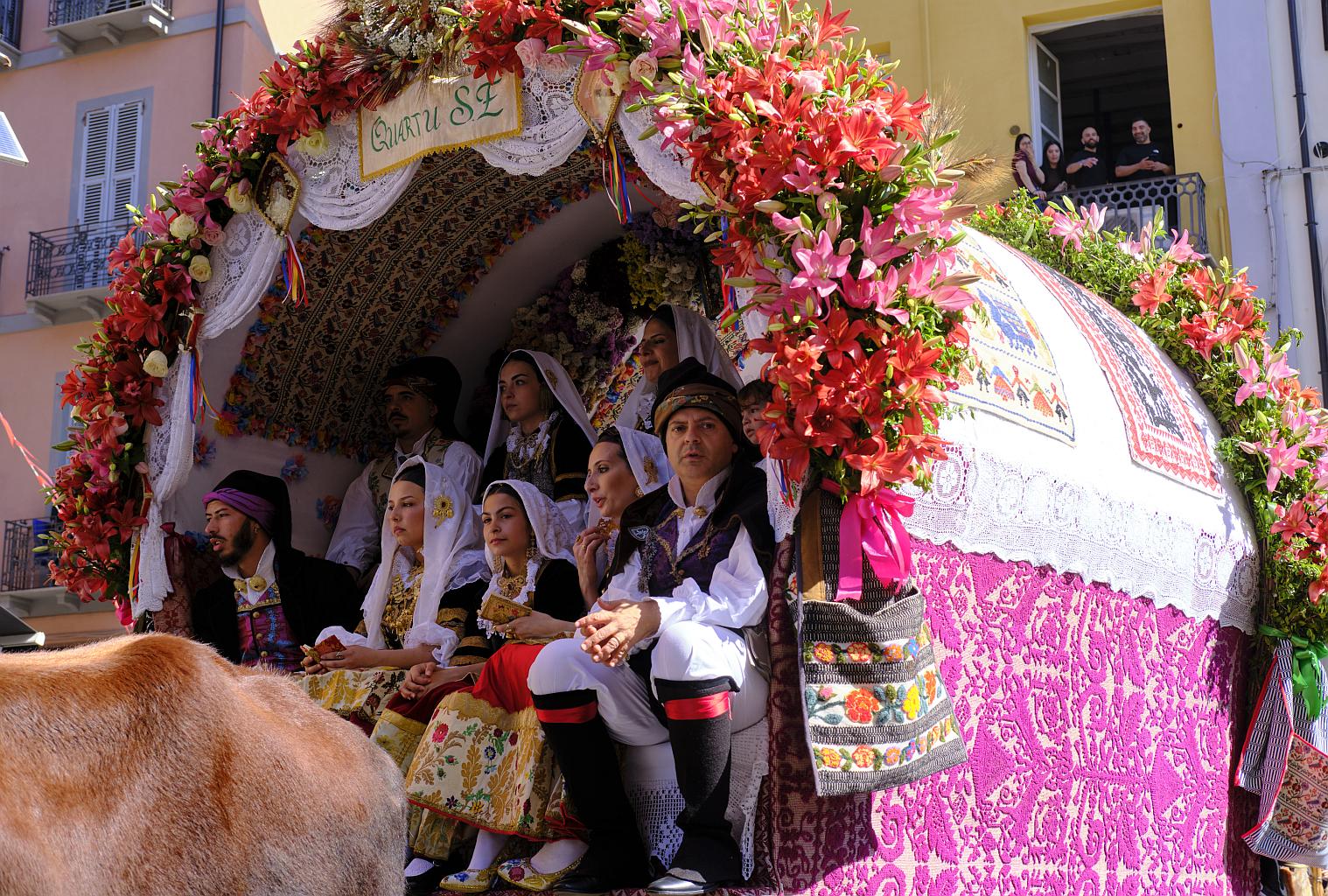
Ox cart, Festa di Sant’Efisio. Fujifilm X-Pro 3 digital camera, 56mm lens (click to enlarge).

The carts were decorated with flowers, some artificial but many natural, which makes the point that this is a sort of spring festival as well. Each cart carried the name of the town it came from, and many of the people on the carts were singing hymns.

Singers
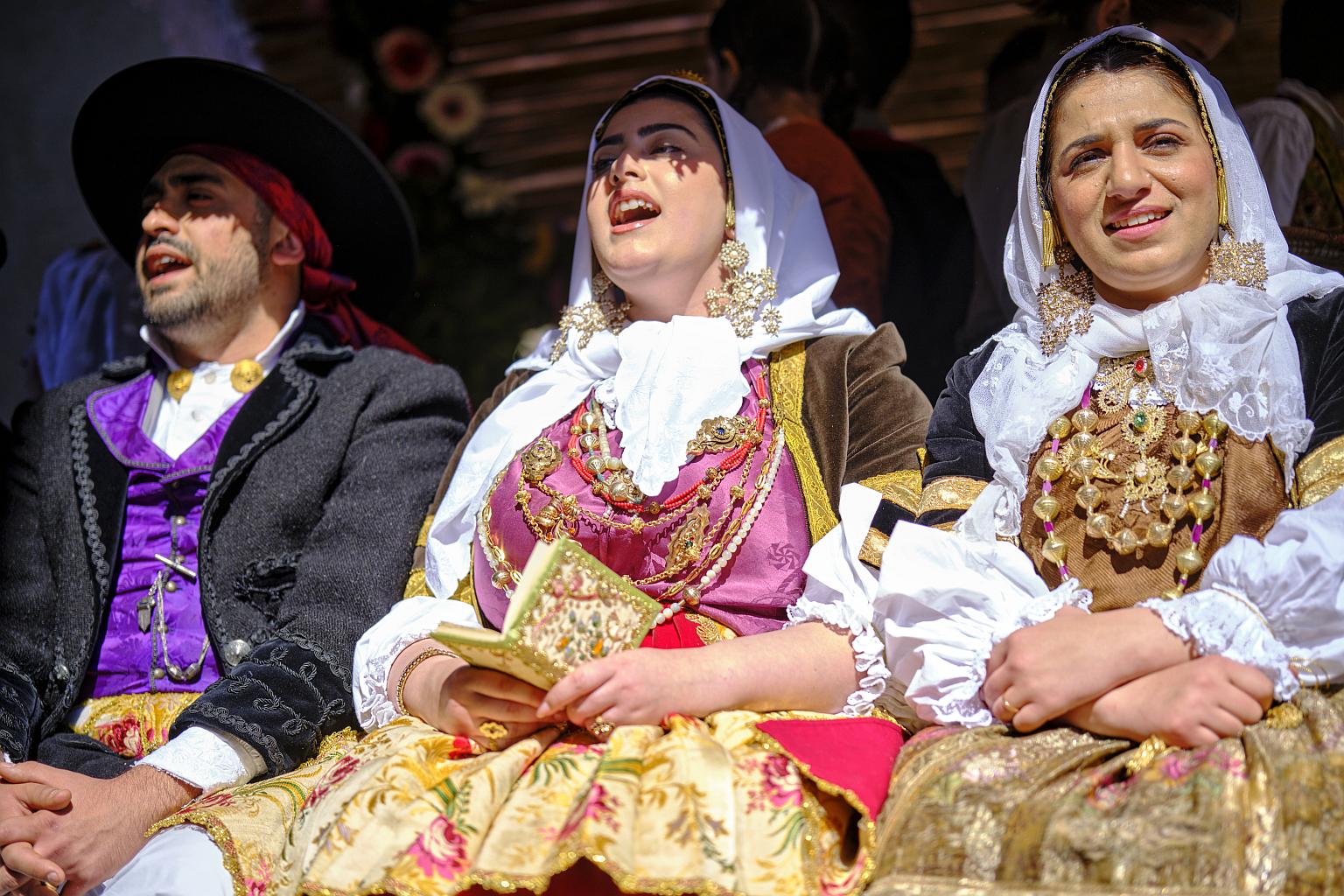
Singers, Festa di Sant’Efisio. Fujifilm X-Pro 3 digital camera, 56mm lens (click to enlarge).

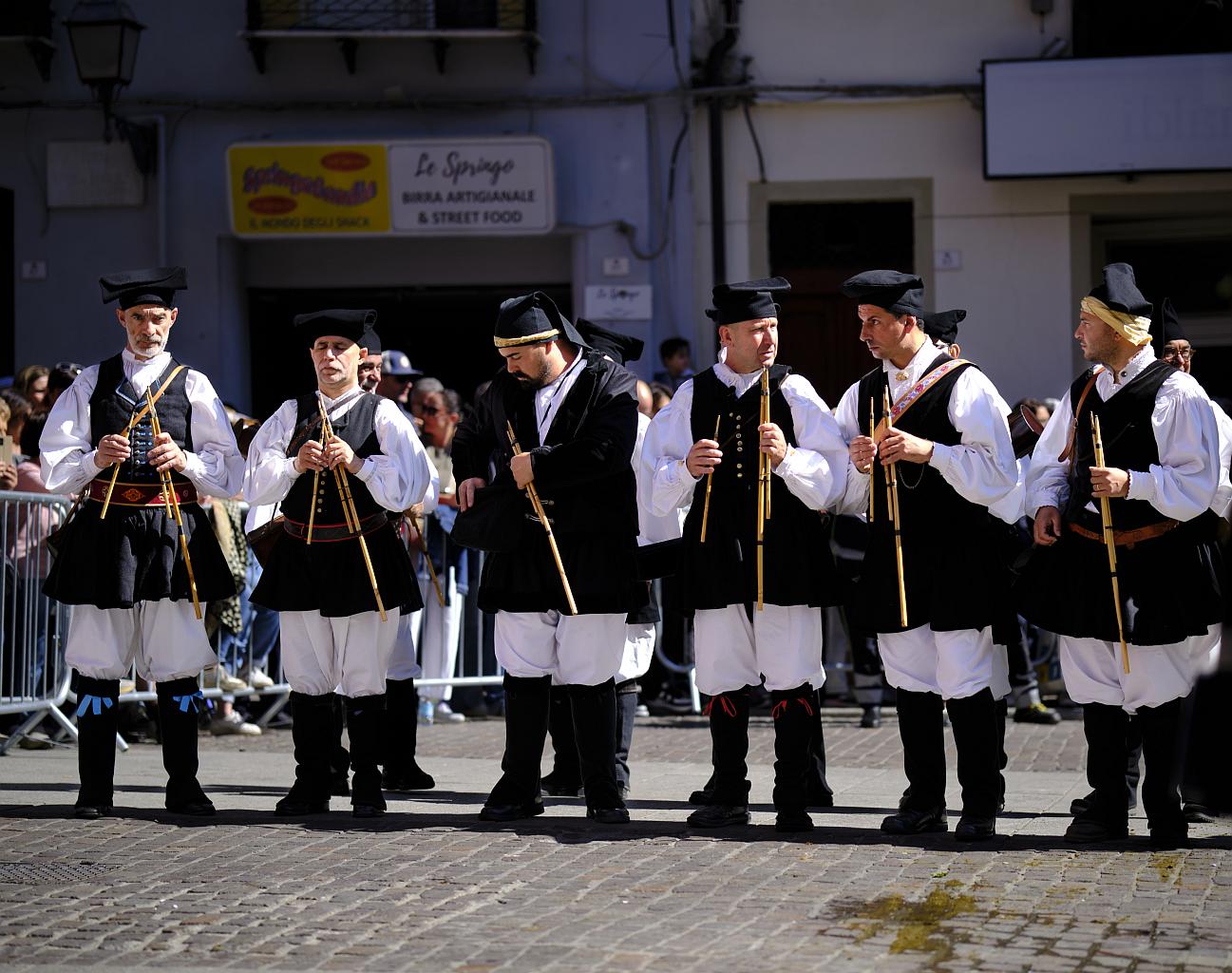
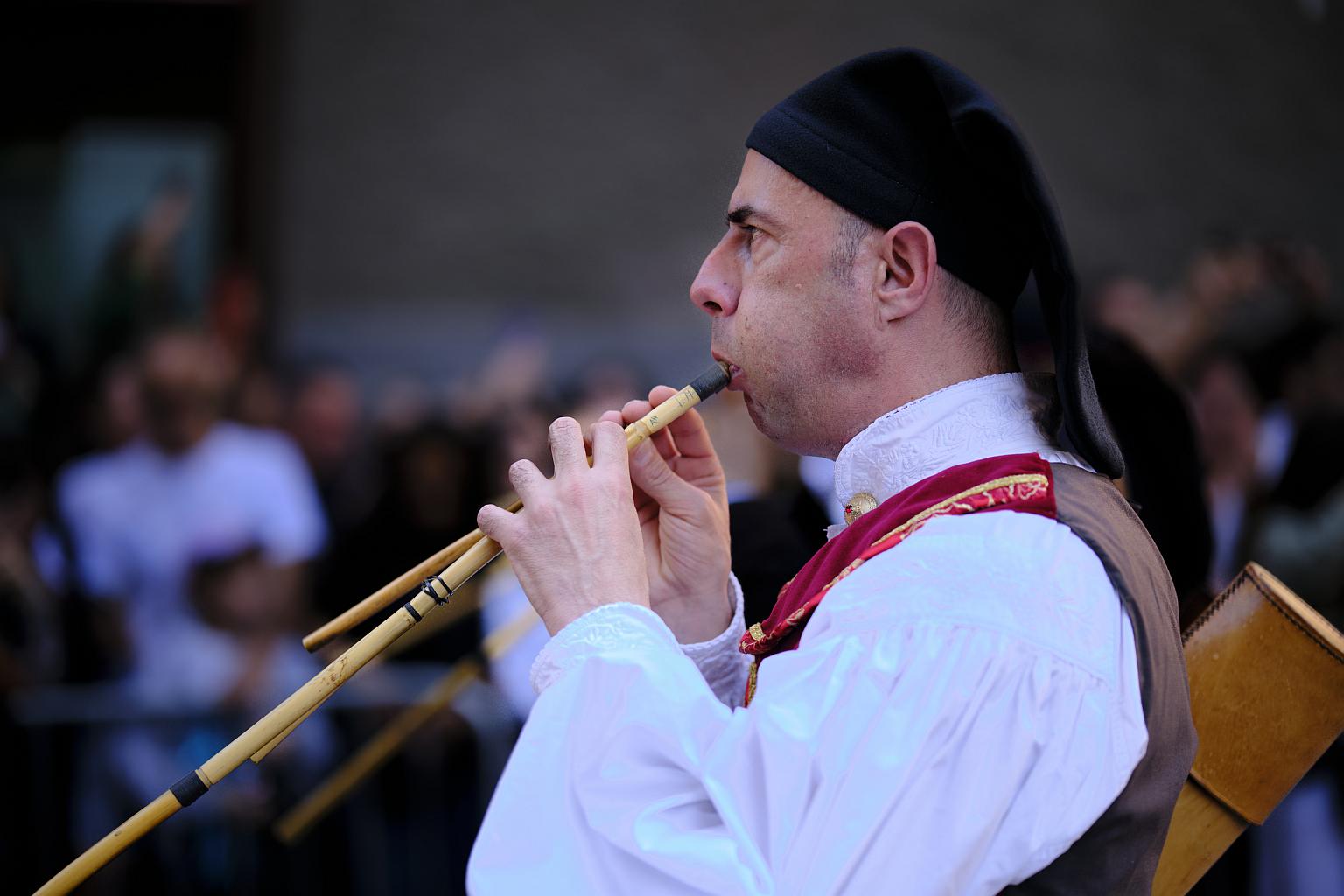
The singing was in unison rather than harmony, but often men and women would take alternate verses. The singing style was quite nasal and very penetrating – useful for calling across mountain valleys, no doubt, but not unpleasant. There were instruments too – mainly a sort of double-reed thing. We thought these surprisingly loud for their size and shape, until when I was processing the photographs on the computer I noticed that some crafty fellows had taped microphones to them and had battery-powered speakers attached to their belts.

Musicians amplified
If you look closely you will see the microphones and amplifiers. Festa di Sant’Efisio. Fujifilm X-Pro 3 digital camera, 56mm lens (click to enlarge).
Musician
Unamplified musician, Festa di Sant’Efisio. Fujifilm X-Pro 3 digital camera, 56mm lens (click to enlarge).
Junior musicians
Junior unamplified musicians, Festa di Sant’Efisio. Fujifilm X-Pro 3 digital camera, 35mm lens (click to enlarge).

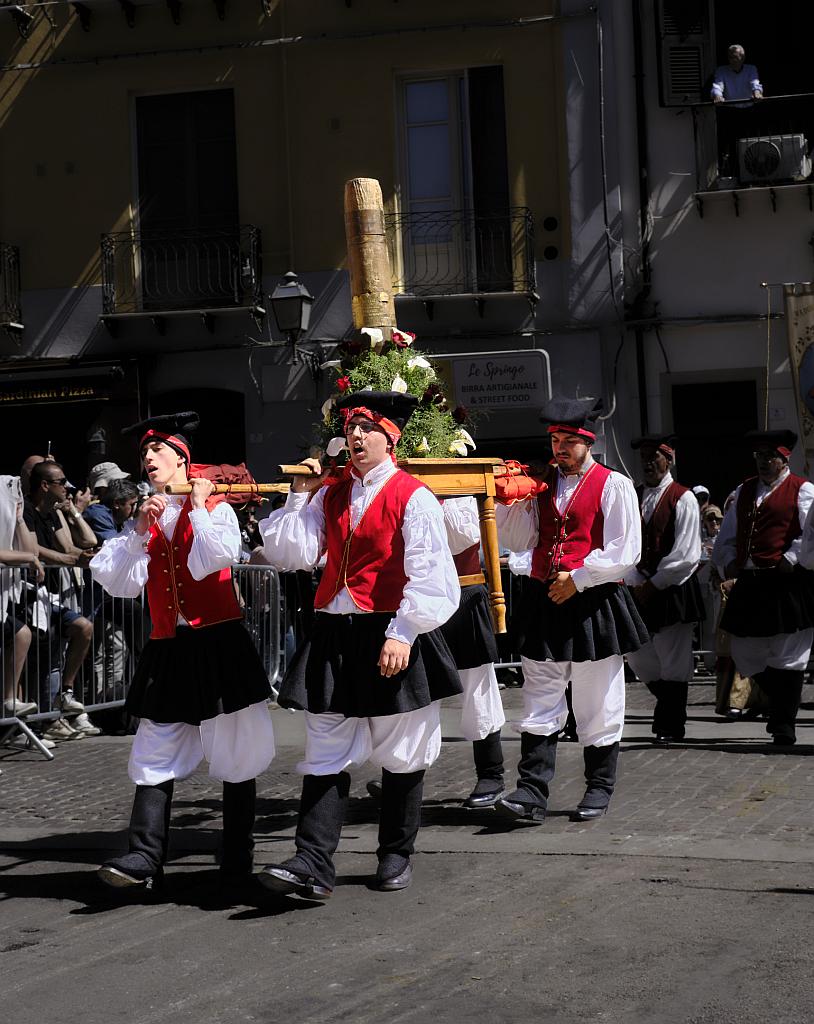
After the carts came a large number of groups on foot, each preceded by a sign saying where they were from, and when the contingent from each town or village came in sight there was an excited cheer from their fellow-citizens in the crowd.

Sant'Efisio
Festa di Sant’Efisio. Fujifilm X-Pro 3 digital camera, 56mm lens (click to enlarge).
Sant'Efisio
Festa di Sant’Efisio. Fujifilm X-Pro 3 digital camera, 56mm lens (click to enlarge).

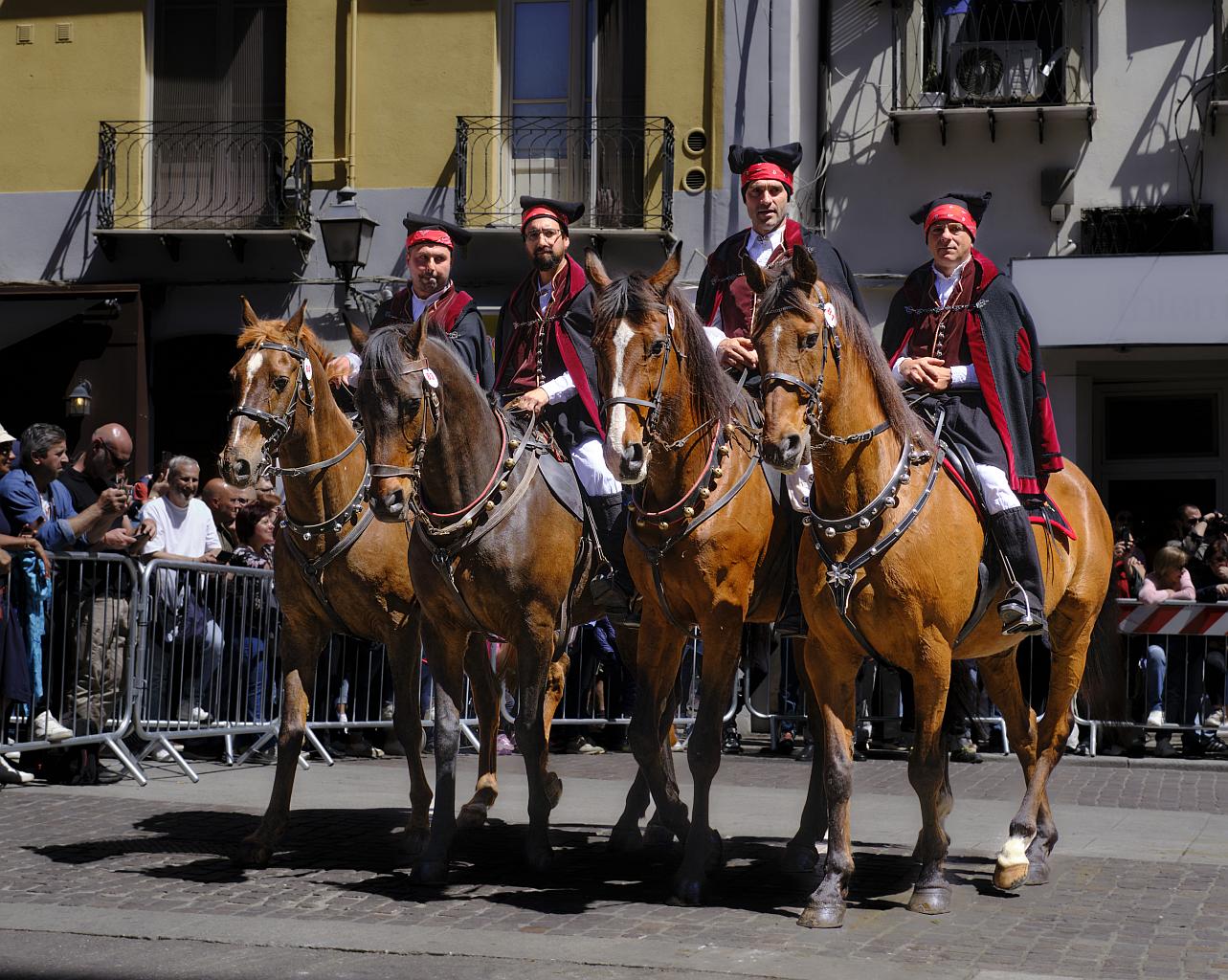
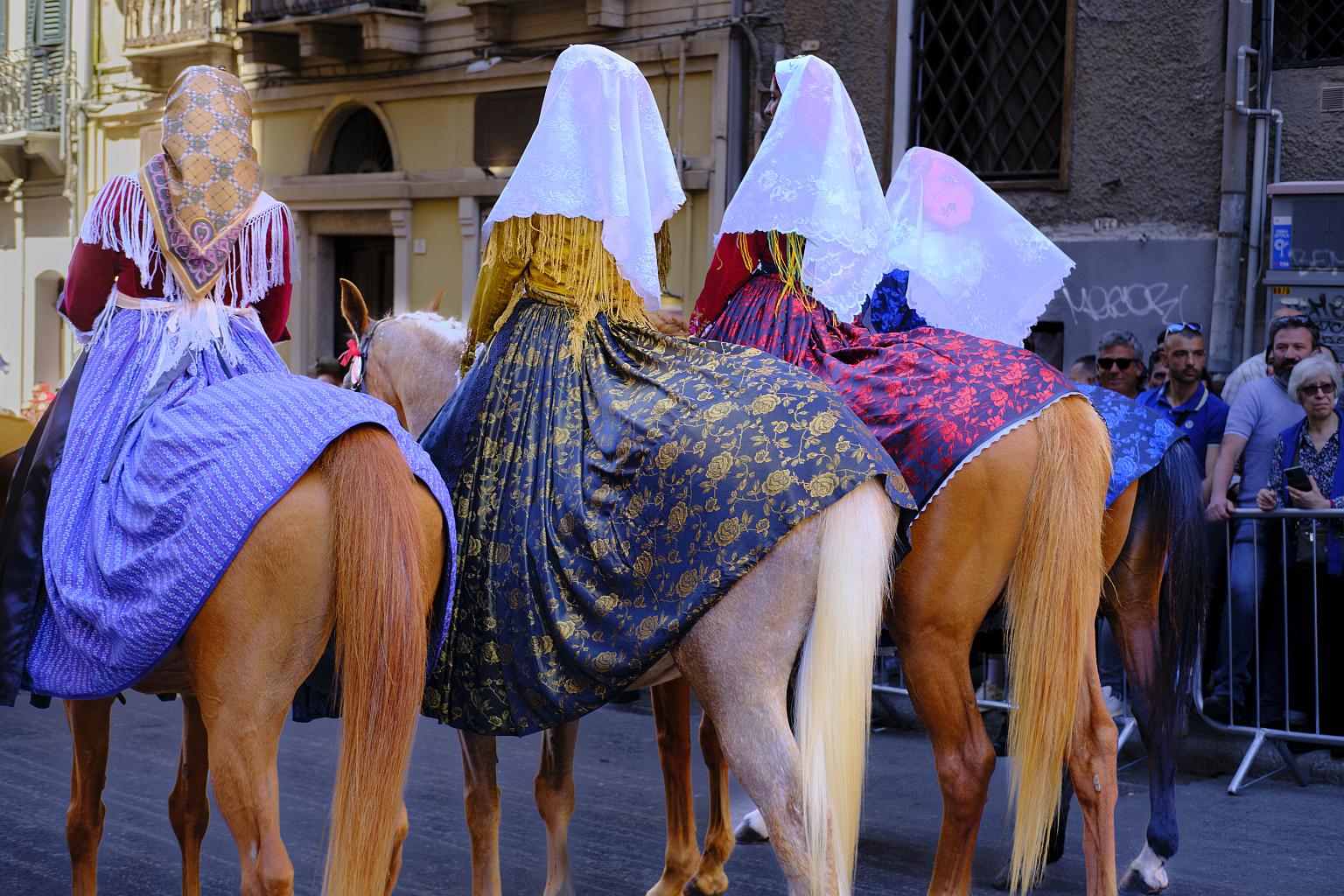
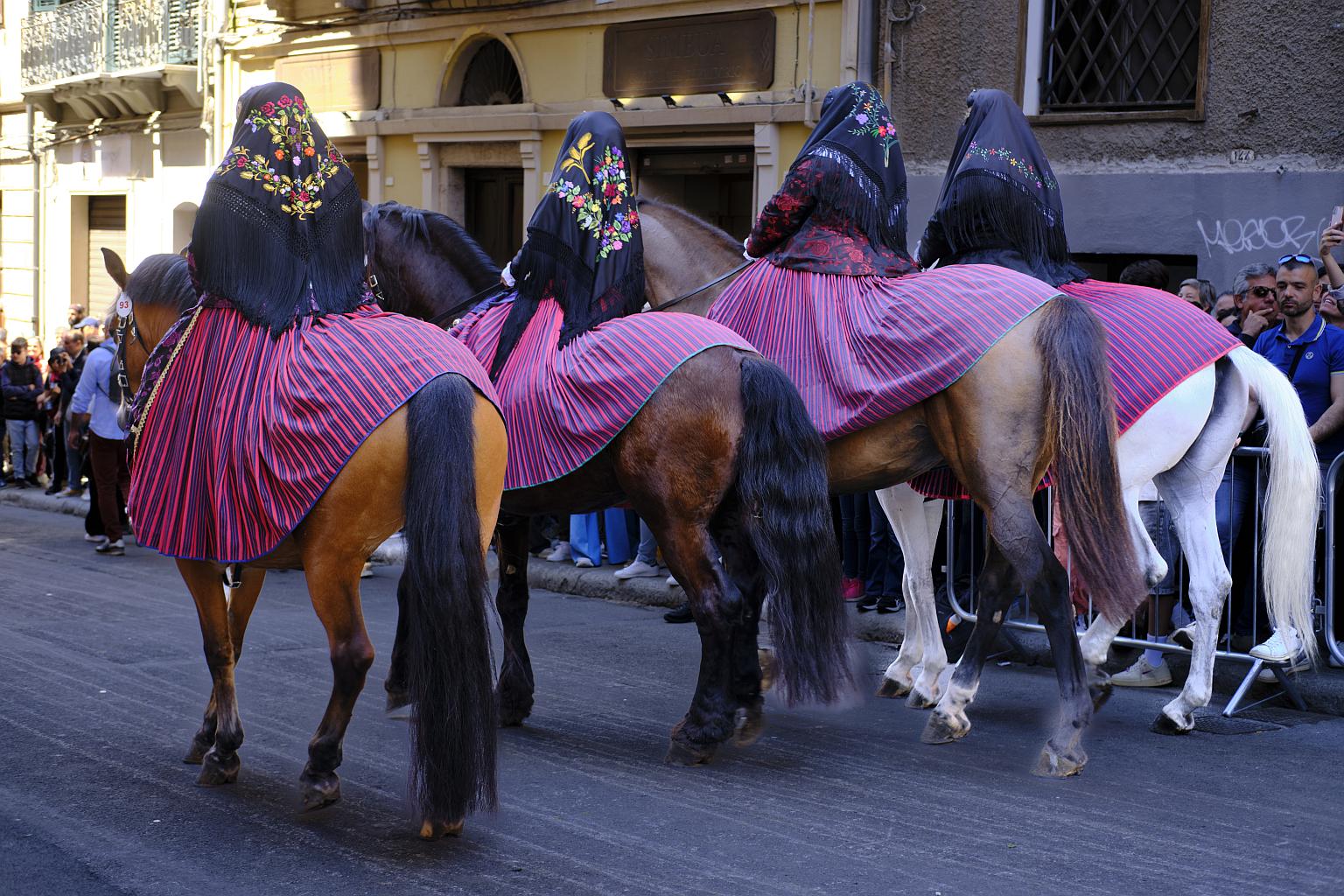
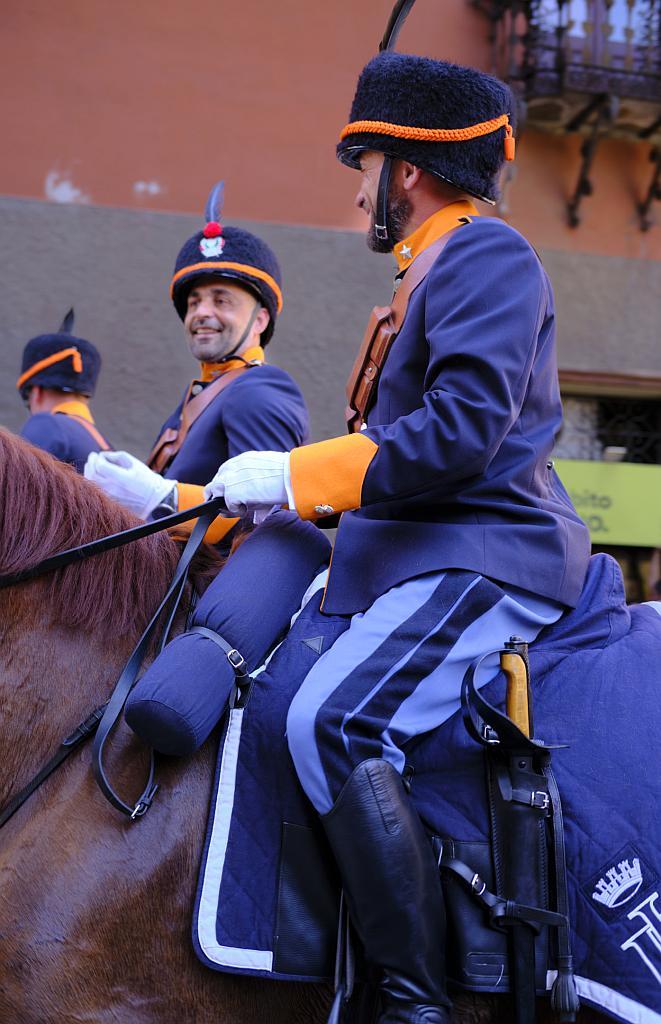
After the pedestrians came a number of groups on horseback. Initially these were dressed like the pedestrians – the women in gorgeous dresses sitting side-saddle, and some of the men carrying enormously long muskets – and then some chaps looking as if they might have charged with the Light Brigade; presumably in uniforms of the pre-unification Piedmontese military.

Horsemen
Horsemen, Festa di Sant’Efisio. Fujifilm X-Pro 3 digital camera, 56mm lens (click to enlarge).
Female riders
Female riders, Festa di Sant’Efisio. Fujifilm X-Pro 3 digital camera, 35mm lens (click to enlarge).
Female riders
Female riders, Festa di Sant’Efisio. Fujifilm X-Pro 3 digital camera, 35mm lens (click to enlarge).
Female rider
Female rider, Festa di Sant’Efisio. Fujifilm X-Pro 3 digital camera, 35mm lens (click to enlarge).
Hussars
Cavalry, Festa di Sant’Efisio. Fujifilm X-Pro 3 digital camera, 35mm lens (click to enlarge).

Eventually the saint’s effigy appeared, and a large section of the crowd joined in behind it. The festival officially goes for four days, with the saint’s effigy progressing to the little church at Nora that marks the traditional site of the his martyrdom. As it makes its way along the coast there are mini-parades put on by local communities. But most of the participants in today’s parade would have taken the rest of the day off; no doubt there were some very sore feet, especially among those ladies who had covered the whole route in high-heeled shoes, and those gentlemen who had done it in no shoes at all. Despite that everyone looked as if they had enjoyed themselves and by the sound of it quite a few people partied well into the evening.

Sant'Efisio
Festa di Sant’Efisio. Fujifilm X-Pro 3 digital camera, 56mm lens (click to enlarge).
Female costume. Like many of the ladies, this one is carrying rosary beads and a lace handkerchief. Festa di Sant’Efisio. Fujifilm X-Pro 3 digital camera, 56mm lens (click to enlarge).
Candle
I have no idea what these fellows are carrying but I’m guessing it might be a large candle. Whatever it is they are taking it seriously. Festa di Sant’Efisio. Fujifilm X-Pro 3 digital camera, 56mm lens (click to enlarge).
The end
The end. Fujifilm X-Pro 3 digital camera, 56mm lens (click to enlarge).

Edit: you can now see the second post in this series on Sardinia here: Ancient Sardinia.

And the third: Sardinia – The West Coast. And the fourth and final one: Dancing Monks and Hidden Billionaires.