
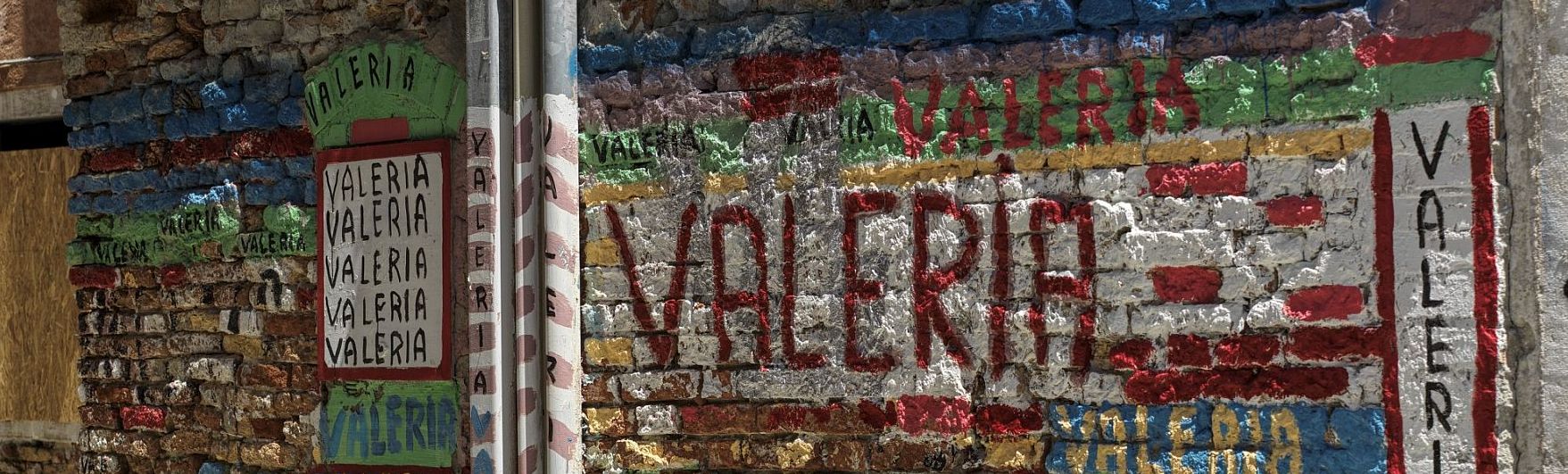
When does a bit of graffiti become an historical artefact? I’ve been looking into this and the answer seems as always to be “it depends”.
Love and Other Impulses
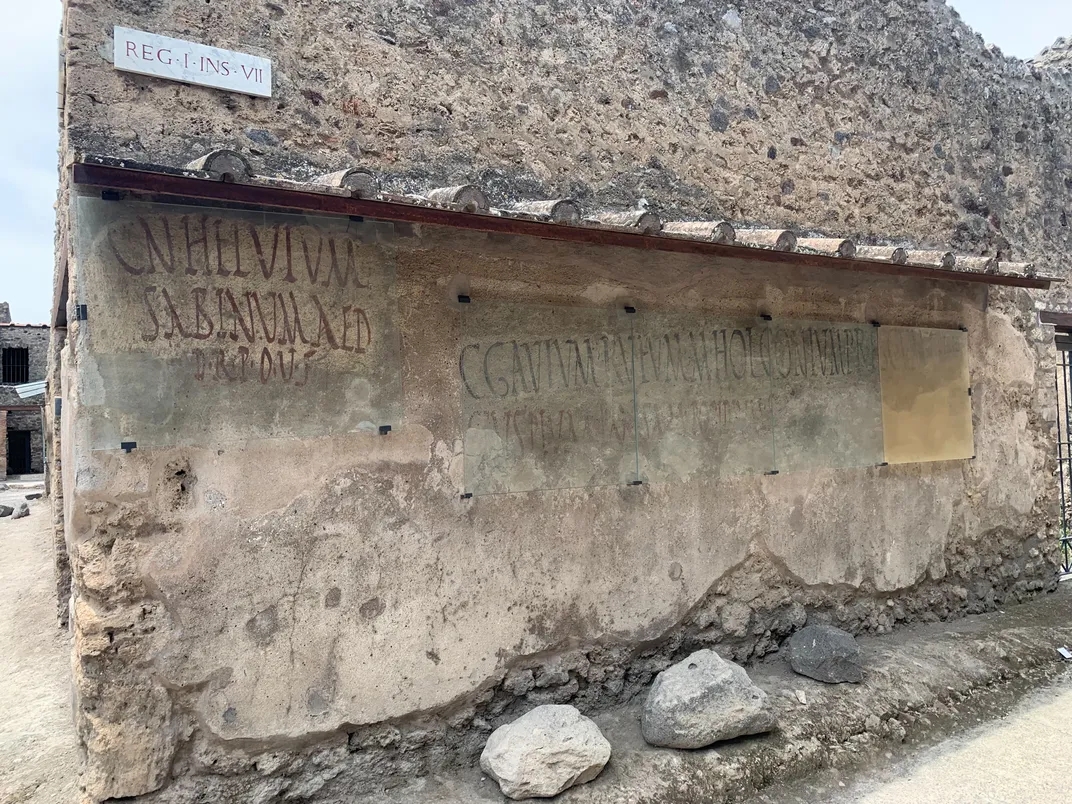
There is no question that the famously obscene graffiti from Pompeii qualify as historic, even though they shocked 19th-Century people so profoundly that their transcriptions were kept locked up with all the other rude stuff like phallic good luck symbols, in the Gabinetto Segreto (the Secret Room) in the Archaeological Museum of Naples. There they could be viewed occasionally, and then only by adult men of “good moral character”. We’ve been to the Gabinetto Segreto, and not only did they let us in, but there was a school group there at the same time, so times change.
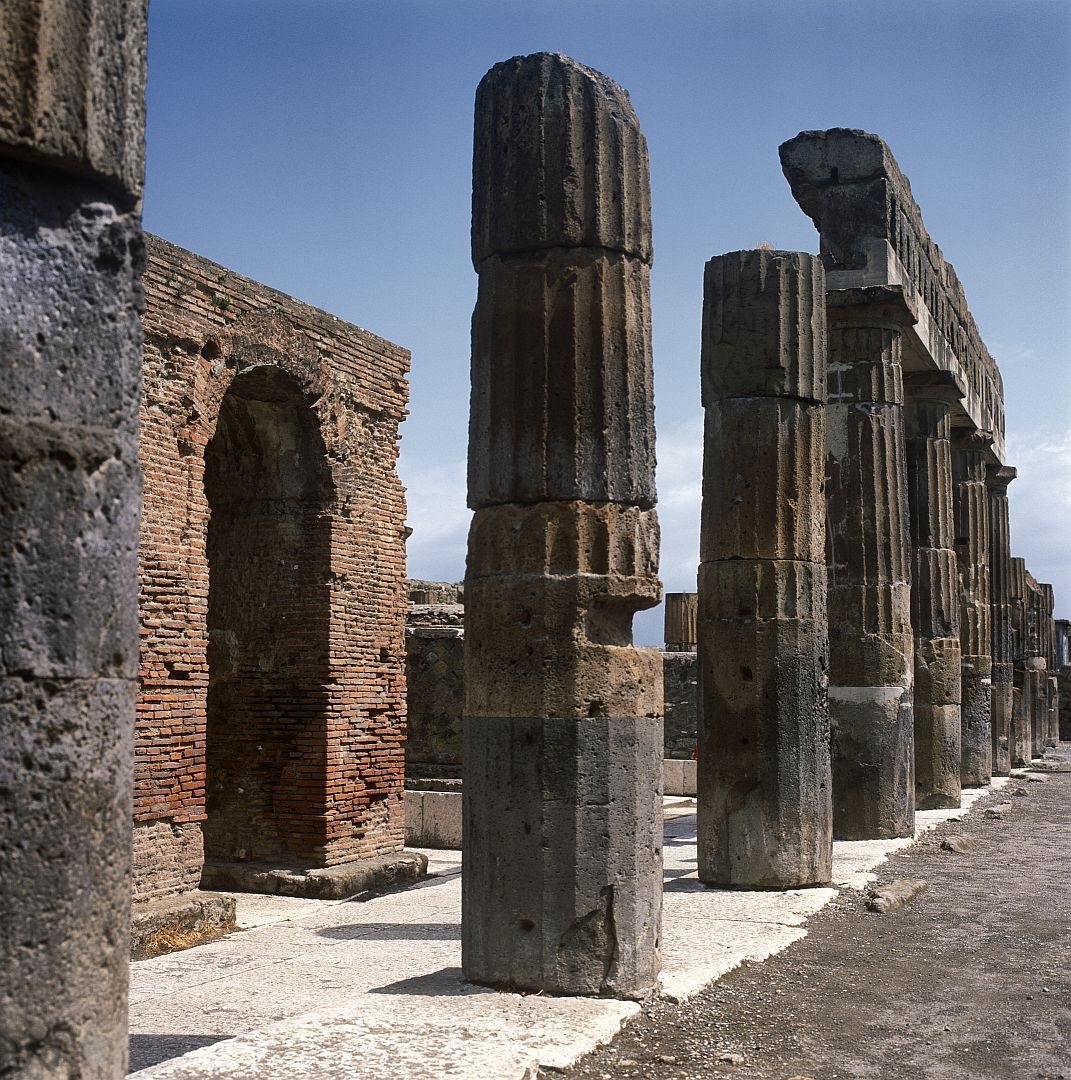
I don’t want to get this site red-flagged by search engines, so I won’t give any examples of the cruder sort of Pompeii graffiti, but there are some I can safely mention, starting with one of what must be the oldest examples of the “Kilroy was here” type.
Gaius Pumidius Diphilus hic fuit.
“Gaius Pumidius Diphilus was here.”
Others – definitely still a thing in Italy – are declarations of love.
Victoria amat Crescens.
“Victoria loves Crescens.”
Primigenia mea pulcherrima es.
“Primigenia, you are my most beautiful.”
And so on, or as an inhabitant of Pompeii would have said, et cetera. Some graffiti are the ancient equivalent of TripAdvisor, saying which inns had bad beds, or (ahem) “friendly” waitresses. Others were the equivalent of the modern football fan’s slogan, but about gladiators rather than centre-forwards. And there are several political slogans seeking votes for elections to the post of municipal magistrate (aedile).
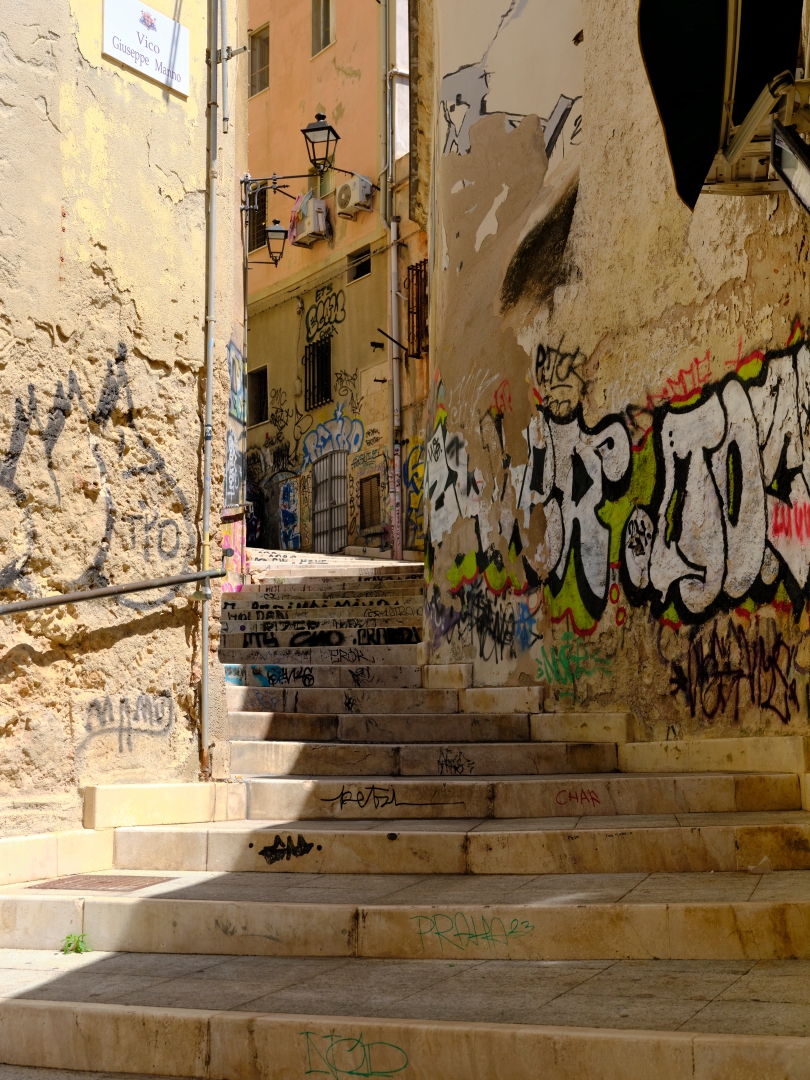
So, not a very noble art form, but one that is at least partly dignified by age. Let’s look at the present for the moment. Italy is, alas, by no means immune from the moronic “tagging” of spray-painters which can render some otherwise attractive scenes rather unpleasant, and does not suggest much sense of civic pride.
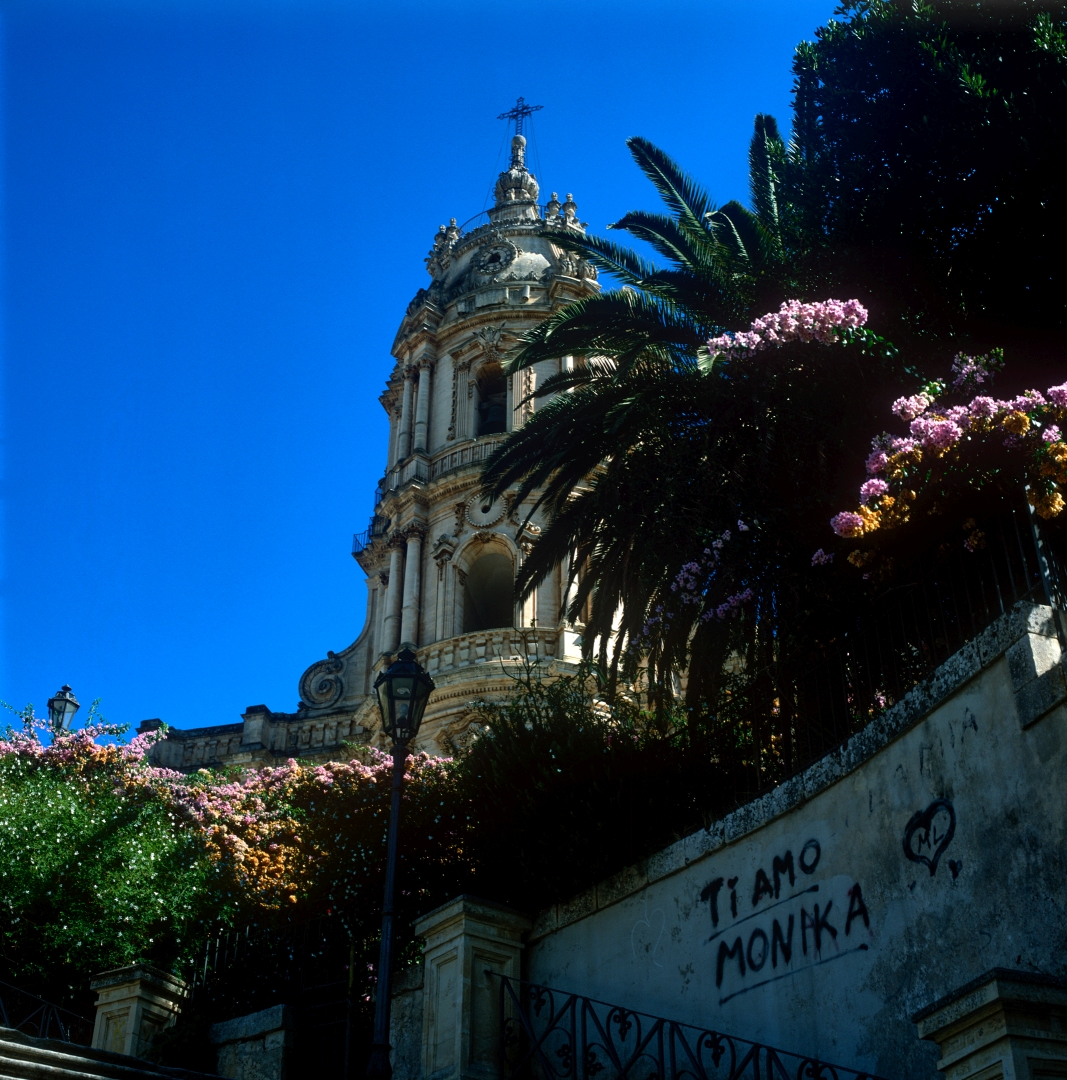
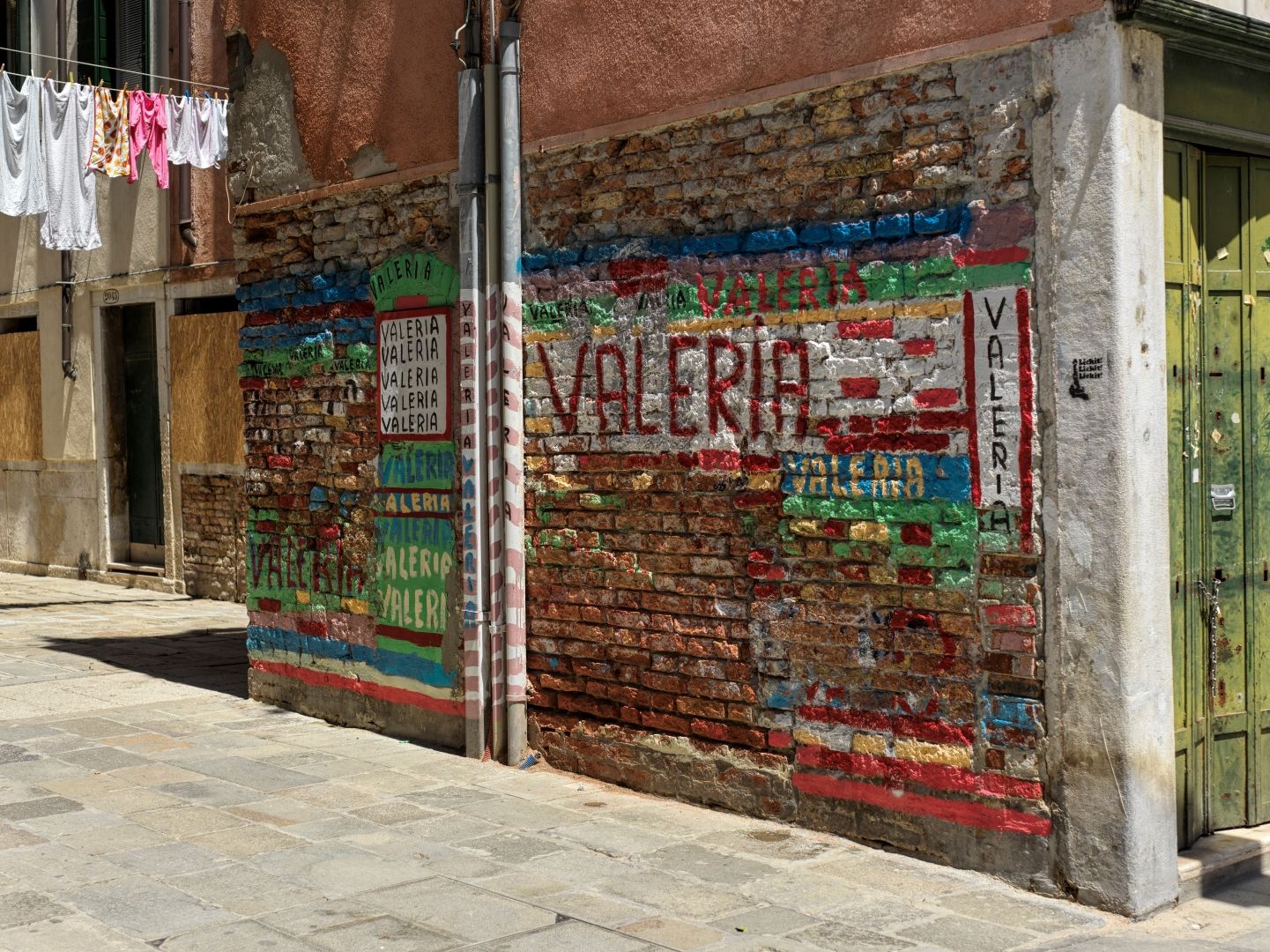
Others, I can be a bit more tolerant towards. As I said, public declarations of love are still a thing in Italy and it is hard to feel too annoyed when the graffito is one as passionate as that to Primigenia in Pompeii. While some of the Pompeii graffiti were written by girls, the modern equivalents all seem to be written by boys, and seldom seem to identify the writer; presumably the young ladies in question will be aware.
Local Rivalries
The graffiti below in Florence is obviously recent (and probably football-related), but the sentiment could have dated from any time in the last several hundred years at least
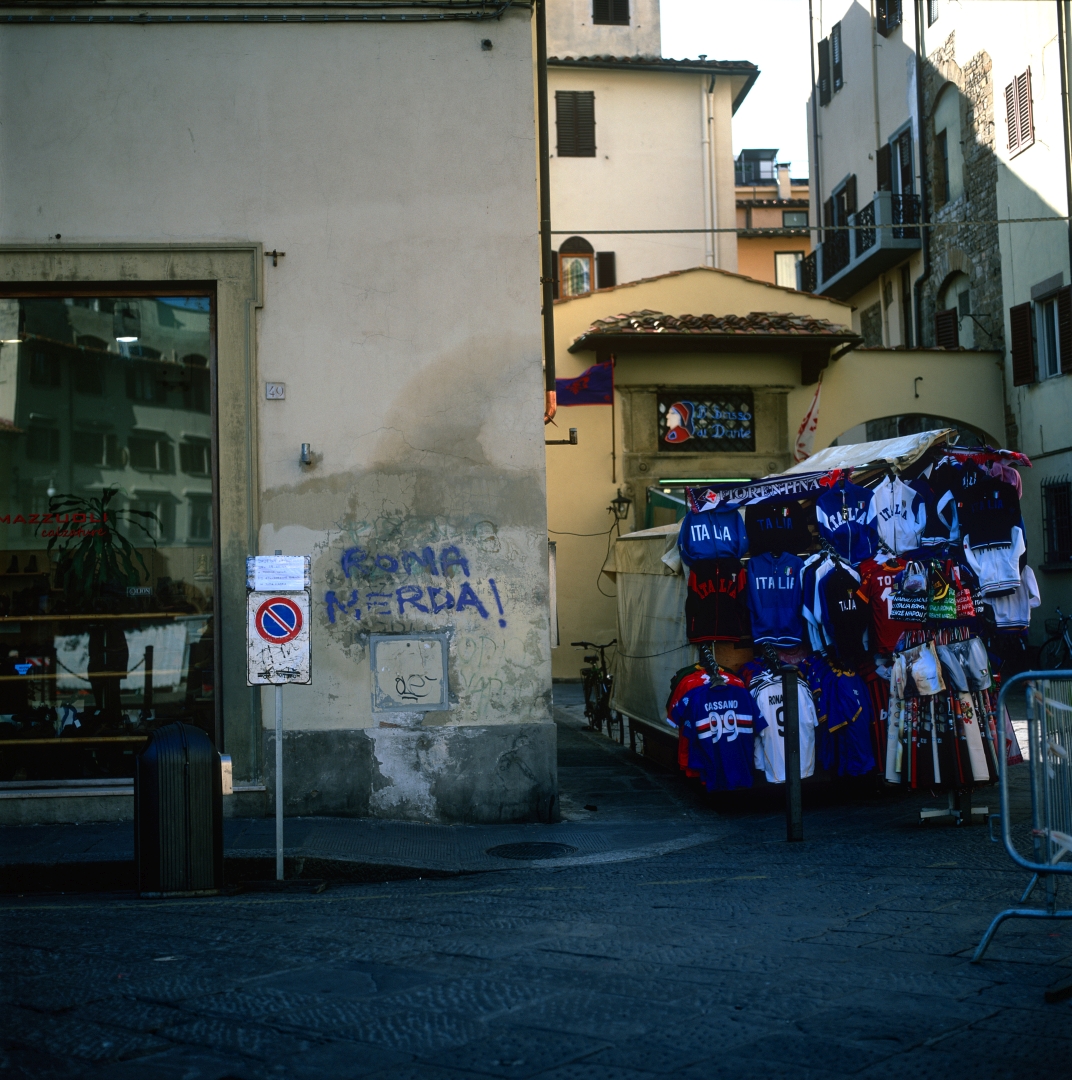
I’ve seen similar – “Pisa merda” in Lucca, and “Terni merda” in Todi, for example – but while the writers were probably thinking about a forthcoming semi-final in the regional football division, one cannot avoid the thought of their ancestors buckling on their armour for some regular Guelf versus Ghibelline fixture.
Political Graffiti, and Pasquino
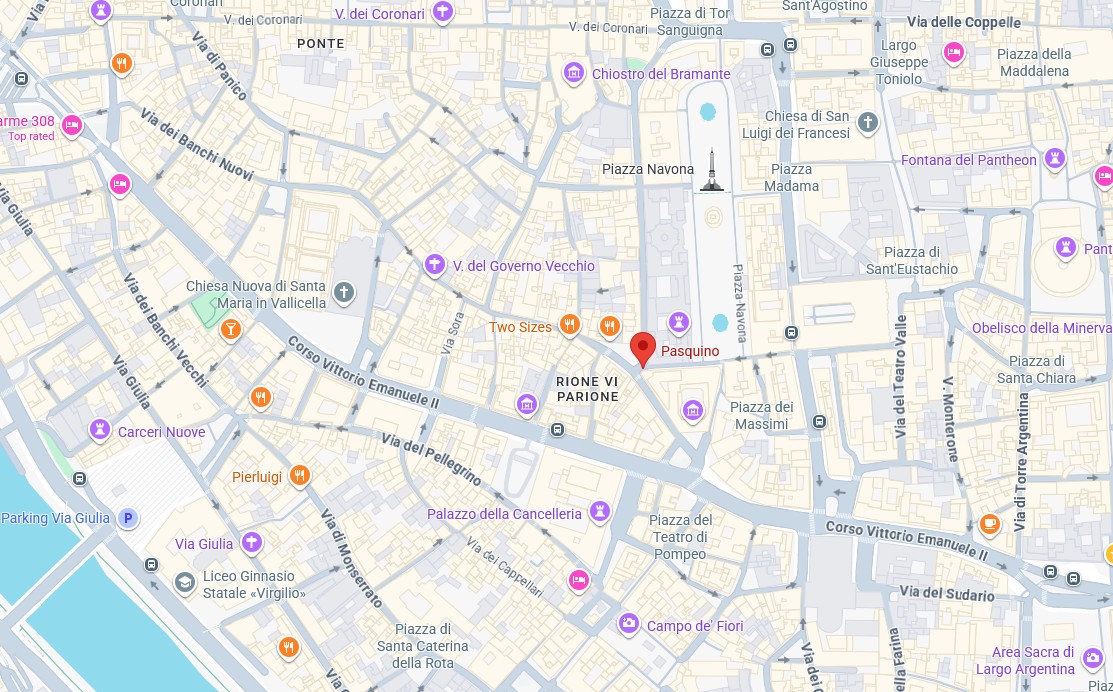
In 1501, a group of Greek statues was dredged up from the bed of the Tiber in Rome. One of them, a Menelaus supporting the body of Patroclus, not in very good condition, was erected in a small piazza close to the southern end of the Piazza Navona. Somehow it acquired the nickname “Pasquino”, perhaps named after a tailor who had a shop nearby.
One morning, shortly after its re-installation, Romans found the statue draped in a toga and covered in Latin epigrams – an erudite joke by a cardinal named Oliviero Carafa. The Cardinal’s example was followed by others, but the epigrams quickly developed a distinctly subversive tone. And within a very short time the word “pasquinade” was being used all over Europe to denote anonymous political satire.
Many of these pasquinades were sharply critical of the ruling Popes, and authorities played a never-ending game of catch-up trying to suppress them – but as soon as a verse appeared in the mornings, it would be copied down and passed around. One famous example appeared after Pope Urban VIII of the Barberini family ordered that the ancient bronze from the Pantheon be stripped and re-cast into cannon (an inaccurate tradition has it that the bronze was used for Bernini’s great baldacchino in St Peters).
Quod non fecerunt barbari, fecerunt Barberini
What the barbarians did not do, the Barberini did.
Some pasquinades, implying corruption and worse by the Pope of the day, were frankly seditious and would probably have got their authors imprisoned or executed, had they been caught. Pope Alexander VI Borgia was a particular target, with Pasquino noting the high rate of unexpected death among cardinals whose wealth would then be expropriated by the Pope.
More than one exasperated pope or papal governor threatened to throw the statue back in the river, but the Romans replied that if that happened to poor old Pasquino, all the statues in Rome would start speaking. So Pasquino survived. Actually some other statues did find voices, and would have conversations with each other, with one asking a question, and another providing an answer the following night. I don’t think it is possible to understand the complicated relationship Italians have with their government without reference to these subversive traditions.
The tradition continues today, although the lapidary Latin has been replaced by Roman dialect, and people are no longer allowed to place the verses on the statue itself, but on a board next to it. One famous modern pasquinade dates from 1944 when Rome was under Allied administration. The military governor was an Italian-American, Colonel Charles Poletti, who in civilian life was a politician in New York. Romans were suffering acute food shortages, and were getting tired of hearing Poletti making speeches on the radio telling them to be patient and show more responsibility. Pasquino responded:
Charlie Poletti, Charlie Poletti, meno ciarla e più spaghetti
Charlie Poletti, Charlie Poletti, less talk and more spaghetti.
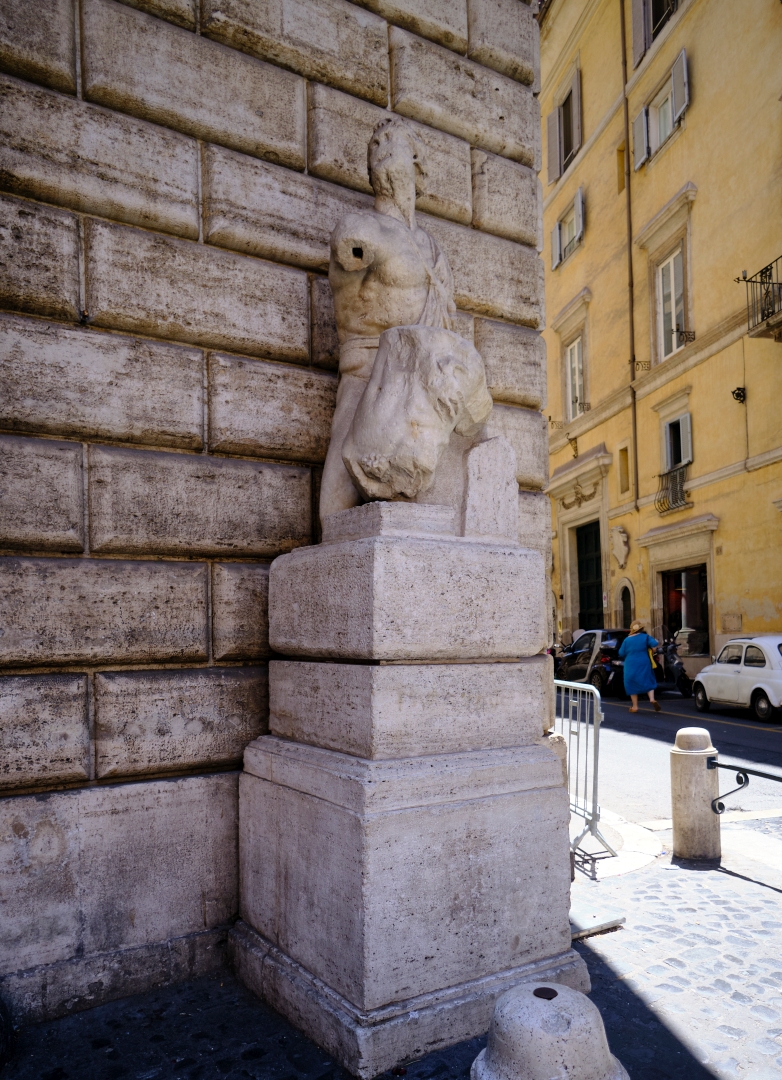
Even before Pasquino was dredged from the Tiber, political graffiti was a feature of Rome. In my post on Cola di Rienzo and Mussolini I wrote how Rienzo’s campaign against the powerful families of Rome was largely conducted through anonymous denunciations which appeared on the walls overnight. And I recently read that when Felix Mendelssohn was staying in Rome in 1830-31 and writing his Italian Symphony, in the many letters he wrote were complaints about the graffiti. So not much changes.
Today one sees a good deal of political graffiti, especially around universities or in the edgier inner suburbs, and sometimes this has an element of Pasquino-like commentary in it. In my post on Cagliari I mentioned the lookout with a view over some dispiriting post-war housing developments, with the graffito bel cimento, no? (Nice concrete, eh?).
Overtourism is a significant problem in Italy, so it is not surprising that a good deal of graffiti, particularly in the worst-hit cities, is directed against it – mostly of the simple “Yankee go home” variety, but some a bit more satirical. In Genoa, in an inner district that was once the working-class soul of the city but is now seeing the displacement of local bars and restaurants by those catering to tourists, and the destruction of the residential rental market by AirBNBs, we saw several comments on the subject.
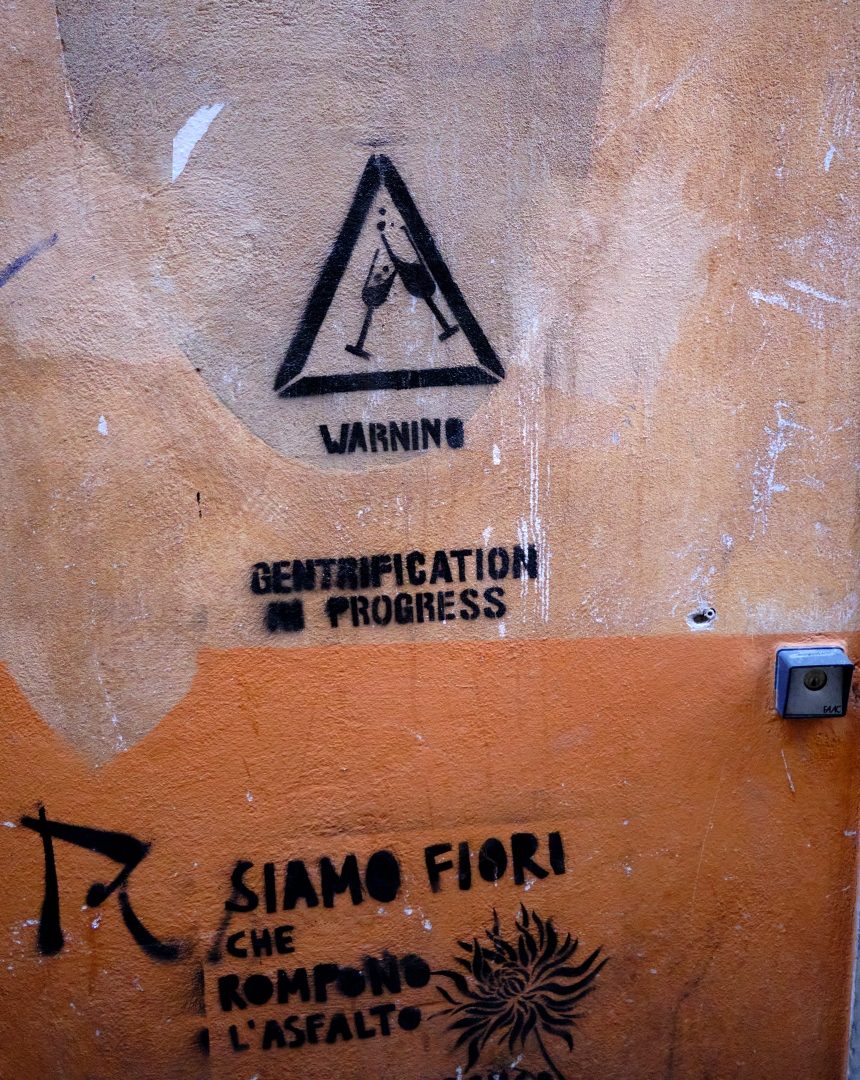
The next one is a bit of a mystery to me, and I wasn’t sure at first what category it belonged in. I had walked down through Rome’s main university – the marvellously-named “La Sapienza” – to see the Basilica of San Lorenzo. On a wall across the road I saw the following:
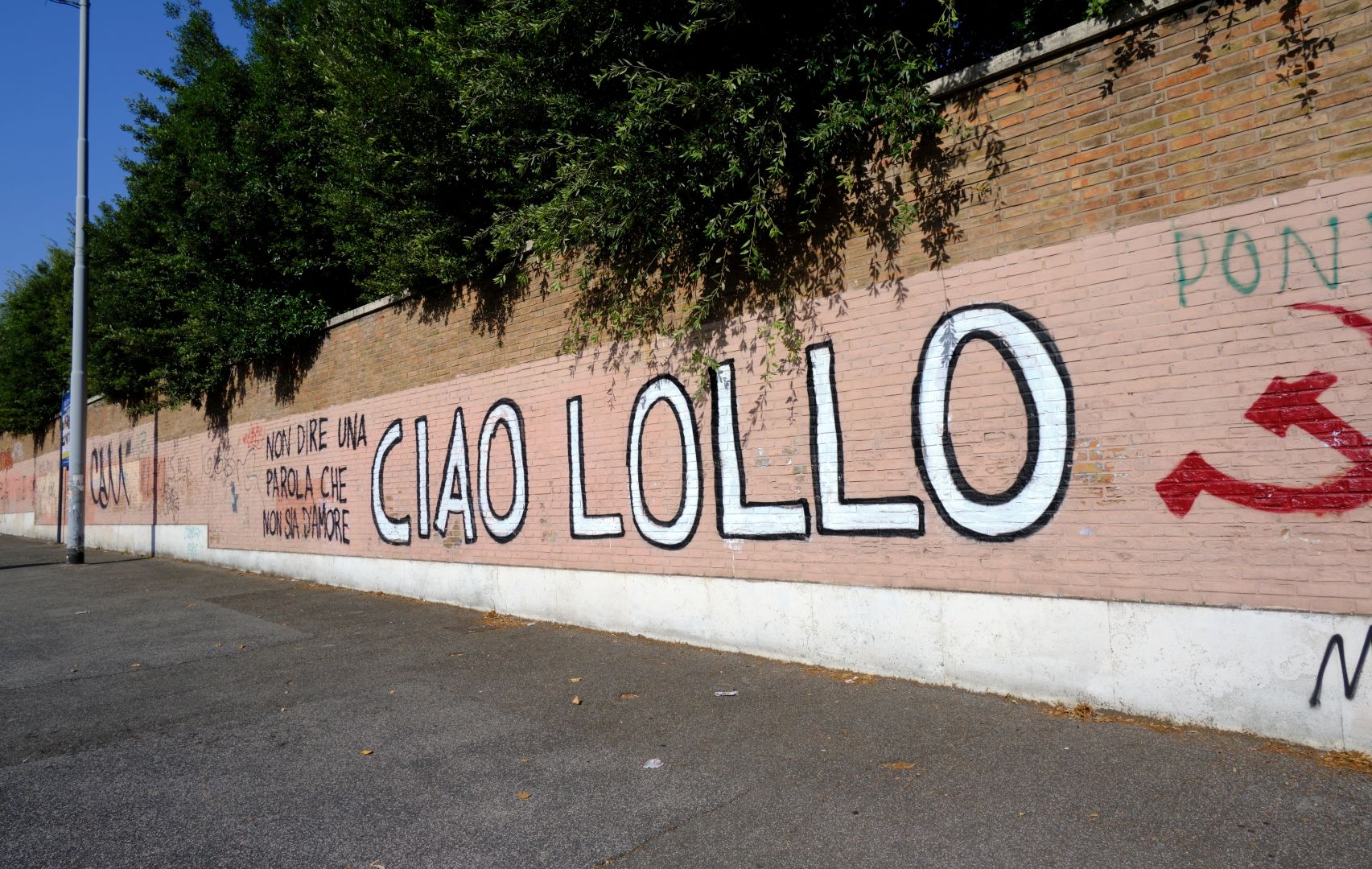
At first – keen student that I am – I was struck by the literary quality of it. “Non dire una parola che non sia d’amore” shows the correct use of the congiuntivo (subjunctive) form. An approximate English translation that captured the style might be something like “say not a word if it be not of love”. I assumed that the hammer and sickle was part of an unrelated graffito, and that this might be a rather extravagant declaration of affection. But then I realised that “Lollo” is a diminutive form of the masculine name Lorenzo.
So I started looking online, and I discovered lots of references to “non dire una parola che non sia d’amore” – people were using it as a peg from which to hang all sorts of arguments and reflections. There were so many that, with its literary style, I thought it must be from a famous poem by someone like Leopardi or d’Annunzio, or perhaps even an Italian translation of something from Shakespeare (Italians consider Shakespeare to be an honorary fellow-countryman and everyone studies him at school).
But it turned out to be nothing of the sort – it’s a line from a 1980s song called Annarella by a punk band that mixed Soviet, Catholic and other themes. Somehow the line became iconic in Italy, in a countercultural sort of way.
So who then was Lollo, and why was someone saying “ciao”to him? I was briefly intrigued by the fact that the graffiti appeared across the road from the Basilica of San Lorenzo, but it didn’t seem very likely that this was some sort of greeting to the Catholic saint and martyr. Then I found this, in an article in an online communist newspaper:
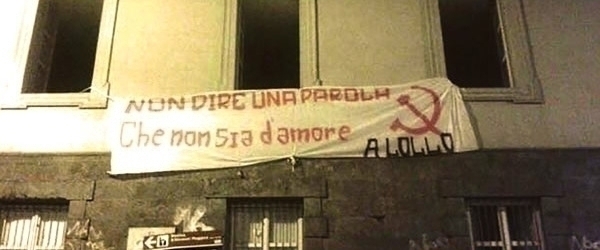
It seems that “Lollo” was a young political activist from Naples who committed suicide in June 2015 – the article didn’t say anything about the circumstances, but “ciao” can mean hello or goodbye, and in this case it seems to have been the latter. I doubt Lollo and I would have found much to agree about, but ciao, anyway.
Other Historical Survivals
The historic centre of Ferrara is dominated by the massive Castello Estense – the castle of the d’Este rulers. History has treated the d’Este family fairly kindly, thanks perhaps to the reputations of the rather jolly Duke Borso and the famous Isabella d’Este who married into the Gonzaga family of Mantua and became one of the greatest art patrons of the Renaissance.
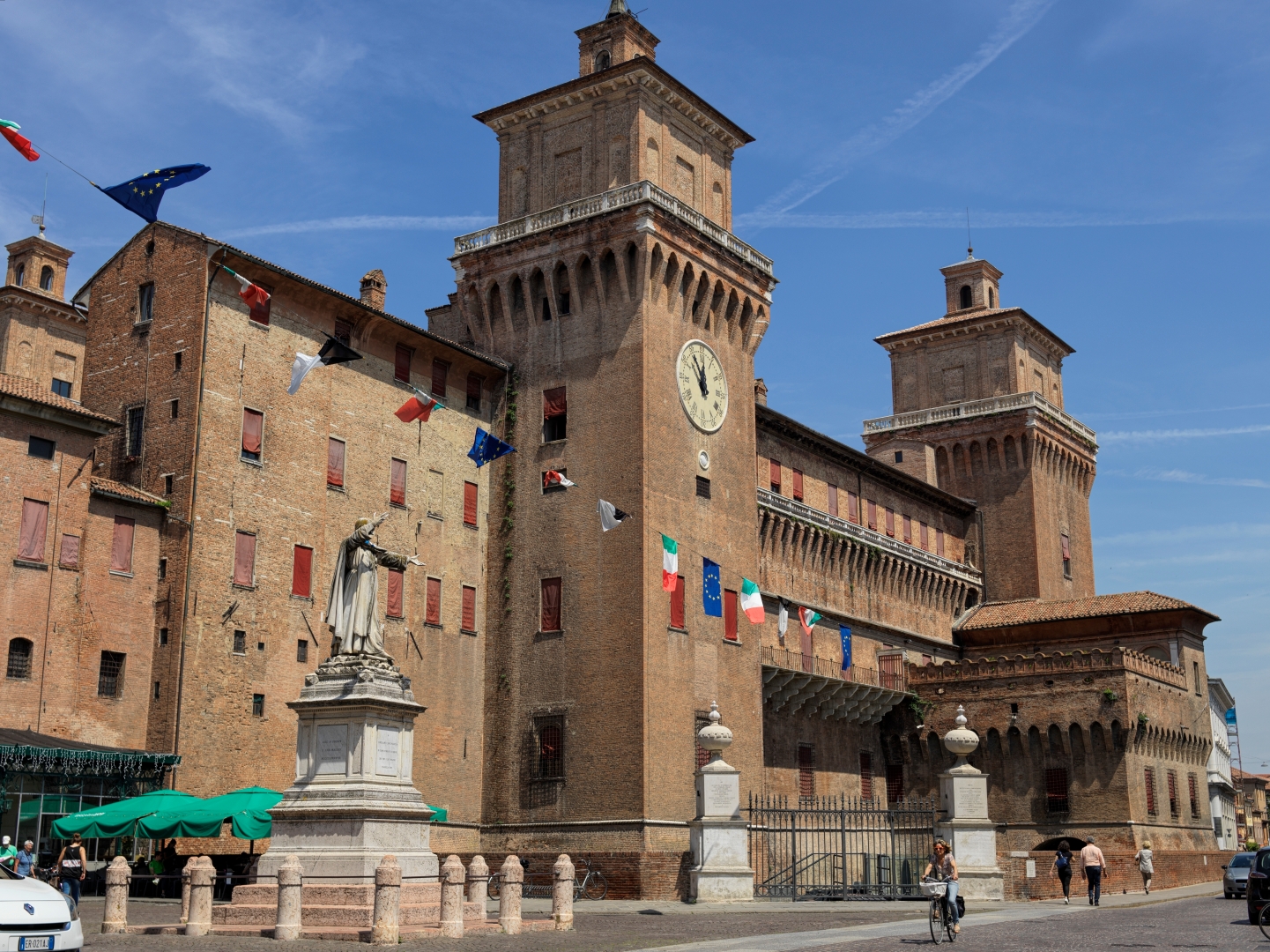
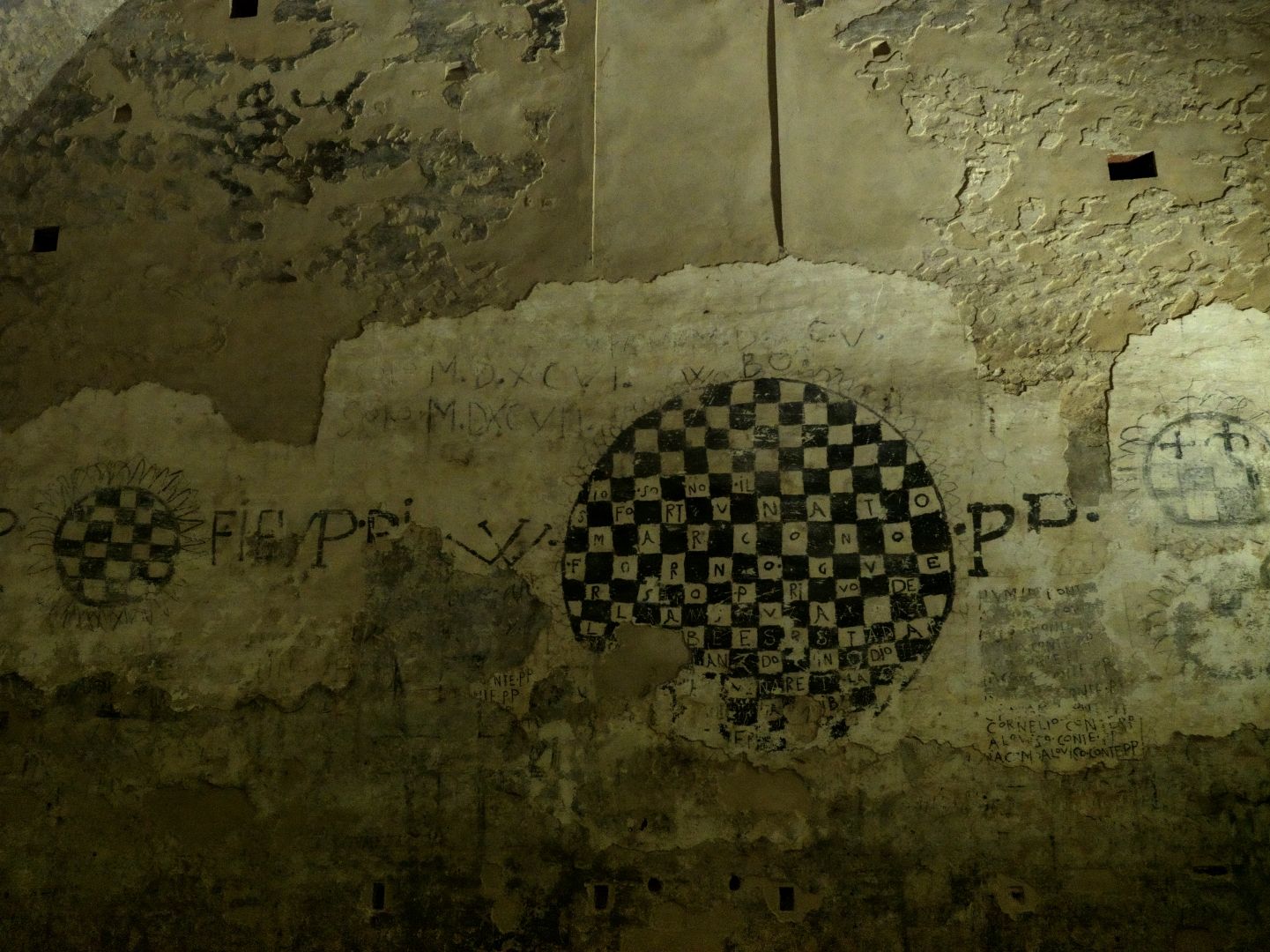
There was a darker side though – in the dungeons deep below the gilittering halls of the castle languished political prisoners. In 1506, Giulio and Ferrante d’Este, half-brothers of the reigning Duke Alfonso I, plotted to overthrow the Duke and another brother, Cardinal Ippolito d’Este (who went on to create the famous Villa d’Este at Tivoli). The plot was discovered and the plotters were sentenced to life imprisonment. Ferrante died after 34 years in prison, while Giulio survived 53 years in solitary confinement before being pardoned by Duke Alfonso II in 1559. The sight of the 81-year old Giulio walking the streets of Ferrara dressed in old-fashioned clothes, and enquiring after friends long dead, caused something of a sensation.
You can visit the dungeons as part of a tour of the castle, and on the wall see the graffiti left by some of the prisoners. I do not know if any of it can be attributed to Giulio or Ferrante. I went down there; Lou said it sounded much too creepy.
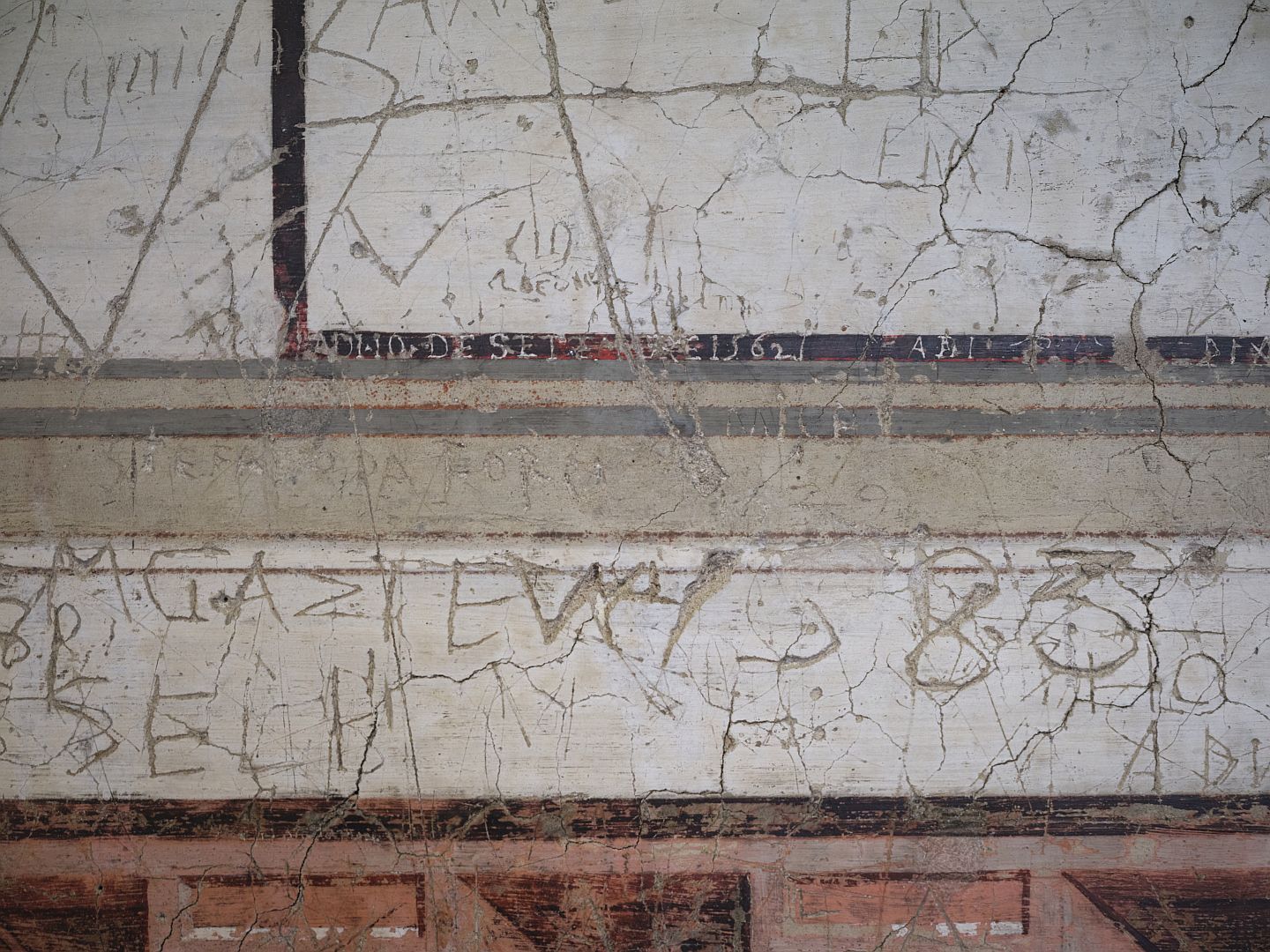
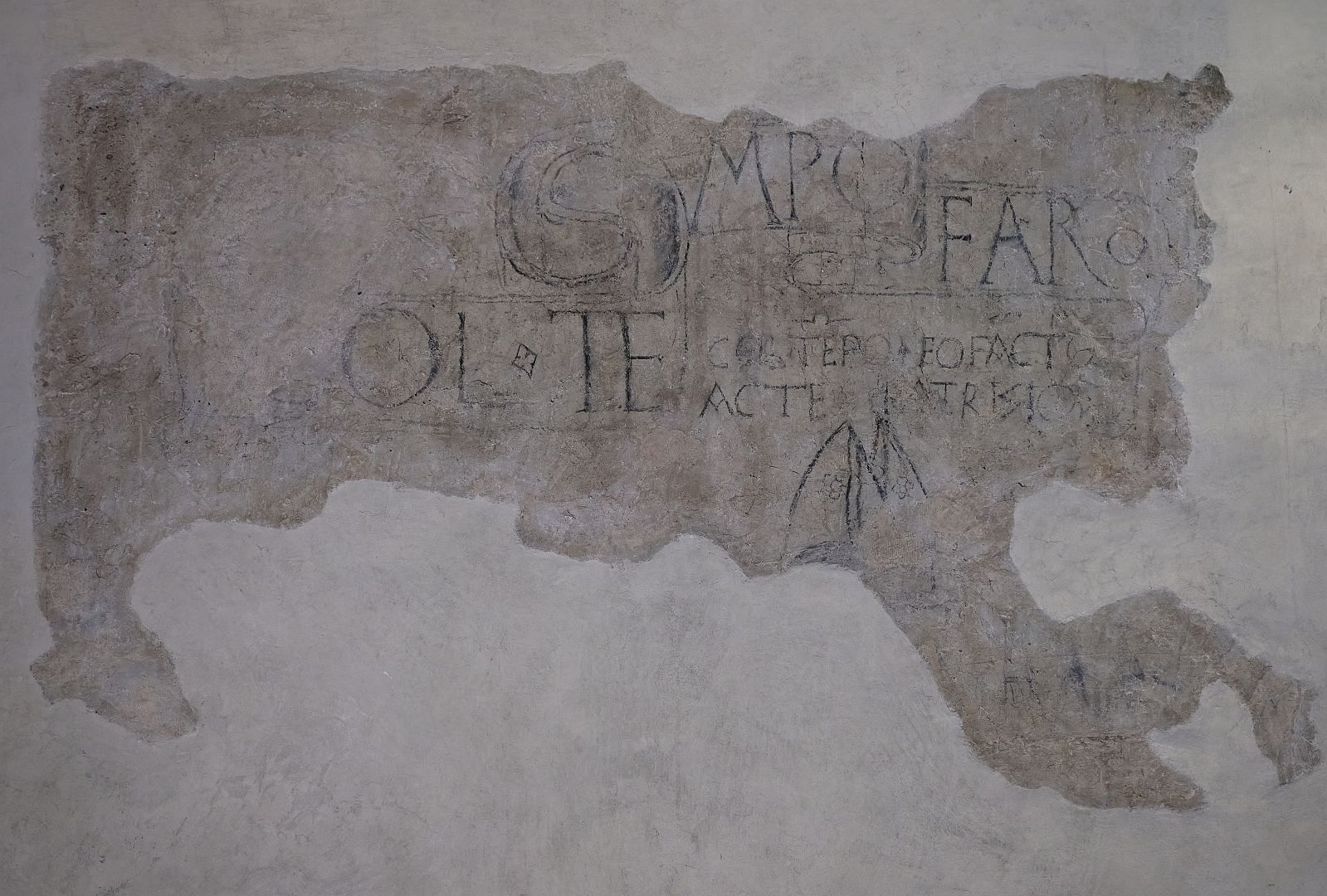
I have written two articles about the (very much under-appreciated, in my view) Palazzo Trinci in Foligno. These are Foligno: The Palazzo Trinci and the Hall of the Liberal Arts and The Palazzo Trinci in Foligno II – More Jewels of the High Middle Ages.
In the first of the two posts I talked about the history of the building, and how miraculous it was that it, and the art treasures it contains, had survived earthquakes, Allied bombs, and the indignities it suffered during the centuries of papal rule. One of those indignities was the fact that anyone who used the place, or visited, seemed to think it was OK to record the fact for posterity.
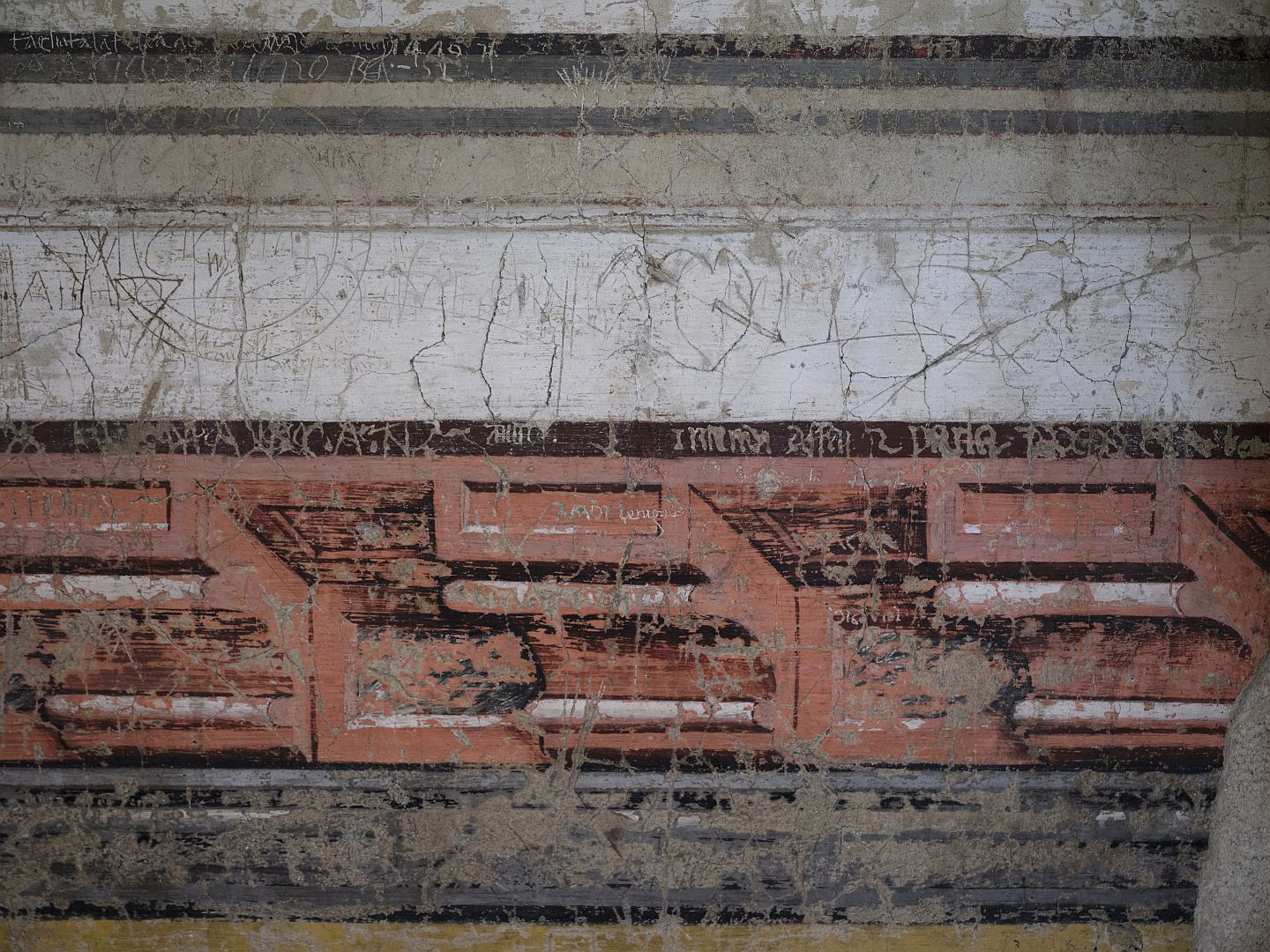
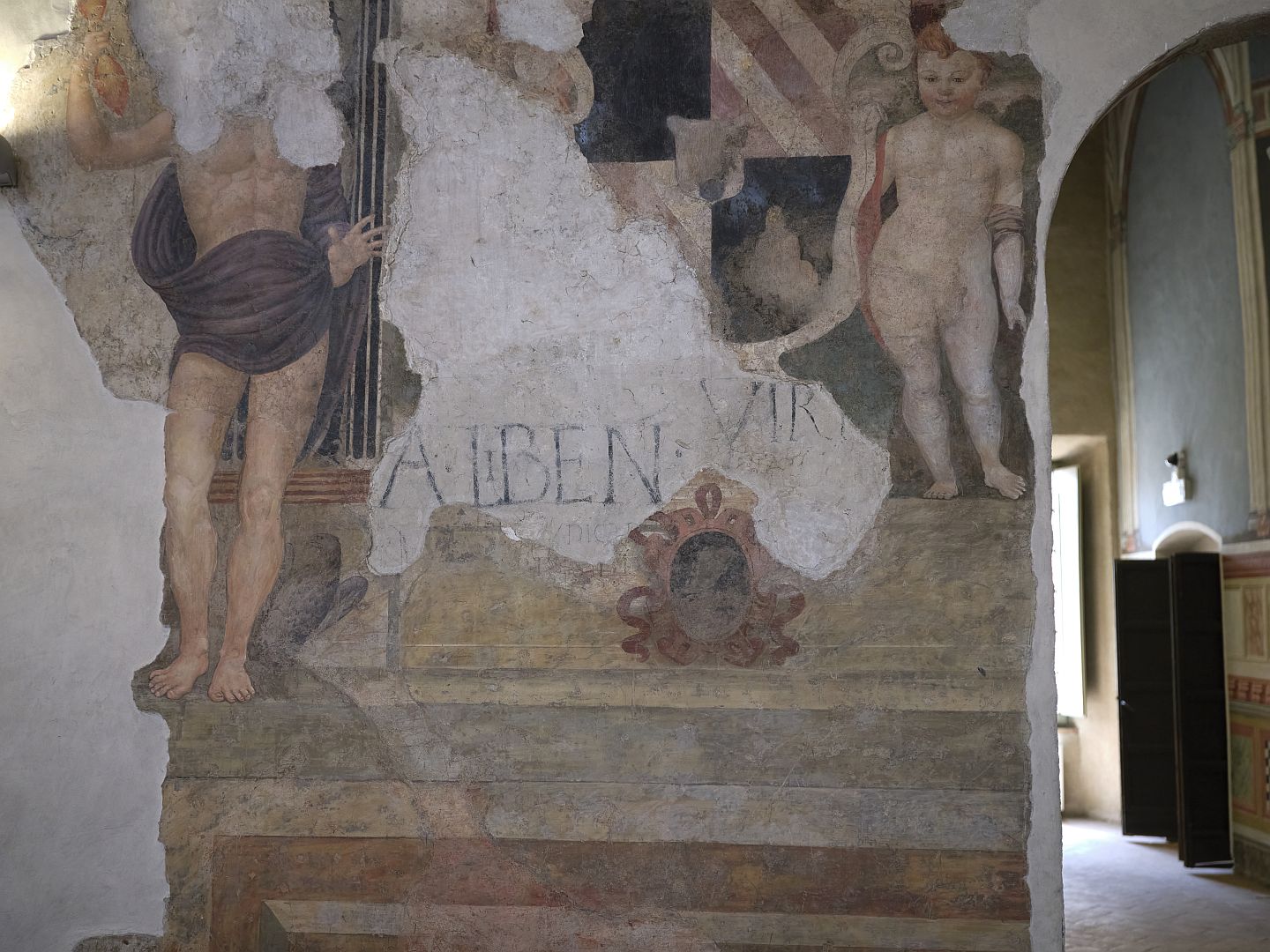
Which brings me back to the initial question: when does a thoughtless bit of vandalism become an historical artefact? Should restoration of an artwork take precedence over preservation of graffiti? Social historians would doubtless always see more value in the artless scribblings of common people than would art historians. And to an extent there is an aesthetic response involved – at least for those of us who are not professional historians.
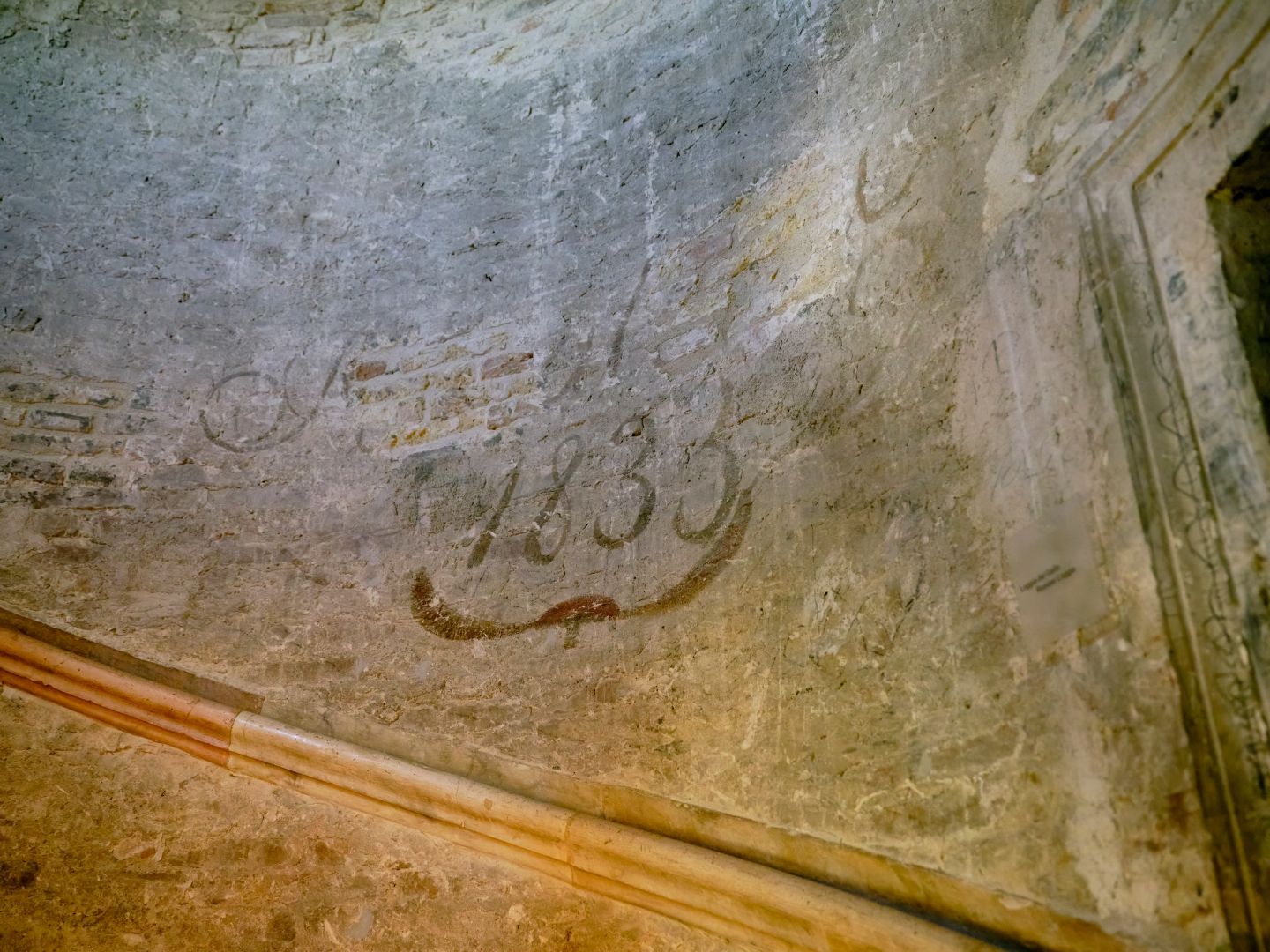
And here is one from one of the towers in the Palazzo Ducale, Urbino. If you are going to write “Kilroy was here” you may as well do it with a flourish.
Let us return to Pompeii, and finish with a graffito about graffiti itself, written on a wall already covered in it:
Admiror, paries, te non cecidisse ruinis
qui tot scriptorum taedia sustineas.
“I’m amazed, wall, that you haven’t collapsed into ruins,
since you carry the tedious scribblings of so many writers.”