
This is a sad and rather terrible story about the trial and execution of an innocent Umbrian woman – Matteuccia da Todi – and the political context in which the events occurred.
Warning: it is not possible for me to tell this story without criticism of a popular Catholic saint. If this is likely to offend you, you may not wish to continue.
The Warrior – Braccio da Montone (Fortebraccio)
In the late 1300s, central Italy was in a state of political flux. The Black Death, which killed half the European population, and a higher proportion than that in the crowded Italian cities, was a recent memory and indeed outbreaks were still occurring from time to time. The trauma of that experience had left deep scars which showed themselves in apocalyptic religious thinking, social disruption and financial crises. But the struggle for secular power continued, with the two superpowers, the Papacy and the Holy Roman Empire, contending through their Italian proxies, the Guelphs and Ghibellines respectively. Although not playing out with as much ferocity as a century earlier, this rivalry was reflected at every level – towns and cities declared themselves Guelph or Ghibelline, while within cities ancient clan rivals did the same.
One of the main features of the period was the decline of the independent communes. Some self-governing cities like Perugia and Florence were starting to be subverted from within by powerful families, while others were subdued by Papal troops under the command of Cardinal Albornoz and henceforth ruled directly by Rome. I described some of this in my post about the return of the Papacy from Avignon, titled Catherine of Siena, Cardinal Albornoz and Sir John Hawkwood.
Part of all this upheaval was the rise of the condottieri. A literal translation of the term would be something like “contractors”, but they were mercenary warlords who fought on behalf of the remaining independent cities, or the Pope, or one of the medium powers, frequently changing sides and employers. In some cases they seized control of the cities that employed them and in time were created counts, marquesses and dukes, starting their own dynasties.
In Umbria, one of the principal condottieri was a fellow variously called Andrea Fortebraccio, Braccio da Montone, or Braccio Fortebraccio (an equivalent English surname would be “Armstrong”). Braccio’s parents lived in Perugia but his father was, I assume, the hereditary lord of Montone, a small fortified town overlooking the Upper Tiber Valley from which came one of the names by which he was known.
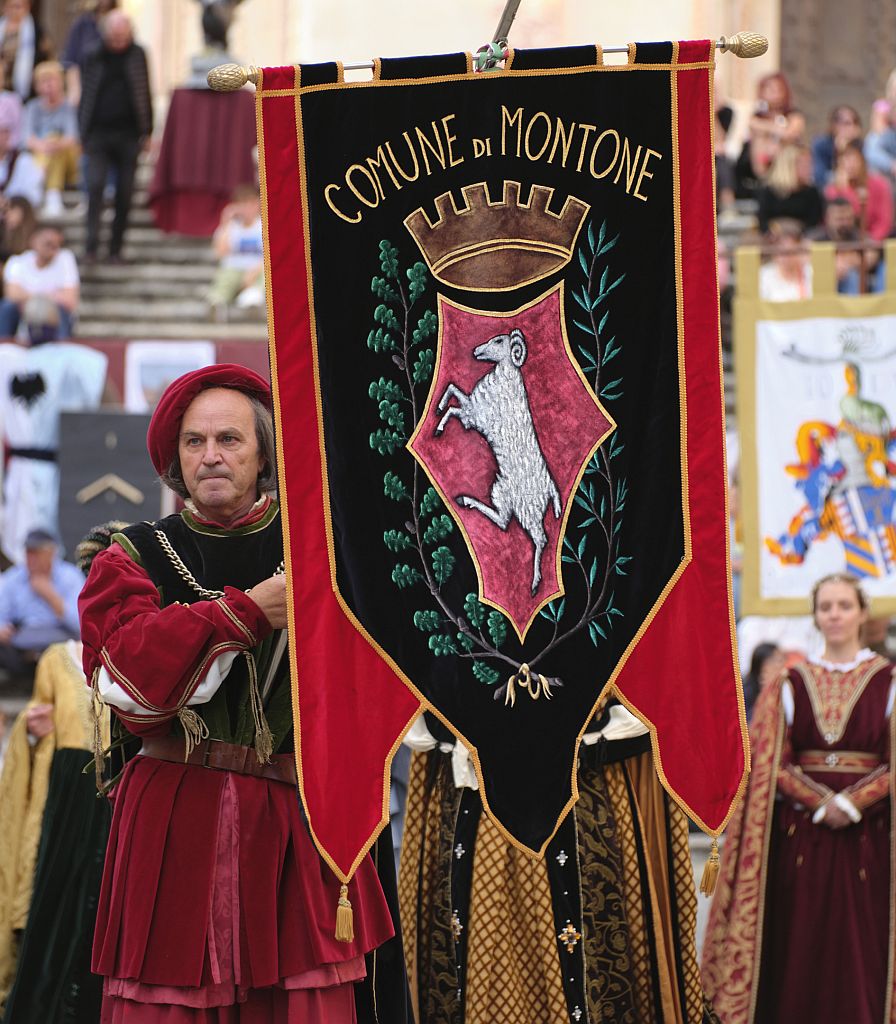
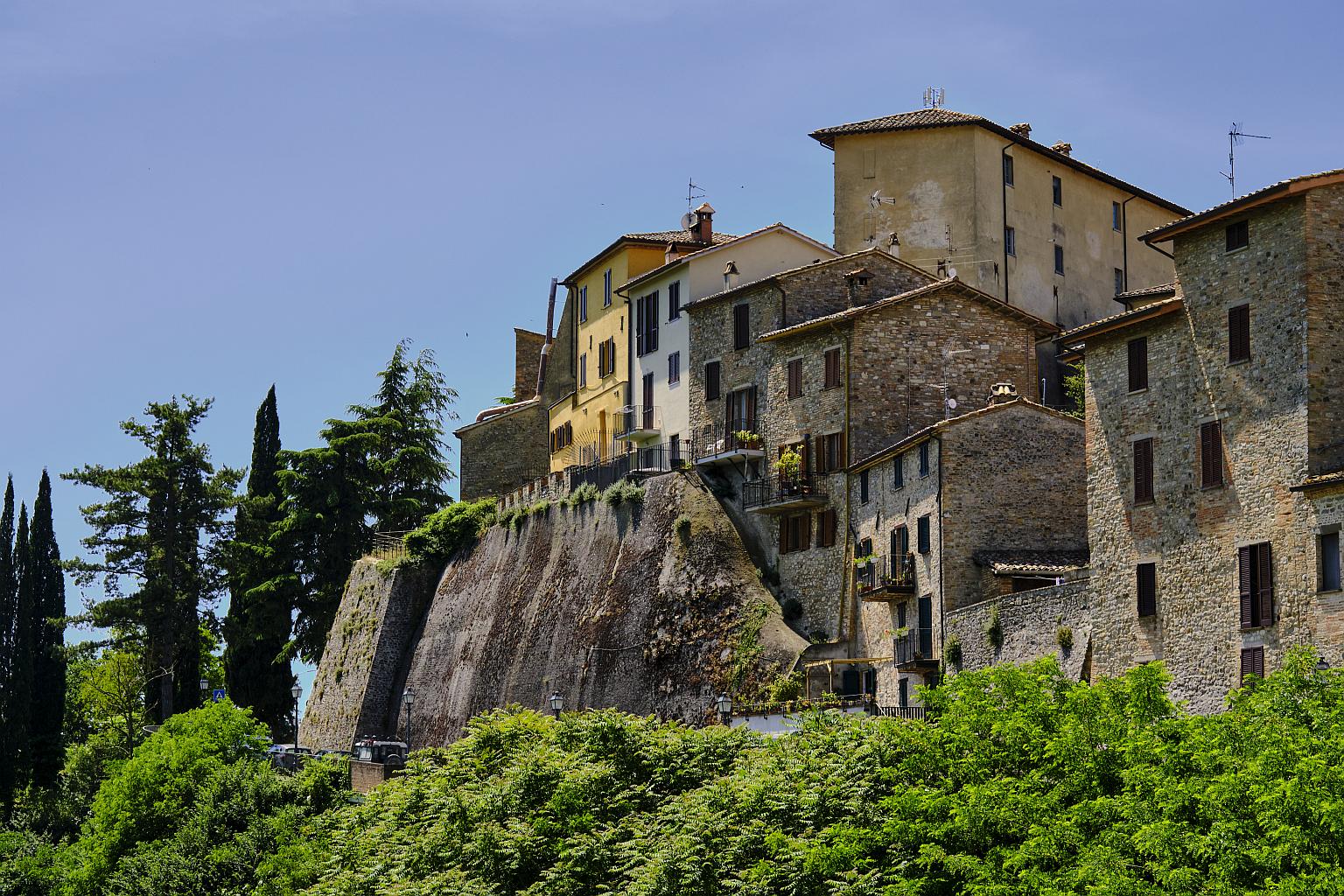
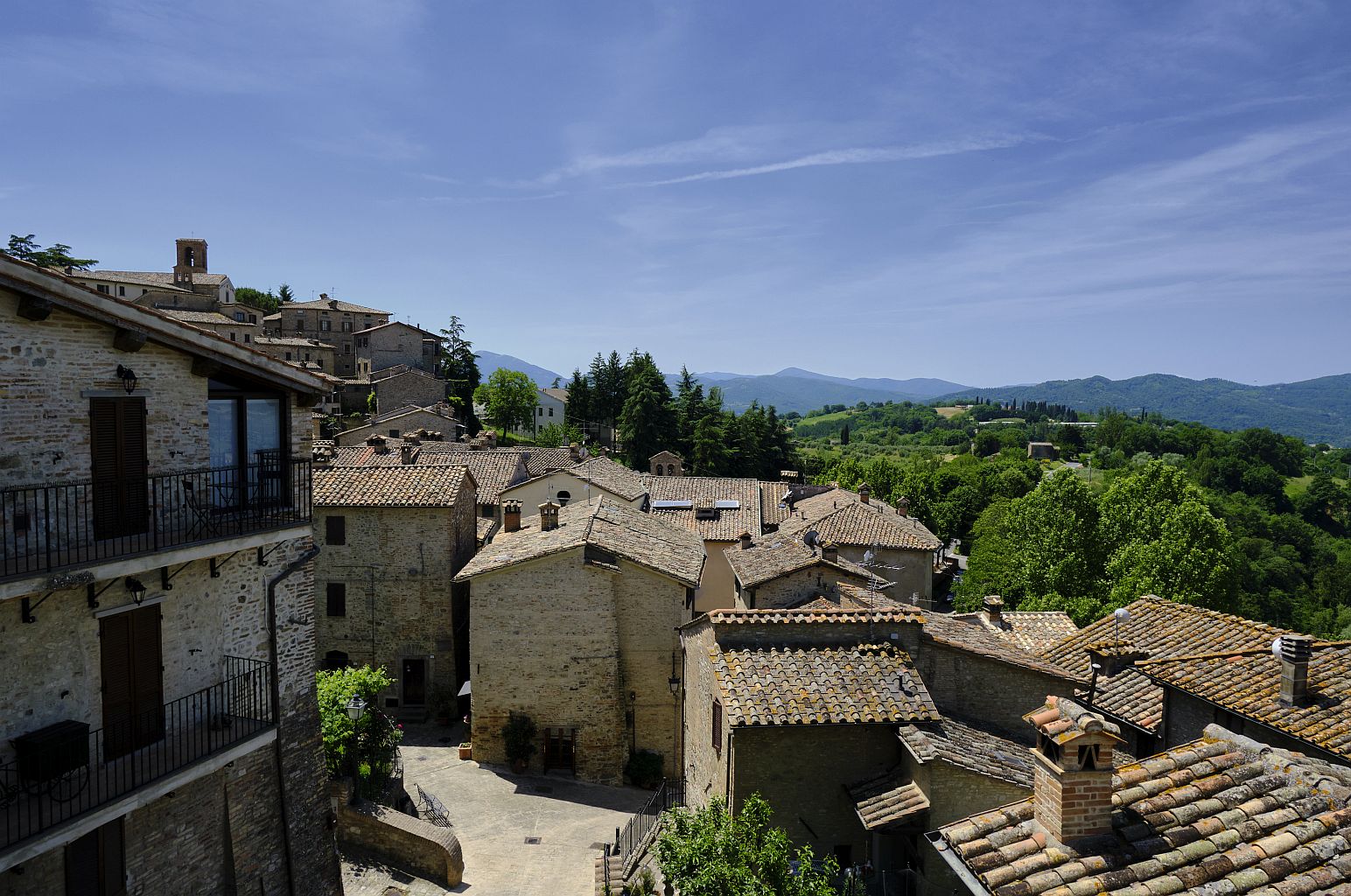
After one of the many factional fights in Perugia, Braccio’s family was forced into exile, and Braccio began his life as a professional soldier. He fought for a bewildering number of employers – for and against the Pope, for and against Florence, for and against Queen Joanna of Naples, but always he looked for opportunities to return to Perugia – preferably as its lord.
One of his signature tactics was the ability to move his forces rapidly to achieve surprise – one article I found says that in military theory of the time such a rapid redeployment became known as a Braccesca, after him.
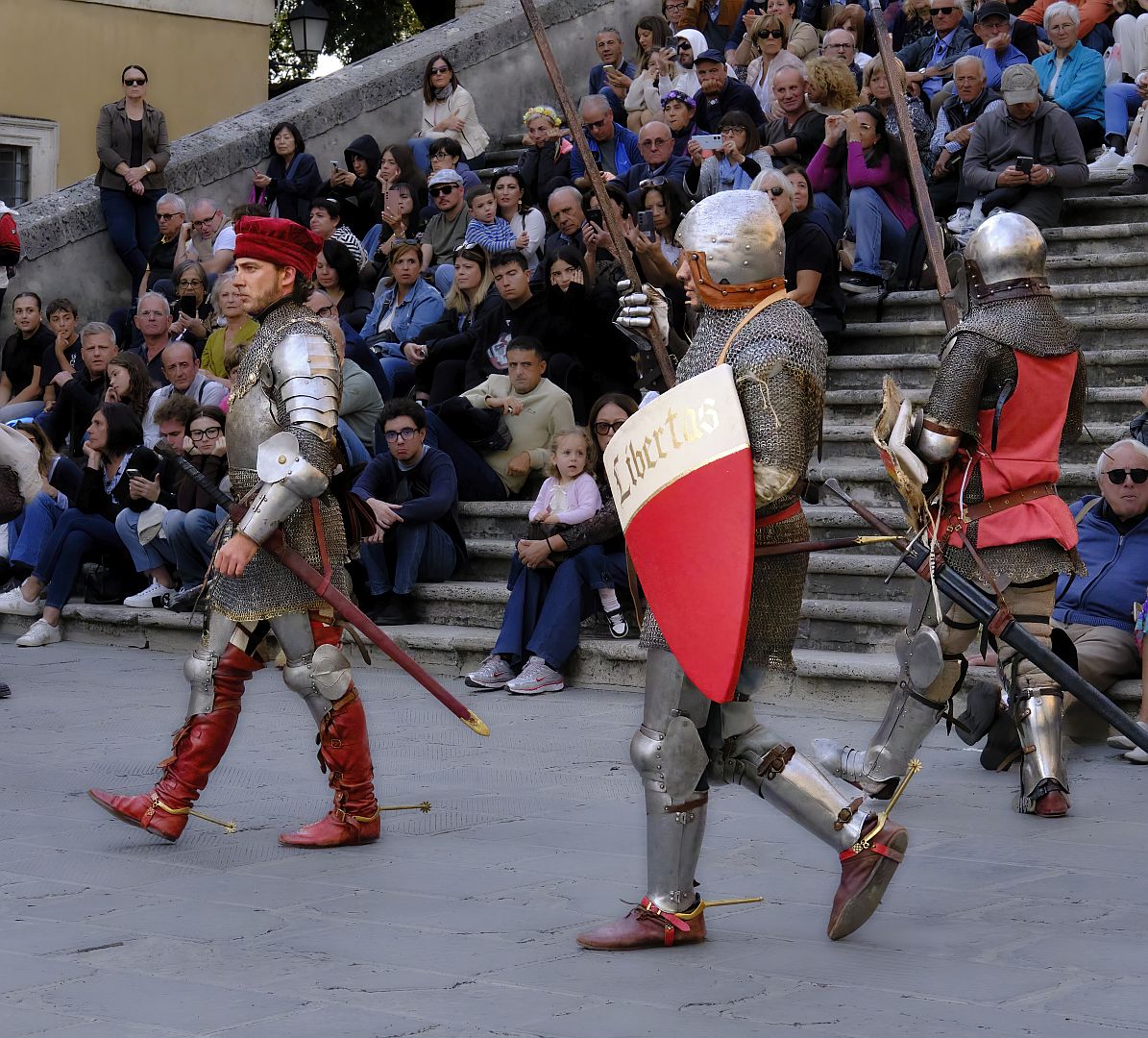
In 1416, at the battle of Sant’Egidio (near the city now known as Umbertide), Braccio’s forces defeated those of Perugia and he became its ruler, along with much of Umbria including the cities of Todi, Terni, Assisi, Spello and others. He sought recognition of his conquest in the title of Papal Vicar for Umbria, but the Pope – Martin V – refused, sending troops against him, including some under the command of Francesco Sforza, who later famously married into the Visconti family and became Duke of Milan. However Braccio was able to defeat the Papal forces near Spoleto, and in due course he took up arms for the Pope against another warlord occupying Bologna, in return for which he was finally granted the title.
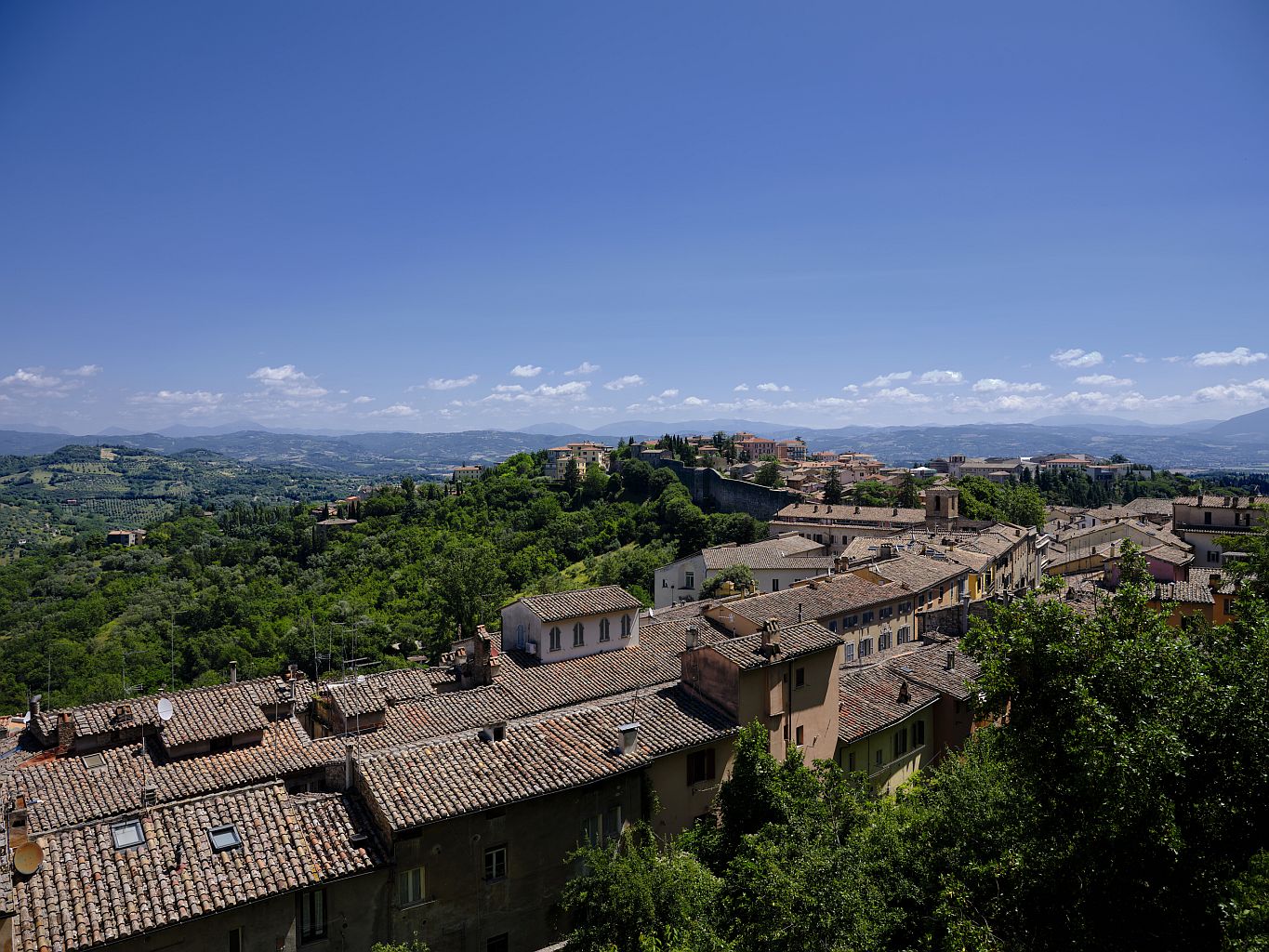
That was not the end of his story. Queen Joanna II of Naples had a most complicated life – too complicated to discuss here, but after succeeding to the throne somewhat unexpectedly at the age of 41, she had been supported by Pope Martin V. But when she declined to make a financial contribution to the Papal military forces, Martin excommunicated her and supported a claim to the Neapolitan throne by Joanna’s rival, Louis of Anjou (it seems that Martin was easily offended). In return Joanna appointed Alfonso of Aragon as her heir, and employed Braccio to fight for them.
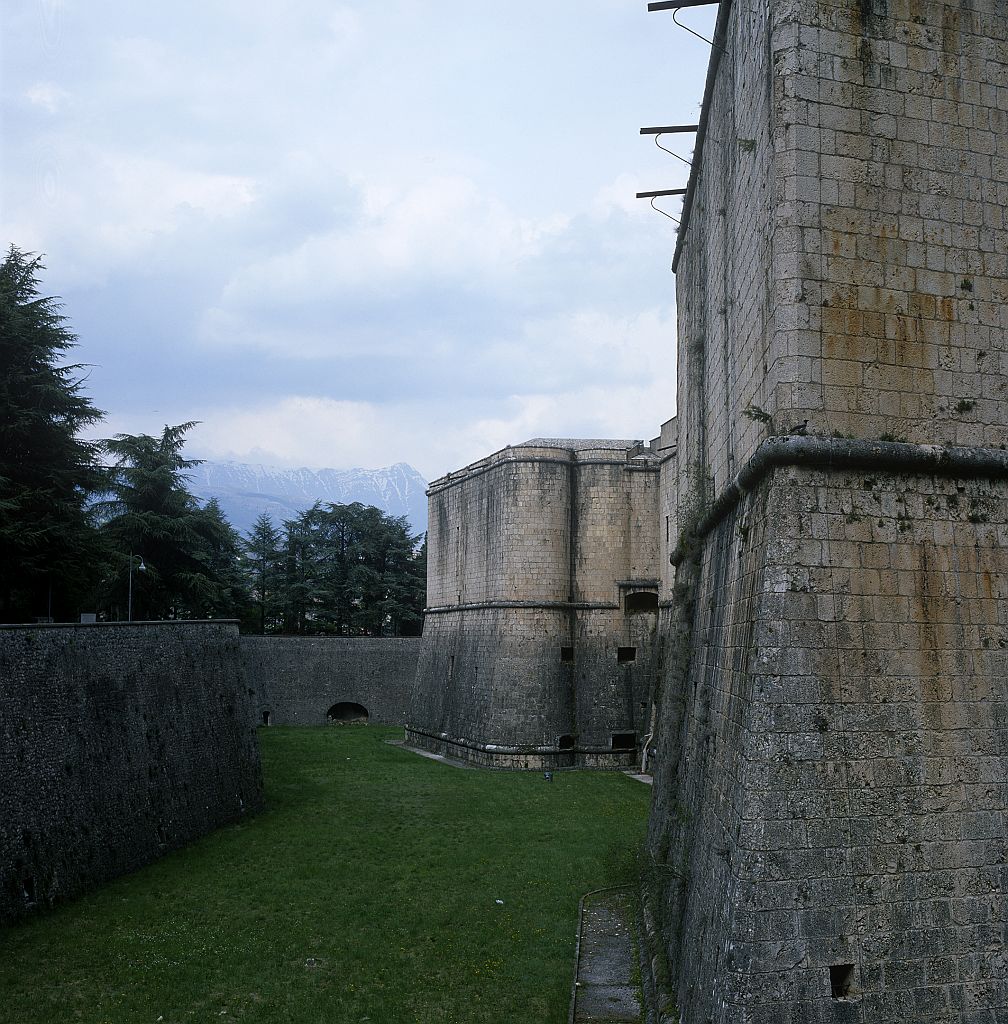
Louis’s army was led by Braccio’s old enemy Francesco Sforza. In a not-uncharacteristic move, Joanna then abandoned Alfonso and supported Louis – but Braccio stayed loyal to Alfonso and in June 1424 his army and Sforza’s met outside l’Aquila in Abruzzo. In that battle Braccio was mortally wounded, and he died in l’Aquila a few days later. Pope Martin had excommunicated everyone fighting for Joanna and Alfonso, and Braccio was therefore denied burial in consecrated ground.
The Preacher – Bernardino di Siena
Bernardino of Siena – canonised shortly after his death in 1444 – was a Franciscan monk and a charismatic preacher. These days he is commemorated as a peacemaker, on the grounds that his emblem, the “IHS” trigraph (being the first three letters of “Jesus” in Greek), was supposed to replace the symbols used by political factions.
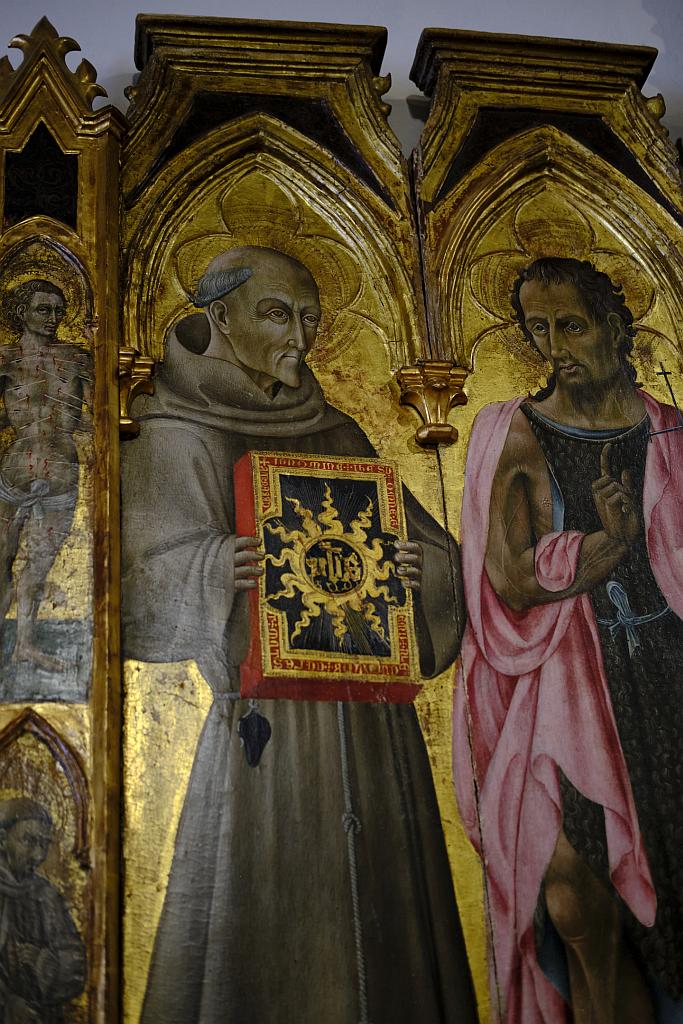
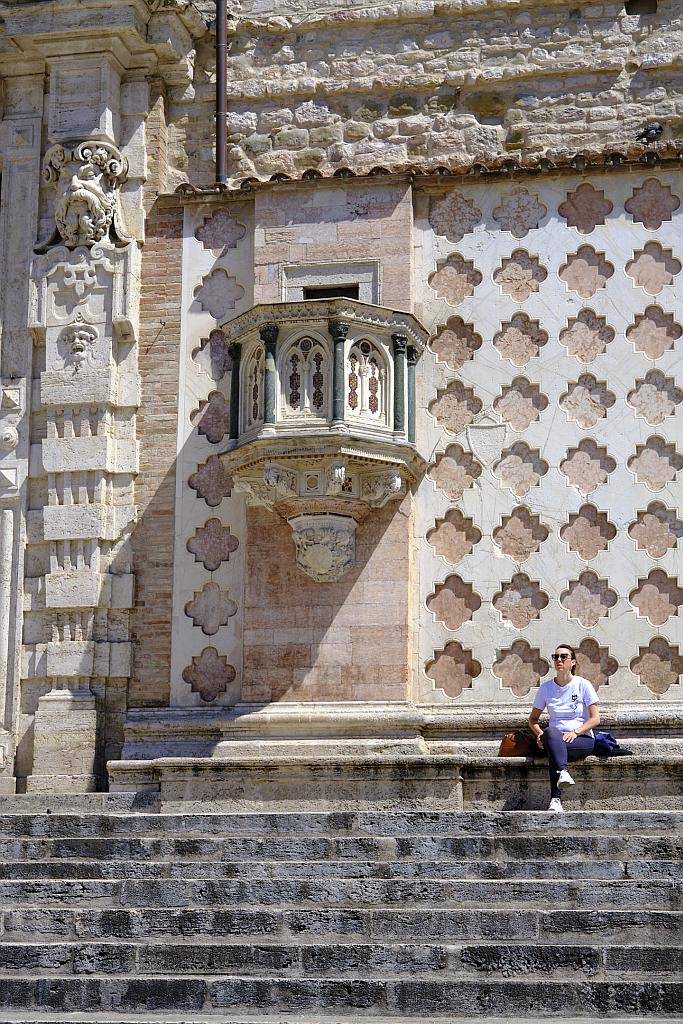
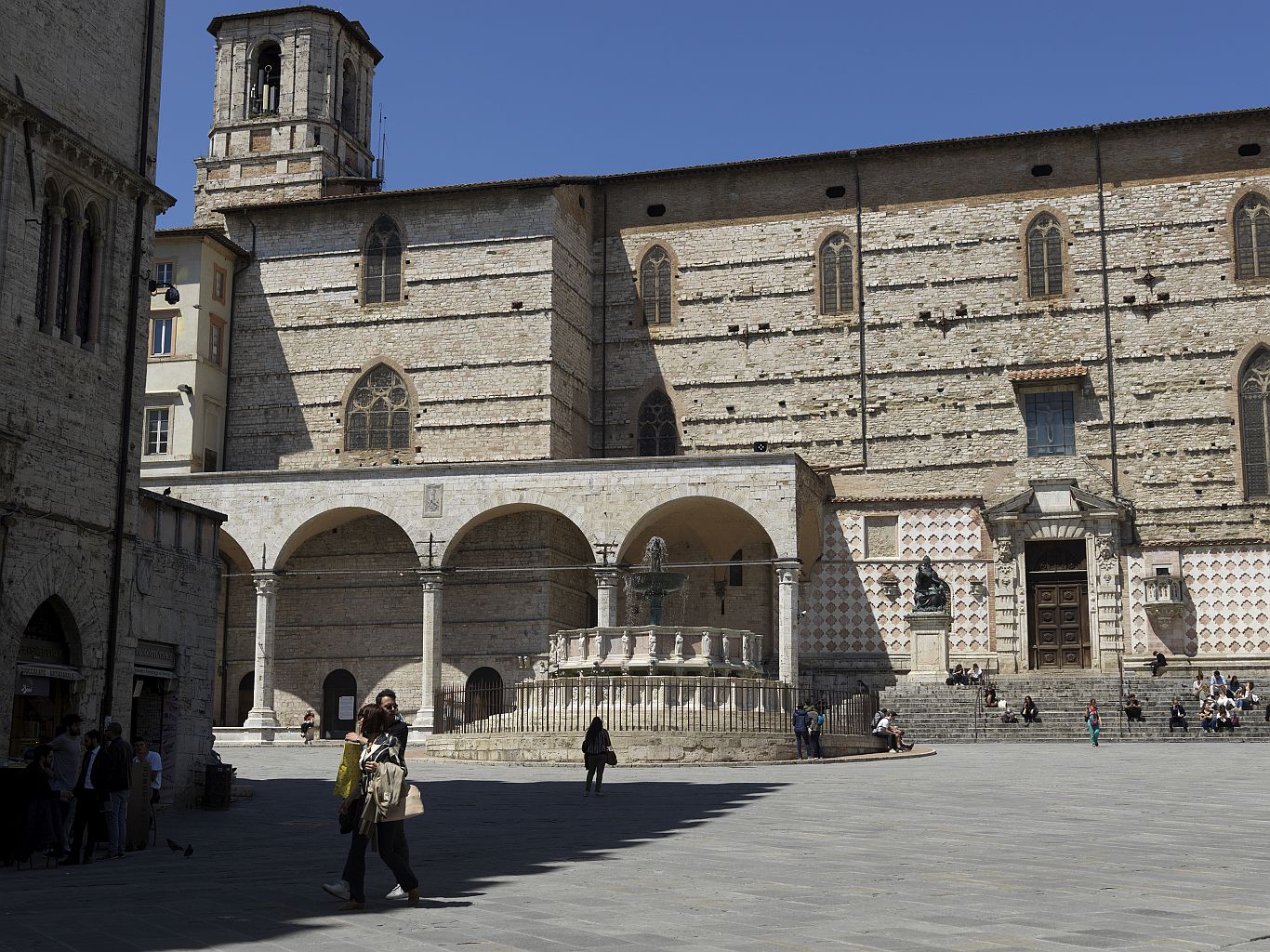
He was certainly the most famous preacher of his time. He drew large crowds, and town governments, rather than religious bodies, would often invite him to come and preach because of the income they stood to make from those who would come along to hear him. In Perugia they erected a special pulpit for him on the side of the cathedral, from which he could speak to the crowd in the piazza below. There is still a pulpit there, but not the original – this one was built a few years after his death to commemorate him.
His sermons were not notable for advocating peace – quite the opposite in fact. Instead he condemned Jews, homosexuals, gypsies and “sorcery”, sometimes whipping up mob violence against his unfortunate targets. He told people that the Great Plague had been a punishment from God for sodomy, and was particularly critical of Florence, which had traditionally been comparatively tolerant of homosexuality (both Donatello and Leonardo were homosexuals, and Michelangelo may well have been).
He didn’t always get things his own way though – on one occasion he was set upon by “sodomites” who attempted to beat him, and on another someone sabotaged a wooden pulpit by sawing through the legs, causing it to fall over backwards when he climbed into it.
Like Savonarola, he held “bonfires of the vanities”, where people brought their luxury possessions to be destroyed, and he also enjoyed publicly burning books of which he disapproved.
His views on women were considered somewhat regressive even by the standards of the 14th Century: they should never go out alone, they should obey men, they should dress with extreme modesty, and unmarried women should never speak to a male unless their fathers were present. Today his views sound like something of which the Taliban would approve, but shocking as all that is to modern sensibilities, it is said that women comprised the majority of people in his audiences.
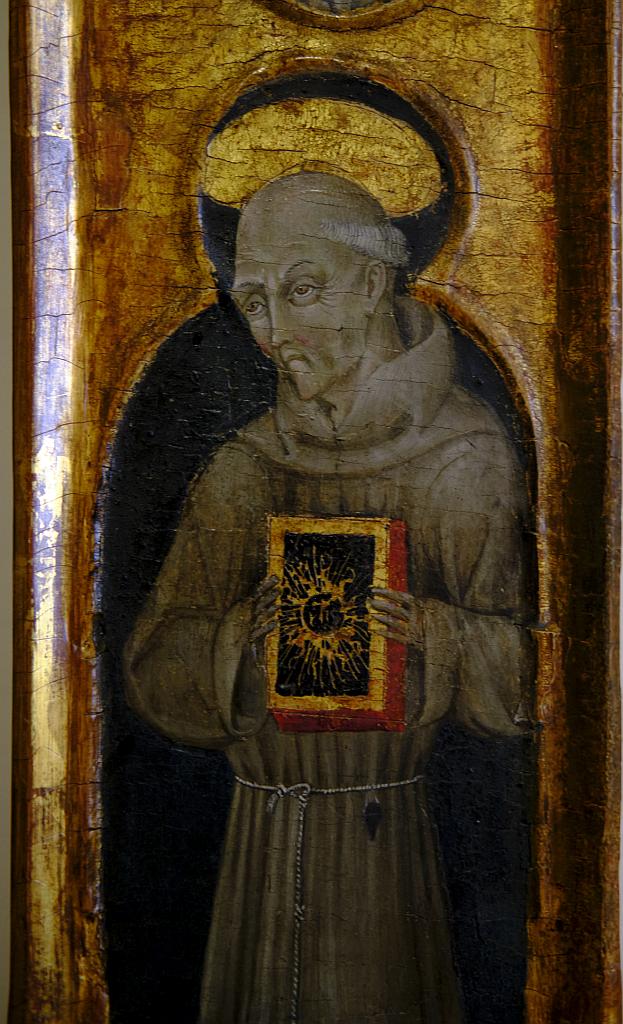
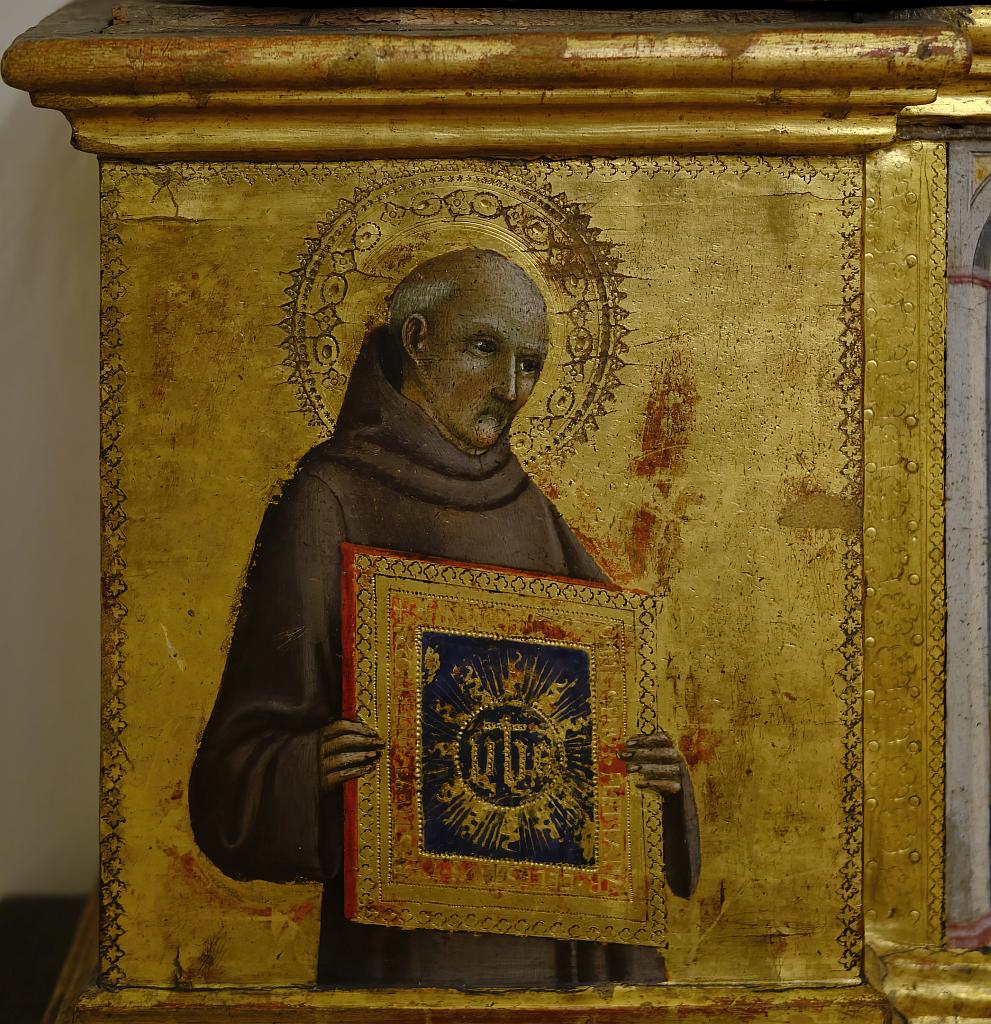
Despite all that he proved a popular saint, although the Church understandably puts more emphasis on his supposed peacemaking than it does on his intolerance. His image is very common in religious art, and his traditional likeness probably dates from when he was alive, or shortly after his death. It may therefore be taken as truthful, and he is certainly one of the easiest saints to recognise – he is always represented with an expression of intense disapproval on his face.
The “Witch” – Matteuccia da Todi
Matteuccia was born in the town of Ripabianca, a few miles north of Todi on the road to Perugia. As in so many Umbrian towns, the medieval centre was built on a hill for defence and to reduce the risk from malaria, while the modern town now extends along the valley floor beside the Tiber River (Ripabianca means, I think, “white banks”, so it probably refers to the river). We have passed the unremarkable modern town many times, but it was not until we visited there in order to take some photographs that we visited the historic centre, which is quite attractive.

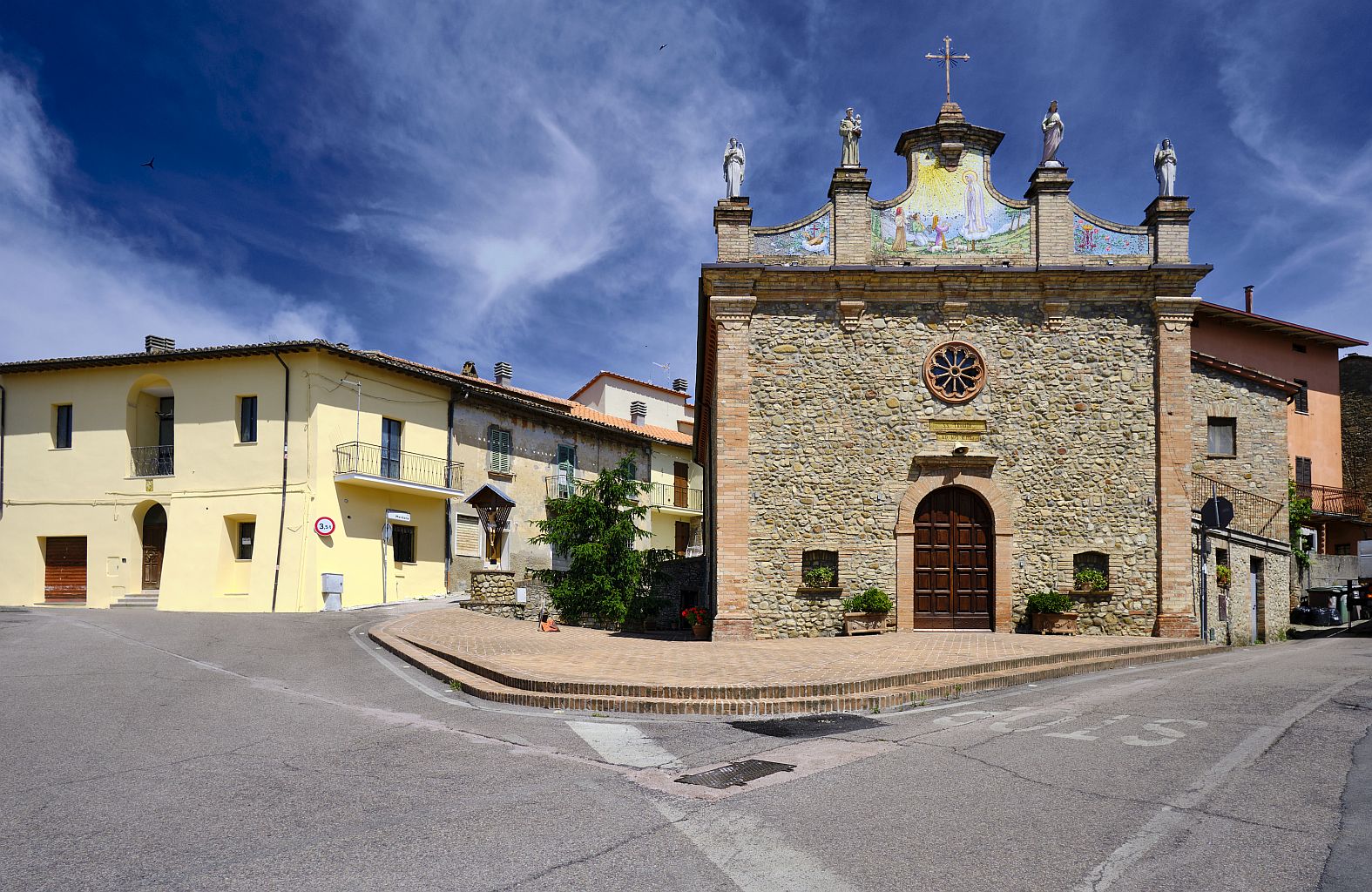
Matteuccia was a herbalist and healer. No doubt there would have been a degree of ritual involved with the preparations of her ointments and infusions, typically invoking the blessing of saints – and perhaps something darker and more mysterious, although such suggestions need to be treated with caution under the circumstances.
As with folk medicine and charms throughout the ages, the rituals would not have been canonically Christian, but you could find similar superstitions today.
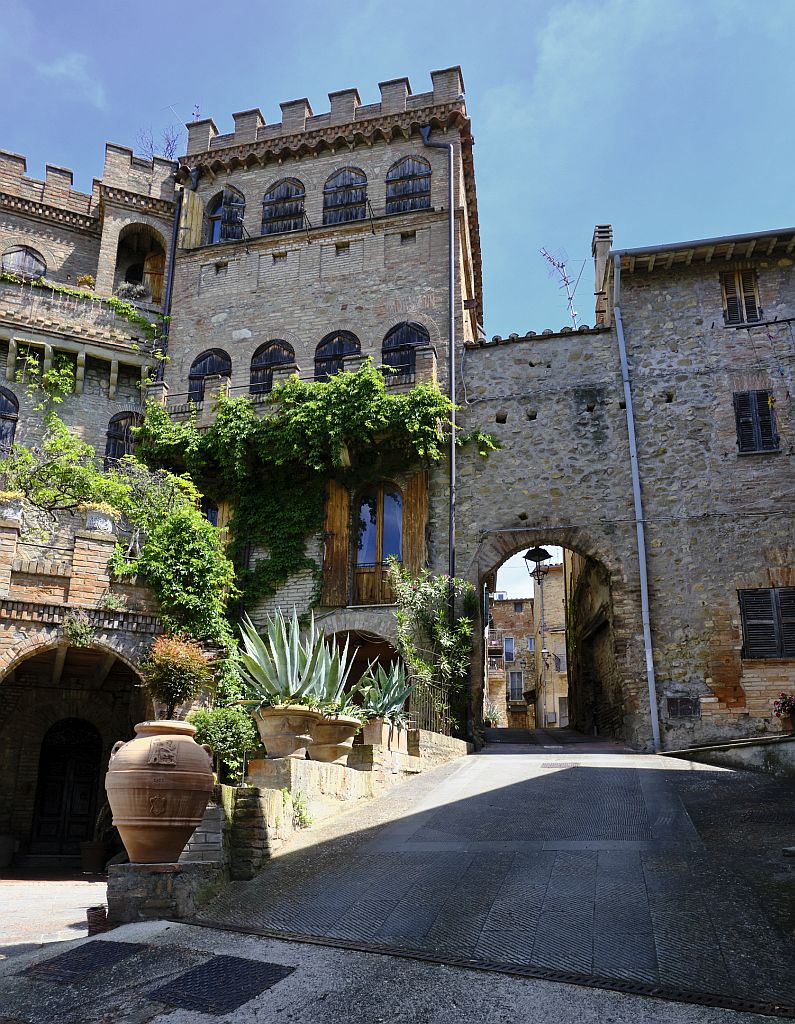
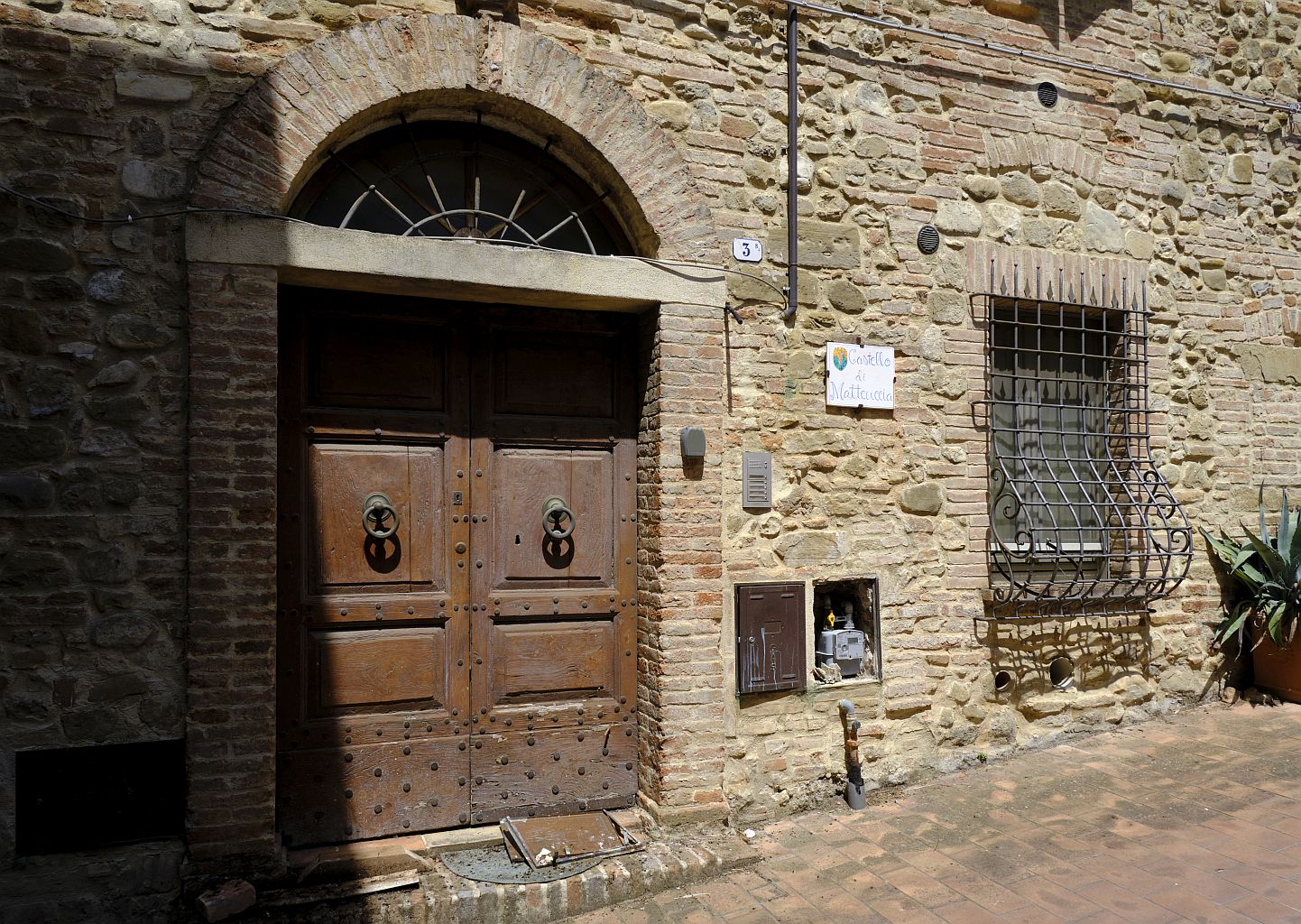
But Matteuccia did not lead a conventional life, and the early 1400s was not a good time to be unconventional. In 1428 Bernardino of Siena visited Todi, where he accused Matteuccia of witchcraft. She was arrested and, after interrogation under torture, charged with a range of crimes including sexual relations with other women, selling love potions, infanticide, flying through the air, consorting with demons and other witches, and turning herself into a cat. The records of the trial are still held in the Todi municipal archives, and apparently make no mention of anything she might have said in her own defence.
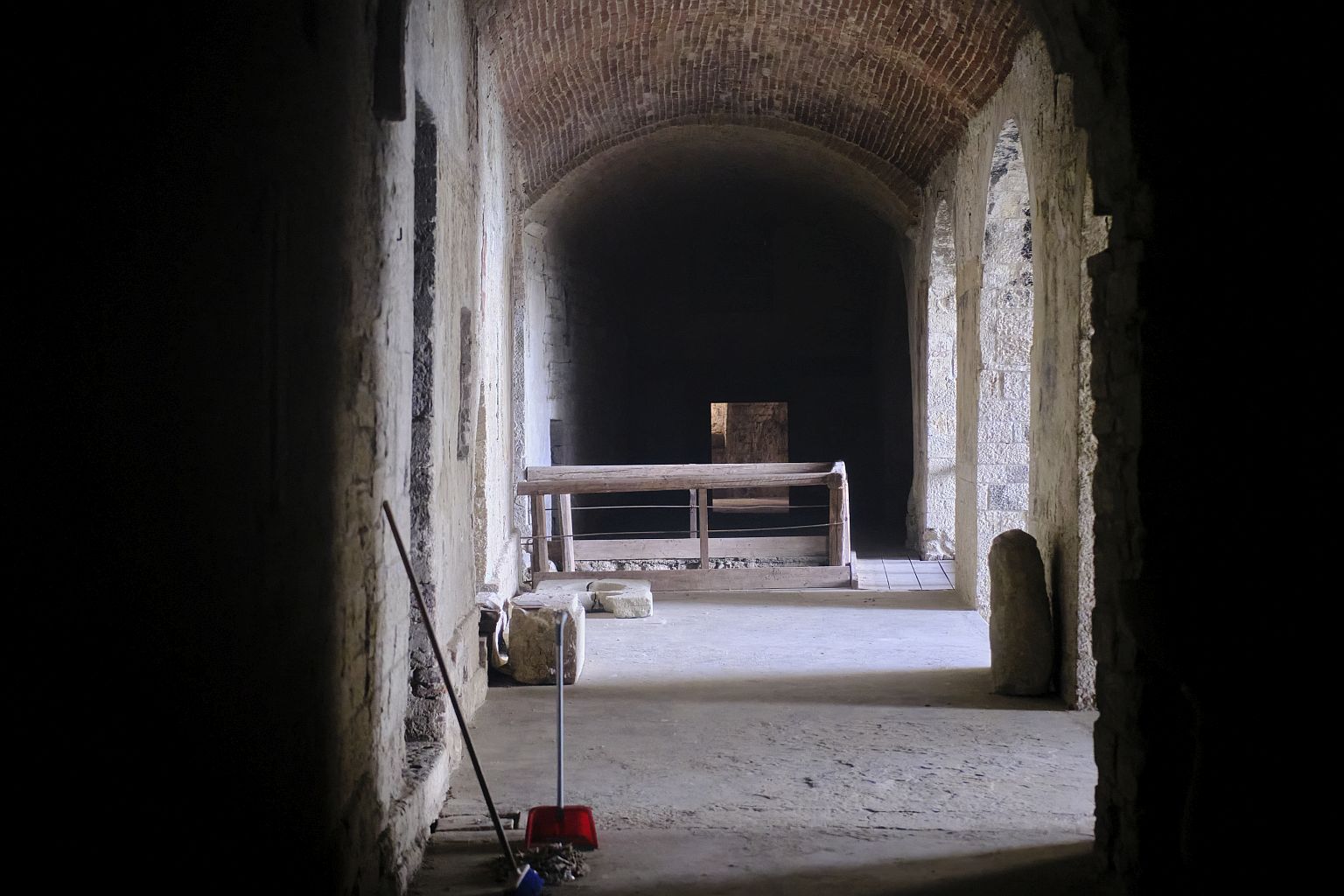
I don’t know if the documentary evidence tells us where the trial took place, but local tradition has it that the court of the Inquisition met in a gloomy cloister beneath the church of Santa Maria in Cammuccia.
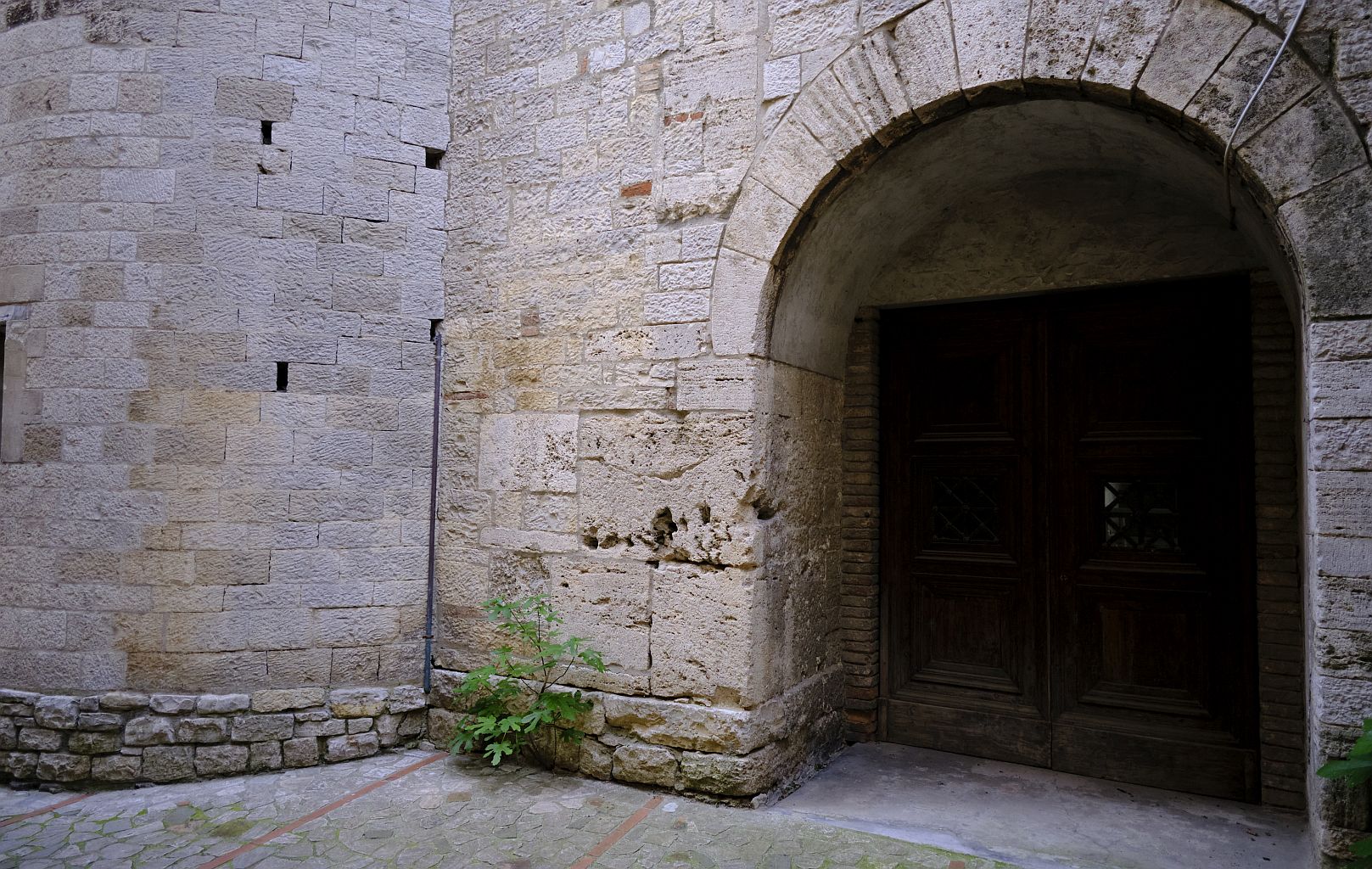
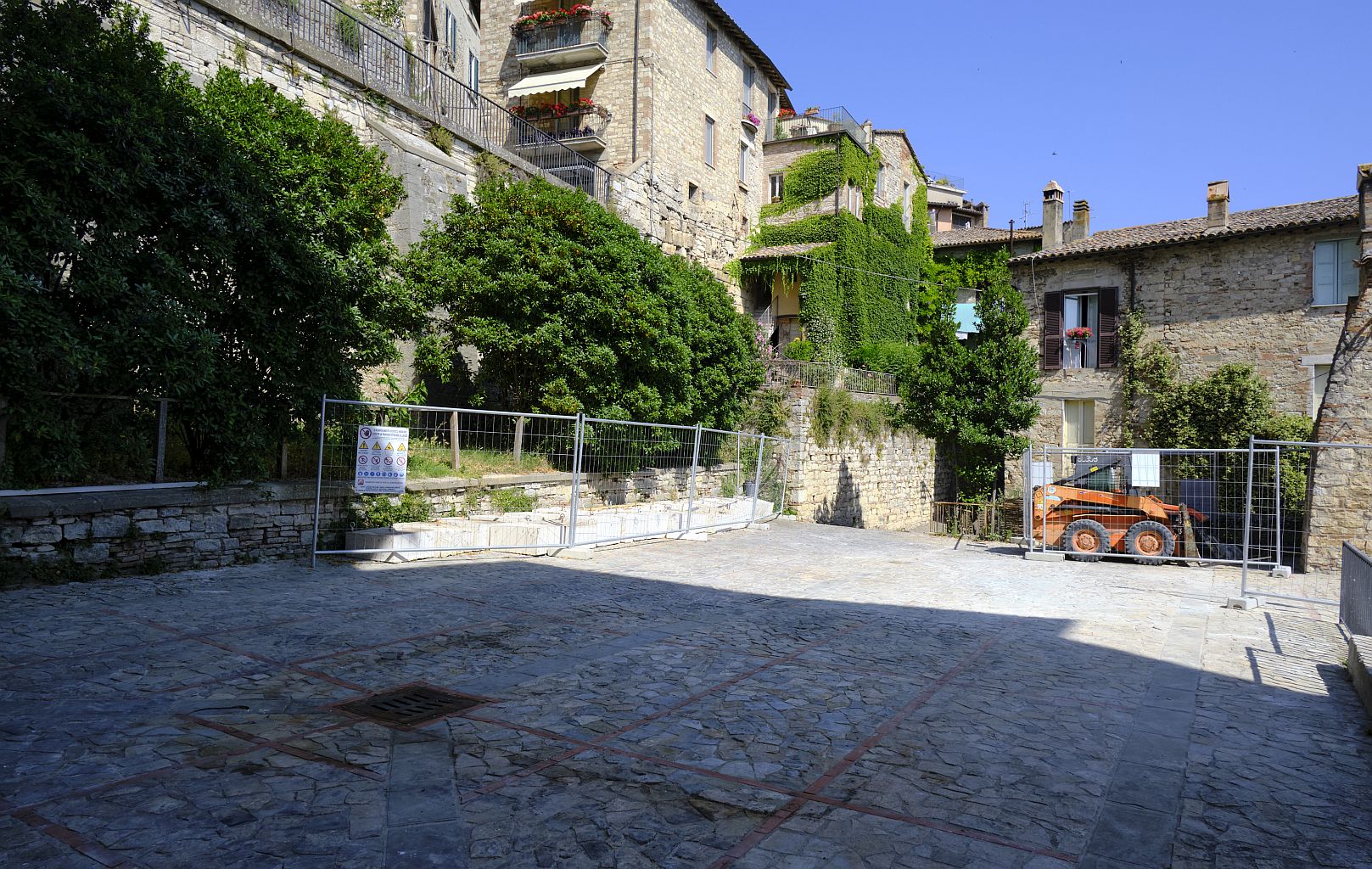
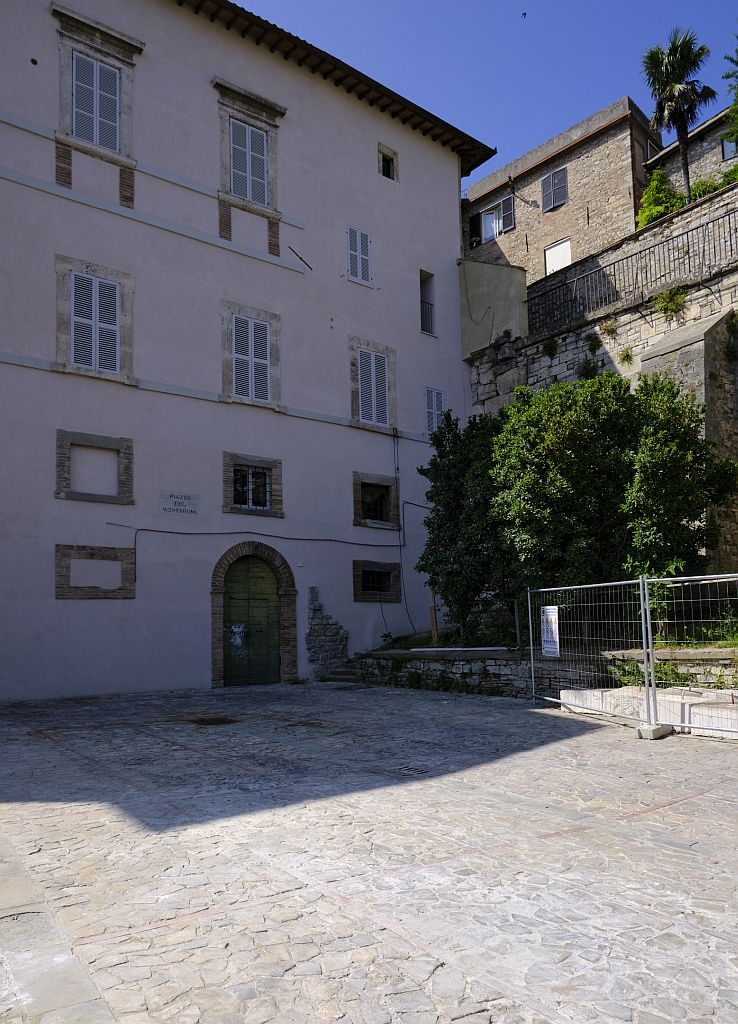
On the 20th of March 1428 she was tied to a stake in Piazza del Montarone, and burned alive.
Apparently Matteuccia’s was one of the first witchcraft trials in Europe, and she may even have been the first woman to have been executed as a witch. She was not, alas, the last. It is strange – we tend to think of witch-burning as an example of medieval ignorance and superstition, but in fact witch-burning became common after the Middle Ages – especially during the Reformation and Counter-Reformation. Bernardino really started something.
I suspect that there may have been a cynical political aspect to poor Matteuccia’s ordeal. It is said that Fortebraccio had been her friend and protector, but as we have seen he had died in battle four years earlier, fighting for Alfonso of Aragon against the Papacy, for which he had been excommunicated. It would have suited authorities to associate him and his allies with devil-worship, and conveniently some of Matteuccia’s alleged crimes were said to have been committed on behalf of Fortebraccio’s soldiers.
Matteuccia’s Legacy
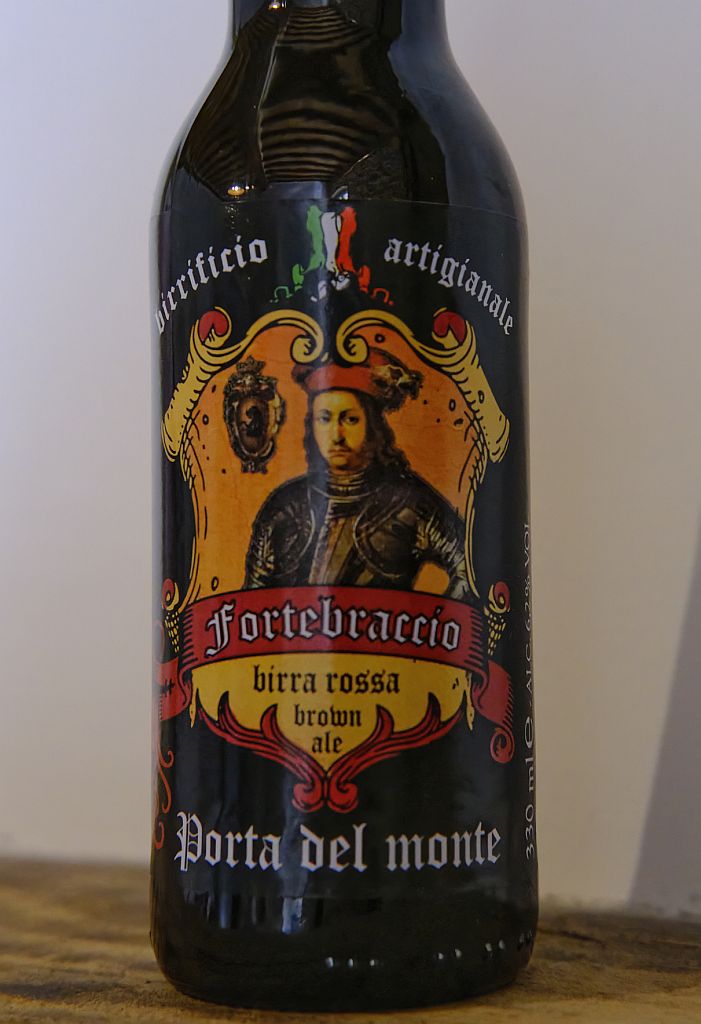
So what do we make of all this, almost six hundred years later? Somewhat understandably, Italian feminists celebrate Matteuccia as a victim of systemic misogyny. New-age crystal-wearing hippie types tend to be fascinated by the witchcraft part, but not in a negative way. Bernardino, as we have seen, was canonised and is now the patron saint of Italy, and also of advertising and public relations. He also has a city in California named after him. Fortebraccio has a brewery named after him.
Being quite possibly the first town anywhere to burn an accused witch at the stake is not something to be particularly proud of, but modern Todi does not attempt to hide it; various commemorations ensure that Matteuccia will not be forgotten. I’m not convinced that all of these have been in the best of taste; there have been pageants and imaginative re-enactments of the trial, and in an art gallery we saw a painting of Matteuccia depicted as a voluptuous naked woman flying over the skyline of Todi.
Halloween has recently become a thing in Italy, and last year a local restaurant advertised a “witch’s soup (if you dare!)” which fortunately derives its flavour from herbs rather than organs of newts or toads. They advertised it with a poster showing someone dressed in a Halloween witch outfit with black conical hat and so on. Enough people must have been brave enough to try it because it is still on the menu.
The most respectful tribute to her is surely the “Orto della Strega Matteuccia” (Garden of the Witch Matteuccia) at the Agricultural Institute of Montecristo in Todi, in which traditional medicinal herbs are grown and studied. It would have been even more respectful if they had dropped the word “strega”, but there you are.
One Reply to “The Witch, the Warrior and the Preacher – the story of Matteuccia da Todi”