In this post I describe a trip up the west coast of Sardinia in May 2025, visiting a couple of the Spanish-influenced towns there. I’ve previously written on Cagliari and the Festa di Sant’Efisio and Ancient Sardinia. (Edit: and now I’ve added a final one: Dancing Monks and Hidden Billionaires.)
You left us down in the south, after visiting the Phoenician/Carthaginian/Roman archaeological site of Nora. From there we drove back – almost – to Cagliari before taking the only decent road in Sardinia, the “Carlo Felice”, northwards. Near a place called Macomer we left the main highway and headed for the coast. This involved encounters with nuraghe (Bronze Age stone towers) and enormous potholes in the road, which I have already described.
Bosa
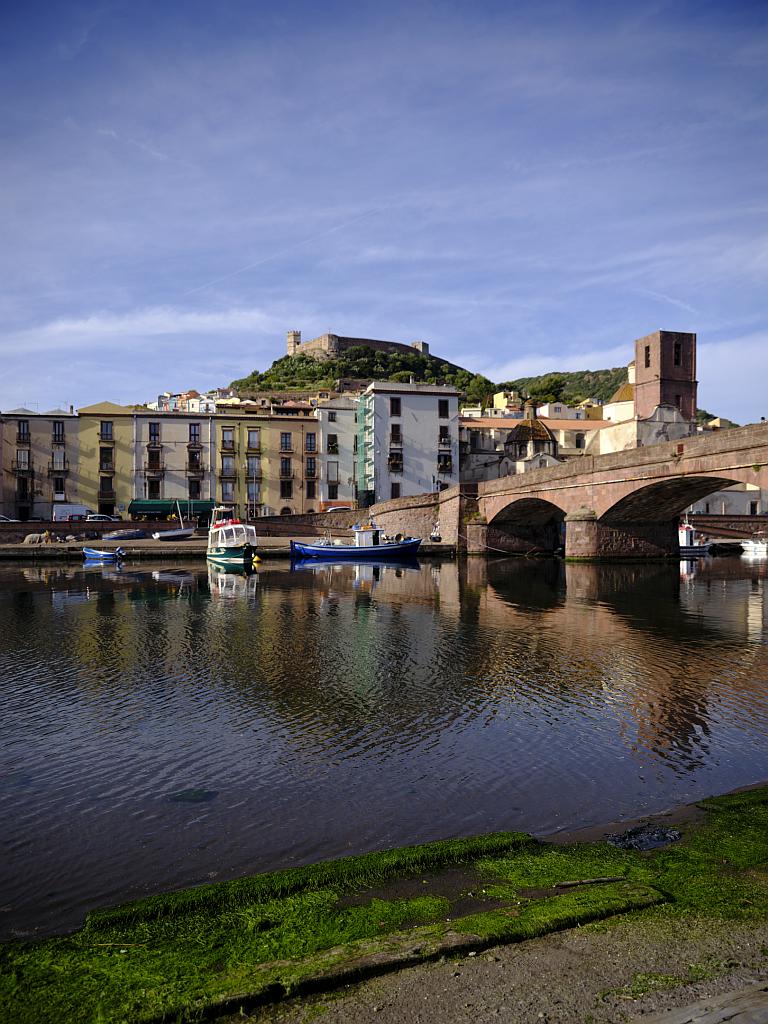
Our first stop was a town called Bosa on the west coast, which we had chosen firstly because it seemed likely to be a convenient base for exploring central and north-west Sardinia, and secondly because the pictures in guide books made it look like a really pretty place. Both assumptions turned out to be correct.
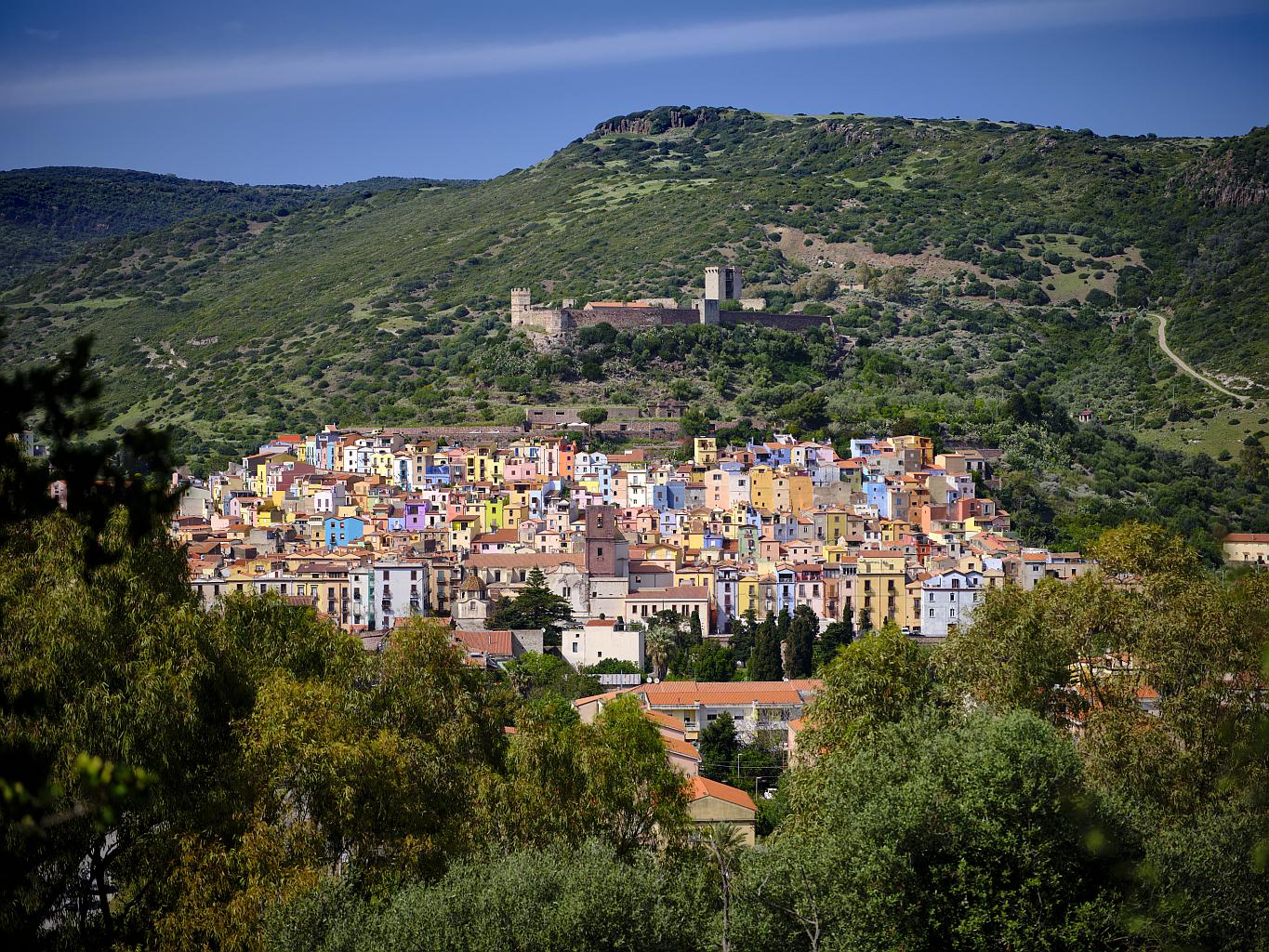
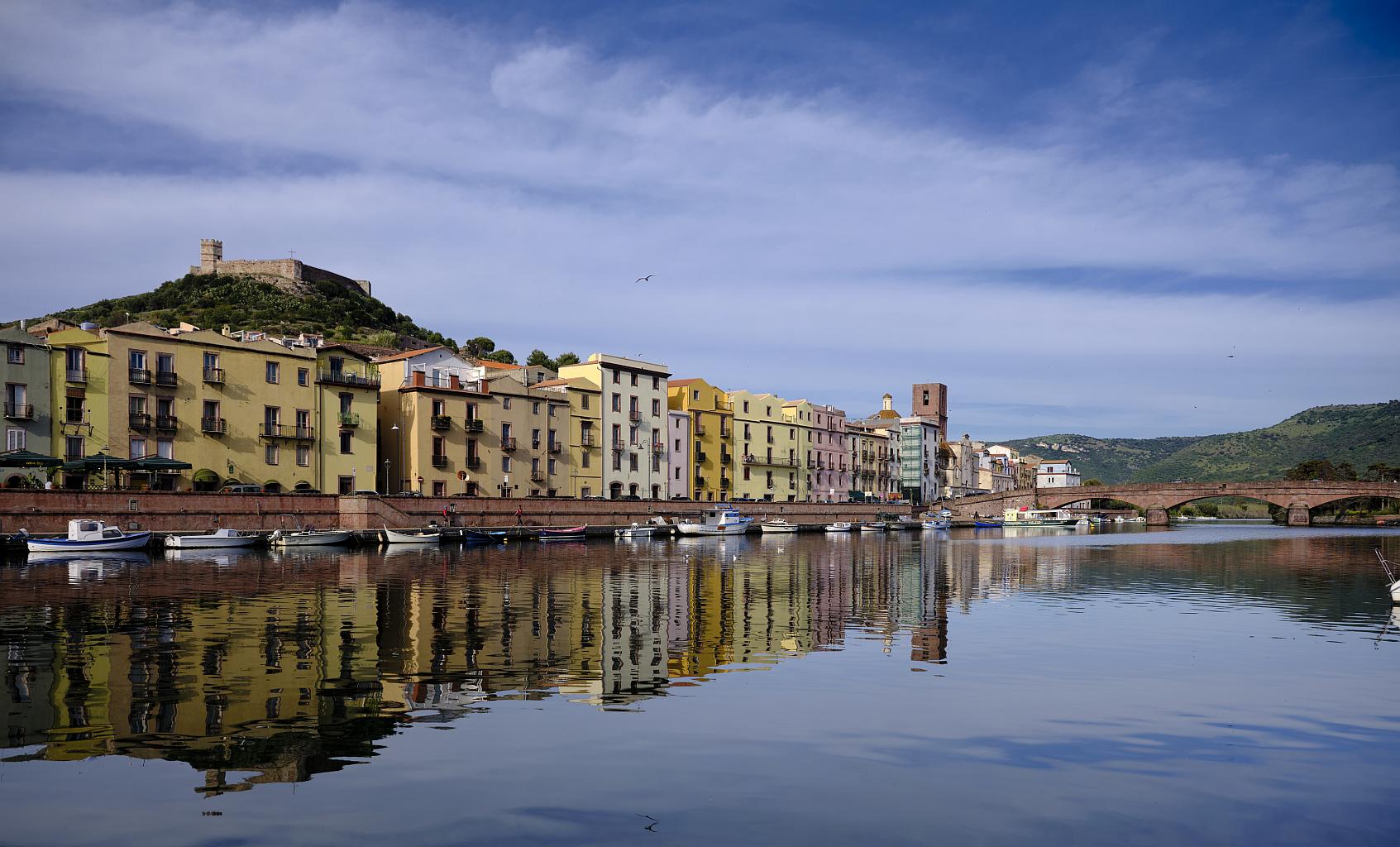
The modern town of Bosa is a settlement on the Temo River about 3km upstream from the sea, and was founded in the 13th Century by the Malaspina family that also built the castle above the town. However there were Phoenician and Roman settlements closer to the coast in antiquity, since this would always have been an obvious place from which to trade into the interior.
In the 14th Century the town was acquired by the Aragonese, and it is said that the local language retained a distinct Aragonese influence. I’m not sure how robust these Sardinian sub-dialects are – firstly because they are competing with the officially-sanctioned Sardo, and secondly because in many regions of Italy younger people, if they use dialect at all, do so only when talking to their grandparents. Not that we would have noticed anyway because if not in English, people spoke to us in the clear standard Italian of which the Sardinians are proud.
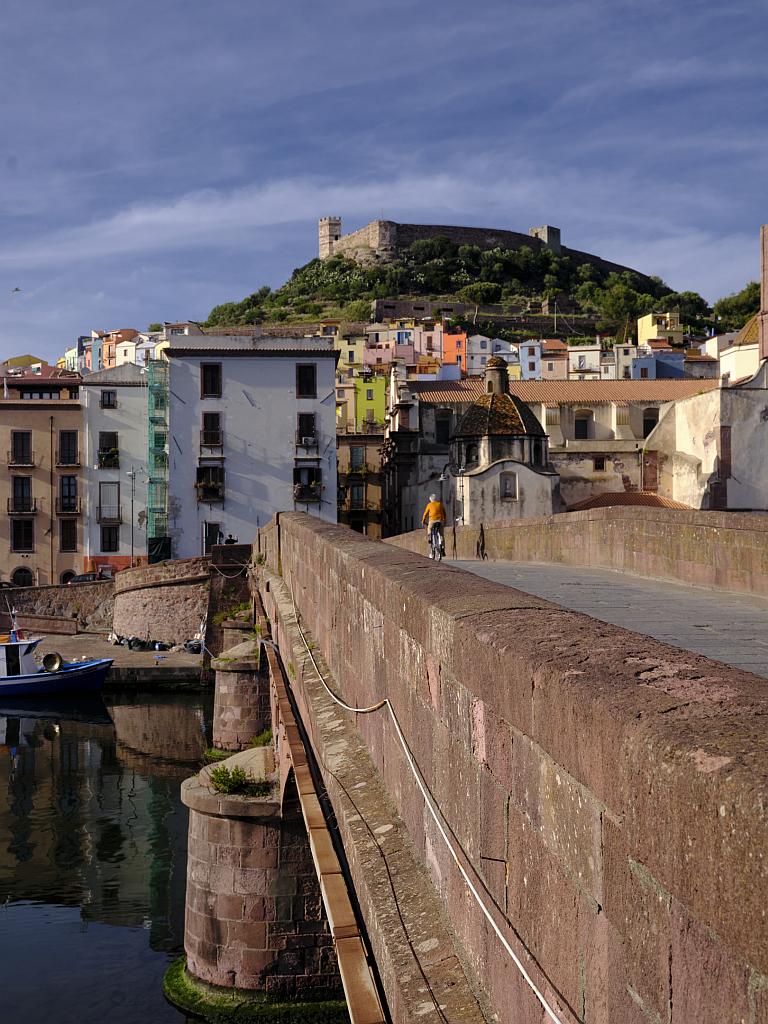
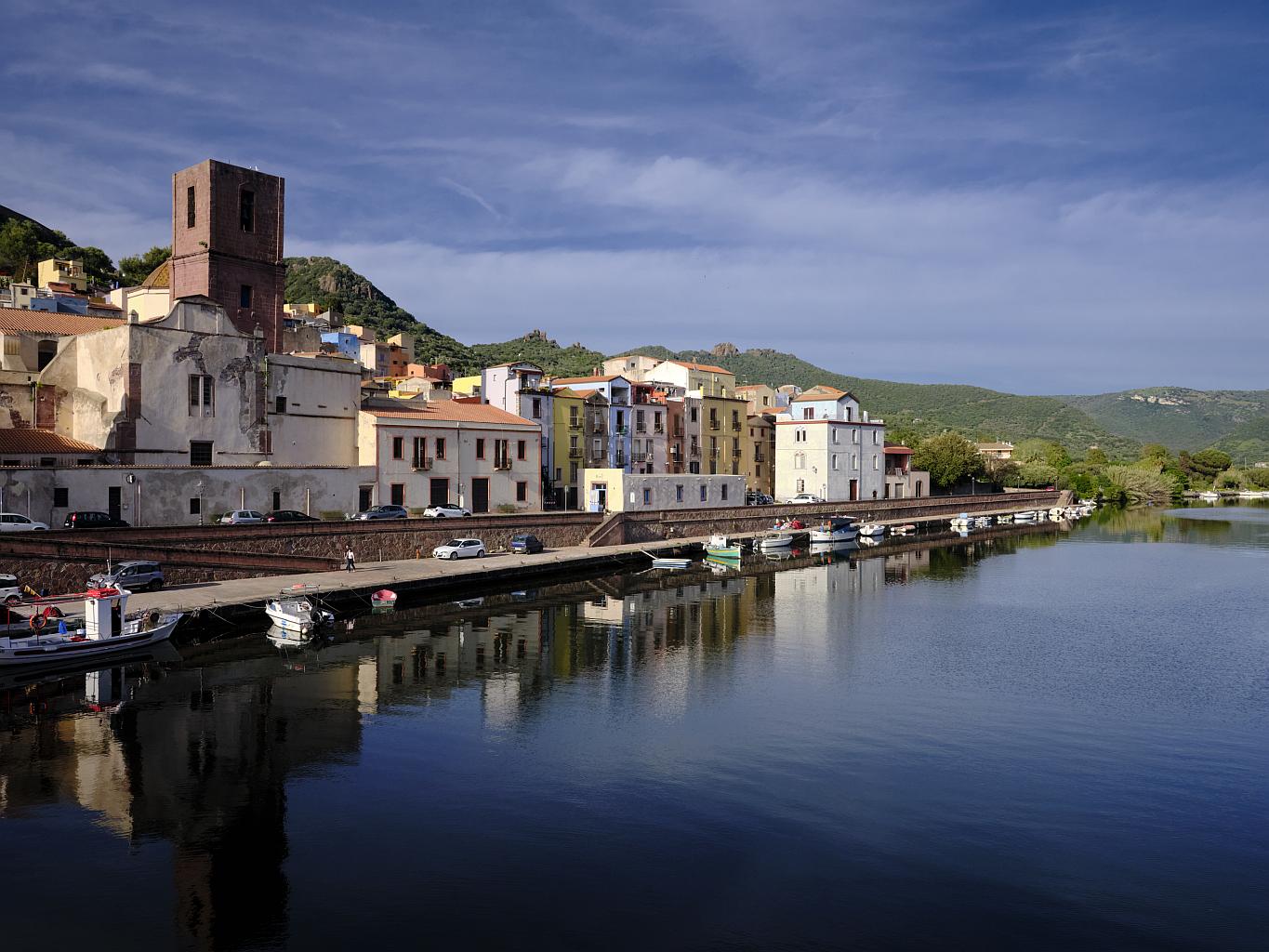
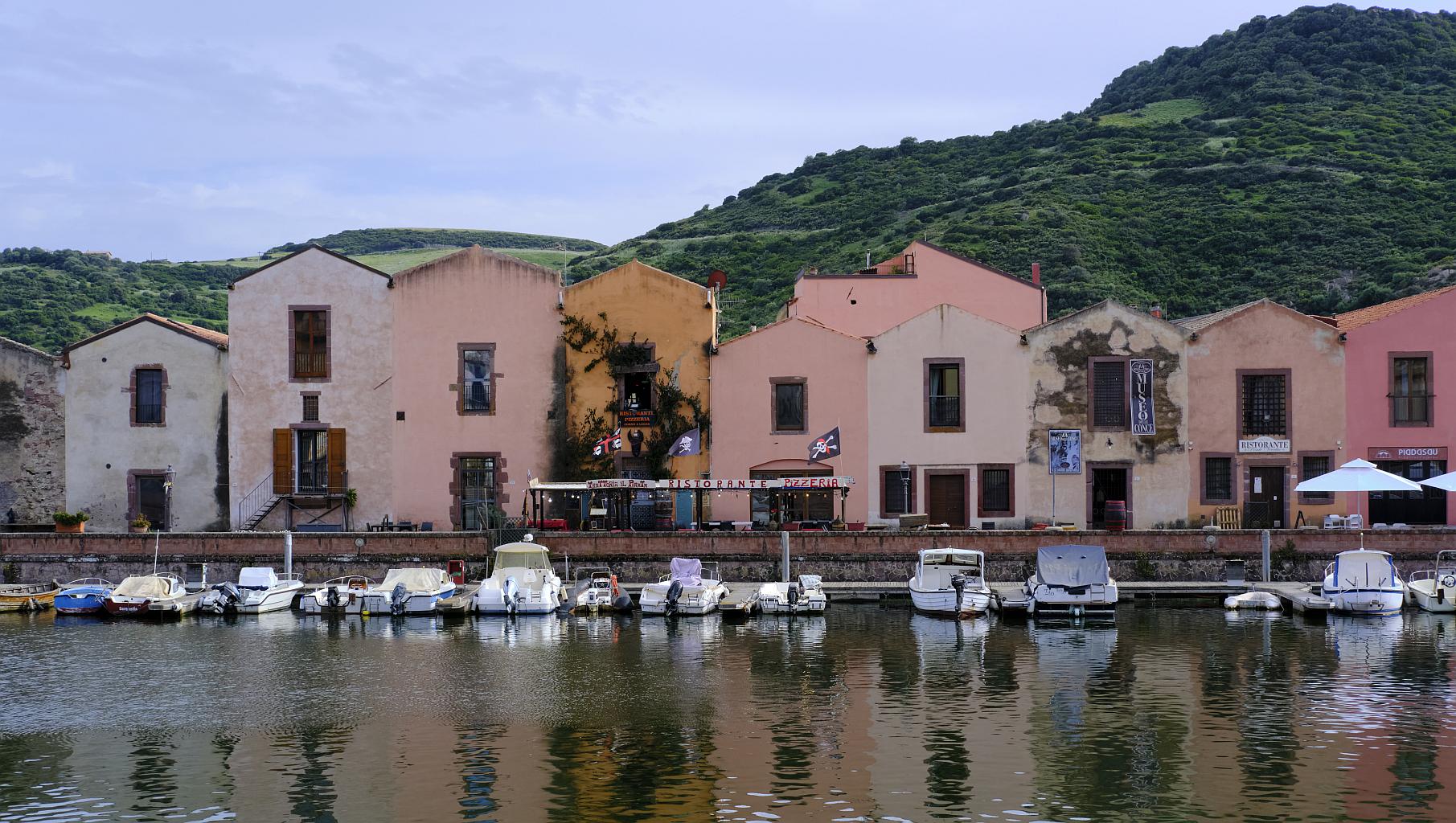
The river is navigable as far upstream as the town, so despite its distance from the coast fishing would still have been part of the economy. Another major contributor to the local economy was the tanneries (conce) that lined the south bank of the river and operated until the 20th Century. Tanning leather produces a lot of smelly liquid waste so being on a river would have helped to get rid of it. After a period of lying derelict, these old tanneries are starting to be redeveloped into bars and restaurants.

The Coast Road
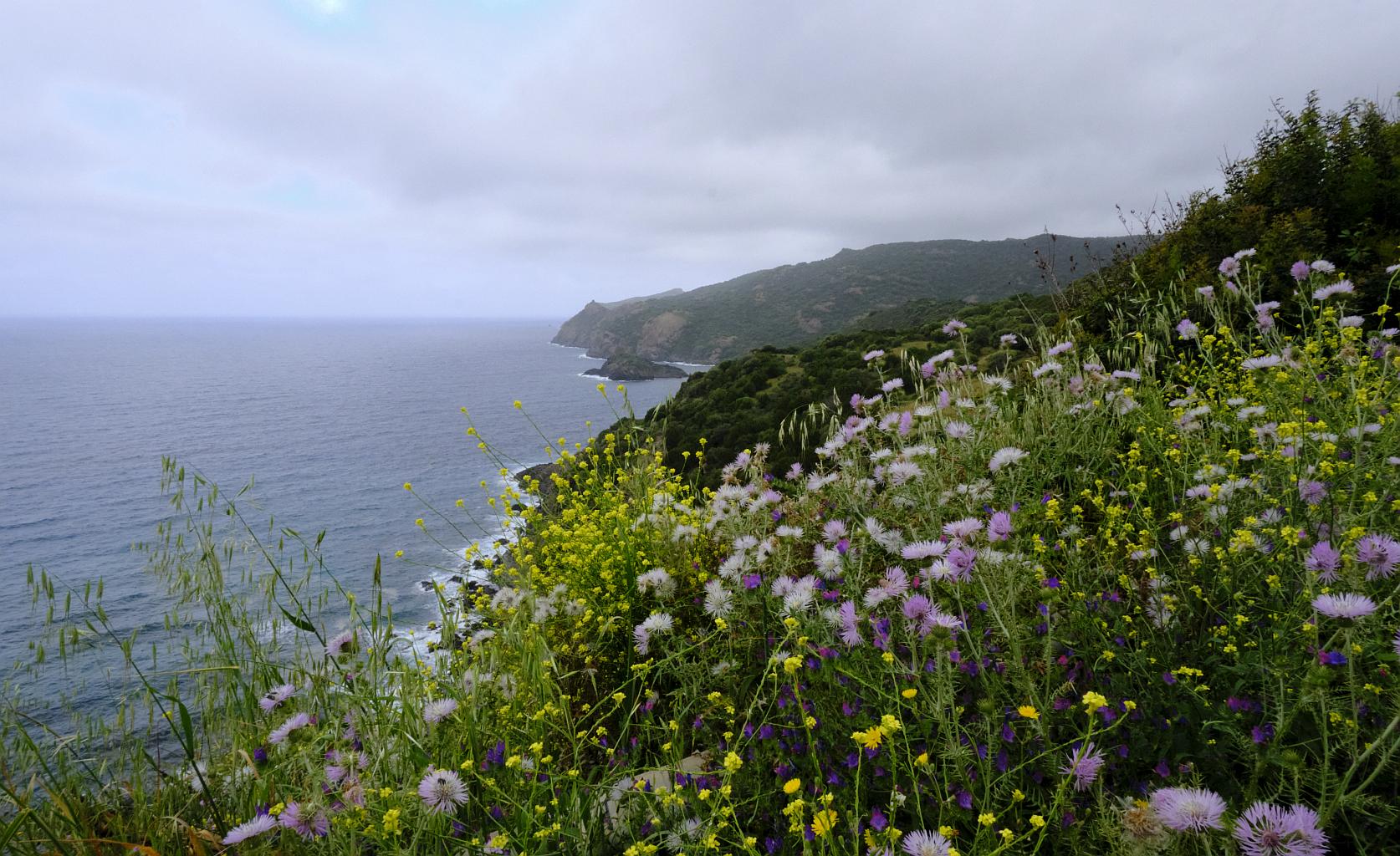
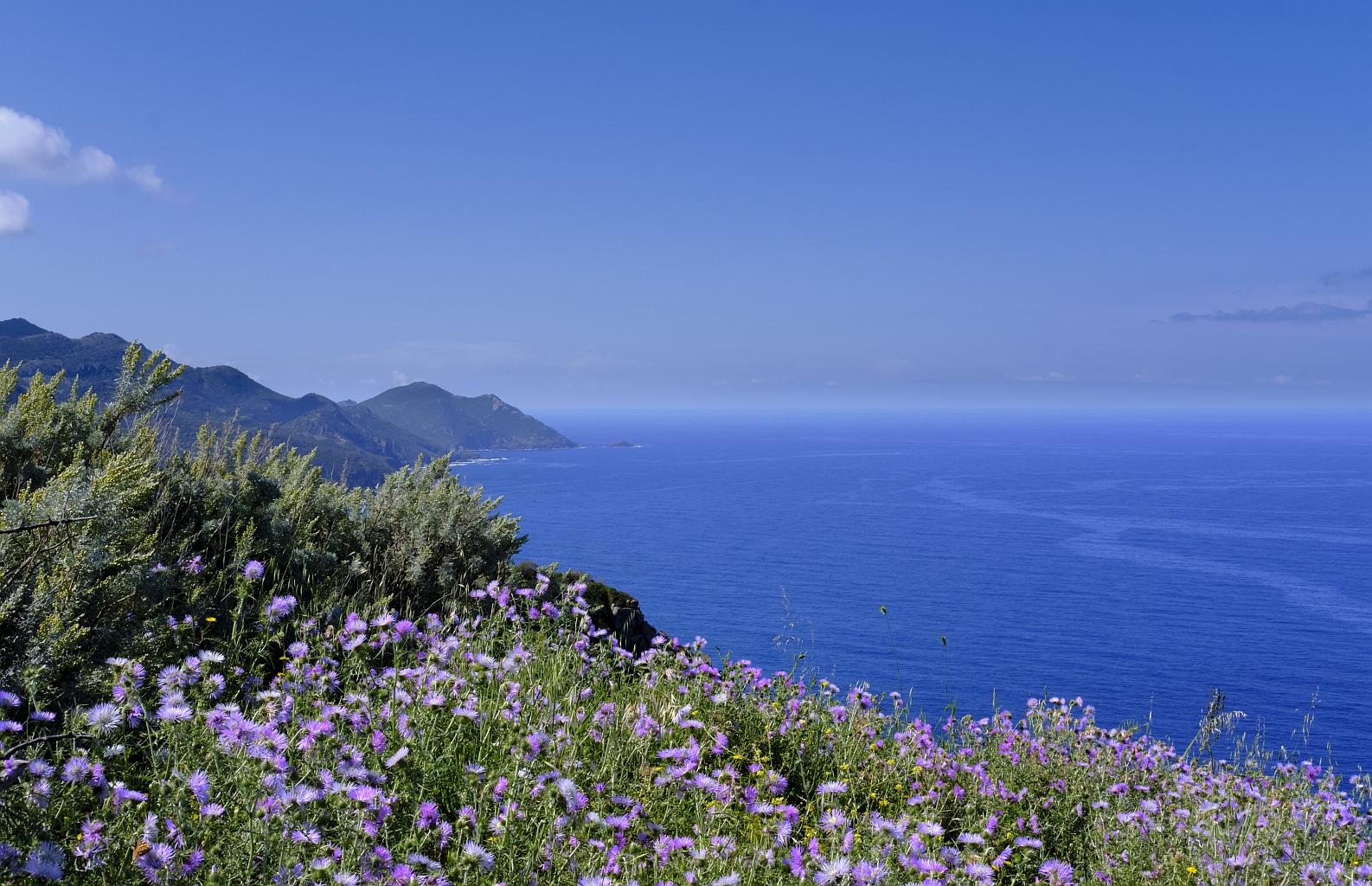
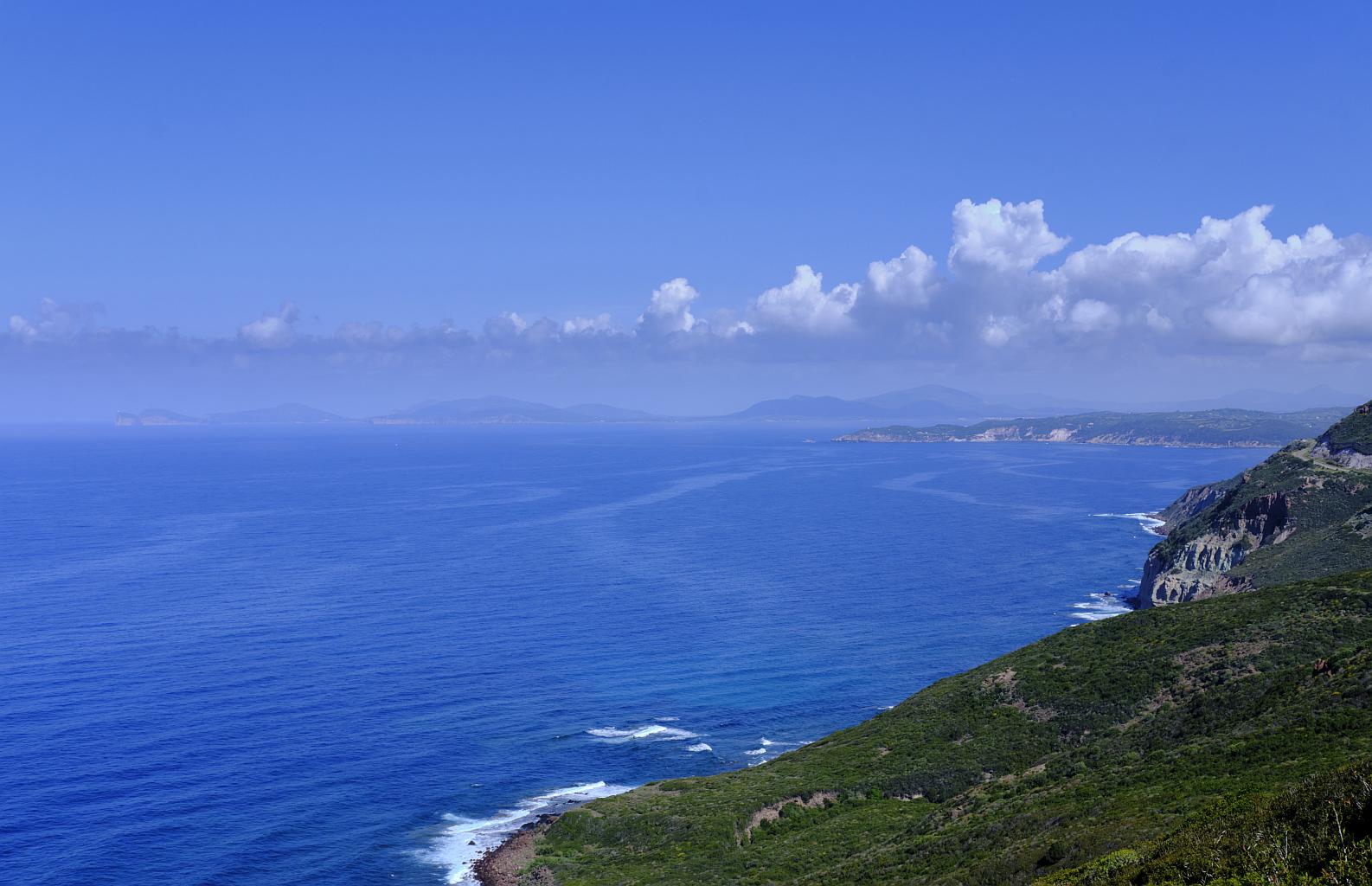
One of the trips we did from Bosa was to the town of Alghero, on the coast about 50km to the north. Rather than take the main roads on the inland route, we took the coastal road (SP49) which is genuinely spectacular and – apart from the typically challenging Sardinian road surface – deserves to be ranked among the great coastal drives of the world. We did it twice; the first time in rather changeable weather, the next day in bright sunshine. The clouds on the first day were to be expected as the west coast of Sardinia is a weather coast where the warm moist air comes in off the sea and hits the mountains, which generates clouds. There is even a local saying which translates to “do like in Bosa, when it rains, let it rain” or in other words, don’t try and change what you can’t control.
One attraction of Sardinia for the non-Italian visitor is the number of so-called “wild” beaches, which are beaches that are not operated as commercial concessions and covered in rows and rows of umbrellas, doubtless lined up with laser devices, such is the uniformity of the distance between them. Instead you can just walk onto them and sit down anywhere you like. In other words, “wild beaches” in Italy are what in Australia we call “beaches”.
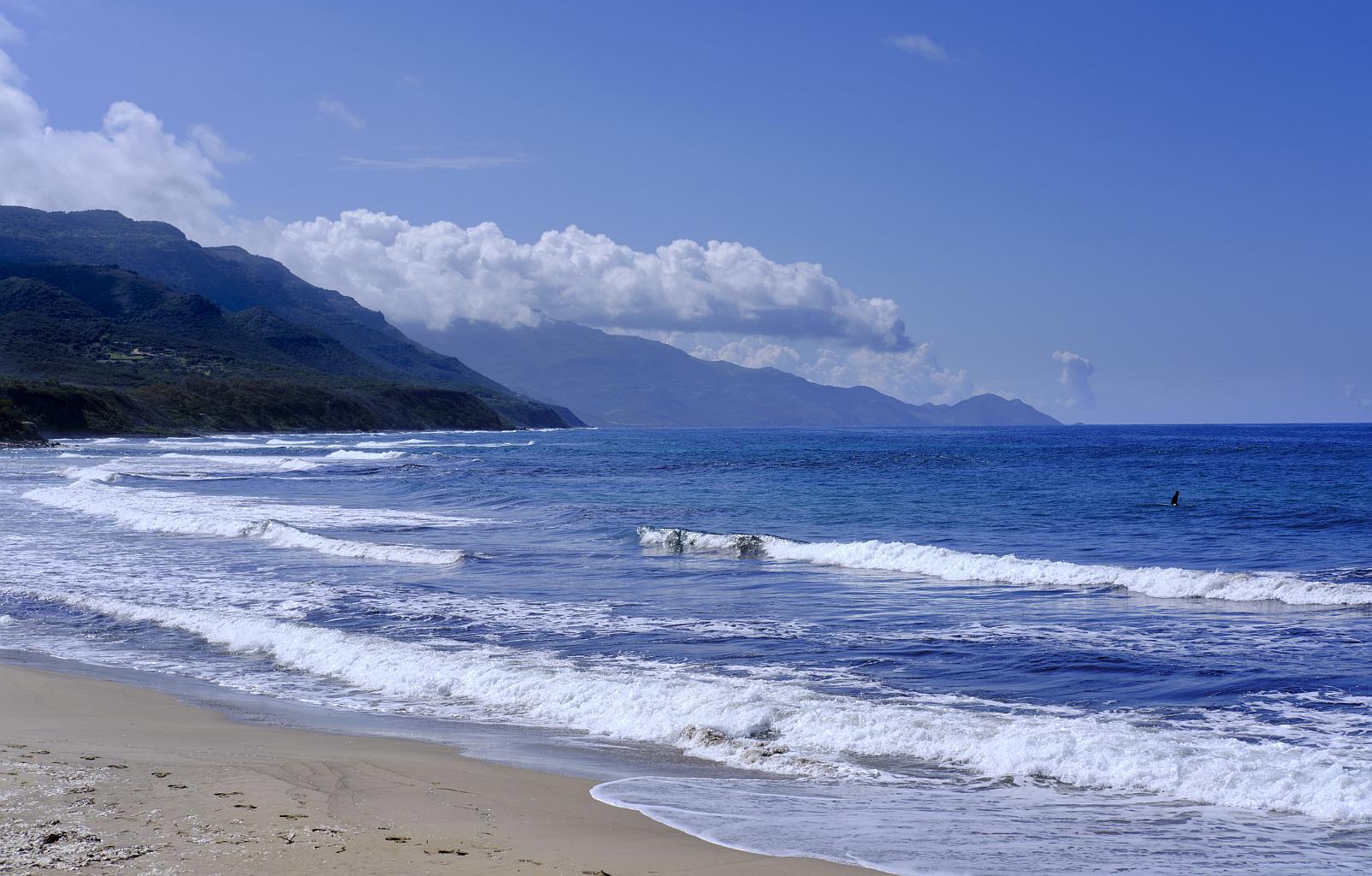

A reminder of the 1940s is that at the end of such beaches you are likely to see concrete machine-gun bunkers located where they could put down fire on an attempted amphibious landing. However apart from the heavy bombing of the naval and air bases at Cagliari, World War II, like many other wars, bypassed Sardinia. Before the Allies could launch an invasion the Italians had surrendered, and the Germans withdrew to Corsica.
Alghero
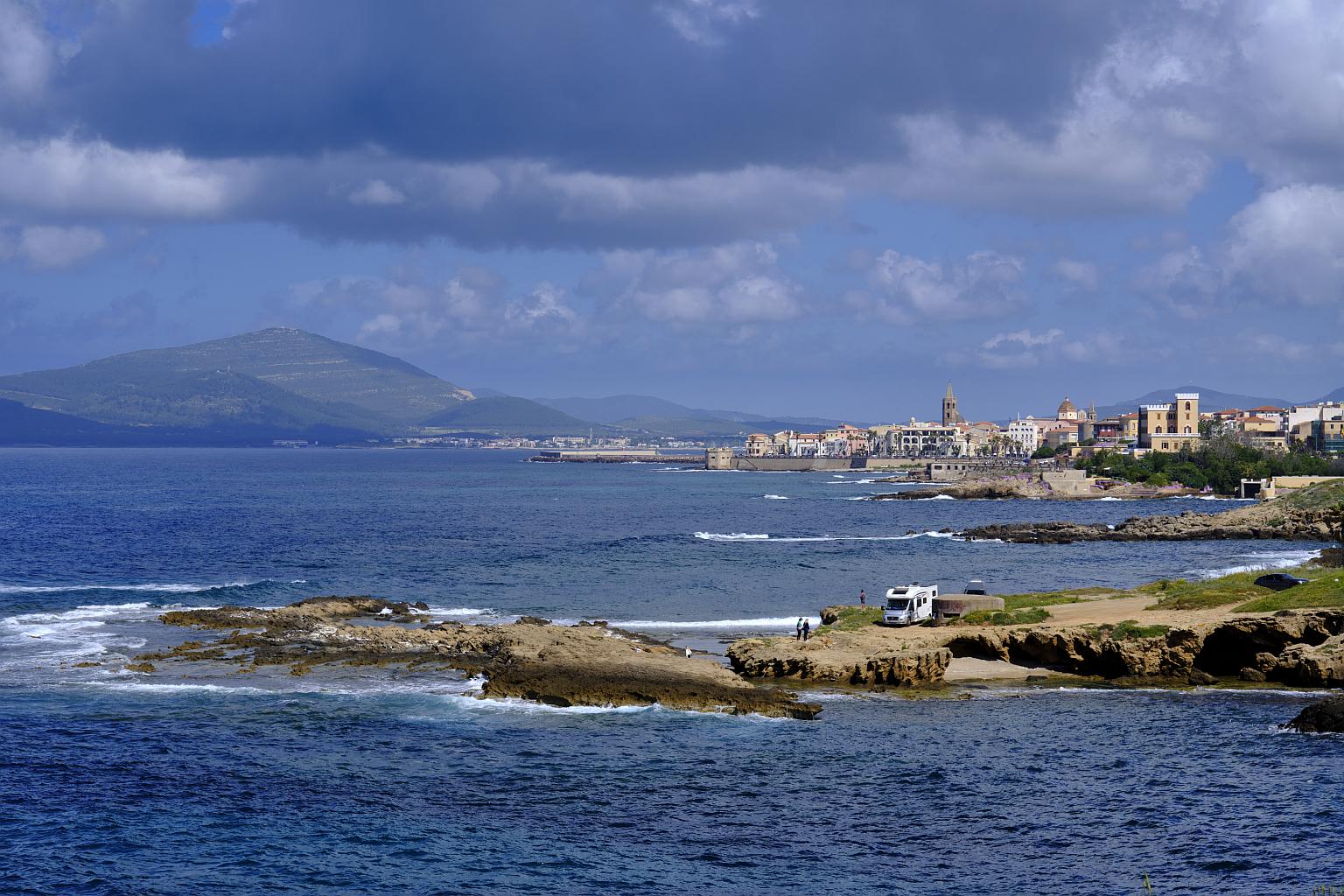
Alghero is in a picturesque setting; to the north the coast curves around, ending in the sheer cliffs of Capo Caccia. It has quite a large population and there is a lot of modern development surrounding the old town, but the approach from the south offers a few viewpoints from which the modern parts can be largely excluded, with the right focal length lens.
The history of Alghero is as we were coming to expect from Sardinian coastal towns – the Phoenicians arrived in the 8th Century BC and established a town of mixed Phoenician and Sard population that traded metal ore from inland, refined it locally, and traded the results with foreigners, including the Etruscans on mainland Italy. The Phoenicians were followed by the Carthaginians, then the Romans, the Vandals and the Goths, then a period of self-government.
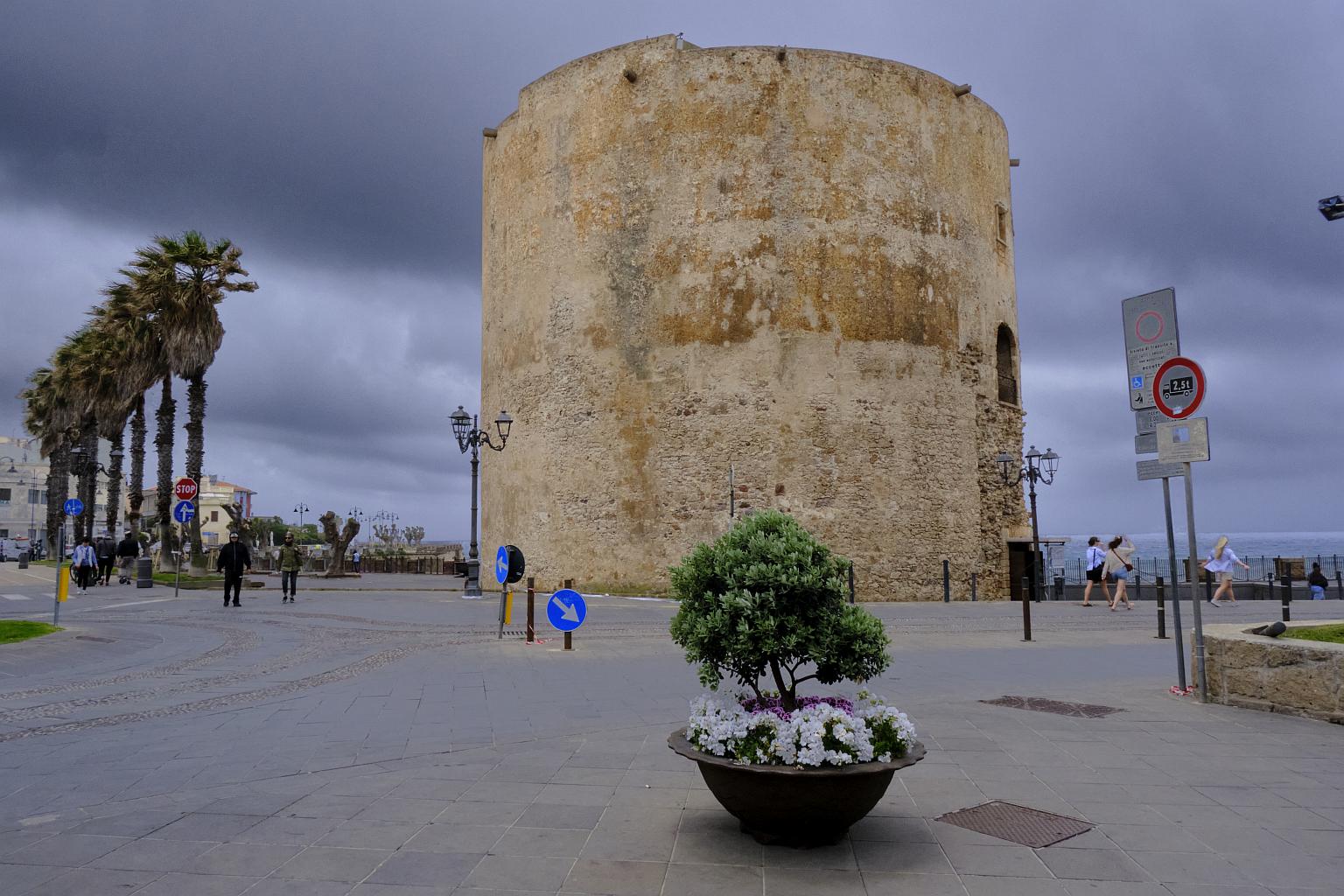
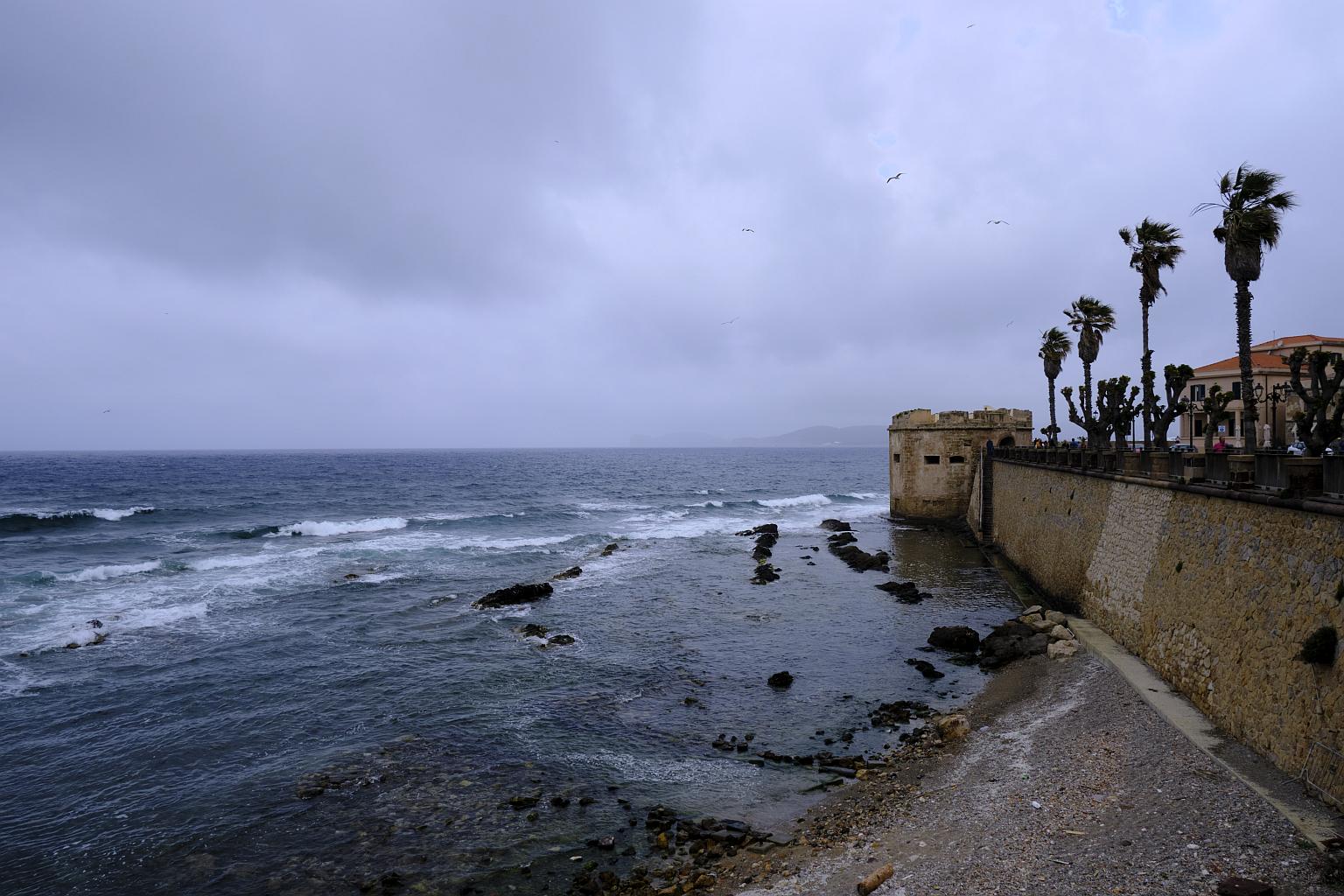
By the early 1100s, the Genoese had established a fortified port on the present site, near the site of the ancient town. The fortifications on the seafront date from then, but were repaired and improved several times until the 17th Century, so it is hard to tell how much the modern ones look like the original. My rule of thumb is that round towers and rounded fortifications post-date the introduction of cannon, so most of what you see is probably from later eras.
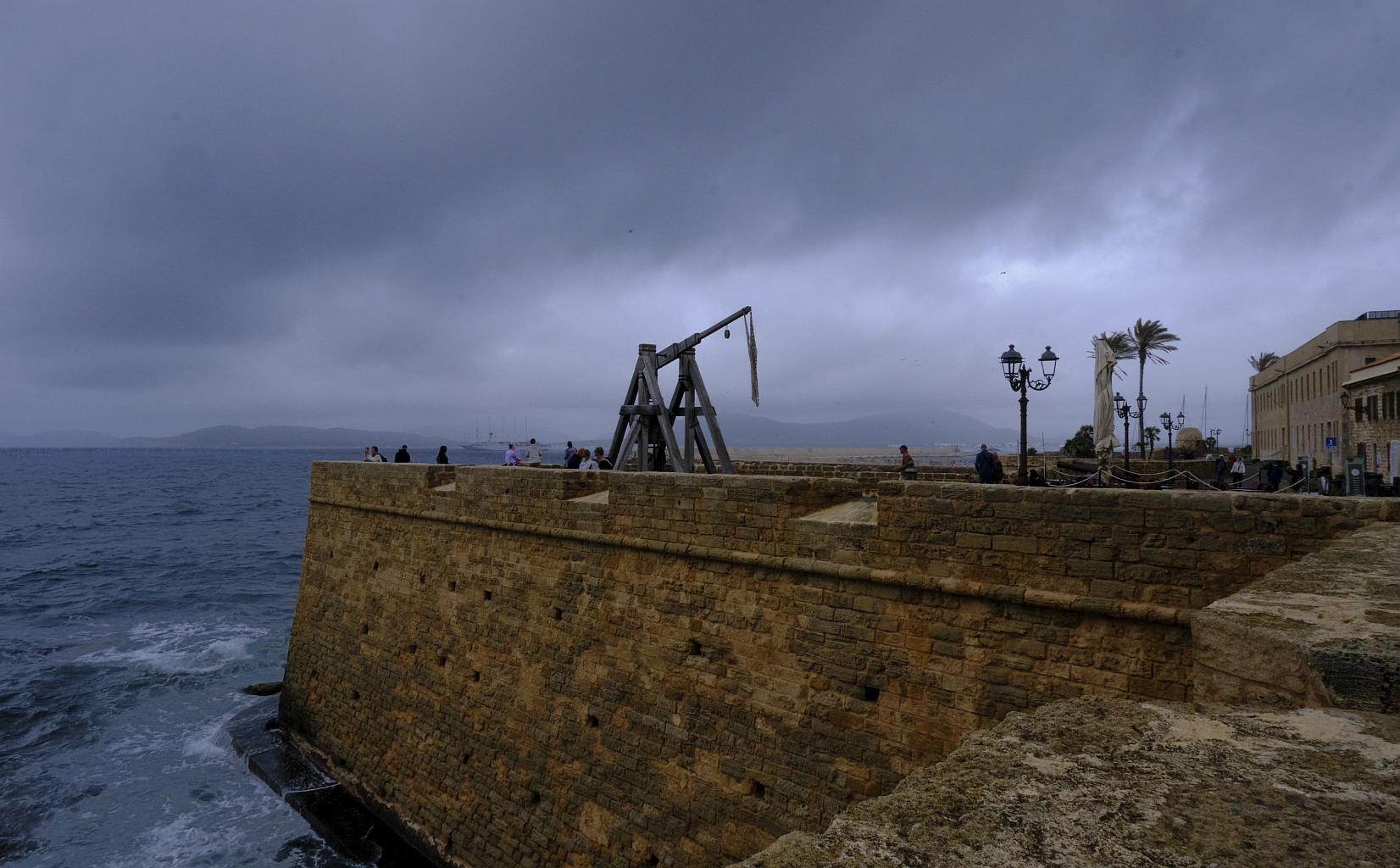
Some time in the considerably more recent past, someone had the bright idea of placing replica medieval catapults like trebuchets and mangonels on the top of the sea wall. The enthusiasm did not last long enough to keep them in good condition, so they are now somewhat deteriorated. Nonetheless the captain of a visiting French cruise ship obviously decided to play it safe and anchored well out of range of even a well-maintained trebuchet.
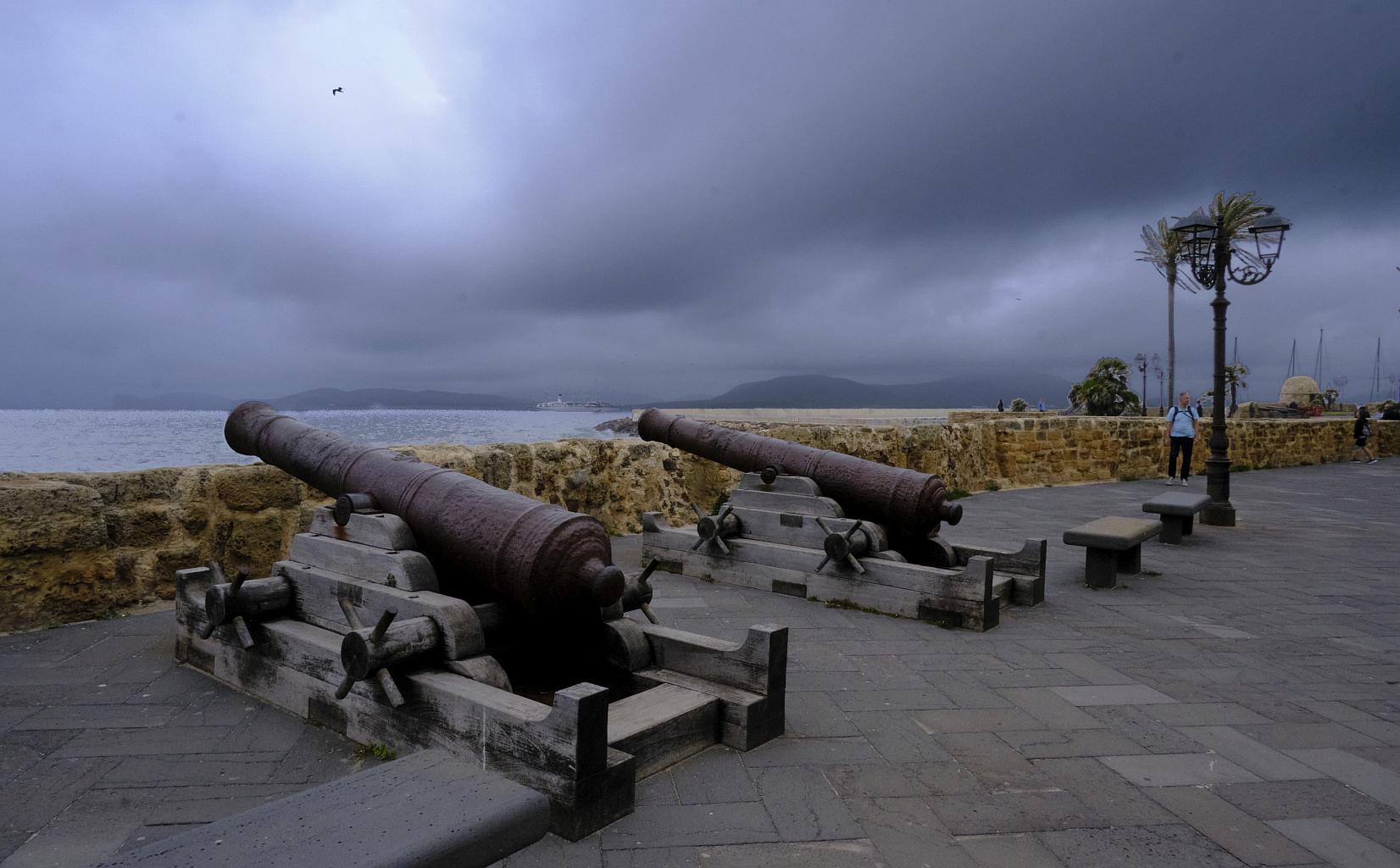
In the 14th Century, the Aragonese took Alghero from the Genoese, and encouraged colonisation from their domains in Spain, particularly Catalonia. Modern Algherese are very proud of their Catalan heritage, although to my untutored eyes and ears the signs of it are subtle. One is that the local restaurants offer paella, or a Sardinian variant thereof. Another is that the trenino, the little tourist train that meanders slowly through the town ruining people’s photographs, is called the Trenino Catalano. There are linguistic influences visible in street and shop names, but who knows whether these are genuine survivals or the results of more recent cultural enthusiasms. I wrote in A Brief Political History of the Italian Language that in the past there was some hostility to minority languages, especially under the Fascists, but I don’t know how that played out in Sardinia.
I did find an article online that says that Algherese Catalan is now spoken by only 18% of the population. The article also says that one factor in the relative decline has been the growth in the population of Alghero. Most of the immigrants came from the rural areas inland, and to the extent that they speak anything other than Italian, it would be Sardo.
The weather was cloudy and windy and a bit cool but we still had a pleasant wander along the waterfront with its fortifications, before finding a restaurant in a sheltered spot that offered Sardinian, rather than mock-Catalan, cooking.
3 Replies to “Sardinia – The West Coast”